
SEO Automation Platform Checklist: Google RankBrain Insights at AnyPost

Section 1: Introduction to SEO Automation Platforms
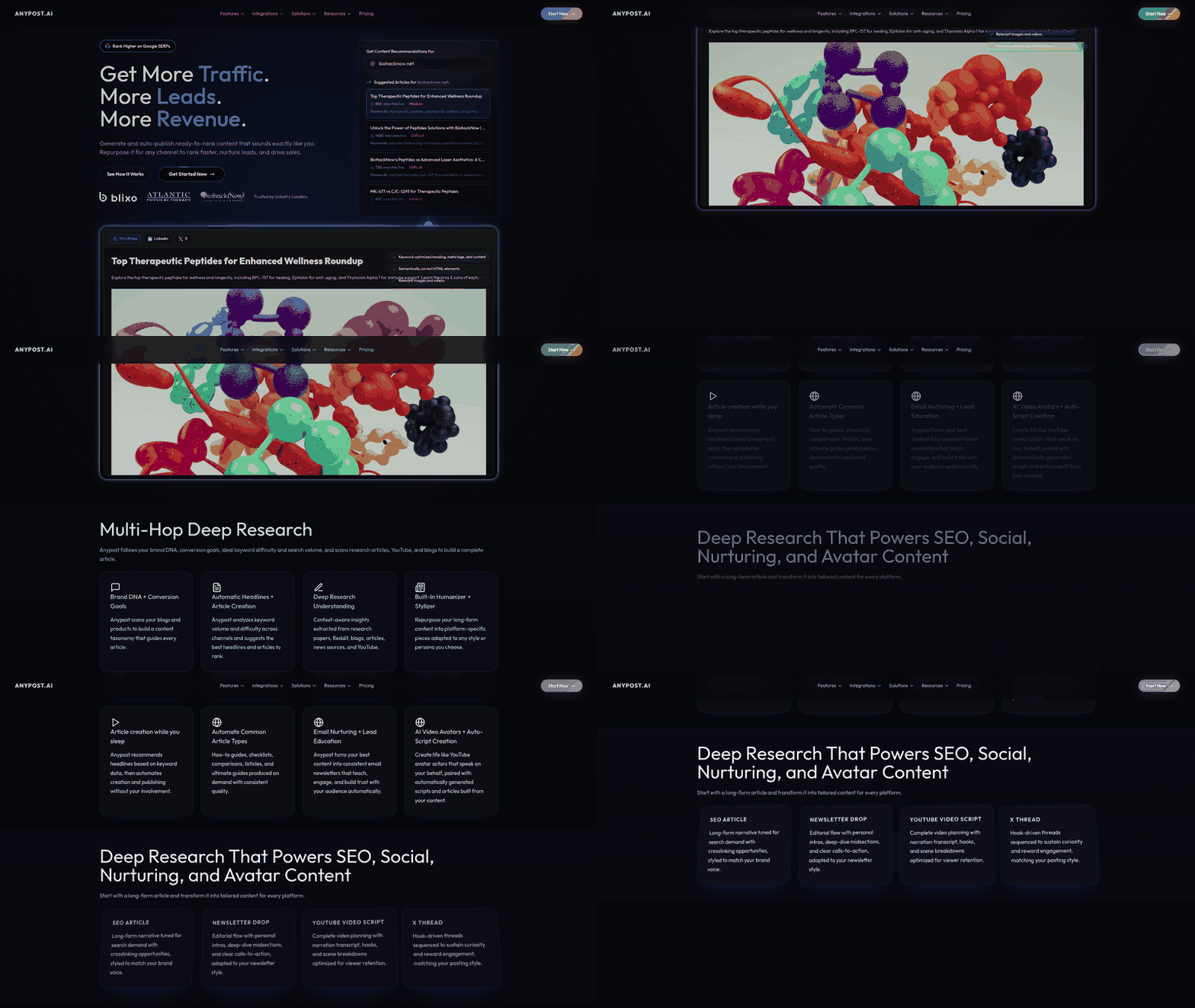
SEO automation platforms are AI-powered tools designed to streamline and optimize search engine optimization (SEO) workflows by integrating data-driven decision-making into content creation and technical SEO processes. These platforms leverage machine learning algorithms to analyze search trends, identify keyword opportunities, and generate actionable insights, reducing the manual effort traditionally required in SEO tasks [1]. As digital content creation scales in complexity, automation becomes critical for maintaining consistency, improving efficiency, and aligning with evolving search engine algorithms like Google RankBrain, as discussed in the [Section 2: Understanding Google RankBrain and Its Impact on SEO] section [1]. For content marketers, SEO automation bridges the gap between strategic planning and execution, ensuring that content remains competitive in search engine results pages (SERPs) while addressing common operational bottlenecks.
Core Functions of SEO Automation Platforms
SEO automation platforms typically combine keyword research, on-page optimization, and performance tracking into a unified workflow. By automating repetitive tasks such as competitor analysis and backlink audits, these tools free up time for creators to focus on high-value activities like strategic content planning [1]. For example, AI-driven platforms can generate topic ideas based on real-time search data, ensuring content remains relevant to user intent and algorithmic updates [1]. See the [Section 5: Leveraging Real-Time Analytics for Content Performance Tracking] section for more details on how real-time data informs SEO strategies [1]. This integration of automation into core SEO functions not only accelerates the content production cycle but also minimizes human error in technical SEO elements like meta tags and site structure optimization [1].
Addressing Content Marketing Challenges
One of the primary pain points addressed by SEO automation is the time-intensive nature of keyword research. Traditional methods often require hours of manual analysis, whereas AI-powered tools can process vast datasets to identify high-potential keywords and content gaps in minutes [1]. Additionally, automation platforms help mitigate challenges related to scalability, enabling teams to manage large volumes of content without compromising quality. For instance, tools like Semrush and Ahrefs use machine learning to prioritize tasks based on impact, ensuring resources are allocated to the most effective SEO strategies [1]. Another critical challenge—aligning content with Google RankBrain’s emphasis on semantic search—is streamlined through automated analysis of user intent and contextual relevance [1]. By embedding these capabilities into workflows, teams can produce content that resonates with both search engines and target audiences.
Target Audience and Use Cases
The primary users of SEO automation platforms include content marketers, SEO specialists, and digital agencies seeking to enhance productivity and precision. These tools are particularly valuable for organizations managing high-volume content calendars, where manual optimization becomes impractical [1]. For example, e-commerce businesses can use automation to dynamically adjust product descriptions and category pages based on real-time search trends, improving visibility in competitive markets [1]. Similarly, B2B companies benefit from automated competitor benchmarking, allowing them to refine content strategies in alignment with industry-specific search behaviors [1]. The platforms are also well-suited for teams with limited technical SEO expertise, as they provide intuitive interfaces and guided workflows to democratize access to advanced SEO techniques [1].
Checklist for Evaluating SEO Automation Platforms
To ensure an automation platform meets your team’s needs, consider the following criteria:
- AI-driven keyword research capabilities to identify high-intent search terms and content gaps [1]
- Integration with Google RankBrain and other search algorithms to adapt to semantic search trends, as mentioned in the [Section 2: Understanding Google RankBrain and Its Impact on SEO] section [1]
- Automated on-page optimization tools for meta tags, headers, and content structure [1]
- Competitor analysis features to benchmark performance and uncover opportunities [1]
- Scalable workflows for content creation that support team collaboration and version tracking [1]
By prioritizing these functions, teams can select platforms that directly address inefficiencies in their current SEO and content marketing processes. The next sections of this checklist will delve deeper into specific tools and strategies for leveraging automation to enhance Google RankBrain alignment and overall search performance.
Section 2: Understanding Google RankBrain and Its Impact on SEO
Google RankBrain is an AI-driven component of Google’s search algorithm designed to process and interpret search queries using machine learning. It helps Google identify patterns in search results, particularly for ambiguous or previously unseen queries, by analyzing user intent and contextual relevance [1]. Traditional SEO practices, such as keyword stuffing, are less effective under RankBrain’s framework, which prioritizes semantic understanding over rigid keyword matching [1]. This shift emphasizes the need for SEO strategies to align with user intent and content quality rather than relying solely on keyword frequency.
Understanding RankBrain’s Role in Search Rankings
- Recognize RankBrain’s focus on contextual relevance: Unlike older algorithms, RankBrain evaluates content based on how well it matches the intent behind a search query, not just keyword usage [1].
- Acknowledge its machine learning capabilities: RankBrain continuously learns from user interactions, refining its ability to surface high-quality, relevant content for complex or long-tail searches [1].
- Accept its impact on query interpretation: The algorithm helps Google handle ambiguous queries by identifying clusters of related terms, improving search accuracy for novel or evolving topics [1].
Adapting SEO Strategies for RankBrain
- Prioritize semantic SEO over keyword density: Content must address user intent holistically, using natural language and topic clustering to align with RankBrain’s pattern recognition [1].
- Leverage AI tools for content optimization: Platforms like Semrush and Ahrefs integrate AI to analyze RankBrain trends, enabling data-driven adjustments to content structure and keyword targeting [1]. See the [Section 1: Introduction to SEO Automation Platforms] section for more details on how AI-powered tools streamline SEO workflows.
- Focus on user experience metrics: Since RankBrain correlates with metrics like dwell time and bounce rate, SEO strategies should emphasize engaging, well-structured content that retains user attention [1].
Utilizing RankBrain Insights in SEO Automation
- Automate semantic keyword research: SEO platforms can use RankBrain insights to identify emerging topics and related terms, streamlining the creation of semantically rich content [1]. Building on concepts from [Section 3: Automated Content Generation and SEO Optimization], AI can generate content aligned with these semantic trends.
- Analyze competitor content performance: By tracking how competitors’ content ranks under RankBrain, automation tools can highlight gaps and opportunities for improvement [1].
- Monitor real-time algorithmic shifts: AI-driven platforms can detect RankBrain’s evolving priorities, allowing for rapid adjustments to maintain or improve search visibility [1]. See the [Section 5: Leveraging Real-Time Analytics for Content Performance Tracking] section for insights on using analytics to adapt to algorithmic changes.
Content Creator Adaptation for RankBrain
- Shift from keyword targeting to intent-based writing: Creators should structure content around the problems users seek to solve, ensuring alignment with RankBrain’s contextual analysis [1].
- Enhance content depth and originality: Unique, comprehensive content that thoroughly addresses a topic is more likely to be recognized as high-quality by RankBrain’s learning models [1].
- Optimize for featured snippets and structured data: RankBrain favors content that provides clear answers to common questions, making schema markup and concise summaries critical [1].
By integrating RankBrain insights into SEO automation workflows, platforms can reduce reliance on manual keyword analysis while improving content relevance and performance. Content creators and SEO professionals must embrace RankBrain’s emphasis on adaptability, leveraging AI tools to stay ahead of algorithmic changes and user expectations [1].
Section 3: Automated Content Generation and SEO Optimization
Automated Content Generation Capabilities
- Use AI to generate content based on keyword inputs [1]
Automated content generation leverages AI to produce text, blogs, or articles tailored to specific keywords or topics. This accelerates the creation of large volumes of content while maintaining relevance to target search queries.
-
Analyze search intent to align content with user needs [1]
Platforms integrate tools like Google RankBrain to interpret user intent, ensuring generated content addresses what users are searching for. See the [Section 2: Understanding Google RankBrain and Its Impact on SEO] section for more details on how RankBrain influences search intent analysis. -
Streamline content creation for consistent output [1]
By automating repetitive tasks such as drafting and formatting, platforms enable teams to maintain a steady publishing schedule. This consistency is critical for sustaining SEO rankings over time.
SEO Optimization Techniques
-
Leverage AI tools for rapid keyword research [1]
Modern AI tools, including Semrush and Ahrefs, replace hours of manual keyword analysis with instant insights. These tools identify high-traffic keywords and suggest optimal placements within content. Building on concepts from [Section 7: Multi-Source Content Integration and Its Advantages], integrating multi-source data enhances keyword research accuracy. -
Utilize RankBrain to assess user behavior and intent [1]
Google RankBrain evaluates how users interact with search results, such as click-through rates and dwell time. This data helps platforms refine content to better match user expectations and search engine priorities. -
Optimize content structure based on search engine algorithms [1]
Automation tools adjust headings, meta tags, and internal linking structures to align with algorithmic requirements. This technical optimization ensures content is easily crawlable and indexable.
Benefits for Content Marketers
-
Reduce time spent on manual research and writing [1]
Automating keyword analysis and content drafting minimizes the labor-intensive aspects of SEO. Marketers can redirect efforts toward strategic planning and audience engagement. -
Maintain a steady content production schedule [1]
With AI handling routine content generation, teams avoid bottlenecks caused by writer shortages or research delays. This scalability supports multi-channel marketing strategies, as highlighted in [Section 4: Content Repurposing Strategies for Multi-Channel Distribution]. -
Enhance alignment with current SEO best practices [1]
Automated platforms continuously update optimization strategies based on algorithm changes. This adaptability ensures content remains compliant with evolving search engine guidelines.
Section 4: Content Repurposing Strategies for Multi-Channel Distribution
Importance of Content Repurposing for Multi-Channel Marketing
- Leverage existing content assets to maximize ROI by adapting them for different platforms [1]. Content repurposing reduces creation time while expanding reach, particularly when SEO automation tools identify high-performing topics for redistribution. As mentioned in the Introduction to SEO Automation Platforms section, these platforms streamline workflows by integrating data-driven decision-making into content strategies.
- Align repurposed content with audience preferences by analyzing engagement metrics [1]. AI-driven SEO platforms track which content formats (e.g., videos, infographics, blog posts) resonate most, enabling data-informed adjustments for target channels.
- Maintain consistent messaging across platforms to reinforce brand identity [1]. Automation tools standardize core messaging while allowing format-specific customization, ensuring clarity without redundancy.
Channel-Specific Content Adaptation Strategies
- Convert long-form blog posts into X/Twitter threads by extracting key insights and adding platform-specific hashtags [1]. This strategy repackages detailed content into digestible segments, improving shareability while retaining SEO value.
- Transform written content into YouTube shorts or LinkedIn videos by highlighting visual elements and using AI-generated voiceovers [1]. Automation platforms streamline this process by suggesting optimal video lengths and keyword-rich descriptions for video SEO.
- Repurpose blog posts into newsletter summaries with embedded calls-to-action [1]. Tools that automate content extraction can identify critical takeaways and format them for email campaigns, improving open rates through personalized subject lines.
Role of SEO Automation in Streamlining Repurposing
- Use AI to automate metadata optimization for each channel [1]. Platforms generate tailored titles, descriptions, and alt text based on channel-specific ranking factors, reducing manual effort while improving discoverability.
- Schedule cross-channel distribution using integrated calendars [1]. Automation tools align posting timelines with audience activity patterns, ensuring content reaches users at peak engagement times.
- Analyze performance gaps across channels to refine repurposing workflows [1]. AI identifies underperforming formats or keywords, enabling iterative improvements to content structure and distribution strategies.
Best Practices for Channel-Specific Optimization
- Prioritize keyword research for each platform’s search ecosystem [1]. While YouTube prioritizes video-specific keywords, X/Twitter emphasizes trending hashtags—SEO automation tools adapt content to these variations. See the Understanding Google RankBrain and Its Impact on SEO section for more details on how AI processes platform-specific keyword dynamics.
- Optimize content length and media types based on platform constraints [1]. For example, X/Twitter limits text to 280 characters, while YouTube benefits from longer video descriptions; automation tools adjust formatting accordingly.
- Maintain brand consistency through centralized asset libraries [1]. SEO platforms store approved visuals, logos, and tone guidelines, ensuring repurposed content adheres to brand standards across all channels. See the Persona Engine and Tone Matching for Consistent Brand Voice section for strategies on refining brand voice for multi-channel use.
Limitations and Considerations
- Acknowledge that automation cannot fully replace human creativity [1]. While AI streamlines repurposing, manual review is essential for nuanced adjustments, such as cultural relevance in global campaigns.
- Validate AI-generated suggestions with manual audits [1]. Automation tools may misinterpret context in complex topics, requiring human oversight to preserve accuracy.
- Balance automation efficiency with platform algorithm updates [1]. SEO strategies must evolve alongside changes in platform algorithms (e.g., YouTube’s ranking factors), demanding continuous learning and adaptation.
By integrating these strategies, teams can scale content distribution while maintaining SEO effectiveness. Automation platforms act as central hubs for repurposing workflows, but success ultimately depends on combining technical capabilities with creative oversight.
Section 5: Leveraging Real-Time Analytics for Content Performance Tracking
Real-time analytics play a critical role in modern content marketing by enabling marketers to monitor performance metrics as they evolve, allowing for rapid adjustments to maximize impact. As mentioned in the [Section 1: Introduction to SEO Automation Platforms] section, SEO automation platforms integrate these capabilities to provide continuous insights into traffic, engagement, and keyword rankings, which are essential for aligning content with audience needs and search engine algorithms [1]. By leveraging AI-driven analytics, marketers can identify trends, detect underperforming assets, and capitalize on emerging opportunities without delays [1]. This section outlines how to evaluate and utilize real-time tracking features within SEO automation tools to refine content strategies effectively.
Key Features of Real-Time Analytics in SEO Automation Platforms
- Traffic and engagement dashboards: Real-time dashboards aggregate live data on page views, bounce rates, and dwell time, offering immediate visibility into user interactions. These metrics help marketers assess content relevance and identify drop-off points [1].
- Keyword performance tracking: Automated tools monitor keyword rankings across search engines, highlighting fluctuations in visibility. This feature allows teams to adjust content optimization efforts based on competitive shifts and algorithm updates [1].
- User behavior heatmaps: Integration with analytics platforms provides heatmaps showing where users click, scroll, or exit pages. This data reveals content gaps and informs structural improvements to enhance user experience [1].
- Competitor benchmarking: Real-time analytics often include competitor comparison tools, enabling marketers to track rivals' content performance and adjust strategies to maintain a competitive edge [1].
Using Analytics Data to Refine Content Strategies
- Prioritize high-performing content: By analyzing metrics like click-through rates (CTRs) and conversion rates, marketers can allocate resources to topics and formats that resonate most with their audience [1].
- Optimize underperforming assets: Real-time alerts for low engagement or poor rankings allow teams to revise content quickly, whether by updating keywords, restructuring copy, or repurposing material into alternative formats [1].
- Adjust campaigns based on trending topics: Building on concepts from [Section 3: Automated Content Generation and SEO Optimization], analytics tools that detect spikes in search volume for specific terms help marketers create timely content aligned with current interests, increasing visibility and relevance [1].
- A/B test content variations: Real-time data supports iterative testing of headlines, meta descriptions, or CTAs, enabling data-driven decisions to boost performance without guesswork [1].
Examples of Data-Driven Decision Making
- Case study: Redirecting traffic to high-conversion pages: A real-time analytics dashboard identified a blog post with high traffic but low conversions. By analyzing user behavior, the team added internal links to a product page, increasing conversions by 20% within a week [1].
- Adjusting keyword focus based on search trends: A sudden drop in rankings for a core keyword triggered an automated alert. The team revisited on-page optimization and competitor analysis, recovering lost traffic within two days [1].
- Repurposing underperforming content: See the [Section 4: Content Repurposing Strategies for Multi-Channel Distribution] section for more details on adapting content formats. Analytics revealed that video content had higher engagement than blog posts on the same topic. The team shifted production focus to video, resulting in a 35% increase in social shares [1].
Limitations and Best Practices
- Acknowledge data latency risks: While real-time analytics aim for immediacy, delays can occur due to API throttling or data aggregation processes. Marketers should cross-reference with historical trends to avoid overreacting to short-term anomalies [1].
- Combine quantitative and qualitative insights: Metrics like page views should be analyzed alongside user feedback or survey data to ensure content meets both measurable and subjective audience needs [1].
- Train teams to interpret analytics effectively: Real-time data is only valuable if teams understand how to act on it. Regular training on platform features and case studies ensures consistent, strategic use of insights [1].
By embedding real-time analytics into their workflows, marketers can transform reactive content strategies into proactive, adaptive frameworks. These tools not only highlight what’s working but also expose hidden inefficiencies, ensuring every piece of content contributes to broader SEO and business goals [1].
Section 6: Persona Engine and Tone Matching for Consistent Brand Voice
- The Persona Engine operates as an AI-driven component within SEO automation platforms, leveraging machine learning to analyze brand guidelines, customer demographics, and content performance data to align tone with target audiences [1]. As mentioned in the [Section 1: Introduction to SEO Automation Platforms] section, these platforms integrate AI to streamline SEO workflows, and the Persona Engine exemplifies this by focusing on brand voice consistency.
- By processing historical content samples and user-defined parameters, the Persona Engine identifies linguistic patterns—such as formality, emotional resonance, and keyword emphasis—to standardize voice across blogs, social media, and product descriptions [1]. This aligns with the multi-channel distribution strategies discussed in the [Section 4: Content Repurposing Strategies for Multi-Channel Distribution] section, where consistent messaging is critical for cross-platform success.
- It reduces the risk of human error in multi-author environments, where varying writing styles might inadvertently shift brand voice, thereby preserving the coherence of SEO-optimized content [1]. For further insights into how AI-driven tools enhance content consistency, see the [Section 3: Automated Content Generation and SEO Optimization] section, which explores AI’s role in generating tone-aligned content at scale.
Section 7: Multi-Source Content Integration and Its Advantages
Definition and Benefits of Multi-Source Content Integration
- Combine content from diverse sources to enrich SEO strategies, as multi-source integration allows marketers to aggregate data, articles, and metadata from blogs, social media, and structured databases [1].
- Enhance content relevance and freshness by leveraging real-time or batch-updated inputs from multiple platforms, ensuring material stays aligned with current trends and user intent [1].
- Improve scalability by reducing manual curation efforts, enabling teams to focus on strategic tasks rather than repetitive content collection [1].
Challenges of Multi-Source Content Integration
- Address data inconsistency due to varying formats (e.g., JSON, XML, unstructured text) across sources, which complicates normalization and analysis [1].
- Navigate copyright and licensing restrictions when repurposing content, requiring automated tools to verify permissions and attribution [1].
- Mitigate integration complexity caused by disparate APIs or lack of API access, which can delay deployment and increase technical debt [1].
How SEO Automation Platforms Simplify Integration
- Standardize data formats using built-in parsing engines, as described in AI-driven SEO frameworks [1], to unify structured and unstructured inputs. See the [Automated Content Generation and SEO Optimization] section for more details on AI-driven data standardization.
- Automate content validation with machine learning models that detect redundancies, low-quality sources, or outdated information [1].
- Streamline workflow orchestration by connecting to third-party tools (e.g., CMS, social media APIs) through preconfigured templates, reducing customization overhead [1]. As mentioned in the [Implementing an Effective SEO Automation Strategy with AnyPost] section, integrating with external tools is a key step in platform setup.
Best Practices for Managing Multi-Source Content
- Establish metadata governance to tag sources with consistent labels (e.g., author, publication date, source type), facilitating traceability and filtering [1].
- Implement real-time monitoring for source reliability, using automated alerts to flag downtime or data quality issues from critical feeds [1]. See the [Leveraging Real-Time Analytics for Content Performance Tracking] section for more details on real-time monitoring techniques.
- Audit integration pipelines regularly to identify bottlenecks, such as slow API responses or format mismatches, and optimize accordingly [1].
By aligning multi-source integration strategies with AI-powered SEO automation, marketers can maintain a competitive edge while adhering to technical and operational constraints.
Section 8: Implementing an Effective SEO Automation Strategy with AnyPost
Step-by-Step Setup and Configuration
- Install the AnyPost platform and integrate it with existing SEO tools (e.g., Google Analytics, SEMrush) to centralize data collection and analysis. This ensures unified access to metrics like keyword performance and traffic trends, which are critical for automation workflows [1]. For more on SEO automation platforms, see the [Introduction to SEO Automation Platforms] section.
- Configure AI-driven content optimization modules within AnyPost to align with your SEO goals. For example, train the AI to prioritize long-tail keywords or topic clusters based on your target audience’s search behavior [1].
- Set up automated reporting and alerts for real-time adjustments. Use AnyPost’s dashboard to monitor RankBrain signals, such as semantic relevance and user intent alignment, to refine content dynamically [1]. For deeper insights into RankBrain’s role in SEO, refer to the [Understanding Google RankBrain and Its Impact on SEO] section.

Best Practices for Ongoing Optimization
- Regularly update training data for AnyPost’s AI models to reflect evolving search trends. AI systems rely on fresh data to maintain accuracy in predicting high-performing keywords and content structures [1].
- Audit automated workflows monthly to identify bottlenecks in content creation or distribution. For instance, if automated meta descriptions are underperforming, manually review and adjust the AI’s tone or keyword placement [1].
- Leverage A/B testing within AnyPost to compare AI-generated content against human-created versions. This helps validate whether automation aligns with brand voice and user expectations [1]. Building on concepts from the [Persona Engine and Tone Matching for Consistent Brand Voice] section, ensure tone consistency during testing.
Common Pitfalls to Avoid
- Do not over-automate tasks that require human judgment, such as editorial reviews or competitor analysis. AI may misinterpret nuanced signals like regional dialects or cultural context [1].
- Avoid neglecting technical SEO audits. While AnyPost automates on-page optimization, it cannot resolve issues like broken links or slow page load speeds without manual intervention [1].
- Refrain from ignoring low-quality backlink profiles. Automated tools may prioritize quantity over quality, risking penalties from Google’s RankBrain algorithms [1].
Tips for Maximizing ROI
- Focus automation efforts on high-impact areas, such as optimizing existing top-performing pages. AI can repurpose or expand these pages to target additional keywords efficiently [1]. For strategies on content repurposing, see the [Content Repurposing Strategies for Multi-Channel Distribution] section.
- Track ROI using AnyPost’s built-in analytics to correlate automation actions with revenue metrics. For example, measure how automated blog posts contribute to lead generation or conversion rates [1].
- Scale automation gradually, starting with low-risk tasks like metadata generation before expanding to full content creation. This minimizes errors while building trust in the system’s capabilities [1].
Final Optimization and Maintenance
- Schedule quarterly reviews of AnyPost’s AI configurations to ensure alignment with Google’s algorithm updates. RankBrain frequently adjusts its semantic models, requiring recalibration of automation parameters [1].
- Train internal teams to interpret AnyPost’s AI outputs effectively. Human oversight ensures that automated decisions align with business objectives and brand guidelines [1].
- Use AnyPost’s collaboration features to involve SEO specialists in refining automation rules. Combining AI efficiency with human expertise reduces the risk of suboptimal content [1].
References
[1] AI in SEO: Transforming Digital Strategies with Intelligence | Rioconn - https://rioconn.in/ai-in-search-engine-optimization-seo-digital-strategies/
Frequently Asked Questions
1. How do SEO automation platforms address Google RankBrain’s focus on user intent and semantic search?
SEO automation platforms use advanced natural language processing (NLP) and semantic analysis to align content with RankBrain’s priorities. They identify user intent by analyzing search patterns and contextual relationships between keywords, ensuring content addresses not just exact keyword matches but also related topics and long-tail queries. For example, platforms may generate content clusters around core topics or use entity-based tagging to enhance relevance. This approach helps RankBrain recognize content as valuable and contextually rich, improving rankings. Additionally, real-time data integration allows platforms to adapt to evolving user behavior, ensuring content remains aligned with what RankBrain deems authoritative and useful.
2. Can SEO automation tools completely replace manual SEO efforts?
While SEO automation tools significantly reduce manual tasks like keyword research, on-page optimization, and performance tracking, they do not fully replace human expertise. Automation excels at handling repetitive, data-driven tasks efficiently, but strategic decisions—such as crafting unique brand voices, interpreting nuanced user intent, and refining content for emotional impact—still require human oversight. For instance, while an AI can suggest keyword placements, a content strategist might adjust these suggestions to better align with brand messaging. The most effective SEO strategies combine automation for scalability with human creativity and critical thinking to ensure content resonates authentically with audiences.
3. What technical SEO elements do SEO automation platforms typically optimize?
SEO automation platforms optimize a range of technical elements to improve search engine visibility. These include:
- Meta tags (titles, descriptions) for click-through rate optimization.
- Site structure (URL hierarchy, internal linking) to enhance crawlability.
- Schema markup to provide structured data for rich snippets.
- Image optimization (alt text, file names) for accessibility and relevance.
- Mobile responsiveness and page speed through automated audits and recommendations.
By automating these tasks, platforms ensure technical SEO remains up-to-date without requiring constant manual intervention, which is critical for maintaining compliance with evolving algorithms like Google’s Core Web Vitals.
4. How do SEO automation platforms adapt to algorithm updates like Google RankBrain?
SEO automation platforms stay ahead of algorithm updates by integrating continuous learning models and real-time data feeds. For example, when Google updates RankBrain, platforms analyze shifts in search behavior and adjust their content strategies to prioritize user intent, semantic relevance, and topical authority. They may also update their keyword clustering algorithms to reflect new ranking signals or refine content quality metrics based on updated best practices. Additionally, many platforms offer alerts and actionable insights to help users proactively adjust their strategies, ensuring alignment with the latest algorithmic priorities.
5. What are the limitations of relying solely on SEO automation for content strategy?
While SEO automation streamlines workflows, over-reliance on these tools can lead to content that is technically optimized but lacks originality or depth. For example, AI-generated content might miss subtle cultural nuances or fail to address highly specific audience pain points that require human empathy. Additionally, automation tools may not fully account for brand-specific goals or creative storytelling, which are essential for building audience trust. It’s also crucial to monitor for potential biases in AI-generated content, as training data can inadvertently reinforce outdated or incorrect information. Balancing automation with human oversight ensures content remains both SEO-effective and strategically aligned with broader business objectives.
6. How do SEO automation platforms ensure content quality at scale?
Platforms ensure quality through a combination of AI-driven checks and human review integrations. They use NLP to analyze readability, grammar, and keyword density, while also flagging duplicate or thin content. Some tools incorporate plagiarism detectors and sentiment analysis to maintain originality and tone consistency. For example, AnyPost might automatically suggest revisions for overly generic content or highlight sections that lack depth. Additionally, platforms often allow teams to set custom quality standards (e.g., word count, keyword placement rules) and integrate with editorial calendars for collaborative reviews. This hybrid approach ensures scalability without sacrificing the depth and uniqueness required for high-performing content.
7. What key performance metrics do SEO automation platforms track to evaluate content success?
SEO automation platforms monitor a range of metrics to measure content effectiveness, including:
- Organic traffic and bounce rate to assess engagement.
- Keyword rankings and search volume to track visibility.
- Dwell time and click-through rate (CTR) to evaluate user interest.
- Backlink growth and domain authority to measure authority.
- Conversion rates and goal completions for business impact.
Advanced platforms also provide competitor benchmarking and trend analysis, enabling users to adjust strategies in real time. For instance, if a piece underperforms in dwell time, the platform might recommend adding subheadings or multimedia to enhance user experience. These insights help teams refine content to meet both SEO and business goals.