SEO Copywriting 101: How to Write Content That Ranks and Converts

Key Takeaways
- Prioritize understanding search intent to align content with user needs and improve rankings.
- Categorize search intent into four types: informational, navigational, commercial, and transactional for targeted strategies.
- Address informational intent by providing thorough answers to questions like “how to fix a leaky faucet.”
- Optimize navigational content by simplifying access to specific websites or pages, such as “Amazon contact.”
- Focus commercial intent content on product comparisons and reviews to aid purchasing decisions.
- Use clear calls-to-action in transactional content to drive purchases or actions like “buy running shoes online.”
- Mismatched search intent leads to poor engagement, even if content is technically optimized.
Related Video
Watch: Setting The Record Straight: SEO Copywriting vs Conversion Copywriting by Alex Cattoni
Understanding Search Intent
Understanding search intent is the foundation of SEO copywriting that ranks and converts. It refers to the why behind a user’s search query-what they’re truly looking for when they type keywords into a search engine. As highlighted in the Why SEO Copywriting Matters section, aligning your content with this intent ensures your pages meet user needs, earn higher rankings, and drive meaningful engagement. Without addressing the right intent, even well-optimized content fails to resonate or converts.
What Are the Four Types of Search Intent?
Search intent falls into four core categories, each requiring a distinct content strategy:
- Informational: Users seek knowledge, like “how to fix a leaky faucet” or “history of AI.” Content should answer questions thoroughly.
- Navigational: Users want to reach a specific website, such as “Netflix login” or “Amazon contact.” Pages must simplify access to key destinations.
- Commercial: Users research products or services before buying, like “best laptops for gaming 2025” or “SEO tools comparison.” Content should highlight features, reviews, and comparisons.
- Transactional: Users aim to complete a purchase or action, such as “buy running shoes online” or “get a free trial.” Pages need clear calls-to-action and streamlined purchasing options.
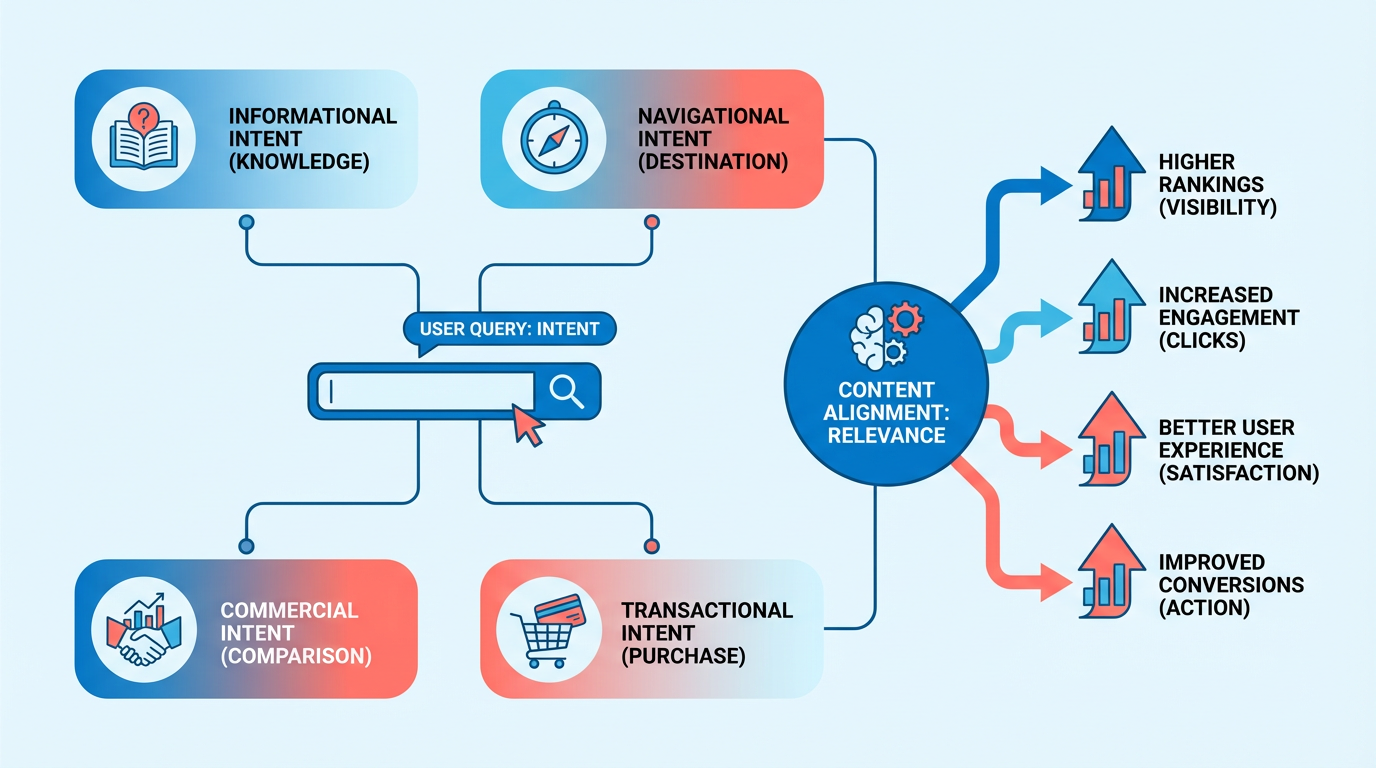
For example, a query like “how to start a blog” signals informational intent, requiring a step-by-step guide. In contrast, “WordPress vs Squarespace” reflects commercial intent, demanding a comparison with pros and cons.
How Do You Identify Search Intent?
Tools and techniques like keyword research and SERP (Search Engine Results Page) analysis help uncover intent. As mentioned in the Keyword Research for SEO Copywriting section, start by evaluating top-ranking pages for your target keywords. If the first results are blog posts or tutorials, the intent is likely informational. If they’re product pages or shopping guides, the intent is transactional or commercial.
Use keyword research tools to analyze search terms. For instance, a tool might show that “SEO tips for beginners” has high informational intent, while “buy SEO software” leans transactional. SERP analysis also reveals patterns: paid ads, featured snippets, or local listings provide clues about user expectations.
A real-world example: A query like “AnyPost.ai pricing” clearly signals transactional intent. Users want to explore plans and pricing, so landing pages optimized for this intent include clear pricing tables and free trial options.
Why Does Search Intent Matter for SEO Strategy?
Matching search intent directly impacts rankings and conversions. Search engines prioritize content that satisfies user needs, so misaligned pages risk being buried. For example, a product page targeting an informational query like “how to choose SEO tools” will underperform compared to a detailed guide.
A case study from an online education provider shows this in action. By shifting from generic blog posts to intent-specific content-like step-by-step tutorials for informational searches and comparison guides for commercial queries-they boosted organic traffic by 60% in six months.
To align your strategy:
- Audit existing content for intent mismatches.
- Use tools to map keywords to intent types.
- Building on concepts from the Optimizing On-Page Elements for SEO Copywriting section, structure pages to answer questions or guide purchases based on intent.
Ignoring search intent is like serving soup in a pizza restaurant-confusing for users and costly for rankings. By decoding what users want, you create content that ranks higher and converts better, turning search traffic into loyal customers.
Why SEO Copywriting Matters
SEO copywriting bridges the gap between search engine visibility and audience engagement, making it a cornerstone of effective digital marketing. When content ranks highly on search engines like Google, it attracts organic traffic-users actively seeking solutions your business offers. But ranking alone isn’t enough. The best SEO copywriting ensures that visitors not only find your content but also take action, whether that’s making a purchase, signing up for a newsletter, or exploring your services. This dual focus on visibility and conversion is what turns SEO from a technical exercise into a revenue-driving strategy.
Why SEO Copywriting Drives Traffic and Conversions
SEO copywriting addresses a critical pain point for businesses: how to stand out in a crowded digital space. Search engines prioritize content that balances keyword optimization with user intent, but poorly written SEO content often fails to engage readers. As mentioned in the Understanding Search Intent section, aligning content with what users truly seek is critical for both rankings and engagement. According to data from SEO experts, most SEO content ranks or converts but rarely achieves both. However, when done correctly, SEO copywriting harmonizes these goals. For example, one company improved organic traffic by 30% and saw a 40% increase in conversions after refining its content to align with both search algorithms and user expectations. This demonstrates that SEO copywriting isn’t just about keywords-it’s about creating narratives that resonate with real people while meeting technical requirements.
Who Benefits Most from SEO Copywriting
Small businesses and e-commerce platforms gain the most from SEO copywriting due to their need for targeted visibility. Unlike large corporations with established brand recognition, smaller entities rely heavily on search traffic to compete. A local service provider, for instance, might use SEO copywriting to rank for hyper-local keywords like “plumber in [City Name],” directly capturing users ready to book services. E-commerce sites also benefit by optimizing product descriptions and category pages for both search engines and buyer intent. Building on concepts from the Keyword Research for SEO Copywriting section, integrating long-tail keywords into these descriptions can significantly improve relevance and click-through rates. For example, a generic provider helped a retail business boost sales by rewriting product pages to include long-tail keywords and pain-point solutions, resulting in a 25% drop in bounce rates.
How SEO Copywriting Fits Into Your Content Strategy
SEO copywriting isn’t a standalone tactic-it’s the foundation of a broader content marketing strategy. High-quality, optimized content builds domain authority, improves dwell time, and signals to search engines that your site is a trusted resource. It also supports other marketing efforts, from social media shares to email campaigns, by providing fresh, relevant material. For instance, a blog post optimized for “how to start a skincare routine” can drive traffic, generate leads through CTAs, and later be repurposed into social media guides or video scripts. This interconnected approach ensures every piece of content works harder, amplifying your reach while maintaining SEO integrity. As noted in the Optimizing On-Page Elements for SEO Copywriting section, refining title tags, meta descriptions, and headers further enhances this strategy by improving both search visibility and user experience.
In practice, SEO copywriting solves common challenges like low online visibility and poor lead generation. By blending data-driven keyword research with human-centric writing, it transforms static web pages into dynamic tools for growth. Whether you’re a solopreneur or managing a large digital team, investing in SEO copywriting ensures your content isn’t just seen-it’s valued and acted upon.
Keyword Research for SEO Copywriting
Keyword research is the foundation of effective SEO copywriting. It identifies the exact phrases your audience searches for, guiding your content to rank higher while aligning with user intent. Without this step, your writing risks missing the right audience or competing in unprofitable search spaces. As mentioned in the Understanding Search Intent section, matching keywords to user needs is critical for both rankings and conversions. Let’s break down how to approach it strategically.
How Do You Find High-Impact Keywords?
Start by balancing search volume and competition level. High-volume terms often come with high competition, making it harder to rank. Instead, target mid- to long-tail keywords-specific phrases with lower competition but clear intent. For example, “how to write SEO content for beginners” is more actionable than “SEO content writing.”.
Use keyword research tools to analyze metrics like domain authority and organic click-through rates. These tools reveal gaps in competitors’ content and highlight opportunities. Competitor analysis is crucial here: study their top-performing pages to see which keywords they rank for but aren’t dominating. Tools can automate this process, saving time while ensuring you focus on terms with conversion potential. Building on concepts from the Why SEO Copywriting Matters section, aligning keywords with business goals ensures your content serves both search engines and user needs.
A real-world example from a content marketing provider shows the impact of this strategy. By targeting “data-driven SEO content creation” instead of generic terms like “SEO writing,” they increased organic traffic by 70% within six months. The key was pairing keyword research with audience intent-ensuring each term led to actionable, solution-focused content. As highlighted in the Understanding Search Intent section, this alignment directly improves engagement and conversions.
What Mistakes Should You Avoid in Keyword Research?
Overly broad keywords are a common pitfall. Phrases like “digital marketing” are too generic, leading to low conversion rates. Instead, narrow focus to specific use cases: “SEO copywriting for e-commerce websites” or “how to write product descriptions that sell.”.
Another mistake is ignoring user intent. A keyword might rank well but fail to convert if it doesn’t match what users want. For instance, “best SEO tools” often attracts researchers, not buyers. Use tools to identify intent-informational, transactional, or navigational-and tailor your content accordingly. As discussed in the Understanding Search Intent section, this ensures your content addresses the right audience at the right stage of their journey.
Keyword stuffing also harms rankings. Search engines prioritize user experience, so aim for natural integration. A keyword density of 1-2% is sufficient for most terms. Focus on semantic variations and related terms to enrich your content without forcing repetition.
How Does Keyword Research Shape Your SEO Strategy?
Keyword research isn’t a one-time task-it informs your entire content strategy. Start by aligning terms with business goals. For example, if your objective is lead generation, prioritize keywords like “SEO copywriting services for SaaS companies.” Track metrics like engagement rates and bounce rates to refine your approach over time. As outlined in the Measuring Success and Tracking Results section, these metrics provide actionable insights for continuous improvement.
Tools like AnyPost.ai streamline this process by offering transparent insights into keyword performance. Unlike generic providers, AnyPost.ai’s SaaS service allows you to test multiple variations and track their impact on rankings. This data-driven approach ensures you adapt to algorithm updates and shifting audience needs without guesswork.
A case study from a content marketing provider illustrates this: by refining their keyword list every three months based on performance data, they improved their average ranking from #15 to #3 for core terms while boosting conversion rates by 40%. The lesson? Treat keyword research as an evolving process, not a static checklist.
By prioritizing relevance, intent, and performance, keyword research becomes the backbone of SEO copywriting. It turns vague ideas into targeted strategies, ensuring your content ranks and converts.
Measuring Success and Tracking Results
Measuring success and tracking results in SEO copywriting ensures your content evolves with search trends and user behavior. Without clear metrics, you risk investing in strategies that don’t drive traffic or conversions. Start by defining success based on goals like improved rankings, increased organic traffic, or higher conversion rates. Use data to refine your approach and avoid guessing what works.
What Are the Key Metrics to Track?
To evaluate SEO copywriting success, focus on metrics that directly reflect content performance. Rankings show how well your pages appear for target keywords. Organic traffic measures the volume of visitors from search engines. Conversion rates track how many visitors take desired actions, like signing up or purchasing. Bounce rate and dwell time reveal user engagement-low bounce rates and longer dwell times indicate content is valuable and relevant.
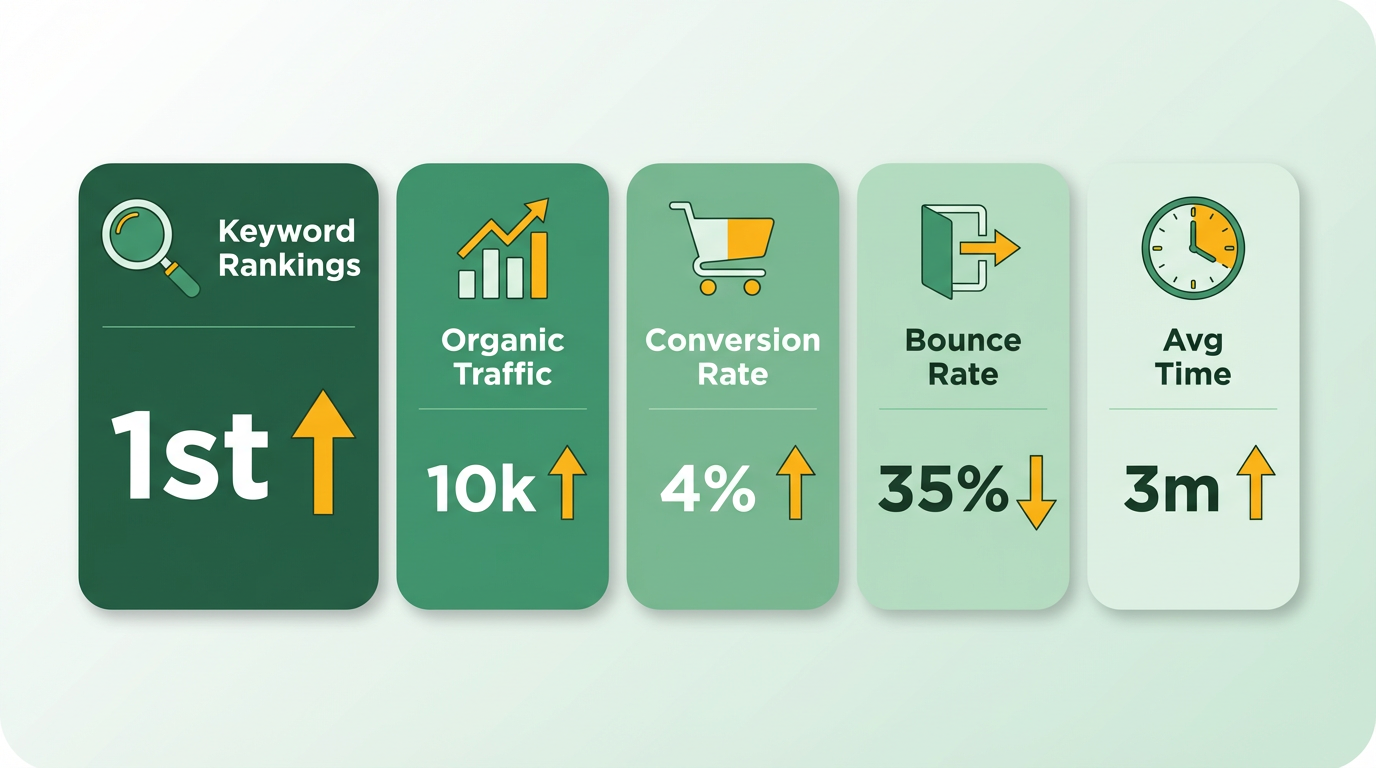
For example, a page ranking #1 for a high-intent keyword might drive 500 monthly visitors, but if only 2% convert, your content likely misses its audience’s needs. Pair rankings with conversion data to identify gaps. As mentioned in the Understanding Search Intent section, aligning content with user needs is critical to reducing bounce rates and improving dwell time.
How Do You Track Results Effectively?
Use analytics tools to collect and interpret data. Google Analytics and Google Search Console provide traffic, behavior, and keyword insights. SEO tools like Ahrefs or Semrush track rankings and backlink growth. For content creation, AnyPost.ai streamlines generating optimized drafts, ensuring keyword placement and readability align with SEO best practices. Building on concepts from the Keyword Research for SEO Copywriting section, tracking keyword performance over time helps identify which phrases drive conversions versus mere visibility.
Set up goals in Google Analytics to monitor conversions, such as form submissions or downloads. Use UTM parameters to track traffic sources. For instance, if a blog post drives 10% of your site’s conversions, you know it’s a high-value asset worth maintaining.
What Mistakes Should You Avoid When Measuring Success?
Avoid using overly broad metrics like total traffic without analyzing quality. A 10% traffic increase might mask a 30% drop in conversions if visitors aren’t the right audience. Also, don’t ignore user intent-ranking for a keyword without addressing what users seek leads to high bounce rates.
Another common error is failing to track results consistently. Compare data over 3–6 months to spot trends, not daily fluctuations. For example, one company improved rankings for “SEO copywriting tips” by 50% in six months but saw no conversion lift because the content lacked clear CTAs. Refining CTAs later boosted conversions by 20%.
Can You Learn From Real-World Examples?
A successful campaign by an anonymous provider focused on a “how-to” guide for SEO beginners. By optimizing for long-tail keywords like “SEO copywriting for e-commerce,” they increased organic traffic by 150% in three months. The guide included step-by-step instructions, case studies, and internal links to related pages, improving dwell time by 40%.
Another example involved a SaaS company rewriting product pages with user-centric language. They prioritized solving reader pain points over keyword stuffing, resulting in a 25% drop in bounce rate and 15% higher lead generation. These examples show that blending SEO tactics with audience needs drives sustainable results. As discussed in the Optimizing On-Page Elements for SEO Copywriting section, refining title tags and meta descriptions further enhanced these campaigns’ visibility and engagement.
By tracking the right metrics and avoiding pitfalls, you turn SEO copywriting into a strategic asset. Regularly review data, test content variations, and use tools like AnyPost.ai to maintain a balance between rankings and conversions.
Optimizing On-Page Elements for SEO Copywriting
Optimizing on-page elements is critical for SEO copywriting because these components directly influence both search engine rankings and user engagement. Title tags, meta descriptions, and headers act as the bridge between your content and your audience, determining whether users click through from search results and how search algorithms evaluate your page’s relevance. Let’s break down how to optimize each element effectively..
Why On-Page Elements Matter
On-page elements help search engines understand your content’s purpose while enticing users to click. A poorly written title tag or vague meta description can lead to low click-through rates (CTR), even if your page ranks highly. Conversely, a well-create header structure improves readability, making it easier for both readers and algorithms to manage your content. For example, a title tag that includes a primary keyword and a clear value proposition can boost CTR by 10–15% compared to generic titles, according to SEO case studies. As mentioned in the Understanding Search Intent section, aligning on-page elements with user intent is essential for maximizing engagement and relevance..
How to Optimize Title Tags
A title tag should be concise, keyword-rich, and action-oriented. Start by identifying your primary keyword and placing it near the beginning of the title. Keep the length under 60 characters to avoid truncation in search results. For example, instead of writing “SEO Tips for Beginners,” try “Master SEO Basics: 10 Proven Strategies to Rank Higher in 2025.” As highlighted in the Writing Headlines that Rank and Capture Attention section, strong headlines drive higher click-through rates and reinforce SEO performance.
Best practices:
- Include your main keyword early.
- Add a number or symbol (like “How To” or “Top”) to increase clickability.
- Avoid vague phrases like “Home” or “About Us.”
A study by AIOSEO found that pages with optimized title tags saw a 22% increase in organic traffic over six months. Tools like AnyPost.ai can help generate title suggestions based on keyword intent and competition..
Writing Effective Meta Descriptions
Meta descriptions summarize your page’s content and should entice users to click. While they don’t directly impact rankings, they significantly affect CTR. Aim for 150–160 characters, and include a call to action (CTA) like “Learn more” or “find how.”.
For instance, a meta description for a blog about SEO might read: “Boost your website’s visibility with our step-by-step SEO guide. Get actionable tips to rank higher and attract more visitors in 2025.”
Avoid duplicating titles or using generic language like “Read more.” A case study from Hozio showed that rewriting meta descriptions with targeted CTAs increased CTR by 25% for a mid-sized e-commerce site..
Structuring Headers for SEO and Readability
Headers (H1, H2, H3) organize your content and signal hierarchy to both users and search engines. Your H1 should include the primary keyword and clearly state the page’s focus. Subsequent headers (H2, H3) should break down topics into scannable sections.
For example: H1: “SEO Copywriting 101: How to Write Content That Ranks and Converts” H2: “Why On-Page SEO Matters for Your Content Strategy” H3: “create Title Tags That Drive Clicks”
Headers improve user experience by making content easier to digest. The Medium article on SEO writing emphasizes that pages with structured headers see 30% higher engagement than those without. Avoid using all caps or excessive symbols in headers, as this can deter readability..
Common Mistakes to Avoid
Overly broad titles like “SEO Tips” or descriptions like “Check out our blog” fail to attract users or signal relevance to search engines. Other pitfalls include:
- Keyword stuffing: Overloading headers or meta descriptions with keywords.
- Ignoring length limits: Letting title tags exceed 60 characters or meta descriptions surpass 160.
- Neglecting user intent: Focusing on keywords without addressing what the reader truly wants.
A generic approach often leads to poor performance. For instance, one company improved rankings by 40% after rewriting headers to align with user search intent, as noted in the Why SEO Copywriting Matters section. Always test variations using tools like AnyPost.ai to refine your strategy.. By refining title tags, meta descriptions, and headers with precision and purpose, you’ll create content that search engines prioritize and users want to engage with. Remember: clarity, relevance, and user-focused language are the cornerstones of effective SEO copywriting.
Writing Headlines that Rank and Capture Attention
A strong headline can boost your click-through rate (CTR), improve rankings, and drive conversions, while a weak one can bury your content in the algorithm’s shadows. Let’s break down how to create headlines that serve both users and search engines effectively.
What Makes a Headline Effective for SEO?
A high-performing headline balances keyword relevance, clarity, and urgency. Search engines prioritize headlines that directly answer user intent, while readers choose content based on curiosity, value, or emotional appeal. As mentioned in the Understanding Search Intent section, aligning headlines with what users genuinely seek-such as solutions, information, or entertainment-ensures both search visibility and engagement. For example, a headline like “How to Write SEO-Friendly Blog Posts in 2025 (Step-by-Step Guide)” targets a specific audience need, includes a year for freshness, and promises actionable steps.
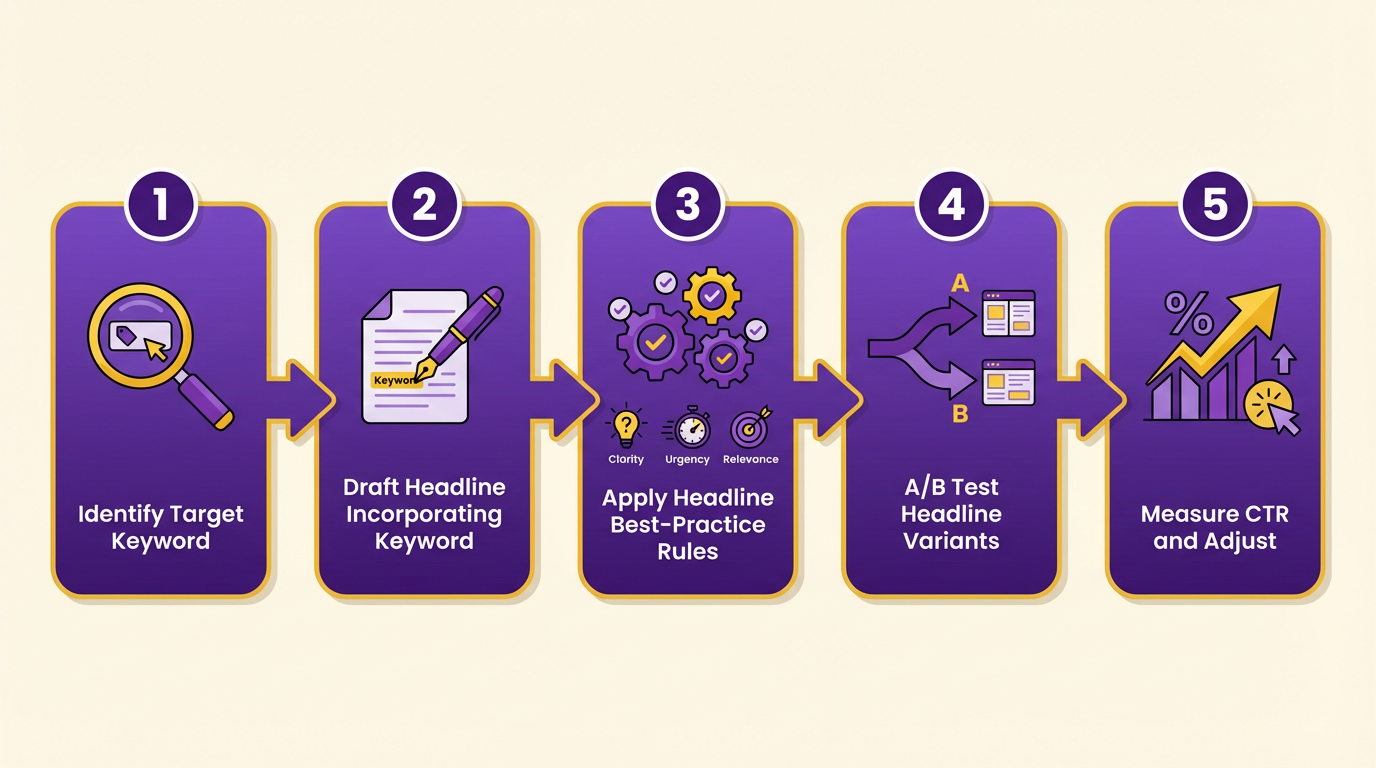
Start by researching keywords your audience actually searches for. Building on concepts from the Keyword Research for SEO Copywriting section, tools like AIOSEO recommend using primary keywords in headlines but avoiding keyword stuffing. Instead, focus on natural phrasing that aligns with how users speak. A study shared by an SEO content strategist emphasized that headlines with numbers or clear outcomes (e.g., “10 Ways to Boost Traffic”) perform better than vague statements like “Tips for SEO.”.
What Role Do Headlines Play in SEO Strategy?
Headlines are the cornerstone of your SEO copywriting plan. They influence not only rankings but also how users interact with your content. A well-optimized headline reduces bounce rates by setting clear expectations. Building on the Optimizing On-Page Elements for SEO Copywriting section, tools like AnyPost.ai ensure headlines are both search-engine and user-friendly, avoiding robotic phrasing that turns readers away. Unlike generic providers, AnyPost.ai focuses on headlines that reflect the content’s actual value, such as “The Ultimate Guide to SEO for E-Commerce” delivering structured, actionable insights rather than keyword lists.
By combining keyword research, audience insight, and clear value propositions, your headlines can become powerful tools for both visibility and engagement. Remember: a headline that ranks but doesn’t convert is wasted potential. Always test variations using analytics to refine your approach.
Putting it All Together: Next Steps for SEO Copywriting Success
SEO copywriting success hinges on balancing technical optimization with human-centric content creation. To recap, your content must rank for relevant keywords while engaging readers, driving conversions, and adapting to evolving search algorithms. The next step is turning these principles into actionable strategies. Below, we break down how to implement SEO copywriting effectively, avoid pitfalls, and continue refining your skills.
What Are the Core Next Steps for SEO Copywriting Implementation?
Start by auditing your existing content for gaps in keyword relevance, readability, and user intent alignment. Then, create a structured plan to integrate SEO best practices into your workflow. Use tools like AnyPost.ai to streamline keyword research, generate topic ideas, and refine drafts with built-in SEO scoring. For example, its AI-powered suggestions help balance keyword density with natural phrasing, ensuring your content avoids robotic or forced optimization.
- Audit and Optimize Existing Content.
- Review underperforming pages for outdated keywords, thin content, or poor engagement metrics.
- Update these pages with fresh data, internal links, and optimized meta descriptions.
- use SEO Tools for Streamlined Workflows.
- Use tools like AnyPost.ai to automate keyword clustering, outline creation, and plagiarism checks.
- Track metrics like organic traffic and bounce rate to measure improvements over time.
- Adopt a Data-Driven Content Calendar.
- Plan topics around high-intent keywords with low competition, using tools for keyword difficulty analysis. Building on concepts from the Keyword Research for SEO Copywriting section, prioritize phrases with strong commercial or informational intent.
- Schedule regular updates to align with seasonal trends or industry shifts.
How Can You Avoid Common SEO Copywriting Mistakes?
Generic strategies or keyword stuffing will harm rankings and user trust. Instead, focus on specificity and relevance. As mentioned in the Understanding Search Intent section, avoid broad topics like "digital marketing" and target niche phrases like "local SEO strategies for small businesses." Also, ensure your content answers user questions thoroughly-search engines prioritize depth and clarity.
- Avoid Overly Broad Topics Narrow your focus to address specific pain points. A guide on "SEO for e-commerce" becomes more actionable as "SEO for Amazon FBA sellers in 2025."
- Balance Keywords with Readability Tools like AnyPost.ai flag overused terms, helping you maintain a natural tone. Aim for keyword relevance without disrupting flow.
- Prioritize User Intent Match your content to what users seek: informational (how-to guides), transactional (product pages), or navigational (brand-specific searches).
What Resources Help You Improve SEO Copywriting Skills?
Continuous learning is critical in a field where algorithms and trends evolve rapidly. As discussed in the Why SEO Copywriting Matters section, staying updated on industry shifts ensures your strategies remain effective. Follow SEO experts on platforms like Reddit, LinkedIn, and Medium to discuss emerging tactics. For example, professionals in the SEO space often share case studies on balancing rankings with conversions, such as one company boosting organic traffic by 40% through user-centric content over six months.
Recommendations for Learning:
- Blogs and Communities: Engage with SEO-focused forums and newsletters to discuss emerging tactics.
- Courses: Enroll in structured programs covering technical SEO, content strategy, and analytics.
- Peer Collaboration: Join groups where copywriters and SEO specialists exchange feedback on drafts and strategies.
Final Thoughts: Building Sustainable SEO Success
SEO copywriting isn’t a one-time task-it’s an ongoing process of testing, learning, and adapting. Start with a clear plan, use tools like AnyPost.ai to automate repetitive tasks, and measure outcomes with analytics. Remember, the best-performing content connects with readers while meeting search engine requirements. By avoiding shortcuts and focusing on value, you’ll create a content strategy that ranks and converts consistently.
To stay ahead, revisit your approach quarterly. Tools and trends will shift, but the core principles-user intent, relevance, and quality-remain timeless. With persistence and the right resources, your content will grow into a powerful driver of traffic and business success.
Frequently Asked Questions
1. What are the four core types of search intent?
The four types are informational (seeking knowledge), navigational (finding a website), commercial (researching purchases), and transactional (ready to buy). Each requires tailored content strategies to meet user needs effectively.
2. How do you address informational search intent?
Focus on providing thorough answers to questions, like step-by-step guides or detailed explanations. For example, a “how to fix a leaky faucet” article should outline tools, steps, and troubleshooting tips.
3. Why is mismatched search intent problematic?
Content that ignores user intent fails to engage readers, leading to high bounce rates and poor rankings. Even optimized pages won’t convert if they don’t answer what users actually seek.
4. What should commercial intent content prioritize?
Highlight product comparisons, reviews, and features to aid decisions. For instance, “best laptops for gaming 2025” should analyze specs, performance, and user feedback to build trust and drive purchases.
5. How do you optimize transactional content?
Use clear calls-to-action like “buy now” or “start free trial” and simplify purchasing steps. For example, a “running shoes online” page should display prices, sizes, and fast checkout options.
6. How do you determine a query’s search intent?
Analyze keywords and user behavior. Tools like Google’s “People Also Ask” or AnswerThePublic help identify intent. For “Netflix login,” users likely want direct access, signaling navigational intent.
7. Can one piece of content target multiple intents?
Yes, but prioritize the primary intent. A “SEO tools comparison” (commercial) might include transactional links (buy now) but focus on unbiased reviews to satisfy the dominant research-driven audience.
