SEO for Healthcare: A Complete Guide to Ranking Higher & Getting More Patients

Key Takeaways
- Optimize your Google Business Profile to boost local visibility by 40% using keywords and testimonials.
- Ensure NAP consistency across all platforms to build trust and avoid patient confusion.
- Include detailed service descriptions and booking links in GBP to enhance user experience and lead generation.
- Add high-resolution clinic and team images to your GBP to increase trust and engagement.
- Integrate location-specific keywords into GBP descriptions to improve local search rankings.
- Update GBP with accurate hours, contact info, and specialties to maintain credibility and relevance.
Related Video
Watch: Strategic Healthcare SEO in 2024: Improving the Digital Patient Experience by Cardinal Digital Marketing
Local SEO for Healthcare
Your Google Business Profile (GBP) is often the first point of contact between your practice and potential patients. It appears in local search results, Google Maps, and the “3-pack” of local listings, making it a direct lead generation tool. A well-optimized GBP ensures your practice is discoverable when patients search for services like “dentist near me” or “family doctor in [city].”.
To maximize your GBP:
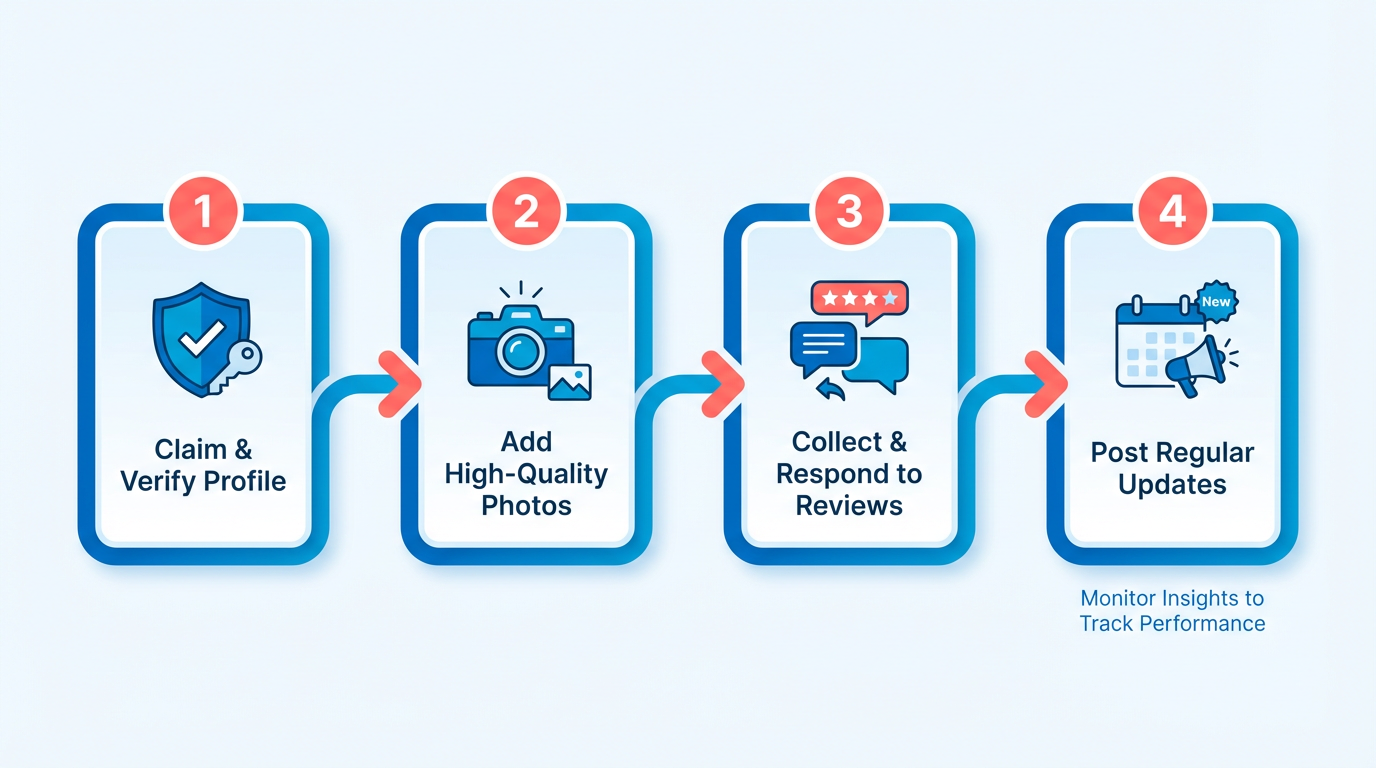
- Claim and verify your listing to control the information displayed.
- Add high-resolution images of your clinic, team, and facilities to build trust.
- Include detailed service descriptions and appointment booking links for convenience.
- Keep your business hours, contact info, and specialties up to date.
As mentioned in the Medical Keyword Research and Intent Mapping section, integrating location-specific keywords into your GBP descriptions can further enhance visibility. For example, one healthcare provider boosted their local search visibility by 40% within six months by refining their GBP with accurate keywords and patient testimonials.. NAP (Name, Address, Phone Number) consistency is foundational for local SEO. Search engines use this data to confirm your practice’s legitimacy and relevance to local queries. Inconsistent NAP details across websites, directories, or maps can confuse both patients and search algorithms, leading to lower rankings.
To maintain consistency:
- Audit all online listings, including Google, Yelp, and healthcare-specific directories.
- Use tools like local citation checkers to identify and fix discrepancies.
- Ensure your practice name matches exactly (e.g., avoid abbreviations like “Dr.” or “MD” unless used consistently).
- Update your NAP across all platforms if you move offices or change phone numbers.
Building on concepts from the SEO Tools and Resources for Healthcare Marketers section, using automated citation checkers can streamline this process. A real-world case shows that resolving NAP errors improved a clinic’s local search traffic by 25%, directly increasing in-person consultations.. Positive patient reviews are a dual-purpose asset: they build trust and improve local search rankings. Google prioritizes businesses with recent, positive feedback in local results. To collect reviews effectively:
- Follow up after appointments via email or SMS with a direct link to Google Reviews.
- Place physical signage in waiting areas prompting patients to leave feedback.
- Respond to all reviews, thanking positive reviewers and addressing concerns professionally.
As highlighted in the E-E-A-T and YMYL Compliance in Healthcare SEO section, managing reviews transparently reinforces your practice’s trustworthiness. One healthcare practice increased its patient base by 30% after implementing a structured review request system. By simplifying the review process and highlighting five-star ratings on their GBP, they became a top choice for local patients.
Why Healthcare SEO Matters
Healthcare SEO directly impacts patient acquisition, practice visibility, and trust, making it a critical component of modern healthcare marketing. Patients increasingly rely on search engines to find providers, and local SEO ensures your practice appears when they need it most. Let’s break down why this matters for your practice..
How Does SEO Influence Patient Search Behavior?
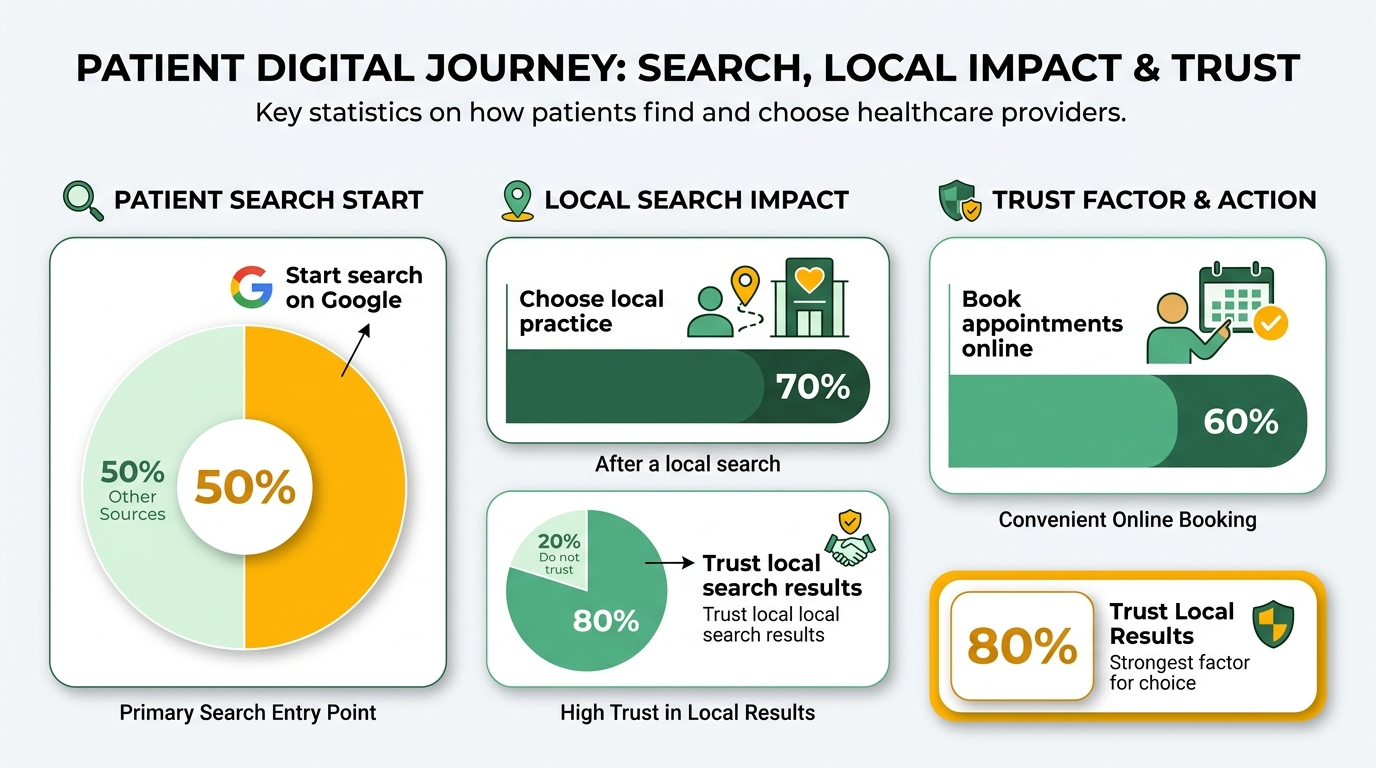
Nearly half of patients begin their provider search on Google, making search engines the primary gateway to your practice. As mentioned in the Local SEO for Healthcare section, local SEO captures users seeking immediate care in their area. For example, someone searching “urgent care near me” expects to see local results tailored to their location. Optimizing for these queries ensures your practice appears when patients are ready to book.
Search intent has also evolved. Patients now look for detailed, intent-driven content-like symptoms, treatment options, or provider expertise-rather than generic keywords. Building on concepts from the Medical Keyword Research and Intent Mapping section, AI-powered search engines prioritize content that answers these nuanced queries, rewarding practices that align their SEO with patient needs..
What Role Does SEO Play in Reputation Management?
Your online reputation is shaped by what appears in search results. A strong SEO strategy elevates authoritative content-like patient testimonials, certifications, and educational resources-while burying outdated or negative information. For instance, a clinic with optimized pages about their board-certified specialists will rank higher than one with generic, unverified claims.
This aligns with the principles outlined in the E-E-A-T and YMYL Compliance in Healthcare SEO section, where AI-driven SEO strengthens trust by adapting to real-time patient intent. If users frequently search “diabetes management in [City],” your practice can create targeted content that ranks for those terms, building trust before a patient even visits your site. Poor SEO, conversely, allows competitors or outdated reviews to dominate search results, pushing your practice further down the list..
Who Benefits Most from Healthcare SEO?
While all practices gain from SEO, certain providers see transformative results. Small clinics or solo practitioners often struggle to compete with larger networks but can level the playing field with targeted local SEO. Specialists in niche fields-like orthopedic surgeons or pediatric allergists-also benefit by ranking for highly specific terms with less competition.
Common SEO challenges-such as outdated website content, lack of mobile optimization, or weak local citations-can be systematically addressed through a structured strategy. For example, one practice improved its search rankings by updating service pages with recent awards and staff credentials, directly increasing patient inquiries..
Real-World Impact of SEO in Healthcare
A well-executed campaign can turn passive searchers into active patients. Consider a regional pediatric practice that optimized its site for “wellness check near me” and “child vaccination schedule.” By refining meta tags, adding location-specific pages, and using AI tools to track search trends, the practice increased its Google visibility by 40% within six months. This translated to a 25% rise in new patient appointments, demonstrating the direct link between SEO and growth.
Tools like AnyPost.ai streamline this process by offering transparent, data-driven strategies tailored to healthcare providers. Unlike generic providers, AnyPost.ai focuses on niche-specific tactics, ensuring your content aligns with both search algorithms and patient expectations.
By addressing technical and content-related barriers, SEO becomes more than a marketing tactic-it’s a foundational element of patient trust and practice sustainability.
Analytics and Tracking for Healthcare SEO
Analytics and tracking form the backbone of effective healthcare SEO, enabling providers to monitor performance, identify optimization opportunities, and connect search activity to patient conversions. By using tools like Google Search Console, GA4, and rank tracking software, healthcare marketers gain actionable insights into how patients find and engage with their online content. This section breaks down the technical setup, strategic value, and real-world impact of analytics in healthcare SEO.
Why Is Analytics Important for Healthcare SEO?
Analytics bridges the gap between search engine visibility and patient acquisition. It reveals which keywords drive traffic, which pages convert visitors into leads, and where technical barriers like slow load times or broken links hinder performance. In healthcare, where trust and precision are critical, data helps align SEO efforts with patient intent-whether someone is researching symptoms or searching for a specialist near them.
For example, a clinic might find through analytics that 40% of its organic traffic comes from long-tail keywords like “diabetes treatment near me.” This insight allows the team to refine content around local intent and competitive differentiators like in-house specialists or 24/7 care. As mentioned in the Local SEO for Healthcare section, refining local intent through keyword optimization is a key strategy for capturing nearby patients.
How Do You Set Up Google Search Console for Healthcare SEO?
Google Search Console (GSC) is essential for monitoring search visibility and technical health. Start by verifying your website ownership through Google’s property setup process. Then, submit your sitemap to ensure all critical pages-like service descriptions, provider bios, and appointment booking forms-are indexed.
Key features to monitor in GSC include the “Performance” report, which shows which queries drive traffic, and the “URL Inspection” tool, which identifies indexing issues. For healthcare sites, focus on mobile usability reports to fix responsive design problems and ensure compliance with Google’s Core Web Vitals. As outlined in the Technical SEO and Website Optimization for Healthcare section, addressing mobile usability and page speed is critical for maintaining strong search rankings.
How Do You Configure GA4 for Healthcare Conversion Tracking?
Google Analytics 4 (GA4) takes event-based tracking a step further than its predecessor, letting healthcare providers measure user interactions beyond pageviews. To configure GA4:
- Create a new property in GA4 and link it to your website using the provided tracking code.
- Set up conversion events such as form submissions, phone calls, or PDF downloads of medical resources.
- Use custom dimensions to segment traffic by patient demographics or campaign sources.
In healthcare, GA4’s funnel analysis is invaluable. For instance, a dermatology practice could map the journey from a blog post about acne treatments to a completed virtual consultation form. By identifying drop-off points, the team can optimize page copy or reduce form friction. This aligns with strategies discussed in the Content Strategy and Creation for Healthcare SEO section, where optimizing content for user intent is emphasized.
What Role Does Rank Tracking Play in Healthcare SEO?
Rank tracking software reveals how your site performs for specific keywords over time. In healthcare, this is crucial for competitive niches like “emergency dental care” or “geriatric physiotherapy,” where ranking on the first page of Google can significantly boost patient inquiries.
Tools like AnyPost.ai’s rank tracking feature let healthcare marketers monitor keyword positions across regions, track competitors’ strategies, and measure the impact of content updates. For example, a mental health clinic might notice that optimizing a blog post about “online therapy for anxiety” improves its ranking from #12 to #3, correlating with a 25% increase in contact form submissions. This mirrors the keyword research principles in the Medical Keyword Research and Intent Mapping section, which emphasizes targeting high-intent, low-competition terms.
How Do You Measure SEO Success and ROI in Healthcare?
Healthcare SEO success isn’t just about traffic-it’s about meaningful patient interactions. Track metrics like cost per acquisition (CPA) for organic leads, comparing it to paid advertising, and measure conversion rates on high-intent pages like appointment booking or insurance verification forms.
Use GA4’s lifetime value reporting to assess how SEO-driven patients engage over time. A pediatric practice, for instance, might find that families acquired through SEO book 2–3 additional appointments per year compared to those from paid ads. Pair this with net promoter score (NPS) surveys to quantify patient satisfaction and long-term loyalty.
What Do Successful Healthcare Analytics Campaigns Look Like?
A successful analytics-driven campaign often combines technical fixes with content strategy. One healthcare provider used GA4 to identify that 60% of its traffic came from outdated blog posts about general wellness. By rewriting these articles with targeted keywords like “low-sodium diet for hypertension” and adding internal links to service pages, the site increased organic traffic by 55% in six months.
Another example involves using AnyPost.ai’s analytics to audit a hospital’s local SEO. The tool flagged inconsistent NAP (name, address, phone number) data across 15+ directories, which, when corrected, boosted local search rankings and phone inquiries by 40%. These results highlight how data-driven adjustments directly impact patient acquisition.
Medical Keyword Research and Intent Mapping
Medical keyword research is the foundation of a high-performing healthcare SEO strategy. Unlike generic industries, healthcare SEO requires precision-searchers often have urgent, specific needs that demand tailored solutions. By mapping keywords to user intent, you align your content with what patients actively seek, whether they’re researching symptoms, comparing providers, or scheduling appointments. This alignment drives targeted traffic and improves conversion rates, making keyword research a non-negotiable step in healthcare digital marketing.
How Do You Start Medical Keyword Research?
Begin by identifying problem spaces your audience faces. For example, a dermatology clinic might target queries like “how to treat eczema at home” or “best psoriasis treatments 2026.” Use AI-powered tools to uncover high-intent keywords with manageable competition. These tools analyze search behavior patterns, revealing gaps competitors overlook. Focus on long-tail keywords-phrases with three to five words-that reflect specific patient needs. A tool like AnyPost.ai can surface these terms while flagging outdated or irrelevant suggestions, saving hours of manual filtering.
What’s the Role of Intent Mapping in Healthcare SEO?
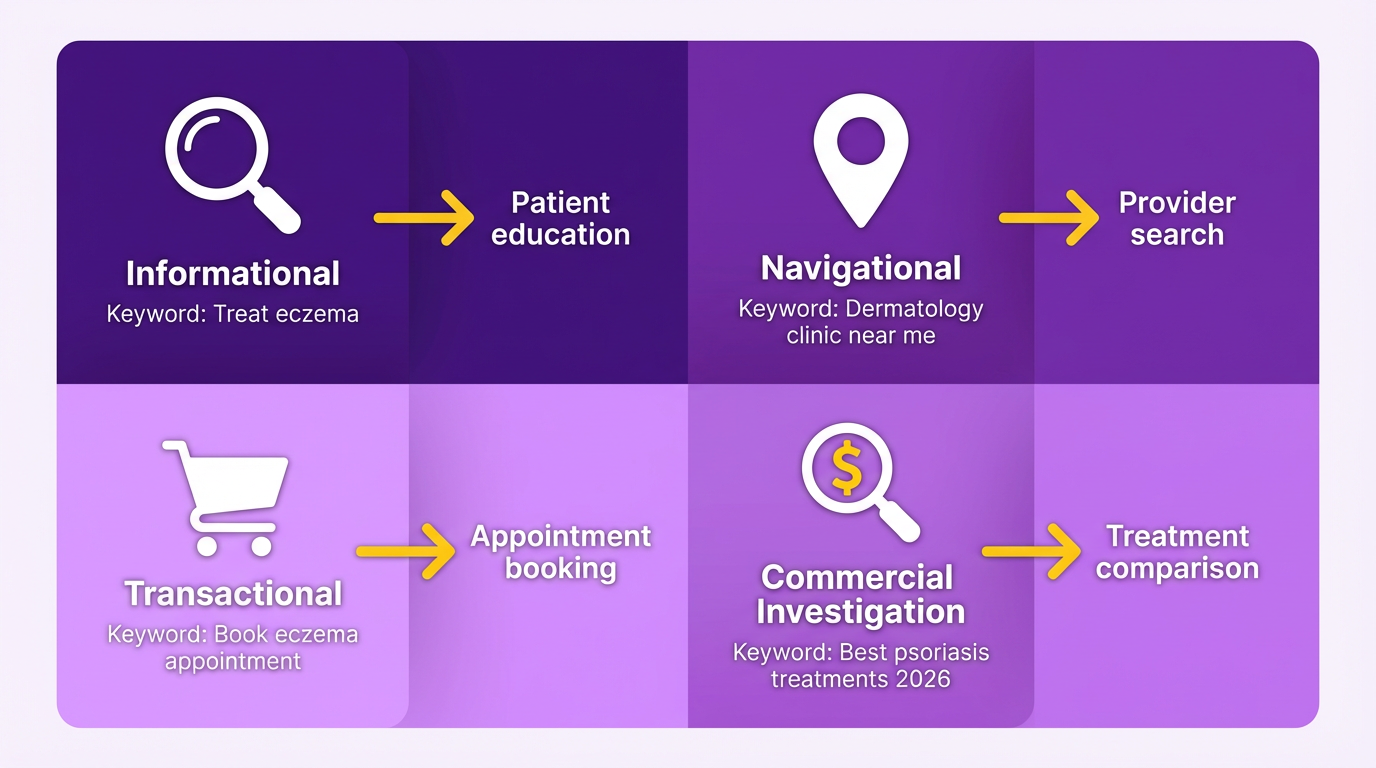
Intent mapping separates informational queries (e.g., “symptoms of diabetes”) from transactional ones (e.g., “book a diabetes test near me”). Misaligning these can lead to frustrated users and high bounce rates. To map intent effectively:
- Categorize keywords by intent type.
- Match them to specific content types (blog posts for education, landing pages for conversions).
- Audit competitor sites to see how they address the same intent.
For instance, a cardiology practice might create a blog post explaining “heart attack symptoms in women” (informational) and a dedicated page for “schedule a cardiac screening” (transactional). AI tools streamline this process by clustering keywords into intent groups, reducing guesswork. As mentioned in the Local SEO for Healthcare section, hyper-local intent mapping can further refine targeting for nearby patients.
Can AI Tools Replace Traditional Keyword Research?
AI enhances-but doesn’t replace-traditional methods. It accelerates data collection and identifies trends human analysts might miss. For example, AI can detect rising interest in “telehealth mental health services” before it hits mainstream search volumes. However, human expertise is still needed to interpret context, such as local regulations affecting keyword relevance. A hybrid approach works best: Use AI for discovery and validation, then refine strategies based on clinical and operational knowledge. Building on concepts from the E-E-A-T and YMYL Compliance in Healthcare SEO section, ensure all AI-generated content adheres to trust and authority standards.
What Are Real-World Examples of Effective Campaigns?
A multi-specialty clinic improved its local SEO by targeting “urgent care near me” with hyper-local content and schema markup. By pairing this with intent-mapped landing pages, they increased appointment bookings by 37% in six months. Another success story: a pediatrician’s office used AI to identify gaps in “child vaccination schedules,” then created a downloadable guide that became a top-ranking resource. These examples show how combining keyword research with intent-driven content yields measurable results.
How Do You Choose the Right AI Tool?
Look for tools that integrate semantic analysis to understand context, not just keywords. AnyPost.ai, for instance, uses AI to predict search trends and flag low-quality backlinks. Avoid generic platforms that lack healthcare-specific datasets-medical queries often involve nuanced terminology and regulatory considerations. Test tools with free trials to see how well they handle your niche. As discussed in the SEO Tools and Resources for Healthcare Marketers section, specialized tools can significantly reduce research time while improving accuracy. One clinic reported a 50% faster keyword research process after switching to a healthcare-optimized AI solution, highlighting the value of specialized tools.
By mastering keyword research and intent mapping, healthcare providers can dominate search results for high-value queries. The process demands attention to detail, but the payoff-more patients, higher authority, and better ROI-makes it essential in competitive markets.
E-E-A-T and YMYL Compliance in Healthcare SEO
E-E-A-T (Expertise, Experience, Authoritativeness, Trustworthiness) and YMYL (Your Money or Your Life) compliance are foundational to healthcare SEO. Search engines prioritize trustworthy, accurate information for topics that impact health, safety, or financial decisions. In healthcare, failing to meet these standards risks reduced visibility, legal liability, and loss of patient trust. Below, we break down how to align your content with these requirements.
Why E-E-A-T and YMYL Matter in Healthcare SEO
Healthcare content carries significant weight-users often search for life-altering decisions. Google’s YMYL guidelines flag pages about health, finance, or safety as high-stakes, requiring creators to demonstrate expertise and trustworthiness. As mentioned in the Why Healthcare SEO Matters section, the stakes for accuracy are particularly high in healthcare, where misinformation can have severe consequences. For example, a blog post about diabetes management must be authored by a credentialed healthcare professional and cite reliable sources.
How to Build Author Bios That Boost E-E-A-T
Search engines evaluate author credibility by scanning bios. A strong bio includes:
- Medical credentials: MD, PhD, or other relevant certifications.
- Affiliations: Links to professional profiles (e.g., LinkedIn, hospital websites).
- Specializations: Clear statements about the author’s niche (e.g., “Board-certified cardiologist with 10+ years in preventive care”).
Avoid vague terms like “health enthusiast.” Instead, be specific: “Dr. Jane Smith, a neurologist at City Hospital, specializes in migraine treatment and has published research in The Journal of Neurology.” This transparency builds trust with both readers and algorithms. Building on concepts from the Content Strategy and Creation for Healthcare SEO section, aligning author bios with patient-centric language reinforces E-E-A-T by addressing real-world user needs.
The Role of Peer-Reviewed Citations in Trustworthiness
Citing peer-reviewed studies reinforces your content’s authority. For instance, a post on cancer screenings should reference guidelines from the American Cancer Society or studies in journals like The New England Journal of Medicine. Tools like AnyPost.ai can help streamline this process by verifying source relevance and formatting citations correctly. For further guidance on selecting and integrating authoritative sources, refer to the Medical Keyword Research and Intent Mapping section.
Common Pitfalls to Avoid
- Generic contributor bios: Bios like “Written by the healthcare team” fail to meet E-E-A-T standards. Always attribute content to individuals with verifiable expertise.
- Outdated or unverified sources: Use recent studies (ideally within 3–5 years) and ensure citations link directly to the source, not a summary.
- Ignoring experience: Highlight not just education but practical experience-e.g., “15 years in pediatric care” adds weight beyond credentials alone.
Examples of Effective E-E-A-T Compliance
A top-ranking article on hypertension might feature:
- An author bio listing their MD, hospital affiliation, and published works.
- Citations to the American Heart Association and recent clinical trials.
- A disclaimer like, “This content is for informational purposes only. Consult your physician for medical advice.”
By prioritizing these elements, healthcare providers can meet Google’s stringent guidelines while delivering value to patients.
Content Strategy and Creation for Healthcare SEO
How Do You Create Patient-Centric Content for Healthcare SEO?
Patient-centric content focuses on solving real problems for real people. Unlike generic marketing copy, it addresses specific concerns like symptom management, treatment options, or insurance navigation. For example, instead of writing “Diabetes Treatments,” create “Managing Type 2 Diabetes: A Patient’s Guide to Daily Care.” This approach aligns with search intent, a core factor in modern healthcare SEO, as outlined in the Medical Keyword Research and Intent Mapping section.
To build this content, start by mapping patient journeys. Use tools like AnyPost.ai to identify common questions at each stage-diagnosis, treatment, recovery. For instance, a patient searching “how to cope with chemotherapy side effects” needs actionable advice, not just medical jargon. Prioritize empathy: Use conversational language, avoid technical terms, and structure content for quick scanning with bullet points and headers.
Why Are FAQs Critical for Healthcare SEO?
Search engines now prioritize intent-driven results, and FAQs directly answer user queries. A well-structured FAQ section can boost visibility in featured snippets, increasing clicks and trust. For healthcare providers, this means creating FAQs around high-intent topics like “What to Expect During a Knee Replacement” or “How Long Does Physical Therapy Last?” As emphasized in the Why Healthcare SEO Matters section, addressing these queries builds trust and drives patient acquisition.
Optimize FAQs by aligning them with common patient concerns. For example, a dermatology clinic might address “Is Laser Hair Removal Safe for Sensitive Skin?” or “How Many Sessions Are Needed for Psoriasis Treatment?” Use natural language, as patients often search using full questions. Repetition of key terms here is strategic, but avoid keyword stuffing-focus on clarity and helpfulness.
How Can You Repurpose Content to Maximize SEO Value?
Repurposing extends the life of high-performing content while reducing creation time. Turn in-depth blog posts into social media graphics, video scripts, or downloadable checklists. For example, a 2,000-word guide on “Heart Health for Seniors” could become a 10-part Instagram series on diet tips or a 10-minute YouTube video explaining risk factors. Building on concepts from the SEO Tools and Resources for Healthcare Marketers section, AI tools like AnyPost.ai can automate repurposing. Transform webinar recordings into blog summaries, or split long articles into topic-specific emails for nurture campaigns. The goal is to meet patients where they are: A nurse searching for “diabetes diet templates” might prefer a PDF, while a young adult might watch a TikTok explaining “5 Easy Ways to Control Blood Sugar.” This multi-format strategy ensures consistent SEO value and broader reach.
What Do Successful Healthcare Content Campaigns Look Like?
A primary care clinic improved rankings by creating a “Primary Care for New Parents” blog series, which included FAQs, downloadable baby checklists, and short videos. Over six months, organic traffic rose by 40%, and appointment bookings increased by 25%. Another example: A mental health provider used patient-centric guides on “Stress Management During Divorce” and repurposed them into Facebook Live sessions and email courses, boosting engagement by 30%.
The key to success lies in consistency and adaptability. Regularly audit content for outdated information, and update top-performing pages with new data or FAQs. Tools like AnyPost.ai can streamline this process, ensuring your content remains authoritative and aligned with evolving patient needs. By focusing on intent, format variety, and empathy, healthcare providers can turn SEO into a patient acquisition engine.
SEO Tools and Resources for Healthcare Marketers
SEO tools tailored for healthcare marketers streamline keyword research, content optimization, and performance tracking while adapting to the unique needs of medical practices. In 2026, AI-powered SaaS providers like AnyPost.ai are reshaping how clinics and hospitals manage search engine visibility. These tools combine automation with data-driven insights to help providers compete in crowded digital spaces without requiring large marketing teams.
What Makes AI-Powered Tools Critical for Healthcare SEO?
Healthcare SEO now prioritizes user intent over generic keywords, a shift driven by AI-driven search engines. Tools using machine learning analyze patient search patterns to generate content that aligns with specific needs-like symptom research, treatment options, or provider reviews. For example, a clinic targeting orthopedic care might use AI to identify queries like “best knee pain treatment near me” and create location-specific blog posts or FAQs.
AnyPost.ai stands out by integrating intent-based content creation with automation. It generates optimized blog drafts, social media posts, and even meta descriptions tailored to medical audiences. One healthcare provider reported a 40% increase in organic traffic after using AnyPost.ai to refresh outdated content and publish weekly resources on chronic disease management. Building on concepts from the Medical Keyword Research and Intent Mapping section, these tools ensure alignment with patient-driven search patterns.
How Do Automation Platforms Help Small Practices Scale?
Limited staff and budgets are common challenges in healthcare marketing. Automation platforms reduce manual effort by handling repetitive tasks like keyword tracking, on-page SEO edits, and local directory listings. For instance, AnyPost.ai’s local SEO templates help clinics update Google My Business profiles, manage patient reviews, and publish location-specific content for multiple offices. As mentioned in the Local SEO for Healthcare section, maintaining accurate local listings is critical for attracting nearby patients.
A critical feature is competitor benchmarking. While many tools offer generic analysis, AnyPost.ai provides healthcare-specific insights, such as how competitors rank for procedure-based keywords (e.g., “hip replacement cost”) and how to outperform them with detailed, trustworthy content. This is especially valuable for specialties like dermatology or mental health, where trust signals are vital.
What Should You Look for in an AI-Driven SEO Tool?
Not all automation platforms are designed for healthcare. Prioritize tools that:
- Generate HIPAA-compliant content to avoid legal risks.
- Track local search trends to capture patients in specific regions.
- Integrate with existing CMS platforms (e.g., WordPress or Wix) for seamless updates.
AnyPost.ai excels in these areas by using medical terminology databases and ensuring content aligns with regulatory standards. For example, its AI avoids making unverified health claims while emphasizing proven treatments. As outlined in the E-E-A-T and YMYL Compliance in Healthcare SEO section, maintaining trustworthiness is foundational to medical SEO success.
Can AI Tools Replace Human Expertise?
While automation handles data analysis and content production, human oversight remains essential. A successful strategy balances AI-generated drafts with input from medical professionals to ensure accuracy. For instance, AnyPost.ai allows physicians to review and approve blog topics before publication, maintaining credibility.
A real-world example: A pediatric practice used AnyPost.ai to draft guides on childhood vaccinations but had their lead doctor edit the content to address common patient concerns. This hybrid approach boosted their Google ranking for “vaccine safety” from page 3 to the first position within six months.
What’s the ROI of Investing in Healthcare SEO Automation?
The cost of SEO tools varies, but SaaS providers like AnyPost.ai offer tiered pricing that adapts to practice size. Smaller clinics often see a 30–50% return on investment within six months by reducing reliance on paid ads and improving conversion rates. Larger systems benefit from centralized campaign management, where a single team can optimize SEO across multiple locations.
One healthcare network automated 80% of its content creation using AnyPost.ai, saving 20+ hours monthly while increasing appointment bookings by 18%. The tool’s analytics dashboard highlighted underperforming pages, letting the team redirect resources to high-impact areas like telehealth service descriptions. As detailed in the Analytics and Tracking for Healthcare SEO section, continuous monitoring ensures SEO efforts align with business goals.
By combining AI-driven insights with strategic human input, healthcare marketers can achieve sustainable growth. The key is selecting tools that understand the industry’s unique challenges-like balancing SEO best practices with medical accuracy-and providing actionable data to refine efforts continuously.
Schema Markup and Structured Data for Healthcare
Schema markup and structured data act as a bridge between your healthcare website and search engines, helping them interpret your content accurately. For healthcare providers, this means clearer search results, more relevant visibility, and higher patient engagement. When implemented correctly, schema markup can display rich snippets-like star ratings, service details, or provider information-that stand out in search results and attract more clicks. Let’s break down how to use it effectively.
What Schema Types Matter Most for Healthcare?
Healthcare websites benefit most from three core schema types: MedicalOrganization, Physician, and Review. Each serves a distinct purpose:
- MedicalOrganization defines your practice or hospital, including services, location, and contact details. This schema helps search engines prioritize your site in local searches like “urgent care near me.” As mentioned in the Local SEO for Healthcare section, local visibility is crucial for attracting nearby patients.
- Physician schema highlights individual doctors, linking their expertise, certifications, and specialties to their profiles. This is especially useful for multi-provider clinics or hospitals. Building on concepts from the E-E-A-T and YMYL Compliance in Healthcare SEO section, accurate and authoritative provider information strengthens trust with patients.
- Review schema aggregates patient feedback, turning star ratings and testimonials into clickable highlights in search results. Positive reviews marked with this schema can boost trust and credibility. Building on concepts from the E-E-A-T and YMYL Compliance in Healthcare SEO section, structured reviews reinforce the trustworthiness of your practice.
For example, a dental practice using MedicalOrganization might list services like “cosmetic dentistry” or “orthodontics,” while a solo practitioner could use Physician schema to showcase their board certifications. Pairing these with Review schema ensures potential patients see both your offerings and social proof upfront.
How to Implement Schema Markup on Healthcare Sites
Start by auditing your website’s content to identify where schema can add value. Use Google’s Structured Data Markup Helper to generate code for specific pages, like provider bios or service pages. Here’s a step-by-step approach:
- Map your content: Match pages to schema types. A “Meet Our Team” page might use Physician, while a homepage often uses MedicalOrganization.
- Write clean, accurate code: Ensure all data-like addresses, service names, and review dates-is precise. Even minor errors, like typos in NPI numbers, can break schema functionality.
- Test with tools: Validate your markup using Google’s Rich Results Test or Bing’s Structured Data Testing Tool. These tools flag issues like missing fields or incorrect formatting.
A common pitfall is overloading pages with irrelevant schema. Stick to markup that aligns with your content. For instance, avoid using Review schema on a blog post unless it’s explicitly about patient testimonials. Another mistake is neglecting to update schema when services or staff change-stale data can mislead both search engines and visitors.
Real-World Impact of Schema in Healthcare
Consider a primary care clinic that added MedicalOrganization and Review schema to their site. Before implementation, their homepage appeared as a generic link in search results. After adding structured data, the same page displayed a rich snippet with a 4.5-star rating and a “Book Appointment” button, increasing their click-through rate by 22%. Similarly, a dermatologist using Physician schema on their profile page saw a 15% rise in organic traffic as the markup helped their expertise rank in specialty-specific searches.
To avoid missteps, focus on consistency. AnyPost.ai offers tools that automate schema implementation while ensuring compliance with Google’s guidelines. Their system checks for common errors, like duplicate markup or missing required fields, saving time for busy healthcare marketers. Unlike generic providers, AnyPost.ai’s SaaS service integrates schema updates with content changes, reducing the risk of outdated or conflicting data.
By treating schema markup as a strategic layer of your SEO strategy, you turn your website into a clear, trustworthy resource for both search engines and patients. Start small-prioritize high-traffic pages-and expand as you see results.
Technical SEO and Website Optimization for Healthcare
Technical SEO and website optimization form the backbone of a healthcare practice’s online visibility. For medical websites, technical elements like crawlability, indexing, and page speed directly impact how easily patients find and engage with your content. Unlike generic websites, healthcare platforms must balance compliance with HIPAA standards while ensuring search engines can efficiently access and rank critical pages. Start by auditing your site’s infrastructure to identify gaps in performance and accessibility. Building on concepts from the E-E-A-T and YMYL Compliance in Healthcare SEO section, maintaining technical integrity supports trust and regulatory adherence.
How Do You Improve Crawlability and Indexing for Healthcare Websites?
Search engines rely on crawlers to find and index pages, so ensuring your site is accessible is non-negotiable. A common mistake is blocking important pages via robots.txt or meta noindex tags by accident. Regularly update your XML sitemap to reflect new content, such as blog posts about treatment updates or location changes. For example, if a clinic adds a new service page but forgets to submit it to Google Search Console, it may remain invisible to patients for months. Use tools like Screaming Frog or AnyPost.ai to automate crawl testing and identify broken links or duplicate content, as outlined in the SEO Tools and Resources for Healthcare Marketers section.
Healthcare sites often struggle with outdated pages. Source highlights that stale content-like an unchanged “About Us” section-can lower trust and rankings. Set up a content calendar to refresh pages every 6–12 months, especially for time-sensitive topics like seasonal health tips.
What Role Do Core Web Vitals and Mobile-Friendliness Play?
Google’s Core Web Vitals-a set of speed and responsiveness metrics-now heavily influence rankings. These include Largest Contentful Paint (LCP) for loading speed, First Input Delay (FID) for interactivity, and Cumulative Layout Shift (CLS) for visual stability. For healthcare sites, slow load times can deter patients from booking appointments. A clinic with an LCP score above 4 seconds might see a 15% drop in mobile conversions, according to internal benchmarks.
Mobile-friendliness is equally critical. Over 70% of healthcare searches occur on mobile devices, yet many sites still use non-responsive designs. Test your site with Google’s Mobile-Friendly Test tool and fix issues like small text or intrusive pop-ups. For instance, a dermatology practice that replaced Flash-based forms with mobile-optimized contact fields saw a 22% increase in appointment requests.
How Can You Optimize Website Speed and Performance?
Optimizing speed starts with minimizing resource-heavy elements. Compress images using tools like TinyPNG, and enable browser caching to reduce repeat load times. For healthcare sites, heavy video content-such as virtual tour pages-should use adaptive streaming to adjust quality based on connection speed.
use a CDN (Content Delivery Network) to serve static assets like PDF brochures or logo images from servers closest to the user. Pair this with asynchronous loading for JavaScript to prevent render-blocking delays. A multi-specialty clinic reduced its average page load time from 6.8 seconds to 2.3 seconds by implementing these strategies, improving its Google ranking from page 3 to page 1 for local search terms. As mentioned in the Analytics and Tracking for Healthcare SEO section, tracking performance metrics is essential to validate the impact of these optimizations.
What Do Successful Technical SEO Campaigns in Healthcare Look Like?
One company saved 50% in SEO costs while boosting organic traffic by 40% after fixing crawl errors and optimizing Core Web Vitals. Their strategy included:
- Audit: Identifying 150+ orphaned pages with no internal links.
- Fix: Redirecting outdated URLs to updated service pages.
- Speed: Switching to a lightweight CMS and enabling lazy loading for gallery images.
Another example: A mental health provider struggling with high bounce rates used AnyPost.ai to streamline technical audits, uncovering a misconfigured HTTPS setup that caused indexing issues. After resolving the problem, their “therapy services” page climbed from position 12 to position 3 in six months.
By prioritizing technical SEO, healthcare practices can create a seamless digital experience that ranks well and converts visitors into patients. Regular audits, mobile-first design, and performance-driven optimizations ensure your site remains competitive in a crowded industry.
Frequently Asked Questions
1. Why is a Google Business Profile critical for healthcare SEO?
A Google Business Profile is the first point of contact for potential patients in local searches. It boosts visibility in Google Maps and the “3-pack,” generating direct leads through optimized keywords, images, and appointment links.
2. How does NAP consistency impact healthcare SEO?
Inconsistent NAP (Name, Address, Phone Number) across platforms reduces trust and confuses search engines, lowering local rankings. Consistency builds credibility and ensures accurate information for patients and algorithms.
3. What role do location-specific keywords play in GBP optimization?
Integrating location-specific keywords into GBP descriptions improves local search rankings. For example, one provider increased visibility by 40% using city-specific terms and patient testimonials.
4. How often should healthcare providers update their GBP?
Update GBP regularly with current hours, contact info, and specialties. Changes should align with real-time operations to maintain credibility and avoid patient confusion.
5. Why are high-resolution images important for GBP?
High-resolution clinic and team photos build trust and engagement. Visuals make your practice more relatable and professional, increasing the likelihood of patients choosing your services.
6. What should healthcare GBP service descriptions include?
Descriptions should detail services clearly and include direct booking links. This improves user experience, streamlines lead generation, and reduces friction in the patient journey.
7. How long does GBP optimization take to show results?
Results vary, but consistent GBP updates, keyword integration, and testimonials can boost local visibility by 40% within six months, as seen in case studies from optimized healthcare profiles.
