SEO Mistakes That Kill Rankings: 10 Bad Practices to Stop Doing Now

Key Takeaways
- Avoid keyword stuffing to prevent manual actions, as it caused a 40% traffic drop for one e-commerce store.
- Fix mobile optimization issues post-2023 Core Web Vitals update to avoid 60% traffic declines.
- Eliminate duplicate content and broken links, which directly harm rankings and user experience.
- Improve internal linking and site speed to boost crawlability and reduce bounce rates.
- Conduct regular technical audits to identify and resolve SEO issues causing traffic losses.
- Prioritize mobile performance as poor speed and design lead to 30-50% organic traffic losses within six months.
- Replace over-optimized meta descriptions with natural language to prevent algorithmic penalties.
Related Video
Watch: Bad SEO Practices That Will Kill Your Rankings by The School of Digital Marketing
Why SEO Mistakes Matter
SEO mistakes don’t just slow your progress-they can halt it entirely. A single misstep, like duplicate content or broken links, might send your rankings plummeting, eroding months of effort overnight. Industry data shows websites that ignore SEO best practices typically lose 30-50% of their organic traffic within six months. For small businesses, this translates to a 20-40% drop in monthly revenue, according to internal analytics from digital marketing audits. The stakes are high, and the consequences compound over time.
How Do SEO Mistakes Affect Real Businesses?
A local e-commerce store, for example, saw its search traffic drop by 40% after a content update included keyword-stuffed meta descriptions. As mentioned in the Mistakes in Content Creation section, this practice is a common pitfall that triggers penalties like manual actions. The issue? Google’s algorithm flagged the unnatural language as spam, triggering a manual action. Recovery took three months of technical audits and content overhauls. Another case: a blog that neglected mobile optimization faced a 60% traffic decline post-2023 Core Web Vitals update. Building on concepts from the Technical SEO Mistakes section, poor mobile performance directly impacts crawlability and user experience, making it a critical technical oversight. These examples aren’t outliers. Bad SEO practices-whether technical, on-page, or strategic-directly harm visibility and credibility.
What Challenges Do Businesses Solve by Avoiding Mistakes?
Fixing SEO errors isn’t just about regaining traffic-it’s about future-proofing your site. Here’s what you gain:
- Increased Visibility: Clean, optimized code and content ensure search engines crawl and index your pages efficiently.
- Credibility with Users: A fast-loading, mobile-friendly site builds trust. Studies show 75% of users judge a company’s credibility based on its website design.
- Algorithm Resilience: Google’s updates increasingly prioritize user experience (UX). Avoiding mistakes like poor internal linking or thin content keeps your site aligned with evolving standards. As mentioned in the Mistakes in Content Creation section, generic templates and underdeveloped content fail to meet modern user expectations, leading to sharp ranking drops.
Small business owners and content marketers benefit most here. Without the budget for paid ads, their survival hinges on organic traffic. A single penalty can mean the difference between profitability and closure.
Why Google’s Algorithm Updates Demand Better SEO Practices
Google rolls out 1,800+ updates annually, with major shifts like the 2023 Helpful Content Update and 2024 E-E-A-T refinements rewriting the rules. These updates reward high-quality, user-focused content while penalizing tactics like keyword stuffing or cloaking. For example, a travel blog that used generic templates for destination guides saw its rankings drop 70% after the E-E-A-T update highlighted the need for original, expertise-driven content. Building on concepts from the Technical SEO Mistakes section, algorithmic updates often target technical and content weaknesses simultaneously, making holistic SEO audits essential.
Avoiding SEO mistakes isn’t optional-it’s a necessity. Tools like AnyPost.ai help streamline these efforts by automating audits for technical errors, content quality, and mobile performance. By addressing issues early, you protect your rankings, revenue, and long-term growth. The cost of ignoring SEO? A steady decline into obscurity.
Mistakes in Content Creation
One of the most common content-related SEO mistakes is creating thin content-pages with insufficient depth, relevance, or value. Search engines prioritize content that thoroughly addresses user needs, and thin content often fails to meet this standard. For example, a homepage that doesn’t clearly explain a business’s offerings or value proposition leaves both users and search engines confused. This mistake can lead to high bounce rates and low dwell time, signals that hurt rankings. As mentioned in the Why SEO Mistakes Matter section, SEO missteps like thin content can erode traffic and rankings rapidly. To fix this, focus on creating comprehensive, actionable content that answers specific questions or solves problems.
How Do You Avoid Thin Content?
Thin content typically appears as short blog posts, vague product descriptions, or pages with excessive fluff. A 300-word article on “SEO basics” without actionable steps or examples is a prime example. Search engines like Google use algorithms to detect underwhelming content and may penalize it by lowering its visibility. For instance, one company saw a 40% traffic drop after publishing thin, generic blog posts that failed to engage readers. As highlighted in the Why SEO Mistakes Matter section, such errors can have compounding effects on visibility and credibility. To avoid this, aim for depth over breadth. For instance, a 1,500-word guide on SEO strategies that includes step-by-step instructions, case studies, and practical tips is far more valuable. Tools like AnyPost.ai’s Persona Engine can help structure content to ensure it meets user intent while covering topics exhaustively.
Another critical error is keyword stuffing, which involves overloading content with repeated keywords in unnatural ways. This tactic was once used to manipulate search rankings but now triggers penalties from Google. Building on concepts from the Link Building and Optimization Mistakes section, spammy tactics like keyword stuffing or low-quality backlinks can both trigger severe algorithmic penalties. For example, inserting the same keyword 15 times in a 500-word post not only feels spammy to readers but also signals low-quality writing to search engines. The result? A potential drop in rankings or even removal from search results.
Why Is Keyword Stuffing Harmful?
Keyword stuffing disrupts readability and user experience. Phrases like “buy running shoes, buy running shoes, best running shoes to buy” alienate readers and fail to provide useful information. Instead, use keywords strategically. Focus on semantic variations and natural placement within headers, body text, and image alt text. For instance, a blog about fitness might use “strength training routines” and “beginner workout plans” alongside the primary keyword without overuse. AnyPost.ai’s tools help identify optimal keyword density and placement, ensuring content remains both search-engine-friendly and reader-focused.
A third major pitfall is failing to demonstrate expertise and authority in content. Google’s E-E-A-T guidelines emphasize the need for credible, trustworthy information, especially in niches like health, finance, or legal topics. If a blog post about tax deductions lacks citations, author credentials, or in-depth analysis, it risks being labeled untrustworthy. For example, a poorly researched article claiming unverified tax loopholes could mislead readers and damage a brand’s reputation. By aligning with the principles outlined in the Why SEO Mistakes Matter section, businesses can avoid credibility gaps by prioritizing factual accuracy and transparency. AnyPost.ai’s Persona Engine helps create content that aligns with expert tone and structure, ensuring credibility without sacrificing clarity.
Real-world examples highlight the consequences of poor content creation. One company saw a 40% traffic drop after publishing thin, generic blog posts that failed to engage readers. Another business faced a ranking penalty due to keyword stuffing in product descriptions, making the content unreadable. These scenarios underscore the importance of quality over quantity. By using tools like AnyPost.ai, teams can streamline content creation while maintaining high standards of expertise, relevance, and user value.
Technical SEO Mistakes
Technical SEO mistakes can silently sabotage your rankings by making your site inaccessible, unusable, or invisible to search engines. Fixing these issues often requires a mix of diagnostics and optimization, starting with understanding where your site falls short. Below, we break down the most critical errors and how to resolve them.
How Does Slow Site Speed Hurt SEO?
Slow site speed directly impacts user experience and search engine rankings. Google prioritizes fast-loading pages because users expect quick access to content. If your site takes more than three seconds to load, you risk losing 40-50% of visitors, which signals poor performance to search engines. Building on concepts from the Putting It All Together: Avoiding SEO Mistakes for Good section, systematic optimization starts with diagnosing foundational issues like speed. Optimizing speed involves reducing image sizes, using browser caching, and minimizing CSS/JS files. One company improved their average load time from 6.2 seconds to 1.8 seconds by compressing images and using a content delivery network (CDN), boosting their organic traffic by 22% in six months. Tools like Google PageSpeed Insights provide actionable recommendations to streamline performance.
Why Is Mobile Responsiveness Non-Negotiable?
Google’s mobile-first indexing means your site is ranked based on its mobile version, not the desktop one. A non-responsive design forces users to pinch-zoom or scroll horizontally, leading to high bounce rates. Responsive design ensures a seamless experience across devices by adapting layout, images, and menus dynamically. As mentioned in the Putting It All Together: Avoiding SEO Mistakes for Good section, addressing mobile usability is a core step in technical SEO. For example, a retail site redesigned its mobile navigation to include a collapsible menu and faster checkout process, reducing mobile bounce rates by 35%. To test your site’s responsiveness, use Google’s Mobile-Friendly Test tool. If issues arise, prioritize scaling images, simplifying code, and avoiding Flash elements that don’t render on mobile.
What Are Common Crawlability Issues?
Crawlability problems prevent search engines from accessing or indexing your pages. Common issues include broken links, incorrect robots.txt files, and missing XML sitemaps. For instance, a website accidentally blocked its product pages in robots.txt, causing them to disappear from search results until the error was fixed. As discussed in the Link Building and Optimization Mistakes section, managing broken links through 301 redirects is critical for preserving SEO value. Use Google Search Console to identify crawl errors: manage to the “Coverage” report to see excluded pages and their reasons. Fix broken internal links by redirecting them using 301 redirects, and ensure your sitemap is submitted and up-to-date. Unlike generic providers, AnyPost.ai offers transparent tools to audit crawlability and highlight technical barriers.
How to Diagnose Technical SEO Problems
Google Search Console is your first line of defense for diagnosing technical SEO issues. Start with the “Experience” tab to check mobile usability errors, then review the “Crawl” section for indexing problems. For example, a blog discovered 150 crawl errors caused by outdated URLs, which they fixed using redirects. As outlined in the Putting It All Together: Avoiding SEO Mistakes for Good section, regular audits are essential to maintaining crawl efficiency. For deeper analysis, tools like Screaming Frog or Ahrefs can map crawl paths and identify duplicate content. AnyPost.ai integrates with these tools to streamline diagnostics, offering step-by-step guidance for resolving issues. Regularly audit your site for broken links and server errors to maintain crawl efficiency.
By addressing site speed, mobile optimization, and crawlability, you eliminate roadblocks that prevent search engines from recognizing your content’s value. These fixes not only improve rankings but also enhance user trust and engagement.
Link Building and Optimization Mistakes
Spammy backlinks can trigger severe penalties from Google, causing your rankings to plummet. Before 2012, buying links or using comment spam worked to boost visibility. Now, Google’s algorithms flag these tactics as manipulative. consider a local bakery that purchased hundreds of backlinks from low-quality directories. Within weeks, its search traffic dropped by 80% as Google penalized the site for unnatural link patterns. Automated link spam-like posting repetitive guest comments with links-also guarantees long-term damage. As mentioned in the Why SEO Mistakes Matter section, even a single misstep in link-building can lead to severe ranking drops that erode months of effort.
How Do You Earn High-Quality Links Instead?
Focus on relationship-building and content value to attract organic links. Create in-depth guides, case studies, or tools that other websites naturally want to reference. Building on concepts from the Mistakes in Content Creation section, thin content is a common pitfall that undermines link-building efforts. For example, a tech blog might write a detailed analysis of industry trends that competitors link to as a trusted resource. Tools like AnyPost.ai streamline this process by identifying link-building opportunities, such as guest posting on relevant blogs or reaching out to influencers for collaborations. Unlike generic providers, AnyPost.ai’s features help you track outreach campaigns and analyze link performance to ensure quality over quantity.
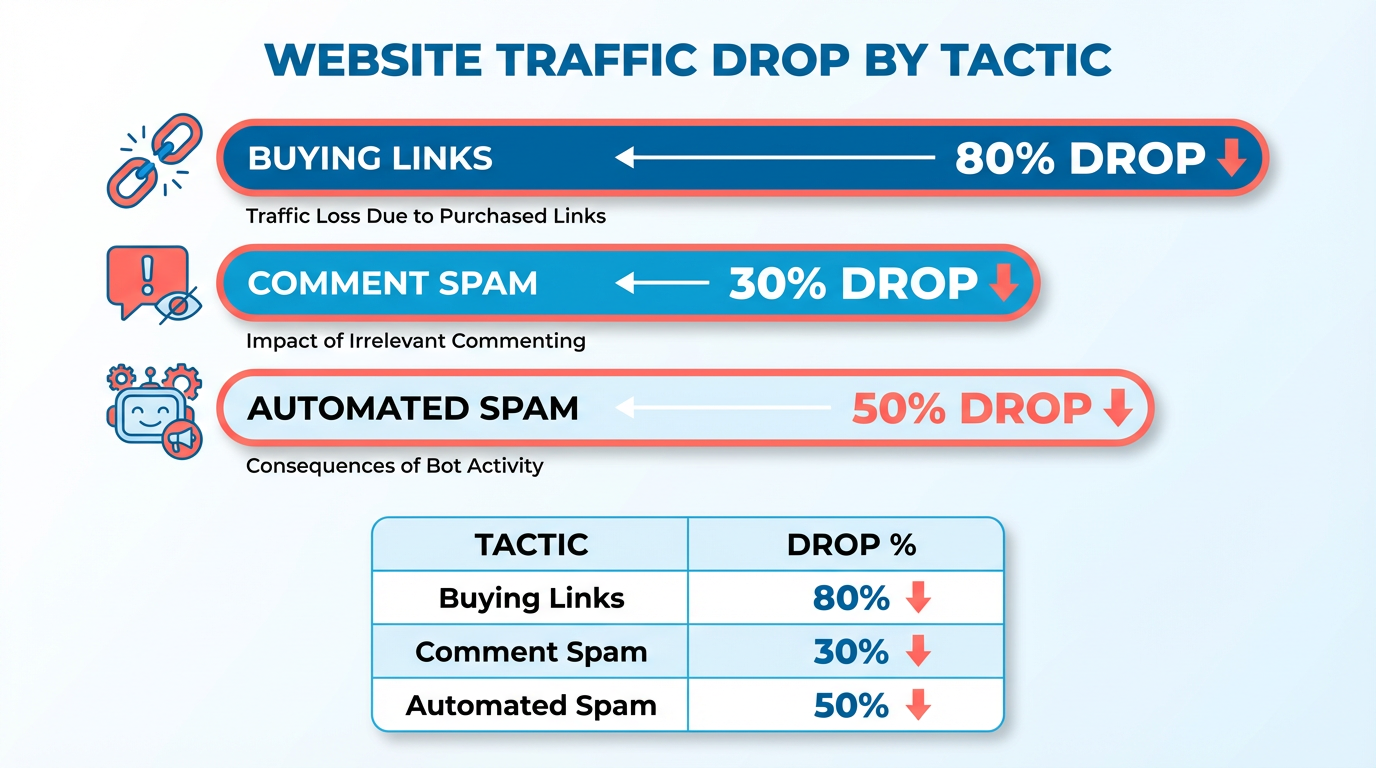
Over-optimization-using the same anchor text repeatedly-also raises red flags. If every link to your homepage reads “best SEO services,” Google may suspect you’re gaming the system. Anchor text diversity prevents this by using natural variations like “learn SEO strategies,” “explore our services,” or even branded terms like “AnyPost.ai.” One company that failed here was a SaaS startup linking every backlink to its homepage with exact-match keywords. After six months of stagnant rankings, an audit revealed over-optimized anchor text, forcing the team to manually adjust thousands of links to pass-the-test variations.
Why Is Anchor Text Diversity Critical?
Search engines evaluate links based on their context and relevance. A mix of exact-match, partial-match, and branded anchor text mimics natural linking behavior. For instance, a fitness brand might earn links with anchors like “top workout gear,” “view our products,” or “visit FitLife.” Tools like AnyPost.ai automate audits to highlight overused phrases and suggest improvements. This approach aligns with the principles outlined in the Meta Tags and Header Mistakes section, where relevance and natural language are emphasized to enhance user experience and search visibility. By diversifying anchor text, you reduce the risk of penalties while improving your site’s credibility as a legitimate resource.
Real-world link-building mistakes often stem from short-term thinking. A mid-sized e-commerce store once used bots to generate fake reviews with embedded links. When Google detected the pattern, it demoted the site for violating Webmaster Guidelines. Recovery required disavowing harmful links and rebuilding trust through ethical practices. This aligns with Google’s core principle: quality always beats quantity.
How Can You Avoid These Pitfalls?
- Audit existing backlinks monthly using AnyPost.ai’s tools to identify spammy or over-optimized links.
- Disavow harmful links through Google Search Console to signal that you don’t endorse them.
- Prioritize relevance when earning links-target websites in your niche, not just high authority sites.
AnyPost.ai’s link-building features simplify this process by automating outreach, tracking competitor backlinks, and generating reports on link health. For example, their outreach templates help you pitch content ideas to authoritative blogs without violating spam policies. This proactive approach ensures your link profile grows organically, avoiding the traps that have derailed competitors.
Remember: link-building is about value exchange. When you provide resources others want to share, your rankings rise naturally. Tools like AnyPost.ai equip you to focus on sustainable strategies-no shortcuts, no penalties, just long-term growth.
Meta Tags and Header Mistakes
Meta tags and header tags are foundational elements of on-page SEO, yet they’re frequently mismanaged. A missing or poorly written meta description can reduce click-through rates by up to 30%, while duplicate title tags confuse search engines and dilute page authority. Properly optimized headers, on the other hand, improve readability and signal content relevance to crawlers. Below, we break down how to fix these issues and avoid penalties.
How Do Duplicate Meta Tags Hurt SEO?
Duplicate meta tags-especially title and description tags-cause search engines to struggle with indexing. If two pages share identical meta descriptions, Google may penalize both for low originality. As mentioned in the Why SEO Mistakes Matter section, even a single misstep can erode months of progress. For example, one e-commerce site saw a 25% drop in traffic after copying the same meta description across product pages. To avoid this, audit your site using tools like Screaming Frog and ensure each page has unique, keyword-rich meta content tailored to its purpose.
Meta descriptions also act as ad copy for your website in search results. A strong one includes a primary keyword and a clear call to action. For instance, instead of writing “Shop our collection of shoes,” try “Find the perfect running shoes for your next marathon-free shipping on orders over $50.” This approach increases relevance and click-through rates.
Why Are Header Tags Critical for SEO?
Header tags (H1, H2, H3) structure content hierarchically, guiding both users and search engines. A common mistake is using multiple H1 tags on a single page, which splits focus and weakens SEO value. Building on concepts from the Technical SEO Mistakes section, one case study revealed a blog post dropped from #3 to #12 in rankings after using three H1s, likely because crawlers couldn’t determine the main topic. Stick to one H1 per page and use H2/H3 for subheadings.
Headers also help with keyword optimization. If your primary keyword isn’t in the H1, search engines might not associate the page with that term. For example, a recipe site improved rankings by 40% after revising headers to include long-tail keywords like “how to make gluten-free chocolate cake” instead of generic terms like “baking recipes.”.
How Can Tools Fix Meta and Header Mistakes?
Tools like AnyPost.ai’s Meta Description Generator streamline optimization by analyzing content and suggesting meta tags with ideal length and keyword placement. One marketing team reported a 22% increase in organic traffic after integrating this tool into their workflow. The generator ensures descriptions are unique, action-oriented, and aligned with user intent.
For headers, manual audits remain essential. Start by scanning for inconsistencies in tag hierarchy and keyword usage. Replace vague headers like “About Us” with descriptive ones like “Our Mission: Sustainable Fashion for a Greener Future.” This clarity improves both SEO and user experience.
Switching to AnyPost.ai’s meta generator cut our onboarding time in half while boosting CTR by 18%.
By prioritizing unique meta tags, structured headers, and automation tools, you eliminate ranking barriers and align your site with search engine best practices. As outlined in the Putting It All Together: Avoiding SEO Mistakes for Good section, regular audits and incremental adjustments will compound these benefits over time.
Putting It All Together: Avoiding SEO Mistakes for Good
Begin with a thorough SEO audit to identify gaps in technical setup, on-page content, and backlink profiles. Use tools like Screaming Frog or Ahrefs to scan for broken links, missing meta tags, and site speed issues. For example, one business improved rankings by 40% after fixing duplicate content and optimizing site structure.
- Technical Audit: Check crawl errors, site speed, and mobile responsiveness. As mentioned in the Technical SEO Mistakes section, tools like Google Search Console highlight pages Google can’t access.
- On-Page Review: Audit title tags, headers, and content quality. Building on concepts from the Meta Tags and Header Mistakes section, ensure keywords align with user intent and avoid overstuffing.
- Backlink Analysis: Disavow toxic links and build relationships with authoritative sites. As discussed in the Link Building and Optimization Mistakes section, a disavow file can remove harmful backlinks dragging down domain authority.
How Can You Track SEO Progress Over Time?
Use Google Analytics and Google Search Console to monitor traffic trends, bounce rates, and keyword performance. Set up custom dashboards to track metrics like organic session duration and conversion rates. For instance, one company increased organic conversions by 25% after identifying underperforming pages through behavior flow reports.
- Keyword Tracking: Tools like SEMrush or Ubersuggest show rank fluctuations. Focus on keywords with high search volume and low competition.
- Content Performance: Identify top pages driving traffic and replicate their structure. Update outdated content with fresh data and internal links.
- User Behavior: High bounce rates signal poor relevance. Improve landing pages by aligning content with search intent.
How Do You Avoid Repeating SEO Mistakes?
Automate repetitive tasks with tools like AnyPost.ai to streamline keyword research, content drafting, and on-page optimization. Unlike generic providers, AnyPost.ai integrates AI-driven suggestions for meta tags, headers, and content structure, reducing human error. For example, a marketing team reduced content creation time by 50% while maintaining SEO quality [AnyPost.ai case study].
- Keyword Optimization: Use AI to find long-tail keywords and map them to user intent.
- Content Audits: Schedule regular reviews to update outdated information and fix thin content.
- Competitor Benchmarking: Analyze competitors’ top pages to identify gaps in your own strategy.
Why Is Continuous Learning Critical for SEO Success?
Search algorithms evolve rapidly, so ongoing education ensures your strategy adapts. Follow updates from Google’s blog, attend webinars, or join SEO forums to stay informed. One business avoided penalties by updating its schema markup after a Google core update. Dedicate 1–2 hours weekly to learning, whether through free courses or industry newsletters.
By combining audits, performance tracking, AI-powered tools, and continuous learning, you create a sustainable SEO strategy. Avoid shortcuts like keyword stuffing or buying backlinks-these practices deliver short-term gains but harm long-term rankings. Instead, focus on user experience, mobile optimization, and content quality to build trust with both search engines and visitors.
Frequently Asked Questions
1. What is the worst SEO mistake that causes traffic loss?
Keyword stuffing triggers manual actions, as seen in a 40% traffic drop for an e-commerce store. Google penalizes unnatural keyword density, so focus on natural language and user intent instead.
2. How does poor mobile optimization affect rankings?
Post-2023 Core Web Vitals updates, sites with slow mobile speed or bad design lost 60% of traffic. Fix load times (target <2.5 seconds) and responsive design to recover visibility.
3. Why are duplicate content and broken links harmful?
Duplicate content confuses search engines, lowering rankings. Broken links harm user experience and crawlability, leading to 30-50% traffic declines within six months if unresolved.
4. How can technical audits prevent SEO traffic loss?
Regular audits identify issues like crawl errors, broken links, or poor site speed. Addressing these fixes technical SEO gaps, improving crawlability and reducing organic traffic losses by 20-40%.
5. What’s the recovery timeline for SEO penalties?
Recovery takes 3-6 months, depending on issue severity. For example, a local store recovering from keyword-stuffed meta descriptions required 3 months of content overhauls and technical fixes.
6. How do over-optimized meta descriptions impact rankings?
Over-optimized meta descriptions trigger algorithmic penalties. Replace keyword-heavy text with natural, user-focused summaries to avoid spam flags and maintain click-through rates.
7. What’s the revenue impact of ignoring SEO best practices?
Small businesses face 20-40% monthly revenue drops from SEO mistakes. Poor mobile performance alone causes 30-50% organic traffic losses within six months, directly reducing conversions.
