
SEO Red Flags: How to Spot a Bad SEO Agency Before You Hire

Key Takeaways
- Black hat tactics can trigger search penalties that tank your rankings for months. You end up paying for harm instead of help.
- Guaranteed number-one rankings are impossible. Nobody controls Google's algorithm, so any such promise is an instant red flag.
- Recovering from a manual penalty takes time, technical cleanup, and often a second agency to fix the first one's mess.
- Good agencies tie their work to revenue, not vanity metrics that look impressive and drive nothing.
- Secretive agencies that won't show their work make it impossible to tell whether you're funding strategy or empty activity.
- Demand for SEO has flooded the market with new agencies. Some are excellent. Some will drain your budget and your rankings.
- A bad agency keeps you paying retainers while organic traffic stays flat or falls.
What a bad SEO agency actually costs you
Hire the wrong SEO agency and you lose money, time, and search rankings. Demand for SEO keeps climbing as businesses fight for visibility, which means more agencies keep popping up to meet it. Some are excellent. Others will burn your budget and damage your standing with search engines.
Here's what's at stake, and why catching the warning signs early matters.
What goes wrong when you hire the wrong one
A bad agency drains your budget and delivers little in return. Worse, the ones that lean on black hat tactics can trigger penalties that tank your rankings for months. You pay for damage, not progress.
The financial hit is direct. You spend on retainers while traffic stays flat or drops. The reputation hit runs deeper. Recovering from a manual penalty takes time, technical cleanup, and often a second agency hired to clean up after the first.
Some agencies promise guaranteed rankings or specific search positions. Nobody controls Google's algorithm, so those promises can't be kept. Treat any guarantee of a number-one ranking as a reason to walk.
Others hide behind secretive processes. If an agency won't explain what it does or show you the work, you can't tell real strategy from billable noise.
What the good ones do differently
A good agency ties its work to business outcomes, not vanity metrics. It improves your visibility in ways that move revenue, and it shows you exactly how, with reporting you can actually read.
Transparency is the dividing line. Strong agencies explain their methods, report what they did, and connect the activity to results. They chase sustainable growth instead of shortcuts that risk penalties.
Watch for the senior-to-junior bait-and-switch. You meet experienced strategists during the pitch, then your account gets handed to junior staff once you sign. The expertise you paid for evaporates. This guide on agency bait and switch breaks down how to catch it before it costs you.
Why this is so hard to judge from the outside
SEO is hard to evaluate because the work is technical, results take time, and bad actors hide behind jargon. Most buyers can't tell good strategy from busywork, which is exactly what shady agencies count on.
Real SEO takes months to show meaningful gains. Any agency promising fast results is either overselling or planning to cut corners. Score candidates on a simple rubric: their deliverables, their reporting style, and whether they explain the why behind each tactic.
Pay attention to how they handle accountability. Will they own a campaign that underperforms? Do they set clear expectations upfront? That's what separates a partner worth keeping from one you'll regret.
For teams that want full control, building an in-house SEO function gives you a transparency you can't always buy from a vendor. You see every decision and own every result.
Red flags hiding in the proposal
The fastest way to spot a bad agency is to read the proposal carefully. The bad ones tip their hand early, with promises no honest provider can make. Learn the patterns and you'll filter out the worst offers before money changes hands.
Why guaranteed rankings should end the conversation
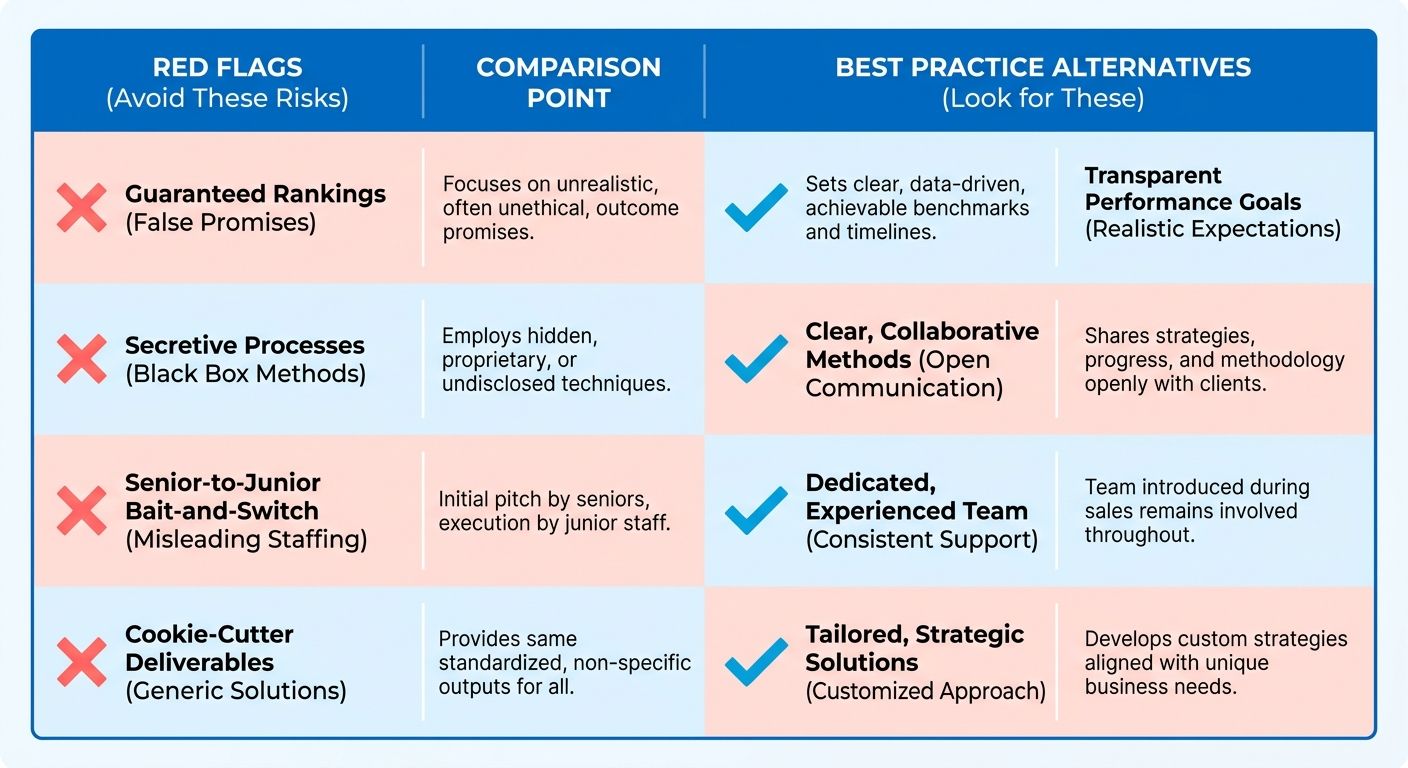
Guaranteed rankings are the single biggest red flag in any proposal. When an agency promises a specific position, they're usually targeting low-competition, zero-volume keywords that carry no commercial value. They technically hit the promise without growing your business one bit.
Watch for proposals fixated on locking in exact keyword positions. Search algorithms update constantly, so rankings naturally fluctuate. A credible partner talks about search visibility trends, organic traffic health, and conversion potential instead, focusing on what they can actually optimize.
What an unrealistic timeline looks like
A proposal promising fast top rankings is selling fantasy. Search engines need time to crawl, index, and evaluate changes to your architecture and content. An agency that claims it can skip the indexing cycle is probably planning to use automated spam or temporary link networks that eventually trigger a manual action.
Instead of chasing spikes, look for a roadmap: technical audits, on-page optimization, content development. A sustainable strategy builds domain authority over time. That phased approach gives your site a foundation that survives algorithm updates instead of collapsing under them.
How to spot hidden black hat tactics
Hidden tactics usually mean manipulative link schemes. If an agency won't share its techniques or won't disclose where it's placing your content, you may be looking at private blog networks (PBNs) or hidden redirects. Those shortcuts violate search guidelines and put your domain at real risk.
Ask for a detailed breakdown of their technical execution. You should have full access to your Google Search Console and Analytics, and every change made to your site should land in a shared log. If a provider balks at that level of access, look elsewhere.
Does the agency actually know what it's doing
Check the track record before you sign anything. Real expertise shows up in case studies with sustained organic growth, not one-month traffic spikes. Ask to speak with current clients in similar industries, and dig into how the agency handles communication and strategic pivots.
Verify the credentials of the people actually assigned to your project, too. Otherwise you risk paying premium rates for entry-level execution. Request the profiles of your designated account managers and technical leads, and confirm they have the skills your site needs.
Judging the work they hand back
Once you sign, the deliverables tell you everything. Strong work is built for your business. Weak work could belong to any client on the roster. Learning to tell them apart protects your investment after the proposal stage.
Why cookie-cutter content quietly hurts you
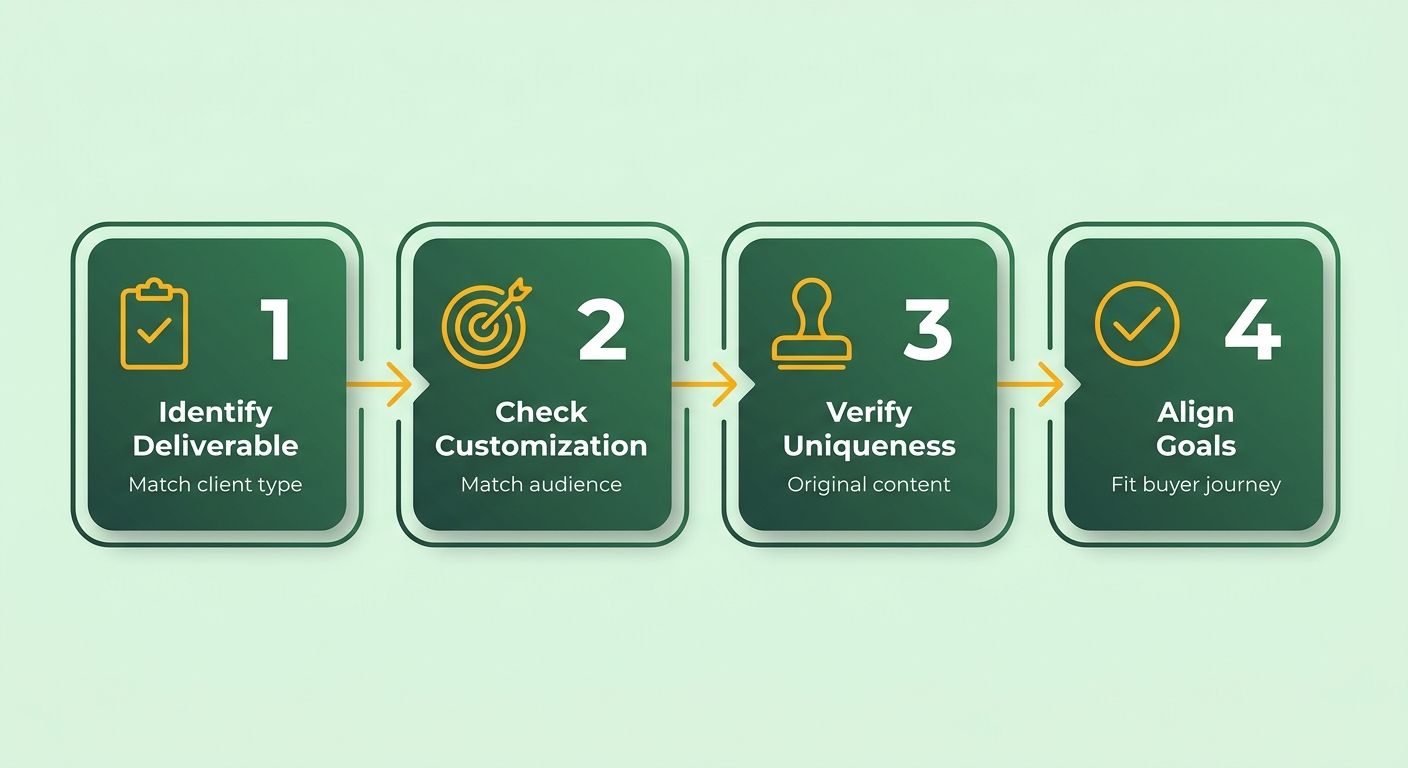
Cookie-cutter content is generic, templated work that ignores your audience and goals. It fails because search engines reward in-depth, original material that shows real expertise. Recycled blog posts and boilerplate pages rarely rank, and they burn the budget you paid for original work.
When you review content, look for deep research, unique insights, and clear formatting. The writing should hit the specific pain points of your audience, not rehash the high-level stuff sitting on dozens of other sites. Good content earns engagement and shares because it's genuinely useful.
What transparent reporting looks like
Transparent reporting means regular updates you can read and verify. A good report ties activity to outcomes and explains what changed and why. Instead of vanity metrics like Domain Authority or raw backlink counts, look for organic conversions, lead quality, and revenue attribution.
Your reports should spell out the specific work done that month: page speed improvements, schema markup, content updates. That detail lets you verify the agency is actually working on your site, and shows how the effort connects to business growth.
How staffing tradeoffs shape quality
Staffing structure directly affects campaign quality. Many agencies run high-leverage models, where one senior strategist oversees dozens of accounts and delegates the actual work to entry-level staff. That's how you get missed technical errors, generic content, and slow response times.
Knowing this helps you set expectations. Ask about the client-to-staff ratio, and make sure the specialists handling your technical audits and content strategy have enough experience for complex site architectures.
Should you score proposals on a rubric
Yes. A structured scoring system strips emotional bias out of the decision. Assign numbers to the criteria that matter, like technical depth, industry experience, and communication style, and you can compare proposals side by side.
It forces you past the polished sales deck and onto the actual substance of the offer. You end up weighing things like strategic alignment and resource allocation evenly, which points you toward the partner best equipped for long-term growth.
How to avoid the bad ones in the first place
Avoiding a bad agency comes down to a repeatable process: vet the proposal, check the reputation, score every candidate against the same criteria. The work happens before you sign, not after the rankings crater. Build a system and you stop trusting your gut.
How to vet an agency's reputation
Check the track record before you read a single proposal. Look for verifiable client results, case studies tied to real businesses, and references you can actually call. An agency proud of its work will happily connect you with active clients.
When you talk to those references, ask about responsiveness, how the agency handles algorithm updates, and whether it proactively suggests adjustments. That feedback gives you a realistic picture of day-to-day life with them, and helps you dodge the providers who go quiet the moment the contract is signed.
Building your proposal scorecard
A scoring rubric grades every candidate on the same field. Define your criteria before you read any proposals, so a slick pitch can't skew your judgment. Weight the areas most critical to your business heavier, whether that's technical SEO or content depth.
Once you've scored everyone, use the results to set performance baselines in the contract. Spell out the communication schedule, deliverable deadlines, and reporting formats before signing. That upfront clarity kills scope creep and keeps both sides aligned on what "success" means.
Should you bring SEO in-house instead
In-house SEO is a strong alternative when you want full transparency and control. You own the content, the data, and the timeline. No mystery retainers, no junior team you've never met, no waiting on a vendor to explain flat results.
Owning content generation means you see exactly what gets published and why. Modern in-house tools do the heavy lifting: AI keyword research, automated internal and external link building, multi-platform publishing from one place. You get real-time analytics instead of a monthly PDF.
Weigh the tradeoff honestly, though. Agencies bring outside expertise and bandwidth, and that suits some teams fine. But if transparency, ownership, and fast feedback rank highest for you, going in-house removes the middleman and the guesswork at once.
Why transparency is the whole game
Transparency separates a partner you can trust from one hiding poor work. An agency that shows you what it's doing, why, and what results follow gives you the data to hold it accountable. Secrecy does the opposite. When you can't see the work, you can't tell progress from nothing.
Why regular updates matter
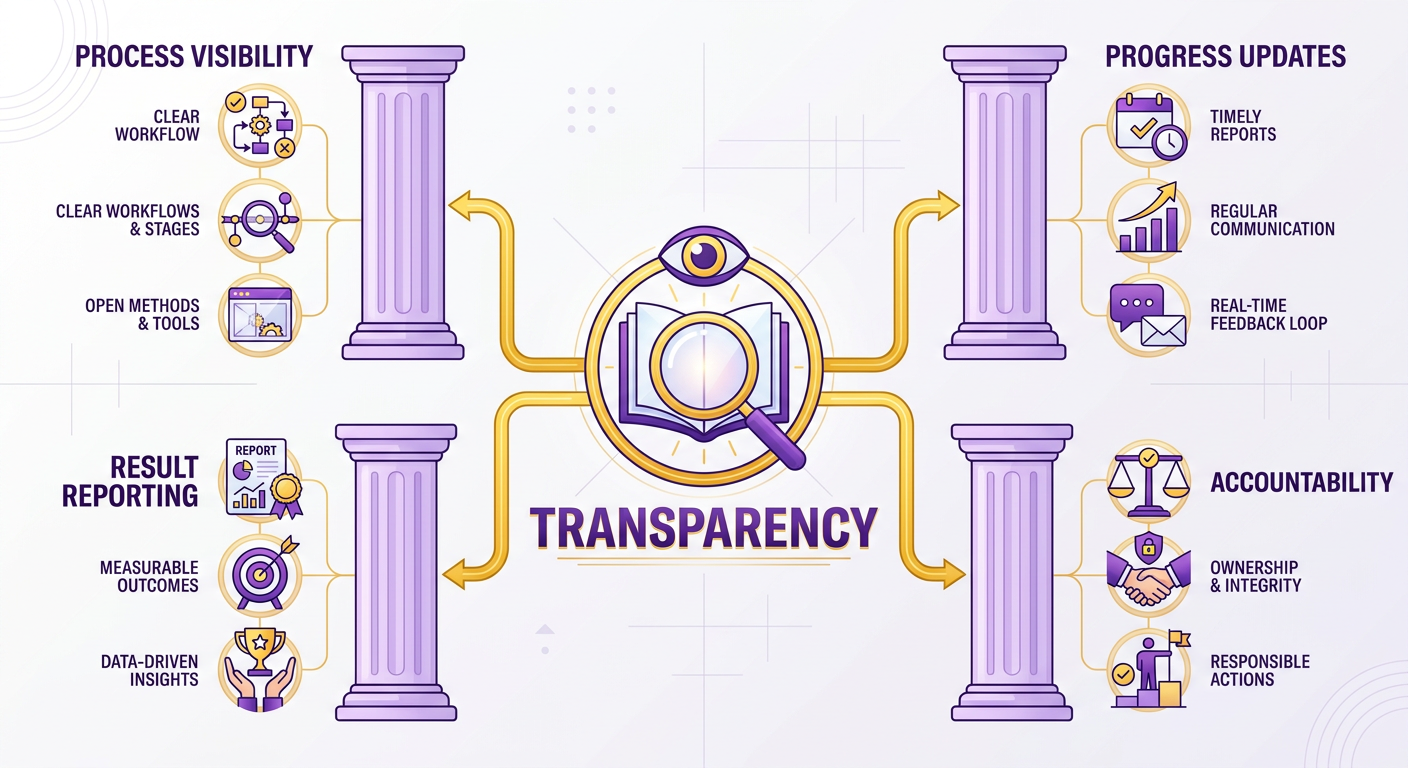
Regular updates keep you informed and let you catch problems early. A good agency reports on a fixed schedule, ties every activity to a goal, and explains what changed since the last report. You shouldn't have to chase anyone for a status.
Consistent communication means strategic adjustments happen in real time. When algorithms shift or a competitor steps up its game, your agency should explain how it plans to adapt before you have to ask. That keeps the campaign aligned with your business and stops you from spending on tactics that already went stale.
What a transparent report includes
Transparent reporting connects activity to outcomes with real metrics. Look for reports built around indicators that touch your bottom line. Vague summaries listing "optimizations" with no numbers tell you nothing.
Data beats guesswork. When an agency shows you which pages gained traffic and which lost ground, you can decide together where to invest next. The numbers steer the strategy instead of the agency steering you blind.
Ask for these in every report:
- Organic traffic trends with month-over-month comparisons
- Keyword movement for the terms that drive your business
- Work completed during the period, tied to specific pages
- Next steps and the reasoning behind them
Does going in-house give you more control
Managing SEO internally lets you wire search strategy straight into your product, sales, and support teams. That cross-department work tends to produce highly relevant content built around actual customer questions, which an outside agency struggles to match.
The catch: it takes dedicated internal resources and ongoing training to keep current. Whichever route you pick, demand the same performance tracking. Clear communication, regular reporting, and honest answers about the work are non-negotiable whether you hire an agency or run the channel yourself.
What I'd actually do
Spotting a bad agency comes down to pattern recognition. By now you know the four warning signs that show up most: guaranteed rankings, secretive processes, the senior-to-junior bait-and-switch, and cookie-cutter deliverables. Read every proposal against that list and you filter out the worst offers before money changes hands.
The agencies that fail your vetting share one habit. They hide the work. The ones worth hiring show you what they do, why, and what comes of it.
What to demand before you sign
Set expectations in writing before the contract starts. Define who does the work, what gets reported, and how often. An agency that dodges these questions during the pitch will dodge them after you pay.
Three commitments separate a real partner from a budget drain:
- Named personnel. Get a written agreement naming the specific strategists who'll manage your account day to day.
- Structured communication. Set a fixed reporting schedule that lines up with your internal marketing updates.
- Plain-language methods. Require the agency to explain its techniques in language you understand, so you can follow every change made to your site.
State these up front. Communication problems almost always start with vague scope, not bad intentions.
When in-house actually makes sense
Building an internal team makes sense when organic search becomes a core driver of your growth. When you need daily content updates, fast technical fixes, and deep integration with your product roadmap, an outside vendor turns into a bottleneck.
This route fits teams that already have content skills or the budget to build them. If you can't staff a writer and a strategist, an honest agency may still serve you better. And don't make the move if you'd be handing SEO to someone with no time to learn it. Half-built in-house SEO loses to a competent partner every time.
Keeping quality high without an agency
The bottleneck for most in-house teams is content production. Original, search-intent-aligned articles eat hours each, and that's exactly the work cookie-cutter agencies cut corners on. Tooling closes the gap.
A tool like AnyPost.ai generates SEO-optimized content in your brand voice and publishes it directly, giving smaller teams agency-level output without losing visibility into the work. You keep control of the strategy, and the reporting stays in your hands.
The core lesson holds either way. Clear communication and measurable results are the real tests. An agency that proves its value, respects your budget, and aligns with your goals is a genuine partner. Vet hard before you sign, communicate clearly after, and you protect your rankings and your money at the same time.
Frequently Asked Questions
1. How long does it take to recover from a Google penalty caused by a bad SEO agency?
Recovering from a manual penalty typically takes several months and requires technical cleanup, disavowing spammy links, and submitting a reconsideration request. The process involves auditing your entire backlink profile, removing low-quality links, and documenting your cleanup efforts for Google's webspam team. Even after the penalty is lifted, rebuilding your site's authority and regaining lost search visibility is a gradual process.
2. What questions should I ask during the pitch to expose a bait-and-switch?
Ask directly who will execute your account day-to-day, not who is pitching, and request their specific names and past work in writing. Confident agencies answer immediately. Requesting these details in writing and incorporating them into your service agreement ensures that the experienced strategists you meet during the sales process remain actively involved in your campaign.
3. Are all link-building-focused agencies bad?
Agencies that build their entire strategy around link volume should raise concern, but link building itself isn't harmful when done well. Quality matters more than quantity. Focus on agencies that earn links through high-quality content creation, digital PR, and outreach to reputable, relevant websites in your industry rather than relying on automated directories or paid link schemes.
4. Is in-house SEO always better than hiring an agency?
In-house SEO provides direct alignment with your company's daily operations, but it requires significant investment in hiring, training, and specialized software. If your business lacks the resources to support a dedicated internal team, partnering with a reputable, transparent agency is often the more cost-effective choice.
5. What KPIs prove an SEO agency is actually delivering results?
Focus on metrics that directly impact your business growth, such as organic conversion rates, qualified lead volume, and revenue generated from search traffic. While keyword rankings and impressions are useful leading indicators, a successful agency should demonstrate how their optimization efforts translate into tangible business value.
6. Can tools help a small team match agency output without hiring writers?
Yes. Modern content automation platforms allow small teams to scale their publishing schedule efficiently. By streamlining keyword research, drafting, and publishing workflows, these tools enable a single internal marketer to manage a high-volume content strategy that would typically require a full team of writers and editors.
7. Why do realistic SEO results take months instead of weeks?
Search engines must crawl, index, and evaluate changes across your entire site before adjusting your rankings. Additionally, establishing trust and authority with search algorithms is a cumulative process that relies on consistent, long-term signals. A realistic timeline accounts for these technical phases and focuses on sustainable, compounding growth.