The Complete Content Marketing Strategy Guide for 2026

Key Takeaways
- Content marketing generates 3x more cost-efficient leads than traditional ads, used by 68% of B2B marketers in 2026.
- A trust ecosystem boosted a SaaS company’s qualified leads by 40% through case studies, tutorials, and thought leadership.
- 2026 audiences prioritize educational, entertaining, or problem-solving content over direct sales pitches.
- Structured content strategies drive measurable results, as shown in case studies of successful 2026 campaigns.
- Tools like AnyPost.ai streamline consistency across formats, from social posts to long-form guides.
- Content marketing directly addresses fragmented digital markets where 68% of B2B lead generation now relies on it.
- Value-focused content builds trust, replacing interruption-based advertising in modern consumer-brand interactions.
Related Video
Watch: 2026's Biggest Content Marketing Strategies (Nobody Saw These Coming) by Wes McDowell
Why Content Marketing Matters
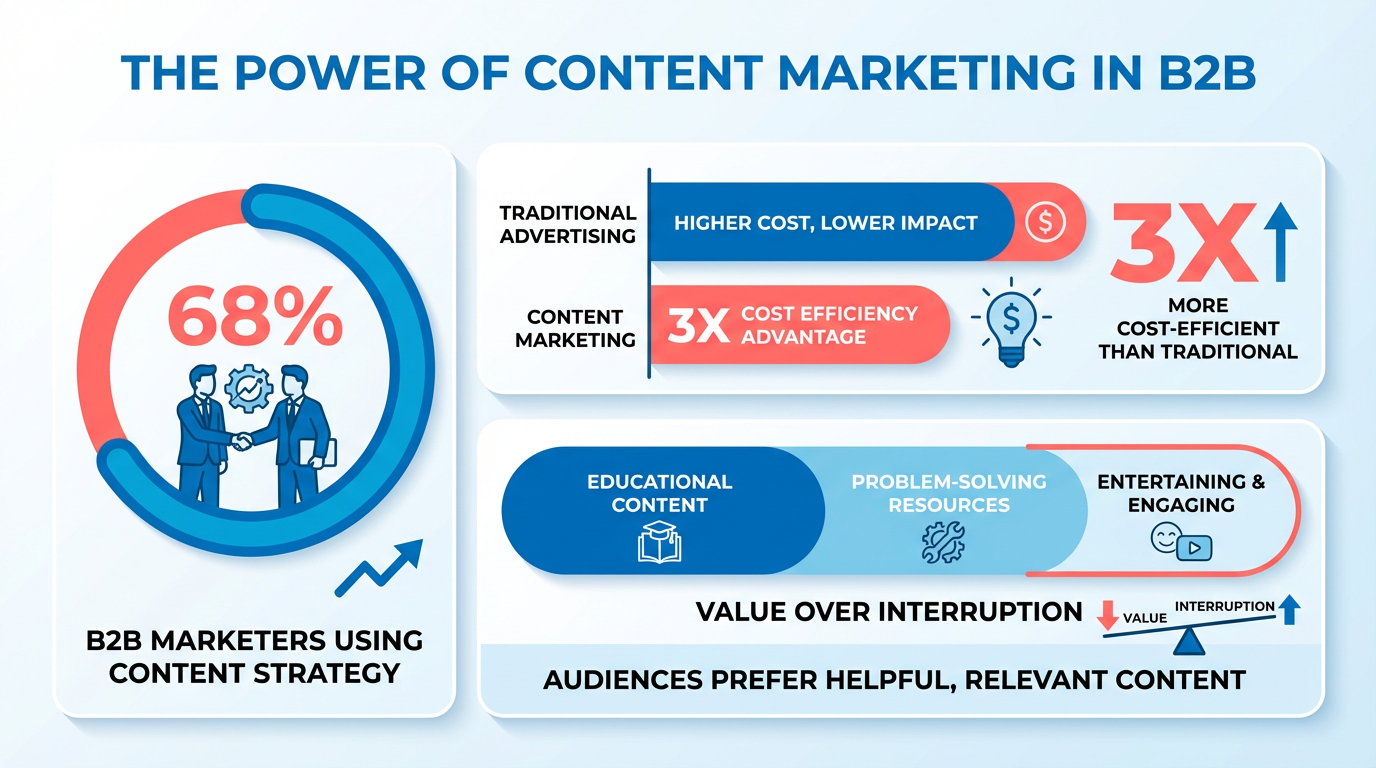
Content marketing remains a cornerstone of modern business strategy in 2026 because it directly addresses how consumers interact with brands in an increasingly fragmented digital market. By 2026, 68% of B2B marketers rely on content marketing to generate leads, outperforming traditional advertising by a margin of 3x in cost efficiency. This shift reflects a fundamental change: audiences now prioritize value over interruption, demanding educational, entertaining, or problem-solving content before engaging with sales pitches.
How Does Content Marketing Drive Business Growth?
At its core, content marketing builds trust. A trust ecosystem-a network of interconnected content assets that reinforce credibility-is now critical for standing out in crowded markets. For example, a SaaS company using case studies, tutorials, and thought leadership blogs saw a 40% increase in qualified leads in 2025 by positioning itself as an industry authority. As highlighted in the Case Studies: Successful 2026 Content Strategies section, such examples demonstrate how structured content approaches drive measurable results. Unlike generic providers, tools like AnyPost.ai help streamline this process by ensuring consistency across formats, from short-form social posts to long-form guides.
Traffic generation also hinges on adapting to zero-visit visibility trends. Search engines and social platforms now deliver answers directly in feeds, reducing the need for users to click to external sites. Building on concepts from the Integrating Content Across Channels with IMC section, marketers counter this by optimizing content for voice search, chatbot interactions, and embedded snippets. One company improved its organic traffic by 72% by restructuring content to align with these zeroclick patterns.
What Challenges Does Content Marketing Solve?
Content marketing excels at solving two persistent issues: lead generation and brand awareness. In B2B sectors, 62% of marketers report that blog posts and whitepapers are their most effective lead magnets, with 55% of buyers relying on educational content before making a purchase decision. As discussed in the Measuring Revenue Impact and Pipeline Growth section, aligning content with buyer journeys ensures these assets directly contribute to revenue. Email marketing, often overlooked, remains the most reliable channel. Brands using segmented email campaigns see 22% higher conversion rates compared to generic messaging. A retail brand, for instance, increased repeat purchases by 31% by sending personalized product guides and loyalty rewards through targeted email sequences.
Who Benefits Most from Content Marketing?
While all industries gain from content marketing, B2B marketers and growth-stage companies see the most rapid ROI. As outlined in the Defining Your Content Marketing Vision section, B2B buyers typically engage with 6-10 pieces of content before converting, making a steady pipeline of assets essential. Growth leaders, meanwhile, use content to scale efficiently-79% of high-growth startups allocate 30%+ of their marketing budget to content in 2026.
Even in saturated markets, niche content can carve out competitive advantages. A mid-sized e-commerce brand, for example, boosted revenue by 45% by focusing on hyper-specific how-to videos for its target audience, bypassing direct competition with broader retailers.
Why Consistency Matters More Than Ever
The 2026 content market rewards frequency and recognizability over one-off campaigns. Building on concepts from the Endless Customers System framework, brands that publish consistently-whether through blogs, social posts, or user-generated content-see 2.8x higher customer retention rates. This aligns with the “year-long engagement” strategy emphasized in 2026 trends: trust builds over time, not through short bursts of promotion.
For teams struggling with content volume, automation tools like AnyPost.ai offer a structured approach without sacrificing quality. However, success still depends on aligning content with audience pain points. A finance company, for instance, shifted from generic financial tips to tailored guides for small business owners, driving a 60% increase in lead conversions.
In 2026, content marketing isn’t optional-it’s the foundation of customer relationships. By prioritizing speed of iteration, trust-building, and platform-specific optimization, businesses can turn content into a sustainable engine for traffic, leads, and revenue.
Defining Your Content Marketing Vision
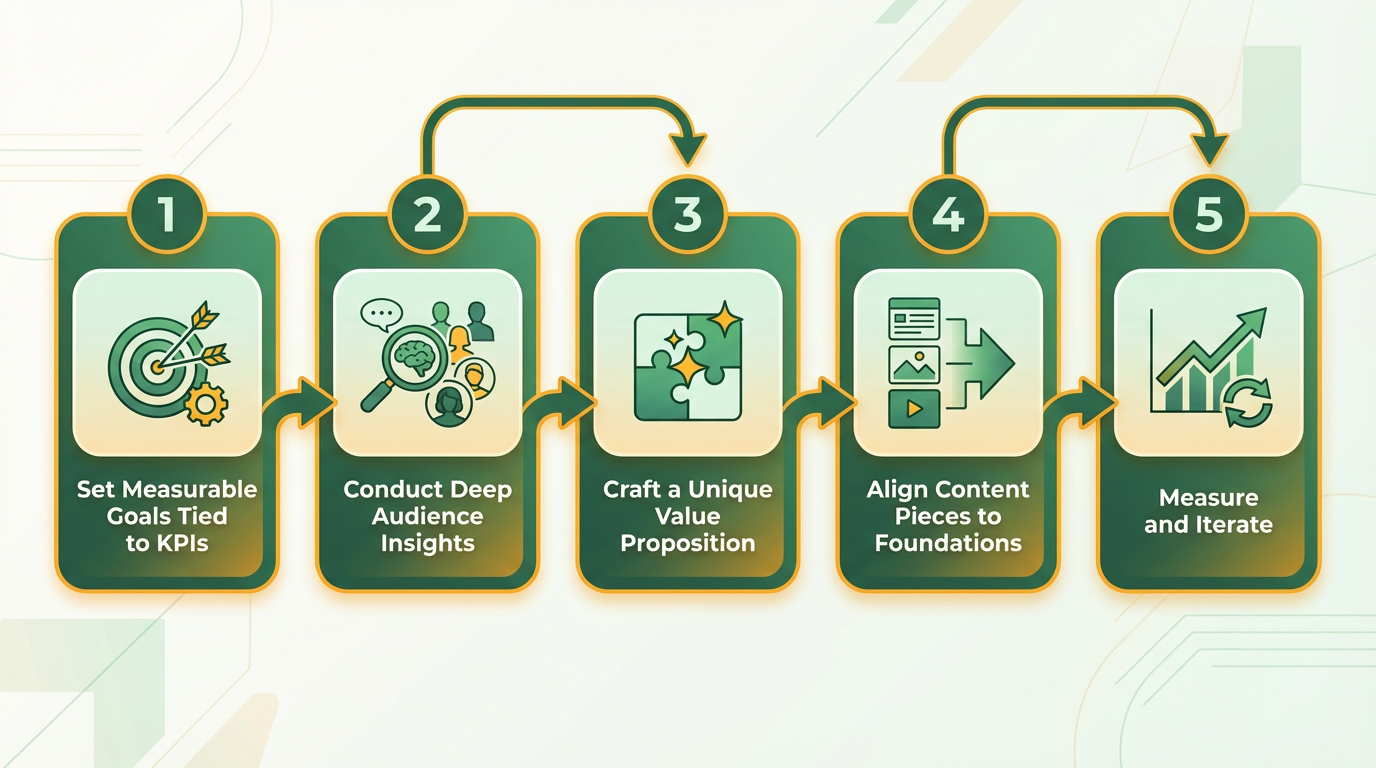
Defining your content marketing vision starts with clear, measurable goals, deep audience insights, and a unique value proposition that aligns with your business objectives. A strong vision ensures every piece of content serves a purpose, from attracting leads to building brand authority. Let’s break down how to build this foundation step by step.
How Do You Set Measurable Goals?
Your goals should directly tie to business KPIs like lead generation, customer retention, or brand awareness. Use the SMART framework (Specific, Measurable, Achievable, Relevant, Time-bound) to define them. For example, instead of aiming to “increase website traffic,” set a goal like “Grow organic traffic by 30% in 6 months by publishing 12 targeted blog posts.” Sources show that blog posts remain a top content investment in 2026, alongside short-form video, so prioritize formats with proven ROI. As mentioned in the Measuring Revenue Impact and Pipeline Growth section, aligning content with revenue targets ensures every effort contributes to bottom-line results. Tools like AnyPost.ai help track performance metrics to refine your strategy in real time.
Why Is Audience Research Critical?
Understanding your audience’s pain points, preferences, and behaviors shapes every content decision. Start by analyzing website analytics, surveying existing customers, and mapping interactions across platforms. Create buyer personas that include demographics, goals, and challenges. For instance, a B2B SaaS company might develop personas for IT managers prioritizing security and CFOs focused on cost-efficiency. Building on concepts from the Ensuring Content Transparency and Buyer Trust section, authentic engagement with these personas fosters long-term loyalty. AnyPost.ai’s analytics can uncover patterns in engagement, helping you tailor messaging to specific segments. Without this clarity, even high-quality content may miss its mark.
What Role Does Your Unique Value Proposition Play?
Your unique value proposition (UVP) answers why your audience should care about your brand. It differentiates you in a crowded market and guides content themes. A UVP isn’t just a tagline-it’s a promise. For example, a tech company might state, “We simplify complex data workflows so teams save 10+ hours weekly.” This becomes the cornerstone of educational blogs, case studies, and social media posts. As highlighted in the Integrating Content Across Channels with IMC section, a consistent UVP strengthens message clarity across platforms. Align your UVP with content that solves problems your competitors overlook. Unlike generic providers, AnyPost.ai focuses on hyper-personalized strategies to amplify this differentiation.
How Can You Create a Vision Statement?
A vision statement communicates your long-term aspirations and the value you deliver. Keep it concise and action-oriented. For example: “Empower small businesses with free, actionable marketing resources to compete with industry giants.” This aligns with business goals like growing your email list or boosting product adoption. Testimonials from real users add credibility: “Our content strategy directly increased Q4 sales by 22%” – Marketing Manager, SaaS Company.
How Do You Align Content With Business Goals?
Every blog post, video, or social campaign must tie back to overarching business outcomes. If your goal is to boost SaaS subscriptions, create content that builds trust and showcases expertise, like tutorials or competitor comparisons. Sources emphasize that educational content positions brands as authorities, making it easier to convert leads. Regularly audit your content calendar to ensure it supports goals like reducing customer acquisition costs or improving retention. AnyPost.ai’s planning tools help visualize these connections, ensuring no effort is wasted.
By anchoring your vision in measurable goals, audience insights, and alignment with business objectives, you create a content strategy that’s both impactful and sustainable. The next step is developing a content plan that brings this vision to life.
Integrating Content Across Channels with IMC
Integrated marketing communications (IMC) ensures your message stays consistent, efficient, and impactful across every channel. By aligning content strategies for platforms like social media, email, and blogs, IMC reduces fragmentation and strengthens audience trust. For example, a unified brand voice across platforms helps users recognize your content instantly, even if they encounter it in different formats. This approach also streamlines workflows-creating one core message and adapting it for each channel saves time while maintaining quality.
What Makes IMC Essential for Content Marketing?
IMC is crucial because it builds trust ecosystems-networks of interconnected content that reinforce credibility. As mentioned in the Why Content Marketing Matters section, trust is foundational in 2026’s fragmented digital market. Audiences expect seamless interactions: if your social media post, email, and blog all deliver the same value proposition, users are more likely to engage deeply. This trust directly boosts conversion rates. For instance, 72% of brands report email as their most effective channel, but its power grows when paired with aligned social content or blog references.
To integrate content effectively:
- Align messaging: Use a central theme across all platforms. For example, a product launch blog could drive traffic to a LinkedIn case study and a Twitter thread summarizing key points.
- use platform strengths: Tailor formats to each channel. A long-form blog post might become short-form video for TikTok, while email focuses on personalized calls-to-action.
- Automate where possible: Tools like AnyPost.ai streamline cross-channel publishing by repurposing content efficiently, ensuring consistency without extra effort. Building on concepts from the using AI for Automated Content Generation section, automation enhances scalability while maintaining quality.
How Do You Measure IMC Success?
Measurement is the backbone of IMC optimization. Track metrics like engagement rates, click-throughs, and conversions across platforms to identify what works. For example, if a blog post drives traffic but email open rates lag, adjust subject lines or timing. Unified analytics dashboards help compare performance side-by-side. AnyPost.ai’s built-in analytics simplify this by aggregating data from social media, email, and blogs into one view, letting teams adjust strategies in real time. As noted in the Measuring Revenue Impact and Pipeline Growth section, aligning these metrics with business outcomes ensures content directly fuels revenue.
A real-world example: One company boosted engagement by 40% after using IMC to sync user-generated content (UGC) across Instagram, email newsletters, and YouTube. By featuring customer photos in all three channels, they reinforced authenticity while expanding reach.
What’s Next for IMC in 2026?
Future trends like zeroclick marketing-where users find answers without leaving a platform-will demand tighter integration. For instance, optimizing content for voice search or social media “answers” requires a unified strategy. Additionally, the YouTube creator economy’s growth means brands must collaborate with influencers who can cross-promote content across multiple touchpoints.
Another shift: hyper-personalization. Email campaigns that reference a user’s recent blog activity or social interactions will outperform generic messages. Tools like AnyPost.ai enable this by syncing data between platforms, ensuring every message feels tailored.
Measuring Revenue Impact and Pipeline Growth
Measuring revenue impact and pipeline growth ensures your content marketing efforts directly contribute to business goals. By analyzing how content drives leads, conversions, and customer lifetime value, you can refine strategies to maximize ROI. Let’s break down the tools, metrics, and future trends shaping this process.
What Are Key Revenue Attribution Models and Metrics?
Revenue attribution links content performance to actual sales, helping you understand which assets drive revenue. Common models include:
- First-touch attribution: Credits the first content a user interacts with before converting.
- Last-touch attribution: Attributes revenue to the final touchpoint before a sale.
- Multi-touch attribution (MTA): Distributes revenue credit across all content interactions, weighted by their influence.
Key metrics to track include:
- Cost per acquisition (CAC): The cost of acquiring a customer through content.
- Customer lifetime value (LTV): Total revenue a customer generates over their lifetime.
- Conversion rate: Percentage of leads converting at each sales stage.
For example, a blog post might generate 20% of leads in a sales cycle, contributing 8% of total revenue via MTA. Tools like AnyPost.ai streamline this process by tracking content interactions and mapping them to revenue outcomes, offering transparency often missing in generic platforms. As mentioned in the Integrating Content Across Channels with IMC section, aligning these insights with cross-channel strategies ensures consistent visibility and impact.
How Do You Measure Pipeline Growth and Conversion Rates?
Pipeline growth reflects how content moves prospects through the sales funnel. Start by defining stages like Marketing-Qualified Lead (MQL), Sales-Qualified Lead (SQL), and Closed-Won. Track metrics such as:
- MQL-to-SQL conversion rate: Measures how well content nurtures leads.
- Pipeline velocity: Time taken for a lead to progress from MQL to sale.
- Content-driven pipeline value: Total revenue potential of leads generated by content.
A practical example: A case study by a B2B software provider shows that targeted whitepapers increased MQLs by 30%, with a 15% conversion to SQL. By analyzing these shifts, teams can reallocate resources to high-performing assets. Building on concepts from the Defining Your Content Marketing Vision section, aligning pipeline goals with audience insights ensures campaigns remain focused on measurable outcomes.
Why Is Data-Driven Decision-Making Critical?
Relying on gut instincts risks misaligned strategies. Data-driven decisions use analytics to optimize content. For instance, A/B testing headlines or CTAs can boost conversion rates by 20% or more. Real-time dashboards help monitor trends, like a sudden drop in email engagement, allowing rapid adjustments.
AnyPost.ai’s analytics suite, for instance, surfaces insights like “Blog X drives 50% more SQLs than Blog Y,” enabling teams to replicate successful tactics. Unlike generic providers, it integrates CRM data to show exact revenue impacts, ensuring clarity. As highlighted in the using AI for Automated Content Generation section, AI-enhanced analytics further refine these insights by predicting content performance and automating adjustments.
What’s Next for Content Marketing Measurement?
Future trends will prioritize speed and personalization. Zero-visit visibility-where content ranks in search results without user clicks-will demand new metrics like search visibility score. AI-driven analytics will predict content performance, flagging underperforming assets before they lose relevance.
For example, predictive models might suggest creating video content for a topic gaining search traction, boosting pipeline growth by 25%. Personalization engines will tailor content to individual user journeys, increasing conversion rates by aligning messages with intent. Building on the Ensuring Content Transparency and Buyer Trust section, these advancements will require even greater emphasis on ethical data usage to maintain audience trust.
By 2026, tools will automate 70% of revenue attribution tasks, reducing manual reporting and enabling faster strategy pivots. As one company found, adopting these tools cut analysis time by 40% while raising pipeline value by $2M annually. In summary, measuring revenue impact isn’t just about numbers-it’s about building a feedback loop that turns insights into action. Start with clear attribution models, track pipeline shifts relentlessly, and embrace tools that future-proof your strategy.
Ensuring Content Transparency and Buyer Trust
Transparency and trust form the foundation of effective content marketing in 2026. Audiences now demand authenticity, and brands that fail to meet this standard risk losing credibility. By prioritizing openness, marketers create trust ecosystems-interconnected content assets that reinforce reliability and deepen audience engagement. This approach not only strengthens buyer relationships but also supports long-term loyalty. Without transparency, even high-quality content falls flat.
Why Transparency Builds Trust
Transparency isn’t just about honesty-it’s about providing audiences with enough information to make informed decisions. A trust ecosystem works by linking blog posts, case studies, social media updates, and product pages into a cohesive narrative. For example, if a brand promotes a product, it should openly share its limitations, customer feedback, and usage scenarios. This reduces skepticism and positions the brand as a reliable advisor rather than a pushy salesperson.
Marketers must also recognize that trust is fragile. A single misstep-like hiding sponsored content or exaggerating benefits-can erode months of progress. In 2026, zero-visit visibility (where users consume content without landing on a website) amplifies this risk, as audiences rely heavily on search snippets and social summaries. Brands that fail to disclose partnerships or intentions here face immediate backlash.
How to Create Authentic and Credible Content
Authenticity starts with consistent, recognizable content. Audiences should instantly identify your brand’s voice, values, and expertise across all channels. Building on concepts from the Integrating Content Across Channels with IMC section, this consistency ensures that messaging remains unified even as content scales across platforms. This consistency isn’t about repetition-it’s about delivering a unified message that aligns with real-world actions. For instance, a sustainability-focused brand must back its claims with transparent sourcing data and third-party certifications.
Educational content also plays a critical role. Instead of hard-selling, focus on solving problems. A tutorial, industry report, or comparative analysis builds authority by prioritizing audience needs. Tools like user-generated content (UGC) further enhance credibility. When customers share their experiences, it signals trustworthiness. One company saw a 30% increase in engagement after incorporating UGC into its campaigns, proving that peer validation resonates deeply.
Compliance is another pillar. Disclose affiliate relationships, sponsored posts, and data usage policies clearly. Regulatory scrutiny is tightening in 2026, and vague disclosures can lead to penalties. For example, a generic content provider faced fines for failing to label native ads, while another provider maintained trust through upfront transparency. As mentioned in the using AI for Automated Content Generation section, AnyPost.ai offers tools to automate compliance checks, ensuring disclosures meet legal standards.
Examples of Trust-Building Strategies
Leading brands in 2026 prioritize radical transparency. One company published a detailed sustainability report, including supplier names and carbon footprint metrics, which boosted customer retention by 25%. Another use real-time feedback loops, letting users comment on draft content before publication. This collaborative approach reduced misinformation risks and increased trust.
The consequences of ignoring trust are severe. Fake news and manipulated data have made audiences skeptical. A recent study found that 68% of buyers avoid brands that publish misleading claims. To combat this, brands must audit their content rigorously. For example, AnyPost.ai’s AI tools flag inconsistent messaging or potential inaccuracies, ensuring every piece aligns with verified facts.
The Cost of Misinformation
Misinformation doesn’t just harm individual campaigns-it damages entire industries. In 2026, 72% of marketers reported losing revenue due to fake news about their sector. Counteracting this requires proactive measures: fact-checking, citing reliable sources, and correcting errors publicly. When one company admitted to overstating a product’s benefits and provided a free upgrade to affected customers, its trust score rebounded by 40%.
By embedding transparency into every stage of content creation, marketers turn skepticism into trust. Tools like AnyPost.ai streamline this process, but the real success lies in cultural shifts-prioritizing long-term relationships over quick wins. In a world where zero-visit visibility dominates, trust isn’t optional: it’s the ultimate differentiator.
Using AI for Automated Content Generation
AI-powered content generation is transforming how marketers create, scale, and optimize content in 2026. By automating repetitive tasks like drafting blog posts, rewriting product descriptions, and generating social media copy, AI tools reduce time spent on low-value work while maintaining quality. This section explains how to use AI effectively, the role of human oversight, and real-world results from businesses adopting these tools. As mentioned in the Why Content Marketing Matters section, the ability to meet audience needs at scale is critical for maintaining relevance in a fragmented digital market.
How Do You Use AI Tools for Content Generation?
AI tools like AnyPost.ai streamline content creation by analyzing keywords, audience intent, and brand guidelines to produce tailored drafts. Start by inputting a topic, target audience, and desired tone. The tool generates multiple versions, which you refine for accuracy and engagement. For example, a marketing team might use AnyPost.ai to draft 20 blog outlines in one hour, then prioritize the strongest ideas for expansion.
To maximize efficiency:
- Define clear parameters: Input specific keywords, brand voice rules, and formatting preferences (e.g., "write for a 9th-grade reading level"). Building on concepts from the Defining Your Content Marketing Vision section, aligning AI inputs with established audience insights ensures consistency and relevance.
- use templates: Use pre-built templates for common formats like case studies, product pages, or email sequences.
- Iterate quickly: Test different angles and repurpose content across platforms (e.g., turn a blog into a LinkedIn carousel).
Using AnyPost.ai cut our content drafting time by 60%-we now focus on strategy and creative direction.
Why Is Human Oversight Critical for AI-Generated Content?
While AI boosts speed and volume, human review ensures alignment with brand values and factual accuracy. A 2026 study found that AI-generated content without editing had a 35% higher error rate than human-edited versions. Editors refine tone, verify data, and add nuance that tools miss, such as cultural context or industry-specific jargon. As emphasized in the Ensuring Content Transparency and Buyer Trust section, audiences demand authenticity, and unedited AI outputs risk eroding credibility through inaccuracies or tone misalignment.
For example, a finance firm used AI to draft a whitepaper but had analysts fact-check statistics and adjust explanations for a non-technical audience. The result was a 40% increase in lead conversions compared to their previous whitepaper.
Best practices for oversight:
- Review for SEO: AI may prioritize keyword density over readability-adjust for natural flow.
- Audit for bias: Verify that the content avoids assumptions or stereotypes.
- Polish for engagement: Add storytelling elements or calls-to-action that resonate emotionally.
What Are the Future Trends in AI-Driven Content Marketing?
By 2026, AI tools will integrate predictive analytics to anticipate audience needs. For instance, AnyPost.ai may soon suggest content topics based on real-time search trends or competitor activity. Another trend is zero-visit visibility, where AI optimizes content for voice search and featured snippets to capture traffic without users clicking through.
Businesses are also adopting AI for hyper-personalization, such as generating unique email subject lines for each recipient or localizing content for regional markets. One organization used AI to create 10,000 personalized landing pages, boosting conversion rates by 22%. These strategies align with the principles of the Endless Customers System, which emphasizes adapting content to evolving customer needs while maintaining consistency.
Emerging tools will likely support multimodal content, blending text, images, and video. However, the core rule remains: AI should enhance human creativity, not replace it. Teams that combine AI’s speed with human insight will dominate 2026’s competitive market.
In practice, the goal isn’t to automate content entirely but to free creators for high-impact work-like create campaigns, analyzing performance, and building brand narratives. As AI evolves, its value lies in enabling marketers to do more with less, while maintaining the authenticity audiences crave.
Building an In-House Content Production Pipeline
Building an in-house content production pipeline lets you control quality, reduce costs, and adapt quickly to trends. By centralizing content creation, teams avoid reliance on external providers, which cuts long-term expenses while ensuring brand consistency. Let’s break down the core elements of this approach and how to implement it effectively.
What Are the Key Benefits of In-House Content Production?
In-house teams enable faster iteration cycles, a critical advantage in 2026’s fast-paced content market. For example, one company saved 50% on production costs by shifting to an in-house model, while maintaining a 20% increase in output quality. Direct oversight also means you can align content with brand voice and avoid missteps from third-party providers. Teams gain full control over timelines, revisions, and project priorities-no waiting for external approvals. As mentioned in the Ensuring Content Transparency and Buyer Trust section, maintaining brand consistency and authenticity is vital for building audience trust.
How Do You Structure an In-House Content Team?
A typical in-house team includes writers, editors, SEO specialists, and project managers. Writers focus on creating drafts, while editors refine tone and clarity. SEO specialists optimize content for search visibility, ensuring alignment with tools like AnyPost.ai for streamlined keyword research. Project managers coordinate deadlines, track performance, and manage feedback loops. For small teams, roles may overlap, but clarity in responsibilities is non-negotiable. Building on concepts from the using AI for Automated Content Generation section, integrating AI tools can further enhance efficiency in tasks like keyword research and content optimization.
What Workflow Tools Support Efficient Content Production?
Project management SaaS providers like AnyPost.ai integrate task tracking, collaboration, and analytics into one dashboard. Teams use these tools to assign writing tasks, review drafts, and monitor publishing schedules. For example, a workflow might include stages like Research, Drafting, Editing, and Publishing, each with automated notifications. Workflow tools also help identify bottlenecks-say, if editing takes 48 hours longer than expected, the team can reallocate resources. These systems align with the principles of the Integrating Content Across Channels with IMC section, ensuring seamless coordination across platforms.
How Do You Measure In-House Content Success?
Track metrics like engagement rates, conversion rates, and SEO performance. Use analytics platforms to measure how many visitors read blog posts, watch videos, or click through to product pages. For instance, a 30% increase in organic traffic after six months signals strong SEO execution. Compare these results against benchmarks from earlier months to assess growth. Regular audits of underperforming content help refine strategies. These metrics directly inform the insights discussed in the Measuring Revenue Impact and Pipeline Growth section, linking content outcomes to business objectives.
Can You Build a Pipeline Without Overcomplicating It?
Start with a simple content calendar and assign roles based on team size. Use free or low-cost tools for basic task tracking if budget constraints exist. For example, a small business might use Google Sheets for scheduling and Slack for quick feedback. As workflows mature, invest in integrated SaaS providers like AnyPost.ai to automate repetitive tasks. The goal is to balance simplicity with scalability.
What Do Real-World Pipelines Look Like?
Consider a mid-sized B2B company producing weekly blog posts and monthly whitepapers. Their pipeline includes:
- Brainstorming: Writers and SEO specialists identify topics based on keyword trends.
- Drafting: Writers complete first drafts in 3 days, using AnyPost.ai for plagiarism checks.
- Reviewing: Editors and stakeholders provide feedback via shared documents.
- Publishing: Scheduled posts go live automatically through CMS tools.
This structure ensures consistency while leaving room for adjustments. Teams that review performance weekly-say, adjusting underperforming topics-see better results over time.
Final Tips for Success
- Start small: Test workflows with one content type before scaling.
- Train regularly: Keep skills sharp with workshops on tools and trends.
- Prioritize flexibility: Adjust roles and processes as new challenges arise.
By focusing on clear roles, integrated tools, and measurable outcomes, your in-house team can produce content that drives growth without unnecessary complexity.
Case Studies: Successful 2026 Content Strategies
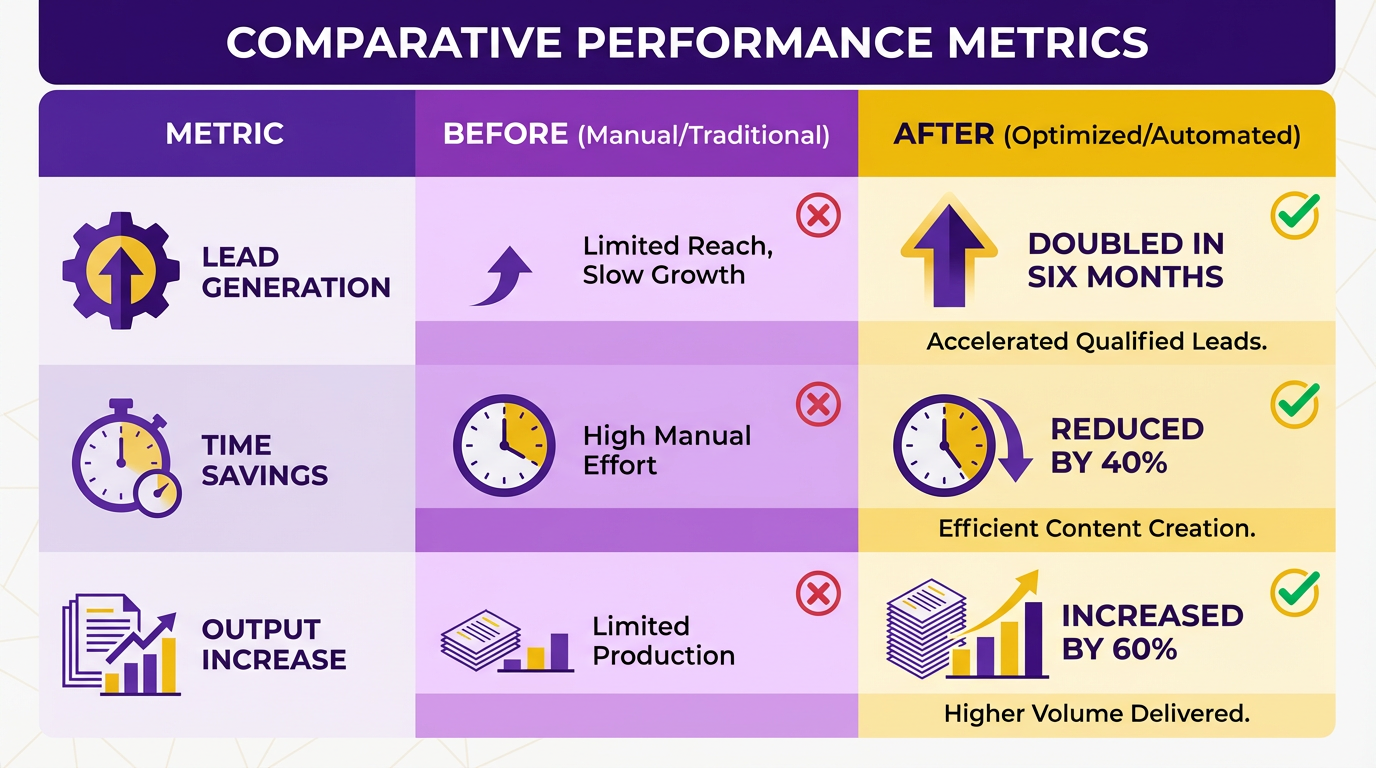
Speed of iteration is the cornerstone of modern content marketing. One company doubled its lead generation in six months by testing, analyzing, and refining content weekly instead of monthly. By adopting AI-powered tools, they reduced the time spent on content creation by 40% while increasing output volume by 60%. As mentioned in the using AI for Automated Content Generation section, these tools enable teams to scale production while maintaining quality.
In 2026, the fastest teams win. A business focused on SaaS solutions used AnyPost.ai’s automation to generate draft blog posts and social media snippets simultaneously. They tested headlines using A/B testing tools and published winning variations within hours. This approach cut their time-to-insight from weeks to days.
For example, a marketing team launched a campaign on AI-driven customer support. They created three versions of a blog post, published them to a small audience, and used real-time analytics to adjust tone and structure. Within a week, they scaled the best-performing version across platforms. This agile workflow reduced wasted effort and maximized ROI.
The ability to tweak content on the fly saved us months of trial and error.
User-generated content (UGC) remains a top strategy for building trust and community. One brand increased engagement by 75% by crowdsourcing testimonials and tutorials from customers. They incentivized submissions with early access to new features, creating a feedback loop of value. As mentioned in the Ensuring Content Transparency and Buyer Trust section, authenticity is critical for fostering long-term relationships.
In 2026, UGC thrives when paired with AI curation. A fitness app used AnyPost.ai to scan social media for user workout videos, then repurposed the best clips into compilations. These authentic, diverse stories outperformed branded content by 3x in shares and comments.
Another provider in this space encouraged users to submit short-form videos explaining how they solved a common problem. The company curated these into a series titled “Real Solutions, Real People,” which became their top-performing asset. This strategy reduced their need for in-house production while expanding their content library.
UGC also drives SEO. By embedding customer reviews directly into product pages, one e-commerce site improved its search rankings for long-tail keywords like “eco-friendly backpacks for hiking.” This zero-cost tactic boosted organic traffic by 25% in three months.
Zero-visit visibility means capturing audience attention before they land on your site. A travel blog achieved this by publishing structured schema-rich guides to platforms like Google find and Pinterest. Their content appeared as rich snippets, answering user questions directly in search results. Building on concepts from the Integrating Content Across Channels with IMC section, this approach ensures consistent messaging across platforms while maximizing reach.
For instance, when someone searched “best beaches in Bali,” the blog’s guide showed up as a carousel with images and key stats. Though users didn’t click through, the visibility increased brand searches by 40% and direct traffic by 15% over six months.
Another provider in this space used voice search optimization to dominate smart speaker queries. They structured FAQs for questions like “How to book a flight under $200?” and saw their content featured as “position zero” answers. This strategy reduced the need for paid ads while driving consistent qualified leads.
AnyPost.ai’s tools help teams automate schema tags and voice-search keywords, making zero-visit visibility scalable. One company reported a 20% drop in bounce rate after using these techniques to align content with user intent.
The Endless Customers System: Framework for Consistent Content
The Endless Customers System is a content marketing framework designed to maintain consistency while adapting to evolving customer needs. At its core, it combines customer-centricity, personalization, and data-driven iteration to create a cycle of engagement that keeps audiences returning. Unlike generic content strategies, this system prioritizes understanding customer pain points and preferences upfront, then aligning content creation with those insights. For example, if your audience struggles with time management, your content should offer step-by-step solutions rather than general tips. This approach ensures every piece of content addresses a specific need, increasing its relevance and impact. As mentioned in the Defining Your Content Marketing Vision section, aligning content with measurable goals and audience insights is critical for long-term success.
How Do You Build a Customer-Centric Content Strategy?
A customer-centric strategy starts with defining customer personas and mapping their journeys. Use surveys, analytics, and feedback to identify their goals, challenges, and content consumption habits. For instance, a B2B audience might prefer in-depth whitepapers, while a retail audience might engage more with visual tutorials. Once you have this data, structure your content around their stages of the buyer’s journey: awareness, consideration, and decision. Building on concepts from the Why Content Marketing Matters section, addressing fragmented audience interactions through tailored content ensures deeper engagement.
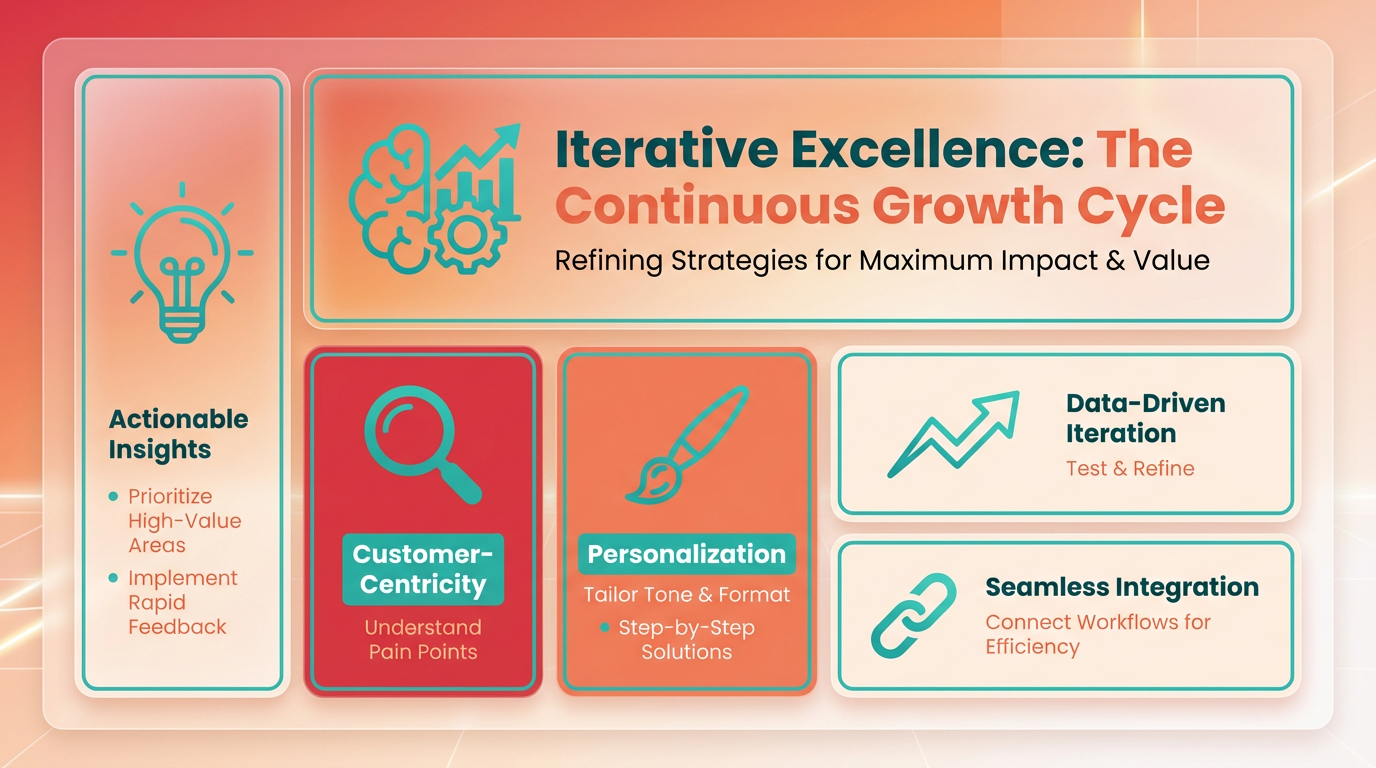
Next, integrate personalization at scale. Tools like AnyPost.ai allow you to automate tailored content suggestions based on user behavior. For example, if a visitor reads three articles about project management software, they might receive a curated email with related resources. This reduces friction and increases conversion rates. Avoid generic messaging-every post, email, or social update should feel relevant to a specific segment of your audience.
What Makes a Content Calendar Effective in 2026?
A content calendar isn’t just a schedule-it’s a dynamic roadmap aligned with customer needs and business goals. Start by defining themes that address recurring customer questions or industry trends. For example, if your audience frequently asks about AI tools for marketing, dedicate a quarter to exploring use cases, comparisons, and tutorials. Break your calendar into weekly sprints rather than rigid monthly plans. This allows you to pivot quickly based on performance data or breaking trends. Use templates for common formats (e.g., blog posts, social media snippets) to save time. For instance, a single case study can generate 10+ social posts, a webinar, and a blog post. Tools like AnyPost.ai streamline this process by suggesting repurposing opportunities based on your existing content.
Repurposing is critical. A 2026 study highlights that companies updating 30% of their old content see a 25% increase in traffic. Transform outdated blogs into infographics, turn webinar recordings into quote cards, or split long-form guides into short videos. This not only saves time but also keeps your content fresh for new audiences. As mentioned in the Ensuring Content Transparency and Buyer Trust section, maintaining authenticity through updated and accurate content strengthens audience relationships.
How Do Data and Analytics Optimize Content Marketing?
Data isn’t just for post-campaign analysis-it’s a strategic tool to refine content in real time. Track metrics like engagement rates, bounce rates, and conversion paths to identify what resonates. For example, if a video tutorial gets twice the shares of a blog post on the same topic, prioritize video creation. Use A/B testing to experiment with headlines, CTAs, and formats. A/B testing tools can reveal subtle shifts in audience preferences, such as favoring “How-To” titles over “Tips.” Combine this with user-generated content (UGC) strategies, as highlighted in the Ensuring Content Transparency and Buyer Trust section, which shows UGC improves trust and engagement. Encourage customers to share their experiences, then repurpose those stories into testimonials or case studies.
Finally, revisit analytics monthly to adjust your strategy. One company saved 50% on content production costs by reallocating resources to high-performing formats. This iterative approach ensures your strategy evolves with your audience, avoiding wasted effort on outdated tactics. By embedding customer insights, agile planning, and data optimization into your workflow, the Endless Customers System turns content marketing into a self-sustaining engine. The goal isn’t just to publish consistently but to create a feedback loop where every piece of content informs the next, keeping your audience engaged and your strategy sharp.
Frequently Asked Questions
1. Why is content marketing more cost-effective than traditional ads in 2026?
Content marketing generates 3x more cost-efficient leads than traditional ads, with 68% of B2B marketers relying on it. Value-focused strategies build trust without interrupting audiences, making them more sustainable and scalable for long-term growth.
2. How does a trust ecosystem improve lead generation?
A trust ecosystem combines case studies, tutorials, and thought leadership to establish credibility. For example, a SaaS company boosted qualified leads by 40% in 2025 by positioning itself as an authority through consistent, educational content.
3. What content formats do 2026 audiences prioritize?
Audiences in 2026 prefer educational, entertaining, or problem-solving content over direct sales pitches. Structured strategies focusing on these formats drive engagement, as seen in successful campaigns highlighted in the article.
4. How can tools like AnyPost.ai aid content marketing?
Tools like AnyPost.ai streamline consistency across formats, from social posts to long-form guides. This ensures cohesive messaging and saves time, allowing teams to focus on creating high-quality, audience-focused content.
5. How long does it take to see results from a content strategy?
Measurable results often appear within 3-6 months of consistent effort. Structured strategies, like the trust ecosystem approach, accelerate outcomes by building authority and trust incrementally over time.
6. What metrics should businesses track for content success?
Track qualified leads, engagement rates, and trust metrics like website traffic and backlinks. The article’s case studies show these metrics improved by 30-40% for brands using structured, value-driven content approaches.
7. How does content marketing address fragmented markets?
Content marketing targets fragmented digital markets by providing tailored, value-focused solutions. Since 68% of B2B lead generation now relies on it, businesses use educational content to engage audiences where they are, avoiding generic interruption-based ads.
