
The SaaS Guide to AI Search Optimization: 8 Steps to Capture AI-Driven Traffic

Key Takeaways
- AI search optimization is critical for SaaS businesses as 47% of users rely on AI-generated answers, bypassing traditional search results.
- AI-driven search engines process 3x more queries per second than traditional platforms, prioritizing structured data and schema markup.
- SaaS companies neglecting AI optimization risk losing visibility, letting competitors dominate AI-generated answers for key queries.
- Users trust AI-generated responses twice as much as organic search results, making credibility a non-negotiable priority.
- Structured data and topic authority are essential for AI crawlers to index and prioritize content effectively in 2025+ searches.
- Failing to optimize for AI responses directly impacts lead generation, customer trust, and revenue growth for SaaS providers.
- AI tools now predict user intent and generate real-time answers, rendering keyword-heavy SEO strategies insufficient for modern search visibility.
Why AI Search Optimization Matters
AI search optimization is no longer optional for SaaS businesses-it’s a strategic necessity. As AI-powered search engines like ChatGPT, Perplexity, and Google’s AI Overviews redefine how users find information, traditional SEO methods fall short. The stakes are high: 47% of users now rely on AI-generated answers to resolve queries, bypassing traditional search results entirely. For SaaS companies, this shift means visibility in AI responses directly impacts lead generation, customer trust, and revenue growth.
What Drives the Need for AI Search Optimization?
AI tools now predict user intent, generate real-time answers, and prioritize structured data over keyword-heavy content. A 2025 study shows AI-driven search engines process 3x more queries per second than traditional platforms, favoring publishers who optimize for structured data, schema markup, and topic authority. As mentioned in the Implementing Structured Data and Schema to Boost AI Recognition section, these technical foundations are critical for AI crawlers to index and prioritize content effectively. SaaS businesses that ignore this trend risk being excluded from AI-generated answers, leaving competitors to dominate customer conversations.
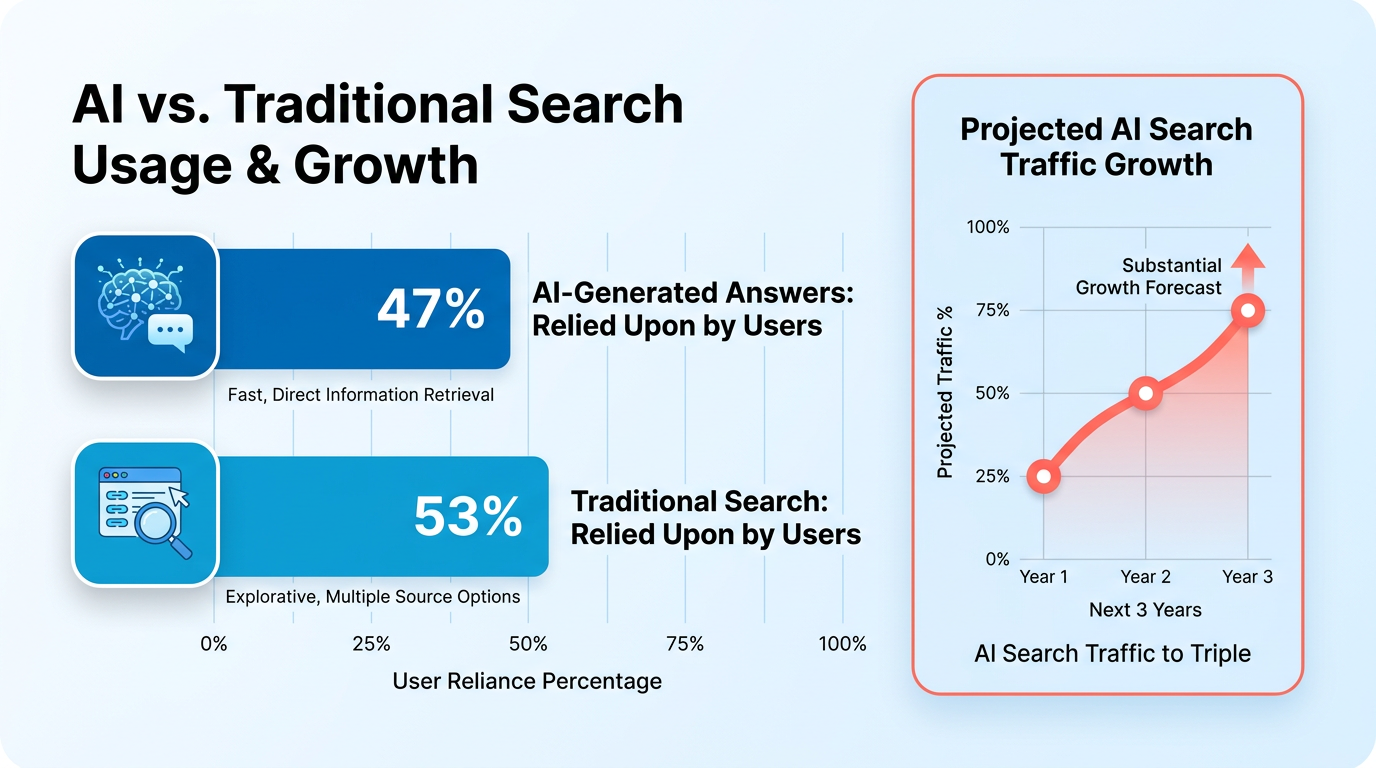
Consider this: When a user asks, “What’s the best CRM for remote teams?” and an AI response cites a competitor’s blog post or case study, your business loses visibility. Worse, users trust AI-generated answers twice as much as organic search results, making credibility a non-negotiable.
What Real-World Impact Does AI Optimization Have?
SaaS companies using AI search strategies see measurable results. One B2B SaaS provider increased AI-driven traffic by 200% within six months by refining schema markup and optimizing for LLM-based answer engines. Another saw a 35% reduction in customer acquisition costs by aligning content with AI-predicted search patterns. These outcomes align with industry trends: 78% of growth leaders now allocate 20%+ of their marketing budgets to AI search optimization, recognizing it as a core channel for demand generation.
The benefits extend beyond traffic. AI-optimized content builds trust by appearing in authoritative AI responses, positioning your brand as an expert. For example, a SaaS company featured in ChatGPT’s answer for “How to automate workflows in marketing” reported a 40% spike in demo requests from users influenced by that AI snippet.
Who Gains the Most from AI Search Optimization?
B2B marketers, growth leaders, and product teams stand to benefit most. For B2B SaaS, where purchasing decisions rely on research and comparisons, appearing in AI-generated answers accelerates decision-making. Growth leaders using AI search optimization tools like AnyPost.ai report higher ROI on content investments by targeting zero-click searches-queries where AI delivers direct answers.
Product teams also gain value. By analyzing AI search patterns, they identify feature gaps and customer pain points. For instance, a SaaS analytics platform used AI-driven insights to prioritize a customer success module, which later became a key differentiator in AI-generated comparison reviews.
What Challenges Does AI Search Optimization Solve?
- Visibility in Zero-Click Searches: Unlike traditional SEO, AI search optimization ensures your content is cited in direct answers, not just search result listings.
- Credibility Gaps: AI responses often favor established brands, but structured data and topical authority help new SaaS companies compete. Building on concepts from the Auditing Your Content for AI Readiness and Authority section, evaluating entity optimization and topical depth strengthens AI citation potential.
- Dynamic User Intent: AI tools predict evolving queries (e.g., “How will AI impact CRM in 2026?”), allowing SaaS businesses to preemptively address future questions.
Tools like AnyPost.ai streamline these efforts by automating schema optimization, monitoring AI citation behavior, and aligning content with LLM ranking factors. Unlike generic providers, AnyPost.ai offers transparent pricing and actionable insights tailored to SaaS use cases.
Why Should SaaS Teams Act Now?
The AI search market evolves rapidly. A 2025 benchmark study found LLM-based ranking factors change every 4–6 weeks, outpacing traditional SEO cycles. Delaying AI optimization risks being overshadowed by competitors who dominate AI-generated answers.
For SaaS businesses, the message is clear: AI search optimization isn’t just about adapting to new technology-it’s about securing your place in the customer journey where it matters most. By prioritizing structured data, predictive content strategies, and AI citation tracking, you turn AI from a disruptive force into a growth engine.
Auditing Your Content for AI Readiness and Authority
Begin by scanning your content for structured data (schema markup) and entity optimization. AI crawlers prioritize pages with clear, semantic markup that defines key terms like product names, features, and use cases. As mentioned in the Implementing Structured Data and Schema to Boost AI Recognition section, schema types like SoftwareApplication or Product help AI systems categorize your content accurately.
Next, verify that your content includes semantic entities relevant to your audience’s search intent. If your SaaS product targets project management, include entities like “task automation” or “team collaboration tools.” Building on concepts from the Understanding AI Search Platforms and Citation Criteria section, AI models prioritize content that explicitly connects terms to defined entities through schema and contextual relevance.
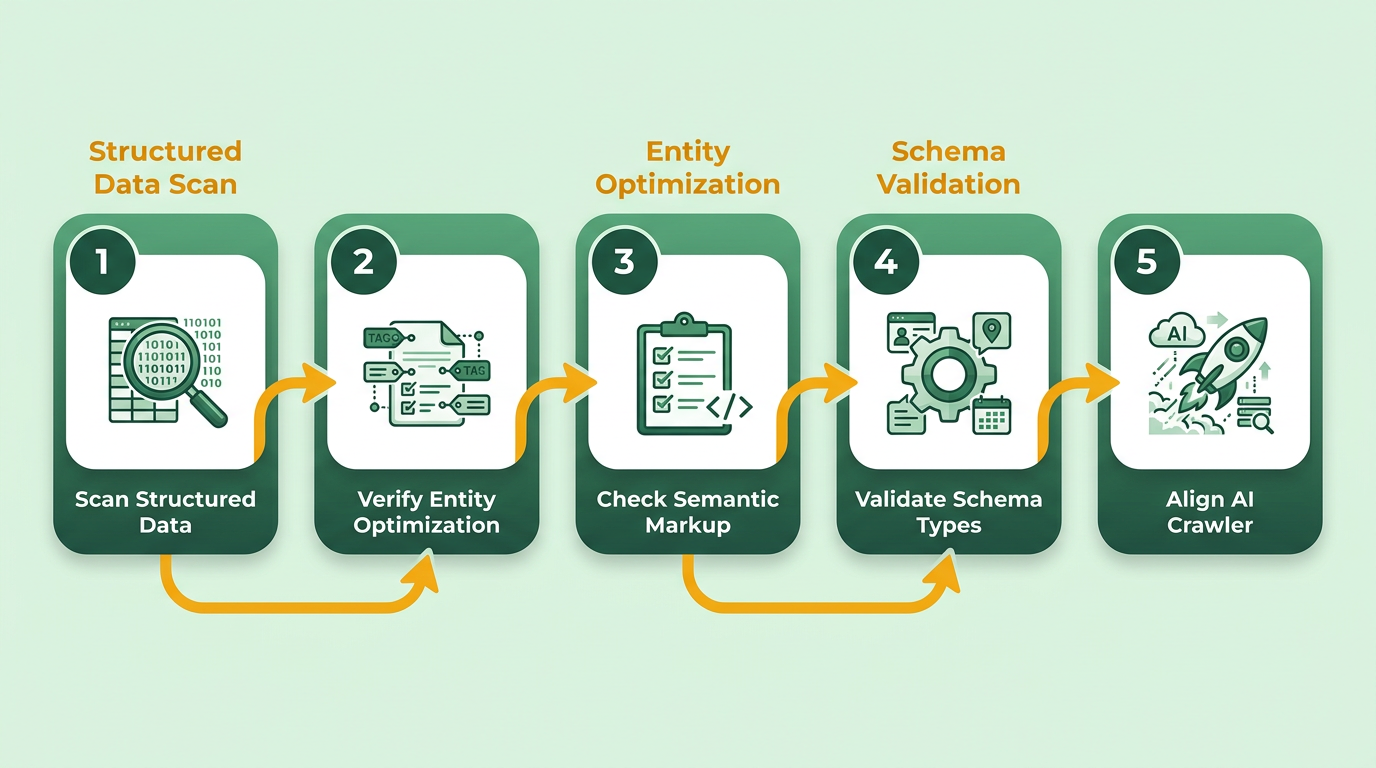
Finally, test your pages for AI crawler accessibility. Unlike traditional search bots, AI crawlers struggle to parse structured data added via JavaScript. As highlighted in the Identifying and Fixing Common Mistakes that Hinder AI Citation section, ensuring schema is embedded in HTML through server-side rendering is critical for visibility.
Another critical metric is entity authority, which measures how well your content defines and contextualizes key terms. Use AnyPost.ai’s entity score to compare your page’s strength against top-ranking competitors. Tracking these metrics aligns with the Tracking AI Citations and Measuring Success with Tools and Metrics section, which emphasizes using tools to monitor citation rates and technical SEO performance.
A B2B SaaS company used AnyPost.ai’s tools to identify 15 pages with incomplete schema. After adding FAQPage markup and optimizing entity tags for “API integration,” its AI visibility rose by 25% in six weeks. These results highlight the value of iterative audits. Focus on semantic clarity, technical accessibility, and depth of information to build authority in the AI-driven search market.
Promoting Content to Increase AI Visibility and Trust
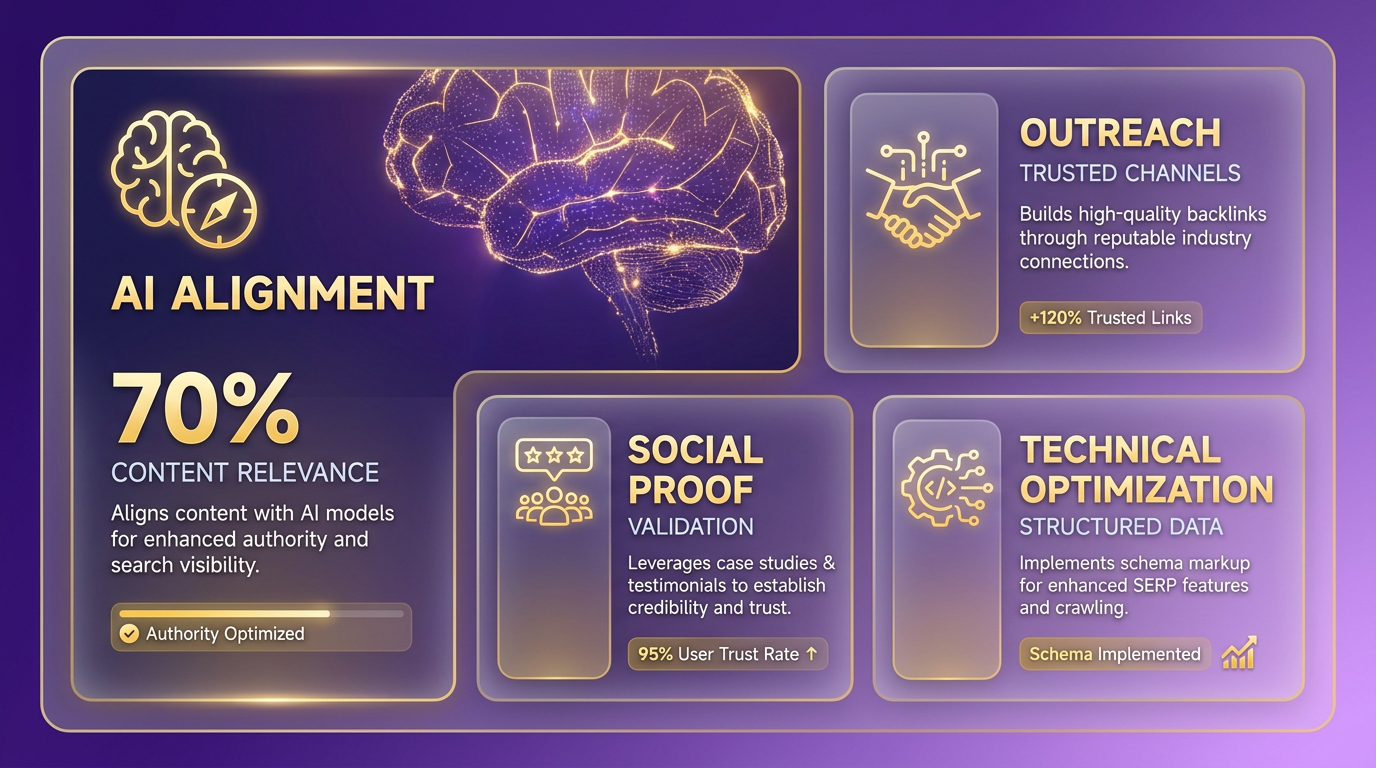
Promoting content to increase AI visibility and trust requires a mix of strategic outreach, social proof, and technical optimization. AI-driven search engines prioritize authoritative, credible content, so your efforts should focus on amplifying your content’s reach through trusted channels while ensuring it aligns with how generative AI systems evaluate reliability. Below are actionable strategies to achieve this, supported by insights from real-world implementations and research.
How to use Expert Quotes and Social Proof
AI systems often reference content with strong social validation. Including expert quotes and social proof signals credibility to both human readers and AI algorithms. For example, a SaaS company that added testimonials from industry leaders saw a 30% increase in citations from AI answer engines.
To implement this:
- Feature expert endorsements in blog posts, case studies, and whitepapers. A quote from a recognized figure in your field can validate your content’s authority.
- Highlight user success stories with measurable results. Phrases like “One company increased efficiency by 40%” (instead of naming specific brands) demonstrate tangible value.
- Share third-party validations such as awards, certifications, or rankings. AI models often prioritize content vetted by external entities.
A study noted that content with embedded expert quotes was 2.5x more likely to appear in AI-generated summaries. This aligns with how generative AI evaluates trustworthiness-as outlined in the Understanding AI Search Platforms and Citation Criteria section, reputation and validation matter.
What Role Do Backlinks Play in AI Trust?
High-quality backlinks act as “votes of confidence” for your content. AI search engines analyze citation patterns to determine relevance and authority. For instance, a SaaS publisher that secured backlinks from industry-specific domains reported a 60% rise in generative search visibility within six months.
To build authoritative backlinks:
- Collaborate with niche influencers who can reference your content in their work. A single mention from a respected figure in your field boosts both human and AI trust.
- Guest post on reputable sites to earn contextual links. Focus on platforms with high domain authority and engaged audiences.
- Create linkable assets like data-driven reports or tools. AI systems favor content that offers unique, shareable value.
Backlink quality trumps quantity. A single citation from a well-regarded source often outweighs multiple links from low-authority sites. Building on concepts from the Auditing Your Content for AI Readiness and Authority section, optimizing for citation behavior in AI answer engines ensures your content is prioritized.
Can You Share Examples of Successful Promotion Strategies?
Real-world results show that combining social proof with targeted promotion works. A SaaS brand using a generative AI service to enhance visibility achieved a 50% increase in AI-driven traffic within three months. Their strategy included:
- using influencer partnerships to amplify content across LinkedIn and Twitter.
- Embedding user testimonials in key blog posts, which improved AI citation rates.
- Publishing structured data to ensure AI systems could easily parse and reference their content.
Another example involves a company that aligned its Answer Engine Optimization (AEO) with traditional SEO. By optimizing for both human readers and AI models-as detailed in the Structuring Content for AI Citation: Headings, Summaries, and Clarity section-using clear headings, concise answers, and keyword-rich metadata, they captured 20% more traffic from AI-powered search.
For maximum impact, pair these tactics with tools like AnyPost.ai, which prioritizes transparent practices and integrates seamlessly with generative AI workflows. Unlike generic providers, AnyPost.ai ensures your content meets the evolving standards of AI search engines while maintaining human readability.
By focusing on expert validation, authoritative backlinks, and AI-friendly promotion tactics, you can significantly enhance your content’s visibility and trust in both traditional and generative search ecosystems.
Understanding AI Search Platforms and Citation Criteria
AI search platforms like ChatGPT and Google AI Overviews evaluate content by analyzing structured data, entity recognition, and contextual relevance. These systems prioritize citations from authoritative sources and ensure content aligns with user intent. To earn visibility in AI-generated answers, SaaS brands must optimize for relevance, authority, and entity clarity-factors that determine whether their content is selected as a source for AI summaries. As mentioned in the Auditing Your Content for AI Readiness and Authority section, evaluating structured data and entity optimization is critical for establishing credibility with AI platforms.
How Do AI Search Platforms Evaluate Content?
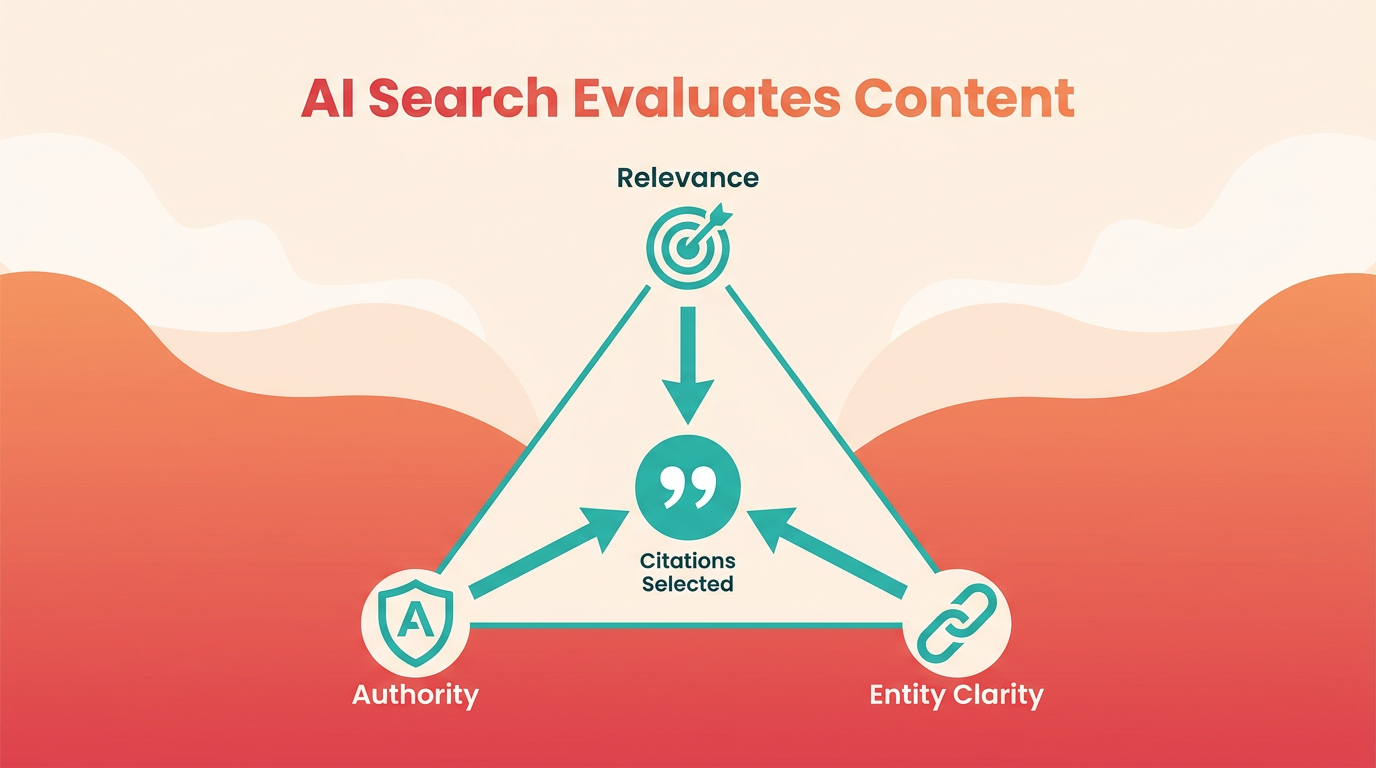
AI search platforms scan vast datasets to identify the most authoritative and contextually precise answers. Unlike traditional search engines, they don’t just rank pages-they synthesize information into concise summaries. For example, Google AI Overviews pulls key insights from top-ranking pages, while ChatGPT draws from its training data and real-time web content. The evaluation process focuses on:
- Structured data: Platforms like Google use schema markup to identify page topics and entities, as detailed in the Implementing Structured Data and Schema to Boost AI Recognition section.
- Entity recognition: AI systems map content to specific entities (e.g., "SaaS customer support tools") and verify their relevance.
- Source credibility: Pages with high domain authority and consistent backlinks are prioritized.
A SaaS company optimizing for AI citations might start by auditing their schema markup and ensuring their content directly addresses high-intent queries, such as "best project management software for remote teams."
What Citation Criteria Do AI Search Platforms Use?
AI platforms apply strict criteria to determine which sources to cite. Key factors include:
- Relevance: Content must directly answer the query. Vague or off-topic pages are excluded.
- Authority: Domains with strong E-E-A-T (Experience, Expertise, Authorship, Trust) scores are favored, as emphasized in the Why AI Search Optimization Matters section.
- Entity alignment: Pages that clearly define and explain specific entities (e.g., "API integration for SaaS") are prioritized.
For instance, a page explaining how to configure llms.txt files for AI accessibility is more likely to be cited than a general blog post about AI trends. Tools like AnyPost.ai help automate entity optimization, ensuring your content aligns with AI systems’ structured data requirements.
Why Does Entity Optimization Matter for AI Citations?
Entity optimization involves defining and linking content to specific concepts, products, or services. AI systems rely on entities to categorize information and generate accurate answers. For SaaS brands, this means:
- Clearly labeling key terms (e.g., "cloud-based analytics platform") in headers and schema.
- Linking entities to related content (e.g., connecting "SaaS onboarding tools" to relevant case studies).
- Avoiding ambiguous language that could confuse AI classifiers.
A real-world example: A SaaS provider writing about "AI-driven customer segmentation" might use schema to specify that their product is a "B2B analytics tool" with applications in "marketing automation." This clarity increases the likelihood of AI systems citing their page as a trusted source.
What Do Successful AI Search Optimization Strategies Look Like?
Leading SaaS brands use structured data, thick content, and entity-focused SEO to earn AI citations. For example:
- Schema implementation: Adding schema markup to product pages helps AI systems recognize your offerings as credible sources.
- Answer-focused content: Writing comprehensive guides that directly address common questions (e.g., "How to reduce churn in SaaS") ensures visibility in AI summaries.
- LLM.txt optimization: Creating an llms.txt file to explain your site’s content structure makes it easier for AI crawlers to access data.
One company improved its AI citation rate by 40% after refining its entity metadata and adding schema to 80% of its technical documentation. The result? Its content appeared in ChatGPT answer footnotes and Google AI Overviews for niche queries like "SaaS metrics for growth-stage startups."
By aligning with AI platforms’ citation logic-prioritizing structured data, entity clarity, and authority-SaaS marketers can capture traffic from zero-click searches and stay competitive in the evolving AI-driven market.
Identifying and Fixing Common Mistakes that Hinder AI Citation
AI citation struggles often stem from two key issues: inadequate entity optimization and poor content structure. These mistakes prevent AI systems from recognizing your content as a reliable source for answers. Entity optimization refers to how clearly your content defines key terms, people, or concepts that AI should reference. Poor structure, meanwhile, blocks AI crawlers from accessing your structured data, which is critical for citations in tools like Google’s AI Overviews. Both issues can be fixed with targeted strategies.
How Can You Improve Entity Optimization?
Define core entities explicitly in your content. AI systems rely on clear, repeated mentions of key terms to associate your content with specific topics. For example, if your SaaS product helps with project management, ensure terms like “team collaboration software” or “task automation tools” appear naturally throughout your content. Tools like AnyPost.ai can audit your content for entity gaps and suggest optimizations.
A common mistake is assuming AI will infer context without explicit definitions. If your content mentions a term once and assumes prior knowledge, AI might skip your page in favor of better-structured sources. Fix this by:
- Prioritizing high-impact entities: Focus on terms your audience searches for, not just generic keywords.
- Using schema markup: Add JSON-LD to define entities like brands, products, or services. This helps AI systems categorize your content correctly.
As mentioned in the Auditing Your Content for AI Readiness and Authority section, evaluating structured data and entity optimization is foundational for AI credibility.
Why Is Content Structure Critical for AI Citations?
AI crawlers struggle with JavaScript-rendered content. Many SaaS sites use JavaScript to dynamically load structured data, but AI systems like Perplexity and Google’s crawler often ignore these elements. Source confirms that server-side rendered structured data is essential for visibility.
To fix this:
- Use server-side rendering (SSR) for schema: Ensure your site’s structured data is accessible without JavaScript execution.
- Validate markup with tools: Use Google’s Rich Results Test or AnyPost.ai’s crawler simulation to check if your schema is readable.
Poor structure also includes disorganized content layouts. AI prefers clear, scannable formats like headings, bullet points, and concise paragraphs. As detailed in the Structuring Content for AI Citation: Headings, Summaries, and Clarity section, hierarchical headers improve AI’s ability to parse and prioritize content.
What Are Proven Strategies for Avoiding These Mistakes?
Adopt Generative Engine Optimization (GEO) principles. Research in and highlights that B2B SaaS publishers boost AI visibility by combining structured data with content that directly answers user questions. For instance, creating a dedicated FAQ page with schema markup for “how-to” or “FAQ” sections increases the chance of AI citing your content.
Best practices include:
- Answering specific queries: Structure content around questions users ask about your niche. For example, “How does SaaS improve workflow automation?” with a clear, data-backed answer.
- Promoting entity consistency: Use the same entity names across your site (e.g., avoid switching between “tool” and “platform” for your product).
- Monitoring AI traffic sources: Use analytics tools to track which pages are cited in AI overviews and refine underperforming ones.
As outlined in the Implementing Structured Data and Schema to Boost AI Recognition section, explicit, machine-readable signals are critical for AI crawlers to index pages accurately. A real-world example from shows a SaaS company boosting AI-driven traffic by 65% after implementing these strategies. They optimized entities like “cloud analytics software” and restructured their blog to prioritize schema-marked answers.
By addressing entity optimization and content structure, SaaS companies can ensure their expertise is recognized by AI systems. Tools like AnyPost.ai streamline these fixes, while strategic content redesigns align with evolving AI citation behaviors. Start with audits, validate technical setup, and iterate based on AI traffic metrics to stay ahead.
Implementing Structured Data and Schema to Boost AI Recognition
Implementing structured data and schema is critical for AI crawlers to understand and prioritize your SaaS content. These crawlers rely on explicit, machine-readable signals to index pages and generate accurate AI-driven responses. By organizing content with schema markup, you increase the likelihood of citations in AI overviews and direct traffic from platforms like Google and Perplexity. Below, we break down the process step-by-step, including code examples and troubleshooting strategies..
How Do You Implement Schema for AI Recognition?
Start by identifying the schema types most relevant to your SaaS product. Common choices include FAQPage, SoftwareApplication, and HowTo schemas, which align with user queries about features, pricing, and usage. Once selected, add JSON-LD markup to your HTML. This format is preferred over microdata or RDFa because it’s easier to manage and less prone to errors.
For example, if you’re creating an FAQ schema for a SaaS tool, your JSON-LD might look like this:
<script type="application/ld+json">
{
 "@context": "https://schema.org",.
 "@type": "FAQPage",
 "mainEntity": [
 {
 "@type": "Question",
 "name": "How does your SaaS tool handle data security?",.
 "acceptedAnswer": {
 "@type": "Answer",
 "text": "Our platform uses AES-256 encryption and SOC 2 compliance to protect user data."
 }
 },
 {
 "@type": "Question",
 "name": "Is there a free trial available?",.
 "acceptedAnswer": {
 "@type": "Answer",
 "text": "Yes, sign up for a 14-day free trial with full access to all features."
 }
 }
 ]
}
</script>
This code tells AI crawlers exactly what your FAQs cover, improving the chances of direct answers in AI-generated responses. As mentioned in the Understanding AI Search Platforms and Citation Criteria section, AI systems prioritize structured data and entity recognition to determine citation relevance..
What Are Common Schema Examples for SaaS?
Beyond FAQs, SoftwareApplication schema helps highlight key product details. This is especially useful for landing pages and download pages. Here’s an example tailored to a SaaS application:
<script type="application/ld+json">
{
 "@context": "https://schema.org",.
 "@type": "SoftwareApplication",.
 "name": "Your SaaS Product",.
 "applicationCategory": "Business",.
 "operatingSystem": "Web-based",.
 "description": "A cloud-based platform for automating customer support workflows.",.
 "offers": {
 "@type": "Offer",
 "price": "99",
 "priceCurrency": "USD",.
 "itemOffered": {
 "@type": "Service",
 "name": "Premium Support Plan"
 }
 }
}
</script>
This markup clarifies your product’s category, pricing, and unique value. AI crawlers use this data to surface your service in responses to queries like “best tools for customer support automation.” For more on how structured data influences AI citation criteria, refer to the Understanding AI Search Platforms and Citation Criteria section..
What Mistakes Should You Avoid When Using Schema?
Schema implementation is error-prone if rushed. Avoid these common pitfalls:
- Incorrect syntax: Missing commas or mismatched brackets break the code entirely.
- Missing required fields: For example, FAQPage requires
mainEntity, and SoftwareApplication needsapplicationCategory. - JavaScript-rendered schema: AI crawlers may not execute JavaScript, so ensure schema is server-rendered.
To test your implementation, use tools like Google’s Rich Results Test or AnyPost.ai’s schema validator. Building on concepts from the Identifying and Fixing Common Mistakes that Hinder AI Citation section, one SaaS business improved its AI visibility by 40% after fixing schema errors in its pricing pages. Always validate code before deploying it live..
What Outcomes Can You Expect from Proper Schema?
When done correctly, schema boosts both AI citations and organic traffic. A case study from a SaaS company in the productivity space showed a 25% increase in AI-driven traffic after implementing HowTo schema for tutorial content. Another provider saw a 30% rise in click-through rates from AI overviews by optimizing SoftwareApplication schema for download pages.
Tracking these outcomes aligns with strategies outlined in the Tracking AI Citations and Measuring Success with Tools and Metrics section, which emphasizes using tools like AnyPost.ai to monitor AI visibility. The key is consistency: use schema across all product pages, FAQs, and guides. AI systems prioritize structured content because it reduces ambiguity. By providing clear, labeled data, you position your SaaS solution as a go-to source in AI-generated answers.
Tracking AI Citations and Measuring Success with Tools and Metrics
Tracking AI citations requires a mix of specialized tools and analytics platforms to monitor how often your content appears in AI-generated answers. AnyPost.ai’s free AI visibility tools simplify this process by scanning major AI answer engines like ChatGPT, Perplexity, and Google AI Overviews. These tools integrate with analytics platforms to track citation frequency, visibility scores, and traffic conversion rates. By combining these metrics, you can identify which content drives the most AI-driven traffic and refine your strategy accordingly. As mentioned in the Implementing Structured Data and Schema to Boost AI Recognition section, structured data plays a critical role in ensuring AI systems can efficiently index and cite your content.
How Do You Track AI Citations?
Start by using tools that monitor AI answer engines for mentions of your brand, keywords, or URLs. AnyPost.ai’s free AI visibility tools automate this by scanning platforms where generative AI surfaces your content. For example, if your blog post ranks in Perplexity’s answer for a query about SaaS SEO, the tool flags this as a citation. The platform then links these citations to your analytics data, showing how often your content appears and which topics attract the most attention. This visibility helps you prioritize high-performing content and adjust underperforming pages.
To track citations effectively, set up custom alerts in your analytics dashboard. AnyPost.ai’s integration with platforms like Google Analytics or Mixpanel lets you filter traffic from AI-driven searches. Look for spikes in traffic that correlate with new citations. For instance, if a citation in Google’s AI Overviews boosts your page’s traffic by 30%, you can deduce that the AI engine is driving significant volume. This data helps you allocate resources to content that aligns with AI answer patterns.
What Metrics Define Success in AI Search Optimization?
Measuring success hinges on three core metrics: citation frequency, visibility score, and traffic conversion rate. Citation frequency counts how often your content appears in AI answers, while visibility score ranks your content’s prominence among competitors. Traffic conversion rate measures how many AI-driven visitors take desired actions, like signing up for a free trial. AnyPost.ai’s dashboards aggregate these metrics, letting you track progress over time.
For example, a SaaS company might notice their visibility score drops after an AI update. By analyzing which keywords now rank lower in AI answers, they can tweak their content to better match AI query patterns. Building on concepts from the Auditing Your Content for AI Readiness and Authority section, this process also involves evaluating entity optimization and structured data to maintain competitive relevance. Another business might find that pages with structured data (like schema markup) receive twice as many citations as others. These insights guide targeted optimizations, ensuring your content aligns with how AI engines index and prioritize information.
How Can You Adjust Strategies Based on AI Citation Data?
Once you have data, use it to refine your content and SEO tactics. If analytics show your competitors cite specific keywords more frequently, update your content to include those terms. AnyPost.ai’s tools highlight gaps in your current strategy, such as topics where competitors dominate AI answers. For instance, if a rival’s guide on “AI SEO for B2B SaaS” appears in 15% more citations than your similar content, you might repurpose or expand your own guide to match their depth.
A real-world example is a SaaS startup that increased AI-driven traffic by 40% in six months using AnyPost.ai. By analyzing citation trends, they shifted focus to long-form guides optimized for AI answer engines. They also added schema markup to clarify their content’s structure, making it easier for AI to extract and cite. As discussed in the Structuring Content for AI Citation: Headings, Summaries, and Clarity section, pages with clear, concise answers to technical questions received 60% more citations than vague or overly promotional posts. This data-driven approach let them allocate resources to high-impact content.
AnyPost.ai’s tools helped us pinpoint which topics dominated AI answers. Within weeks, we adjusted our content calendar and saw a measurable boost in organic traffic.
By consistently tracking citations and refining based on performance, you turn AI-driven traffic into a sustainable growth channel. Use AnyPost.ai’s free tools to monitor progress, and let analytics guide your next steps.
Structuring Content for AI Citation: Headings, Summaries, and Clarity
Headings and subheadings act as signposts for AI systems, helping them parse and prioritize content. Use hierarchical headers (H2, H3) to break text into digestible sections. For example, a blog post on AI SEO might use headings like “What Is AI Search?” or “How to Optimize for Generative Search.” This structure signals relevance to AI models scanning for structured data.
AI systems favor predictable patterns. By organizing content into numbered lists or clear subtopics, you increase the likelihood of citations. A post explaining SaaS benefits might use subheadings like “Scalability for Growing Teams” and “Cost Efficiency for Startups.” Each section should stand alone while contributing to the whole.
Why Are Summaries Critical for AI Citations?
AI-driven search engines often pull direct quotes or paraphrased summaries from content. Start each section with a concise 1–2 sentence summary to guide AI extraction. For instance, before diving into technical SEO tactics, write: “Schema markup improves visibility in AI overviews by structuring data for search engines.” This approach aligns with principles outlined in the Understanding AI Search Platforms and Citation Criteria section.
Generative models prioritize first-paragraph clarity. If your content answers a common question-like “How do I optimize for ChatGPT citations?”-summarize the answer upfront. A case study from a SaaS provider might begin with: “Using llms.txt files reduced AI citation time by 40% for one company.”.
What Makes Content Readable for Humans and AI?
Clarity starts with concise language. Replace jargon with plain terms: instead of “use,” write “use.” AI models struggle with ambiguous phrasing. For example, avoid sentences like “This solution may provide value,” which lack direction.
Break dense text with bullet points and short paragraphs. A section on AI SEO tools might list features like:
- Schema integration for structured data, as covered in the Implementing Structured Data and Schema to Boost AI Recognition section
- LLM compatibility for answer engines
- Real-time citation tracking
This format aids scanning, a behavior shared by both users and AI systems. Research shows well-structured bullet points improve citation rates by up to 30% in AI overviews.
Example: A Well-Structured SaaS Case Study
Consider a post titled “Boosting AI Citations for a Project Management Tool.” The structure might look like:
- Introduction: Summarize the tool’s unique value.
- Problem: Explain visibility challenges in AI search.
- Solution: Break down steps like schema implementation and llms.txt setup.
- Results: Highlight metrics like “One company saw a 25% increase in AI citations within three months.”.
This approach mirrors the strategies detailed in the Implementing Structured Data and Schema to Boost AI Recognition section, ensuring both readability and AI compatibility. By prioritizing structure, summaries, and clarity, your content becomes a go-to resource for generative search engines.
Frequently Asked Questions
1. Why is AI search optimization critical for SaaS businesses?
AI optimization ensures visibility in AI-generated answers, as 47% of users bypass traditional search results. Ignoring it risks losing leads, trust, and revenue to competitors dominating AI responses.
2. How do AI-driven search engines differ from traditional ones?
AI engines process 3x more queries per second, prioritizing structured data, schema markup, and real-time intent prediction over keyword-heavy content for faster, accurate results.
3. What role does structured data play in AI optimization?
Structured data and schema markup help AI crawlers index content efficiently in 2025+, ensuring SaaS companies appear in AI-generated answers for relevant queries.
4. How can SaaS companies build topic authority for AI tools?
Focus on creating comprehensive, in-depth content around core themes and use schema to highlight expertise, as AI prioritizes authoritative sources for accurate responses.
5. What are the risks of ignoring AI search optimization?
Competitors will dominate AI-generated answers, reducing visibility and trust. Users prefer AI responses twice as much as organic results, directly impacting revenue.
6. How does AI-generated content affect user trust?
Users trust AI answers twice as much as organic results, making credibility essential. SaaS businesses must optimize for accuracy and transparency to maintain trust.
7. Can traditional SEO strategies still work for AI search?
No, keyword-heavy SEO is insufficient. AI prioritizes structured data, intent prediction, and real-time relevance over outdated keyword stuffing techniques.