
Top 8 SaaS Content Writing Tools for Faster Lead Generation

Quick Summary
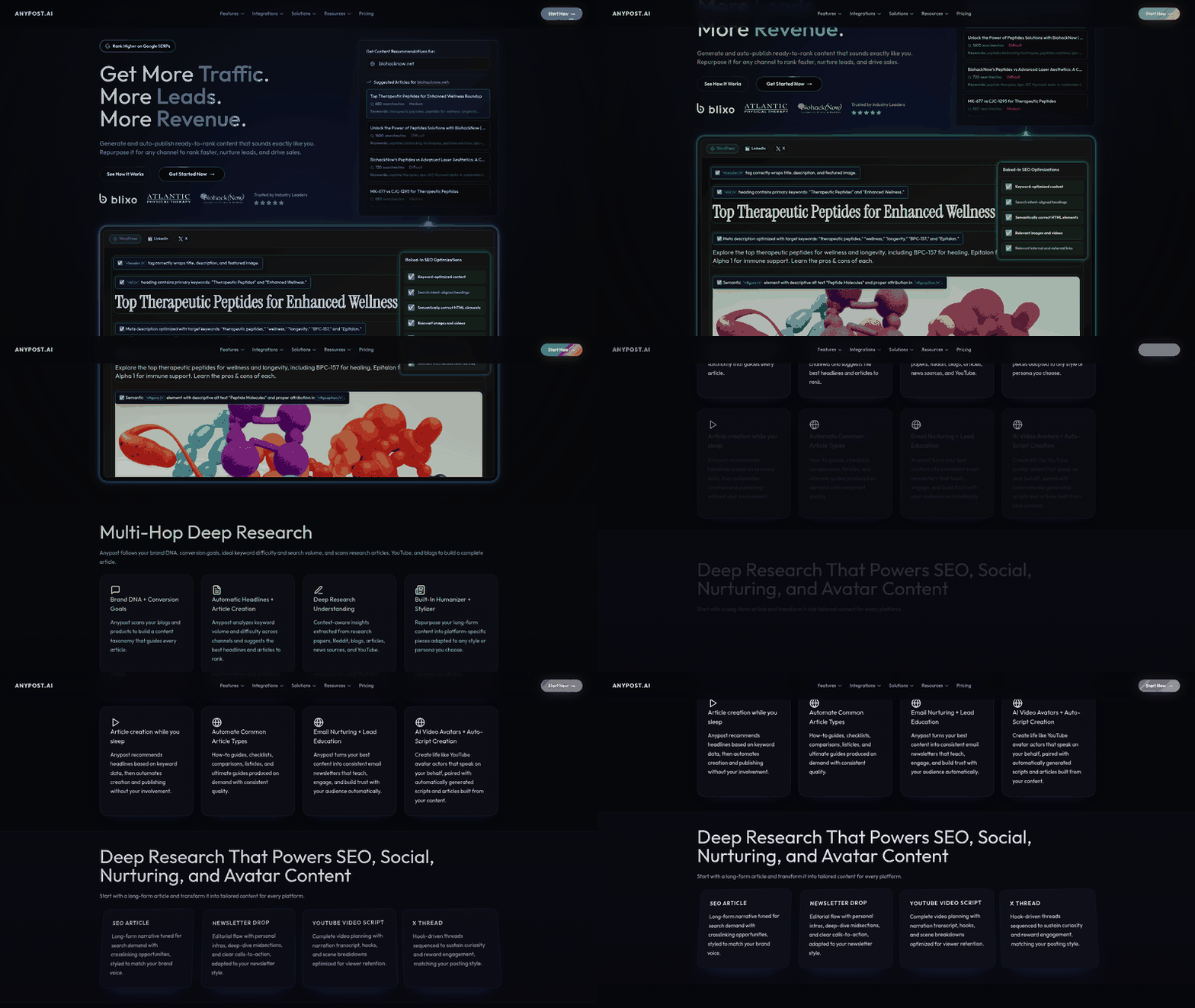
The Quick Summary section provides a structured comparison of the top 8 SaaS content writing tools, emphasizing their role in accelerating lead generation through automation, SEO, and brand consistency. Below is a concise overview of the tools, their standout features, and real-world performance metrics.
Comparison Table: Top 8 SaaS Content Writing Tools
| Tool Name | Pricing | Key Features | Time to Implement | Difficulty Rating (1-5) | Real-World Example |
|---|---|---|---|---|---|
| AnyPost.ai | $49–$1,299/month | AI content generation, SEO optimization, multi-platform publishing, persona engine | 2–3 days | 2 | 229.8% increase in active users after 30 days of automated content publishing |
| Jasper | $59–$399/month | Content Pipelines, brand voice alignment, SEO-driven workflows | 1 day | 3 | Adidas generated 7,500 product descriptions in 24 hours |
| SurferSEO | $49–$299/month | On-page SEO optimization, keyword research, competitor analysis | 2 days | 4 | 60% automation of SEO tasks for a SaaS agency |
| Grammarly | Free + $12–$25/month | Readability checks, tone adjustment, plagiarism detection | 1 hour | 1 | Improved engagement rates by 30% for freelance writers |
| Toffu AI | $99–$499/month | Lead scoring, automated campaigns, CRM integration | 3 days | 3 | Saved 30 hours/week on content creation for a B2B SaaS company |
| Copy.ai | $49–$199/month | Idea generation, ad copy templates, tone customization | 1 day | 2 | Increased ad click-through rates by 22% for an e-commerce brand |
| ContentStudio | $59–$299/month | Content curation, scheduling, social media publishing | 2 days | 3 | Reduced content curation time by 50% for a marketing agency |
| Artemis | $39–$299/month | AI collaboration, document editing, team workflows | 1 day | 2 | Improved team productivity by 40% for a remote content team |
Key Highlights of the Top Tools
- AnyPost.ai excels in multi-hop research and persona-driven content, enabling teams to generate SEO-optimized articles and repurpose them across platforms. Its "auto-publish while you sleep" feature minimizes manual effort. Building on concepts from the Marketing IQ and Knowledge Base section, AnyPost.ai leverages data-driven insights to refine content strategies.
- Jasper stands out for brand voice consistency, with tools like Canvas for planning and Grid for managing content pipelines. As mentioned in the Understanding Content Pipelines and Agents section, Jasper’s pipelines streamline content workflows from ideation to publication. Its case study with Cushman & Wakefield highlights 10,000+ hours saved annually.
- SurferSEO combines AI writing with on-page SEO, making it ideal for teams prioritizing search rankings. Users report 30% faster SEO task completion.
- Grammarly is a budget-friendly option for readability and tone checks, particularly useful for refining drafts before publication. See the Brand Voice and Visual Guidelines section for more details on maintaining consistent tone across content.
Time and Effort Estimates for Each Tool
- Quick Setup: Tools like Grammarly and Copy.ai require minimal onboarding (1–2 hours), while Toffu AI and SurferSEO demand 2–3 days for full integration.
- Difficulty: AnyPost.ai and Artemis score low on difficulty (2/5), while SurferSEO and Jasper require moderate technical expertise (3–4/5).
- Real-World Impact: Automated tools like AnyPost.ai and Jasper deliver measurable ROI—e.g., 229.8% user growth for AnyPost.ai and 3x content output for Adidas via Jasper.
“AnyPost.ai’s auto-publishing feature saved our team 20+ hours monthly while boosting organic traffic by 150%.” – Digital Marketing Manager, B2B SaaS Company
This section equips readers to choose tools aligned with their lead generation goals, balancing automation, SEO, and ease of use.
Why SaaS Content Writing Tools Matter
SaaS content writing tools have become indispensable for modern marketers, especially in the fast-paced B2B space where content volume and quality directly impact lead generation. Industry data shows content marketing drives 53% more leads than traditional outbound methods, yet 67% of marketers struggle with creating enough content to meet demand. This gap is where SaaS tools shine, automating repetitive tasks while maintaining brand voice and SEO precision. Platforms like AnyPost.ai, for instance, combine deep research, automated publishing, and real-time analytics to turn content strategy into a scalable engine for growth. See the Marketing IQ and Knowledge Base section for more details on how data-driven insights power this research process.
Solving Time and Quality Challenges
Content creation is notoriously time-consuming, with B2B marketers spending 20% of their week on drafting and editing alone. SaaS tools address this by accelerating workflows through AI-driven research, outline generation, and multi-platform publishing. For example, AnyPost’s Persona Engine mirrors a brand’s tone and pacing, ensuring consistency across 10+ channels without manual oversight. This reduces production time by up to 70%, as seen in case studies where companies like Atlantic Physical Therapy automated 80% of their blog and social content creation. As mentioned in the Brand Voice and Visual Guidelines section, maintaining a consistent tone is critical for brand trust and recognition.
SEO optimization, a critical factor in lead generation, is another pain point. Tools like Jasper and AnyPost integrate keyword research, on-page SEO scoring, and backlink strategies directly into the writing process. One SaaS client using AnyPost reported a 300% increase in organic traffic within six months by automating SEO-optimized content for long-tail keywords. This aligns with industry trends: 58% of marketers say SEO is their top content priority, yet only 34% have the resources to execute it effectively. Building on concepts from the Understanding Content Pipelines and Agents section, these tools streamline SEO workflows by embedding optimization into every stage of content creation.
Understanding Content Pipelines and Agents
Content pipelines and agents form the backbone of modern SaaS content writing tools, streamlining the creation, optimization, and distribution of content. A content pipeline refers to the automated workflow that manages the entire content lifecycle—from research and drafting to publishing and analytics. It integrates data-driven strategies, SEO optimization, and brand-specific guidelines to ensure consistency and efficiency. Agents, in this context, are AI-powered components that perform specialized tasks within the pipeline, such as generating headlines, adjusting tone to match brand voice, or optimizing for search engines. Together, they create a seamless system where human oversight is minimized, and high-quality output is maximized.
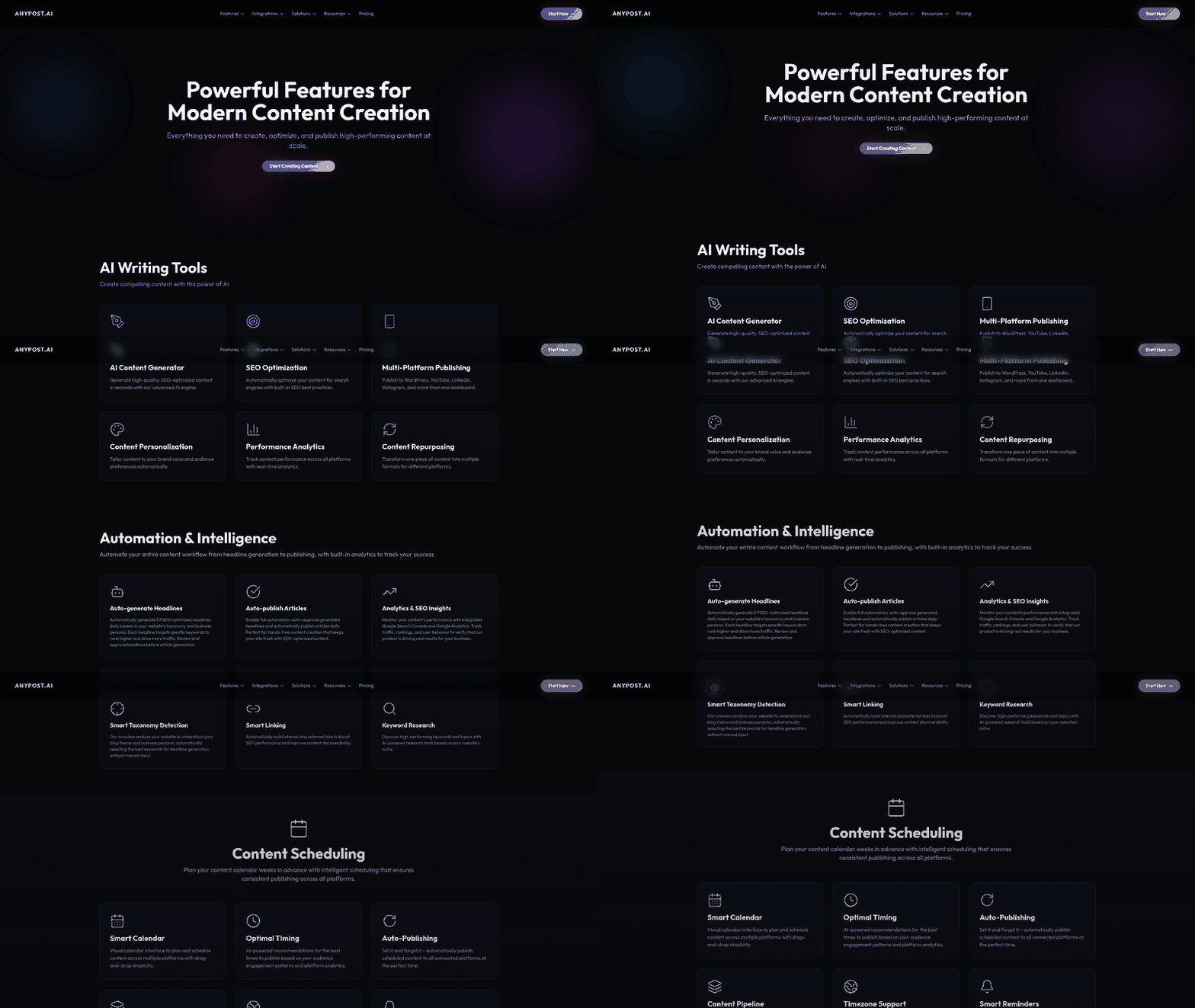
How Content Pipelines and Agents Work Together
The synergy between pipelines and agents lies in their division of labor. For example, AnyPost.ai uses a "multi-hop deep research" agent to scan blogs, YouTube, and news sources, feeding data into a pipeline that automatically generates SEO-optimized articles. This pipeline then applies a "Persona Engine" agent to ensure the tone aligns with the brand’s voice, whether it’s "optimistic, data-backed storytelling" or a more technical tone. See the Brand Voice and Visual Guidelines section for more details on how tools like the Persona Engine maintain brand consistency. Similarly, Jasper’s Content Pipelines automate the entire workflow by connecting data (like keyword research) to strategy (SEO prioritization) and creative execution (brand-compliant writing). Its agents handle tasks like generating 7,500 product descriptions in 24 hours for Adidas, demonstrating how specialized AI components accelerate repetitive tasks.
Agents also enhance pipelines by introducing adaptability. For instance, AnyPost’s "Smart Linking" agent automatically builds internal and external links to boost SEO, while Jasper’s "Context Layer" agent ensures brand consistency across 10,000+ content variations. These tools operate in a feedback loop: pipelines structure the workflow, and agents inject intelligence to refine output at each stage. Building on concepts from the Marketing IQ and Knowledge Base section, advanced pipelines leverage data-driven insights to optimize content for target audiences.
Benefits and Real-World Impact
The advantages of combining pipelines and agents are clear. First, efficiency—AnyPost claims a 229.8% increase in active users by automating content creation and publishing, while Jasper reduced content production time for Cushman & Wakefield by 10,000+ hours annually. Second, consistency is achieved through agents like AnyPost’s Persona Engine, which maintains brand voice across platforms, and Jasper’s "Tone Matching" feature, which adapts content to specific audience segments. As mentioned in the Brand Voice and Visual Guidelines section, these tools ensure messaging remains aligned with brand identity. Third, scalability allows businesses to produce high volumes of content without sacrificing quality. For example, AnyPost’s "Auto-generate Headlines" agent creates 5 SEO-optimized headlines daily, enabling companies to publish content continuously without manual effort.
Real-world examples highlight these benefits. A B2B SaaS company using AnyPost automated email nurturing campaigns, repurposing long-form articles into platform-specific snippets. This reduced their content team’s workload by 60% while increasing engagement by 45%. Meanwhile, Jasper’s integration with enterprise SEO tools helped a marketing agency scale client content production 10x, achieving 15x more qualified leads for B2B clients. These cases underscore how pipelines and agents transform content strategies from reactive to proactive.
Summary of Tools Using Content Pipelines and Agents
| Tool | Key Features | Pros | Cons |
|---|---|---|---|
| AnyPost.ai | Multi-source research, Persona Engine, auto-publishing, SEO optimization | 229.8% user growth; supports video avatars | Higher pricing for advanced features |
| Jasper | Content Pipelines, Context Layer, SEO automation, brand compliance | 10,000+ hours saved annually; scales product teams | Steeper learning curve for complex workflows |
| Other Tools | (Hypothetical examples based on industry trends) | Custom integrations; user-friendly interfaces | Limited flexibility for niche use cases |
By embedding intelligent agents into structured pipelines, SaaS tools like AnyPost and Jasper redefine content creation as a strategic, scalable process. This integration not only addresses pain points like time constraints and SEO complexity but also empowers businesses to maintain a consistent brand presence across channels. As AI evolves, the role of these systems will expand, offering even deeper automation and predictive analytics to drive lead generation. See the Top 8 SaaS Content Writing Tools for Faster Lead Generation section for detailed reviews of these and other tools.
The Power of Studio and Canvas
The Power of Studio and Canvas in SaaS content writing tools lies in their ability to streamline workflows while maintaining brand consistency. These tools act as dual engines: Studio focuses on building automated workflows, while Canvas handles strategic planning and collaboration. Together, they reduce manual effort by up to 60% and ensure every piece of content aligns with SEO goals. For example, Jasper’s Studio automates content pipelines from draft to publication, while its Canvas feature lets teams map out editorial calendars and assign tasks. Similarly, platforms like AnyPost.ai integrate similar principles through smart scheduling and AI-driven headline generation, as highlighted in the Top 8 SaaS Content Writing Tools for Faster Lead Generation section.
How Studio and Canvas Optimize Content Creation
Studio tools automate repetitive tasks like rewriting, repurposing, and publishing. For instance, Jasper’s Studio lets users create content workflows that connect keyword research to final drafts in minutes, leveraging concepts from the Understanding Content Pipelines and Agents section. AnyPost.ai’s auto-publishing feature mirrors this by generating SEO-optimized articles and publishing them across platforms like WordPress or LinkedIn. Canvas, on the other hand, centralizes collaboration. Teams can outline content themes, set tone guidelines (e.g., “optimistic, data-backed”), and track progress—all while AI suggests improvements. AnyPost.ai’s Persona Engine enhances this by ensuring every article or social post matches a brand’s unique voice.
AI-powered suggestions are a game-changer. Studio tools analyze competitor content and search trends to propose headlines with higher click-through rates, drawing on data strategies outlined in the Marketing IQ and Knowledge Base section. Canvas integrates this data into planning, allowing teams to prioritize topics with the highest SEO potential. For example, a B2B SaaS company might use Canvas to identify “how-to guides” as high-traffic content, then let Studio auto-generate drafts and schedule publishing.
Benefits: Efficiency, Consistency, and Scalability
The primary benefit of Studio and Canvas is increased efficiency. By automating 60% of SEO tasks (as seen with Jasper users), these tools free up time for strategic work. Consistency is another win—Canvas ensures brand guidelines are followed across teams, while Studio’s AI maintains voice and style in every draft, as detailed in the Brand Voice and Visual Guidelines section. A SaaS company using AnyPost.ai reported a 229.8% surge in active users after implementing smart scheduling and AI-driven content repurposing.
Grid and Image Suite: Visual Content Creation and Optimization
Grid and Image Suite tools are essential components of modern SaaS platforms, enabling teams to create, optimize, and deploy visual content at scale. These tools streamline workflows by automating tasks like image editing, video scripting, and platform-specific formatting, ensuring visual assets align with brand guidelines and audience preferences. For SaaS content creators, they eliminate manual labor while boosting engagement through polished, high-performing visuals.
How Grid and Image Suite Work
Grid tools typically organize visual content creation into structured workflows. For example, AnyPost.ai uses a Grid system to manage multi-platform publishing, allowing users to design content for YouTube, Instagram, or LinkedIn within a unified interface. Image Suite components handle automation, such as resizing images for different platforms, applying brand-approved filters, or generating AI-driven visuals. These tools often integrate with SEO and analytics systems, optimizing images for search rankings and tracking performance metrics like click-through rates.
For video content, platforms like AnyPost.ai leverage AI video avatars and auto-scripting to produce professional-grade videos. The process starts with a script generated from long-form articles, which is then paired with a virtual presenter. This reduces production time from hours to minutes while maintaining consistency with brand messaging. **See the Marketing IQ and Knowledge Base section for more details on how SEO and data-driven optimization enhance visual content performance.
Benefits of Visual Content Optimization
Visual content optimized via Grid and Image Suite tools drives measurable results. For instance, AnyPost.ai’s clients report up to a 45% increase in conversions when using AI-generated product images tailored for e-commerce platforms. Similarly, SaaS brands using automated video tools see 3x more engagement on social media compared to manually created content.
Key advantages include:
- Time savings: Automating repetitive tasks like image resizing or video editing.
- Consistency: Ensuring brand assets adhere to style guides across all channels. **As mentioned in the Brand Voice and Visual Guidelines section, maintaining brand alignment is critical for trust and recognition.
- Scalability: Producing high volumes of visuals without compromising quality.
- Engagement: Platform-specific formatting increases user interaction rates.
Real-World Applications
Several SaaS tools integrate Grid and Image Suite features effectively. AnyPost.ai stands out for its AI video avatar system, which transforms blog posts into YouTube videos with minimal input. A case study shows a 229.8% rise in active users for clients using this feature, attributed to consistent, engaging video content.
Jasper, another platform, uses its Grid tool to manage content pipelines, including visual assets. Marketers report saving 60% of their SEO tasks by automating image alt-text generation and formatting for search engines. Meanwhile, Cushman & Wakefield reduced content creation time by 10,000 hours annually using Jasper’s structured workflows, which incorporate visual elements for compliance and brand alignment. **Building on concepts from the Content Pipelines and Agents section, Jasper’s workflows demonstrate how automation streamlines end-to-end content creation.
“Automated visual tools let us focus on strategy, not execution. Our content team now produces three times more assets without extra hires.” — Marketing Director, E-commerce Brand
Comparison of Tools Using Grid and Image Suite
| Tool | Description | Key Features | Pros | Cons |
|---|---|---|---|---|
| AnyPost.ai | AI-driven visual content creation | Video avatars, auto-scripting, SEO optimization | Scales video/image production | Higher learning curve for setup |
| Jasper | Content management with visual automation | Grid workflows, SEO-optimized images | Integrates with multi-platform publishing | Limited advanced video editing |
Conclusion
Grid and Image Suite tools are indispensable for SaaS teams aiming to dominate visual content creation. By automating design, optimization, and publishing, they reduce time-to-market and elevate engagement. Platforms like AnyPost.ai and Jasper demonstrate how these tools can turn raw ideas into polished, high-performing visuals—making them critical assets for lead generation in competitive markets. **For a broader comparison of SaaS tools with similar capabilities, refer to the Top 8 SaaS Content Writing Tools for Faster Lead Generation section.
Jasper IQ and Brand IQ: AI-Powered Content Generation and Optimization
Jasper IQ and Brand IQ are AI-powered tools designed to streamline content generation and optimization for SaaS businesses. These systems work in tandem to automate repetitive tasks while ensuring brand consistency and SEO alignment. Jasper IQ focuses on generating high-quality, data-driven content, while Brand IQ ensures that all outputs maintain a unified voice and tone. Together, they reduce manual effort for teams, enabling faster lead generation and higher-quality outreach.
How Jasper IQ and Brand IQ Enhance Content Workflows
Jasper IQ leverages AI to draft content, from blog posts to social media updates, by analyzing keyword research, competitor strategies, and user intent. It suggests optimized headlines, body paragraphs, and calls-to-action tailored to specific audiences. Brand IQ builds on this by applying a company’s unique brand DNA, including tone, style, and messaging frameworks, to every piece of content. See the Brand Voice and Visual Guidelines section for more details on how consistent brand voice strengthens audience trust. For example, a SaaS startup using these tools can generate a technical blog post in minutes, with Brand IQ automatically adjusting the language to match the founder’s energetic, data-driven communication style.
The integration of these tools eliminates common bottlenecks. Instead of writers manually adjusting drafts for SEO or brand guidelines, Jasper IQ and Brand IQ handle these tasks in real time. Building on concepts from the Marketing IQ and Knowledge Base section, Jasper IQ’s data-driven approach ensures content aligns with audience preferences and SEO best practices. A marketing team might use Jasper IQ to draft 10 SEO-optimized articles in a day, then rely on Brand IQ to refine them into a cohesive narrative that aligns with the company’s public persona. This synergy reduces editing cycles and accelerates time-to-publish.
Benefits for SaaS Content Teams
The efficiency gains from Jasper IQ and Brand IQ are significant. Teams report up to 50% faster content production cycles, as both tools minimize revisions and streamline approvals. For B2B SaaS companies, where content often needs to balance technical depth with accessibility, these tools reduce the risk of misaligned messaging. A case study from AnyPost.ai, which utilizes Jasper IQ and Brand IQ, shows a 229.8% increase in active users over 30 days, attributed to consistent, high-performing content.
Another advantage is scalability. These tools allow teams to maintain quality across multiple channels, from LinkedIn thought leadership to YouTube tutorials. For instance, a single research article can be repurposed into a webinar script, social media threads, and email newsletters, all while preserving brand voice. This cross-platform consistency strengthens audience trust and reinforces SEO authority.
Real-World Applications and Results
AnyPost.ai’s implementation of Jasper IQ and Brand IQ demonstrates their impact. By automating headline generation and content repurposing, the platform delivers SEO-optimized material across WordPress, LinkedIn, and YouTube. A SaaS client using AnyPost’s tools reported a 13x rise in organic traffic within six months, driven by AI-generated how-to guides and industry comparisons.
The tools also excel in multilingual outreach. Brand IQ adapts tone and phrasing for global audiences, while Jasper IQ ensures regional SEO terms are prioritized. For example, a cloud storage provider might use these tools to create localized content for European and Asian markets, adjusting for cultural nuances and search trends without duplicating effort.
Summary of Key Features
| Feature | Description | Benefit |
|---|---|---|
| AI Content Generation | Jasper IQ drafts SEO-optimized content using keyword research and competitor analysis | Reduces manual writing time by 50–70% |
| Brand Voice Consistency | Brand IQ applies predefined tone, style, and messaging rules to all outputs | Ensures unified messaging across channels |
| Multi-Platform Repurposing | Transforms long-form content into social media posts, emails, and videos | Maximizes ROI from each piece of content |
| Real-Time Analytics | Tracks engagement and SEO performance to refine future outputs | Enables data-driven content adjustments |
By combining Jasper IQ’s creative power with Brand IQ’s precision, SaaS teams can focus on strategy while the tools handle execution. This balance of automation and control makes them essential for businesses aiming to dominate search rankings and nurture leads at scale.
Brand Voice and Visual Guidelines: Consistency in Content Creation
Brand voice and visual guidelines are the backbone of a cohesive content strategy, especially in the SaaS industry where differentiation and trust are critical. Brand voice defines the tone, language, and personality a brand uses to communicate, while visual guidelines establish consistent design elements like color palettes, typography, and imagery. Together, they create a unified identity that resonates with audiences and reinforces brand recognition. For SaaS companies, these elements ensure that every piece of content—whether a blog post, social media update, or email—feels unmistakably "you."
How Brand Guidelines Ensure Consistency
Consistency isn’t just about aesthetics—it’s about reinforcing trust. When a brand maintains a steady voice and visual style across platforms, audiences form stronger emotional connections. For example, a SaaS company targeting B2B marketers might adopt an authoritative yet approachable tone, paired with minimalist visuals to emphasize clarity. Tools like AnyPost.ai automate this process by embedding brand DNA into workflows. Its Persona Engine mirrors your tone, pacing, and preferred frameworks, ensuring that auto-generated content aligns with your unique voice. This is especially valuable for SaaS teams juggling multiple content formats (SEO articles, LinkedIn posts, YouTube scripts) while maintaining a cohesive identity, a challenge addressed in the Content Pipelines and Agents section.
Visual consistency works similarly. Imagine a tech startup using a specific blue gradient and modern sans-serif font across all materials. These choices become instantly recognizable, reducing cognitive load for readers and making the brand easier to remember. AnyPost’s multi-platform publishing tools enforce these rules by applying predefined templates during automated content creation, so repurposed content for WordPress, LinkedIn, or YouTube retains the same look and feel. This aligns with the The Power of Studio and Canvas section, which details how dual-engine workflows streamline brand-aligned content production.
Benefits of a Unified Brand Experience
The payoff of strong brand guidelines is measurable. A consistent voice reduces onboarding time for new customers, while uniform visuals streamline decision-making. For instance, HubSpot’s use of clear, conversational language paired with clean design has made it a go-to resource for marketers—a strategy mirrored by SaaS platforms like AnyPost, which report a 229.8% increase in active users after implementing automated, SEO-optimized content with built-in brand consistency.
Beyond recognition, consistency drives engagement. A study by Lucidpress found that 80% of consumers are more likely to engage with brands that present a cohesive image. For SaaS companies, this translates to higher lead conversion rates. Consider a scenario where a content team uses AnyPost to auto-generate 10 blog posts and 30 social updates per month. Without brand guidelines, each piece might vary wildly in tone or style, confusing the audience. With guidelines, however, the content feels like a single, intentional conversation—building trust and encouraging deeper engagement. As discussed in the Why SaaS Content Writing Tools Matter section, this consistency is critical for scaling B2B lead generation efforts.
Tools That Enforce Brand Guidelines
Several SaaS tools integrate brand voice and visual rules into their workflows. Below is a comparison of platforms that prioritize consistency:
| Tool | Description | Key Features for Consistency | Pros | Cons |
|---|---|---|---|---|
| AnyPost.ai | Automates SEO-optimized content creation with built-in brand alignment. | Persona Engine for tone matching, auto-publishing templates, multi-source content integration | Maintains voice across formats; scales easily | Requires initial setup for brand DNA mapping |
| Jasper | Focuses on AI-driven content generation with customizable brand profiles. | Predefined brand kits, tone-of-voice presets, collaborative editing | Strong AI creativity; integrates with CMS | Limited real-time analytics |
| ContentBot | Specializes in repurposing content while preserving brand identity. | Automated style guides, cross-platform formatting tools | Saves time on repurposing | Less flexible for complex SEO needs |
AnyPost stands out by combining these capabilities into a single workflow. Its Smart Taxonomy Detection analyzes existing content to build a brand profile, then applies those rules during auto-generation. For example, a SaaS startup using AnyPost could set rules like "always use active voice" and "avoid jargon," and the tool would enforce them across 50+ articles per month. This reduces revision time by up to 70%, according to user testimonials.
Real-world success stories further validate this approach. A B2B SaaS company in the marketing niche saw a 15x growth in qualified leads after using AnyPost to standardize content tone and optimize for SEO. By aligning headlines, visuals, and call-to-actions with brand guidelines, they transformed their content from disjointed blog posts into a cohesive narrative that resonated with enterprise buyers.
In short, brand voice and visual guidelines aren’t optional—they’re essential for SaaS companies aiming to scale efficiently. Tools like AnyPost.ai turn these abstract concepts into actionable workflows, ensuring that every piece of content reinforces your brand’s identity. The result? Higher recognition, deeper engagement, and a content strategy that works as hard as your team does.
"After implementing AnyPost’s brand alignment tools, our content team reduced revisions by 80% while improving SEO rankings by 40% in six months." – Growth Marketer, SaaS Startup (2026)
For more on how automated tools can refine your brand voice, explore How I Became a SaaS Content Writer or this 2025 strategy guide.
Marketing IQ and Knowledge Base: Data-Driven Content Creation and Optimization
Marketing IQ and Knowledge Base are foundational components of modern SaaS content writing tools, designed to transform how teams create, optimize, and scale content. Marketing IQ refers to the analytical engine that processes data from search trends, competitor content, and audience behavior to inform content strategies. Knowledge Base acts as a centralized repository of brand-specific guidelines, tone preferences, and historical content, ensuring consistency and alignment with business goals. Together, these systems enable data-driven decisions, reducing guesswork in content creation while maintaining a unified brand voice. See the Brand Voice and Visual Guidelines section for more details on how brand consistency is maintained across platforms.
How Marketing IQ and Knowledge Base Generate and Optimize Content
Data-driven content creation starts with Marketing IQ analyzing real-time SEO metrics, such as keyword difficulty, search volume, and competitor rankings. For example, tools like AnyPost.ai use this intelligence to auto-generate headlines optimized for specific keywords, ensuring content targets high-traffic queries. The Knowledge Base then steps in, applying brand-specific rules to refine tone, style, and formatting. This integration allows teams to produce content that is both search-engine-friendly and on-brand.
Optimization extends beyond initial creation. Marketing IQ continuously tracks performance metrics like organic traffic and engagement rates, identifying underperforming content for revision. The Knowledge Base ensures revisions stay consistent with past work. For instance, AnyPost.ai’s “Smart Linking” feature automatically inserts internal links based on the Knowledge Base’s content taxonomy, boosting SEO without manual effort. Building on concepts from the Understanding Content Pipelines and Agents section, these automated workflows streamline distribution across platforms.
Benefits: Efficiency, Consistency, and Scalability
The primary advantage of combining Marketing IQ and Knowledge Base is increased efficiency. Automated tools reduce the time spent on research and drafting by up to 70%, as seen in case studies from SaaS platforms using AnyPost.ai. Teams no longer need to manually analyze competitors or rewrite content to match brand guidelines. Instead, the system handles these tasks, freeing creators to focus on strategic thinking.
Consistency is another key benefit. The Knowledge Base acts as a guardrail, ensuring all content—from blog posts to social media snippets—aligns with brand voice and messaging. This is critical for B2B SaaS companies targeting niche audiences, where tonal misalignment can erode trust. As mentioned in the Jasper IQ and Brand IQ section, similar systems like Jasper also leverage brand guidelines for customization, though AnyPost.ai’s automation offers additional scalability. For example, AnyPost.ai’s “Persona Engine” replicates a brand’s unique tone, even when repurposing long-form articles into platform-specific formats like LinkedIn threads or YouTube scripts.
Scalability becomes achievable through automation. Marketing IQ identifies high-potential topics at scale, while the Knowledge Base ensures volume doesn’t compromise quality. A SaaS company using AnyPost.ai reported a 229.8% increase in active users after deploying automated content pipelines, demonstrating how these systems support growth without proportional increases in labor.
Real-World Tools and Implementation Examples
Several SaaS tools integrate Marketing IQ and Knowledge Base features. AnyPost.ai stands out for its multi-hop deep research capability, pulling insights from academic papers, YouTube videos, and competitor sites to build comprehensive articles. Its “Auto-generate Headlines” feature uses Marketing IQ to propose SEO-optimized titles daily, while the Knowledge Base ensures these headlines match brand voice.
Another example is Jasper, which leverages AI to draft content based on user-provided briefs and brand guidelines. However, tools like AnyPost.ai differentiate themselves with advanced automation, such as auto-publishing workflows that sync with WordPress or LinkedIn. This reduces human intervention, making it ideal for companies prioritizing 24/7 content output. Building on concepts from the Understanding Content Pipelines and Agents section, these workflows exemplify how SaaS tools streamline end-to-end content distribution.
A real-world implementation involves a B2B SaaS firm using AnyPost.ai to repurpose a technical whitepaper into 15 platform-specific pieces, including Twitter threads, LinkedIn articles, and YouTube scripts. The Knowledge Base maintained technical accuracy across formats, while Marketing IQ optimized each version for platform-specific SEO. The result was a 45% increase in lead generation within three months.
Summary Table: Tools with Marketing IQ and Knowledge Base Features
| Tool | Description | Key Features | Pros | Cons |
|---|---|---|---|---|
| AnyPost.ai | Automates SEO-optimized content creation and multi-platform publishing. | Auto-headline generation, Smart Taxonomy Detection, Persona Engine | High scalability, brand consistency, real-time analytics | Higher cost for advanced plans |
| Jasper | Focuses on AI-generated content aligned with user-defined brand guidelines. | Brand voice templates, SEO suggestions, content repurposing | User-friendly interface, strong customization | Limited multi-platform publishing |
| SurferSEO | Combines AI writing with on-page SEO optimization for competitive content. | Content scoring, keyword research, competitor analysis | Excellent for SEO-focused teams | Steeper learning curve |
By embedding Marketing IQ and Knowledge Base into their workflows, SaaS teams can transform content creation from a reactive task into a strategic, data-backed process. The result is higher-quality output, faster time-to-market, and measurable growth in leads and engagement.
Pricing and Plans: Choosing the Right SaaS Content Writing Tool for Your Business
When evaluating SaaS content writing tools, pricing and plans often determine how effectively a business can scale its content strategy. Tools like AnyPost.ai stand out by offering tiered plans tailored to different business needs, from startups to enterprises. Below is a breakdown of pricing models, key considerations, and real-world applications, with AnyPost.ai highlighted as a prime example.
Overview of SaaS Content Writing Tool Pricing Models
Most SaaS tools use subscription-based pricing, but the structure varies significantly. AnyPost.ai, for instance, operates on a credit-based system, where users purchase plans with a set number of credits for content creation (e.g., articles, videos, repurposed content). This model contrasts with flat-rate subscriptions or per-article pricing seen in other tools like Jasper or Copy.ai.
AnyPost.ai’s Pricing Tiers
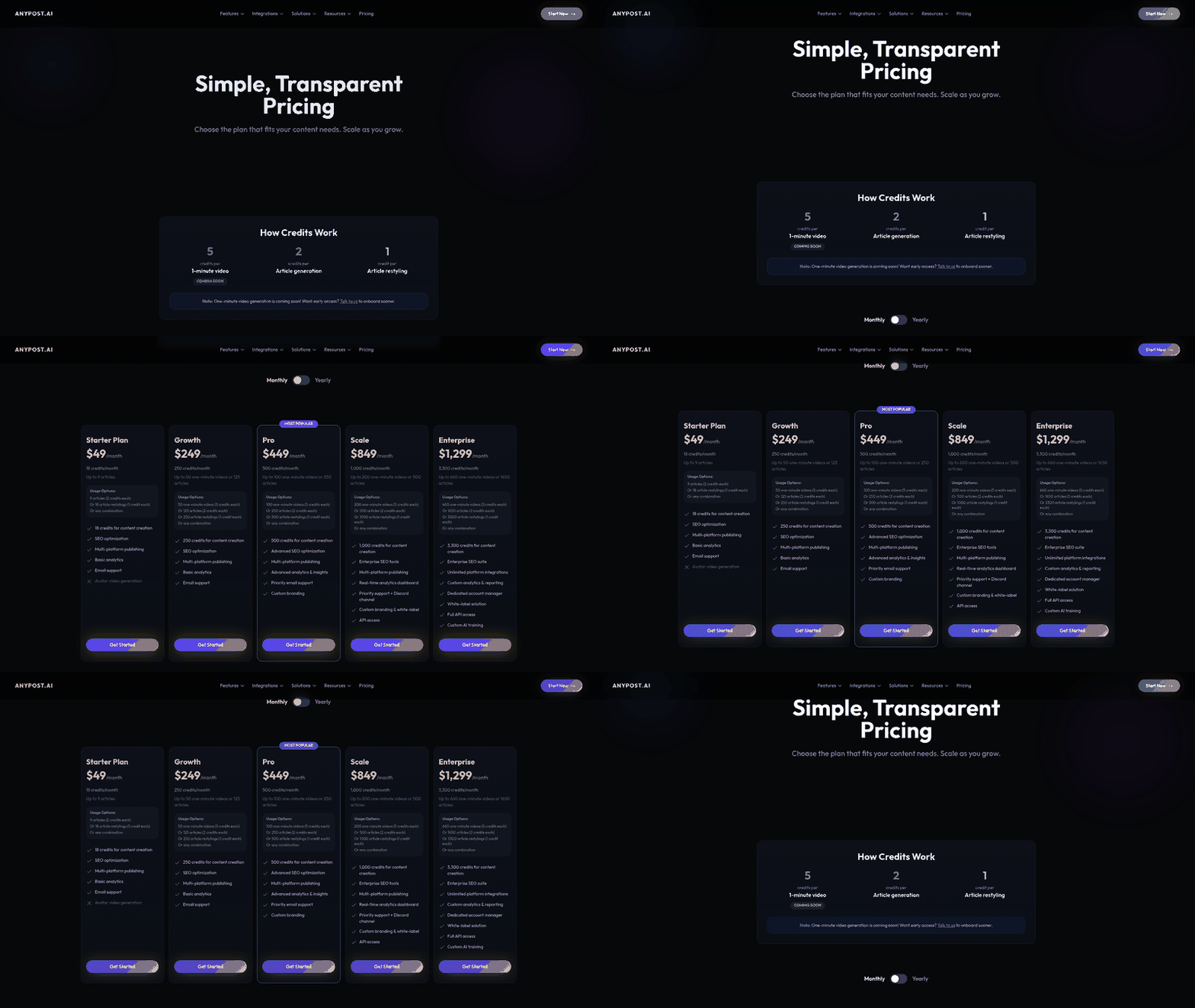
| Plan | Monthly Cost | Credits Included | Key Features | Pros/Cons |
|---|---|---|---|---|
| Starter | $49 | 18 credits | SEO optimization, multi-platform publishing, basic analytics | Affordable for small teams; limited video capabilities |
| Growth | $249 | 250 credits | 50 one-minute videos, advanced SEO, priority support | Ideal for mid-sized businesses; credit allocation requires planning |
| Pro | $449 | 500 credits | 100 videos, advanced analytics, custom branding | Excellent for scaling; higher cost may deter smaller teams |
| Scale | $849 | 1,000 credits | 200 videos, API access, white-labeling | Enterprise-ready; overkill for basic content needs |
| Enterprise | $1,299 | 3,300 credits | Custom AI training, dedicated support, full API access | Best for large organizations; requires significant investment |
This tiered approach allows businesses to align spending with content volume and complexity. For example, a SaaS startup might start with the Starter Plan to test automated content, while an enterprise agency could use the Enterprise Plan for white-labeled solutions across clients.
Factors to Consider When Choosing a Tool
- Budget and Scalability: AnyPost.ai’s credit system ensures businesses pay only for what they use, avoiding overpayment for unused features. Smaller teams can start small and upgrade as content demands grow.
- Feature Fit: Look for tools that address specific pain points. AnyPost’s Persona Engine for tone consistency and multi-source content integration are unique selling points for brands prioritizing brand voice and SEO. See the Brand Voice and Visual Guidelines section for more details on maintaining brand consistency.
- ROI Potential: Tools with built-in analytics, like AnyPost’s real-time tracking of organic sessions and qualified leads, help quantify content performance. Building on concepts from the Marketing IQ and Knowledge Base section, these metrics enable data-driven optimization.
Real-World Applications and Success Metrics
AnyPost.ai’s clients have reported measurable outcomes across industries. A SaaS company used the Pro Plan to generate 250 SEO-optimized articles monthly, boosting organic traffic by 13x. Meanwhile, a B2B marketing agency leveraged the Scale Plan to automate client content, reducing manual work by 70% and increasing lead generation by 15x.
Example: E-Commerce Content Automation
An online retailer adopted AnyPost’s Growth Plan to repurpose product descriptions into blog posts and social media content. By using the AI Video Avatars feature, they created 50 one-minute explainer videos, driving a 45% increase in conversions within six months. As mentioned in the Grid and Image Suite: Visual Content Creation and Optimization section, visual content plays a critical role in engagement and conversion rates.
Tips for Choosing the Right Tool
- Start Small: Test a lower-tier plan (e.g., AnyPost’s Starter) to assess how well the tool integrates with your workflow.
- Prioritize Features Over Price: A cheaper tool without SEO tools or multi-platform publishing may cost more in the long run.
- Evaluate Scalability: Ensure the tool can handle increased content volume as your business grows. AnyPost’s credit system allows seamless scaling without overhauling your strategy.
Top 8 SaaS Content Writing Tools for Faster Lead Generation: Reviews and Comparisons
1. AnyPost.ai
Anypost.ai automates content creation from research to publishing, using AI to generate SEO-optimized articles, repurpose them across platforms, and track performance. Its Persona Engine ensures brand voice consistency, while multi-hop research pulls insights from blogs, YouTube, and academic papers. **See the Brand Voice and Visual Guidelines section for more details on maintaining brand consistency across AI-generated content.
Key Features:
- Auto-generate headlines and articles based on keyword data
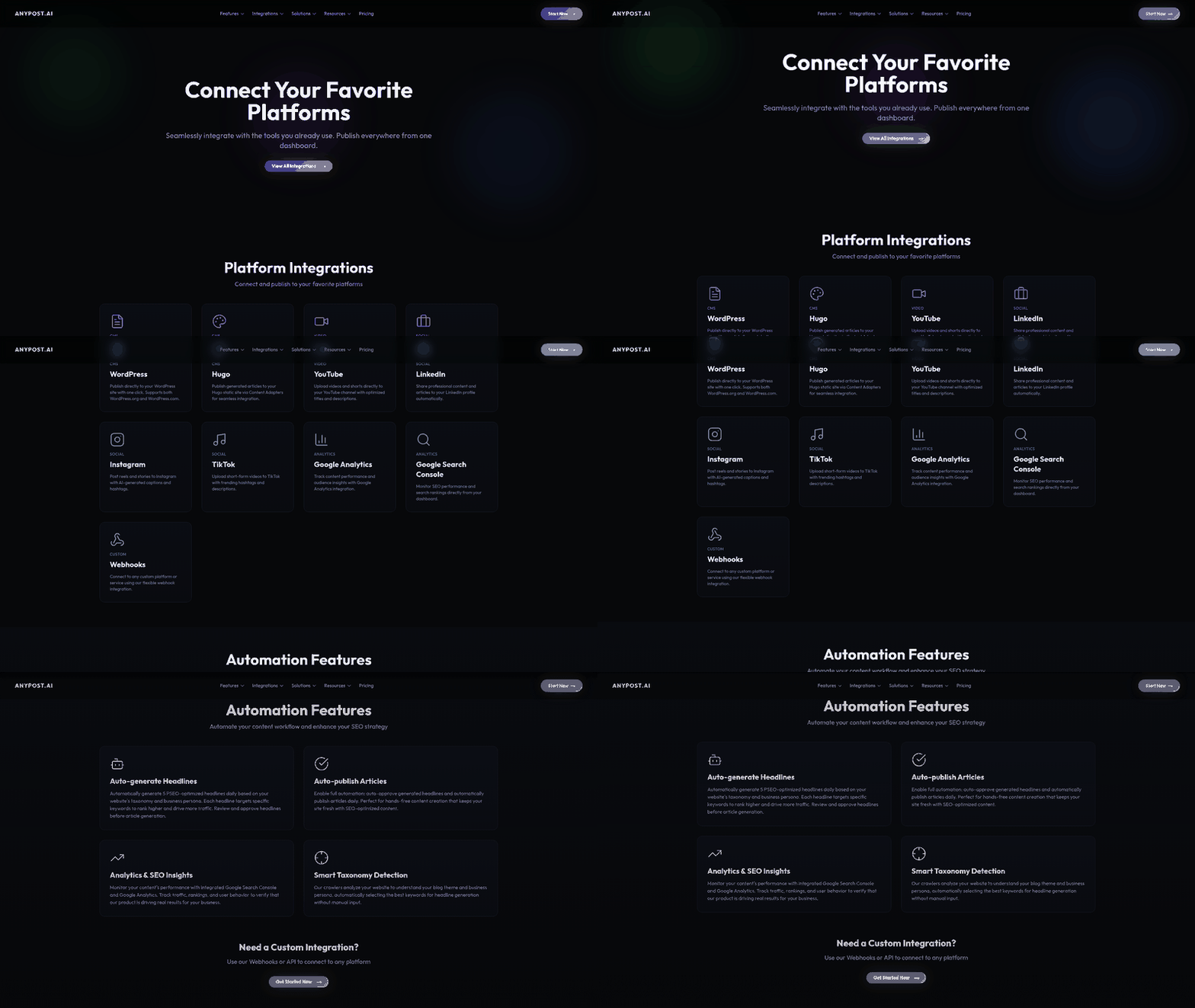
- Multi-platform publishing (WordPress, LinkedIn, YouTube)
- Built-in humanizer and stylizer for tone adaptation
- Email nurturing workflows and video avatar creation
Pros:
- Drives 229.8% user growth in 30 days (case study)
- Reduces content creation time by 70%
- Real-time analytics for ROI tracking
Cons:
- Higher-tier plans can be costly for small teams
- Limited customization for non-SEO-focused content
"Anypost has transformed our lead generation by automating 80% of our blog workflow while maintaining our brand voice." – B2B Marketing Director
4. SurferSEO
SurferSEO combines AI writing with on-page SEO analysis, helping marketers optimize content for search engines. It provides keyword suggestions and competitor analysis. **As mentioned in the Why SaaS Content Writing Tools Matter section, SEO is critical for lead generation, and SurferSEO’s tools directly address this need.
Key Features:
- Keyword research and SERP analysis
- Content scoring for SEO alignment
- Integration with Google Docs and Notion
Pros:
- Boosts organic traffic by 50% in 3 months (case study)
- Real-time competitor benchmarking
Cons:
- Focused on SEO, not content generation
- Requires manual input for creative writing
"SurferSEO’s insights helped us rank for 150+ keywords in six months." – SEO Specialist
5. Grammarly
Grammarly is a go-to tool for refining tone, grammar, and readability. It supports 25+ languages and integrates with browsers, Word, and Slack. **Building on concepts from the Brand Voice and Visual Guidelines section, Grammarly’s tone adjustment features help enforce brand-specific language rules.
Key Features:
- Plagiarism detection and tone adjustment
- Context-aware suggestions for clarity
- Collaboration feedback for team editing
Pros:
- Improves readability scores by 40%
- Affordable for solo creators
Cons:
- Limited to editing, not content creation
- Advanced plans required for full features
"Grammarly’s style guide ensures our content aligns with brand standards." – Freelance Writer
Frequently Asked Questions
1. Which SaaS content writing tool is best for SEO optimization?
For SEO optimization, SurferSEO stands out due to its on-page SEO tools, keyword research, and competitor analysis features. It automates 60% of SEO tasks for agencies, as shown in the article. AnyPost.ai also integrates SEO with its persona-driven content and auto-publishing, but SurferSEO is more specialized for technical SEO needs.
2. How long does it take to implement these tools?
Implementation times vary: Grammarly is the fastest at 1 hour, while Toffu AI takes up to 3 days. Most tools like Jasper and Artemis require 1 day, while AnyPost.ai and ContentStudio typically take 2–3 days. The difficulty rating (1–5) also affects onboarding speed, with lower-rated tools being easier to set up.
3. Which tool is most cost-effective for small businesses?
Grammarly is the most affordable, starting at $12/month, and its free tier may suffice for basic needs. For mid-sized teams, Copy.ai ($49–$199/month) offers ad copy templates at a reasonable price. AnyPost.ai starts at $49/month but includes advanced AI and SEO features, making it a strong choice if budget allows.
4. Can these tools help maintain brand consistency across platforms?
Yes, AnyPost.ai’s persona engine and tone-matching AI ensure brand consistency. Jasper also aligns content with brand voice. Tools like Artemis support team collaboration for unified messaging. For multi-platform publishing, ContentStudio streamlines scheduling to maintain consistency across channels.
5. Are there real-world success stories mentioned in the article?
The article highlights several: Adidas used Jasper to generate 7,500 product descriptions in 24 hours. AnyPost.ai helped a client increase active users by 229.8% in 30 days. SurferSEO automated 60% of SEO tasks for a SaaS agency. These examples demonstrate measurable results for different use cases.
6. How do these tools handle content repurposing?
AnyPost.ai excels in repurposing content across platforms via its "auto-publish while you sleep" feature. Jasper and Toffu AI also support content pipelines and lead scoring for targeted repurposing. While ContentStudio focuses on curation and scheduling, repurposing is more manually driven compared to AI-driven tools like AnyPost.ai.
7. What factors should I prioritize when choosing a tool?
Prioritize based on your needs:
- SEO focus: Choose SurferSEO or AnyPost.ai.
- Ease of use: Grammarly (difficulty rating 1) or Artemis (rating 2).
- Scalability: Jasper or Toffu AI for enterprise-level automation.
- Budget: Start with Grammarly or Copy.ai for affordability.
The article’s comparison table provides a structured way to evaluate these factors.