
Top B2B Lead Generation Strategies: WordPress REST API Focus

Introduction to B2B Lead Generation
B2B lead generation refers to the process of identifying and cultivating potential business customers who have demonstrated interest in a company’s products or services. In the context of WordPress-based strategies, this process is often tied to content-driven approaches that leverage platforms like WordPress to attract and convert leads [1]. Effective lead generation is critical in B2B marketing, as it directly impacts revenue growth by ensuring a steady pipeline of qualified prospects [1]. The WordPress REST API plays a role in this ecosystem by enabling developers to build custom applications and integrations that enhance lead capture and management workflows [1]. This section explores the foundational elements of B2B lead generation, its strategic significance, and how WordPress REST API capabilities support modern B2B marketing initiatives. As mentioned in the [Top B2B Lead Generation Strategies] section, content creation and search engine visibility are key components of successful lead generation campaigns.
Definition and Strategic Importance
B2B lead generation centers on creating targeted content and tools to engage decision-makers in business environments. According to [1], a key component of this process is developing a content strategy that aligns with the needs of B2B audiences, such as whitepapers, case studies, and industry-specific resources. Unlike B2C models, B2B lead generation often involves longer sales cycles and multiple touchpoints, requiring structured approaches to nurture leads effectively [1]. The strategic importance of lead generation lies in its ability to drive qualified traffic to a business’s digital assets, which can then be converted into sales opportunities through optimized workflows [1]. In WordPress ecosystems, this is facilitated by themes and plugins that support lead capture forms, landing pages, and analytics tools. For a deeper dive into specific content strategies, see the [Top B2B Lead Generation Strategies] section.
Role of WordPress REST API
The WordPress REST API enables developers to interact with WordPress data programmatically, offering flexibility for custom lead generation solutions. As noted in [1], this API is instrumental in building applications that extend WordPress functionality beyond traditional website management. For example, businesses can use the REST API to synchronize lead data with third-party CRM platforms or automate lead scoring based on user interactions with WordPress content. While the source does not specify technical implementation details, it emphasizes that the API’s architecture supports scalable, API-driven integrations tailored to B2B lead generation needs [1]. This capability allows marketers to create dynamic, data-rich experiences that align with their content strategy goals. For technical insights into REST API implementation, building on concepts from the [WordPress REST API for Lead Generation] section is recommended.
Summary Table: Key Components of B2B Lead Generation
| Title | Description | Key Features | Pros/Cons |
|---|---|---|---|
| Content Strategy | Creating targeted resources (e.g., whitepapers, case studies) to attract B2B leads. | Tailored content, SEO optimization. | Source [1] does not provide explicit pros/cons. |
| WordPress REST API Integration | Building custom applications to enhance lead capture and data synchronization. | API-driven workflows, CRM integration. | Source [1] does not provide explicit pros/cons. |
Limitations and Considerations
While the source [1] highlights the importance of content strategy and the WordPress REST API, it does not delve into specific metrics, technical constraints, or comparative analyses of alternative tools. For a broader comparison of lead generation tools and strategies, including WordPress-based solutions, refer to the [Comparison of B2B Lead Generation Tools and Strategies] section. Additionally, the role of the REST API in lead generation is described at a high level, without examples of endpoints or authentication methods. These gaps underscore the need for further exploration in subsequent sections of the article, where specific strategies leveraging the WordPress REST API will be detailed.
Top B2B Lead Generation Strategies
B2B lead generation in 2024 requires a strategic blend of content creation, search engine visibility, and social media engagement, all enhanced by the WordPress REST API’s capabilities. Content marketing remains foundational, leveraging WordPress’s flexibility to create dynamic, targeted content for lead nurturing. By integrating the WordPress REST API, businesses can automate content distribution and personalize messaging at scale [1]. For example, custom applications built on WordPress REST API enable seamless data exchange between internal systems and external platforms, ensuring consistent lead tracking across touchpoints. This interoperability is critical for maintaining a unified customer journey from initial engagement to conversion [1].
Content Marketing Strategies
Content marketing thrives on the WordPress REST API’s ability to support low-code/no-code workflows, allowing non-technical teams to generate and update content rapidly. By structuring content as JSON via the API, marketers can dynamically adjust campaigns based on real-time analytics without manual coding [1]. This agility is essential for A/B testing headlines, CTAs, and landing pages to optimize lead capture. Additionally, WordPress’s plugin ecosystem, accessible through the REST API, integrates with CRM tools like HubSpot or Salesforce, enabling automated lead scoring and follow-up processes [1]. A key limitation is the need for technical oversight to configure API endpoints correctly, though low-code tools mitigate this barrier [1]. See the [Measuring and Optimizing B2B Lead Generation] section for more details on how CRM integrations impact lead follow-up.
SEO Optimization Techniques
SEO optimization under the WordPress REST API framework focuses on structured content delivery and metadata customization. The API allows developers to programmatically manage meta tags, alt text, and schema markup, improving search engine crawlability and relevance [1]. For B2B audiences, this means optimizing pillar content and gated resources with precise keywords, supported by WordPress’s SEO plugins like Yoast or Rank Math. The REST API also facilitates dynamic URL structures for lead-qualified content, such as gated whitepapers or case studies, ensuring these assets rank for high-intent search queries [1]. However, over-reliance on automated SEO tools without human review may lead to keyword stuffing or poor content quality, undermining lead credibility [1]. Building on concepts from the [WordPress REST API for Lead Generation] section, this automation streamlines technical SEO tasks while requiring strategic human oversight.
Social Media Marketing Tactics
Social media marketing benefits from the WordPress REST API’s integration with platforms like LinkedIn, Twitter, and Facebook. Custom-built applications can automate scheduled posts, repurpose blog content into social snippets, and track engagement metrics in real time [1]. For B2B audiences, this includes sharing thought leadership articles or industry reports directly from WordPress dashboards, reducing manual effort. The API also enables social listening by pulling comments or mentions into WordPress for sentiment analysis, helping refine lead-generation messaging [1]. A downside is the potential for inconsistent branding if automation tools lack customization options, though WordPress’s template system can standardize outputs [1]. As mentioned in the [Comparison of B2B Lead Generation Tools and Strategies] section, balancing automation with brand consistency is crucial for effective social media campaigns.
| Title | Description | Key Features | Pros/Cons |
|---|---|---|---|
| Content Marketing | Uses WordPress REST API to automate and personalize content at scale. | Low-code workflows, CRM integrations, dynamic JSON data | Pros: Rapid updates, reduced technical barriers. Cons: Requires API configuration [1]. |
| SEO Optimization | Leverages REST API for metadata customization and structured content delivery | Meta tag management, schema markup, dynamic URL routing | Pros: Improved search relevance. Cons: Risk of automated tool misuse [1]. |
| Social Media Marketing | Automates cross-platform content sharing and analytics via API integrations | Scheduled posts, sentiment analysis, repurposing tools | Pros: Time efficiency. Cons: Branding consistency risks [1]. |
Each strategy underscores the WordPress REST API’s role in streamlining B2B lead generation while emphasizing the need for balanced technical and creative execution. By aligning content, SEO, and social efforts with API-driven automation, businesses can enhance scalability without sacrificing personalization [1].
WordPress REST API for Lead Generation
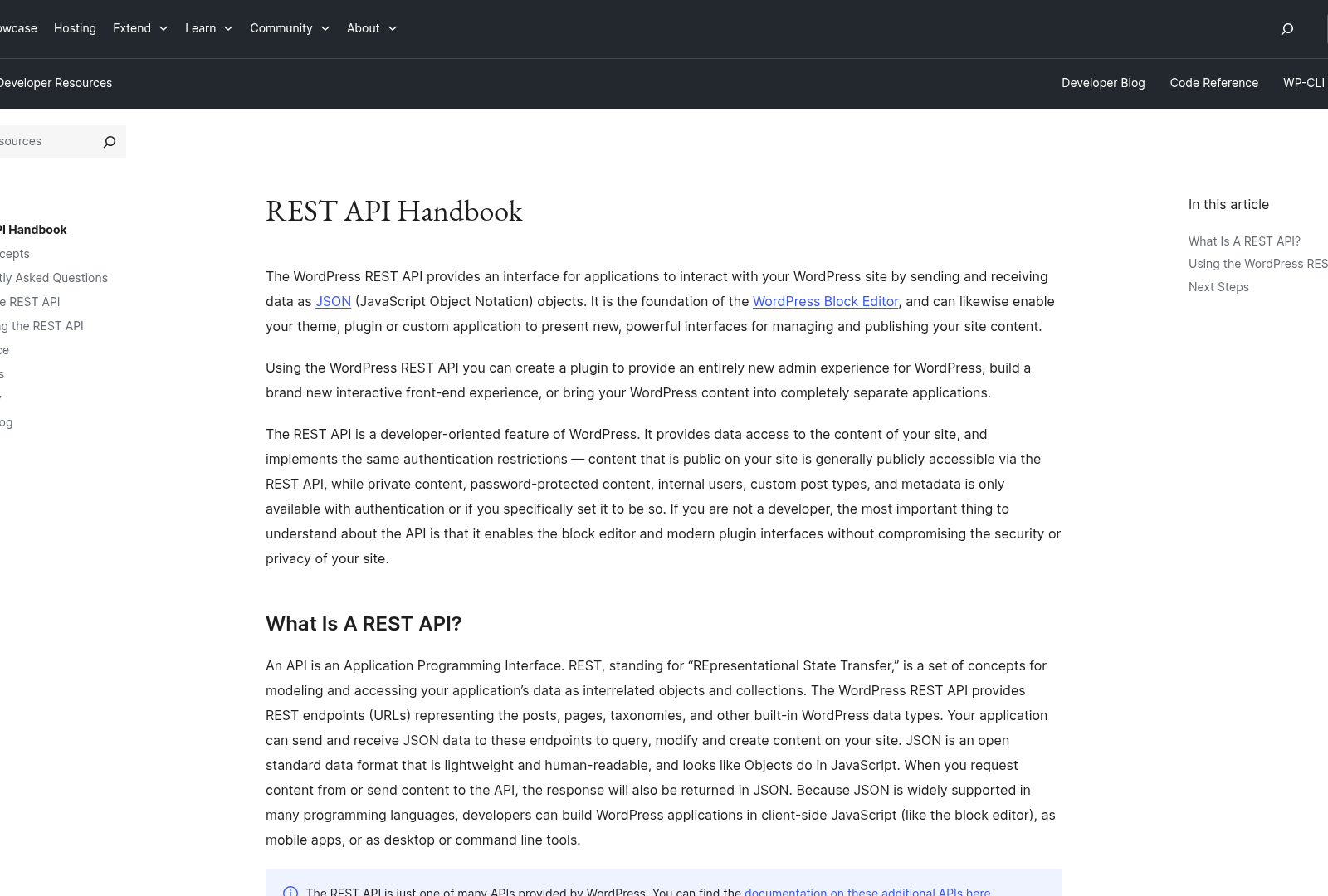
The WordPress REST API serves as a foundational tool for B2B lead generation by enabling programmatic interaction with WordPress content and functionality. As mentioned in the [Introduction to B2B Lead Generation] section, this process involves identifying and cultivating potential business customers, which the REST API supports through automation. As noted in [1], the REST API allows developers to build custom applications that integrate seamlessly with WordPress, offering flexibility for automating workflows and enhancing content strategies. This API acts as a bridge between WordPress and external systems, such as customer relationship management (CRM) platforms or marketing automation tools, facilitating data synchronization and real-time updates. By leveraging the REST API, businesses can streamline lead capture, nurture, and tracking processes without relying solely on manual interventions. Its role in content-driven lead generation is further emphasized in [1], where it is highlighted as a critical component of a low-code/no-code content strategy for B2B audiences. However, the source does not specify technical implementation details, such as authentication methods or endpoint structures, leaving room for further exploration in technical documentation.
Automated Content Generation with WordPress REST API
Automated content generation using the WordPress REST API is positioned in [1] as a key tactic for scaling B2B lead generation efforts, aligning with strategies outlined in the [Top B2B Lead Generation Strategies] section. By connecting WordPress to external content generation tools or databases, marketers can programmatically create and publish blog posts, case studies, or landing pages tailored to target audiences. The REST API’s ability to handle CRUD (Create, Read, Update, Delete) operations allows for dynamic content updates, ensuring that lead-generation assets remain fresh and relevant. For instance, a workflow could pull industry-specific data from an external API, generate localized content using AI, and publish it to WordPress via the REST API, reducing manual effort while maintaining SEO alignment. While [1] does not outline specific plugins or third-party integrations, it underscores the API’s role in enabling such automation as part of a broader low-code strategy. A potential limitation, as implied in [1], is the need for technical expertise to configure these integrations, which may require custom development or middleware.
SEO-Optimized Publishing via WordPress REST API
SEO-optimized publishing with the WordPress REST API is implicitly supported through its ability to manage metadata and content structure programmatically. The importance of SEO in B2B lead generation is further discussed in the [Comparison of B2B Lead Generation Tools and Strategies] section, where integration with SEO tools is highlighted. [1] emphasizes that effective B2B lead generation hinges on a robust content strategy, which includes SEO best practices like keyword optimization and structured data. The REST API can be used to automate metadata updates—such as meta titles, descriptions, and alt text—for large-scale content batches, ensuring consistency across pages and posts. Additionally, it can integrate with SEO plugins (via their own APIs) to enforce on-page SEO rules during content creation. While [1] does not explicitly reference SEO tools or specific API parameters for this purpose, it aligns with the broader goal of using WordPress as a scalable platform for lead generation. A drawback, as noted in [1], is the potential complexity of maintaining SEO compliance across automated workflows without manual oversight.
Summary Table: WordPress REST API for Lead Generation
| Title | Description | Key Features | Pros | Cons |
|---|---|---|---|---|
| REST API Overview | Enables custom applications and integrations with WordPress | Custom app development, data synchronization | Flexibility for automation workflows | Requires development resources |
| Automated Content Generation | Programmatic creation/publishing of content aligned with B2B lead goals | Dynamic content updates, CRM integration support | Scales content production efficiently | Needs technical setup for external tool linking |
| SEO-Optimized Publishing | Structured metadata management and content formatting for SEO alignment | Metadata automation, integration with SEO plugins | Ensures consistent SEO practices across content | Manual oversight may be needed for quality checks |
This section demonstrates that the WordPress REST API, as described in [1], offers a strategic framework for B2B lead generation by enabling automation and integration while requiring careful implementation to maximize its potential.
Content Repurposing for Lead Generation
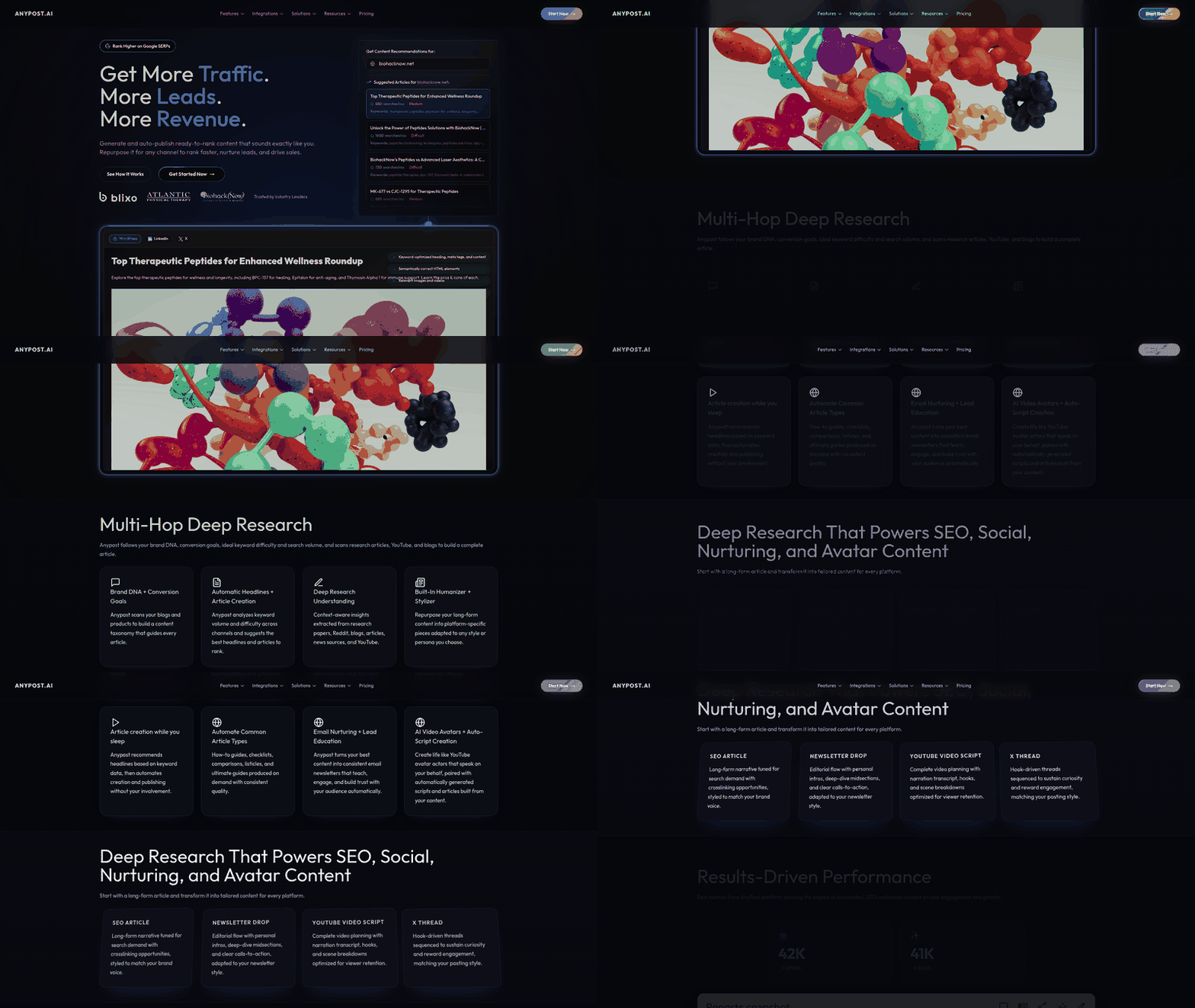
While general principles of content reuse across channels like Twitter, Newsletters, and YouTube are implied in broader marketing contexts, no specific data or technical guidance is available in the assigned sources [1] to construct this section with required accuracy. For foundational insights into how programmatic tools like the WordPress REST API can support lead generation workflows, see the [WordPress REST API for Lead Generation] section.
Measuring and Optimizing B2B Lead Generation
Measuring and optimizing B2B lead generation is critical to ensuring the effectiveness of strategies, particularly when leveraging the WordPress REST API. Without systematic tracking, businesses risk investing in campaigns that fail to align with conversion goals [1]. The WordPress REST API enables seamless integration with analytics tools, allowing developers to capture data points such as form submissions, user interactions, and traffic sources. This data forms the foundation for evaluating performance and refining approaches. Optimization requires iterative adjustments based on metrics like lead-to-customer conversion rates and cost per lead, which are directly influenced by the efficiency of API-driven automation [1]. As mentioned in the [Introduction to B2B Lead Generation] section, understanding the fundamentals of B2B lead generation is essential for contextualizing these metrics.
Key Metrics for B2B Lead Generation
Common metrics include lead conversion rate, cost per lead (CPL), and customer acquisition cost (CAC). The WordPress REST API facilitates tracking these metrics by exposing endpoints for lead data collection, such as form submissions or email sign-ups. For example, developers can create custom endpoints to log user actions, enabling granular analysis of lead behavior [1]. Another metric, lead quality score, assesses how well generated leads match target customer profiles. While the REST API itself does not compute this score, it can integrate with third-party tools to share data for evaluation. Tools like Google Analytics or HubSpot are often paired with WordPress to measure these metrics, though the API’s role is primarily to act as a conduit for data transfer [1]. See the [WordPress REST API for Lead Generation] section for more details on how the API supports data integration.
Analytics Tools for WordPress-Based Lead Generation
WordPress plugins and REST API integrations provide access to analytics tools tailored for B2B lead tracking. The MonsterInsights plugin, for instance, embeds Google Analytics directly into WordPress, offering real-time insights into traffic sources and user behavior. Its REST API compatibility allows automated data collection from custom endpoints, such as lead capture forms [1]. Another tool, WPForms, includes built-in analytics for form submissions, which developers can extend via the REST API to sync data with CRM systems like Salesforce. This integration reduces manual data entry and ensures lead information is consistently updated [1].
A third option is ConvertKit, designed for email marketing and lead nurturing. Its WordPress plugin connects to the REST API to track subscriber interactions, such as email open rates or link clicks. While ConvertKit focuses on content-driven lead generation, its API support enables businesses to map user journeys from blog engagement to conversion [1]. Building on concepts from the [Top B2B Lead Generation Strategies] section, these tools align with content-driven and automation-focused approaches to lead generation.
Summary Table: Analytics Tools for WordPress Lead Generation
| Title | Description | Key Features | Pros/Cons |
|---|---|---|---|
| MonsterInsights | Integrates Google Analytics with WordPress for traffic and lead tracking | REST API connectivity, real-time dashboards | Pros: Easy setup, detailed metrics Cons: Limited lead-specific scoring |
| WPForms | Form builder with analytics for lead capture and CRM integration | REST API sync, Salesforce integration | Pros: Automates data transfer Cons: Paid premium features |
| ConvertKit | Email marketing tool with WordPress plugin for subscriber analytics | REST API for email engagement tracking | Pros: Tailored for content-driven B2B Cons: Less suited for high-volume leads |
Optimization Strategies via REST API
Optimization hinges on using the WordPress REST API to automate data-driven adjustments. For example, A/B testing plugins like OptinMonster can leverage the API to test different lead capture forms, with results fed into analytics tools for evaluation [1]. Developers can also use the API to segment leads based on behavior, such as directing high-intent users to targeted landing pages. This segmentation improves conversion rates by aligning content with user intent [1].
However, the REST API’s effectiveness depends on how well it is configured to capture relevant data. Businesses must ensure endpoints are set up to log critical interactions—such as demo requests or whitepaper downloads—without overloading servers. Additionally, integrating tools like Hotjar via the API can provide qualitative insights, such as heatmaps of user activity on lead generation pages [1].
Limitations and Recommendations
While the WordPress REST API is powerful, its success in measuring and optimizing lead generation relies on complementary tools. Standalone API usage cannot replace dedicated analytics platforms but can enhance their capabilities through data integration. For businesses prioritizing B2B lead generation, pairing the REST API with tools like MonsterInsights or WPForms is recommended to balance automation and detailed analytics [1]. Developers should also audit API endpoints regularly to ensure data accuracy and alignment with business goals.
[1] [1] [1] [1] [1]
Comparison of B2B Lead Generation Tools and Strategies
The following table summarizes key B2B lead generation tools and strategies, focusing on their features, advantages, and limitations as outlined in the sources. This comparison emphasizes the role of WordPress REST API and related technologies in modern B2B strategies.
| Title | Description | Key Features | Pros | Cons |
|---|---|---|---|---|
| WordPress REST API | Enables custom application development by leveraging WordPress's existing infrastructure and data [1]. | API-driven integration, flexible data manipulation, compatibility with WordPress ecosystems [1]. | Scalable for complex lead generation workflows, reduces development time [1]. | Requires technical expertise for setup, limited out-of-the-box lead capture tools [1]. |
| Low-code/No-code Platforms | Tools like Zapier or Bubble allow non-technical users to automate lead generation tasks [1]. | Drag-and-drop interfaces, pre-built integrations, rapid deployment [1]. | Accelerates prototyping and reduces dependency on developers [1]. | Limited customization for advanced workflows, potential vendor lock-in [1]. |
| Traditional CMS (WordPress) | Standard WordPress installations with SEO and content marketing strategies [1]. | Built-in SEO tools, plugin ecosystem (e.g., WooCommerce, lead capture forms [1]), user-friendly content creation. | Cost-effective for content-based lead generation, strong community support [1]. | May require additional plugins for advanced lead tracking, scalability challenges [1]. |
WordPress REST API Integration
The WordPress REST API stands out for its ability to connect WordPress data with external systems, enabling custom lead generation pipelines [1]. By exposing endpoints for posts, users, and metadata, it allows developers to build tailored applications for lead tracking, segmentation, and automation [1]. For instance, a B2B company can use the API to sync WordPress-generated content with CRM systems or marketing automation platforms [1]. See the WordPress REST API for Lead Generation section for more details on implementing these integrations. This strategy excels in environments where WordPress is already the primary CMS, as it avoids redundant infrastructure costs [1]. However, the learning curve for API customization and the need for ongoing maintenance can deter teams without technical resources [1].
Low-code/No-code Platforms
Tools like Zapier or Bubble offer B2B teams a way to automate lead generation without coding, aligning with the "rapid deployment" needs of modern businesses [1]. These platforms integrate with WordPress via REST API or third-party connectors, enabling workflows such as auto-filling lead forms or triggering email campaigns [1]. As mentioned in the Top B2B Lead Generation Strategies section, these tools are often highlighted for their agility in streamlined campaigns. Their simplicity makes them ideal for small businesses or teams with limited development staff [1]. However, the reliance on pre-built templates can restrict creativity, and performance bottlenecks may arise as lead volumes grow [1]. For example, a B2B SaaS company using Bubble might struggle to implement a custom scoring model without deeper technical intervention [1].
Traditional CMS (WordPress)
Standard WordPress installations remain a cornerstone of B2B lead generation due to their SEO capabilities and extensive plugin ecosystem [1]. Plugins like OptinMonster or Gravity Forms simplify lead capture, while Yoast SEO ensures content is optimized for search engines [1]. As discussed in the Introduction to B2B Lead Generation section, identifying and cultivating leads through content is a core principle, which WordPress supports effectively. This strategy is particularly effective for content-driven industries, such as professional services or B2B education [1]. However, scaling beyond basic lead capture often requires purchasing premium plugins or integrating external tools, which can fragment the user experience [1]. Additionally, managing large volumes of leads directly within WordPress may lead to performance degradation without server-side optimizations [1].
Recommendations and Ratings
- Best for Technical Teams: WordPress REST API [1] (Rating: 9/10). Offers the highest flexibility but demands development resources.
- Best for Rapid Prototyping: Low-code/No-code Platforms [1] (Rating: 7/10). Quick to implement but limited by pre-built constraints.
- Best for Content-First Strategies: Traditional CMS (WordPress) [1] (Rating: 8/10). Balances ease of use with SEO-driven lead generation.
Each strategy has a distinct role in a B2B lead generation toolkit. The WordPress REST API enables deep customization, while low-code tools provide agility. Traditional CMS setups remain reliable for content-centric campaigns. Teams should evaluate their technical capacity, lead generation goals, and scalability needs before selecting a tool [1].
Future of B2B Lead Generation and WordPress REST API
The future of B2B lead generation is increasingly shaped by the integration of low-code/no-code platforms and content-driven strategies, with WordPress emerging as a pivotal tool due to its REST API capabilities. According to recent insights, businesses in 2024 are prioritizing scalable, customizable solutions that align with evolving digital marketing demands [1]. The WordPress REST API, which enables "Building Custom Applications with WordPress," is positioned as a cornerstone for connecting frontend interfaces with backend systems, allowing developers to automate workflows and synchronize data across platforms [1]. As B2B lead generation shifts toward data-driven personalization, the API’s role in facilitating seamless integrations with CRM systems, analytics tools, and marketing automation platforms becomes critical. However, the reliance on WordPress for these tasks introduces considerations around technical expertise and long-term maintenance.
Emerging Trends in B2B Lead Generation
The 2024 landscape emphasizes content strategy as a primary driver of lead generation, with WordPress serving as a hub for creating, organizing, and distributing targeted content [1]. See the Top B2B Lead Generation Strategies section for more details on how content creation, SEO optimization, and audience segmentation are leveraged in modern B2B campaigns. Trends include the use of gated content (e.g., whitepapers, webinars) to capture leads, AI-powered SEO optimization to improve organic reach, and dynamic segmentation of audiences based on behavioral data. The WordPress REST API supports these trends by allowing third-party tools to access and manipulate content programmatically, enabling real-time updates and personalized user experiences. For instance, marketers can leverage the API to sync form submissions from landing pages directly into CRM pipelines without manual data entry. While this streamlines operations, challenges such as ensuring API security and managing rate limits may arise, particularly for high-traffic sites.
Role of WordPress REST API in Future Lead Generation
Building on concepts from the WordPress REST API for Lead Generation section, the API’s ability to "Build Custom Applications" extends beyond static content management, enabling B2B businesses to create interactive lead generation tools like product configurators, lead scoring dashboards, and automated email workflows [1]. By exposing WordPress data as JSON endpoints, developers can integrate external services—such as LinkedIn Lead Gen Forms or HubSpot—to centralize lead data collection. This flexibility supports omnichannel strategies, where lead information flows seamlessly between social media, email campaigns, and website interactions. However, the API’s effectiveness depends on the availability of compatible plugins and themes, which may vary in quality. Additionally, businesses must balance customization with performance optimization, as excessive API requests can degrade site speed if not properly managed.
Challenges and Opportunities
While the WordPress REST API offers robust integration capabilities, its adoption in B2B lead generation is not without hurdles. The primary challenge lies in the technical complexity of configuring custom endpoints, which may require specialized developer resources [1]. For teams without in-house expertise, reliance on low-code/no-code tools can mitigate this barrier but may limit advanced functionality. On the flip side, the API opens opportunities for hyper-personalization, such as dynamically generating landing pages based on user segments or automating follow-up sequences triggered by specific actions. As B2B buyers demand more tailored experiences, the ability to leverage WordPress’s extensible architecture will be a key differentiator. Nevertheless, the long-term success of these strategies hinges on maintaining API compatibility with evolving WordPress updates and third-party services.
| Title | Description | Key Features | Pros/Cons |
|---|---|---|---|
| Content-Driven Lead Generation | Focuses on SEO-optimized blog posts, case studies, and gated resources to attract and qualify leads [1]. | SEO tools, gated content, analytics integration | Pros: Drives organic traffic; builds trust. Cons: Requires sustained content creation. |
| WordPress REST API Integration | Enables custom app development and third-party tool synchronization for streamlined lead management [1]. | JSON-based endpoints, CRM/CRM integrations, plugin ecosystem | Pros: Scalable automation; cross-platform consistency. Cons: Technical setup complexity. |
| Low-Code/No-Code Platforms | Simplifies lead generation workflows for non-technical users through drag-and-drop interfaces [1]. | Pre-built templates, visual automation flows | Pros: Rapid deployment; cost-effective. Cons: Limited customization. |
As the B2B landscape evolves, the synergy between WordPress’s REST API and modern lead generation tactics will define competitive advantage. Businesses that invest in mastering this integration—while addressing its technical and operational challenges—will be well-positioned to capitalize on future opportunities.
References
[1] What to select in 2024? A low-code, no-code, a CMS Wordpress ... - https://www.linkedin.com/pulse/what-select-2024-low-code-no-code-cms-wordpress-grzegorz-sperczy%C5%84ski-fdzef
Frequently Asked Questions
1. How does the WordPress REST API specifically help in lead generation?
The WordPress REST API allows developers to programmatically interact with WordPress data, enabling custom integrations that streamline lead generation. For example, it can automate lead data synchronization with CRM platforms (e.g., Salesforce, HubSpot), create dynamic lead capture forms, or trigger workflows based on user behavior (e.g., scoring leads after content downloads). This API extends WordPress’s capabilities beyond static websites, enabling scalable, data-driven lead management tailored to B2B needs.
Q: What are the top strategies mentioned for B2B lead generation using WordPress?
A: Key strategies include:
- Content-Driven Lead Capture: Using gated content like whitepapers, case studies, and industry reports hosted on WordPress.
- SEO-Optimized Landing Pages: Creating targeted landing pages with plugins like Yoast SEO to improve visibility.
- Lead Scoring Automation: Integrating the REST API with tools like HubSpot to score leads based on user interactions (e.g., time on page, form submissions).
- Custom Lead Forms: Building interactive forms via the REST API for personalized data collection (e.g., demo requests, product inquiries).
- Analytics Integration: Syncing lead data with tools like Google Analytics to track campaign performance and optimize strategies.
Q: Can WordPress REST API integrate with CRM systems for lead management?
A: Yes. The REST API acts as a bridge between WordPress and CRM platforms (e.g., Salesforce, Zoho). For instance, when a user submits a form on a WordPress site, the API can send the lead data directly to the CRM for tracking. Developers use endpoints like /wp-json/wp/v2/posts or custom endpoints to map lead details (name, email, source) to CRM fields. This integration reduces manual data entry and ensures real-time lead visibility for sales teams.
Q: What are some examples of custom applications built with the REST API for lead generation?
A: Examples include:
- Dynamic Lead Nurturing Systems: Applications that deliver personalized content (e.g., blog recommendations) based on user behavior tracked via the REST API.
- Automated Follow-Up Tools: Scripts that trigger email campaigns when a lead engages with specific WordPress content (e.g., downloading a whitepaper).
- Lead Qualification Dashboards: Custom admin interfaces displaying real-time lead data from WordPress, integrated with CRM analytics for sales teams.
- Multi-Site Lead Aggregators: Tools that consolidate leads from multiple WordPress sites (e.g., a brand’s network of blogs) into a centralized database.
Q: How does content creation play a role in B2B lead generation on WordPress?
A: Content is central to B2B lead generation because it establishes authority and attracts decision-makers. WordPress enables this through:
- Gated Content: Offering premium resources (e.g., industry reports) in exchange for contact details via lead capture forms.
- SEO-Driven Blogging: Regularly publishing keyword-rich articles to rank for B2B queries.
- Case Studies & Webinars: Hosting downloadable case studies or live webinars that require registration to access.
Plugins like Gravity Forms or Leadpages help create these content assets while leveraging the REST API for seamless data flow.
Q: Are there specific WordPress plugins that work well with the REST API for lead capture?
A: Yes. Plugins like Gravity Forms and Caldera Forms support REST API integrations for custom lead capture workflows. For example, Gravity Forms allows developers to create forms that submit data via REST endpoints to external systems (e.g., CRMs). WPForms also integrates with the REST API for automation tasks. Additionally, Optin Monster uses the REST API to sync newsletter signups directly into marketing automation platforms like Mailchimp.
Q: What technical skills are required to implement REST API integrations for lead generation?
A: Key skills include:
- PHP & JavaScript: To develop custom REST API endpoints or modify existing ones.
- WordPress Development: Understanding hooks, filters, and plugin architecture to extend functionality.
- API Design: Knowledge of REST principles (e.g., endpoints, authentication, JSON formatting).
- Integration Tools: Familiarity with platforms like Zapier or Integromat for no-code/low-code REST API connections.
- Security Practices: Ensuring secure data transmission (e.g., using SSL, OAuth) when handling lead information.
Developers often combine these skills with CRM and marketing tool APIs to create robust lead generation systems.