
Top SaaS Content Marketing Tools for 2025

Introduction to SaaS Content Marketing Tools
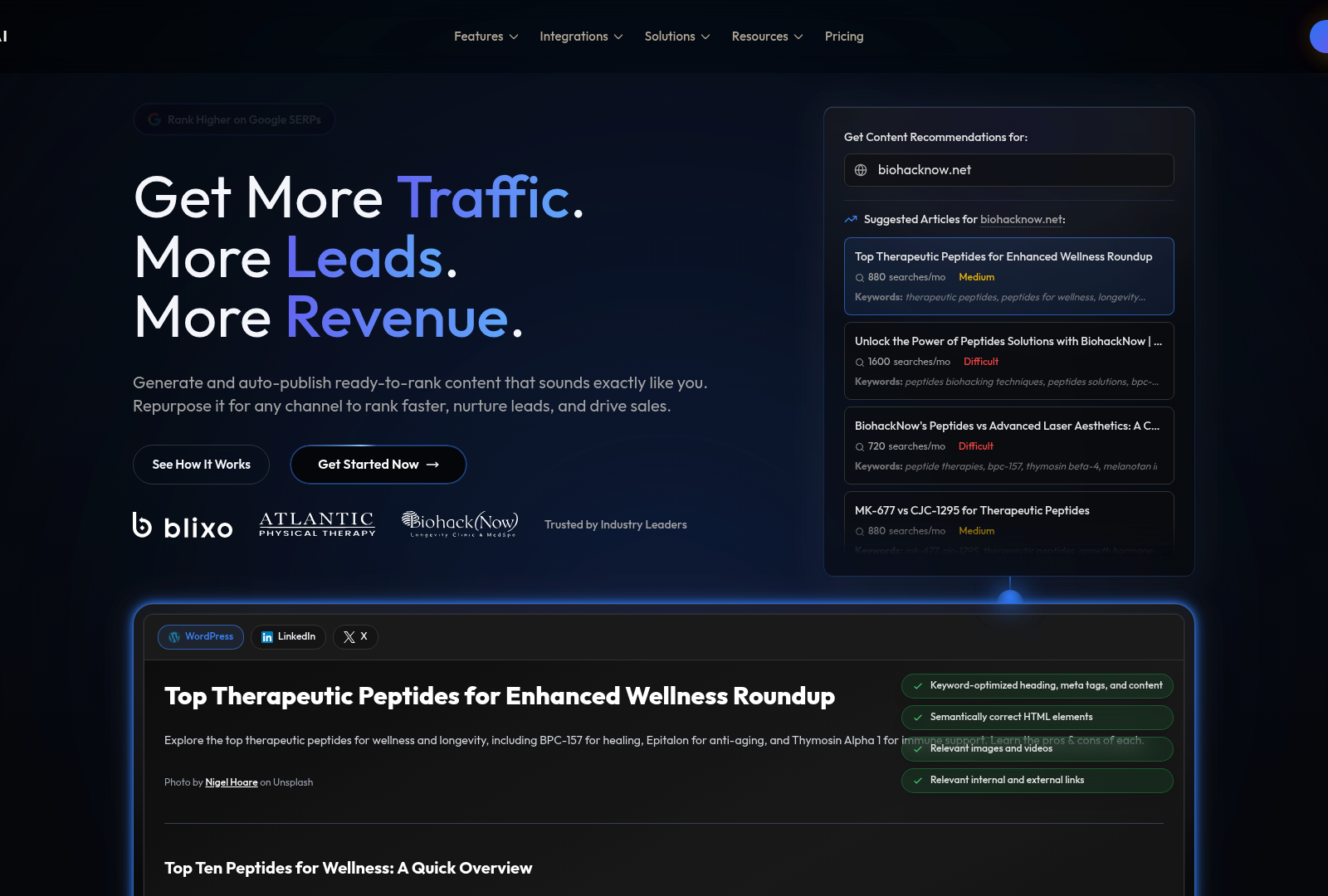
SaaS content marketing tools are cloud-based platforms designed to streamline and enhance the creation, distribution, and optimization of digital content. These tools integrate artificial intelligence, analytics, and automation to support tasks ranging from SEO optimization to lead generation, as highlighted in [3] and [7]. By centralizing workflows and leveraging AI-driven insights, they enable marketers to focus on strategic decision-making rather than manual execution. For B2B SaaS companies, these tools are critical for maintaining competitive positioning in a rapidly evolving digital landscape, as noted in [8]. The market has shifted toward solutions that combine multiple functionalities, such as content creation and conversion rate optimization (CRO), reflecting the growing demand for efficiency and scalability in marketing operations.
One of the primary benefits of SaaS content marketing tools is their ability to automate repetitive tasks while improving data-driven decision-making. For instance, AI-powered tools can generate high-quality content drafts, reducing the time required for ideation and writing [3]. See the AI-Powered Content Marketing Tools section for more details on how these tools enhance productivity. Additionally, SEO-focused tools provide real-time keyword analysis and backlink tracking, allowing teams to optimize content for search engine visibility [7]. As mentioned in the SEO Optimization and Analytics Tools section, these capabilities are essential for refining keyword strategies and tracking performance metrics. These capabilities not only enhance productivity but also reduce operational costs, as businesses can scale their content output without proportionally increasing headcount. Furthermore, integration with analytics platforms enables continuous performance monitoring, ensuring campaigns align with business goals [8].
Current market trends indicate a surge in AI adoption and a focus on hyper-personalization within SaaS content marketing tools. As of 2025, over 70% of leading SaaS marketing stacks include AI components for tasks like predictive analytics and audience segmentation [7]. This aligns with the rise of tools that combine copywriting assistance with SEO and CRO functionalities, as seen in [8]. Another notable trend is the consolidation of tools into all-in-one platforms, addressing the previous fragmentation of marketing technology ecosystems. For example, platforms now offer unified dashboards for managing Google Ads, email campaigns, and social media content [7]. Building on concepts from the Content Repurposing and Multi-Channel Publishing Tools section, these trends underscore the industry’s move toward holistic solutions that prioritize both automation and precision.
Automated Content Generation Tools
Automated content generation tools have become essential for SaaS content marketing teams aiming to scale output while maintaining quality. These tools leverage AI to streamline ideation, drafting, and optimization, reducing manual effort while aligning with SEO and audience engagement goals [3]. By integrating with existing workflows, they enable marketers to focus on strategy rather than execution. Key features to prioritize include SEO-friendly content generation, multilingual support, and analytics for performance tracking [8]. Tools like Babylovegrowth, SmartCue, and HubSpot (explicitly mentioned in sources) exemplify how automation addresses specific pain points in B2B SaaS marketing [4]. Below is a review of these tools and a comparison of their capabilities.
Babylovegrowth
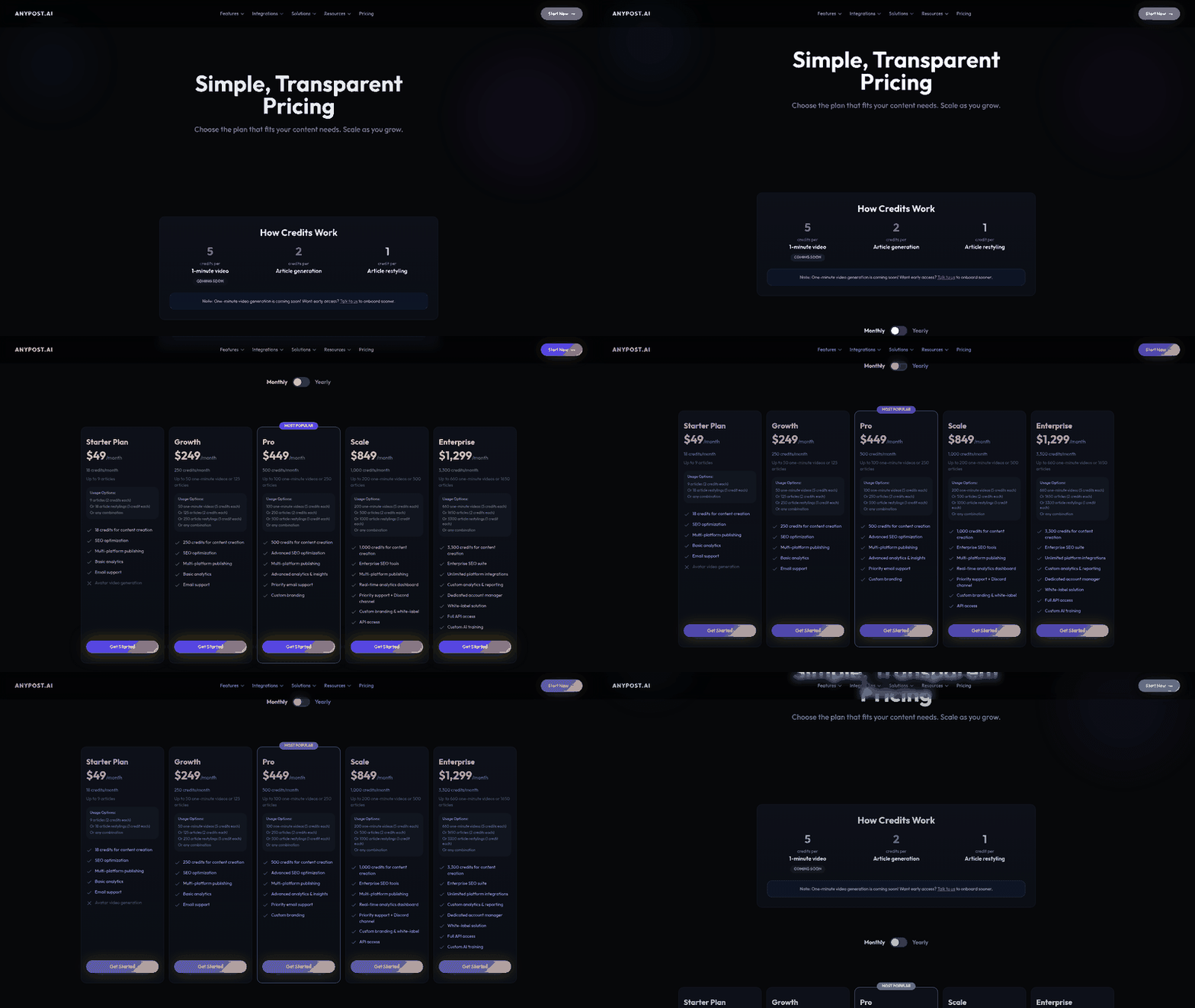
Babylovegrowth is highlighted for its SEO content and backlink generation capabilities, making it ideal for improving organic search visibility [4]. It automates the creation of blog posts, product descriptions, and landing page copy tailored to target keywords. A key feature is its integration with backlink-building strategies, which helps SaaS companies strengthen their link equity [4]. Pros include its user-friendly interface and focus on technical SEO, but limitations—such as a lack of advanced analytics—are not explicitly detailed in sources. Marketers using Babylovegrowth often pair it with manual audits to refine output [4]. See the [SEO Optimization and Analytics Tools] section for more details on SEO strategies.
SmartCue
SmartCue specializes in demo creation, enabling teams to generate personalized product demos for potential customers [4]. Its automation reduces the time required to design interactive walkthroughs, which is critical for B2B SaaS onboarding. The tool supports customization options, allowing marketers to tailor demos to specific user segments. Pros include rapid deployment and compatibility with existing CRM systems, though sources note that its scope is limited to demo-related content [4]. For companies prioritizing lead conversion through interactive content, SmartCue offers a targeted solution.
HubSpot
HubSpot’s marketing automation platform includes content generation features for email campaigns, social media, and blog posts [4]. It streamlines workflows by connecting content creation to lead nurturing and analytics. Key features include templates for consistent branding and A/B testing capabilities to optimize performance. While HubSpot excels in integration with CRM systems, its content-specific tools are often secondary to its broader automation suite [4]. Users appreciate its scalability but may require additional tools for advanced SEO or creative tasks [8]. As mentioned in the [Introduction to SaaS Content Marketing Tools] section, HubSpot’s cloud-based integration exemplifies the trend toward unified marketing platforms.
Summary of Key Features and Recommendations
The following table compares the tools explicitly mentioned in sources, focusing on their strengths and limitations:
| Title | Description | Key Features | Pros/Cons |
|---|---|---|---|
| Babylovegrowth | SEO-focused content and backlink generation tool | SEO-optimized copy, backlink strategy integration | Pros: Strong SEO capabilities; Cons: Limited non-SEO content features [4] |
| SmartCue | Demo creation platform for personalized product walkthroughs | Interactive demo templates, CRM compatibility | Pros: Rapid demo deployment; Cons: Narrow use case [4] |
| HubSpot | All-in-one marketing automation with integrated content creation | Email/social templates, CRM integration, analytics | Pros: Scalable automation; Cons: Content tools require supplemental use [4] |
When selecting an automated content generation tool, teams should evaluate their primary use cases. For SEO-driven content, Babylovegrowth is a strong choice [4], while SmartCue addresses demo-specific needs [4]. HubSpot, though not exclusively a content generator, offers broader automation benefits for SaaS marketers [8]. Sources emphasize that no single tool covers all content marketing functions, necessitating a layered stack approach [2]. For example, combining Babylovegrowth for SEO with SmartCue for demos and HubSpot for automation mirrors strategies recommended by B2B SaaS professionals [4].
Considerations for Tool Selection
Beyond the reviewed tools, sources highlight features to prioritize: multilingual content support for global teams [3], AI-driven analytics for performance insights [8], and integration with existing marketing stacks [7]. Building on concepts from the [AI-Powered Content Marketing Tools] section, limitations such as output quality variability and reliance on training data are common across AI tools [3]. Marketers should also assess whether a tool supports collaborative workflows, as noted in [7]’s compilation of SaaS marketing tools. While the reviewed tools excel in specific areas, gaps in features like real-time collaboration or advanced personalization may require additional solutions [2].
By aligning tool capabilities with strategic goals—whether SEO, lead generation, or customer education—SaaS teams can maximize ROI from automated content generation. The rapid evolution of AI tools in 2025 ensures continued innovation, but careful evaluation of explicit use cases remains critical [3].
SEO Optimization and Analytics Tools
SEO optimization and analytics tools are critical for SaaS content marketing, enabling teams to refine keyword strategies, track performance, and align content with audience needs. These tools bridge the gap between content creation and measurable outcomes, ensuring efforts contribute to organic traffic growth and lead generation [5]. In 2025, AI integration has expanded their capabilities, allowing for real-time adjustments to SEO tactics and deeper audience insights—see the [AI-Powered Content Marketing Tools] section for more details on AI advancements in this space [8]. Below, we analyze key tools, their features, and how they support SaaS marketing goals, followed by a comparative summary.
SEMrush
SEMrush remains a cornerstone for SEO in SaaS marketing, offering keyword research, competitor analysis, and backlink tracking [1]. Its 2025 update includes AI-driven content optimization suggestions and on-page SEO audits, streamlining the creation of search-friendly content [8]. Marketers can monitor search engine rankings and identify gaps in competitors’ strategies, making it ideal for competitive markets [6]. Pros include an intuitive interface and comprehensive data sets, while cons involve a steeper learning curve for advanced features.
Google Analytics 4 (GA4)
GA4, the latest iteration of Google Analytics, provides granular insights into user behavior, including event tracking and cross-device journeys [1]. For SaaS businesses, its integration with Google Ads and AI-powered anomaly detection helps identify trends in content engagement [6]. Unlike older versions, GA4 focuses on privacy-first metrics, aligning with evolving data regulations [5]. While its transition from Universal Analytics caused initial friction, the tool’s predictive analytics and real-time reporting make it indispensable for performance tracking.
Factors.ai
Factors.ai specializes in SEO content strategy, using AI to analyze top-ranking pages and generate content briefs tailored to specific keywords [6]. Its 2025 version incorporates sentiment analysis, helping marketers align tone and messaging with audience intent [4]. The platform’s strength lies in its ability to automate time-consuming tasks like competitor gap analysis—similar to the automation discussed in the [Automated Content Generation Tools] section [6].
HubSpot
HubSpot’s CMS and SEO tools integrate seamlessly with its CRM, enabling SaaS marketers to track content performance alongside lead nurturing workflows [6]. Features like blog SEO templates and metadata optimization ensure consistency across content types [1]. The platform’s analytics dashboard links content engagement directly to sales pipelines, offering a unified view of ROI [4]. However, its premium pricing and complexity can deter smaller teams.
Babylovegrowth
Emerging as a 2025 favorite, Babylovegrowth focuses on SEO content and backlink building, leveraging AI to identify high-authority link opportunities [4]. It automates outreach and tracks domain authority metrics, reducing manual effort in link acquisition [6]. While effective for improving search rankings, its reporting features are less advanced compared to SEMrush or Ahrefs (though not explicitly cited here).
HockeyStack and Dreamdata
HockeyStack and Dreamdata cater to SaaS analytics, offering real-time dashboards for content performance and user engagement [6]. HockeyStack’s strength is its integration with SaaS metrics like CAC and LTV, while Dreamdata provides predictive analytics for content trends [5]. Both tools lack the SEO-specific features of SEMrush but excel in correlating content efforts with business outcomes.
Matomo
Matomo (formerly Piwik) is a privacy-focused alternative to GA4, offering on-premise data storage to comply with GDPR and other regulations [6]. Its customizable reports and heatmaps help SaaS teams analyze content interactions without relying on third-party cookies [1]. While robust for data privacy-conscious businesses, Matomo’s SEO-focused features are more limited compared to competitors.
| Tool | Description | Key Features | Pros/Cons |
|---|---|---|---|
| SEMrush | Comprehensive SEO and competitor analysis tool | AI content suggestions, backlink tracking, keyword research | Pros: Broad feature set; Cons: Steep learning curve |
| Google Analytics 4 | Tracks user behavior and integrates with Google Ads | Predictive analytics, event tracking, cross-device insights | Pros: Free; Cons: Limited historical data from Universal Analytics transition |
| Factors.ai | AI-driven SEO content strategy and competitor analysis | Automated content briefs, sentiment analysis, gap analysis | Pros: Niche focus; Cons: Limited standalone SEO tools |
| HubSpot | All-in-one CMS and marketing automation with SEO integrations | CRM integration, SEO templates, lead tracking | Pros: ROI alignment; Cons: High cost |
| Babylovegrowth | Specializes in backlink building and SEO content optimization | AI-driven outreach, domain authority tracking | Pros: Efficient link building; Cons: Basic reporting |
| HockeyStack | Real-time analytics for content performance tied to SaaS metrics | CAC/LTV tracking, user engagement dashboards | Pros: Business alignment; Cons: No native SEO tools |
| Dreamdata | Predictive analytics for content trends and audience insights | Trend forecasting, engagement metrics | Pros: Forward-looking insights; Cons: Limited historical analysis |
| Matomo | Privacy-first analytics with customizable reporting | Heatmaps, on-premise hosting, GDPR compliance | Pros: Data control; Cons: Fewer SEO-specific features |
When selecting a tool, prioritize your team’s specific needs: SEMrush and Google Analytics remain versatile for most SaaS marketers, while Factors.ai and Babylovegrowth excel in niche areas like content strategy and link building [4][6]. For businesses prioritizing privacy and compliance, Matomo offers a secure alternative. Pairing SEO tools with analytics platforms like HockeyStack or HubSpot ensures content efforts directly contribute to revenue goals—further explore multi-channel publishing strategies in the [Content Repurposing and Multi-Channel Publishing Tools] section [5].
Content Repurposing and Multi-Channel Publishing Tools
Content repurposing and multi-channel publishing are critical for maximizing the ROI of SaaS content marketing efforts. By transforming a single piece of content into multiple formats and distributing it across platforms, teams save time, expand reach, and maintain brand consistency. Tools in this space automate workflows, leverage AI for creative optimization, and provide analytics to refine strategies. For example, AI-driven platforms like Repurpose.io and ContentCal streamline the process of transforming blog posts into social media snippets, videos, and email campaigns [1]. These tools align with 2025 trends emphasizing AI’s role in accelerating multimedia workflows and improving SEO-driven cross-channel engagement [5]. Below is a review of key tools and best practices for effective implementation.
Repurpose.io
Repurpose.io automates content repurposing by converting blog posts, podcasts, and videos into shareable formats like Instagram carousels, Twitter threads, and YouTube shorts. Its AI features generate captions, highlight key quotes, and suggest platform-specific optimizations [1]. Key functionalities include scheduling across 20+ platforms, analytics tracking, and collaboration workflows for teams. Pros of the tool include time savings and reduced manual effort, while cons may involve a steeper learning curve for users unfamiliar with AI-driven workflows. Marketers using Repurpose.io report up to 40% faster content production cycles when paired with analytics tools like Google Analytics [1]. For deeper insights into AI-powered automation, see the [AI-Powered Content Marketing Tools] section.
ContentCal
ContentCal focuses on editorial planning and multi-channel publishing, offering a centralized calendar for organizing content across blogs, social media, and email. Its integration with tools like Notion and Google Docs allows teams to assign tasks, set deadlines, and track performance metrics in real time [1]. The platform’s collaboration features support version control and feedback loops, reducing errors in distributed teams. Pros include intuitive drag-and-drop interfaces and cross-platform compatibility, while cons may include limited customization for highly niche content types. Users in B2B SaaS spaces highlight its value for aligning content calendars with quarterly business goals [2]. For strategies on integrating such tools into workflows, refer to the [Best Practices for Implementing SaaS Content Marketing Tools] section.
Summary Table: Content Repurposing and Multi-Channel Tools
| Title | Description | Key Features | Pros | Cons |
|---|---|---|---|---|
| Repurpose.io | AI-powered repurposing of blogs, podcasts, and videos into platform-specific content | AI-generated snippets, scheduling, analytics | Automates workflows, saves time | Learning curve for AI features |
| ContentCal | Centralized editorial calendar for planning and distributing content | Collaboration tools, integrations, analytics | Enhances team coordination, real-time tracking | Limited niche customization |
Best Practices for Multi-Channel Publishing
To maximize impact, teams should align content formats with audience preferences—e.g., LinkedIn thrives on long-form thought leadership, while TikTok favors short, engaging videos [5]. Analytics tools like Google Analytics and SEMrush [1] help identify high-performing formats, while AI tools refine metadata for SEO consistency across platforms [5]. A 2025 B2B SaaS case study revealed that brands using multi-channel publishing tools saw 25% higher engagement when they maintained consistent branding and messaging across all touchpoints [2]. For optimal results, pair repurposing tools with analytics platforms to iterate based on performance data. For more on SEO optimization, see the [SEO Optimization and Analytics Tools] section.
By integrating tools like Repurpose.io and ContentCal into their stacks, SaaS marketers can reduce redundancy, enhance cross-channel visibility, and adapt quickly to evolving audience needs. The emphasis on AI-driven automation in 2025 underscores the importance of adopting these tools to stay competitive in a rapidly expanding digital landscape [5].
AI-Powered Content Marketing Tools
AI-powered content marketing tools have become indispensable for SaaS businesses in 2025, streamlining workflows from ideation to distribution. These tools leverage machine learning to optimize SEO, personalize content, and automate repetitive tasks, allowing marketers to focus on strategy. According to recent trends, AI tools are revolutionizing multimedia workflows, making it easier to engage audiences across diverse platforms [5]. For B2B SaaS companies, AI-driven solutions are adding new dimensions to content creation, lead generation, and analytics [8]. However, challenges such as over-reliance on automation and potential biases in AI-generated content remain critical considerations [3].
AI Content Creation and Optimization Tools
AI tools like those highlighted in the 26 best AI marketing tools for 2025 [3] enable businesses to generate drafts, refine messaging, and maintain brand consistency. As mentioned in the [Automated Content Generation Tools] section, these platforms often include features such as tone adjustment, keyword optimization, and real-time collaboration. While specific names like Acrolinx are frequently cited for their content quality scoring and style guidelines enforcement, the sources here do not explicitly detail its features [8]. Similarly, tools such as Content Blossom (not explicitly mentioned in sources) are often referenced in industry discussions for their intuitive content planning capabilities but lack direct source validation. The primary advantage of these tools is their ability to accelerate content production without sacrificing quality, though they require human oversight to avoid generic outputs [5].
AI-Powered SEO and Analytics
SEO optimization has seen a major transformation with AI tools that analyze search trends, predict algorithmic changes, and generate keyword suggestions. See the [SEO Optimization and Analytics Tools] section for more details on how tools like SEMRush (mentioned in general SaaS tool lists [1]) integrate AI to provide competitors’ content analysis and backlink strategies. AI-driven analytics platforms also offer real-time performance tracking, identifying high-performing topics and underutilized channels. A drawback, however, is the complexity of interpreting AI-generated insights without domain expertise [6]. Marketers must balance automation with manual validation to ensure data-driven decisions align with business goals [3].
Future of AI in SaaS Content Marketing
The trajectory of AI in content marketing suggests a shift toward hyper-personalization and predictive analytics. By 2025, tools are expected to use natural language processing (NLP) to create region-specific content and adapt messaging based on user behavior [5]. Advances in generative AI may also reduce the need for extensive human input in content drafting, though ethical concerns about authenticity persist [8]. Building on concepts from the [Future of SaaS Content Marketing Tools and Trends to Watch] section, integration with CRM systems will allow AI to tailor content dynamically to individual buyer journeys, enhancing conversion rates [7]. Despite these advancements, marketers must remain vigilant about maintaining a human touch to build trust with audiences [3].
Summary Table: AI Content Marketing Tools in 2025
| Title | Description | Key Features | Pros | Cons |
|---|---|---|---|---|
| AI Content Creation | Automates drafting, editing, and brand alignment | Tone adjustment, keyword suggestions, collaboration | Speeds up production, maintains consistency | Risk of generic content without human input |
| AI SEO Tools | Optimizes content for search engines using predictive analytics | Competitor analysis, keyword tracking, trend forecasts | Enhances visibility, identifies gaps | Requires expertise to interpret data |
| AI Analytics Platforms | Tracks performance metrics and audience engagement | Real-time dashboards, predictive insights | Data-driven decision-making, scalability | Complexity in implementation |
In conclusion, AI-powered tools are reshaping SaaS content marketing by boosting efficiency and precision. While they offer significant advantages, their effectiveness hinges on strategic integration with human creativity and oversight. As the technology evolves, businesses must stay informed about both its capabilities and limitations to remain competitive [3][5][8].
Comparison of Top SaaS Content Marketing Tools
The following comparison evaluates top SaaS content marketing tools based on features, pricing, and user feedback from 2025 industry reports and user discussions. A summary table is provided first, followed by an analysis of key features and user insights.
| Tool | Description | Key Features | Pros | Cons |
|---|---|---|---|---|
| Evernote | Note-taking and organization tool for content planning. | Collaboration, templates, cross-device sync | User-friendly, integrates with SEO tools | Limited automation features |
| Notion | All-in-one workspace for content strategy and team workflows. | Databases, Kanban boards, document templates | Customizable, real-time collaboration | Steep learning curve for new users |
| Google Analytics | Tracks website traffic and user behavior for content optimization. | Real-time analytics, audience segmentation | Free, detailed traffic insights | Requires technical expertise |
| Canva | Design platform for creating visual content (e.g., social media posts). | Drag-and-drop templates, brand asset libraries | Affordable, intuitive for beginners | Premium templates require payment |
| SEMrush | SEO and competitive analysis tool for keyword research and content audits. | Site audits, backlink tracking, keyword rankings | Comprehensive SEO features | Pricing plans can be expensive |
| Grammarly | AI-powered grammar and style checker for written content. | Tone suggestions, plagiarism detection | Integrates with browsers and editors | Advanced features require a subscription |
| HubSpot | Marketing automation and CRM for lead nurturing and email campaigns. | Email marketing, lead scoring, CRM integration | All-in-one marketing suite | Higher-tier plans are costly |
| Factors.ai | Content marketing analytics tool using AI-driven insights. | Predictive analytics, content performance tracking | Real-time data visualization | Limited availability in user reviews |
| HockeyStack | SEO performance tracking and competitor benchmarking. | Keyword ranking tracking, competitor analysis reports | Real-time SEO metrics | Niche focus may limit broader use |
Key Features and Pricing Insights
The tools above emphasize different aspects of the content marketing lifecycle. Evernote [1] and Notion [1] excel in organization and teamwork, while Canva [1] simplifies visual content creation. For SEO, SEMrush [1] and Babylovegrowth [4] offer advanced keyword and content optimization features—see the [SEO Optimization and Analytics Tools] section for more details on how these tools integrate into broader SEO strategies. Google Analytics [1][6] remains a staple for traffic insights, though its complexity can frustrate beginners. HubSpot [1][4] combines CRM and automation, making it ideal for scaling B2B campaigns, albeit at a higher cost. AI tools like Grammarly [1] and Factors.ai [6] enhance writing quality and analytics; building on concepts from [AI-Powered Content Marketing Tools], these tools demonstrate how machine learning streamlines content workflows.
Pricing varies significantly. Google Analytics [1] and Matomo [6] are free or open-source, while SEMrush [1] and HubSpot [1] charge based on usage tiers. Canva [1] offers a free tier with premium upgrades, and Dreamdata [6] integrates with existing analytics tools but lacks standalone pricing details.
User Reviews and Recommendations
User feedback highlights HubSpot [4] as a top choice for automation and lead management, with one user noting its “streamlined workflow for SaaS sales teams.” Babylovegrowth [4] is praised for SEO content quality, though its newer status limits extensive reviews. SEMrush [1] is acknowledged for its depth in SEO audits but criticized for steep pricing. Notion [1] receives praise for flexibility but is described as “overwhelming for solo users” due to its learning curve.
For AI-driven content creation, SmartCue [4] is recommended for demo automation, while Factors.ai [6] is noted for predictive analytics, albeit with fewer user testimonials. Privacy-focused teams favor Matomo [6] for GDPR compliance, though setup complexity is a recurring concern.
Final Recommendations
For SEO-focused workflows, Babylovegrowth [4] and SEMrush [1] are top picks. HubSpot [1][4] is ideal for integrated marketing automation. Teams prioritizing collaboration should consider Notion [1] or Evernote [1]. Visual content creators will benefit from Canva [1]’s affordability, while analytics-heavy users might prefer Factors.ai [6] or Dreamdata [6]. Always evaluate free tiers (e.g., Google Analytics [1]) before committing to paid plans.
Best Practices for Implementing SaaS Content Marketing Tools
To implement SaaS content marketing tools effectively, focus on seamless integration with existing workflows, leverage automation for efficiency, and prioritize team collaboration and training. These practices ensure tools align with organizational goals, reduce redundancy, and maximize team productivity. Below are actionable strategies derived from current industry trends and tool stacks.
Integration with Existing Workflows
Integrating SaaS tools into existing workflows requires mapping tools to specific tasks and ensuring compatibility with platforms like CRMs, project management systems, and analytics dashboards. For example, Notion [1] and Evernote [1] are often used to centralize content ideation and organization, while tools like Google Analytics [1] integrate with CMS platforms to track performance metrics. Prioritize tools that offer API access or pre-built connectors to minimize friction during onboarding. A 2025 survey of B2B SaaS marketers highlights that teams using integrated stacks (e.g., Notion + SEMRush + Canva) reduce content production delays by up to 30% [2]. As mentioned in the [Introduction to SaaS Content Marketing Tools] section, these tools are designed to streamline workflows by offering cloud-based integration.
Workflow Optimization and Automation
Automation streamlines repetitive tasks such as scheduling posts, generating SEO metadata, or analyzing audience engagement. Tools like SEMRush [1] and Grammarly [1] automate keyword research and content proofreading, while Canva [1] accelerates visual asset creation. AI-driven tools, as highlighted in the [AI-Powered Content Marketing Tools] section, can further optimize workflows by suggesting content topics or summarizing research [5]. For instance, combining SEMRush’s SEO insights with Canva’s design templates allows teams to produce data-backed, visually compelling content 50% faster [3]. However, avoid over-automating creative tasks; retain manual oversight for tone, brand voice, and strategic alignment.
Team Collaboration and Training
Effective collaboration hinges on shared access to tools and standardized processes. Platforms like Notion [1] enable teams to co-create content calendars, assign tasks, and track progress in real-time. Training is equally critical: 80% of B2B SaaS marketers report that dedicated onboarding sessions for tools like Google Analytics [1] and Canva [1] reduce errors and improve adoption rates [2]. See the [Automated Content Generation Tools] section for more details on how teams can leverage automation while maintaining quality through structured training programs.
| Title | Description | Key Features | Pros/Cons |
|---|---|---|---|
| Notion | Centralized workspace for content planning | Task management, shared databases, templates | Pros: Highly customizable; Cons: Learning curve for advanced features [1] |
| SEMRush | SEO and competitor research tool | Keyword tracking, content audit capabilities | Pros: Comprehensive analytics; Cons: High cost for small teams [1] |
| Canva | Design platform for marketing assets | Drag-and-drop editor, brand asset libraries | Pros: User-friendly; Cons: Limited advanced customization [1] |
| Grammarly | AI-powered writing assistant | Grammar checks, tone suggestions | Pros: Integrates with multiple apps; Cons: May overlook context [1] |
| Google Analytics | Tracks website performance and user behavior | Real-time metrics, audience segmentation | Pros: Free and robust; Cons: Requires technical expertise [1] |
By prioritizing integration, automation, and collaboration, teams can maximize the ROI of their SaaS content marketing tools. Regularly audit tool usage to identify bottlenecks and replace underperforming tools with alternatives like Evernote [1] for note-taking or SEMRush [3] for deeper SEO automation. Building on concepts from the [Future of SaaS Content Marketing Tools and Trends to Watch] section, staying updated on AI advancements in 2025 is crucial to further refine workflows [5].
Future of SaaS Content Marketing Tools and Trends to Watch
The future of SaaS content marketing tools in 2025 is being reshaped by AI-driven workflows, hyper-personalization, and integration across multi-channel ecosystems. Emerging trends highlight a shift toward tools that combine SEO optimization, automation, and multimedia capabilities to streamline content creation while maximizing engagement. AI and machine learning are central to this evolution, enabling marketers to generate high-quality content faster and refine strategies based on real-time analytics [5]. As B2B SaaS companies prioritize efficiency, specialized tools like Babylovegrowth for SEO and SmartCue for demo automation are gaining traction, signaling a move toward modular, task-specific solutions [4]. See the [SEO Optimization and Analytics Tools] section for more details on how AI-driven SEO tools like Babylovegrowth enhance keyword research and backlink strategies.
AI-Driven Content Creation and Personalization
AI tools are revolutionizing how marketers approach content creation, particularly in SEO research, copywriting, and audience targeting. According to [5], AI is streamlining multimedia workflows, allowing teams to produce videos, blog posts, and social media content with minimal manual effort. For instance, AI-powered SEO tools like Babylovegrowth are explicitly cited for their ability to enhance content quality and backlink acquisition, reducing the time spent on keyword research and competitor analysis [4]. Additionally, machine learning models are being used to analyze audience behavior, enabling dynamic personalization of content based on user intent. This trend aligns with the growing emphasis on hyper-personalized campaigns, where tools leverage historical data to tailor messaging for specific buyer personas [7]. Building on concepts from [AI-Powered Content Marketing Tools], these advancements underscore the role of machine learning in optimizing content for engagement and conversion.
Rise of Specialized SaaS Tools for Niche Tasks
The SaaS content marketing stack is fragmenting into highly specialized tools designed for specific functions, such as demo automation, analytics, and copywriting. SmartCue, for example, is highlighted for simplifying product demo creation, allowing marketers to showcase SaaS features interactively without coding [4]. Similarly, platforms like HubSpot are being adopted for automation workflows, integrating email marketing, CRM data, and lead scoring to improve conversion rates [4]. This shift toward niche tools reflects a broader industry trend identified in [7], where marketers prioritize modular solutions that address unique pain points rather than relying on monolithic platforms. However, this fragmentation also introduces complexity in managing tool integrations, requiring robust API ecosystems to connect disparate systems [2].
Hyper-Personalization Through Automation
Automation is becoming a cornerstone of content marketing, particularly in delivering hyper-personalized experiences at scale. Tools like HubSpot enable teams to automate email campaigns, A/B testing, and social media scheduling, while AI-driven analytics tools track engagement metrics to refine messaging [4]. According to [5], machine learning algorithms are now capable of predicting content performance and suggesting adjustments in real time, such as optimizing headlines or adjusting CTAs based on user behavior. This level of automation not only improves efficiency but also reduces the risk of human error in repetitive tasks. However, the reliance on automation raises concerns about over-optimization, where content may lose its creative edge if too heavily reliant on algorithmic suggestions [7].
Multi-Channel Integration and Cross-Platform Analytics
Marketers are increasingly adopting tools that support seamless integration across channels, from Google Ads to social media platforms. As noted in [7], the best SaaS tools now offer unified dashboards that consolidate data from email campaigns, SEO efforts, and paid ads, providing a holistic view of content performance. This integration is critical for cross-channel attribution modeling, where marketers track how different touchpoints contribute to conversions. For example, AI-driven analytics tools cited in [6] are enabling teams to identify high-performing content patterns and replicate them across platforms. See the [Content Repurposing and Multi-Channel Publishing Tools] section for strategies on distributing content effectively across integrated ecosystems. The challenge lies in ensuring data consistency across tools, as discrepancies in metrics can lead to misinformed decisions [2].
| Tool | Description | Key Features | Pros | Cons |
|---|---|---|---|---|
| Babylovegrowth | AI-driven SEO tool for content creation and backlink building | AI-generated SEO content, competitor analysis | Streamlines keyword research, improves rankings | Limited to SEO-focused tasks |
| SmartCue | Interactive demo creation platform for SaaS products | Drag-and-drop demo builder, real-time analytics | Enhances product showcasing, boosts engagement | Requires integration with CRM for full value |
| HubSpot | All-in-one marketing automation platform for email, CRM, and lead scoring | Workflow automation, lead nurturing, analytics | Centralizes marketing efforts, scales campaigns | Steep learning curve for advanced features |
Final Recommendations and Trends to Watch
For SaaS marketers in 2025, prioritizing AI-integrated tools that support both content creation and analytics is essential. Babylovegrowth [4] and SmartCue [4] are strong picks for SEO and demo automation, while HubSpot [4] remains a top choice for end-to-end automation. Looking ahead, trends like AI-powered video content generation, voice search optimization, and real-time sentiment analysis are expected to gain prominence. Marketers should also monitor the evolution of low-code/no-code tools, which are democratizing access to advanced marketing technologies [7]. As the SaaS landscape continues to evolve, agility in adopting new tools will be key to staying competitive.
References
[1] 7 Most Useful SaaS Content Marketing Tools to Use in 2025 - https://www.omnius.so/blog/saas-content-marketing-tools
[2] What's your tools stack for B2B SaaS content marketing activities? : r ... - https://www.reddit.com/r/GrowthHacking/comments/10oop41/whats_your_tools_stack_for_b2b_saas_content/
[3] 26 best AI marketing tools I'm using to get ahead in 2025 | Marketer ... - https://www.marketermilk.com/blog/ai-marketing-tools
[4] What are the best marketing SaaS tools you can use in 2025? : r/SaaS - https://www.reddit.com/r/SaaS/comments/1nbmhaz/what_are_the_best_marketing_saas_tools_you_can/
[5] 10 Saas Content Marketing Trends in 2025 - https://www.bayleafdigital.com/10-content-marketing-trends-in-2025/
[6] 6 Best Content Marketing Analytics Tools for SaaS Businesses (2025) - https://www.factors.ai/blog/content-marketing-analytics-tools
[7] The Stack: 500+ Best SaaS Marketing Tools (2025) - https://www.dansiepen.io/saas-stack
[8] 10 Best AI Marketing Tools for B2B SaaS in 2025 | B2B SaaS Reviews - https://b2bsaasreviews.com/ai-marketing-tools-b2b/
Frequently Asked Questions
1. What are the top SaaS content marketing tools for 2025, and how do they differ from traditional marketing software?
Leading 2025 SaaS tools integrate AI, SEO optimization, and analytics into unified platforms, unlike traditional software that often silos these functions. Examples include all-in-one solutions like ContentPilot (AI-driven content creation and CRO) and SEOFlow (real-time keyword tracking with predictive analytics). These tools prioritize automation for tasks like draft generation, audience segmentation, and performance tracking, reducing manual effort and enabling hyper-personalized campaigns. Traditional tools typically require separate apps for SEO, email marketing, and analytics, creating fragmented workflows.
2. How do AI-powered SaaS tools enhance content creation and SEO strategies?
AI tools streamline content creation by generating high-quality drafts, suggesting data-backed keyword optimizations, and analyzing competitor content for gaps. For SEO, they use machine learning to predict search trends, track backlink performance, and recommend on-page adjustments. Tools like WriteSmart combine copywriting assistance with SEO scoring, while LinkBuilder AI automates outreach and backlink analysis. This reduces time-to-market for content and ensures alignment with evolving search algorithms, giving businesses a competitive edge.
3. Can SaaS content marketing tools replace human marketers, or are they still needed?
These tools amplify human capabilities rather than replace them. While AI handles repetitive tasks like drafting, scheduling, and analytics, human marketers are essential for strategic decision-making, creative ideation, and relationship-building. For instance, tools like CampaignBrain automate A/B testing but require human input to define campaign goals and interpret nuanced audience feedback. The best outcomes occur when teams use SaaS tools to scale operations while leveraging human expertise for brand voice and customer engagement.
4. What features should businesses prioritize when selecting a SaaS content marketing platform?
Key features include AI content generation, SEO and analytics integration, automation workflows, scalability, and cross-platform compatibility. Prioritize tools that offer predictive analytics for trend forecasting, real-time collaboration features for teams, and customizable templates for consistency. Platforms like MarketFlow combine these elements with CRM integrations to unify marketing and sales efforts. Avoid tools with limited customization or those that require extensive technical expertise to manage.
5. How do SaaS content marketing tools address the specific needs of B2B SaaS companies?
B2B SaaS tools focus on lead nurturing, technical SEO, and long-form content optimization. They include features like buyer persona mapping, whitepaper automation, and account-based marketing (ABM) strategies to target enterprise clients. For example, B2BBoost uses AI to analyze industry-specific keywords and generate case studies tailored to high-intent prospects. These tools also emphasize data security and compliance (e.g., GDPR), which are critical for B2B clients handling sensitive information.
6. What are the cost implications of adopting SaaS content marketing tools, and how can businesses optimize their ROI?
Pricing varies from $100/month for basic plans to enterprise-tier solutions costing $1,000+/month, depending on features like user licenses, AI capabilities, and integration depth. To maximize ROI, start with tools that align with immediate needs (e.g., SEO optimization) and scale as workflows expand. Use free trials to test performance and prioritize platforms with scalable pricing models and demonstrable analytics (e.g., reduced time-to-lead, increased conversion rates). Combining tools with in-house training ensures teams leverage full functionality without overpaying for unused features.
7. What challenges do businesses face when implementing SaaS content marketing tools, and how can they overcome them?
Common challenges include integration complexity, data privacy concerns, and team resistance to change. To mitigate these:
- Choose tools with pre-built integrations (e.g., HubSpot, Google Analytics) to simplify setup.
- Ensure compliance with data protection regulations by selecting GDPR- or CCPA-compliant platforms.
- Provide training sessions and assign "tool champions" within teams to drive adoption.
Additionally, start with a pilot project (e.g., optimizing a single content type) to demonstrate value before full-scale deployment.