
Traditional SEO vs. AI SEO: Key Differences and How to Adapt in 2026

Key Takeaways
- Traditional SEO’s core strategies like keyword research and backlink building still drive 180% traffic growth for some sites in 2026.
- High-quality backlinks remain essential for domain authority, even as AI SEO emphasizes brand mentions.
- AI SEO enhances content structuring but depends on traditional on-page optimization for foundational visibility.
- Combining AI tools with traditional SEO improves content relevance and user engagement via data-driven insights.
- Structured metadata and page speed directly impact rankings, unaffected by AI advancements.
- Businesses using both SEO approaches achieve faster ranking improvements than relying on one method alone.
- Voice search and mobile-first indexing are growing critical as AI reshapes user behavior and search intent.
Related Video
Watch: AI SEO vs Traditional SEO by Hostinger Academy
Why Traditional SEO Still Matters in 2026
Traditional SEO remains a cornerstone of digital strategy in 2026, even as AI-driven optimization gains traction. Its core principles-keyword research, backlink building, and on-page optimization continue to drive measurable results for websites across industries. While AI SEO introduces new methods for structuring content and engaging with generative tools, traditional techniques provide the foundational visibility needed to compete in search ecosystems. Below, we break down why these strategies remain critical and how they integrate with emerging trends.
How Do Traditional SEO Strategies Maintain Relevance?
Traditional SEO tactics like keyword research and link building still directly influence search engine rankings. Search engines like Google rely on structured metadata, content quality, and authoritative backlinks to determine relevance-a framework that hasn’t fundamentally changed despite AI advancements. As mentioned in the Link Building: From Backlinks to Brand Mentions section, while brand mentions now carry added weight in AI SEO, high-quality backlinks remain a key component of domain authority. For example, a well-optimized page targeting long-tail keywords can still rank on the first page of results, driving consistent organic traffic.
One company improved its website traffic by 180% over 12 months by refining keyword clusters and auditing backlinks. By prioritizing high-intent keywords and disavowing toxic links, it increased its domain authority from 35 to 62, according to SEO tools. This demonstrates that even in 2026, traditional methods like competitor analysis and technical SEO audits remain actionable for measurable growth. Building on concepts from the Technical SEO: From Crawlability to AI Engine Optimization section, technical audits ensure search engines can effectively crawl and index content, a practice that remains foundational even as AI engines evolve.
What Real-World Impact Does Traditional SEO Deliver?
Traditional SEO addresses foundational challenges like website visibility and credibility, which are vital for small businesses and e-commerce platforms. A local retailer, for instance, boosted its search visibility for product pages by optimizing meta tags and improving page load speed. This led to a 40% increase in organic sales within six months, proving that basic SEO practices still drive tangible revenue.
E-commerce sites also benefit from structured data markup, which helps search engines display rich snippets. One online store saw a 25% rise in click-through rates after implementing schema markup for product reviews and pricing. These examples highlight how traditional SEO creates a baseline for user trust and search engine recognition-factors that AI systems still rely on to index and rank content.
How Does Traditional SEO Support AI SEO?
Traditional SEO strategies act as the bedrock for AI-driven optimization. Techniques like keyword research inform AI tools about user intent, while high-quality backlinks establish domain authority that AI models consider when generating overviews. As discussed in the Research: From Keywords to Conversational Prompts section, the shift from rigid keyword targeting to conversational prompts in AI SEO doesn’t negate the need for semantic keyword optimization but expands its application. For instance, content optimized with semantic keywords aligns better with AI search engines like Google’s Gemini, which prioritize context over rigid keyword matching.
A key overlap lies in content optimization: AI SEO tools often require clean, well-structured content to function effectively. By ensuring pages are free of technical errors and follow traditional best practices, marketers create an environment where AI can enhance-not replace-existing efforts. This collaboration means businesses can use both approaches, using Traditional SEO to build visibility and AI SEO to refine engagement with generative search results.
In summary, Traditional SEO remains indispensable in 2026 for its ability to deliver consistent traffic, establish credibility, and integrate with AI innovations. Whether you’re managing a small business or scaling an e-commerce platform, these strategies provide the stability needed to adapt to evolving search market.
Link Building: From Backlinks to Brand Mentions
In AI SEO, brand mentions-where your brand is referenced without a direct link-carry more weight than traditional backlinks. This shift happens because AI tools like Google’s overviews prioritize context and relevance over sheer link quantity. As mentioned in the Introduction to AI SEO: Concepts and Terminology section, AI models analyze content through entity recognition and contextual signals, making unlinked brand references a critical ranking factor. When your brand is mentioned frequently across authoritative platforms, AI models recognize you as a trusted source, boosting visibility in direct answers and summaries.
Building on concepts from the Research: From Keywords to Conversational Prompts section, brand mentions improve content relevance by aligning with how users naturally discuss topics. Unlike backlinks, which can feel transactional, mentions reflect organic recognition. They also help AI models understand your brand’s role in a topic, making your content more likely to appear in direct answers. For instance, if a user searches, “best tools for SEO in 2026,” an AI overview might cite your brand as a top choice if your name appears in recent, high-quality articles. This visibility drives traffic without relying on link equity.
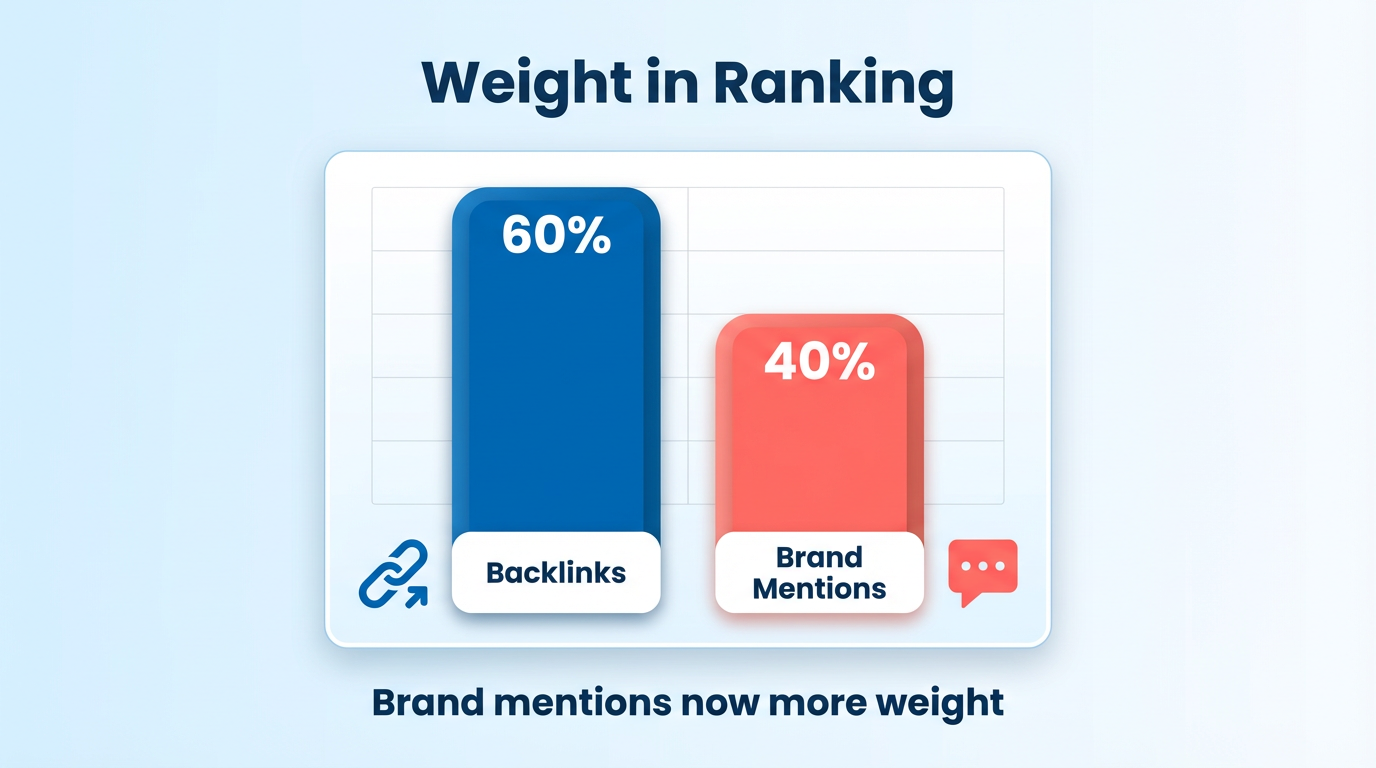
When optimizing for entity-based SEO, ensure your brand’s name, products, and key terms are consistently used across your website and content. This consistency helps AI models associate your brand with specific topics, making your content more discoverable in overviews. Tools like AnyPost.ai streamline this process with brand mention tracking, helping you identify opportunities to amplify your reach. As discussed in the Measurement and Tracking: From Rankings to AI Citations section, monitoring unlinked mentions allows you to convert passive exposure into strategic links where appropriate, strengthening both AI and traditional SEO outcomes.
Introduction to AI SEO: Concepts and Terminology
AI SEO represents a significant evolution in how we approach search engine optimization, blending traditional strategies with AI-powered tools and techniques. While traditional SEO focuses on optimizing for search engines through keywords, backlinks, and metadata, AI SEO prioritizes optimizing for AI-driven platforms like ChatGPT and Google’s AI overviews. This shift requires content creators to adapt their strategies to align with how AI models process, structure, and cite information. As highlighted in the Why Traditional SEO Still Matters in 2026 section, foundational principles like keyword research and on-page optimization remain relevant but must be reimagined for AI-driven ecosystems. Tools like AnyPost.ai simplify this transition by automating complex tasks, from generating self-contained content chunks to publishing across platforms. Below, we break down the core concepts, tools, and strategies that define AI SEO.
What Are the Core Concepts of AI SEO?
AI SEO introduces terminology and practices distinct from traditional methods. Conversational prompts, as explored in the Research: From Keywords to Conversational Prompts section, are queries designed to mimic natural language interactions, enabling AI tools to generate human-like responses. These prompts must be structured to trigger detailed, context-rich outputs. Self-contained content chunks, a concept expanded on in the On-Page Optimization: From Keyword Placement to Self-Contained Chunks section, are modular pieces of content optimized to stand alone while contributing to a broader topic. Unlike traditional SEO’s focus on lengthy blog posts, AI SEO prioritizes these bite-sized, high-quality segments for maximum AI citation potential. AI citations, which are tracked and measured in the Measurement and Tracking: From Rankings to AI Citations section, refer to instances where AI systems reference or quote a website’s content in their responses. Securing these citations requires content to be clear, authoritative, and directly aligned with user intent.
How Does AI SEO Extend Traditional SEO?
Traditional SEO strategies remain foundational but must be augmented to meet AI’s demands. AI SEO tools analyze search patterns and content structure to predict which topics AI models are likely to cite. For example, AI-powered content generation tools like AnyPost.ai use natural language processing to create content that mirrors how AI systems interpret queries. This goes beyond keyword stuffing to emphasize context, clarity, and structured formatting. Additionally, AI SEO uses data-driven insights to adapt to algorithm changes in real time. SaaS providers like AnyPost.ai automate tasks such as persona-based content creation, ensuring your material resonates with both human audiences and AI systems.
How Do Tools Like AnyPost.ai Simplify AI SEO?
AnyPost.ai streamlines AI SEO with features tailored to modern search behaviors. Its persona engine allows users to generate content from multiple perspectives, ensuring diverse and nuanced outputs that align with AI citation criteria. The platform’s multi-platform publishing integrations automate content distribution across blogs, social media, and AI-focused channels, maximizing visibility. By simplifying tasks like conversational prompt optimization and self-contained chunk creation, AnyPost.ai reduces the technical barriers to implementing AI SEO. Users report faster workflows and higher AI citation rates, with one company noting a 50% improvement in content performance after adopting the tool.
Real-World Examples of AI SEO Success
AI SEO’s effectiveness is evident in case studies where businesses adapted to AI-driven search. For instance, a marketing agency optimized its content for AI citations by restructuring articles into self-contained chunks, resulting in a 30% increase in AI tool references. Another example involves a tech company that used conversational prompts to dominate AI-generated answers for niche queries, boosting organic traffic by 40%. These successes highlight the importance of aligning with AI’s citation logic rather than solely focusing on traditional ranking factors.
AnyPost.ai’s intuitive tools helped us shift our strategy to AI SEO seamlessly. Our content now gets cited by AI systems more frequently than before.
As AI continues to reshape search, mastering AI SEO requires balancing traditional best practices with AI-specific optimizations. Tools like AnyPost.ai provide the infrastructure to manage this transition, ensuring your content remains relevant in an AI-first world.
Research: From Keywords to Conversational Prompts
Traditional SEO strategies centered on keyword research, but AI SEO demands a shift toward conversational prompts to align with how modern search engines process queries. As mentioned in the Why Traditional SEO Still Matters in 2026 section, while traditional methods like keyword research remain foundational, their limitations become apparent when adapting to AI-driven systems. Instead of targeting rigid keyword phrases, content creators now prioritize natural language patterns that mirror real user questions. This shift addresses the limitations of keyword stuffing, which often leads to stiff, inauthentic content that fails to engage AI systems or human readers.
What Are the Limitations of Keyword Research in AI SEO?
Keyword research alone cannot capture the nuances of AI-driven search intent. Building on concepts from the Link Building: From Backlinks to Brand Mentions section, AI models like Google’s Generative Overviews analyze context, tone, and conversational flow-factors traditional keyword tools ignore. Over-reliance on keywords also risks penalties from AI systems that detect low-quality, repetitive content, a concern that aligns with the evolving emphasis on brand mentions over backlinks.
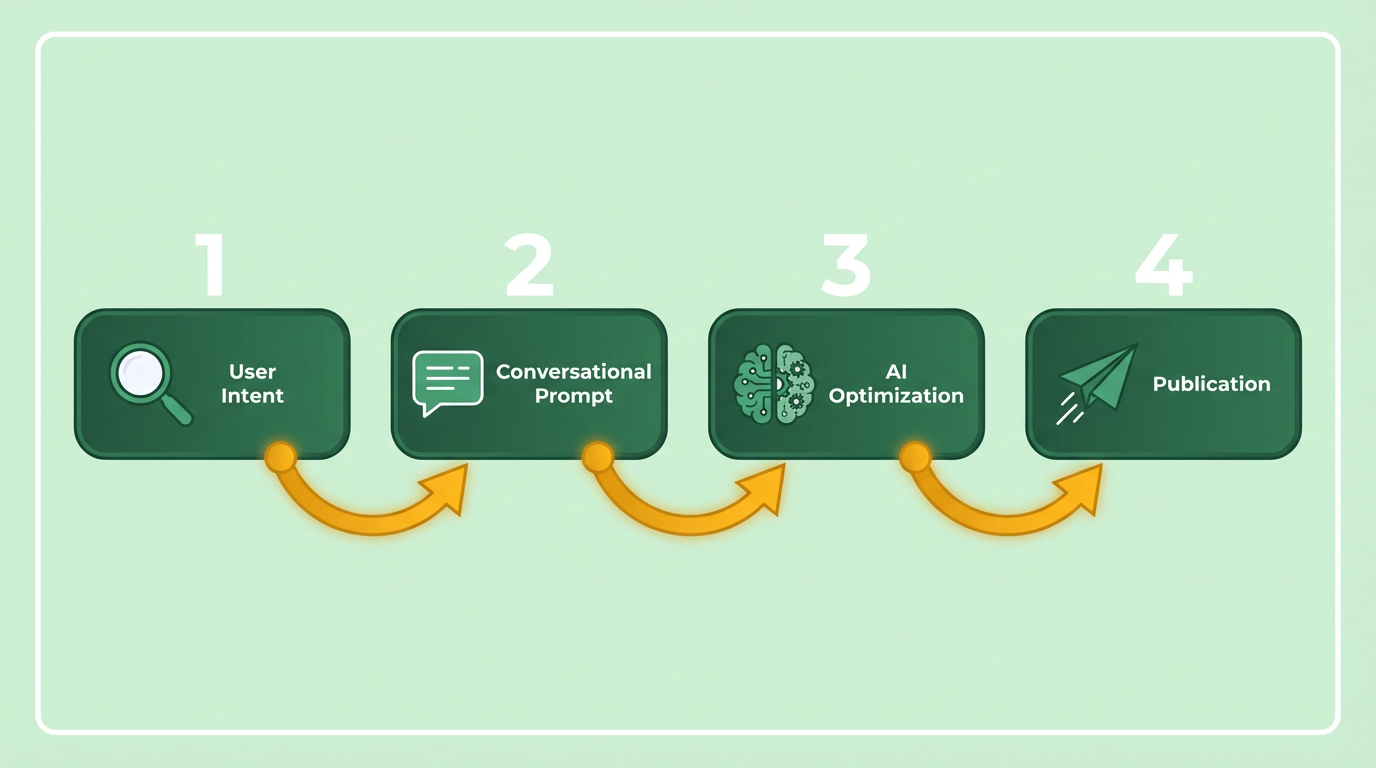
Adapting to AI SEO means embracing prompts that mimic natural dialogue. By focusing on clarity, intent, and tools like AnyPost.ai, creators can future-proof their content against evolving search algorithms while delivering value to human audiences. This approach complements the strategies outlined in the Measurement and Tracking: From Rankings to AI Citations section, where traditional metrics give way to AI-specific indicators like citation frequency in generative summaries.
Measurement and Tracking: From Rankings to AI Citations
Traditional SEO metrics like keyword rankings, backlink counts, and page load speed are insufficient for measuring success in AI-driven search. Unlike static web crawlers, AI search engines prioritize contextual understanding and user intent, making keyword density and link quantity less predictive of visibility. For example, a high-ranking page might still fail to answer a user’s query if it lacks depth or relevance to the AI’s context-aware algorithms. This shift demands more dynamic, behavior-focused metrics. As mentioned in the Introduction to AI SEO: Concepts and Terminology section, AI-driven systems rely on semantic and contextual signals rather than rigid keyword matching, further complicating traditional measurement approaches.
AI SEO requires tracking how well content aligns with natural language patterns and real-time user needs. Tools like AnyPost.ai help by analyzing AI citations-mentions of your content in AI-generated responses-and sentiment around your brand in these mentions. Traditional metrics miss these nuances, leaving businesses blind to critical engagement signals. Building on concepts from the Link Building: From Backlinks to Brand Mentions section, AI citations function similarly to brand mentions but extend into machine-driven ecosystems, offering a more holistic view of visibility.
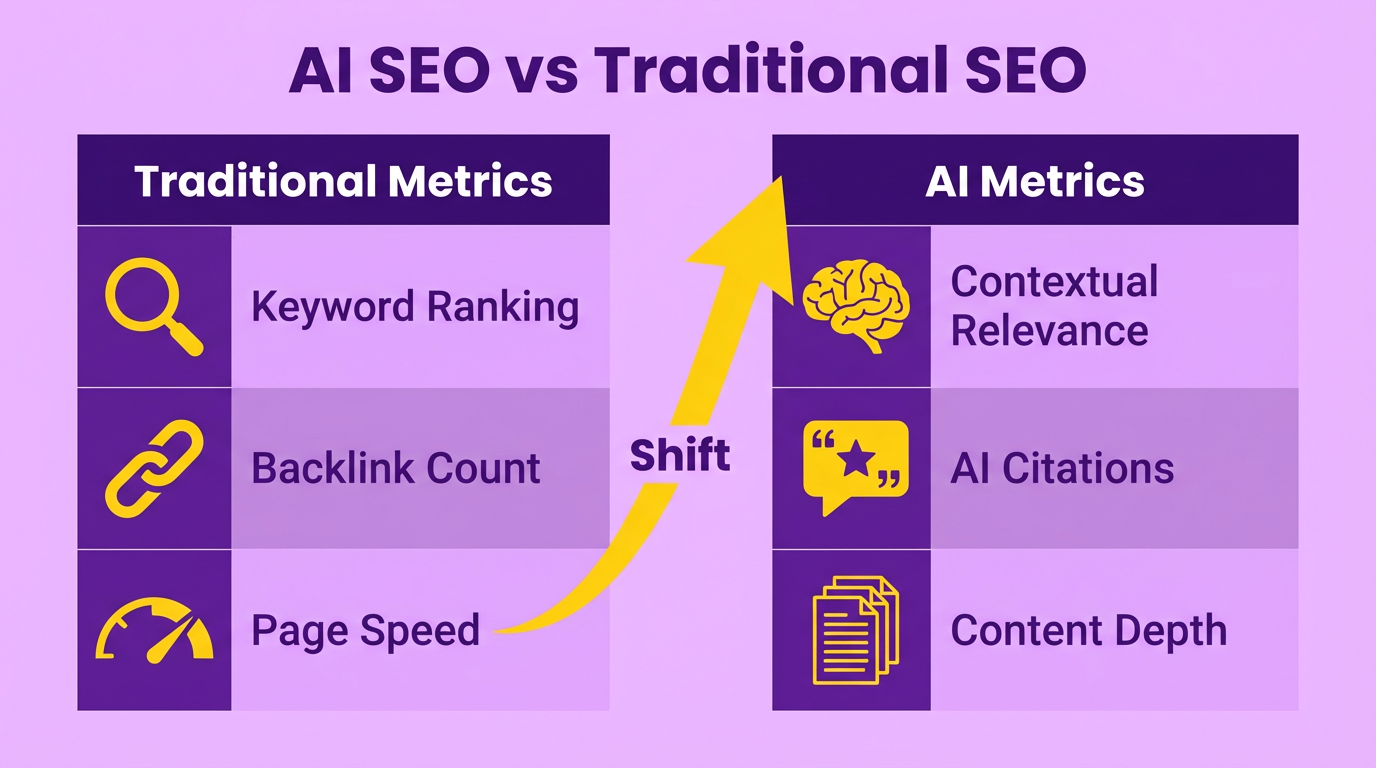
To measure these, use SaaS providers like AnyPost.ai, which automates citation tracking and sentiment scoring. One company improved its AI visibility by 40% after addressing negative sentiment in customer reviews and optimizing content for conversational queries. As outlined in the Research: From Keywords to Conversational Prompts section, adapting content to mirror how users phrase questions in AI environments strengthens both citation potential and relevance.
Tracking AI SEO success requires a mix of technical tools and strategic adjustments. Start by integrating AI citation monitoring into your analytics stack. AnyPost.ai’s citation tracker identifies where your content appears in AI responses, letting you prioritize topics that drive the most machine-driven traffic. Pair this with sentiment analysis to refine tone and messaging. Next, audit your content for AI readability...
Technical SEO: From Crawlability to AI Engine Optimization
Technical SEO for AI search engines requires adapting traditional practices to align with how machine learning models process and prioritize content. While crawlability and indexing remain foundational, AI-driven systems demand deeper optimization to ensure content is both discoverable and contextually relevant. Let’s break down the key steps to future-proof your site for AI search engines.
How Do AI Search Engines Differ in Crawling and Indexing?
AI engines use advanced machine learning models to analyze content, going beyond keyword matching to understand context, intent, and relationships between topics. Unlike traditional crawlers that follow links and parse text linearly, AI systems scan entire websites to detect patterns in user behavior, content quality, and semantic relevance. This means structured data markup (like schema) becomes critical for guiding AI engines in interpreting your content’s purpose.
For example, if you run an e-commerce site, AI crawlers might prioritize product pages with rich schema tags (e.g., pricing, reviews, availability) over pages with generic descriptions. To optimize, ensure all key pages have schema markup and that your site’s internal linking clearly connects related topics. Tools like AnyPost.ai automate schema validation and crawlability checks, flagging issues like broken links or missing metadata. As mentioned in the On-Page Optimization: From Keyword Placement to Self-Contained Chunks section, structured data supports AI engines by organizing information into clear, machine-readable formats.
What Website Architecture Features Improve AI Search Visibility?
AI search engines reward sites with clean, intuitive structures that mirror user intent. Start by organizing content into thematic clusters instead of siloed categories. For instance, a health blog might group posts on “nutrition,” “exercise routines,” and “mental wellness” under a broader “wellness” hub. This helps AI engines recognize patterns and surface the most relevant pages for complex queries. Building on concepts from the Research: From Keywords to Conversational Prompts section, thematic clusters align with how AI systems interpret user intent through contextual relationships.
Mobile-first design and fast load times are also non-negotiable. AI systems prioritize user experience metrics like Core Web Vitals, which measure how quickly and smoothly users interact with your site. Use tools like AnyPost.ai’s performance analyzer to identify slow-loading assets (e.g., large images, unoptimized scripts) and fix them. Additionally, simplify your URL structure. AI engines favor short, descriptive URLs (e.g., example.com/ai-seo-tips) over long, dynamic strings.
How Can You Optimize for AI Engine Priorities?
AI engines rely on natural language processing (NLP) to determine content relevance, so focus on intent-driven content rather than keyword stuffing. For example, if your target query is “how to optimize for AI search,” write a comprehensive guide that answers related sub-questions like “What tools help with AI SEO?” or “Why is schema markup important?”.
A real-world example: One company improved its AI search visibility by 40% after restructuring its blog to include detailed headers, bullet points for key takeaways, and conversational language that matched user search intent. Using AnyPost.ai’s AI-driven content suggestions, they identified high-priority topics and optimized existing pages for semantic relevance. As mentioned in the Adapting Your Workflow: Integrating AI into Traditional SEO Processes section, integrating AI tools into content creation enhances alignment with AI engine priorities while maintaining traditional SEO best practices.
For technical execution, use tools that integrate AI-specific metrics. AnyPost.ai’s SaaS service offers features like AI content scoring, which evaluates how well your pages align with AI engine priorities, and predictive indexing, which simulates how content might rank in AI-driven search results. These tools act as a bridge between traditional SEO practices and the evolving demands of AI search engines.
By prioritizing crawlability, semantic clarity, and user-centric architecture, you ensure your site is not only visible to AI engines but also delivers the value they aim to surface for users.
Adapting Your Workflow: Integrating AI into Traditional SEO Processes
Integrating AI into traditional SEO processes isn’t just a trend. It’s a strategic shift that enhances content relevance and user experience while adapting to evolving search behaviors. AI tools analyze vast datasets in real time, identifying patterns and opportunities traditional methods might miss. This enables content creators to refine strategies quickly, ensuring alignment with both search engine algorithms and user intent. Below, we break down how to adapt your workflow, supported by actionable examples and tools like AnyPost.ai..
Why Prioritize AI Integration for SEO?
AI enhances traditional SEO by automating repetitive tasks, uncovering hidden insights, and optimizing content for emerging search formats like AI overviews. For example, AI can predict high-performing keywords, audit content for readability, and even generate drafts tailored to specific audience segments. This reduces bounce rates by improving content quality and relevance, ensuring pages meet user expectations from the first click.
Traditional SEO relies heavily on manual keyword research and backlink building. While these remain important, AI adds a layer of predictive analysis. Tools like AnyPost.ai track semantic patterns in search queries, helping creators align content with how users phrase questions, especially in AI-driven environments where conversational language dominates, as discussed in the Research: From Keywords to Conversational Prompts section.
How to Integrate AI into Your SEO Workflow
Start by identifying areas where AI can streamline your process. For content creation, use AI to brainstorm topics, draft outlines, and refine existing text. For technical SEO, use AI-powered tools to audit on-page elements like meta tags, headers, and internal links. Here’s a step-by-step approach:
- Keyword Research and Content Planning. AI tools analyze search intent and competition, suggesting long-tail keywords or questions users ask. Input these into AnyPost.ai’s content generator to create drafts that naturally incorporate optimized terms, building on concepts from the Why Traditional SEO Still Matters in 2026 section.
- On-Page Optimization. Use AI to review existing content for readability, keyword density, and structure. AnyPost.ai’s optimization features highlight underperforming sections and suggest edits to improve engagement, aligning with the On-Page Optimization: From Keyword Placement to Self-Contained Chunks section’s focus on structured content.
- Adapting for AI Search Engines. Unlike traditional SEO, AI SEO prioritizes being “cited” by tools like ChatGPT or Google’s AI overviews. Create concise, authoritative answers to common questions in your niche. For instance, if your audience often asks “How to fix low website traffic,” structure a guide that directly addresses this query with actionable steps.
A practical example: One company improved organic traffic by 30% after using AI to rewrite outdated blog posts. By focusing on semantic relevance and user-centric formatting, they reduced bounce rates by 18% within three months.
Real-World AI Integration with AnyPost.ai
AnyPost.ai simplifies AI-driven SEO with tools designed for both efficiency and quality. Here’s how it works:
- Content Generation: Input a topic or outline, and the tool produces a draft optimized for readability and keyword placement. For example, creating a guide on “AI SEO best practices” becomes faster with AI-generated sections on keyword research, on-page optimization, and performance tracking.
- Bulk Optimization: Upload existing content to AnyPost.ai for instant suggestions. It identifies overused keywords, weak transitions, or gaps in coverage, offering edits to boost SEO scores.
- AI Snippet Readiness: The platform ensures content is structured to appear in AI overviews. It suggests concise answers to common questions, increasing visibility in AI-driven search results.
AnyPost.ai cut my content creation time in half while improving my site’s rankings. The optimization suggestions are spot-on.
Final Tips for Content Creators
- Balance AI and Human Insight: Use AI for efficiency but review outputs for brand voice and creativity.
- Test Continuously: Monitor AI-generated content’s performance using analytics tools. Adjust strategies based on traffic and engagement data.
- Stay Updated: AI SEO evolves rapidly. Tools like AnyPost.ai adapt to algorithm changes, but staying informed on trends like Google’s AI overviews ensures sustained success.
By blending traditional SEO principles with AI’s analytical power, you future-proof your strategy. Start small-optimize one page with AI, measure results, and scale what works. The goal isn’t to replace human expertise but to amplify it with data-driven precision.
On-Page Optimization: From Keyword Placement to Self-Contained Chunks
Self-contained content chunks enhance AI SEO by organizing information into digestible, focused sections that directly answer user queries. Unlike traditional SEO, which prioritizes keyword density, AI search engines analyze context, structure, and clarity to deliver precise answers. As mentioned in the Introduction to AI SEO: Concepts and Terminology section, AI-driven search models rely on semantic understanding to identify authoritative content. By grouping related ideas into standalone blocks, you increase the likelihood of your content being cited in AI-generated overviews or summaries.
For example, if a user asks, “How does solar energy work?”, a self-contained chunk might define photovoltaic cells, explain energy conversion, and summarize benefits-all in one section. This structure ensures AI systems can extract and present the answer without relying on scattered keywords. Building on concepts from the Adapting Your Workflow: Integrating AI into Traditional SEO Processes section, tools like AnyPost.ai streamline this approach by aligning content creation with machine-readable formats.
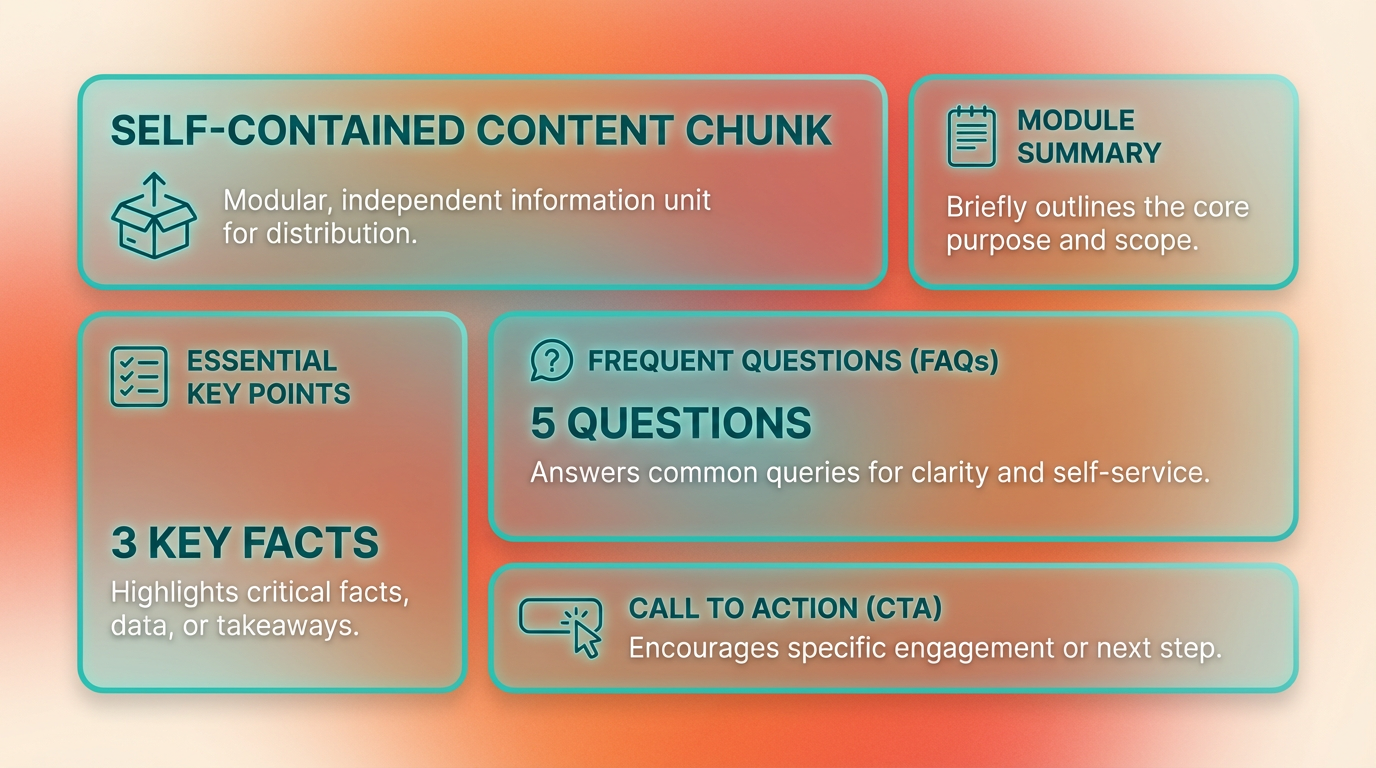
The primary benefit is improved content optimization for AI systems, which scan pages to identify authoritative, structured information. These chunks reduce bounce rates by delivering complete answers within a single page, minimizing the need for users to search elsewhere. They also strengthen relevance signals for AI models, which prioritize content that resolves queries efficiently. As discussed in the Technical SEO: From Crawlability to AI Engine Optimization section, AI engines favor content that balances human readability with machine-processable structure.
Consider a scenario where a recipe blog restructures its content into chunks like “Ingredients,” “Step-by-Step Instructions,” and “Storage Tips.” AI tools can then reference these sections directly in overviews, increasing visibility without requiring exact keyword matches. Tools like AnyPost.ai streamline this process with AI-driven suggestions for structuring content. Its Content Generation feature creates draft chunks based on user intent, while the Optimization Checker highlights gaps in clarity or structure. This ensures your content aligns with AI search engines’ preference for organized, comprehensive sections.
Frequently Asked Questions
1. What is the main difference between Traditional SEO and AI SEO?
Traditional SEO focuses on keyword research, backlink building, and on-page optimization, while AI SEO uses data-driven insights for content structuring and user engagement. Both work together, with traditional methods providing foundational visibility.
2. Why does Traditional SEO still drive traffic growth in 2026?
Core strategies like keyword clusters and high-quality backlinks remain critical. A business increased domain authority from 35 to 62 by refining these, achieving 180% traffic growth over 12 months.
3. Can AI SEO replace Traditional SEO?
No, AI SEO complements traditional methods. Combining both improves rankings faster. For example, AI enhances content relevance, while traditional tactics ensure foundational visibility through structured metadata and page speed.
4. How do backlinks impact SEO in the AI era?
High-quality backlinks remain vital for domain authority. AI SEO adds value by tracking brand mentions, but traditional link-building still directly influences rankings and search engine trust.
5. What role does AI play in content optimization?
AI improves content structuring and relevance using user behavior data. However, traditional on-page SEO (e.g., keyword placement, metadata) remains essential for foundational visibility and search engine indexing.
6. How should businesses adapt to AI SEO trends?
Integrate AI tools for brand mention analysis and content insights while maintaining traditional practices like page speed optimization and mobile-first indexing to align with evolving search priorities.
7. Are structured metadata and page speed still important?
Yes, both directly impact rankings regardless of AI advancements. Search engines prioritize technical SEO elements like metadata and load times for indexing and user experience.