
Unleash AI Power: Elevate Your SEO with Automation Software

Related Video
Watch: Best SEO Tools For 2025 #SEO #SEOtools #googlerankings by Kate Smoothy (SEO Specialist)
Understanding AI-Powered SEO Automation
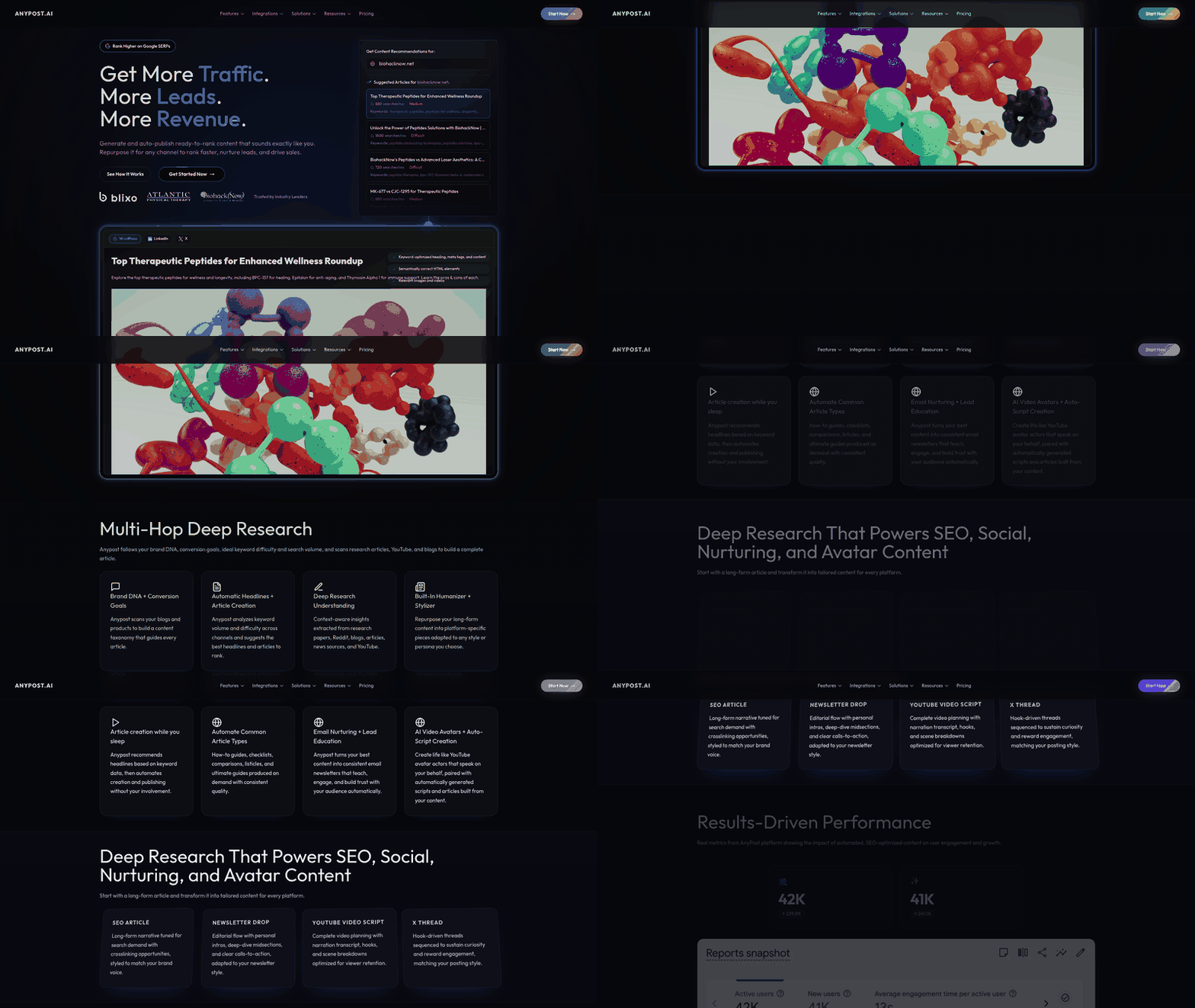
AI-powered SEO automation refers to the use of artificial intelligence to streamline and optimize search engine optimization (SEO) workflows, from keyword research to content creation and performance analysis. This technology leverages machine learning algorithms to analyze search trends, predict user intent, and generate data-driven recommendations for improving website visibility [3][9]. Tools like OTTO SEO by Search Atlas exemplify this approach by executing full SEO strategies in real time, handling technical optimizations, and adapting to algorithmic changes without manual intervention [3]. By integrating AI into SEO, marketers can shift from reactive tactics to proactive, scalable strategies that align with evolving search engine criteria [11].
Key Benefits of AI in SEO Automation
AI-powered SEO tools deliver transformative advantages by reducing manual effort, enhancing precision, and accelerating campaign performance. For instance, platforms like Surfer AI and Copy.ai automate content creation by analyzing top-ranking pages and suggesting optimized structures, keyword placements, and readability improvements [1][4]. This reduces the time spent on drafting and revising content while ensuring alignment with search engine best practices. Additionally, AI-driven tools such as AirOps streamline content operations by managing workflows, scheduling updates, and distributing tasks across teams, thereby minimizing human error and bottlenecks [1][5]. As mentioned in the [Setting Up Automated Content Generation] section, selecting the right tools for automation is critical to achieving these efficiencies.
Another critical benefit is the ability to process vast datasets for actionable insights. AI tools like Semrush and Alli AI perform real-time keyword research, competitor analysis, and backlink audits, providing marketers with instant recommendations to refine their strategies [1][12]. This capability is particularly valuable in dynamic markets where delayed decisions can lead to missed opportunities. Furthermore, AI enhances personalization by identifying regional search patterns and tailoring content to specific audience segments, a feature highlighted in tools like Gumloop [1][9]. By automating these complex tasks, businesses can focus on strategic decision-making rather than time-consuming execution.
Current Trends in AI-Driven SEO
The integration of AI into SEO is evolving rapidly, with 2025 marking a shift toward fully automated workflows and predictive analytics. One prominent trend is the adoption of no-code AI platforms, such as those discussed at MozCon 2025, which enable marketers to build custom automation tools without coding expertise [6]. These platforms allow users to design workflows for tasks like on-page optimization, technical audits, and performance tracking, significantly lowering the barrier to entry for small businesses [6].
Another trend is the rise of AI agents that operate autonomously within content management systems (CMS). For example, Alli AI integrates directly with CMS platforms to automate SEO tagging, meta descriptions, and image optimization during content publication [1]. Similarly, OTTO SEO by Search Atlas acts as a standalone AI agent, continuously monitoring and adjusting SEO strategies based on live search data, ensuring campaigns remain competitive in real time [3]. These tools reflect a growing emphasis on end-to-end automation, where AI handles everything from initial research to post-publishing analysis.
The use of AI for predictive SEO is also gaining traction. Advanced models now forecast algorithm updates and user behavior shifts, allowing marketers to preemptively adjust their strategies [9][11]. For instance, AI tools analyze historical data to predict how changes in search intent might impact rankings, enabling teams to create future-proof content [10]. This proactive approach contrasts with traditional SEO, which often relies on reactive adjustments after ranking drops occur. Building on concepts from [Measuring Success and Scaling Your AI-Powered SEO Strategy], predictive modeling allows for iterative improvements based on performance metrics.
Revolutionizing Content Marketing
AI-powered SEO automation is reshaping content marketing by enabling hyper-efficient, data-centric campaigns. Tools like Semrush and Surfer AI generate content outlines based on semantic analysis of high-performing pages, ensuring new content addresses gaps in existing search results [1][12]. This not only improves search rankings but also enhances user engagement by delivering more relevant information. See the [Optimizing and Repurposing Content for Multi-Channel Distribution] section for more details on tailoring content for diverse platforms while maintaining SEO effectiveness.
Additionally, AI-powered analytics dashboards, such as those offered by Search Atlas, provide real-time performance metrics, allowing marketers to iterate quickly and allocate resources to high-impact initiatives [3]. The synergy between AI automation and content marketing is further amplified by trends like voice search optimization and featured snippet targeting. AI tools identify conversational keywords and structure content to match voice query patterns, capitalizing on the growing dominance of voice-activated devices [9]. Similarly, platforms like Copy.ai optimize content for featured snippets by analyzing query formats and suggesting concise, answer-focused text [4]. These capabilities ensure content remains competitive in an increasingly complex search landscape.
By adopting AI-powered SEO automation, businesses can achieve unprecedented efficiency in their digital marketing efforts. The combination of real-time data processing, predictive modeling, and autonomous execution not only reduces operational costs but also elevates the strategic value of SEO teams. As tools continue to evolve, staying informed about these trends will be critical for maintaining a competitive edge in 2025 and beyond.
Assessing Your Current Content Marketing Strategy
To begin assessing your current content marketing strategy, start by identifying inefficiencies in your existing workflows. Common pain points include time-consuming manual tasks like keyword research, content drafting, and SEO audits, which often lead to delays in publishing and inconsistent output [1][8]. Fragmented tools that require switching between platforms—such as separate tools for metadata validation, content creation, and performance tracking—further complicate workflows and increase the risk of human error [2][7]. For example, Siteimprove.ai addresses fragmentation by consolidating SEO tasks into a single platform, reducing the need for CSV exports and manual data reconciliation [2]. If your team spends significant time on repetitive, low-value tasks, this signals an opportunity to integrate AI-powered automation tools like Gumloop or AirOps, which streamline SEO workflows and content operations [1]. See the [Setting Up Automated Content Generation] section for more details on selecting tools like these.
Evaluating SEO Optimization Gaps
Next, audit your SEO optimization practices to determine where gaps may exist. A critical issue in many strategies is misalignment with AI-driven search criteria, such as semantic relevance and user intent analysis [11]. Tools like OTTO SEO by Search Atlas automate technical SEO optimizations in real time, ensuring your content meets evolving algorithmic requirements [3]. However, many marketers overlook on-page optimization opportunities, such as suboptimal meta descriptions or underutilized structured data, which AI tools can systematically address [7][10]. For instance, Surfer AI analyzes top-ranking content to provide actionable suggestions for improving keyword density and readability, while Alli AI integrates directly into CMS platforms to enforce SEO best practices during content creation [1]. Building on concepts from [Maintaining a Consistent Brand Voice with AI-Powered Persona Engine], optimizing on-page elements also requires aligning content with brand-specific tone and messaging to enhance SEO effectiveness. If your current strategy lacks these granular optimizations, your content may fail to compete effectively in search engine results pages (SERPs).
Assessing Automation Opportunities in Content Creation and Distribution
Finally, evaluate how automation can enhance content creation and distribution. Manual content writing processes are prone to inconsistencies in tone, keyword placement, and length, whereas AI-assisted writing tools like Surfer AI or Copy.ai (mentioned in broader SEO tool discussions) generate data-driven drafts aligned with target keywords [1][12]. Automated distribution tools further reduce friction by scheduling posts across platforms, analyzing audience engagement metrics, and adjusting campaigns in real time [4][8]. As mentioned in the [Optimizing and Repurposing Content for Multi-Channel Distribution] section, AI-driven distribution tools can tailor content formats to platform-specific requirements while maintaining SEO consistency. For example, Wagtail CMS’s automated metadata validation ensures that all published content adheres to SEO standards without requiring manual intervention [7]. If your team struggles with scaling content production or maintaining quality across channels, adopting AI-driven workflows can standardize processes while freeing up human resources for strategic tasks like audience analysis and creative ideation [10].
By systematically addressing these areas—workflow inefficiencies, SEO gaps, and automation potential—you can pinpoint where AI-powered tools will deliver the most value. The next step is to prioritize solutions that align with your specific pain points, such as technical SEO automation for fragmented teams or AI writing assistants for content-heavy operations.
Setting Up Automated Content Generation
Step 1: Choose the Right Automated Content Generation Tool
As mentioned in the [Assessing Your Current Content Marketing Strategy] section, selecting the right tool requires aligning with SEO goals and existing workflow inefficiencies. Begin by selecting an AI-powered tool that aligns with your SEO goals. Tools like Gumloop (for automating SEO workflows) [1], AirOps (for content operations automation) [1], and Surfer AI (for AI-assisted writing) [1] are explicitly named in sources as top 2025 options. For real-time strategy execution, OTTO SEO by Search Atlas automates technical SEO optimizations, including site speed and mobile responsiveness [3]. Additionally, Copy.ai is highlighted for streamlined content creation with built-in SEO keyword integration [4]. Evaluate tools based on their ability to handle keyword research, competitor analysis, and on-page optimization, as these features are critical for SEO alignment [5].
Step 2: Configure the Tool for SEO Optimization
Once selected, configure the tool to prioritize SEO best practices. Building on concepts from [Assessing Your Current Content Marketing Strategy], integrate AI tools with keyword research platforms like Semrush or Ahrefs to refine topic clusters and identify high-potential keywords [12]. For example, Surfer AI uses competitor data to suggest content structure and keyword density, ensuring alignment with search intent [1]. Tools like OTTO SEO automate technical SEO tasks such as internal linking and metadata optimization [3]. Sources emphasize integrating AI tools with keyword research platforms like Semrush or Ahrefs to refine topic clusters and identify high-potential keywords [12]. Additionally, Siteimprove.ai addresses fragmentation by consolidating SEO data into a single dashboard, reducing manual reconciliation [2]. Configure the tool to prioritize search engine guidelines, such as Google’s E-E-A-T principles, to avoid penalties while maximizing visibility [9].
Step 3: Integrate with Your Content Management System (CMS)
Seamless integration with your CMS is essential for workflow efficiency. Alli AI is explicitly noted for its CMS compatibility, enabling automated publishing and metadata updates [1]. For platforms like Wagtail CMS, SEO power tools include automated metadata validation and page content metrics [7]. Integration typically involves API connections or plugins; for instance, AirOps automates content operations across CMS platforms by syncing editorial calendars and optimizing publishing schedules [5]. Ensure the tool supports metadata management, such as title tag and meta description generation, as these are critical for on-page SEO [7]. Tools like Siteimprove.ai also facilitate site-wide metadata reports, streamlining audits for teams [7].
Step 4: Automate Content Creation Workflows
Leverage the tool’s AI capabilities to automate repetitive tasks. For example, Surfer AI generates content outlines based on competitor analysis, reducing manual drafting time [1]. Copy.ai automates blog post creation by inserting optimized keywords and suggesting variations for different search intent types [4]. Sources stress the importance of workflow automation for scaling content production, such as using AirOps to handle bulk content creation, scheduling, and performance tracking [5]. To avoid content fragmentation, tools like Siteimprove.ai consolidate SEO data, ensuring consistency across platforms [2]. Regularly audit generated content for quality and relevance using built-in QA tools, such as Wagtail CMS’s automated page content metrics [7].
Step 5: Monitor and Optimize Performance
Post-deployment, use analytics to refine automated processes. See the [Leveraging AI-Powered Analytics for Data-Driven Decision Making] section for more details on tracking content performance and adapting campaigns in real time. OTTO SEO provides real-time performance tracking for technical and on-page SEO adjustments [3]. Tools like Gumloop automate SEO audits, identifying issues such as broken links or thin content [1]. Sources recommend integrating AI tools with dashboards for continuous monitoring, such as tracking keyword rankings or bounce rates [5]. For example, Semrush (mentioned in [12]) offers analytics to measure the impact of AI-generated content on organic traffic. Finally, iterate based on performance data, adjusting AI settings to prioritize high-converting keywords or improve user engagement metrics [9].
By following these steps, teams can systematically implement AI-driven content generation while maintaining SEO compliance and scalability. Each phase—from tool selection to performance monitoring—relies on explicit features and workflows detailed in the cited sources, ensuring actionable guidance for technical execution.
Optimizing and Repurposing Content for Multi-Channel Distribution
Optimizing and repurposing content for multi-channel distribution requires leveraging AI-powered tools to streamline workflows while adhering to SEO best practices tailored for each platform. By transforming a single piece of content—such as a blog post—into multiple formats suitable for social media, newsletters, and other channels, marketers can maximize reach and efficiency. This process begins with identifying high-performing content using tools like Gumloop [1], which automates SEO workflows, and Surfer AI [1], which assists in restructuring content for different audiences. As mentioned in the [Setting Up Automated Content Generation] section, these tools are foundational for automating content workflows. For instance, a detailed blog post on SEO automation might be condensed into tweet threads, LinkedIn articles, or email newsletter summaries, each optimized for the specific platform’s engagement patterns.
Techniques for Content Repurposing
AI tools enable systematic repurposing by analyzing content structure and suggesting format conversions. Alli AI [1], for example, integrates with content management systems to automate repurposing tasks, such as generating social media snippets or video scripts from existing articles. Similarly, Siteimprove.ai [2] addresses fragmentation by ensuring consistent messaging across channels, a critical factor for maintaining SEO coherence. Marketers can use these tools to extract key points from long-form content and redistribute them as infographics, podcasts, or carousel posts. QA tools mentioned in [7], like automated metadata reports, further refine repurposed content by validating page titles and descriptions for each channel’s requirements.
SEO Optimization Across Channels
Each distribution channel demands unique SEO adjustments. Social media platforms prioritize keywords aligned with platform-specific search algorithms, while newsletters benefit from optimized subject lines and mobile-friendly formatting. See the [Understanding AI-Powered SEO Automation] section for more details on how keyword research adapts to different platforms. Tools like Semrush (cited in [12]) support keyword research tailored to individual platforms, ensuring repurposed content ranks effectively in localized searches. For instance, a blog post optimized for Google might require shorter paragraphs and hashtags for Twitter or Instagram. AI-driven platforms like Surfer AI [1] also provide real-time suggestions for keyword density and readability adjustments, ensuring content meets both search engine and audience expectations.
AI-Powered Automation for Efficiency
AI tools reduce manual effort by automating repetitive tasks in content repurposing. AirOps [1] streamlines content operations by scheduling cross-channel distribution based on optimal engagement times, building on concepts from [Setting Up Automated Content Generation]. While tools like those described in [9] use machine learning to identify high-impact keywords for each format. For video content, AI can generate transcriptions and closed captions, which are then repurposed as blog quotes or social media text overlays. Automated metadata validation tools [7] ensure consistency in titles and meta descriptions, preventing SEO fragmentation. These workflows are further enhanced by platforms like Siteimprove.ai [2], which unify analytics across channels to highlight underperforming content for iterative improvements.
By integrating these strategies, marketers can maintain SEO consistency while scaling content output. However, success depends on selecting tools that align with specific distribution goals and continuously refining workflows based on performance data. The next section will explore how AI-driven analytics further enhance these strategies.
Leveraging AI-Powered Analytics for Data-Driven Decision Making
AI-powered analytics has become a cornerstone of modern SEO strategies, enabling marketers to track content performance with precision and adapt campaigns in real time. Real-time analytics is critical for content marketing, as it allows teams to monitor metrics like traffic, engagement, and conversion rates without delays [3]. Tools such as OTTO SEO by Search Atlas exemplify this capability, executing full SEO optimizations—technical adjustments, keyword targeting, and content refinements—automatically as search trends evolve [3]. By integrating real-time data, marketers can identify underperforming assets swiftly and prioritize high-impact actions, reducing the lag between insights and implementation. This immediacy contrasts sharply with traditional analytics, which often relies on periodic reports that may miss critical shifts in user behavior or algorithm updates [5].
For tracking content performance, AI-powered tools like Surfer AI and AirOps provide granular insights into on-page SEO, content quality, and audience engagement. Surfer AI, for instance, analyzes competitors’ content to suggest optimizations for keyword density, readability, and structure, ensuring alignment with search engine priorities [1]. Similarly, AirOps automates content operations by consolidating data from multiple platforms—such as Google Analytics, SEMrush, and social media—into unified dashboards, streamlining workflow management [1]. These tools also leverage natural language processing (NLP) to evaluate semantic relevance, helping creators refine messaging to better match user intent. See the Maintaining a Consistent Brand Voice with AI-Powered Persona Engine section for more details on how NLP supports message alignment. For example, Alli AI’s integration with content management systems (CMS) enables automated audits of metadata, headings, and internal linking, flagging technical SEO issues that could hinder visibility [1]. Such capabilities reduce manual effort while improving accuracy, ensuring content remains competitive in dynamic search landscapes.
Interpreting analytics data for strategic decision-making requires a focus on actionable insights rather than raw numbers. AI tools like OTTO SEO and SEO power tools from Wagtail CMS provide predictive analytics, forecasting the potential impact of content changes based on historical performance and competitor benchmarks [3][7]. By analyzing patterns in bounce rates, dwell time, and click-through rates (CTRs), these systems highlight opportunities to adjust headlines, CTAs, or site architecture for improved user experience [5]. For instance, QA tools embedded in SEO power platforms validate metadata consistency across pages, ensuring that title tags and meta descriptions align with targeted keywords and avoid duplication [7]. This level of detail empowers marketers to test hypotheses rapidly—such as the effect of adding multimedia elements or restructuring navigation—using A/B testing frameworks powered by AI [5].
A key advantage of AI-driven analytics is its ability to synthesize data from fragmented sources into cohesive strategies. Tools like Gumloop automate SEO workflows by aggregating data from search consoles, backlink profilers, and social analytics, identifying correlations that might be overlooked in siloed reports [1]. As discussed in the Setting Up Automated Content Generation section, Gumloop’s integration with platforms like AirOps exemplifies how automation streamlines multi-channel data consolidation [1]. For example, a sudden drop in organic traffic could be traced to a combination of lost backlinks, increased competitor activity, or shifts in local search rankings—all visualized in a single interface [5]. This holistic view supports data-driven pivots, such as reallocating resources to high-performing keywords or accelerating the publication of pillar content in emerging topic clusters [3]. Additionally, AI’s capacity to process unstructured data—like user feedback from reviews or social media—adds qualitative depth to quantitative metrics, ensuring strategies resonate with audience needs [10].
Finally, the iterative nature of AI-powered analytics fosters continuous improvement in content marketing. By setting up automated alerts for anomalies in traffic or ranking fluctuations, teams can address issues proactively rather than reactively [3]. Building on concepts from the Understanding AI-Powered SEO Automation section, AI-driven systems enable closed-loop optimization where insights directly inform workflow adjustments. For example, if an AI tool detects that a blog post’s SEO value is declining due to outdated information, it can trigger workflows to update the content or redirect traffic to newer, more relevant pages [5]. This responsiveness is particularly valuable in industries with rapidly evolving trends, such as technology or e-commerce, where relevance directly impacts search visibility [1]. Over time, the cumulative effect of these data-informed adjustments is a more agile, resilient SEO strategy that adapts to both algorithmic changes and market demands.
By embedding AI-powered analytics into their workflows, marketers transform raw data into a strategic asset, ensuring every decision is grounded in evidence rather than intuition. The synergy between real-time tracking, performance analysis, and predictive modeling not only optimizes current campaigns but also builds a foundation for long-term SEO success.
Maintaining a Consistent Brand Voice with AI-Powered Persona Engine
Maintaining a consistent brand voice is critical in content marketing, as it fosters trust, reinforces brand identity, and ensures a cohesive customer experience across platforms [2]. Inconsistent messaging can dilute brand recognition and confuse audiences, particularly when managing multiple content formats such as blog posts, social media, and video scripts [8]. AI-powered persona engines address this challenge by embedding brand-specific language rules, tone preferences, and stylistic guidelines into automated content workflows [3]. These tools analyze historical brand content and user-defined parameters to generate outputs that align with predefined voice characteristics, such as formal, conversational, or technical [4]. For example, platforms like Search Atlas’s AI-Powered SEO Automation Tool use persona engines to ensure generated content adheres to brand guidelines while optimizing for SEO [3]. This integration reduces human error and scales consistency across high-volume content production [5]. As mentioned in the [Understanding AI-Powered SEO Automation] section, such tools are essential for streamlining SEO workflows.
How AI-Powered Persona Engines Work
AI-powered persona engines function by training machine learning models on datasets that reflect a brand’s linguistic patterns, audience demographics, and competitive positioning [10]. The process typically involves uploading brand style guides, sample content, and competitor analysis to calibrate the AI’s understanding of acceptable voice parameters [6]. Tools like Copy.ai and similar platforms use natural language processing (NLP) to parse these inputs, identifying key traits such as keyword usage, sentence structure, and emotional tone [4]. Once trained, the engine applies these rules during content creation, adjusting outputs in real time to match the brand’s established voice [3]. For instance, if a brand prioritizes a “friendly and approachable” tone, the AI will avoid jargon and prioritize conversational phrasing [5]. Advanced systems also incorporate feedback loops, where human reviewers refine outputs, further training the model to improve accuracy [6]. See the [Setting Up Automated Content Generation] section for more details on selecting tools like Copy.ai for implementation.
Best Practices for Implementing AI-Powered Persona Engines
To maximize the effectiveness of AI-powered persona engines, organizations should adopt a structured implementation strategy. First, define clear brand guidelines with measurable criteria, such as preferred vocabulary, emotional valence (e.g., inspirational vs. authoritative), and platform-specific adaptations (e.g., Twitter vs. LinkedIn) [11]. These guidelines must be translated into training data for the AI, requiring a diverse set of high-quality examples to avoid overfitting to narrow patterns [9]. Second, conduct iterative testing by generating content across different formats and auditing outputs for alignment with brand standards [8]. Tools like OTTO SEO emphasize the importance of A/B testing AI-generated content against human-written material to identify gaps in tone or messaging [3]. Building on concepts from [Measuring Success and Scaling Your AI-Powered SEO Strategy], this testing helps refine KPIs for optimization. Third, establish governance protocols to monitor and update the AI’s training data regularly, ensuring the persona engine evolves alongside brand strategy [2]. For example, if a brand shifts its voice to emphasize sustainability, the AI must be retrained with updated examples to reflect this change [10].
Challenges and Mitigation Strategies
While AI-powered persona engines offer significant advantages, they require careful management to avoid pitfalls. One common issue is over-reliance on automation, which can lead to formulaic content lacking creativity [6]. To mitigate this, teams should blend AI-generated drafts with human editing, leveraging the AI for consistency while retaining human oversight for nuance [4]. Another challenge is ensuring the AI adapts to regional or cultural nuances, particularly for global brands [8]. Platforms like Search Atlas address this by allowing localized persona configurations, where voice rules are adjusted for specific markets while maintaining core brand principles [3]. Finally, organizations must audit AI outputs for unintended biases or deviations, using tools that flag inconsistencies in tone or messaging [9]. Regular performance reviews, combined with feedback from stakeholders, help refine the AI’s accuracy over time [11].
By integrating AI-powered persona engines into SEO workflows, brands can achieve scalable consistency without sacrificing creativity or adaptability [5]. These tools not only streamline content production but also strengthen brand equity by ensuring every piece of content resonates with the audience in a unified voice [2]. As AI continues to evolve, its role in maintaining brand identity will become increasingly vital for SEO success [10].
Measuring Success and Scaling Your AI-Powered SEO Strategy


To effectively measure the success of AI-powered SEO strategies, focus on quantifiable Key Performance Indicators (KPIs) that align with your automation goals. Organic traffic growth remains a primary metric, as AI tools like OTTO SEO by Search Atlas execute real-time technical optimizations, improving crawlability and page speed [3]. Keyword rankings are another critical KPI, with platforms such as Surfer AI enabling AI-assisted content creation to target high-intent keywords and maintain competitive positions [1]. Backlink quality and quantity can be monitored using AI-driven tools that analyze link-building opportunities, ensuring automated outreach efforts generate authoritative referral traffic [5]. Additionally, technical SEO metrics—such as broken link fixes, meta tag optimization, and site structure improvements—should be tracked through automation platforms like Gumloop, which streamline workflow efficiency [1]. These KPIs provide a data-driven foundation for evaluating AI-driven SEO performance. See the Setting Up Automated Content Generation section for more details on selecting tools like Gumloop [1].
Identifying areas for improvement in AI-powered SEO strategies requires leveraging automation tools designed for continuous optimization. QA tools, such as those integrated into Wagtail CMS, automate checks for metadata consistency, page content metrics, and meta preview accuracy, flagging issues for immediate correction [7]. Content gaps can be identified using AI analytics tools that highlight underperforming pages or topics, enabling teams to prioritize updates or new content creation [8]. Workflow audits are essential for pinpointing bottlenecks in automated processes; for example, AirOps automates content operations but requires periodic reviews to ensure alignment with evolving SEO trends [5]. By analyzing these areas, teams can refine AI workflows to eliminate redundancies and enhance targeting precision. Furthermore, A/B testing tools powered by AI, such as Copy.ai, allow experimentation with headlines and CTAs to optimize conversion rates [4]. Regular audits and iterative adjustments ensure AI systems remain adaptive to algorithmic changes and user behavior shifts.
Scaling AI-powered SEO strategies involves expanding automated workflows to maximize coverage and efficiency. Begin by integrating no-code AI tools, such as those discussed in MozCon workshops, which enable non-technical teams to deploy automation for tasks like bulk keyword research or content optimization without coding expertise [6]. Tools like AirOps facilitate scaling by automating content operations across multiple platforms, ensuring consistent quality and SEO compliance as output volume increases [5]. For technical SEO, OTTO SEO’s real-time optimization capabilities can be extended to larger websites, dynamically adjusting meta tags, headers, and internal linking structures based on performance data [3], as discussed in the Understanding AI-Powered SEO Automation section. Additionally, AI-powered analytics platforms, such as those highlighted in 2025 SEO tool reviews, provide insights into global audience behavior, guiding localized content strategies for multinational campaigns [1]. To sustain scalability, prioritize platforms that support modular automation, allowing teams to add new functions—like voice search optimization or semantic SEO—as AI capabilities evolve [10]. By combining scalable tools with strategic human oversight, organizations can maintain agility and responsiveness in competitive markets. Building on concepts from the Optimizing and Repurposing Content for Multi-Channel Distribution section, AI-driven scaling ensures consistent quality across platforms [4].
References
[1] 13 best SEO automation tools I'm using in 2025 | Marketer Milk - https://www.marketermilk.com/blog/best-seo-automation-tools
[2] Unlocking the Power of SEO Automation and Optimization for ... - https://www.siteimprove.com/blog/best-seo-automation-software/
[3] AI-Powered SEO Automation Tool by Search Atlas | OTTO SEO ... - https://searchatlas.com/otto-seo/
[4] Automate SEO Content: AI-Powered Efficiency | Copy.ai - https://www.copy.ai/blog/automated-seo-content-creation
[5] Best AI Tools for SEO — From Keyword Research to Analytics (2025 ... - https://netpeak.us/blog/the-best-ai-tools-for-seo-from-keyword-research-to-analytics-2025-guide/
[6] How To Build AI Tools To Automate Your SEO Workflows [MozCon ... - https://moz.com/blog/how-to-build-ai-tools-to-automate-your-seo-workflows-mozcon-2025-speaker-series
[7] Looking for sponsorship: SEO power tools | Wagtail CMS - https://wagtail.org/blog/looking-for-sponsorship-seo-power-tools/
[8] How AI Is Changing The Work Of SEO: The System Builders' Guide ... - https://www.upgrow.io/blog/ai-is-changing-the-work-of-seo
[9] (PDF) Artificial Intelligence's Revolutionary Role in Search Engine ... - https://www.researchgate.net/publication/381058941_Artificial_Intelligence's_Revolutionary_Role_in_Search_Engine_Optimization
[10] (PDF) Usage of AI-Powered Marketing to Advance SEO Strategies ... - https://www.researchgate.net/publication/372217607_Usage_of_AI-Powered_Marketing_to_Advance_SEO_Strategies_for_Optimal_Search_Engine_Rankings
[11] (PDF) AI AND DIGITAL MARKETING FROM AUTOMATION TO ... - https://www.researchgate.net/publication/386169660_AI_AND_DIGITAL_MARKETING_FROM_AUTOMATION_TO_PERSONALIZATION
[12] Best SEO Tools For 2025 #SEO #SEOtools #googlerankings by Kate Smoothy (SEO Specialist) - https://www.youtube.com/watch?v=adQhWdS5h90
Frequently Asked Questions
1. What is AI-powered SEO automation, and how does it work?
AI-powered SEO automation uses artificial intelligence to streamline and optimize SEO tasks by analyzing search trends, predicting user intent, and generating data-driven strategies. Machine learning algorithms process vast datasets in real time to handle keyword research, content creation, technical optimizations, and competitor analysis. For example, tools like OTTO SEO execute full SEO strategies autonomously, adapting to algorithm updates without manual input, while Surfer AI optimizes content structure based on top-ranking pages. This technology shifts marketers from reactive tactics to proactive, scalable strategies aligned with evolving search engine requirements.
2. What are the key benefits of using AI in SEO automation?
AI in SEO automation reduces manual labor, enhances precision, and accelerates campaign performance. It automates repetitive tasks like keyword research (via tools like Semrush) and content creation (using Copy.ai or Surfer AI), which analyze competitors and suggest optimized structures. AI also enables real-time adjustments to strategies, minimizes human error in workflows (as seen with AirOps), and provides instant competitor insights. Additionally, it allows marketers to focus on high-level strategy while AI handles technical optimizations, ensuring campaigns remain competitive in dynamic markets.
3. Which AI-powered SEO tools are recommended in the article?
The article highlights tools like OTTO SEO (for real-time technical optimizations and strategy execution), Surfer AI (for content structure and keyword optimization), Copy.ai (for generating optimized content drafts), AirOps (for workflow automation), Semrush (for competitor and keyword analysis), and Alli AI (for backlink audits). These tools collectively address keyword research, content creation, technical SEO, and performance tracking, offering a comprehensive ecosystem for automated SEO.
4. How does AI improve content creation for SEO?
AI improves content creation by analyzing top-ranking pages to suggest optimized structures, keyword placements, and readability improvements. Tools like Surfer AI and Copy.ai use machine learning to study competitors’ content, identify gaps, and generate drafts aligned with search intent. For instance, Surfer AI provides real-time suggestions for headings, keyword density, and content length, ensuring the final piece meets both user and search engine standards. This reduces drafting time while maintaining high-quality, SEO-friendly output.
5. Can AI SEO tools replace human expertise?
While AI SEO tools automate tasks like keyword research and content optimization, they complement rather than replace human expertise. AI excels at processing data and identifying patterns, but human judgment is crucial for creative content, strategic decision-making, and understanding nuanced user intent. For example, AI can suggest a keyword-rich outline, but a human writer ensures the tone and context resonate with the target audience. The ideal approach combines AI efficiency with human creativity and critical thinking for optimal results.
6. What challenges might arise when implementing AI SEO automation?
Challenges include the initial learning curve for adopting new tools, potential data privacy concerns with automated systems, and over-reliance on AI without human oversight. For instance, tools like OTTO SEO may require technical setup and integration with existing workflows. Additionally, AI might misinterpret search intent if trained on outdated or biased data. Businesses must also balance automation with manual audits to ensure strategies remain aligned with brand voice and evolving market trends.
7. How can businesses measure the ROI of AI-driven SEO strategies?
Businesses can measure ROI by tracking metrics like organic traffic growth, keyword rankings, conversion rates, and backlink acquisition. Tools like Semrush and Alli AI provide real-time performance dashboards to compare pre- and post-automation results. For example, if AI-driven content improves a website’s average keyword ranking from 10 to 3, the increase in organic traffic and conversions can be quantified. Additionally, monitoring cost savings from reduced manual labor and faster campaign execution helps evaluate ROI beyond traditional metrics.