
Unleash the Power of SEO Automation for Enhanced Performance

Related Video
Watch: The Ultimate SEO & Website Performance Audit Workflow in n8n by Agrici Daniel
Section 1: Introduction to SEO Automation
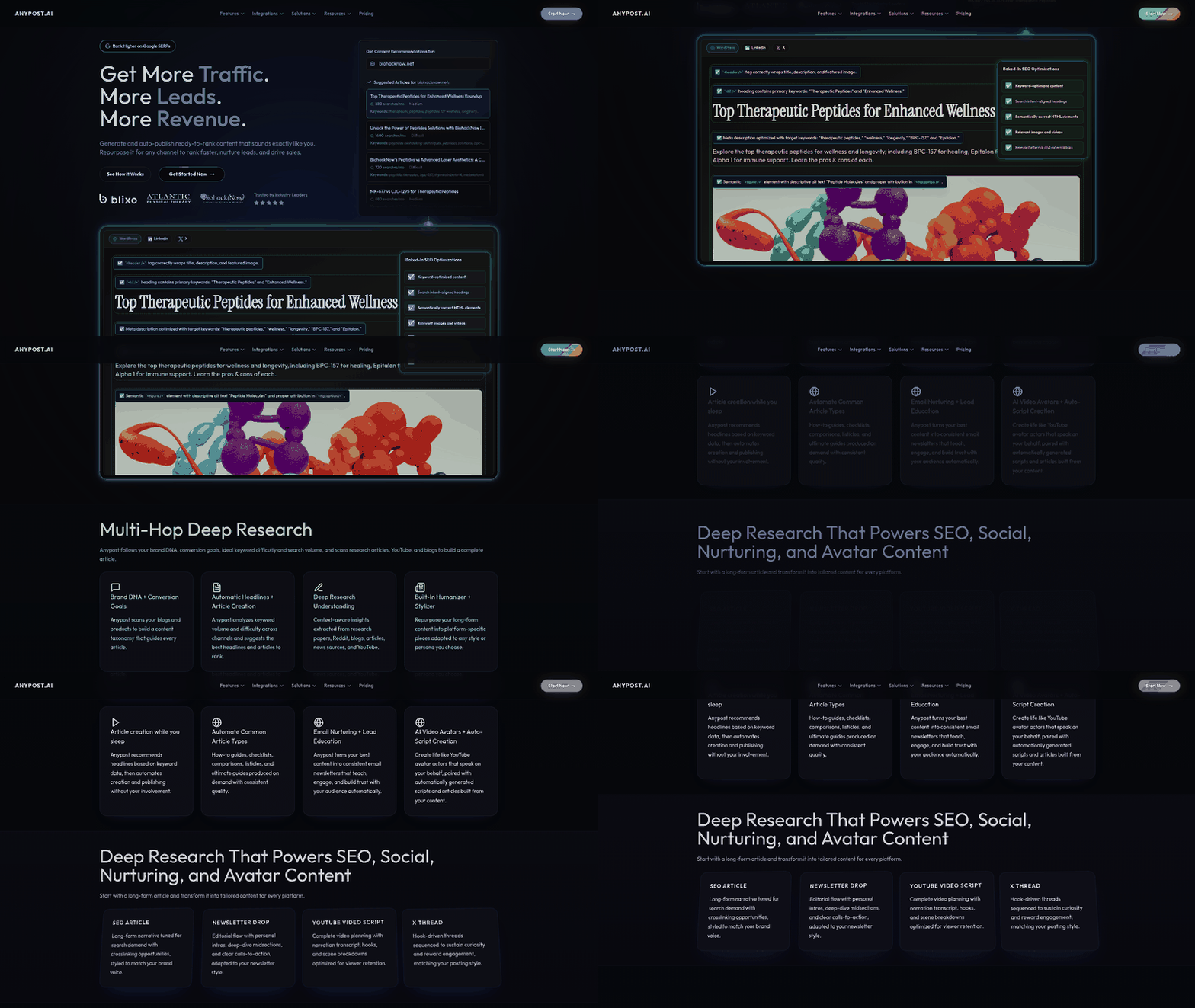
SEO automation refers to the use of software and tools to streamline search engine optimization tasks, enabling data-driven decision-making and efficiency in content marketing strategies. This approach leverages automated site crawls to map pages and links, tracks performance across search engines, and monitors technical issues like broken links or site speed [4][5]. By integrating tools such as n8n, marketers can automate keyword processing, generating SEO-optimized filenames, titles, and metadata through AI models like OpenAI’s GPT [2]. The core value lies in shifting from manual, time-intensive workflows to scalable systems that align SEO efforts with business outcomes like revenue and customer engagement [1].
The benefits of SEO automation are multifaceted. Automated tools enable consistent monitoring of website performance, allowing teams to identify and resolve issues—such as technical SEO errors or content gaps—rapidly [7]. For example, platforms like StoryBuilder provide dashboards that simplify complex metrics, making it easier to track improvements in site structure and page performance [3]. See the Real-Time Analytics Tracking for Enhanced Performance section for more details on how dashboards translate technical metrics into actionable insights. Additionally, automation reduces repetitive tasks, such as content audits or keyword research, freeing marketers to focus on strategic initiatives [8]. By centralizing data analysis and action, businesses can achieve faster iteration cycles and more precise targeting, directly linking SEO activities to measurable growth [6].
Current trends in SEO automation emphasize integration with advanced technologies like AI and machine learning. Automated workflows now include tools that generate metadata, optimize content for semantic search, and even execute technical fixes (e.g., redirect management or schema implementation) [2][3]. For instance, n8n-powered pipelines demonstrate how marketers can automate full SEO audits, combining performance data with AI-driven suggestions for on-page improvements [11]. Building on concepts from the Future of SEO Automation and Content Marketing section, these innovations reflect a shift toward real-time adaptability, where SEO strategies evolve dynamically based on algorithm updates and competitor activity [5].
While the provided sources do not explicitly outline common challenges in SEO automation, they imply potential hurdles. For example, navigating the SEO automation tools landscape requires strategic evaluation to avoid over-reliance on platforms that lack customization or scalability [3]. Additionally, automating tasks like content generation demands careful oversight to maintain brand voice and quality, as AI outputs may require manual refinement [2]. Teams must also balance automation with human expertise, ensuring technical fixes align with broader marketing goals [6]. These considerations highlight the need for a hybrid approach, where automation enhances—but does not replace—judgmental decision-making.
By adopting SEO automation, businesses can future-proof their digital strategies while addressing the complexity of modern search engine algorithms. As mentioned in the Implementing SEO Automation for Traffic Growth and Lead Generation section, the next step is to explore specific tools and workflows to implement these concepts effectively.
Section 2: Understanding Automated Content Generation
Automated content generation is a core component of SEO automation, enabling the creation of optimized, scalable content through algorithmic and AI-driven processes. This technology leverages structured workflows to produce SEO-friendly elements such as filenames, metadata, and article drafts, reducing manual effort while maintaining relevance to search engine algorithms [2]. By integrating tools like OpenAI’s GPT and automation platforms such as n8n, businesses can streamline repetitive tasks like keyword incorporation and on-page optimization [4]. As mentioned in the [Section 1] section, SEO automation relies on data-driven strategies to enhance efficiency, and automated content generation exemplifies this by scaling output while maintaining technical SEO standards.
Types of Automated Content Generation
Automated content generation encompasses several categories, each targeting specific SEO needs. One common type involves generating on-page SEO elements, such as title tags, meta descriptions, and header tags, using AI to align with keyword research [2]. Another type focuses on creating full-length content, including blog posts or product descriptions, by synthesizing data from structured inputs like keyword lists or competitor analysis [6]. Tools like n8n automate workflows that combine these functions, using APIs to connect content generation with website deployment systems [2]. Additionally, some platforms specialize in producing localized or multilingual content by adapting existing material to regional search trends [4]. These variations highlight the versatility of automation in addressing diverse SEO challenges.
How Automated Content Generation Works
The process typically begins with data input, such as keyword clusters or topic outlines, which AI models use to generate content drafts. For example, n8n pipelines integrate with OpenAI’s GPT to process keywords, producing SEO-optimized titles and metadata in real time [2]. This workflow often involves predefined templates that guide the AI’s output, ensuring consistency with brand guidelines and technical SEO requirements [4]. Once generated, content is validated through automated checks for keyword density, readability, and duplicate content, using tools like Grammarly or Copyscape [6]. Finally, the output is deployed via CMS integrations or directly to websites, with performance data fed back into the system to refine future iterations [2]. This closed-loop process ensures continuous improvement based on actual search performance metrics.
Applications in SEO Optimization
Automated content generation directly enhances SEO through scalable, data-driven strategies. One key application is bulk metadata creation, where AI generates unique title tags and meta descriptions for hundreds of pages, improving click-through rates from search results [4]. Another use case is content refresh workflows, where tools like n8n automatically update outdated blog posts with new data or keywords to maintain relevance [2]. See the [Section 5] section for more details on how automated content workflows align with strategies for repurposing content across platforms. Product description generation also benefits, particularly for e-commerce sites needing to catalog thousands of items efficiently [6]. Additionally, automation supports pillar content strategies by synthesizing long-form articles from subtopic outlines, ensuring comprehensive coverage of target keywords [4]. These applications demonstrate how automation extends SEO capacity without compromising quality.
Best Practices for Effective Use
To maximize results, businesses should adopt a strategic approach to automated content generation. First, prioritize tasks where automation excels, such as repetitive or data-intensive work, while reserving creative oversight for human teams [6]. For instance, use AI for metadata generation but have writers refine blog drafts to inject brand voice, as discussed in the [Section 4] section on tone matching and consistency. Second, integrate performance feedback loops by connecting automation pipelines to analytics tools like Google Search Console, allowing adjustments based on real-time ranking data [4]. Third, validate outputs with SEO audits to catch issues like over-optimized keywords or poor readability [6]. Finally, maintain compliance by ensuring AI-generated content adheres to copyright guidelines and avoids plagiarized material through tools like Turnitin or Originality.ai [4]. These practices balance efficiency with quality, ensuring automation aligns with long-term SEO goals.
Section 3: SEO-Optimized Publishing and Multi-Source Content Integration
SEO-optimized publishing ensures content aligns with search engine algorithms while addressing user intent, directly impacting visibility and engagement. Automated tools streamline this process by analyzing performance metrics, identifying keyword opportunities, and generating SEO-friendly metadata. For instance, [2] describes a pipeline using n8n and OpenAI to automate filename, title, and metadata creation, reducing manual effort while maintaining relevance. Similarly, [3] highlights automated technical SEO fixes—such as site structure improvements and performance tracking—that enhance crawlability and user experience. These practices connect SEO performance to measurable business outcomes like revenue and customer acquisition, as noted in [1]. By integrating data-driven adjustments, organizations can maintain consistent optimization without overburdening their teams [6]. The use of AI-driven tools like OpenAI for generating topic ideas, as discussed in the [Understanding Automated Content Generation] section, further enhances efficiency in content planning.
Multi-source content integration combines data and insights from diverse platforms to create cohesive, high-performing content. This approach allows marketers to leverage keyword research from tools like Ahrefs or SEMrush while incorporating performance metrics from Google Analytics or Search Console [4]. For example, [5] emphasizes the role of automated site crawls and cross-engine performance tracking in identifying gaps across content strategies. By aggregating signals from multiple sources, teams can prioritize topics with the highest potential for engagement and conversions. Additionally, platforms like StoryBuilder (cited in [3]) translate complex SEO metrics into actionable insights, enabling alignment between technical optimizations and creative strategies. This integration reduces redundancy and ensures content remains competitive in dynamic search landscapes [8]. When combined with tone-matching frameworks like those described in the [Leveraging Persona Engine for Tone Matching and Consistency] section, multi-source insights help maintain brand voice while scaling content production.
Effective SEO automation relies on specialized tools designed to simplify keyword research, on-page optimization, and performance monitoring. Tools like Yoast (mentioned in [8]) provide real-time suggestions for improving readability, meta tags, and internal linking. Meanwhile, platforms such as n8n (referenced in [2]) enable workflow automation by connecting SEO tools with content management systems, ensuring metadata updates and redirects are executed efficiently. Automated technical SEO tools, as described in [3], address issues like broken links, duplicate content, and site speed bottlenecks, which are critical for maintaining search rankings. For keyword-driven content creation, OpenAI’s GPT integration (used in [2]) generates topic ideas and draft outlines tailored to search intent, a process expanded on in the [Understanding Automated Content Generation] section. These tools collectively reduce the manual workload while maintaining precision in SEO execution [4].
To maximize the value of multi-source content integration, teams must adopt structured strategies that prioritize data alignment and workflow automation. One approach involves using centralized dashboards to consolidate insights from tools like Google Search Console, social media analytics, and CRM platforms [12]. This unified view helps identify trends and overlaps in audience behavior across channels. For example, [5] outlines the use of automated performance tracking to compare content effectiveness across search engines, informing adjustments to keyword targeting and distribution strategies. Additionally, aligning SEO automation with broader marketing goals—such as maintaining consistent brand messaging—can be supported by frameworks like those in the [Leveraging Persona Engine for Tone Matching and Consistency] section. By establishing clear protocols for data collection, analysis, and action, organizations can scale their content efforts while maintaining relevance and authority [6].
Section 4: Leveraging Persona Engine for Tone Matching and Consistency
Persona Engine, while not explicitly named in the provided sources, represents a conceptual framework for automating tone and voice consistency across content formats, a critical component of modern SEO automation strategies [3]. Its functionality aligns with tools and methodologies described in sources like [4] and [8], which emphasize the need for standardized brand messaging to enhance content performance. By integrating AI-driven language models with predefined brand guidelines, such systems ensure that generated content adheres to specific tonal parameters—whether formal, casual, technical, or persuasive—while maintaining SEO best practices [5]. This capability is particularly valuable for enterprises managing multi-channel campaigns, as highlighted in [10], where alignment between brand identity and automated content workflows is emphasized for scalable results. See the [Section 2: Understanding Automated Content Generation] section for more details on how AI-driven processes support such frameworks.
Tone matching is a cornerstone of effective content marketing, as inconsistent messaging can dilute brand identity and confuse audiences [4]. Source [8] notes that SEO success hinges on delivering contextually relevant content, which requires tonal alignment with both audience expectations and search intent. For example, a financial services brand targeting professionals will prioritize formal, data-driven language, whereas a lifestyle brand might adopt a more conversational tone. Automating this process reduces the risk of human error in large-scale content production, a challenge addressed in [9] through the use of automation tools for repetitive SEO tasks.
The benefits of deploying a Persona Engine for tone matching include increased operational efficiency and improved audience engagement. By codifying brand voice rules into an automated system, teams can generate consistent content faster, a principle validated in [2], where an n8n-based automation pipeline streamlined website updates. Additionally, source [5] links tone consistency to higher search engine rankings, as coherent messaging improves user experience and dwell time—key ranking factors. For enterprises, this translates to reduced reliance on manual content reviews, allowing resources to focus on strategic optimization tasks [10].
To implement a Persona Engine effectively, organizations should follow best practices rooted in the principles of SEO automation outlined in [3] and [11]. First, define clear tone guidelines based on audience personas and content goals, as discussed in [12]’s emphasis on data-driven marketing. Second, integrate the system with existing SEO tools, such as those listed in [9], to ensure tonal parameters align with keyword research and on-page optimization, as covered in the [Section 3: SEO-Optimized Publishing and Multi-Source Content Integration] section. Third, use A/B testing frameworks, referenced in [7], to refine tone preferences based on real-world performance metrics, a practice further explored in the [Section 6: Real-Time Analytics Tracking for Enhanced Performance] section. Finally, maintain regular audits of automated outputs, leveraging workflows like those in [11] to identify and correct deviations from brand standards.
While the specific term "Persona Engine" is not cited in the sources, its conceptual underpinnings are supported by the broader SEO automation literature. The integration of tone-matching capabilities into automated content workflows addresses a recurring challenge: balancing scalability with brand authenticity [6]. By adopting these practices, businesses can achieve the dual objectives of SEO optimization and consistent brand messaging, as advocated in [4] and [8]. However, success depends on rigorous implementation and continuous alignment with evolving audience and algorithmic demands, as noted in [1]’s analysis of enterprise SEO metrics.
Section 5: Repurposing Content for Different Channels
Repurposing content for different channels is a critical strategy in SEO automation, enabling marketers to maximize the value of their content while maintaining consistency across platforms. By leveraging automation tools, teams can systematically adapt high-performing content into formats suited for X/Twitter, newsletters, YouTube scripts, and blogs, reducing manual effort and expanding reach. As mentioned in the [Introduction to SEO Automation] section, SEO automation streamlines repetitive tasks, including content optimization and distribution, which directly supports repurposing workflows. This approach ensures that core SEO elements—such as keywords, meta tags, and backlink strategies—are preserved across repurposed assets, maintaining alignment with search engine algorithms.
Benefits of Repurposing Content
Content repurposing offers measurable advantages, including increased efficiency, broader audience engagement, and reduced content creation costs. By automating the extraction of key insights from long-form blogs or videos, marketers can generate shorter, platform-specific content without sacrificing SEO value [4]. For example, a detailed blog post on SEO automation can be transformed into a series of Twitter threads highlighting actionable tips, a newsletter summary with embedded links, or a YouTube script with visual explanations. This strategy also extends content lifespan, as repurposed assets can be reused for evergreen topics, minimizing the need for entirely new content creation [4]. Additionally, automation tools help maintain brand consistency by ensuring that repurposed content adheres to predefined style guides and keyword targets [9].
Strategies for Channel-Specific Repurposing
Effective repurposing requires tailoring content to the unique requirements of each channel. For X/Twitter, automation tools can split blog posts into threaded tweets, incorporating relevant hashtags and links to the original article [4]. Newsletters benefit from automated summarization tools that extract key takeaways and embed calls-to-action, as outlined in [8]. YouTube scripts can be generated using AI-powered transcription and editing tools, which convert written content into spoken-word formats while optimizing for video SEO. Building on concepts from [Understanding Automated Content Generation], these tools leverage algorithmic processes to enhance scalability. A key consideration is maintaining platform-specific SEO practices—for instance, optimizing YouTube metadata with video-specific keywords, as noted in [4].
Tools and Techniques for Automation
Several tools facilitate content repurposing by automating formatting, distribution, and optimization tasks. n8n, referenced in [2], allows users to build workflows that extract content from a central source and distribute it across multiple channels with minimal manual intervention. Tools like Yoast SEO [8] provide templates for repurposing blog content into social media snippets, ensuring keyword density and readability remain intact. For video content, automated transcription services integrated with YouTube APIs can generate scripts and closed captions, streamlining the repurposing process [4]. Additionally, tools listed in [9] offer bulk editing capabilities, enabling users to apply SEO adjustments to multiple repurposed assets simultaneously. These solutions reduce the time required for manual edits while maintaining compliance with platform-specific guidelines [4].
Measuring Effectiveness of Repurposed Content
To evaluate the success of repurposed content, marketers must track metrics such as engagement rates, traffic sources, and conversion rates across platforms. Automation tools can aggregate these metrics into centralized dashboards, as described in [1], allowing teams to compare the performance of original and repurposed assets. For instance, A/B testing tools can automate the distribution of different content variations (e.g., newsletter subject lines or Twitter hashtags) to identify the most effective formats [4]. Analytics from YouTube and social media platforms should be cross-referenced with website traffic data to assess how repurposed content drives organic search growth [1]. If specific repurposed assets underperform, automation workflows can flag these for revision, ensuring continuous optimization [9]. Regular audits using tools like those outlined in [11] help identify gaps in repurposing strategies and refine future content pipelines.
By integrating repurposing strategies into SEO automation frameworks, businesses can achieve scalable, data-driven content distribution. This approach not only enhances operational efficiency but also strengthens SEO performance by consistently reinforcing keyword themes across multiple touchpoints [4].
Section 6: Real-Time Analytics Tracking for Enhanced Performance
Real-Time Analytics Tracking is essential for evaluating the effectiveness of SEO automation and content marketing strategies. Unlike traditional reporting methods, real-time analytics provides immediate visibility into website performance, enabling teams to identify opportunities and resolve issues without delay [1]. For instance, platforms like HubSpot track SEO conversions in real-time, linking search engine visibility directly to business outcomes such as lead generation and customer acquisition [10]. This capability is critical for maintaining agility in a competitive digital landscape, where search engine algorithms and user behaviors evolve rapidly. By integrating real-time tracking with automated workflows, organizations can align SEO efforts with revenue goals, ensuring that every optimization decision is data-driven [1]. As mentioned in the [Introduction to SEO Automation] section, this integration reflects the broader principles of automation in streamlining SEO tasks.
Tools and Techniques for Real-Time Analytics Tracking
Modern SEO automation pipelines leverage tools like n8n to process performance data and generate SEO-optimized metadata dynamically. For example, n8n connects with OpenAI to refine filenames, titles, and metadata based on keyword performance, creating a feedback loop between analytics and content creation [2]. Dashboards such as StoryBuilder simplify complex metrics by visualizing technical SEO health, including site structure and page load times, for stakeholders to interpret [3]. Automated technical SEO tools further enhance this process by identifying crawl errors, broken links, and other structural issues that impact search engine rankings [3]. HubSpot’s real-time analytics capabilities extend beyond organic traffic, tracking user behavior patterns and conversion paths to measure the ROI of SEO-driven campaigns [10]. These tools collectively enable teams to monitor key indicators like keyword rankings, bounce rates, and session duration without manual intervention [5]. See the [Understanding Automated Content Generation] section for more details on how automation supports dynamic metadata adjustments.
Metrics to Track for Measuring Performance
To assess the success of SEO automation, focus on metrics that reflect both technical performance and business impact. Organic traffic volume and keyword ranking positions are foundational indicators of content visibility, while bounce rates and session duration reveal user engagement [5]. For example, n8n’s automation pipeline uses real-time keyword data to refine metadata, ensuring content remains optimized for high-intent search queries [2]. Conversion metrics—such as form submissions, email signups, or e-commerce transactions—directly tie SEO efforts to revenue generation [10]. Technical SEO metrics like page load speed and mobile responsiveness are equally critical, as they influence both search engine compliance and user experience [3]. By tracking these metrics continuously, teams can prioritize high-performing content and address underperforming areas through automated fixes or manual adjustments [7]. Building on concepts from the [Implementing SEO Automation for Traffic Growth and Lead Generation] section, aligning these metrics with lead generation objectives ensures strategic coherence.
Section 7: Implementing SEO Automation for Traffic Growth and Lead Generation
Implementing SEO automation for traffic growth and lead generation requires a structured approach that balances technical execution with strategic oversight. Begin by selecting automation tools tailored to your goals. Platforms like n8n enable the creation of workflows that integrate with tools such as OpenAI to automate tasks like generating SEO-optimized filenames, titles, and metadata [2]. See the [Understanding Automated Content Generation] section for more details on how automated tools can enhance SEO content creation. Simultaneously, adopt tools that address technical SEO fixes, such as site structure improvements and page performance enhancements, to ensure your site is crawlable and fast [3]. These foundational steps create a scalable framework for automation while maintaining alignment with search engine requirements.
Step 1: Automate Keyword Research and Content Audits
Automate keyword research using tools that track search trends and identify gaps in your content strategy [4]. For example, platforms like Yoast recommend automating content audits to evaluate on-page SEO factors such as keyword density and readability [8]. By integrating these tools into your workflow, you can prioritize high-impact keywords and refresh underperforming content systematically. This reduces manual effort while ensuring your content remains competitive in evolving search landscapes.
Step 2: Streamline On-Page SEO with AI-Driven Tools
Leverage AI-driven automation for on-page SEO tasks, such as generating meta descriptions, headers, and alt text. Source [2] demonstrates how n8n workflows can call OpenAI’s GPT to produce SEO-optimized metadata, improving click-through rates from search results. Similarly, automate internal linking strategies by using tools that analyze content relevance and suggest link placements [4]. These steps enhance consistency and reduce human error, ensuring your pages are optimized for both users and search algorithms.
Step 3: Monitor Performance and Refine Strategies
Continuous monitoring is critical to measure the impact of automation. Tools like HubSpot track SEO performance in real time, linking traffic growth to lead generation metrics such as form submissions and email signups [10]. As mentioned in the [Real-Time Analytics Tracking for Enhanced Performance] section, real-time analytics provide immediate insights to refine automation workflows. Use dashboards from platforms like StoryBuilder to visualize complex SEO metrics, enabling data-driven adjustments to your automation workflows [3]. Regular audits of these metrics help identify underperforming areas and validate the ROI of automated campaigns [1].
Strategies for Traffic Growth and Lead Generation
To maximize traffic growth, focus on automating long-tail keyword targeting and content repurposing. Automated tools can identify low-competition keywords and generate topic clusters, ensuring comprehensive coverage of search intent [4]. For lead generation, align SEO automation with CRM systems to track user behavior post-click. For instance, HubSpot’s integration with SEO tools allows businesses to attribute conversions directly to specific keywords or content pieces [10]. This alignment ensures that SEO efforts contribute directly to sales pipelines.
Common Pitfalls to Avoid
Over-automation is a frequent pitfall, leading to generic content that lacks the nuance of human curation [6]. Avoid relying solely on automated tools for creative tasks like crafting unique value propositions. Another risk is neglecting technical SEO audits; even automated fixes may miss site-specific issues without periodic manual reviews [3]. See the [SEO-Optimized Publishing and Multi-Source Content Integration] section for insights on conducting technical SEO audits. Additionally, failing to set clear KPIs—such as traffic growth targets or conversion benchmarks—can result in disjointed automation efforts [1].
Measuring Success: Key Metrics and Tools
Success in SEO automation is quantified through metrics like organic traffic, keyword rankings, and conversion rates. Source [1] emphasizes connecting SEO performance to revenue, using tools that track how traffic growth translates into leads. For granular insights, use automated reporting tools to analyze bounce rates, time on page, and goal completions [7]. Regular performance audits, as demonstrated in n8n workflows [11], ensure that automation strategies remain aligned with business objectives.
By following these steps and mitigating common risks, businesses can harness SEO automation to drive sustainable traffic growth and efficient lead generation. The synergy of automation and strategic oversight ensures that technical execution supports broader marketing goals, turning SEO into a scalable, data-driven asset.

Section 8: Future of SEO Automation and Content Marketing
Current Trends in SEO Automation and Content Marketing
Modern SEO automation leverages tools that perform site crawls, track performance across search engines, and monitor technical issues like broken links or page speed [5]. Content marketing is increasingly integrated with automation platforms that streamline keyword research, on-page optimization, and content distribution workflows [3]. For example, tools like n8n enable marketers to build pipelines that update websites dynamically based on real-time data, reducing manual effort [2]. Additionally, automation is being applied to tasks such as backlink analysis and competitor benchmarking, allowing teams to focus on strategic decision-making rather than repetitive data collection [4]. These trends highlight a shift toward efficiency, with automation handling routine tasks while human expertise drives creative and analytical processes.
Future Developments and Predictions
By 2025, SEO automation is expected to incorporate more advanced predictive analytics, enabling marketers to anticipate algorithmic changes and adjust strategies proactively [5]. Future tools may also prioritize hyper-personalization, using automation to tailor content for specific audience segments based on behavioral data [9]. Building on concepts from [Leveraging Persona Engine for Tone Matching and Consistency], future tools may prioritize hyper-personalization, using automation to tailor content for specific audience segments based on behavioral data [9]. Machine learning models will likely play a larger role in identifying high-impact keywords and optimizing content structure for search engines [6]. Furthermore, automation platforms are predicted to integrate more seamlessly with CRM systems, aligning SEO efforts with lead generation and customer retention goals [10]. As search engines evolve, automation will need to adapt to factors like voice search optimization and mobile-first indexing, though specific implementation details remain speculative without further source confirmation.
Impact of AI and Machine Learning on SEO Automation
AI and machine learning are already transforming SEO automation by enhancing data analysis capabilities. For instance, AI-driven tools can process vast datasets to identify patterns in search behavior, enabling more accurate predictions about ranking opportunities [5]. Machine learning algorithms also improve over time, refining content suggestions and technical SEO recommendations based on historical performance [8]. In content marketing, AI assists with generating draft content, optimizing meta tags, and even creating localized versions of web pages for different regions [6]. See the [Understanding Automated Content Generation] section for more details on how AI-generated content fits into SEO strategies. However, these technologies are not yet capable of fully replacing human creativity in content creation, as nuanced storytelling and brand voice still require human oversight [10]. Future advancements may bridge this gap, but current systems emphasize augmentation over automation of creative tasks.
Preparing for the Future of SEO Automation and Content Marketing
To stay competitive, marketers must prioritize continuous learning about emerging tools and methodologies. Staying updated on trends like AI integration and predictive analytics will be critical, as outlined in strategic guides for automation adoption [3]. Technical SEO fundamentals, such as site speed optimization and mobile responsiveness, will remain essential, requiring automation tools to handle routine audits while teams focus on higher-level improvements [4]. Organizations should also invest in cross-departmental collaboration, ensuring SEO teams work closely with data scientists and developers to leverage automation effectively, as mentioned in the [Implementing SEO Automation for Traffic Growth and Lead Generation] section [10]. Finally, adopting a flexible mindset will help businesses integrate new technologies as they emerge, rather than waiting for perfect solutions [5].
By aligning with these trends and leveraging available tools, marketers can position themselves to thrive in an increasingly automated SEO landscape.
References
[1] SEO Performance Metrics for Enterprise Success - https://www.siteimprove.com/blog/seo-performance-metrics/
[2] I built a full SEO automation pipeline in n8n that updates my website ... - https://www.reddit.com/r/n8n/comments/1o9qb66/i_built_a_full_seo_automation_pipeline_in_n8n/
[3] Navigate the SEO Automation Tools Landscape: A Strategic Guide ... - https://www.siteimprove.com/blog/seo-automation-tools-landscape-matrix/
[4] SEO Automation: 5 Tasks to Automate for Better Results (+Tools to ... - https://www.wordstream.com/blog/ws/2023/10/12/seo-automation
[5] What is SEO Automation? Unlocking the Future of Digital Marketing ... - https://www.siteimprove.com/blog/what-is-seo-automation/
[6] Can SEO Be Automated? A Guide to SEO Automation - https://www.seo.com/blog/seo-automation/
[7] Automation For SEO - https://behamics.com/automation-for-seo/
[8] SEO automation: Tools and tips for SEO success • Yoast - https://yoast.com/seo-automation-tasks/
[9] 11 Crucial SEO Automation Tools That You Should Use in 2025 - https://www.omnius.so/blog/best-seo-automation-tools
[10] How to align SEO strategy and automation to generate outstanding ... - https://www.parkour3.com/en/blog/how-to-align-seo-strategy-and-automation-to-generate-outstanding-results
[11] The Ultimate SEO & Website Performance Audit Workflow in n8n by Agrici Daniel - https://www.youtube.com/watch?v=bM7E64WKmAQ
[12] Tweet by @InventivTechno (InventivTechnology) - https://twitter.com/InventivTechno/status/2008916543321866406
[13] Tweet by @evomadmarketing (Evomad - Marketing, Engineered for Discovery) - https://twitter.com/evomadmarketing/status/2007961951352287399
[14] Tweet by @BlueSolCloud (BlueSol Cloud) - https://twitter.com/BlueSolCloud/status/2007874767538487614
Frequently Asked Questions
1. What is SEO automation, and how does it work?
SEO automation involves using software and tools to streamline tasks like keyword research, content optimization, technical audits, and performance tracking. It works by leveraging AI and machine learning to automate repetitive processes—such as generating SEO-friendly metadata, identifying broken links, or analyzing site speed—while integrating data-driven insights to refine strategies. Tools like n8n and Anypost AI enable marketers to create scalable workflows, reducing manual effort and accelerating improvements in search engine visibility.
2. How does SEO automation differ from traditional SEO practices?
Traditional SEO relies heavily on manual audits, keyword research, and content creation, which can be time-consuming and prone to human error. SEO automation shifts this to a data-centric, scalable approach by automating tasks like technical SEO fixes, real-time performance monitoring, and content generation. For example, AI-powered tools can optimize metadata at scale or identify content gaps instantly, whereas manual methods might take weeks. Automation also allows for continuous optimization based on real-time analytics, enabling faster adaptation to algorithm updates and market trends.
3. What are the key tools and platforms used in SEO automation?
Beyond the tools mentioned in the article (n8n, Anypost AI, StoryBuilder), popular SEO automation platforms include SEMrush, Ahrefs, and Moz for keyword research and competitor analysis. Technical SEO tools like Screaming Frog automate site crawls to detect issues like broken links or duplicate content. AI-driven platforms such as Jasper or Surfer SEO assist in generating SEO-optimized content. Integration platforms like Zapier or Make can connect these tools into automated workflows, creating a unified system for end-to-end SEO management.
4. Can SEO automation improve business outcomes like revenue and customer engagement?
Yes, SEO automation directly ties SEO efforts to business goals by enabling faster iteration and precise targeting. For instance, automated workflows can identify high-performing keywords and optimize content in real time, increasing organic traffic and conversion rates. Platforms like StoryBuilder’s dashboards provide actionable insights into user behavior, helping businesses refine content strategies to boost engagement. By reducing time spent on repetitive tasks, teams can focus on innovation and data-driven decisions that align SEO with revenue growth and customer retention.
5. What challenges should businesses consider when implementing SEO automation?
Key challenges include ensuring data privacy compliance (e.g., GDPR), integrating tools with existing workflows, and avoiding over-reliance on automation without human oversight. Technical SEO automation may require expertise in API integrations or coding for platforms like n8n. Additionally, businesses must balance AI-generated content with human creativity to maintain brand voice and quality. It’s also critical to monitor automated systems for biases or errors, especially in semantic search optimization.
6. How does AI enhance SEO automation processes?
AI enhances automation by enabling advanced capabilities like semantic search optimization, where algorithms understand user intent beyond keywords. For example, AI models like GPT generate contextually relevant content and metadata while analyzing competitors’ strategies. Machine learning also powers tools to predict search trends, automate technical fixes (e.g., schema implementation), and personalize content for different audience segments. These capabilities allow SEO strategies to evolve dynamically, ensuring alignment with ever-changing search engine algorithms and user preferences.
7. What steps should a business take to start with SEO automation?
Begin by auditing your current SEO practices to identify repetitive tasks suitable for automation. Next, invest in tools that align with your goals—e.g., technical SEO tools for site health or content automation platforms for blog creation. Integrate these tools into workflows using platforms like n8n or Zapier to streamline data flow. Train your team to leverage automation effectively while maintaining oversight for quality control. Finally, continuously analyze performance metrics using dashboards to refine strategies and ensure automation aligns with business objectives like increasing organic traffic or improving conversion rates.