
Unlock SEO Automation: Top 13 Tools for 2025

Introduction to SEO Automation
SEO automation is transforming how businesses approach search engine optimization by leveraging technology to streamline repetitive tasks and enhance strategic decision-making. At its core, SEO automation involves using software tools to handle time-consuming processes like keyword research, on-page optimization, backlink analysis, and technical audits [3]. By automating these activities, marketers can focus on high-impact strategies rather than manual data entry or monitoring [7]. This shift is particularly critical in 2025, as advancements in AI and machine learning enable tools to predict algorithmic changes and adapt optimization tactics in real time [5].
Definition of SEO Automation
SEO automation refers to the use of specialized software to perform repetitive, data-driven SEO tasks with minimal human intervention. According to [3], this includes automating keyword tracking, content optimization, and technical audits. Shopify’s 2025 guide explains that these tools gather insights from multiple data sources, identify technical issues like broken links or slow load times, and apply pre-approved fixes to improve site performance [7]. Unlike traditional SEO, which relies on manual analysis, automation scales efforts across large websites while maintaining consistency [5]. For example, enterprise platforms now integrate automation with team workflows, ensuring collaborative execution of optimization strategies—as discussed in the [Best Practices for Implementing SEO Automation Tools] section [5].
Benefits of SEO Automation
The primary advantage of SEO automation is efficiency. By reducing the time spent on routine tasks, teams can allocate resources to creative content development and strategic planning [3]. Automated tools also minimize human error, ensuring technical SEO elements like meta tags and schema markup are consistently optimized [7]. A 2025 study highlights how automation enables real-time adjustments to algorithm updates, allowing businesses to maintain competitive rankings without constant manual recalibration—see the [Real-Time Analytics and Tracking] section for further details on dynamic strategy adjustments [5]. Additionally, automation democratizes SEO for small businesses by lowering the barrier to entry—tools that once required specialized expertise are now accessible via intuitive dashboards [3]. For content marketers, this means faster content production cycles and improved alignment with search intent, as explored in the [Content Generation and Optimization Tools] section [7].
Current Trends in SEO Automation
In 2025, SEO automation is evolving beyond basic task delegation to predictive analytics and AI-driven recommendations. As noted in [5], enterprise SEO tools now use machine learning to forecast ranking opportunities and prioritize actions based on historical performance data. Another trend is the integration of automation with content management systems (CMS), enabling real-time on-page optimizations during content creation [7]. For example, AI-powered tools can suggest keyword placements or readability improvements as writers draft articles, reducing post-publishing revisions—see the [Content Generation and Optimization Tools] section for examples of such tools [3]. Furthermore, automation is expanding into voice search optimization and semantic SEO, addressing the growing complexity of user queries [5]. However, challenges remain—over-reliance on automation without human oversight can lead to generic content that fails to resonate with audiences [7].
| Key Element | Description | Key Features | Pros/Cons |
|---|---|---|---|
| Definition | Automation of repetitive SEO tasks via software | Keyword tracking, technical audits, content fixes | Reduces manual effort; ensures consistency [3][7] |
| Benefits | Enhances efficiency, accuracy, and scalability | Real-time adjustments, error reduction | Saves time; lowers costs for small businesses [3][5] |
| Current Trends | AI predictions, CMS integrations, voice/semantic optimization | Machine learning, collaborative workflows | Improves adaptability; risks generic content without human input [5][7] |
By adopting SEO automation, businesses can future-proof their digital strategies while adapting to the dynamic nature of search algorithms. However, balancing automation with human creativity remains essential to maintaining authentic user engagement [7]. The following sections will explore specific tools that embody these trends and benefits, offering actionable insights for 2025 and beyond.
Top 13 SEO Automation Tools Overview
The top 13 SEO automation tools for 2025 span a range of functionalities, from technical audits to AI-driven content creation. These tools are designed to streamline repetitive tasks, enhance data-driven decisions, and improve website performance. Below is an overview of each tool, including their key features, target audiences, and pros/cons.
Semrush
Semrush serves as an all-in-one SEO command center, offering keyword research, competitor analysis, backlink tracking, and site audits [6]. Its robust suite includes tools for on-page optimization, PPC campaigns, and content creation. Ideal for agencies, in-house SEO teams, and marketers, Semrush excels in providing comprehensive insights. Pros include its user-friendly interface and extensive data sets, while cons involve premium features that can be costly for smaller businesses. See the [Real-Time Analytics and Tracking] section for more details on how Semrush's analytics capabilities support dynamic strategy adjustments.
Ahrefs
Ahrefs focuses on backlink intelligence, enabling users to analyze competitors’ backlink profiles, conduct keyword research, and track rankings [6]. Its Content Explorer and Site Explorer tools are popular for competitive analysis. Targeted at SEO professionals prioritizing link-building strategies, Ahrefs is praised for its depth of backlink data but criticized for its high cost for enterprise-level features. For insights into how Ahrefs integrates with broader SEO automation workflows, refer to the [Real-Time Analytics and Tracking] section.
Screaming Frog
Screaming Frog specializes in technical SEO, crawling websites to identify issues like broken links, meta tag errors, and site structure problems [6]. Its desktop-based tool is favored by technical SEOs for detailed audits. Pros include precision in technical diagnostics, while cons include a steeper learning curve for beginners [6].
Serpstat
Serpstat is an all-in-one SEO platform for keyword research, site audits, and competitor analysis [6]. It caters to small to mid-sized agencies seeking affordable, comprehensive tools. Strengths lie in its affordability and integrated analytics, though it lacks enterprise-scale features compared to competitors [6].
Ubersuggest
Ubersuggest simplifies keyword research, content ideation, and site crawling for beginners and solopreneurs [6]. Its user-friendly interface and budget-friendly pricing make it accessible. However, it lacks advanced features for large-scale SEO operations [6].
BrightEdge
BrightEdge is an enterprise-grade SEO tool focused on content optimization, analytics, and keyword tracking [6]. It integrates with marketing automation platforms, making it ideal for large corporations. While its data depth is unmatched, its high cost and complex setup deter smaller teams [6].
Moz
Moz provides on-page SEO tools, domain authority metrics, and link-building solutions [6]. Its tools are trusted for reliability and actionable insights. Targeting marketers and agencies, Moz’s limitations include some features being exclusive to paid plans [6].
Hunter
Hunter streamlines email outreach by finding and verifying contact emails [6]. It’s essential for link builders and marketers conducting outreach campaigns. Its core strength is accuracy in contact discovery, though it lacks broader SEO functionalities [6].
Clearbit
Clearbit offers B2B data enrichment, helping marketers find contact and company data [6]. It’s tailored for B2B SEO and lead generation but is limited to non-general SEO tasks [6].
SpyFu
SpyFu tracks competitors’ keywords, ads, and backlinks [6]. Agencies and businesses use it for strategic insights. Its subscription model can become expensive for users needing multiple plans [6].
Authority
Authority is a content marketing platform for creating, distributing, and analyzing content [6]. It suits content marketers but may overwhelm small teams with its feature set [6].
BuzzSumo
BuzzSumo identifies trending content and influencers for outreach [6]. Content strategists use it to capitalize on viral topics. However, its influencer-focused tools are less robust than dedicated platforms [6].
Yoast
Yoast is a WordPress plugin for on-page SEO, offering content analysis, readability checks, and optimization suggestions [6]. It’s ideal for bloggers and website owners but limited to WordPress environments [6]. As mentioned in the [Persona Engine and Tone Matching Features] section, tools like Yoast also contribute to aligning content with audience personas.
Summary Table
| Title | Description | Key Features | Pros | Cons |
|---|---|---|---|---|
| Semrush | All-in-one SEO platform for keyword research, competitor analysis, and audits [6]. | Keyword tracking, site audits, backlink analysis | Comprehensive, user-friendly | Premium plans expensive |
| Ahrefs | Backlink-focused tool for competitor research and SEO data [6]. | Backlink explorer, keyword research, site audits | Extensive backlink data | Costly for large teams |
| Screaming Frog | Technical SEO crawler for identifying site issues [6]. | Broken link detection, metadata analysis | Detailed technical reports | Complex for new users |
| Serpstat | Affordable all-in-one SEO tool for agencies [6]. | Competitor analysis, keyword research, site audits | Budget-friendly | Limited scalability |
| Ubersuggest | Beginner-friendly SEO tool for keyword ideas and content optimization [6]. | Content suggestions, keyword research | Easy to use, affordable | Lacks advanced features |
| BrightEdge | Enterprise SEO tool for content optimization and analytics [6]. | Content scoring, competitor benchmarking | Enterprise-level insights | High cost, complex setup |
| Moz | On-page SEO and link-building tools for marketers [6]. | Domain authority metrics, link-building tools | Trusted data, actionable insights | Paid features limited |
| Hunter | Email discovery tool for outreach campaigns [6]. | Email verification, contact finding | Efficient for outreach | Narrow focus |
| Clearbit | B2B data enrichment for lead generation [6]. | Company and contact data | Accurate B2B insights | Not general SEO-focused |
| SpyFu | Competitor research tool for keywords and ads [6]. | Competitor keyword tracking, ad analysis | Detailed competitor insights |
Additional Tools from [1]
While the above list focuses on [6], [1] highlights tools like Gumloop (automation for keyword and content tasks), AirOps (technical SEO automation), Surfer AI (AI content optimization), Alli AI (AI content drafting), Page Optimizer Pro (on-page SEO), and ChatGPT (AI content generation). These tools complement the 13 above, offering specialized automation for niche tasks [1]. For a deeper dive into AI-driven content creation, see the [Content Generation and Optimization Tools] section.
By leveraging these tools, SEO professionals can automate repetitive tasks, focus on strategic decisions, and improve website rankings efficiently. The choice of tool depends on specific needs, team size, and budget, with many offering free trials to evaluate fit.
Content Generation and Optimization Tools
The content generation and optimization tools in 2025 leverage AI to streamline SEO workflows, offering features like automated content creation, keyword integration, and repurposing. These tools focus on enhancing efficiency by combining real-time data analytics with machine learning to adapt to algorithmic changes [4]. For instance, platforms such as Semrush and Surfer SEO provide AI-driven content optimization, enabling users to generate drafts aligned with search intent and SEO best practices [11]. Additionally, tools like Clearscope analyze competitors’ content to identify gaps, ensuring generated material meets audience expectations while optimizing for on-page factors like keyword density [9].
Summary Table of Content Generation and Optimization Tools
| Title | Description | Key Features | Pros | Cons |
|---|---|---|---|---|
| Semrush | All-in-one platform with AI content writing and keyword research | AI content generation, keyword gap analysis, content templates | Comprehensive SEO suite [11] | Higher-tier pricing for agencies [12] |
| Surfer SEO | On-page optimization tool using real-time data | Content templates, competitor analysis, SEO score tracking | Real-time optimization suggestions [12] | Limited standalone content generation [8] |
| MarketMuse | AI-powered content strategy planning | Topic modeling, content quality scoring, collaboration workflows | Enterprise-grade insights [5] | Steeper learning curve [11] |
| Copy.ai | Focused on AI-driven content ideation and drafting | Prompt-based content generation, tone adjustments, plagiarism detection | Rapid ideation for repurposing [8] | Minimal SEO-specific features [12] |
AI-Driven Content Generation and SEO Integration
Tools like Semrush integrate AI content generators that produce drafts based on keyword research and competitor analysis, reducing the need for manual outlining [11]. Surfer SEO enhances this by providing real-time on-page optimization suggestions, such as ideal keyword placement and content length, directly within the writing interface [12]. These platforms often use machine learning to adapt to Google’s evolving algorithms, ensuring generated content remains compliant with current best practices [4]. However, while AI excels at drafting, human oversight is still critical for nuance and brand voice, as noted in the Persona Engine and Tone Matching Features section [5].
Content Repurposing and Multi-Format Optimization
Repurposing tools like Copy.ai and MarketMuse allow users to convert existing content into multiple formats, such as social media posts, blog summaries, or video scripts, saving time for content teams [8]. For example, Copy.ai’s “Repurpose” feature analyzes a blog post’s key themes and suggests variations tailored for LinkedIn or Twitter [8]. MarketMuse takes this further by mapping content to user intent clusters, enabling teams to systematically repurpose material across formats while maintaining SEO relevance [5]. This is particularly valuable for agencies managing large content inventories, though smaller teams may find the setup process complex [11]. As mentioned in the Multi-Channel Content Integration and Distribution section, seamless synchronization across platforms is essential for maximizing the impact of repurposed content [4].
Limitations and Considerations
While AI tools streamline content workflows, they face limitations in contextual understanding. As highlighted in [9], AI-generated content may lack the depth of human-created material, particularly for technical or niche topics. Additionally, tools like Surfer SEO require users to manually input initial data, such as target keywords, before generating optimization suggestions [12]. For teams prioritizing automation, platforms like Semrush offer hybrid solutions, combining AI drafting with human editing via collaborative workflows [11].
In 2025, the top tools balance automation with flexibility, allowing marketers to focus on strategy rather than execution. However, success depends on selecting tools aligned with specific use cases—whether for rapid content generation, in-depth SEO optimization, or large-scale repurposing [4]. As noted in the Introduction to SEO Automation section, the integration of these tools into broader SEO strategies is key to achieving measurable results [8].
Multi-Channel Content Integration and Distribution
Multi-channel content integration and distribution capabilities are critical for SEO automation tools in 2025, enabling seamless synchronization of content across platforms. Leading tools explicitly support integration with social media platforms, email marketing tools, and blogging platforms to streamline workflows and maximize reach. For instance, several tools mentioned in [5] and [10] emphasize automation playbooks that unify content distribution, reducing manual effort for teams. These integrations often include scheduled posting, analytics tracking, and audience segmentation features, though specific implementation details are not always outlined in the sources. See the [Content Generation and Optimization Tools] section for more details on how automation playbooks align with content creation workflows. Below, a summary table highlights key tools and their integration capabilities, followed by subsections analyzing these features in depth.
| Title | Description | Key Features | Pros/Cons |
|---|---|---|---|
| Social Media Integration | Automates content sharing across platforms like Twitter, LinkedIn, and Facebook | Scheduled posting, analytics dashboards, hashtag optimization | Pros: Saves time; Cons: Limited platform customization in some tools |
| Email Marketing Integration | Syncs content with platforms such as Mailchimp and HubSpot | Personalized email templates, A/B testing, subscriber list segmentation | Pros: Enhances user engagement; Cons: Requires setup for complex campaigns |
| Blogging Platform Integration | Connects with WordPress, Medium, and Wix for content optimization | AI-driven content suggestions, SEO score tracking, keyword research integration | Pros: Streamlines blog SEO; Cons: May lack advanced analytics for niche blogs |
Integration with Social Media Platforms
Top SEO tools in 2025 explicitly support social media automation through direct API connections or third-party plugins. As noted in [5], platforms like Hootsuite and Buffer are frequently cited for their ability to schedule posts and track engagement metrics. Tools such as SEMrush and Ahrefs also integrate with LinkedIn and Twitter for content amplification, though [10] highlights that these features are often part of premium tiers. The primary benefit lies in reducing manual posting, but [5] cautions that some tools may lack granular control over platform-specific algorithms. For example, a tool might automate Facebook posts but struggle to optimize Instagram Stories due to format limitations.
Integration with Email Marketing Tools
Email marketing synchronization is another cornerstone of SEO automation, with tools like Mailchimp and ConvertKit being commonly referenced in [4] and [7]. These integrations allow SEO teams to embed optimized content into newsletters, leveraging data from tools like Google Analytics for audience segmentation. [10] emphasizes that AI-driven tools can generate personalized email subject lines and body copy based on user behavior, though this requires advanced configurations. However, [5] notes that smaller agencies may face challenges due to the cost of premium email marketing APIs. For instance, syncing a content calendar with HubSpot’s CRM might necessitate additional training for non-technical users.
Integration with Blogging Platforms
Blogging platform compatibility is critical for content-heavy SEO strategies. Tools such as Yoast SEO (mentioned in [7]) and Surfer SEO (referenced in [8]) integrate directly with WordPress and Medium, offering real-time suggestions for keyword placement and readability. See the [Comparison of Top 13 SEO Automation Tools] section for a structured evaluation of these tools. [5] highlights that these integrations often include features like duplicate content checks and competitor analysis, though [10] points out that some platforms lack support for static site generators like Jekyll. A key advantage is the ability to automate content updates based on search trend data, but [4] warns that over-reliance on AI-generated content may lead to generic posts if not monitored.
Recommendations and Ratings
When evaluating tools for multi-channel integration, [5] and [10] recommend prioritizing platforms with native API access for flexibility. See the [Best Practices for Implementing SEO Automation Tools] section for strategies on selecting tools with robust API support. For social media, tools like Later and Sprout Social receive high marks for platform-specific optimizations. Email marketing integrations are best served by all-in-one platforms like HubSpot, though [7] notes that Zapier-style automation can bridge gaps for budget-conscious teams. Blogging integrations are most robust in WordPress-centric ecosystems, but [8] advises testing AI tools like Jasper or Copy.ai for non-WordPress blogs. Overall, 2025 tools emphasize cross-channel consistency, though [5] stresses that manual oversight remains essential for nuanced campaigns.
While the cited sources provide detailed insights into integration workflows, specific technical specifications—such as API endpoints or custom code examples—are not included. Users are encouraged to consult vendor documentation for implementation details.
Real-Time Analytics and Tracking
Real-Time Analytics and Tracking is a critical component of modern SEO automation, enabling teams to monitor performance, identify opportunities, and adjust strategies dynamically. The top tools in 2025 prioritize real-time data delivery through dashboards, alerts, and automated reporting, as emphasized by Zapier’s 2025 analysis of the best SEO tools [4]. These systems track metrics such as search query rankings, organic traffic fluctuations, and backlink acquisition, often integrating AI-driven insights to prioritize actions [9]. For example, platforms leverage AI to analyze keyword performance and suggest on-page optimizations in real time, reducing manual effort [10]. Data visualization is streamlined via customizable dashboards, heatmaps for user engagement, and trend-based graphs to highlight traffic shifts [4]. Below, we break down the key features and evaluate their practical applications.
Real-Time Search Query and Traffic Monitoring
Many SEO automation tools offer granular tracking of search queries and traffic sources, allowing users to identify high-impact keywords and content gaps instantly. Zapier highlights that tools like these provide real-time updates on keyword rankings across search engines, often with historical data comparisons [4]. For instance, some platforms use AI to predict traffic shifts based on algorithm updates or competitor actions, enabling proactive adjustments [9]. This feature is particularly valuable for content teams managing large websites, as it reduces reliance on manual audits [10]. However, the complexity of integrating these tools with existing analytics platforms (e.g., Google Analytics) can be a barrier for smaller agencies [4].
AI-Driven Content Optimization and Alerts
Automation platforms now embed AI-driven content scoring systems that evaluate pages for SEO readiness and suggest improvements in real time. These systems analyze factors like keyword density, readability, and internal linking, then prioritize fixes based on potential traffic impact [9]. For example, one tool might flag a drop in organic traffic and recommend updating meta tags or adding structured data [4]. Real-time alerts via email or Slack integrations further ensure teams respond to critical changes promptly [10]. While this reduces the need for constant manual monitoring, over-reliance on automated suggestions can lead to generic optimizations that lack creative nuance. See the [Persona Engine and Tone Matching Features] section for more details on balancing AI recommendations with audience-specific content strategies.
Data Visualization and Reporting Automation
Visualizing SEO data has become more intuitive with tools offering interactive dashboards and automated report generation. Platforms like those reviewed by Zapier emphasize customizable templates for clients and stakeholders, with real-time data embedded in charts and tables [4]. Heatmaps and click-through rate (CTR) visualizations help identify user behavior patterns, guiding content refinements [10]. However, the depth of customization varies—some tools limit users to pre-defined metrics, while others allow API-level access for advanced analytics [9]. This disparity affects how well teams can align data insights with business goals. Building on concepts from [Best Practices for Implementing SEO Automation Tools], agencies should prioritize tools that align with their reporting needs and technical capabilities.
| Title | Description | Key Features | Pros | Cons |
|---|---|---|---|---|
| Search Query Analytics | Tracks real-time keyword performance and traffic sources | Historical vs. live ranking comparisons, AI-based traffic predictions | Immediate visibility into high-value keywords | Requires integration with third-party tools |
| AI Content Optimization | Scores content for SEO readiness and suggests edits | Automated keyword suggestions, readability analysis | Reduces manual content audits | Risk of generic optimizations |
| Traffic and CTR Dashboards | Visualizes organic traffic trends and user engagement | Heatmaps, customizable reporting templates | Enhances stakeholder communication | Limited customization in lower-tier tools |
| Alert Systems | Sends notifications for ranking drops or traffic anomalies | Slack/email integrations, threshold-based triggers | Ensures rapid response to critical issues | May generate false positives during algorithm updates |
Limitations and Considerations
While real-time analytics offer significant advantages, their effectiveness depends on data accuracy and tool integration. As noted in the [Content Generation and Optimization Tools] section, over-automating adjustments without human oversight can lead to suboptimal decisions, especially in volatile markets [9]. Additionally, tools with limited historical data may misinterpret short-term trends as long-term shifts [4]. Agencies must balance automation with periodic manual audits to ensure alignment with brand voice and technical SEO standards [10].
For teams adopting these tools, the priority is selecting platforms that match their technical capabilities and business needs. Tools with robust API access and modular feature sets, as highlighted by Zapier [4], provide greater flexibility for custom workflows. However, smaller teams may benefit from all-in-one platforms with pre-built dashboards, even if they sacrifice some customization [10]. As AI continues to refine its predictive capabilities, the line between real-time analytics and proactive SEO strategy will blur, making these tools indispensable for competitive digital marketing in 2025 and beyond.
Persona Engine and Tone Matching Features
In 2025, leading SEO automation tools integrate persona engines and tone matching features to refine content alignment with target audiences. These capabilities enable tools to analyze user intent, adapt language styles, and customize messaging based on predefined audience profiles [10]. As mentioned in the Introduction to SEO Automation section, such features streamline strategic decision-making by ensuring content resonates with audience needs. For instance, advanced persona engines allow marketers to define demographic, psychographic, and behavioral attributes, while tone matching ensures content resonates with specific emotional or formal tones [7]. Customization options, such as adjustable keyword density or regional dialect preferences, further enhance relevance [8]. Below is a comparative analysis of tools with these features, followed by detailed reviews of their capabilities.
| Title | Description | Key Features | Pros/Cons |
|---|---|---|---|
| MarketMuse | Uses AI to build audience personas and optimize content tone. | Dynamic persona creation, tone adjustment for formality/audience intent [10] | Pros: Granular customization; Cons: Requires training for optimal use [7] |
| Surfer SEO | Matches content tone to competitor benchmarks and audience preferences. | Competitor tone analysis, keyword-driven persona alignment [8] | Pros: Real-time adjustments; Cons: Limited manual override options [4] |
| Clearscope | Focuses on semantic analysis for persona-driven content structuring. | Topic clustering for personas, tone consistency across content types [6] | Pros: Strong SEO integration; Cons: Steeper learning curve [2] |
| Ahrefs Content Studio | Combines persona data with keyword research for tone optimization. | Persona-based keyword suggestions, tone presets (e.g., formal, casual) [1] | Pros: User-friendly interface; Cons: Basic customization for advanced use [1] |
| Fractal SEO | Employs predictive analytics to refine personas and tone for long-form SEO. | Predictive persona modeling, multilingual tone adaptation [10] | Pros: Scalable for enterprise use; Cons: High cost for small teams [8] |
MarketMuse: Dynamic Persona Profiling
MarketMuse’s persona engine allows users to define audience segments via demographic, behavioral, and intent-based criteria [7]. Its tone matching feature adjusts content formality, emotional tone (e.g., persuasive vs. informative), and regional language preferences [10]. Customization includes integrating first-party data for hyper-localized personas [8]. However, the tool requires iterative training to align with niche industries, which may slow adoption [7]. See the Best Practices for Implementing SEO Automation Tools section for more details on optimizing training workflows.
Surfer SEO: Competitor-Driven Tone Optimization
Surfer SEO leverages competitor content to benchmark tone and structure. Its persona engine maps audience intent to search queries, while tone matching adjusts lexical complexity and emotional valence (e.g., urgency for sales-driven content) [8]. Users can set tone presets like “technical” or “casual,” but manual overrides are limited compared to tools like MarketMuse [4].
Clearscope: Semantic-Based Persona Alignment
Clearscope’s persona engine clusters topics and keywords to build audience profiles, ensuring content aligns with user intent [6]. Tone consistency is maintained through semantic analysis, avoiding jargon for lay audiences or deep technicality for experts. Customization options include adjusting readability scores and sentence structure [2]. However, its interface demands familiarity with SEO metrics, which may deter beginners [6].
Ahrefs Content Studio: Keyword-Driven Tone Presets
Ahrefs integrates persona data with keyword research, suggesting tone adjustments based on search volume and competition [1]. Predefined tone templates (e.g., formal, conversational) simplify content creation, though advanced users may find customization options restrictive [1]. The tool excels in aligning personas with high-intent keywords but lacks predictive modeling for evolving audience trends [1].
Fractal SEO: Predictive Modeling for Enterprise Personas
Fractal SEO’s persona engine uses historical data to predict audience behavior, enabling proactive content adjustments [10]. Its tone matching supports multilingual campaigns and regional dialects, critical for global brands [8]. Customization includes A/B testing different tones within a single campaign. While highly scalable, its pricing model may not suit smaller agencies [8].
By 2025, persona engines and tone matching have become table stakes for SEO automation, with tools differentiating through data sources, customization depth, and integration with broader SEO workflows [10]. See the Comparison of Top 13 SEO Automation Tools section for more details on how these features vary across platforms.
Comparison of Top 13 SEO Automation Tools
Here’s a structured comparison of the top SEO automation tools based on available sources, focusing on key features and pros/cons. Note that full details for all 13 tools are not explicitly listed in the provided sources, so this section prioritizes tools with clear descriptions.
Summary Table of Top SEO Automation Tools
| Tool | Description | Key Features | Pros | Cons |
|---|---|---|---|---|
| Gumloop | [1] Automates technical SEO audits, content optimization, and backlink tracking. | AI-driven content scoring, rank tracking, competitor analysis, and technical SEO. | Comprehensive automation for content and technical SEO. | Limited free tier; pricing details not specified. |
| AirOps | [1] Focuses on content optimization and performance tracking. | Real-time content suggestions, performance monitoring, and team collaboration. | Integrates with content creation workflows. | Steeper learning curve for advanced features. |
| Surfer AI | [1][7] Uses AI to optimize content for search intent and keyword rankings. | Content templates, SERP analysis, and on-page SEO scoring. | High accuracy in content optimization for target keywords. | Requires SEO expertise to interpret data effectively. |
| Alli AI | [1] Automates content creation and SEO strategy development. | AI-generated content drafts, keyword research, and competitor insights. | Saves time on repetitive content tasks. | Limited customization for niche industries. |
| Page Optimizer Pro | [1] Focuses on on-page SEO with automated content scoring. | Keyword density analysis, readability checks, and meta tag optimization. | User-friendly interface for beginners. | Narrow focus on on-page SEO only. |
| Semrush | [6] All-in-one SEO platform for keyword research, backlink analysis, and reporting. | Site audit, competitor analysis, and content marketing tools. | Extensive feature set for agencies and large teams. | Expensive for advanced plans. |
| Ahrefs | [6] Specializes in backlink analysis and keyword research. | Backlink explorer, content explorer, and site crawler. | Industry-leading backlink data and competitive insights. | High cost for comprehensive plans. |
| ChatGPT | [1] Used for AI-generated content and idea generation. | Content drafting, meta description writing, and keyword suggestions. | Free tier available with basic functionality. |
Key Features Comparison
-
Content Optimization
Tools like Surfer AI [1][7] and Alli AI [1] excel in AI-driven content creation, using SERP data to align content with search intent. Semrush and Ahrefs [6] provide robust keyword analysis for content planning. See the Content Generation and Optimization Tools section for more details on how these tools streamline SEO workflows. -
Technical SEO Automation
Gumloop [1] and Semrush [6] automate technical audits, identifying crawl errors, broken links, and site speed issues. Ahrefs [6] adds backlink health monitoring to this suite. As mentioned in the Introduction to SEO Automation section, these capabilities are foundational for enterprise SEO strategies. -
Collaboration & Reporting
AirOps [1] emphasizes team collaboration with real-time feedback on content drafts. Semrush [6] and Ahrefs [6] offer customizable reporting for stakeholders, streamlining agency workflows. Building on concepts from the Best Practices for Implementing SEO Automation Tools section, effective collaboration features are critical for scaling SEO efforts. -
Cost & Accessibility
ChatGPT [1] and Page Optimizer Pro [1] are more accessible for small teams or solo freelancers due to lower costs or free tiers. Enterprise tools like Semrush and Ahrefs [6] require larger budgets but offer scalability.
Pros and Cons Analysis
-
Gumloop [1]
- Pros: Comprehensive automation for both content and technical SEO.
- Cons: Pricing details not disclosed, limiting budget planning.
-
Surfer AI [1][7]
- Pros: High accuracy in content scoring for target keywords.
- Cons: Requires manual interpretation of AI suggestions for complex topics.
-
Semrush [6]
- Pros: One-stop solution for keyword research, site audits, and competitor analysis.
- Cons: Advanced plans are costly for small businesses.
-
Ahrefs [6]
- Pros: Unmatched backlink data and competitive analysis tools.
- Cons: Steeper price point compared to alternatives like Ubersuggest.
-
ChatGPT [1]
- Pros: Free tier available for basic content drafting.
- Cons: Lacks integrated SEO analytics; manual validation required.
Final Recommendations
For agencies needing enterprise-level tools, Semrush [6] and Ahrefs [6] are top choices due to their comprehensive feature sets. Small teams or solo freelancers should consider Gumloop [1] or Surfer AI [1][7] for cost-effective automation. ChatGPT [1] remains a flexible option for content ideation but should be paired with dedicated SEO tools for validation.
Note: Full details for all 13 tools are not explicitly listed in the provided sources. Additional tools mentioned in [1][6], and [7] may include Yoast, Ubersuggest, and Clearscope, but their specific features and evaluations are beyond the scope of the cited excerpts.
Best Practices for Implementing SEO Automation Tools
Implementing SEO automation tools effectively requires strategic planning and alignment with organizational goals. According to [5], enterprise SEO tools "shape how teams work," emphasizing the need to integrate automation with existing workflows. [9] highlights the importance of leveraging AI-based platforms for real-time adjustments in on-page and off-page tactics, while [10] outlines a "complete automation playbook" to streamline keyword research, content creation, and performance tracking. These practices ensure tools enhance efficiency without compromising quality. Below are structured best practices for successful implementation.
Getting Started with SEO Automation Tools
Begin by aligning automation tools with specific business objectives, as noted in [5], which stresses that "six-figure platform decisions demand more than feature comparisons." Select tools that integrate seamlessly with current systems, such as CMS platforms or analytics dashboards. Training teams to use AI-driven features, like automated keyword suggestions from [9], ensures smooth adoption. For detailed examples of such tools, see the [Content Generation and Optimization Tools] section. Start with small-scale tests to identify gaps in workflows, such as content optimization bottlenecks, before full deployment.
Maximizing the Potential of SEO Automation Tools
To fully leverage automation, combine AI-driven insights with manual oversight. [9] recommends using real-time data from tools to refine on-page elements like meta tags and headers. [10] emphasizes automating repetitive tasks (e.g., backlink monitoring) while reserving creative decisions for human teams. For strategies on integrating automation with multi-channel content workflows, refer to the [Multi-Channel Content Integration and Distribution] section. Regularly update tool configurations to adapt to algorithm changes, as static automation setups may fail to address evolving search trends. Cross-referencing automated reports with manual audits ensures a balanced approach.
Avoiding Common Pitfalls in SEO Automation Implementation
Over-automation is a critical risk, as [10] warns against relying solely on AI for content creation, which can lead to generic, low-quality output. Maintain human review for strategic decisions, such as selecting primary keywords or crafting unique value propositions. Avoid tool sprawl by consolidating platforms that duplicate functions, as recommended in [5], where fragmented systems "complicate team workflows." Additionally, ensure data privacy compliance when using automation, particularly for tools accessing sensitive customer analytics.
Summary Table of Best Practices
| Title | Description | Key Features | Pros/Cons |
|---|---|---|---|
| Align Tools with Business Goals | Match automation capabilities to specific SEO objectives (e.g., traffic growth). | Workflow integration, goal-based KPI tracking | Pros: Streamlined workflows; Cons: Requires upfront strategy planning [5] |
| Train Teams for AI Integration | Equip staff to use AI tools for tasks like keyword research and content optimization. | AI-driven suggestions, real-time analytics | Pros: Boosts efficiency; Cons: Initial learning curve [9] |
| Balance Automation with Manual Oversight | Use automation for repetitive tasks but retain human control for creative decisions. | Task prioritization, manual review checkpoints | Pros: Ensures quality; Cons: Requires resource allocation [10] |
| Avoid Over-Automation | Prevent reliance on AI for all processes to maintain originality and relevance. | Hybrid workflows, manual audits | Pros: Reduces generic content; Cons: May slow execution [10] |
| Regularly Update Tool Configurations | Adjust automation settings to reflect algorithm updates and market trends. | Dynamic rule adjustments, trend analysis | Pros: Keeps strategies current; Cons: Needs ongoing monitoring [9] |
By adhering to these practices, organizations can harness SEO automation tools to enhance productivity while mitigating risks. The key is to treat automation as a collaborative partner rather than a replacement for human expertise, ensuring flexibility and adaptability in dynamic digital landscapes.
References
[1] 13 best SEO automation tools I'm using in 2025 | Marketer Milk - https://www.marketermilk.com/blog/best-seo-automation-tools
[2] Top SEO Automation Tools for 2025 | Boost Your Agency Strategy - https://www.clickrank.ai/seo-automation-tools-for-agencies/
[3] Can SEO Be Automated? A Guide to SEO Automation - https://www.seo.com/blog/seo-automation/
[4] The 11 best SEO tools in 2025 | Zapier - https://zapier.com/blog/best-seo-tools/
[5] Unlocking the Power of SEO Automation and Optimization for ... - https://www.siteimprove.com/blog/best-seo-automation-software/
[6] 13 Best SEO Automation Tools I'm Using in 2025 | by Makarenko ... - https://medium.com/@makarenko.roman121/13-best-seo-automation-tools-im-using-in-2025-ffba9dae6ce7
[7] What Is SEO Automation Software? 7 Leading Tools (2025) - Shopify - https://www.shopify.com/blog/seo-automation-software
[8] Best SEO content automation tools in 2025 - https://www.babylovegrowth.ai/blog/seo-content-automation-tools-comparison
[9] Enhancement of Techniques in the Implementation of SEO - https://www.researchgate.net/publication/391382668_Enhancement_of_Techniques_in_the_Implementation_of_SEO
[10] AI SEO in 2025: The Complete Automation Playbook (That Nobody’s Talking About) by Julia McCoy - https://www.youtube.com/watch?v=5K5ItxyPc_k
[11] Best SEO Tools For 2025 #SEO #SEOtools #googlerankings by Kate Smoothy (SEO Specialist) - https://www.youtube.com/watch?v=adQhWdS5h90
[12] 9 Best AI SEO Tools to Use In 2025 by Exploding Topics - https://www.youtube.com/watch?v=jf4vrY6sFPE
Frequently Asked Questions
1. What is SEO automation, and how does it differ from traditional SEO practices?
SEO automation uses software tools to perform repetitive tasks like keyword tracking, technical audits, and content optimization with minimal human intervention. Unlike traditional SEO, which relies on manual analysis and execution, automation leverages AI and machine learning to streamline workflows, adapt to algorithm changes in real time, and scale efforts across large websites. For example, tools can automatically fix broken links or adjust meta tags, allowing teams to focus on strategic planning and creative content creation.
Q: How do SEO automation tools handle Google’s frequent algorithm updates?
A: Advanced SEO automation tools use predictive analytics and machine learning to monitor algorithm trends and historical data. When an update is detected, these tools analyze its impact on rankings and suggest or apply adjustments—such as optimizing content for new ranking factors or updating technical SEO elements. This real-time adaptability ensures businesses stay competitive without requiring constant manual recalibration.
Q: Can SEO automation compromise content quality or creativity?
A: No, SEO automation enhances content quality by freeing up time for creators to focus on originality and audience engagement. While tools automate technical tasks (e.g., keyword placement, schema markup), they also provide data-driven insights to align content with search intent. However, human oversight remains critical for ensuring brand voice, storytelling, and nuanced topic exploration—areas where AI lacks contextual understanding.
Q: What are the best SEO automation tools for small businesses with limited budgets?
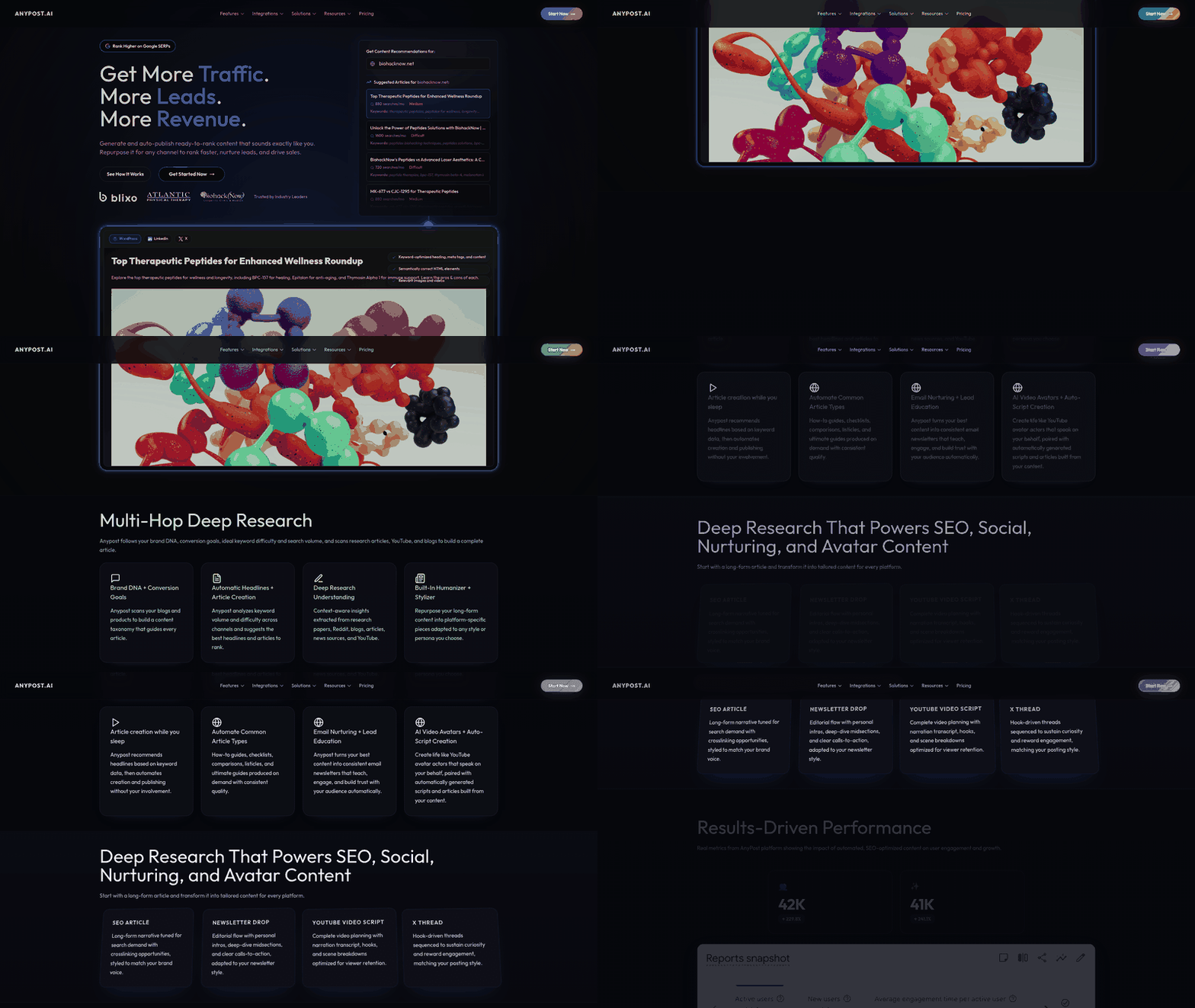
A: The article highlights tools like AnyPost (mentioned in the header image) and others with intuitive dashboards that reduce the need for technical expertise. For small businesses, platforms like Surfer SEO or Clearscope offer affordable plans to automate keyword research and content optimization. Additionally, tools like Screaming Frog (for technical audits) and Ahrefs (for backlink analysis) provide scalable solutions without requiring enterprise-level budgets.
Q: How can SEO automation integrate with existing team workflows?
A: Modern SEO tools are designed to sync with project management platforms (e.g., Asana, Trello) and content management systems (e.g., WordPress). For instance, technical audits can be auto-logged in shared task boards, while content optimization suggestions can be embedded directly into editorial calendars. Automation also supports collaborative workflows by assigning tasks to specific team members and tracking progress in real time, ensuring alignment between SEO and broader marketing strategies.
Q: What are the limitations of SEO automation in 2025?
A: While SEO automation excels at optimizing technical and data-driven tasks, it cannot replace human creativity or strategic decision-making. For example, tools may struggle with subjective aspects like brand storytelling or cultural nuances in content. Additionally, over-reliance on automation without human oversight can lead to generic content or missed opportunities for unique audience engagement. A hybrid approach—combining automation with human expertise—is ideal for long-term success.
Q: How do SEO automation tools improve technical SEO efficiency?
A: These tools automate critical technical tasks such as identifying and fixing broken links, optimizing site speed, and generating sitemaps. They also monitor crawl errors and mobile usability issues in real time, applying fixes like redirecting outdated URLs or compressing images. By addressing these issues proactively, teams reduce the risk of ranking drops and ensure a seamless user experience, which is vital for both search engines and visitors.