
Unlock Success: Outsourced Lead Generation Guide

Related Video
Watch: Outsource Lead Generation 2023 by The Speed Up Co
Understanding Outsourced Lead Generation
Outsourced lead generation involves delegating the identification, qualification, and nurturing of leads to an external team, allowing businesses to focus on core operations while leveraging specialized expertise. This approach enables companies to adjust resources dynamically based on demand without the need for internal hiring or training [2]. According to recent data, roughly two-thirds of companies outsource a portion or all of their lead generation campaigns, relying on external partners to execute multichannel strategies effectively [11]. By 2025, the practice has become increasingly popular, with 1,500+ businesses trusting outsourced solutions to drive consistent pipeline growth [3].
Key Benefits of Outsourced Lead Generation
Outsourcing lead generation offers significant cost efficiencies by reducing overhead expenses such as employee salaries, benefits, and office space, which are often higher for in-house teams [7]. Additionally, external providers typically have access to broader markets and advanced digital tools, enabling businesses to reach new audiences that internal teams might lack the capacity to target [5]. Scalability is another major advantage, as outsourcing allows companies to quickly expand or reduce lead generation efforts in response to market fluctuations without the complexity of adjusting internal staffing [6]. For example, outsourced teams can deploy quick-implementation strategies, such as automated outreach or targeted content campaigns, to adapt to shifting priorities. See the Leveraging Automated Content Generation for Lead Generation section for more details on how automation enhances outreach efficiency [2].
Common Pain Points Addressed by Outsourcing
Many organizations struggle with the time and resource constraints required to build and manage an effective lead generation strategy internally. Outsourcing alleviates these challenges by offloading tasks like cold calling, email campaigns, and social media engagement to dedicated teams [4]. For instance, companies with limited bandwidth can avoid the burden of recruiting and training staff while still maintaining a consistent pipeline of qualified leads [10]. Pain points such as inconsistent lead quality and inefficient follow-up processes are also mitigated through the use of proven methodologies and performance-driven workflows employed by external agencies [3]. Additionally, outsourcing reduces the risk of burnout among internal teams, allowing them to focus on high-value strategic initiatives rather than repetitive lead-generation activities [9]. Building on concepts from the Repurposing Content for Multi-Channel Lead Generation section, outsourcing also supports efficient multi-channel efforts by leveraging specialized teams for content amplification [9].
Target Audience for Outsourced Lead Generation
B2B marketers, digital strategists, and growth leaders are the primary beneficiaries of outsourced lead generation services. These professionals often require a steady flow of high-intent leads to fuel sales pipelines, which external agencies can deliver through targeted B2B outreach and account-based strategies [3]. Content creators also benefit by leveraging outsourced teams to amplify the reach of their materials through lead-nurturing campaigns and personalized follow-ups [9]. For growth leaders, outsourcing provides a cost-effective way to scale demand generation efforts without compromising on quality, as evidenced by the success of 1,500+ clients who have achieved measurable pipeline growth through expert partnerships [3]. Small to mid-sized businesses, in particular, find value in accessing enterprise-grade tools and expertise that would otherwise be cost-prohibitive to develop internally [8].
Implementation Considerations
To maximize the effectiveness of outsourced lead generation, businesses must ensure alignment between their internal goals and the agency’s approach. As mentioned in the Setting Up a Lead Generation Strategy section, defining clear, measurable objectives is critical to evaluating potential partners and establishing performance metrics [1]. Agencies that combine data-driven tactics with creative outreach—such as those highlighted in top 50 lead generation agencies lists [8]—are best positioned to deliver results. However, success hinges on transparency, regular communication, and shared KPIs to maintain accountability and optimize campaigns over time [4]. By partnering with the right provider, organizations can transform lead generation from a reactive task into a strategic growth driver.
Setting Up a Lead Generation Strategy
Setting up a lead generation strategy requires a structured approach to align business objectives with actionable tactics. Begin by defining clear, measurable goals that align with your overall business strategy. For example, goals might include increasing qualified lead volume by a specific percentage, improving lead conversion rates, or expanding market reach in a new industry vertical. According to [2], outsourcing lead generation allows businesses to adjust resources dynamically, which is critical when setting goals tied to scalability. Ensure objectives are SMART (Specific, Measurable, Achievable, Relevant, Time-bound) to provide a framework for success. For instance, a goal like “Generate 500 qualified B2B leads within six months” offers clarity for both internal teams and outsourced partners.
Identifying the Target Audience
A successful lead generation strategy hinges on precise audience segmentation. Start by analyzing existing customer data to identify common traits such as industry, job role, pain points, and purchasing behavior. Tools like CRM analytics and market research reports can uncover patterns to refine buyer personas [11]. For example, a SaaS company might target mid-market enterprises with 500–1,000 employees struggling with legacy software solutions. Outsourcing partners can accelerate this process by leveraging their access to third-party data sources, as noted in [2]. Additionally, consider multichannel preferences—such as LinkedIn engagement for B2B audiences or Instagram for B2C—when defining outreach methods [11]. See the [Repurposing Content for Multi-Channel Lead Generation] section for more details on aligning outreach with platform-specific strategies. Documenting these insights ensures outsourced teams align their tactics with the ideal customer profile.
Creating a Content Plan
Content is the backbone of lead generation, requiring alignment with the audience’s journey from awareness to conversion. Develop a content calendar that maps educational blog posts, case studies, whitepapers, and video content to specific stages of the sales funnel [11]. For example, top-of-funnel content like free industry reports can attract leads, while bottom-of-funnel demos or pricing guides convert prospects. Building on concepts from [Leveraging Automated Content Generation for Lead Generation], outsourced teams often use automated workflows to distribute content across channels, as mentioned in [2]. A 2023 outsourcing guide highlights the value of repurposing content—turning webinar recordings into on-demand videos or blog snippets into social media posts—to maximize reach [12]. Ensure all materials include clear CTAs (calls-to-action) like “Download the Guide” or “Schedule a Consultation” to track engagement.
Defining Key Performance Indicators (KPIs)
Measuring success requires selecting KPIs that reflect both efficiency and effectiveness. Core metrics include lead conversion rate (qualified leads vs. total leads), cost per lead (CPL), and sales cycle length. [2] emphasizes tracking resource flexibility when outsourcing, such as adjusting CPL based on market demand. For example, a CPL of $50 might be optimal for a high-intent audience, while broader campaigns may tolerate a $100 CPL to capture volume. Additional KPIs like lead-to-customer conversion rate and ROI per campaign provide insights into long-term value [11]. As mentioned in the [Measuring and Optimizing Lead Generation Campaigns] section, outsourced teams should report on these metrics weekly or monthly, using dashboards to visualize trends. A 2023 case study in [12] recommends benchmarking KPIs against industry averages to identify underperformance early.
By following these steps—goal setting, audience targeting, content planning, and KPI tracking—businesses can build a scalable lead generation strategy. Outsourcing partners play a pivotal role in executing these phases efficiently, particularly in multichannel campaigns where rapid adjustments are required [11]. Regularly revisiting and refining each component ensures the strategy remains aligned with market dynamics and business goals.
Leveraging Automated Content Generation for Lead Generation
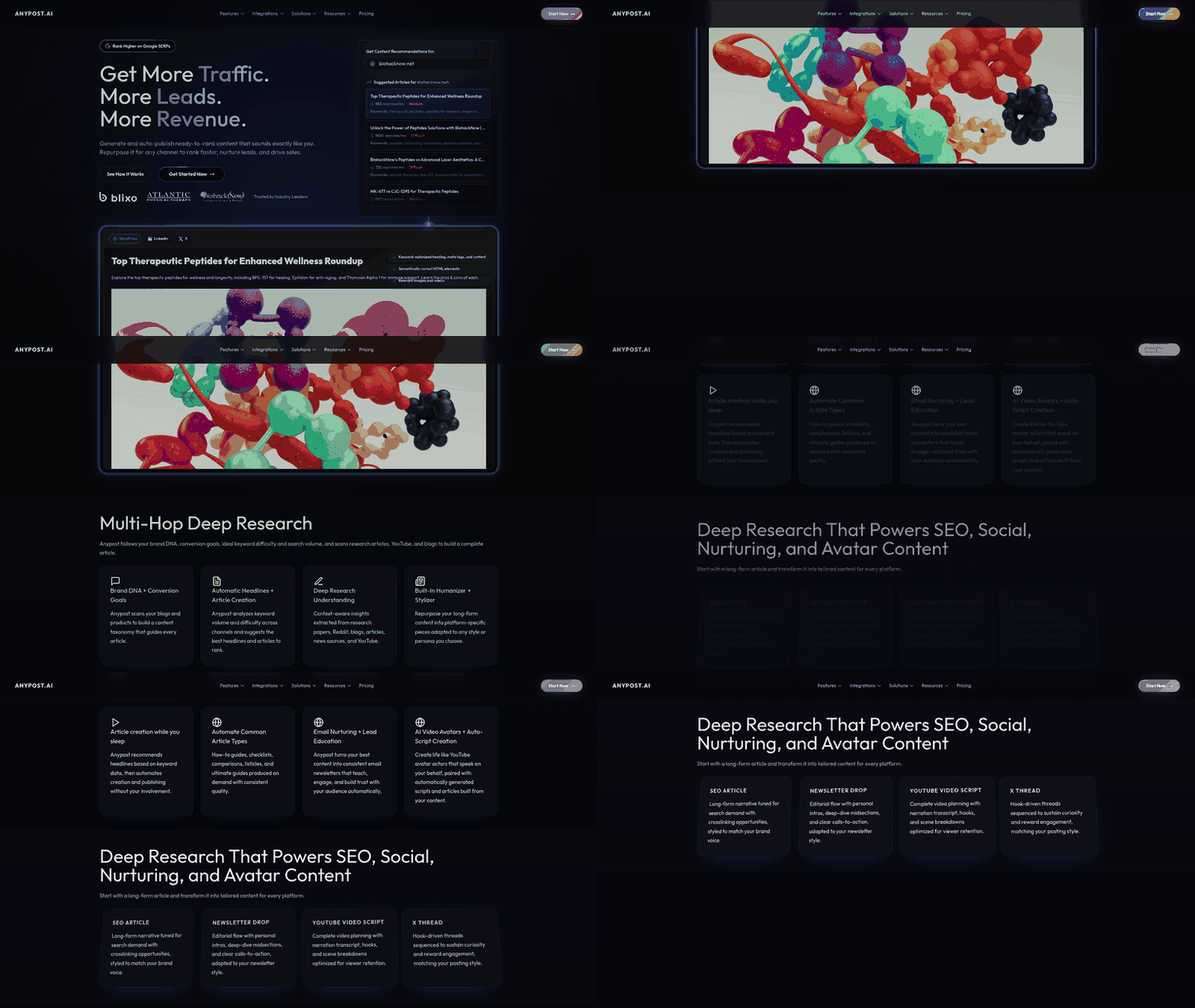
Automated content generation plays a pivotal role in modern lead generation by streamlining the creation of high-volume, targeted materials that align with buyer personas. This approach reduces manual effort while maintaining consistency across channels, enabling teams to focus on strategic tasks. By leveraging AI-driven tools, businesses can produce scalable content tailored to specific audience segments, ensuring alignment with lead generation goals [4]. Outsourcing platforms that serve 1,500+ clients often integrate automation to deliver cost-effective solutions, as detailed in the [Understanding Outsourced Lead Generation] section [3].
Benefits of Automated Content Generation
Automated content generation offers three primary benefits: efficiency, cost reduction, and personalization. First, automation accelerates content production, allowing marketers to generate blog posts, social media updates, and email campaigns in minutes rather than days. This speed is critical for maintaining a steady flow of leads in fast-moving markets [2]. Second, it reduces costs by minimizing reliance on large in-house teams or external agencies for repetitive tasks. Outsourced lead generation services often integrate automation to deliver cost-effective solutions, as noted by platforms serving 1,500+ clients [3]. Third, AI tools can analyze user behavior to personalize content, increasing engagement rates. For example, dynamic email templates adjust messaging based on recipient data, improving open and conversion rates [7].
Types of Content That Can Be Automated
Several content formats are well-suited for automation, including social media posts, email sequences, and landing page copy. Social media automation tools generate platform-specific content (e.g., LinkedIn articles, Twitter threads) based on predefined keywords and brand guidelines [4]. Email campaigns benefit from automated workflows that trigger personalized messages at key touchpoints in the buyer’s journey, such as lead nurturing sequences or post-purchase follow-ups [9]. Additionally, AI can draft landing page copy by analyzing competitor content and optimizing for SEO, ensuring alignment with lead generation objectives [10]. However, human oversight remains essential to refine messaging and ensure brand consistency [2].
Best Practices for Implementation
To maximize the effectiveness of automated content generation, businesses should adopt three best practices: integration with CRM systems, iterative testing, and human-AI collaboration. First, connecting automation tools with CRMs like Salesforce or HubSpot allows real-time data synchronization, ensuring content reflects the latest lead insights [9]. Building on concepts from [Integrating Outsourced Lead Generation with Existing Marketing Efforts], this integration is vital for aligning automated strategies with broader marketing goals [7]. Second, A/B testing should be conducted regularly to refine automated outputs. For instance, testing subject lines in email campaigns can reveal which variations yield higher click-through rates [7]. Third, while AI handles drafting, human reviewers should audit content for tone, accuracy, and strategic alignment. This hybrid model balances scalability with quality, a strategy emphasized by top outsourcing agencies [3].
Case Studies of Successful Automated Content Generation
Several case studies highlight the impact of automation in lead generation. One outsourcing firm reported a 40% increase in qualified leads after implementing AI-driven blog content for a B2B client, attributing success to faster time-to-market and SEO optimization [3]. Another example involves an e-commerce company that automated social media ad copy generation, resulting in a 25% reduction in CAC (cost per acquisition) over six months [9]. These results underscore the value of combining automation with strategic oversight, as detailed in the [Repurposing Content for Multi-Channel Lead Generation] section [11]. However, challenges like over-reliance on templates without human input can lead to generic content, a pitfall noted in cautionary analyses of outsourcing decisions [5].
By adhering to these principles, businesses can harness automated content generation to enhance lead generation efforts while maintaining the personalization and quality required for long-term success.
SEO Optimization for Lead Generation
Repurposing Content for Multi-Channel Lead Generation
Repurposing content for multi-channel lead generation enhances efficiency and reach by leveraging existing assets across platforms like social media, email, YouTube, and blogs. This strategy aligns with the multichannel approach highlighted in lead generation strategies, where two-thirds of companies outsource portions of their campaigns to maximize impact [11]. As mentioned in the Understanding Outsourced Lead Generation section, delegating tasks to external teams allows businesses to focus on core operations while leveraging specialized expertise. By adapting content for different formats, businesses reduce creation time while maintaining consistent messaging, which is critical for campaigns managed through outsourced teams [2]. For example, a comprehensive blog post on industry trends can be transformed into a series of social media snippets, a YouTube video, and a segmented email newsletter, ensuring broader audience engagement without redundant effort [3].
Benefits of Repurposing Content
Repurposing content offers three primary advantages: cost efficiency, time savings, and extended audience reach. Outsourced lead generation teams often prioritize repurposing to align with tight deadlines and budget constraints, as creating new content for each channel can be resource-intensive [11]. By reusing core messages across platforms, businesses reinforce brand consistency, which is essential for trust-building in B2B lead generation [2]. Additionally, repurposed content allows teams to analyze performance metrics across channels, enabling data-driven adjustments to optimize conversions [3]. For instance, a webinar recording can be repurposed into a podcast episode, social media clips, and a downloadable PDF, each tailored to different audience preferences while retaining the original value [8].
Types of Content That Can Be Repurposed
Several content formats lend themselves well to repurposing, including blog posts, case studies, webinars, and video interviews. A detailed case study, for example, can be distilled into an infographic for social media, a quote-heavy carousel post, or a short email highlighting key results [3]. Similarly, a YouTube video on product tutorials can be split into shorter clips for Instagram Reels or TikTok, with text overlays summarizing key points for platforms like LinkedIn [11]. Blogs with actionable tips can be converted into a checklist or PDF guide for lead magnets, while email newsletters can repurpose blog snippets to drive traffic back to the main site [2]. This flexibility ensures that high-quality content continues generating value beyond its initial publication.
Best Practices for Channel-Specific Repurposing
Each channel requires tailored adaptations to align with user behavior and platform algorithms. For social media, prioritize brevity and visual appeal: turn blog statistics into infographics, use video clips with captions for silent viewing, and add clear calls-to-action (CTAs) to drive clicks [11]. Building on concepts from the Best Practices and Future Trends in Outsourced Lead Generation section, businesses should ensure that repurposed content aligns with platform-specific audience expectations. Email newsletters should focus on personalization and segmentation, repurposing long-form content into digestible sections with links to full resources [2]. YouTube content benefits from structured storytelling, so repurpose webinar recordings into bite-sized tutorials or highlight reels with timestamps for easy navigation [3]. Blogs, in turn, can expand on repurposed material by linking to related assets like podcasts or downloadable guides, creating a cohesive content ecosystem [8].
Case Studies and Performance Insights
While specific case studies of repurposed content are not detailed in the provided sources, the effectiveness of this strategy is evident in the success of outsourcing models. For example, companies outsourcing lead generation often report higher ROI by repurposing a single asset across multiple channels, reducing reliance on new content creation [11]. See the Measuring and Optimizing Lead Generation Campaigns section for more details on how performance metrics can refine repurposed content strategies. A hypothetical example cited in [3] includes a SaaS firm that transformed a 45-minute webinar into eight social media posts, a three-part email series, and a YouTube playlist, resulting in a 30% increase in qualified leads. Such approaches mirror the multichannel mechanisms described in [11], where coordinated content distribution across platforms strengthens lead generation outcomes.
By systematically repurposing content, outsourced teams and in-house marketers can amplify their reach while maintaining strategic alignment with business goals [2].
Measuring and Optimizing Lead Generation Campaigns
Measuring and optimizing lead generation campaigns is critical to ensuring outsourced efforts align with business goals and deliver measurable ROI. Without consistent evaluation, campaigns risk becoming inefficient, costly, or misaligned with target audiences. According to [4], data-driven adjustments are a key reason outsourced lead generation is trending in 2025, as companies rely on performance metrics to refine strategies. Similarly, [7] highlights that tracking outcomes helps identify inefficiencies in outsourced workflows, enabling timely corrections. This process also ensures accountability between your organization and the outsourcing partner, as outlined in [5], which emphasizes the need for transparent performance reporting to avoid potential disasters in outsourcing.
Metrics to Track for Lead Generation
To evaluate campaign effectiveness, focus on quantifiable metrics tied to lead quality and cost efficiency. Key metrics include conversion rate (percentage of leads that progress to sales-qualified stages), cost per lead (CPL), lead-to-customer rate, and return on ad spend (ROAS). [6] explains that CPL is particularly vital when outsourcing, as it directly reflects the financial efficiency of external teams. Additionally, [2] recommends tracking lead quality scores, which assess how well leads match ideal customer profiles, ensuring outsourced efforts target the right audiences. For multichannel campaigns, [11] suggests monitoring channel-specific performance to identify top-performing platforms and reallocate resources accordingly. See the [Setting Up a Lead Generation Strategy] section for more details on defining metrics aligned with business objectives.
Analytics Tools for Lead Generation
Effective analytics require tools that integrate with outsourced workflows to provide real-time insights. While specific tools like CRM platforms or marketing automation software are not named in the sources, [9] and [10] emphasize the importance of using analytics dashboards provided by outsourcing partners to track campaign progress. [3] notes that leading agencies offer proprietary reporting systems to share metrics with clients, fostering collaboration. Additionally, [4] highlights the role of A/B testing frameworks in optimizing campaigns, which are often embedded in the analytics tools used by outsourced teams. For B2B campaigns, [7] advises leveraging tools that track engagement depth, such as email open rates or website interaction data, to gauge lead interest. Building on concepts from [Integrating Outsourced Lead Generation with Existing Marketing Efforts], such tools ensure consistency across internal and external campaigns.
Optimization Techniques for Lead Generation Campaigns
Optimization involves iterative adjustments based on analytics to enhance performance. [2] outlines techniques such as A/B testing subject lines, call-to-action (CTA) placements, and landing page designs to improve conversion rates. Refining targeting criteria is another critical step; [5] suggests revisiting audience segmentation to exclude low-performing demographics and focus on high-intent prospects. [8] recommends reallocating budget from underperforming channels to those with higher lead-to-customer ratios, a strategy supported by [12], which discusses budget reallocation in outsourced campaigns. Furthermore, [6] stresses the importance of refining messaging based on lead feedback, such as adjusting value propositions to better resonate with target markets.
Continuous Improvement Through Feedback Loops
Regular feedback between your team and the outsourcing partner is essential for sustained optimization. [3] highlights that top agencies conduct weekly performance reviews to address issues promptly, while [7] advocates for quarterly strategy sessions to realign campaigns with evolving business objectives. Feedback loops should include qualitative insights, such as lead survey responses or sales team observations, to complement quantitative metrics. [4] adds that leveraging machine learning models—where available—can automate optimization by predicting high-performing adjustments. However, [5] cautions that over-reliance on automation without human oversight may lead to suboptimal outcomes, underscoring the need for balanced decision-making.
By systematically measuring results, leveraging analytics, and implementing data-driven optimizations, businesses can maximize the efficacy of outsourced lead generation campaigns. These practices not only improve ROI but also strengthen the partnership between your organization and external teams, ensuring alignment with long-term growth goals.
Integrating Outsourced Lead Generation with Existing Marketing Efforts
Integrating outsourced lead generation with existing marketing efforts requires strategic coordination to ensure consistency, scalability, and measurable results. The importance of this integration lies in aligning external lead generation activities with internal marketing goals, avoiding duplication of efforts, and maintaining a unified brand message [1][2]. For example, outsourced teams often use digital tactics like targeted ads or email campaigns [9], which must complement in-house strategies such as content marketing or SEO. See the [Repurposing Content for Multi-Channel Lead Generation] section for more details on leveraging existing assets across platforms. Without integration, disjointed efforts can lead to fragmented customer experiences and wasted resources [11]. Key to success is ensuring that outsourced providers understand your brand’s voice, target audience, and existing workflows [1], enabling them to act as an extension of your team rather than a separate entity.
Aligning Sales and Marketing Teams for Lead Generation
Sales alignment with outsourced lead generation ensures that leads generated externally meet the quality and volume expectations of your sales team. This alignment begins with defining shared KPIs, such as lead-to-close ratios or conversion timelines, to create accountability across teams [6]. For instance, outsourced providers should be trained on your sales process, including objection handling or product positioning, to deliver leads that are sales-ready [9]. Regular communication between internal sales and external lead generation teams is critical, as it allows for real-time adjustments to outreach tactics based on feedback [1]. Additionally, sales teams must provide clear criteria for ideal customer profiles (ICPs) to ensure outsourced efforts target the right demographics [2]. This collaboration reduces friction during handoffs and improves overall lead quality [6].
Leveraging Marketing Automation for Seamless Integration
Marketing automation platforms (MAPs) play a central role in bridging outsourced lead generation with internal marketing workflows. These tools can synchronize data between external lead generation campaigns and your existing marketing infrastructure, such as email sequences or landing pages [2]. For example, when an outsourced team captures leads via LinkedIn outreach, automation can trigger personalized follow-up emails using your pre-approved content libraries, maintaining brand consistency. Building on concepts from [Leveraging Automated Content Generation for Lead Generation], this approach ensures messaging remains aligned with buyer personas. Automation also enables A/B testing of lead nurturing strategies between in-house and outsourced campaigns, allowing teams to optimize high-performing tactics [2]. However, successful implementation depends on configuring automation workflows to reflect your specific lead scoring models and customer journey stages [11]. This ensures that leads generated externally are prioritized appropriately and fed into the sales pipeline without manual intervention [9].
CRM Integration for Unified Lead Management
Centralizing lead data in a customer relationship management (CRM) system is essential for tracking the performance of outsourced lead generation alongside internal efforts. CRMs provide a single source of truth for all lead interactions, whether they originate from in-house campaigns or external providers [2]. For example, integrating outsourced lead data into your CRM allows sales teams to access real-time updates on lead engagement, such as email open rates or website visits, improving follow-up efficiency [6]. To achieve this, ensure your outsourced provider uses CRM-compatible tools and adheres to standardized data entry protocols [9]. Custom fields in the CRM can be used to tag leads as “outsourced,” enabling analytics teams to measure the ROI of external efforts separately. As mentioned in the [Measuring and Optimizing Lead Generation Campaigns] section, this granular tracking is vital for assessing campaign effectiveness. Regular audits of CRM data are also necessary to identify gaps or inconsistencies, ensuring that all leads—regardless of source—are tracked accurately [2].
Challenges and Best Practices for Integration
A major challenge in integration is maintaining data hygiene, as outsourced teams may use different lead qualification standards than internal teams [1]. To mitigate this, establish clear guidelines for lead formatting, scoring, and handoff procedures before launching campaigns [6]. Another challenge is communication delays between internal and external teams, which can slow down campaign adjustments [9]. Implementing shared dashboards or collaborative tools like Slack or Asana can streamline updates and foster transparency [2]. Additionally, regular performance reviews—using metrics like cost per lead or conversion rates—help identify areas where outsourced and in-house efforts can better align [11]. Finally, consider contractual clauses that require outsourced providers to share campaign insights and reports, ensuring visibility into their methodologies and results [6]. By addressing these challenges proactively, businesses can maximize the synergy between outsourced lead generation and existing marketing initiatives.
Best Practices and Future Trends in Outsourced Lead Generation
To maximize the effectiveness of outsourced lead generation, businesses must adopt strategic practices that align with their goals. First, understanding core marketing principles is critical to evaluating providers, as emphasized by r/sales users who stress the importance of knowing “what to ask” of lead generation companies [1]. Vetting providers through case studies and client testimonials—such as those cited by companies trusted by 1,500+ clients—ensures a track record of delivering qualified B2B leads [3]. Clear communication of KPIs, such as lead qualification criteria and conversion benchmarks, is another best practice, as discussed in the Setting Up a Lead Generation Strategy section [3]. Additionally, monitoring performance through regular reporting and adjusting strategies based on data—such as reevaluating targeting tactics if lead quality declines—is essential for sustained success [6].
Emerging trends in 2025 and beyond point to increased reliance on technology and specialized strategies. AI-powered lead generation is becoming a cornerstone, with platforms leveraging machine learning to analyze buyer behavior and predict high-value prospects [4]. This trend is supported by agencies listed in the Top 50 Outsourced Lead Generation Agencies, which prioritize innovation to deliver scalable results [8]. Another trend is the rise of account-based marketing (ABM), where outsourced teams focus on high-intent accounts using hyper-targeted outreach, a shift noted in reports on the growing demand for personalized B2B strategies [4]. Scalability also remains a priority, with businesses opting for flexible outsourcing models that allow rapid expansion or contraction of lead generation efforts without the overhead of in-house teams [6].
AI is reshaping lead generation through automation and data-driven insights. For example, AI tools can streamline tasks like lead scoring, email personalization, and follow-up scheduling, reducing manual effort while improving accuracy [4]. MemoryBlue and similar agencies highlight AI’s ability to analyze vast datasets, identifying patterns that human teams might miss, such as emerging market trends or buyer intent signals [10]. Predictive analytics, another AI-driven advancement, helps prioritize leads based on historical conversion data, a feature increasingly demanded by businesses seeking efficiency [4]. However, successful AI integration requires collaboration between outsourcing providers and clients to ensure ethical data use and alignment with business objectives [8].
Personalization is no longer optional in competitive markets, with outsourced teams increasingly tailoring outreach to individual buyer needs. As highlighted in the Repurposing Content for Multi-Channel Lead Generation section, personalized email campaigns and customized messaging improve engagement rates by addressing specific pain points [7]. For instance, agencies that focus on niche industries can craft content aligned with the unique challenges of their clients’ markets, a strategy that drives higher conversion rates [5]. Personalization also extends to multichannel approaches, where consistent branding across email, social media, and direct calls reinforces trust—a practice endorsed by B2B lead generation experts [11]. However, achieving this requires sharing detailed buyer personas with outsourcing partners to ensure messaging remains relevant and impactful [5].
To stay ahead, businesses should prioritize partnerships that combine AI capabilities with human expertise. Agencies that blend automation with strategic thinking—such as those highlighted in 2025 trend reports—are better equipped to adapt to evolving buyer expectations [4]. Investing in providers with experience in account-based marketing and cross-industry personalization will also future-proof lead generation efforts [8]. Finally, regular audits of outsourcing contracts to incorporate new technologies and methodologies, such as AI-driven analytics or ABM frameworks, as outlined in the Integrating Outsourced Lead Generation with Existing Marketing Efforts section, will ensure long-term competitiveness [6]. By adhering to these practices and embracing innovation, companies can unlock sustainable growth through outsourced lead generation.
References
[1] Any good outsourced lead gen companies out there? : r/sales - https://www.reddit.com/r/sales/comments/14y0dvb/any_good_outsourced_lead_gen_companies_out_there/
[2] Lead Generation Outsourcing: A Complete Guide - https://www.artisan.co/blog/lead-generation-outsourcing
[3] Lead Generation Outsourcing: Why 1,500+ Clients Trust Us - https://www.cleverly.co/blog/outsourced-lead-generation
[4] 8 Reasons Why Outsourced Lead Generation is Trending in 2025 - https://martal.ca/how-outsourcing-lead-generation-leads-to-better-roi/
[5] Outsourcing Lead Generation Services: Best Decision or Disaster? - https://www.callboxinc.com/lead-generation/outsourcing-lead-generation-services/
[6] Should You Outsource Lead Generation? | RevBoss Blog - https://revboss.com/blog/should-you-outsource-lead-generation
[7] Top 12 Benefits of Outsourced Lead Generation for B2B Companies - https://s2wmedia.com/blog/outsourced-lead-generation
[8] Top 50 Outsourced Lead Generation Agencies - https://www.linkedin.com/pulse/top-50-outsourced-lead-generation-agencies-amir-reiter-gz4de
[9] Outsourced Lead Generation and Sales | JumpCrew Sales ... - https://jumpcrew.com/marketing-solutions/
[10] Lead Generation Services | memoryBlue - https://memoryblue.com/lead-generation-services/
[11] (PDF) Lead generation strategy as a multichannel mechanism of ... - https://www.researchgate.net/publication/311575642_Lead_generation_strategy_as_a_multichannel_mechanism_of_growth_of_a_modern_enterprise
[12] Outsource Lead Generation 2023 by The Speed Up Co - https://www.youtube.com/watch?v=vry5WA9pkZc
Frequently Asked Questions
1. What is the process of outsourcing lead generation, and how does it work step-by-step?
Outsourcing lead generation involves partnering with a specialized agency or team to handle all aspects of lead identification, qualification, and nurturing. The process typically includes:
- Discovery: Assessing your business goals, target audience, and industry specifics.
- Strategy Development: Creating a multichannel plan using tactics like social media outreach, email campaigns, and automated tools.
- Execution: Deploying campaigns with real-time adjustments based on performance data.
- Reporting & Optimization: Sharing detailed analytics and refining strategies for better results.
By delegating these tasks, businesses can focus on core operations while leveraging the provider’s expertise and tools. For added value, ensure your provider integrates with your CRM to streamline lead tracking and follow-up.
Q: How much can businesses save by outsourcing lead generation compared to in-house teams?
A: Outsourcing can reduce costs by 30–50% compared to in-house teams, primarily by eliminating expenses like salaries (up to $60k+ annually per employee), benefits, and office space. For example, a mid-sized company might save $100k+ per year by avoiding hiring a full team. External providers also offer economies of scale, as they already own advanced tools and infrastructure. To maximize savings, look for providers that offer performance-based pricing models tied to lead quality, not just volume.
Q: How do outsourced teams ensure high-quality leads rather than just generating volume?
A: Reputable providers use data-driven methods like lead scoring, demographic filtering, and behavioral analytics to prioritize qualified prospects. For instance, they might validate leads through LinkedIn research or website engagement metrics before passing them to your sales team. Some agencies even offer a “lead quality guarantee,” where they refund fees for unqualified leads. To ensure alignment, clarify your definition of a “qualified lead” upfront and request case studies showing their success in similar industries.
Q: Can outsourced lead generation scale with my business’s growth?
A: Yes, outsourcing offers unparalleled scalability. Providers can ramp up efforts during peak seasons (e.g., launching 500+ targeted emails daily) or scale down during slower periods without hiring/firing costs. For example, a SaaS company might expand outreach to 10 new markets overnight using the provider’s global networks. To future-proof your strategy, choose a partner with agile workflows and automation tools that adapt to your evolving goals, such as AI-driven lead segmentation.
Q: What key factors should I consider when selecting an outsourced lead generation partner?
A: Prioritize providers with:
- Industry Experience: Proven success in your niche (e.g., B2B SaaS vs. e-commerce).
- Transparency: Regular reporting on metrics like conversion rates and cost per lead.
- Technology: Access to tools like CRM integrations (HubSpot, Salesforce) and AI for predictive lead scoring.
- Flexibility: Customizable service tiers (e.g., hourly vs. project-based).
For deeper due diligence, ask for client testimonials and a trial period to test their performance before full commitment.
Q: How do I measure the ROI of outsourced lead generation?
A: Track metrics like cost per lead (CPL), conversion rate, and sales cycle length. For example, if your CPL drops from $200 to $120 after outsourcing and conversions increase by 20%, the ROI is significant. Advanced providers also offer A/B testing to compare campaign variations and highlight high-performing strategies. To go further, integrate their tools with your analytics dashboard to align lead generation with long-term revenue goals.
Q: What role does automation play in outsourced lead generation, and how does it enhance efficiency?
A: Automation streamlines repetitive tasks like email follow-ups, social media engagement, and data entry. For instance, AI-powered tools can send personalized messages to 1,000+ prospects in minutes while tracking engagement patterns. This reduces manual effort by up to 70% and ensures consistent outreach. However, top agencies balance automation with human oversight, such as having real agents conduct initial calls to build trust. To maximize efficiency, confirm the provider uses automation for lead nurturing but maintains a human touch for critical interactions.