
Unlock Success with Expert SaaS Content Marketing Services

Related Video
Watch: This Is the SMARTEST SaaS Marketing Strategy I’ve Ever Seen… 🤯 by Rob Walling
Section 1: Introduction to SaaS Content Marketing
SaaS content marketing is a specialized strategy designed to attract, engage, and convert target audiences for software-as-a-service businesses. At its core, it involves creating and distributing valuable, data-driven content that addresses the pain points and needs of B2B customers while aligning with business goals such as lead generation, brand authority, and customer retention [2]. This approach is distinct from traditional marketing due to its focus on educational and solution-oriented content, which helps SaaS companies establish trust in a competitive, tech-driven market [1]. By leveraging formats like blog posts, whitepapers, case studies, and video content, SaaS brands can position themselves as thought leaders and guide prospects through the buyer’s journey [12].
Key Benefits of SaaS Content Marketing
Content marketing offers SaaS companies a range of advantages, from accelerating growth to improving customer loyalty. According to 2025 industry insights, strategy-first SaaS companies that prioritize content marketing experience faster growth, stronger customer trust, and longer retention rates compared to competitors who neglect this channel [8]. For example, empathetic and helpful content—such as tutorials, product demos, and customer success stories—directly addresses user challenges, fostering deeper engagement and reducing churn [3]. Additionally, content marketing drives predictable revenue by nurturing leads through the sales funnel. Agencies like Quoleady specialize in optimizing blog content to maximize sign-ups and ROI for SaaS products, demonstrating the direct link between high-quality content and measurable business outcomes [10].
Another critical benefit is the ability to dominate search engine rankings through SEO-aligned content. Data-driven agencies like Growfusely emphasize optimizing content for both search engines and user intent, ensuring that SaaS brands capture organic traffic from highly targeted audiences [1]. See the [Section 4: The Role of SEO Optimization in SaaS Content Marketing] section for more details on how SEO enhances visibility and authority in competitive markets. This is particularly vital in the SaaS sector, where decision-makers often conduct extensive research before committing to a subscription-based service [2]. By consistently publishing authoritative content, companies can improve their visibility in crowded markets and outperform competitors relying solely on paid advertising [11].
Current Trends in SaaS Content Marketing
The landscape of SaaS content marketing is evolving rapidly, driven by advancements in data analytics, AI, and user-centric strategies. One dominant trend is the rise of hyper-personalized content, where companies use customer data to tailor messaging to specific segments. For instance, GrowthRomeo’s full-stack marketing services leverage AI to create dynamic content that adapts to user behavior, driving predictable monthly recurring revenue (MRR) for SaaS clients [13]. Building on concepts from [Section 6: Leveraging AI and SEO Trends for Content Marketing Success], the integration of AI tools enables brands to produce highly targeted and efficient content. Similarly, video content has emerged as a cornerstone of modern strategies, with innovative SaaS brands using explainer videos, webinars, and testimonials to simplify complex offerings and boost conversion rates [12].
Another trend is the emphasis on “content as a feedback loop,” where companies analyze engagement metrics to refine their strategies. Reddit discussions highlight the importance of real-time feedback in content creation, with SaaS marketers iterating on blog posts, social media campaigns, and email sequences based on audience responses [5]. This approach aligns with the success of top-performing SaaS brands, such as the 26 companies profiled in industry analyses, which consistently produce content that balances educational value with actionable insights [4].
Finally, the integration of content marketing with broader growth strategies is gaining traction. Agencies like Campfire Labs and Animalz prioritize aligning content with sales and product teams to ensure cohesive messaging across touchpoints [6][9]. As mentioned in [Section 10: Advanced Content Marketing Strategies for SaaS Companies], this holistic approach enhances brand consistency and optimizes resource allocation, ensuring that every piece of content contributes directly to business objectives like pipeline growth and market expansion [6].
By understanding these fundamentals, benefits, and trends, SaaS companies can build content marketing strategies that drive sustainable growth. The next section will explore actionable steps for developing a data-driven content plan tailored to your SaaS business.
Section 2: Understanding the Challenges of Content Creation
Content creation for SaaS companies is inherently complex, requiring a balance between strategic planning, technical execution, and creative consistency. According to [1], SaaS content marketing agencies prioritize "data-driven content marketing and SEO strategies," which demands extensive time investment to analyze audience metrics, identify keywords, and align content with business goals. This data-centric approach, while effective, often strains internal teams due to the need for continuous research and iterative adjustments. Compounding this challenge is the expertise required to execute SEO optimization. As [7] emphasizes, agencies must demonstrate "expert input" in SEO for SaaS, highlighting the specialized knowledge needed to navigate algorithm updates, competitive keyword landscapes, and technical SEO audits. Without dedicated resources, maintaining visibility in search engine results becomes a significant hurdle. See the [Section 4] section for more details on the role of SEO optimization in SaaS content marketing.
Time Constraints and Strategic Depth
The time-consuming nature of content creation stems from its multifaceted demands. Agencies like Growfusely [1] must coordinate ideation, drafting, editing, and analytics, while also ensuring alignment with broader marketing objectives. For example, a single blog post may require 20–40 hours of work, including competitor analysis, content creation, and performance tracking. Internal teams often lack bandwidth to sustain this pace, leading to inconsistent publishing schedules. [7] reinforces this by noting that hiring an agency with "relevant experience" mitigates time pressures, as professionals can streamline workflows. However, even agencies face limitations when scaling content production across multiple formats (e.g., case studies, whitepapers, and video scripts), underscoring the need for efficient project management tools and collaborative processes. As mentioned in the [Section 3] section, automated content generation can help alleviate some of these time constraints through streamlined workflows.
SEO Optimization: A Technical and Evolving Challenge
SEO optimization remains a critical yet arduous task in SaaS content marketing. [1] explicitly states its focus on "SEO strategies for B2B brands," which involves technical tasks like on-page optimization, backlink building, and schema markup. However, SaaS SEO requires niche expertise due to the industry’s jargon-heavy terminology and high competition for keywords like "cloud solutions" or "AI-driven analytics." [7] further notes that agencies must stay updated on algorithm changes, which can render previous strategies obsolete. For instance, Google’s frequent core updates demand constant recalibration of keyword targeting and content quality. Additionally, technical SEO elements—such as site speed optimization and mobile responsiveness—are non-negotiable for ranking, yet often overlooked by teams without dedicated developers.
Checklist for Effective SEO in SaaS Content
- Conduct monthly keyword research using tools like Ahrefs or SEMrush [1].
- Optimize meta tags, headers, and image alt text with primary keywords [7].
- Audit backlink profiles to identify toxic links and build high-quality referrals [1].
- Ensure mobile-first design and fast page load times for technical SEO compliance [7].
- Create pillar content to dominate long-tail keywords in competitive niches [1].
Maintaining a Consistent Brand Voice
Consistency in brand voice is another major challenge, particularly for SaaS companies targeting enterprise clients. [7] stresses that agencies must "maintain a consistent brand voice," which requires aligning tone and messaging across diverse content formats. For example, a SaaS product’s blog, LinkedIn posts, and customer success stories must reflect the same authoritative yet approachable tone. Growfusely [1] addresses this by tailoring strategies for "B2B brands," where trust-building through uniform messaging is critical. However, achieving consistency demands rigorous style guides, team training, and AI-assisted tools to flag deviations in tone. Building on concepts from [Section 8], leveraging persona-driven frameworks can further enhance brand voice alignment across channels.
Challenges vs. Solutions Table
| Challenge | Solution | Source |
|---|---|---|
| Time required for content production | Outsource to agencies with proven workflows [7] | [7] |
| Keeping up with SEO algorithm changes | Partner with agencies specializing in SaaS SEO [1] | [1] |
| Inconsistent brand voice across content | Implement brand style guides and AI tone-checkers [1] | [1] |
The Role of Expert Agencies in Mitigating Challenges
Expert agencies like those highlighted in [6] and [9] offer structured solutions to these challenges. By centralizing tasks such as SEO audits, content calendaring, and brand governance, they reduce the operational burden on internal teams. For instance, an agency might use project management platforms like Notion to automate content reviews or leverage AI tools like Surfer SEO for real-time optimization suggestions. However, [7] cautions that agencies must demonstrate "industry-specific experience," as generic marketing approaches often fail to address SaaS nuances like freemium conversion funnels or enterprise sales cycles.
In conclusion, overcoming content creation challenges requires a blend of strategic expertise, technical proficiency, and disciplined processes. While time constraints, SEO complexity, and brand consistency are significant barriers, leveraging specialized agencies can provide scalable solutions. By adhering to data-driven frameworks and maintaining agility in response to market shifts, SaaS companies can transform these challenges into competitive advantages.
Section 3: Automated Content Generation and Its Benefits
Automated content generation refers to the use of artificial intelligence and software tools to streamline the creation of marketing materials, such as blog posts, social media updates, and email campaigns. This approach is particularly valuable in SaaS marketing, where demand for consistent, high-quality content is high, and resources are often constrained. By leveraging data-driven strategies, automated systems can analyze audience preferences and market trends to produce tailored content that aligns with business goals [1]. For example, agencies like Growfusely specialize in integrating automation into their workflows to deliver scalable content solutions for B2B and tech companies [1]. This method not only accelerates production but also ensures alignment with SEO best practices, a critical factor for SaaS brands competing in crowded digital spaces [1]. As highlighted in the [Section 4: The Role of SEO Optimization in SaaS Content Marketing] section, SEO integration is essential for maximizing visibility and targeting the right audiences.
Key Benefits of Automated Content Generation
Automated content generation offers several advantages for SaaS companies aiming to optimize their marketing efforts. First, it significantly reduces time-to-market by handling repetitive tasks, such as drafting social media posts or generating product descriptions. This efficiency is crucial for maintaining a steady content pipeline, which is highlighted as a core component of GrowthRomeo’s full-stack SaaS marketing services for driving predictable monthly recurring revenue (MRR) [13]. Second, automation enhances consistency in messaging and tone across platforms, a challenge often faced by teams managing multiple content channels [1]. Third, by analyzing user behavior and engagement metrics, automated tools can generate insights that inform content strategy, ensuring topics resonate with target audiences [1]. For instance, data-driven automation enables SaaS brands to prioritize content that addresses specific pain points, improving lead conversion rates [1]. Finally, automation reduces reliance on manual effort, allowing marketing teams to focus on creative and strategic initiatives rather than executional tasks [1].
Examples of Automated Content Generation in Practice
While specific tools are not explicitly named in the provided sources, the services of SaaS marketing agencies like Growfusely and GrowthRomeo implicitly incorporate automation. Growfusely’s focus on data-driven content marketing suggests the use of AI-powered platforms to analyze competitor activity, keyword trends, and audience sentiment [1]. Similarly, GrowthRomeo’s emphasis on high-velocity pipeline generation indicates automated systems for creating and distributing content at scale [13]. These agencies likely employ tools that integrate with CRM platforms and analytics dashboards to generate real-time reports and adjust content strategies dynamically [1]. For example, automated workflows might include:
- Social media scheduling tools that publish posts based on optimal engagement times.
- AI copywriters that draft blog outlines or product landing page text.
- SEO plugins that suggest keyword optimizations during content creation [1]. As discussed in the [Section 6: Leveraging AI and SEO Trends for Content Marketing Success] section, these tools leverage cutting-edge AI and SEO advancements to enhance content effectiveness.
Overcoming Content Creation Challenges with Automation
SaaS companies often struggle with content creation due to limited budgets, evolving customer needs, and the pressure to maintain a constant output. Automated content generation addresses these challenges by scaling production without compromising quality. For instance, automation can repurpose existing content—such as converting webinar recordings into blog posts or infographics—saving time while maximizing ROI [1]. See the [Section 5: Content Repurposing Strategies for Maximum Reach] section for more details on how repurposing can extend the lifecycle of content. It also mitigates the risk of burnout among content creators by delegating routine tasks to AI systems [1]. Furthermore, automation supports A/B testing of headlines, CTAs, and formats, enabling data-informed refinements to improve performance [13]. This iterative process aligns with the strategic execution emphasized by GrowthRomeo, where alignment between content and business objectives is critical [13].
Limitations and Strategic Integration
Despite its benefits, automated content generation is not a standalone solution. Human oversight remains essential to ensure creativity, brand voice, and contextual relevance. As noted in the sources, agencies like Growfusely combine automation with expert analysis to deliver nuanced strategies that AI alone cannot achieve [1]. Additionally, automation tools require training on brand-specific guidelines to avoid generic or off-message outputs. To maximize effectiveness, SaaS marketers should integrate automation into a broader content ecosystem that includes manual contributions from writers, designers, and subject-matter experts [1]. This hybrid approach balances efficiency with originality, ensuring content meets both quantitative and qualitative standards.
Conclusion: Enhancing SaaS Marketing Through Automation
By automating content generation, SaaS companies can achieve greater scalability, consistency, and data-driven decision-making. The integration of automation into services like those offered by Growfusely and GrowthRomeo demonstrates its potential to transform content marketing from a reactive task into a strategic asset [1][13]. However, success depends on thoughtful implementation, where automation complements—not replaces—human expertise. As the SaaS landscape becomes increasingly competitive, leveraging automation will be a key differentiator for brands aiming to maintain a strong market presence.
Section 4: The Role of SEO Optimization in SaaS Content Marketing
SEO optimization is a cornerstone of SaaS content marketing, enabling companies to enhance visibility, attract targeted traffic, and establish authority in competitive markets. For SaaS brands, which often operate in highly technical and crowded niches, SEO ensures that their solutions are discoverable by users actively seeking tools to solve specific problems. Growfusely, a specialized SaaS content marketing agency, emphasizes the need for data-driven SEO strategies tailored to B2B and tech companies, leveraging keyword research, on-page optimization, and content alignment with user intent [1]. This approach is reinforced by insights from the r/SaaS community, which stresses the importance of empathizing with customer needs to create content that resonates and ranks [3]. The challenges of balancing strategic planning and technical execution, as discussed in the [Section 2] section, further highlight the necessity of precise SEO alignment.
Why SEO Optimization Matters for SaaS Companies
SaaS businesses face unique challenges in content marketing, including competing with established players and educating audiences about complex solutions. SEO addresses these challenges by:
- Improving organic visibility to reduce reliance on paid ads.
- Driving high-intent traffic from users searching for specific SaaS solutions.
- Building trust through authoritative, well-optimized content.
Growfusely’s focus on data-driven SEO strategies highlights the need for SaaS companies to move beyond generic tactics, instead analyzing search trends and competitor backlinks to identify opportunities [1]. Meanwhile, the r/SaaS community underscores that SEO success hinges on understanding customer pain points, ensuring content addresses real-world use cases [3].
Keyword Research and Planning
Keyword research forms the foundation of effective SEO for SaaS content. It involves identifying terms and phrases that align with the SaaS product’s value proposition and the audience’s search intent. Growfusely’s methodology likely includes tools to analyze keyword volume, competition, and semantic variations, ensuring content targets both short-tail and long-tail queries [1]. For example, a project management SaaS tool might prioritize keywords like “best project management software for remote teams” over generic terms like “project management tools.”
The r/SaaS community adds a critical perspective: keyword selection must align with user needs. Instead of chasing high-volume keywords with low relevance, SaaS marketers should focus on terms that reflect the audience’s journey—such as “how to automate workflows” for early-stage buyers or “scaleable SaaS solutions for enterprise” for decision-makers [3]. This approach ties directly to the persona-driven strategies outlined in the [Section 8] section, which emphasizes aligning content with audience-specific language and priorities.
Key Steps in Keyword Research
- Audit competitors: Analyze the keywords driving traffic to leading SaaS competitors.
- Map buyer personas: Align keywords with stages of the customer journey (awareness, consideration, decision).
- Prioritize intent: Distinguish between informational, navigational, and transactional search queries.
On-Page Optimization Techniques
Once keywords are identified, on-page optimization ensures content is structured to maximize search engine rankings and user engagement. Techniques recommended by Growfusely likely include:
- Optimizing meta tags: Crafting title tags and meta descriptions with primary keywords and clear value propositions.
- Structuring content with headers: Using H1, H2, and H3 tags to create a logical hierarchy and highlight key points.
- Incorporating structured data: Implementing schema markup to enhance rich snippets and improve click-through rates.
The r/SaaS community reinforces that content quality is non-negotiable. Even with perfect technical optimization, thin or poorly researched content will fail to engage users. SaaS marketers should prioritize depth, originality, and actionable insights—such as case studies, how-to guides, or comparative analyses—while naturally integrating keywords [3].
Checklist for On-Page SEO Best Practices
- Include primary keyword in the first 100 words.
- Use bold or italic formatting to highlight key terms.
- Optimize image alt text with relevant keywords.
- Internal link to related blog posts or product pages.
- Ensure page load speed and mobile responsiveness.
Challenges and Considerations
While SEO is critical, SaaS marketers must navigate evolving algorithms and shifting user behavior. Growfusely’s data-driven approach helps mitigate these risks by continuously monitoring performance metrics like bounce rate, dwell time, and conversion rates [1]. These metrics are further explored in the [Section 7] section, which details how real-time analytics tracking enables rapid strategy adjustments. Additionally, the r/SaaS community advises against “keyword stuffing” or prioritizing search engines over human readers—content should always serve the user’s intent first [3].
In summary, SEO optimization is not a one-time task but an ongoing process requiring strategic keyword planning, technical precision, and a deep understanding of customer needs. By combining the methodologies of specialized agencies like Growfusely with the community-driven insights from platforms like r/SaaS, SaaS companies can create content that ranks higher, engages users, and drives measurable business outcomes.
Section 5: Content Repurposing Strategies for Maximum Reach
Content repurposing is a strategic approach to maximizing the value of existing content by adapting it into different formats and distributing it across multiple channels. According to [11], SaaS companies can optimize their advertising budgets and campaign effectiveness by leveraging varied content formats tailored to platform-specific audiences. This strategy ensures that core messages reach diverse user segments while reducing redundant content creation efforts. For example, a comprehensive blog post on SaaS onboarding can be transformed into a Twitter thread, a YouTube tutorial, or a LinkedIn infographic, each designed to engage different audience behaviors and preferences. The key benefit of content repurposing lies in its ability to amplify reach without proportional increases in production costs, a principle validated by [11]’s findings on the correlation between content diversity and ad performance. Additionally, repurposed content maintains brand consistency while allowing for targeted messaging, which is critical for SaaS companies operating in competitive markets. See the [Building a Consistent Brand Voice with Persona Engine] section for more details on aligning repurposed content with a unified brand identity.
Strategic Benefits of Content Repurposing
Repurposing content offers measurable advantages, including extended audience engagement and improved SEO. [11] highlights that distributing the same core message across platforms like Twitter and YouTube increases the likelihood of user interaction due to varied consumption habits. For instance, a technical blog post can be summarized into a Twitter thread for quick insights, while a video version on YouTube caters to users who prefer visual learning. This multi-format approach also strengthens SEO by increasing the number of pages or posts targeting related keywords, as noted in [11]’s analysis of content format effectiveness. See the [The Role of SEO Optimization in SaaS Content Marketing] section for strategies on leveraging SEO through diversified content formats. Furthermore, repurposing reduces time-to-market for new content, enabling SaaS companies to maintain consistent publishing schedules without overburdening their teams. By reusing high-performing content, companies can focus resources on refining existing material rather than generating entirely new content from scratch.
Cross-Platform Synergy and Analytics
To maximize reach, SaaS companies should treat content repurposing as a cohesive ecosystem rather than isolated efforts. [11]’s research underscores the importance of aligning repurposed content with platform-specific goals—e.g., Twitter for lead generation, YouTube for education, and blogs for SEO. Analytics tools can track engagement metrics across platforms, identifying which formats resonate most with different audiences. Building on concepts from [Measuring Success with Real-Time Analytics Tracking], SaaS marketers can use performance data to refine repurposing strategies, ensuring that each iteration of content aligns with both user preferences and business objectives. For example, if a YouTube tutorial receives high watch time but low comments, the same content might benefit from a follow-up Twitter poll or a blog post with discussion prompts. By iterating based on performance data, SaaS marketers can refine their repurposing strategies to achieve maximum impact across the customer journey.
Section 6: Leveraging AI and SEO Trends for Content Marketing Success
The integration of AI and SEO trends is reshaping SaaS content marketing, enabling businesses to create hyper-targeted, high-performing content. Recent advancements in AI-driven content creation, semantic search optimization, and predictive analytics are allowing SaaS brands to outpace competitors while aligning with evolving SEO algorithms. For instance, the 2025 content marketing strategy guide highlights AI’s role in automating content workflows and personalizing messaging at scale, directly correlating with improved SEO performance [2]. These technologies are now foundational for SaaS companies aiming to dominate organic search rankings and drive measurable growth.
Latest AI Trends in SaaS Content Marketing
AI is revolutionizing how SaaS brands approach content creation and distribution. One key trend is AI-driven content generation, where tools analyze user intent and generate drafts for blogs, case studies, and whitepapers. This reduces time-to-market while maintaining consistency in tone and messaging. As mentioned in the Automated Content Generation and Its Benefits section, AI streamlines content creation while preserving quality [3]. Additionally, predictive analytics now enable marketers to forecast content performance based on historical data, ensuring resources are allocated to high-impact topics. For example, Growfusely leverages data-driven strategies to identify trending keywords and automate content ideation, aligning with AI’s capacity to process vast datasets in real time [1].
Another transformative trend is AI-powered personalization, which tailors content to individual user preferences. By analyzing behavior patterns, AI can dynamically adjust blog recommendations, email campaigns, and landing pages to increase engagement. This mirrors the capabilities of full-stack SaaS marketing services like GrowthRomeo, which uses AI to build high-velocity pipelines by delivering hyper-relevant content to prospects at each stage of the funnel [13].
SEO Trends Shaping SaaS Marketing in 2025
SEO strategies in 2025 are increasingly centered on semantic search optimization and voice search adaptation. Search engines now prioritize context over keyword density, rewarding content that addresses user intent comprehensively. For SaaS brands, this means creating in-depth guides and FAQs that answer long-tail queries. The 2025 guide emphasizes that semantic SEO requires AI tools to analyze search patterns and optimize content for natural language queries, ensuring alignment with how users phrase questions [2].
Voice search optimization is another critical trend, driven by the rise of smart assistants and hands-free devices. SaaS marketers are repurposing written content into FAQ formats and optimizing for conversational keywords like “how to” and “best tool for.” This shift is supported by AI tools that audit existing content for voice search compatibility and suggest adjustments [2]. Additionally, Core Web Vitals remain a cornerstone of technical SEO, with Google prioritizing page experience metrics. AI-powered SEO platforms now automate audits for loading speed, interactivity, and mobile responsiveness, ensuring SaaS sites meet these standards [2].
Applications of AI in Content Marketing
AI’s applications in SaaS content marketing span creation, optimization, and performance analysis. One prominent use case is automated content generation, where AI tools draft initial content that human writers refine. This accelerates output while maintaining quality, particularly for blog series or product documentation. For instance, the 2025 guide outlines workflows where AI generates first drafts using prompts, which are then edited by subject-matter experts to ensure technical accuracy [2]. Building on concepts from the Automated Content Generation and Its Benefits section, this approach ensures efficiency without compromising precision [3].
Another application is SEO optimization at scale. AI tools analyze competitors’ content strategies, identify keyword gaps, and recommend topics with high search volume and low competition. This data-driven approach is central to agencies like Growfusely, which uses AI to prioritize content that directly targets SaaS buyers’ pain points [1]. Additionally, AI enhances performance tracking by aggregating metrics from multiple platforms (e.g., Google Analytics, social media) and predicting which content will drive the highest conversions [13]. See the Measuring Success with Real-Time Analytics Tracking section for more details on leveraging analytics to refine strategies [7].
AI-Powered Content Marketing Tools
Several tools leverage AI to streamline SaaS content marketing. GrowthRomeo’s full-stack services integrate AI for end-to-end pipeline building, from content ideation to A/B testing landing pages [13]. Their system uses machine learning to identify high-converting messaging for different customer segments. Similarly, Growfusely’s platform employs AI to monitor content performance in real time, flagging underperforming assets and suggesting revisions to boost SEO rankings [1].
For independent SaaS brands, standalone tools like Surfer SEO and MarketMuse are popular for AI-driven content optimization. These platforms analyze top-ranking pages and provide actionable recommendations for improving keyword density, readability, and structure. The 2025 guide advocates for adopting such tools to maintain a competitive edge, particularly for companies with limited in-house SEO expertise [2].
Strategic Implementation Framework
To maximize AI and SEO synergies, SaaS marketers should adopt a structured approach:
- Audit existing content with AI tools to identify SEO gaps and prioritize updates [2].
- Automate content creation for routine topics (e.g., tutorials, FAQs), freeing teams for high-value work [1].
- Personalize user experiences using behavioral data to increase engagement and retention [13].
- Monitor performance with predictive analytics to adjust strategies in real time [2]. See the Measuring Success with Real-Time Analytics Tracking section for insights on actionable analytics [7].
By integrating these practices, SaaS companies can future-proof their content marketing efforts while achieving measurable ROI. The fusion of AI and SEO is no longer optional—it’s a necessity for dominating in a competitive digital landscape.
Section 7: Measuring Success with Real-Time Analytics Tracking
Real-time analytics tracking is a cornerstone of effective SaaS content marketing, enabling teams to monitor performance, identify trends, and adjust strategies with speed and precision. Without real-time insights, SaaS marketers risk operating on outdated data, which can lead to missed opportunities and inefficient resource allocation. As noted in discussions on r/SaaS and expanded upon in the [Section 2] section, the absence of real-time feedback mechanisms poses significant challenges for evaluating content marketing impact [5]. This underscores the need for dynamic tracking systems that align with the fast-paced nature of B2B tech markets. By integrating real-time analytics, SaaS companies can ensure their content strategies remain agile and responsive to audience behavior [8].
Key Metrics to Track for Real-Time Success
Real-time analytics should focus on metrics that directly correlate with SaaS growth objectives, such as lead generation, customer acquisition, and engagement. Traffic sources and conversion rates are critical indicators of content effectiveness. For example, RevenueZen’s 2025 statistics highlight that SaaS companies prioritizing strategy-first approaches see faster growth and higher customer retention [8]. Real-time dashboards can track metrics like bounce rate, time on page, and click-through rates (CTR) to assess how well content resonates with target audiences. Additionally, monitoring lead acquisition costs and return on investment (ROI) provides clarity on the financial efficiency of campaigns. Agencies like Quoleady emphasize optimizing blog content for sign-ups and conversions, leveraging these metrics to refine messaging and CTAs in real time [10].
Another critical metric is engagement across platforms. SaaS content often spans blogs, social media, and video, requiring unified analytics to measure cross-channel performance. For instance, real-time tracking of video views, shares, and comments can reveal which formats drive the most interaction. As highlighted by Growfusely, data-driven strategies for B2B tech brands rely on these granular insights to align content with buyer intent [1], as discussed in the [Section 6] section on leveraging AI and SEO trends. By focusing on metrics that reflect both quantitative outcomes (e.g., MRR growth) and qualitative engagement (e.g., social sentiment), SaaS teams can create a holistic view of their marketing impact.
Tools and Agencies for Real-Time Analytics Tracking
While specific tools for real-time analytics are not explicitly named in the available sources, several SaaS agencies specialize in implementing data-driven frameworks. Growfusely, for example, offers SEO and content strategies tailored for B2B brands, emphasizing real-time adjustments to maximize ROI [1]. Similarly, Quoleady positions itself as a partner for driving SaaS sign-ups through blog content, leveraging analytics to optimize lead generation pipelines [10]. These agencies typically integrate platforms like Google Analytics, HubSpot, or custom CRM dashboards to deliver real-time reporting. However, the lack of direct tool recommendations in the sources necessitates a focus on agency expertise rather than specific software [1][10].
For companies seeking in-house solutions, RevenueZen’s 2025 report suggests that real-time analytics tools should prioritize scalability and integration with existing tech stacks [8]. Features like automated alerts for traffic spikes or drops in engagement can help SaaS teams act swiftly. Additionally, agencies often combine real-time data with historical trends to identify long-term patterns, as highlighted in the [Section 6] section on leveraging AI and SEO trends. For instance, a sudden increase in blog traffic might signal a viral topic, while a decline in email open rates could indicate the need for subject line optimization.
Limitations and Best Practices
Despite the advantages, real-time analytics has limitations. As r/SaaS users note, many feedback mechanisms lack real-time capabilities, creating gaps in understanding audience sentiment [5]. To mitigate this, SaaS marketers should supplement analytics with customer surveys and user interviews. Furthermore, over-reliance on real-time data can lead to "analysis paralysis," where teams make reactive changes without strategic alignment. RevenueZen advises balancing immediate insights with quarterly reviews to maintain a cohesive content strategy [8].
Best practices include setting clear KPIs, segmenting audiences for targeted analysis, and training teams to interpret data effectively. For example, tracking real-time metrics for A/B tests on landing pages can inform immediate adjustments to improve conversion rates. Agencies like Growfusely and Quoleady often emphasize the importance of aligning analytics goals with broader business objectives, such as increasing trial sign-ups or reducing churn [1][10].
In conclusion, real-time analytics tracking is indispensable for measuring and optimizing SaaS content marketing success. By focusing on actionable metrics and partnering with specialized agencies, SaaS companies can maintain agility in a competitive market while ensuring their strategies are both data-informed and aligned with long-term growth targets.
Section 8: Building a Consistent Brand Voice with Persona Engine
Maintaining a consistent brand voice is critical for SaaS companies to establish trust and recognition across diverse content formats. A Persona Engine—a conceptual framework derived from data-driven strategies and audience empathy—enables brands to align their messaging with specific buyer personas while preserving tonal consistency. This system integrates audience insights with brand guidelines to produce content that resonates with target users without sacrificing coherence. By leveraging tools like persona mapping and tone-of-voice templates, SaaS companies can ensure their content remains both authentic and strategically targeted [1][3]. For insights into how automation supports such structured content creation, see the [Section 3: Automated Content Generation and Its Benefits] section.
Understanding the Persona Engine Framework
At its core, the Persona Engine operates on two pillars: audience segmentation and brand voice standardization. Audience segmentation involves creating detailed buyer personas based on demographic, behavioral, and psychographic data. For example, a SaaS company targeting project management software might define personas such as "Tech-Savvy Start-up Founders" and "Risk-Averse Enterprise Managers." These personas are not static; they evolve using data from analytics tools and customer feedback loops, ensuring content remains relevant [1].
Brand voice standardization, meanwhile, requires defining a tone-of-voice (ToV) framework. This includes rules for language formality, emotional tone, and key messaging themes. For instance, a SaaS brand might adopt a "professional yet approachable" voice for enterprise clients and a "dynamic and innovative" tone for start-ups. The Persona Engine automates the application of these rules across content types, from blog posts to social media, ensuring alignment even when multiple writers contribute [3]. Building on concepts from [Section 2: Understanding the Challenges of Content Creation], this framework addresses the complexity of balancing consistency with creativity.
Benefits of Implementing a Persona Engine
The Persona Engine offers three primary advantages for SaaS companies:
- Enhanced Audience Relevance: By tailoring content to specific personas, brands can address niche pain points more effectively. For example, a SaaS tool for cybersecurity might create separate content streams for IT administrators (focusing on technical compliance) and C-suite executives (emphasizing risk mitigation ROI). This targeted approach increases engagement and reduces content waste [1].
- Operational Efficiency: Standardized voice guidelines reduce back-and-forth revisions during content creation. Teams can repurpose core messaging across formats (e.g., turning a case study into a webinar script) without losing brand consistency. This aligns with strategies outlined in [Section 5: Content Repurposing Strategies for Maximum Reach], maximizing resource efficiency [3].
- Scalable Personalization: The Persona Engine allows brands to maintain individuality across channels. For instance, a SaaS company might use the same persona-driven framework for LinkedIn thought leadership, email newsletters, and customer onboarding materials, ensuring a unified experience [1].
Example: Persona Engine in Action
Consider a hypothetical SaaS company, CloudFlow, which provides cloud storage solutions. Using the Persona Engine, CloudFlow defines two personas: "Data-Driven DevOps Teams" and "Cost-Conscious CFOs." For the first group, content emphasizes technical capabilities (e.g., "Automate backups with API integrations"). For the second, messaging highlights cost savings ("Reduce infrastructure expenses by 40%").
The brand then creates a tone-of-voice guide specifying:
- DevOps Audience: Direct, technical, and solution-oriented.
- CFO Audience: Analytical, concise, and ROI-focused.
When producing a blog post, case study, or sales deck, the content team references these guidelines. For example, a blog targeting DevOps might use terms like "scalable architecture" and "real-time monitoring," while a CFO-focused whitepaper might focus on "total cost of ownership" and "long-term savings." This ensures CloudFlow’s messaging remains consistent while addressing distinct audience priorities [1][3].
Challenges and Mitigation Strategies
While the Persona Engine improves consistency, it requires ongoing refinement. Common pitfalls include persona stagnation (failing to update personas as markets evolve) and over-segmentation (creating too many personas that dilute focus). To mitigate these risks:
- Audit personas quarterly using updated analytics and customer interviews [1].
- Limit personas to 3–5 to avoid complexity while covering major audience segments [3].
- Train content teams on the ToV framework to minimize deviations during creation [1]. As discussed in [Section 2: Understanding the Challenges of Content Creation], addressing these issues proactively is key to maintaining both efficiency and effectiveness in SaaS content strategies.
By combining data-driven persona development with strict voice governance, the Persona Engine becomes a powerful tool for SaaS brands. It bridges the gap between scalability and personalization, ensuring every piece of content reinforces the brand’s identity while meeting audience needs [1][3].
Section 9: Multi-Source Content Integration for Enhanced Engagement
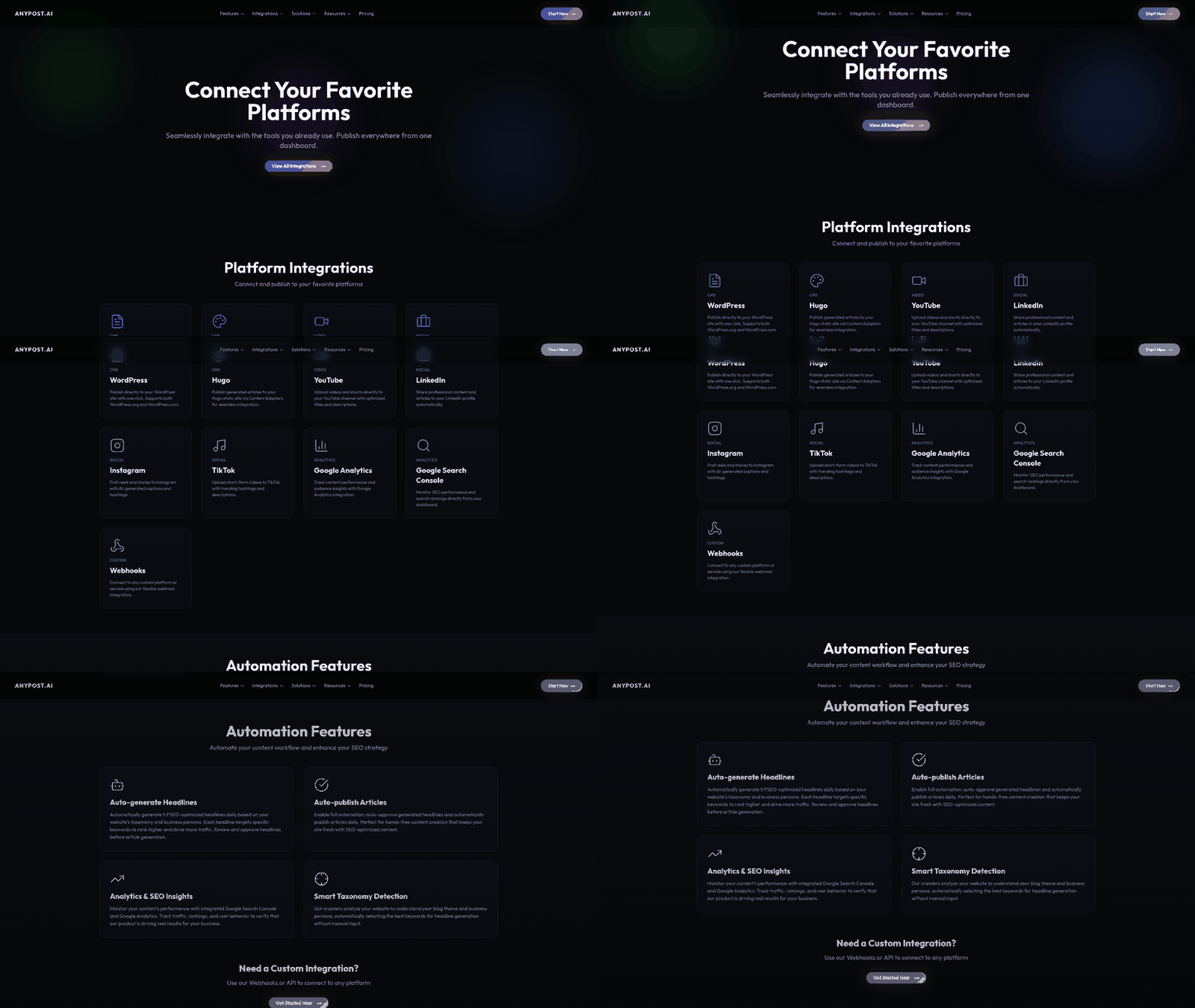
Multi-source content integration involves combining content from diverse origins—such as customer feedback, industry research, and internal subject matter expertise—into a cohesive marketing strategy. This approach allows SaaS companies to leverage existing data and insights while creating fresh, relevant content tailored to their audience’s needs. According to [1], a SaaS content marketing agency, this method is critical for B2B brands and tech companies to maintain a competitive edge by aligning content with both business goals and customer expectations. By synthesizing inputs from multiple channels, companies can address gaps in their messaging and ensure consistency across platforms, as emphasized by Reddit user [3], who highlights empathy and helpfulness as foundational to engaging audiences.
Benefits of Multi-Source Content Integration
Integrating content from disparate sources offers several advantages. First, it enhances SEO by incorporating keywords and themes from various touchpoints, increasing visibility in search results [1]. Second, it strengthens audience trust by presenting a unified narrative that reflects real-world use cases and customer experiences [3]. For example, combining user-generated testimonials with data-driven analytics creates a balanced perspective that resonates with both technical and non-technical stakeholders. Third, it streamlines content creation by repurposing existing materials—such as turning blog posts into social media snippets or webinar summaries—thereby maximizing ROI on marketing efforts [1]. This efficiency is particularly valuable for SaaS companies operating in fast-evolving markets where agility is key. See the [Section 5: Content Repurposing Strategies for Maximum Reach] section for more details on optimizing content reuse.
Strategies for Effective Integration
To implement multi-source content integration, SaaS marketers should adopt structured workflows and tools. Below is a checklist of actionable strategies derived from [1] and [3]:
-
Audit Existing Content Sources:
- Map all content repositories, including blogs, social media, customer support data, and sales collateral.
- Identify gaps where customer needs are not addressed (e.g., pain points mentioned in support tickets but absent in marketing materials).
-
Prioritize Data-Driven Insights:
- Use analytics tools to assess which content types drive the highest engagement. For instance, [1] recommends focusing on topics with high search volume and low competition.
- Align content themes with customer journey stages, ensuring that each piece serves a specific purpose (e.g., awareness, consideration, decision).
-
Collaborate Across Teams:
- Engage product, sales, and customer success teams to gather insights about common user challenges and feature updates.
- Create cross-departmental content calendars to synchronize messaging and avoid redundancy.
-
Leverage User-Generated Content (UGC):
- Feature customer case studies and testimonials in blog posts, videos, and email campaigns.
- Encourage users to share experiences on social media using branded hashtags, as suggested by [3], to amplify reach.
-
Automate Where Possible:
- Tools like content management systems (CMS) can aggregate and schedule content from multiple sources, reducing manual effort.
- Use AI-powered tools to analyze sentiment in customer feedback and generate content ideas. See the [Section 3: Automated Content Generation and Its Benefits] section for further insights on leveraging automation.
Challenges and Mitigation
While multi-source integration offers clear benefits, it also presents challenges. Inconsistent messaging can arise if teams work in silos, leading to fragmented brand perception. To mitigate this, [1] advocates for centralized content governance frameworks that define tone, style, and key messages. Additionally, over-reliance on a single source—such as prioritizing sales pitches over educational content—may alienate audiences. To balance this, [3] stresses the importance of empathy: content should solve problems rather than merely promote products.
Measuring Success
To evaluate the effectiveness of multi-source integration, track metrics such as:
- Engagement Rates: Compare time spent on page, social shares, and comments across integrated vs. standalone content.
- Conversion Rates: Monitor how integrated campaigns influence demo sign-ups or free trial conversions.
- SEO Performance: Use tools like Ahrefs or SEMrush to analyze keyword rankings and organic traffic growth.
A table summarizing these metrics, as recommended by [1], can help identify which sources contribute most to success. For detailed guidance on real-time analytics tracking, refer to the [Section 7: Measuring Success with Real-Time Analytics Tracking] section.
By systematically integrating content from multiple sources and aligning it with audience needs, SaaS companies can build a robust, dynamic marketing strategy. This approach not only enhances engagement but also positions the brand as a thought leader in its niche, as demonstrated by the methodologies of [1] and the audience-centric philosophies outlined in [3].
Section 10: Advanced Content Marketing Strategies for SaaS Companies
Advanced content marketing strategies for SaaS companies involve hyper-targeted, data-driven approaches that align with the unique needs of high-growth tech businesses. These strategies go beyond generic content creation, focusing instead on personalized engagement and leveraging external partnerships to amplify reach. For instance, data-driven content marketing, as emphasized by agencies like Growfusely [1], prioritizes measurable outcomes and audience insights to refine messaging. This approach is critical for B2B SaaS brands, where decision-makers require tailored solutions rather than broad pitches [2]. As mentioned in the [Introduction to SaaS Content Marketing] section, the core goal of SaaS content marketing is to attract and convert target audiences through value-driven engagement.
Account-Based Marketing (ABM): Precision Targeting
Account-based marketing (ABM) is a cornerstone of advanced SaaS strategies, focusing on high-value accounts with customized content. For example, a SaaS company might create case studies, whitepapers, or demo videos tailored to the specific pain points of a target enterprise. Growfusely highlights that ABM requires aligning content with the buyer’s journey, using data to identify account priorities and deliver relevant resources at each stage [1]. A practical example could involve a project management SaaS firm targeting Fortune 500 companies by producing industry-specific content addressing supply chain challenges, supported by live demos and personalized follow-ups [2]. Agencies like Campfire Labs specialize in this for high-growth SaaS firms, ensuring campaigns resonate with C-suite audiences [6]. See the [Multi-Source Content Integration for Enhanced Engagement] section for more details on combining diverse content sources to strengthen ABM campaigns.
ABM Implementation Checklist
- Identify target accounts using CRM and market research data [1].
- Create account-specific content (e.g., custom landing pages, LinkedIn campaigns).
- Track engagement metrics like time spent on pages or email open rates [2].
- Assign dedicated sales reps to nurture relationships post-engagement [6].
Influencer Marketing: Leveraging Industry Authority
Influencer marketing for SaaS involves partnering with domain experts or industry thought leaders to validate products and reach niche audiences. For example, a cybersecurity SaaS company might collaborate with a well-known IT security blogger to co-create webinars or guest posts [3]. This strategy is particularly effective for B2B SaaS, where trust and credibility are paramount [9]. GrowthRomeo, a full-stack SaaS marketing agency, emphasizes aligning with influencers who have technical expertise rather than just social media clout [13]. A real-world example includes a collaboration between a collaboration tool provider and a productivity YouTuber, resulting in a tutorial series that drove 30% more free trial sign-ups [3]. Building on concepts from [Building a Consistent Brand Voice with Persona Engine], aligning influencer messaging with a SaaS brand’s voice is essential for maintaining authenticity.
Choosing the Right Influencers
| Criteria | Examples |
|---|---|
| Relevance to SaaS niche | Tech bloggers, industry analysts [3] |
| Audience engagement rate | >5% for micro-influencers [9] |
| Content quality | Tutorials, case studies over generic posts [3] |
User-Generated Content (UGC): Scaling Authenticity
User-generated content (UGC) leverages existing customers to create testimonials, reviews, or case studies, reducing the cost of content creation while building social proof. While the sources do not provide explicit examples of UGC campaigns for SaaS, the r/SaaS community highlights that empathetic, problem-solving content resonates most [3]. Agencies like Animalz recommend integrating UGC into blogs and social media to showcase real-world applications [9]. For instance, a SaaS company could feature a customer’s migration story from a legacy system to their platform, annotated with metrics like cost savings [4]. As discussed in the [Content Repurposing Strategies for Maximum Reach] section, repurposing UGC into multiple formats enhances its reach and impact.
UGC Strategy Framework
- Incentivize customers to share success stories (e.g., discounts, feature requests).
- Curate content that aligns with brand messaging and SEO keywords [2].
- Repurpose UGC into blogs, social posts, or email campaigns [4].
Multi-Channel Integration for Advanced Strategies
Advanced strategies succeed when integrated across channels. For example, ABM campaigns can use LinkedIn for personalized messaging while pairing with Google Ads targeting the same accounts [11]. Similarly, influencer-generated content can be repurposed into email sequences or webinar materials [3]. The key is to maintain consistency in messaging while adapting formats to platform-specific audiences [9].
By combining ABM precision, influencer credibility, and UGC authenticity, SaaS companies can create a content ecosystem that drives both lead generation and customer retention. Agencies like Growfusely and Campfire Labs [1][6] provide the expertise to execute these strategies, ensuring alignment with business goals and measurable ROI.
References
[1] Growfusely: SaaS Content Marketing Agency - https://growfusely.com/
[2] My best SaaS content marketing strategy guide for 2025 | Marketer ... - https://www.marketermilk.com/blog/saas-content-marketing
[3] How to help SaaS companies with content marketing? : r/SaaS - https://www.reddit.com/r/SaaS/comments/1b2e4g2/how_to_help_saas_companies_with_content_marketing/
[4] These 26 SaaS companies are THE BEST at content marketing ... - https://www.linkedin.com/posts/timsoulo_these-26-saas-companies-are-the-best-at-content-activity-7273264137302896641-bWMe
[5] How effective is content marketing for you? : r/SaaS - https://www.reddit.com/r/SaaS/comments/198j7la/how_effective_is_content_marketing_for_you/
[6] The 11 Best SaaS Content Marketing Agencies in 2025 - https://www.siegemedia.com/strategy/best-saas-content-marketing-agency
[7] Hiring a SaaS Content Marketing Agency | Optimist - https://www.yesoptimist.com/hiring-saas-content-marketing-agency/
[8] 45 SaaS Content Marketing Statistics for 2025 | RevenueZen - https://revenuezen.com/saas-content-marketing-statistics/
[9] The Top SaaS Content Marketing Agencies of 2025 - https://www.campfirelabs.co/blog/saas-content-marketing-agencies
[10] Top 10 SaaS Content Marketing Agencies in 2024 - https://www.quoleady.com/saas-content-marketing-agencies/
[11] GOOGLE ADS as a tool for advertising SAAS products - https://www.researchgate.net/publication/394381556_GOOGLE_ADS_as_a_tool_for_advertising_SAAS_products
[12] This Is the SMARTEST SaaS Marketing Strategy I’ve Ever Seen… 🤯 by Rob Walling - https://www.youtube.com/watch?v=1p95mVJxnRg
[13] Tweet by @javalogixca (Preston Martelly) - https://twitter.com/javalogixca/status/2008551811259437412
Frequently Asked Questions
1. What is SaaS content marketing, and why is it important for software companies?
SaaS content marketing involves creating and distributing educational, solution-oriented content to attract, engage, and convert B2B customers. It's crucial for software companies to establish trust, demonstrate expertise, and guide prospects through the buyer’s journey. Unlike traditional marketing, it focuses on long-term value by addressing customer pain points and nurturing leads organically. For SaaS businesses, this strategy builds brand authority, drives predictable revenue, and supports customer retention through consistent, relevant content.
Q: How does SaaS content marketing differ from traditional marketing approaches?
A: Traditional marketing often relies on direct sales pitches or mass advertising, while SaaS content marketing prioritizes educational and data-driven content tailored to B2B audiences. It focuses on solving specific customer challenges, fostering trust, and positioning the company as a thought leader. For example, instead of promoting features, SaaS content might include tutorials, case studies, or whitepapers that help users solve real-world problems. This approach aligns with the extended decision-making process of SaaS buyers, who require extensive research before committing to a subscription.
Q: What are the most effective types of content for SaaS companies?
A: Effective SaaS content includes blog posts, whitepapers, case studies, video tutorials, and product demos. Blog posts are ideal for SEO and addressing common user questions, while case studies showcase real-world success. Video content, such as explainer videos or webinars, is highly engaging and can accelerate lead conversion. Interactive content like quizzes or calculators also drives engagement. The key is to mix formats—text, video, and interactive—to cater to different audience preferences and guide prospects through the sales funnel.
Q: How can SaaS companies measure the success of their content marketing efforts?
A: Success is measured using metrics like website traffic, lead generation rates, conversion rates, and SEO rankings. Tools like Google Analytics and HubSpot track user behavior, while CRM data reveals how content influences sales pipeline progression. For example, monitoring time-on-page or bounce rates can indicate content quality. Additionally, A/B testing headlines, CTAs, or formats helps optimize performance. Agencies like Quoleady use data analytics to refine content strategies, ensuring alignment with business goals like increased sign-ups or reduced churn.
Q: Why is SEO optimization critical in SaaS content marketing?
A: SEO ensures SaaS content ranks high on search engines, making it discoverable by decision-makers researching solutions. By optimizing for keywords related to user intent (e.g., "best project management software for teams"), companies attract highly targeted traffic. Technical SEO elements like meta tags, site speed, and mobile responsiveness enhance visibility, while content quality builds authority. Agencies like Growfusely emphasize aligning content with both search algorithms and user needs, ensuring sustained organic growth in competitive markets.
Q: How can SaaS companies ensure their content resonates with their target audience?
A: Start by conducting audience research to identify pain points, preferences, and content consumption habits. Use surveys, social listening, and competitor analysis to uncover gaps. Personas help tailor messaging to specific roles (e.g., IT managers vs. executives). Engaging content often includes storytelling, actionable insights, and relatable examples. For instance, customer success stories with measurable outcomes (e.g., "Company X reduced costs by 30% using our software") create emotional and logical connections. Regularly updating content based on feedback ensures relevance.
Q: What are common challenges in SaaS content marketing, and how can they be overcome?
A: Challenges include content saturation, aligning with buyer intent, and proving ROI. To stand out, focus on hyper-specific, niche topics rather than generic advice. For example, target "cloud migration challenges for SMEs" instead of broad "cloud computing tips." Use data-driven content creation tools (like SEMrush or Ahrefs) to identify low-competition keywords. To demonstrate ROI, track metrics like lead-to-customer conversion rates and customer lifetime value (CLV). Collaborating with experts or agencies can also provide fresh perspectives and scalable strategies.