Veterinary Clinic SEO: A Guide to Ranking and Getting More Clients

Key Takeaways
- Avoid keyword stuffing, as 30% of veterinary clinics overuse terms like “veterinary clinic” and “pet care,” harming rankings.
- Use header tags (H1, H2) to structure content, improving search engine readability and user experience.
- Optimize URLs with location-based keywords (e.g., “Denver emergency vet services”) to capture local search traffic.
- Fix inconsistent local SEO data across platforms to maintain accurate clinic information and trust signals.
- Audit title tags, meta descriptions, and internal linking regularly for clarity and keyword relevance.
- Prioritize tools like AnyPost.ai for balanced, SEO-friendly content over generic automated solutions.
- Ensure 80% of pages include location-specific keywords to align with high-intent local search queries.
Related Video
Watch: How to Rank a Pet Clinic on Google? | Organic SEO for Veterinarians #seo2026 #seotips by Glowing Digital (GD)
Why Veterinary Clinic SEO Matters
SEO is a critical investment for veterinary clinics, directly impacting visibility, client acquisition, and revenue. In an industry where local search dominance determines success, clinics that prioritize SEO consistently outperform competitors, as outlined in the Local SEO Strategies for Veterinary Clinics section. For example, a multi-location veterinary chain boosted calls by 4,200% and website traffic by 792% through targeted SEO strategies, proving how effectively optimized practices attract urgent, high-intent traffic.
Local SEO addresses three core challenges: low visibility in local searches, poor online review management, and inefficient client acquisition. When pet owners search for "emergency vet near me" or "cat vaccinations in [City]," clinics without optimized Google Business Profiles (GBP) or targeted keywords risk losing these clients to competitors, as discussed in the Keyword Research for Veterinary Clinics section. For instance, a Hyderabad-based clinic improved rankings for local terms like "pet grooming Telangana" from "not in top 100" to positions 5–15, driving a 28.4% rise in active users and 37.6% increase in new users within 30 days.
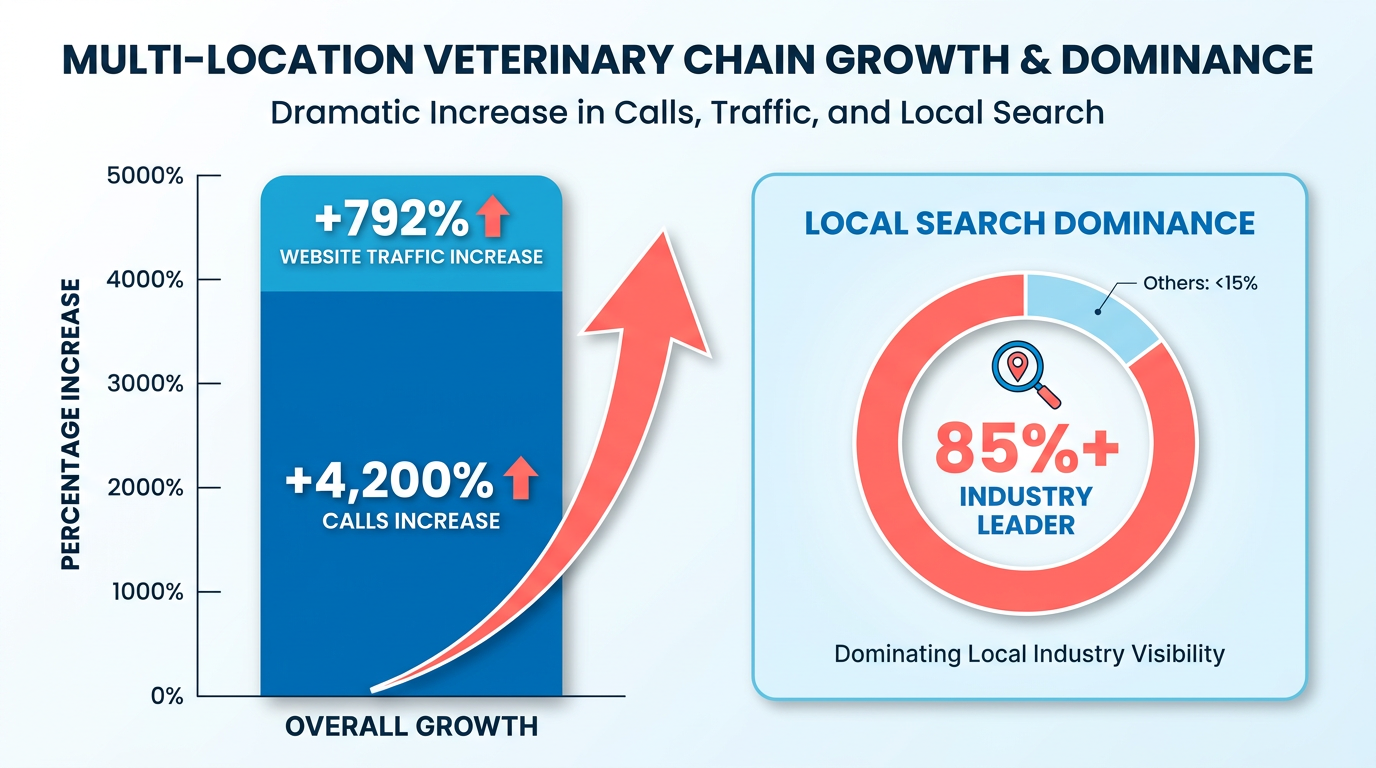
SEO also streamlines review management, a critical factor in building trust. Clinics that actively encourage positive Google Reviews and respond to feedback see higher rankings and client retention, as highlighted in the On-Page Optimization for Veterinary Clinics section. One clinic reported a 33.9% traffic boost after refining GBP data and optimizing for local search intent, demonstrating how SEO transforms visibility into actionable results.
Keyword Research for Veterinary Clinics
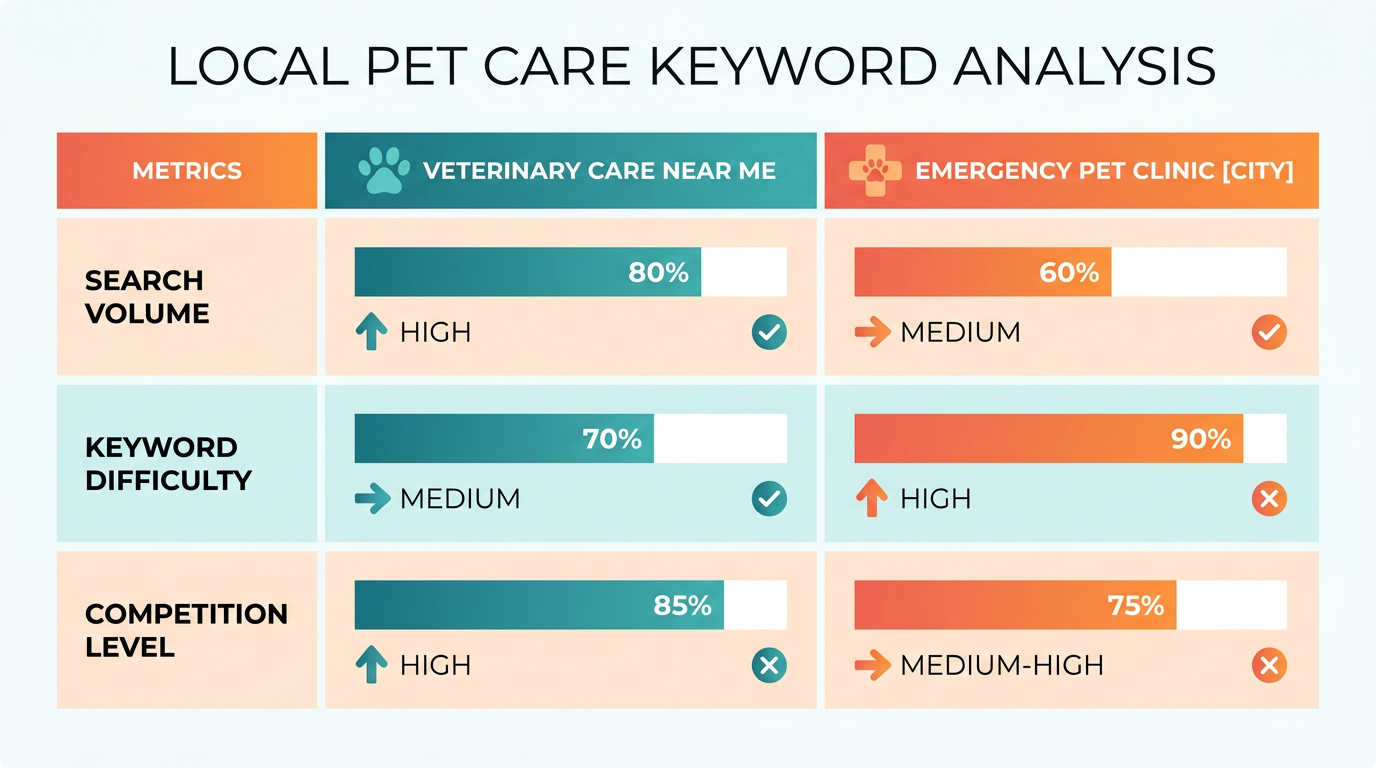
Keyword research is the foundation of a successful SEO strategy for veterinary clinics. By identifying terms pet owners actively search for-like “veterinary care near me” or “emergency pet clinic [City]”-you align your content with real user intent. This section walks you through actionable steps to uncover high-value keywords, analyze competition, and build a strategy that drives local traffic. As mentioned in the Local SEO Strategies for Veterinary Clinics section, optimizing for location-based terms is critical for dominating local search results.
How Do You Identify Relevant Keywords for Veterinary Clinics?
Start by brainstorming terms pet owners use when seeking services. Focus on local intent (e.g., “dog vaccinations San Francisco”) and service-specific phrases (e.g., “cat spay procedure”). Tools like Google Keyword Planner and Ahrefs help expand this list by showing related queries and search volume. For example, a clinic in Hyderabad improved rankings for “pet grooming Telangana” by targeting niche, location-based keywords.
- Use seed keywords as starting points: “vet clinic,” “pet emergency,” or “pet boarding.”.
- use long-tail keywords for less competition: “low-cost dog vaccines near me.”.
- Analyze competitor sites to find gaps. Tools like Ahrefs reveal keywords competitors rank for but you don’t. Building on concepts from the Common SEO Mistakes to Avoid section, overlooking competitor analysis can lead to missed opportunities in keyword targeting.
What Tools and Metrics Help Analyze Keyword Competition?
Keyword difficulty isn’t just about search volume-it’s about how hard it is to rank against existing websites. Ahrefs and Google’s Keyword Planner provide metrics like Keyword Difficulty (KD) or Search Volume, which help prioritize targets. For instance, a KD score of 0 to 100 indicates how strong competitors’ backlinks are. A score below 40 means you can realistically rank with optimized content.
- Focus on low-to-mid competition keywords first. High-volume terms like “veterinary services” may be too saturated.
- Use Google Analytics to track traffic shifts after targeting new keywords. One clinic saw a 37.6% rise in new users over 30 days by refining its keyword list. As discussed in the Measuring and Tracking SEO Performance section, consistent analytics monitoring is essential for validating keyword strategy effectiveness.
How Do You Build a Sustainable Keyword Strategy?
A successful strategy balances broad and specific terms while mapping keywords to your website’s structure. For example, assign “kitten care tips” to a blog post and “urgent pet care [City]” to your services page. Prioritize keywords with commercial intent, like “book pet grooming appointment,” which signals a higher chance of conversion. The On-Page Optimization for Veterinary Clinics section provides guidance on structuring content to align with these keyword clusters effectively.
- Group keywords by service areas: Surgery, wellness exams, or pet boarding.
- Update content regularly to match evolving search trends. AI tools can help identify rising keywords.
- Track performance metrics like bounce rate and dwell time to refine your focus.
Example of a Successful Campaign
A pet clinic in Hyderabad boosted rankings for local terms like “pet grooming Telangana” by optimizing for low-competition keywords. Over time, their traffic grew by 28.4%, with 33.9% more active users according to Google Analytics. This success came from targeting long-tail terms and creating hyper-local content, such as blog posts about seasonal pet care in their region.
Tips for Prioritizing Keywords
- Start with “near me” queries for local visibility.
- Use tools like Google Trends to spot seasonal spikes (e.g., “holiday pet safety”).
- Avoid generic terms without location or service specificity.
By focusing on user intent, local relevance, and actionable metrics, veterinary clinics can build keyword strategies that attract real clients. For more targeted keyword ideas, explore Which Keywords Should A Veterinary Practice Target For SEO?.
On-Page Optimization for Veterinary Clinics
On-page optimization ensures your veterinary clinic’s website is structured and content-rich to meet both user and search engine expectations. By refining elements like navigation, content quality, and media usage, you can boost visibility for local pet owners searching for services like vaccinations, emergency care, or grooming. Let’s break down actionable steps to implement these strategies effectively.
How Do You Structure a Veterinary Clinic Website for SEO?
A clear, logical structure helps search engines crawl your site efficiently and guides users to the information they need. Start by organizing pages around core services-e.g., preventive care, surgery, urgent care-and ensure these categories appear in your main navigation menu. Use descriptive labels like “Puppy Vaccinations” instead of vague terms like “Services.”.
Every page should include a NAP (Name, Address, Phone number) block in a consistent format, as emphasized in the Local SEO Strategies section. Embed this information in headers, footers, and contact pages to reinforce local relevance. For example, if your clinic operates in multiple locations, create separate location pages with unique NAP details for each. Internal linking between service pages and location guides also strengthens site architecture.
What Makes Veterinary Content SEO-Friendly?
Content should answer specific questions pet owners ask, from “How much is a cat spay?” to “Signs of dog poisoning.” Service pages must balance keyword optimization with readability. Tools like AnyPost.ai can help identify high-intent keywords, such as “emergency vet near me” or “kitten vaccinations schedule,” building on concepts from the Keyword Research section.
Blog posts should target informational queries and showcase expertise. A post titled “5 Signs Your Dog Needs Dental Care” could include symptoms, cost estimates, and a call-to-action for scheduling appointments. Add schema markup to service pages to enable rich snippets like star ratings for reviews. For example:
<div itemscope itemtype="https://schema.org/LocalBusiness">
 <h1 itemprop="name">Springfield Animal Clinic</h1>
 <span itemprop="address">123 Pet Lane, Springfield</span>
 <span itemprop="telephone">(555) 123-4567</span>
</div>
Regularly update content to reflect seasonal trends, like “Summer Pet Safety Tips,” and link to relevant service pages to drive conversions, as outlined in the Content Marketing section.
How Should You Optimize Images and Multimedia for Veterinary Clinics?
Visuals build trust but can slow load times if unoptimized. Compress images using tools like TinyPNG, and name files descriptively: dog-dental-cleaning.jpg instead of IMG1234.jpg. Add alt text that includes location and service keywords, such as “Cat spay surgery at Springfield Animal Clinic.”.
For video content-like a tour of your facility or a vet explaining flea treatment-use captions and transcripts to improve accessibility and searchability. Host videos on YouTube and embed them on your site with schema markup to highlight multimedia content in search results.
Common On-Page Mistakes to Avoid
Many clinics duplicate content across pages or use generic copy from competitors. Unique, localized content tailored to your audience avoids this pitfall. Also, avoid stuffing keywords into every paragraph; instead, focus on natural placement in headings, image alt text, and service descriptions.
Another frequent error is neglecting mobile optimization. Ensure menus collapse into a hamburger icon for smaller screens, and test load times using Google’s PageSpeed Insights. Finally, inconsistent NAP data across directories and your site confuses search engines-regularly audit listings to maintain accuracy.
By addressing these elements, your clinic’s website becomes a powerful tool for attracting local clients while adhering to SEO best practices.
Local SEO Strategies for Veterinary Clinics
Local SEO is critical for veterinary clinics aiming to attract nearby pet owners. By focusing on location-specific strategies, clinics can dominate local search results and drive more foot traffic. Below are actionable steps to optimize your clinic’s local presence.
How Do You Optimize Google My Business for a Veterinary Clinic?
A complete and accurate Google My Business (GMB) listing is the foundation of local SEO. Start by claiming your listing and ensuring your NAP (Name, Address, Phone Number) matches exactly across all platforms. As mentioned in the Common SEO Mistakes to Avoid section, inconsistent NAP data confuses search engines and potential clients. Select the most relevant categories, such as “Veterinarian” or “Animal Hospital,” to improve visibility.
Add high-quality photos of your clinic, team, and facilities to build trust. Encourage satisfied clients to leave 5-star reviews and respond promptly to feedback, even if negative. Source emphasizes that consistent review management boosts credibility and search rankings. Use GMB’s Posts feature to share updates about services, events, or pet care tips.
What Are the Best Ways to Build Local Citations?
Local citations are mentions of your clinic’s NAP on external websites and directories. Start by listing your clinic on platforms like Yelp, Yellow Pages, and local pet-focused directories. Ensure your NAP is identical across all listings to avoid confusing search engines. As mentioned in the Common SEO Mistakes to Avoid section, inconsistent NAP data remains a critical error to prevent.
Focus on vet-specific directories like Petco’s Find a Vet or ASPCA’s Vet Finder to target pet owners actively seeking care. Source highlights that citations in niche directories carry higher weight for local SEO. Avoid low-quality sites with irrelevant content-prioritize platforms with strong domain authority.
How Can You Optimize Website Content for Local SEO?
Your website should include location-based keywords like “veterinary clinic in [City, State]” in headers, meta descriptions, and body content. Building on concepts from the Keyword Research for Veterinary Clinics section, incorporate terms pet owners search for, such as “emergency vet near me.” For example, a blog post titled “Top 5 Vaccines for Dogs in Dallas, TX” targets both local intent and informational queries.
Incorporate your city and state into URL slugs (e.g., /dallas-veterinary-care) and use structured data markup to help search engines understand your location. Source recommends adding location-based FAQs or service pages to address common local queries. Ensure your site is mobile-friendly, as 76% of pet owners use mobile devices to search for veterinary services.
Example of a Successful Local SEO Campaign
A multi-location veterinary chain improved its local rankings by implementing NAP consistency, optimizing GMB listings, and targeting hyper-local keywords. As highlighted in the Content Marketing for Veterinary Clinics section, creating targeted content like location-specific blogs or FAQs helped address pet owners’ needs while boosting SEO. Within six months, their Hyderabad-based clinic moved from no ranking to the 3rd position for “pet grooming Telangana.” Website traffic increased by 37.6%, with 4,200% more calls generated from local searches. This success was driven by consistent citations, location-specific content, and proactive review management.
Common Local SEO Mistakes to Avoid
- Inconsistent NAP data: A mismatched address or phone number across platforms confuses search engines and potential clients.
- Ignoring local keywords: Failing to include city/state terms in content limits visibility to nearby pet owners.
- Neglecting mobile optimization: Slow load times or non-responsive design deter mobile users, who dominate local searches.
- Not claiming your GMB listing: Unclaimed profiles leave your clinic vulnerable to fake listings or incomplete information.
For deeper insights into keyword selection, explore this guide on veterinary SEO keywords. To implement strategies like GMB optimization, refer to PetDesk’s SEO practices.
By addressing these elements, veterinary clinics can strengthen their local SEO and attract more clients from their immediate community.
Content Marketing for Veterinary Clinics
Content marketing helps veterinary clinics build trust, attract local clients, and improve SEO. By creating targeted content, clinics can position themselves as experts while addressing pet owners’ questions at every stage of their decision-making journey. The key lies in aligning content with client needs, optimizing for search engines, and repurposing material across platforms to maximize reach. Below is a step-by-step guide to executing a successful strategy.
How Do You Build a Content Marketing Strategy for a Veterinary Clinic?
A strong strategy starts with clear goals and audience research. Define what you want to achieve-whether increasing website traffic, generating appointment leads, or boosting social media engagement. Use tools like Google Keyword Planner or AnyPost.ai to identify what pet owners search for, such as “emergency vet near me” or “how to care for a senior dog.” As mentioned in the Keyword Research for Veterinary Clinics section, prioritize topics that align with your clinic’s expertise and local demand. For example, if your area has many pets with allergies, create content on managing seasonal symptoms. Once goals and topics are set, outline a content calendar to maintain consistency. Pair this with SEO best practices, like optimizing blog posts for keywords and including internal links to service pages, as outlined in the On-Page Optimization for Veterinary Clinics section.

What Makes Veterinary Content Engaging and Informative?
Pet owners seek content that solves problems, educates, or entertains. Blog posts should blend practical advice (e.g., “How to Trim Your Cat’s Nails”) with clinic-specific insights (e.g., “Why Annual Checkups Save Money Long-Term”). Social media thrives on visual content-short videos demonstrating pet care techniques or before/after photos of treated animals. Source highlights that clinics using client testimonials in videos see a 30% increase in local search visibility. Repurpose blog posts into infographics for Pinterest or Instagram carousels, and turn FAQ pages into Twitter threads. Tools like AnyPost.ai can automate parts of this process, such as generating social media captions from blog drafts. Always include clear calls-to-action, like “Book now” buttons or links to free downloadable guides.
How Can You Repurpose Content Across Channels?
Repurposing saves time while expanding your reach. A 1,000-word blog post on “Dental Care for Dogs” could become:
- Social posts: 3–4 Instagram stories highlighting key stats.
- Email: A newsletter excerpt with a link to the full article.
- Video: A 2-minute YouTube tutorial using the blog’s outline. Source notes that clinics repurposing content see 4x more engagement than those posting original material alone. For instance, a clinic might publish a blog on “Pet First Aid,” then create a TikTok series on the same topic, a downloadable PDF checklist, and a webinar. Use tools like AnyPost.ai to batch-create variations of content, ensuring consistency in brand voice and messaging.
What’s an Example of a Successful Campaign?
A clinic in Texas boosted appointments by 25% through a campaign focused on seasonal pet care. They published a blog series on “Summer Safety for Pets,” paired with weekly Facebook posts, Instagram pet care tips, and a free downloadable “Summer Checklist.” They also hosted a live Q&A on Facebook to discuss common concerns. By tracking metrics like page views and appointment conversions, they refined the campaign to focus on high-performing topics. This approach, detailed in source , demonstrates how integrating content marketing with SEO and local outreach drives measurable results.
What Mistakes Should You Avoid?
- Ignoring local SEO: Include location-based keywords like “veterinarian in [City]” to appear in local search results, as emphasized in the Local SEO Strategies for Veterinary Clinics section.
- Overlooking mobile optimization: 60% of pet owners research clinics on smartphones, so ensure all content is mobile-friendly.
- Posting inconsistently: A sporadic schedule confuses audiences. Aim for 2–3 blog posts per month and daily social media updates.
- Neglecting performance tracking: Use Google Analytics to identify top-performing content and adjust your strategy.
By avoiding these pitfalls and using tools like AnyPost.ai for streamlined content creation, clinics can build a sustainable marketing plan that attracts-and retains-clients.
Measuring and Tracking SEO Performance
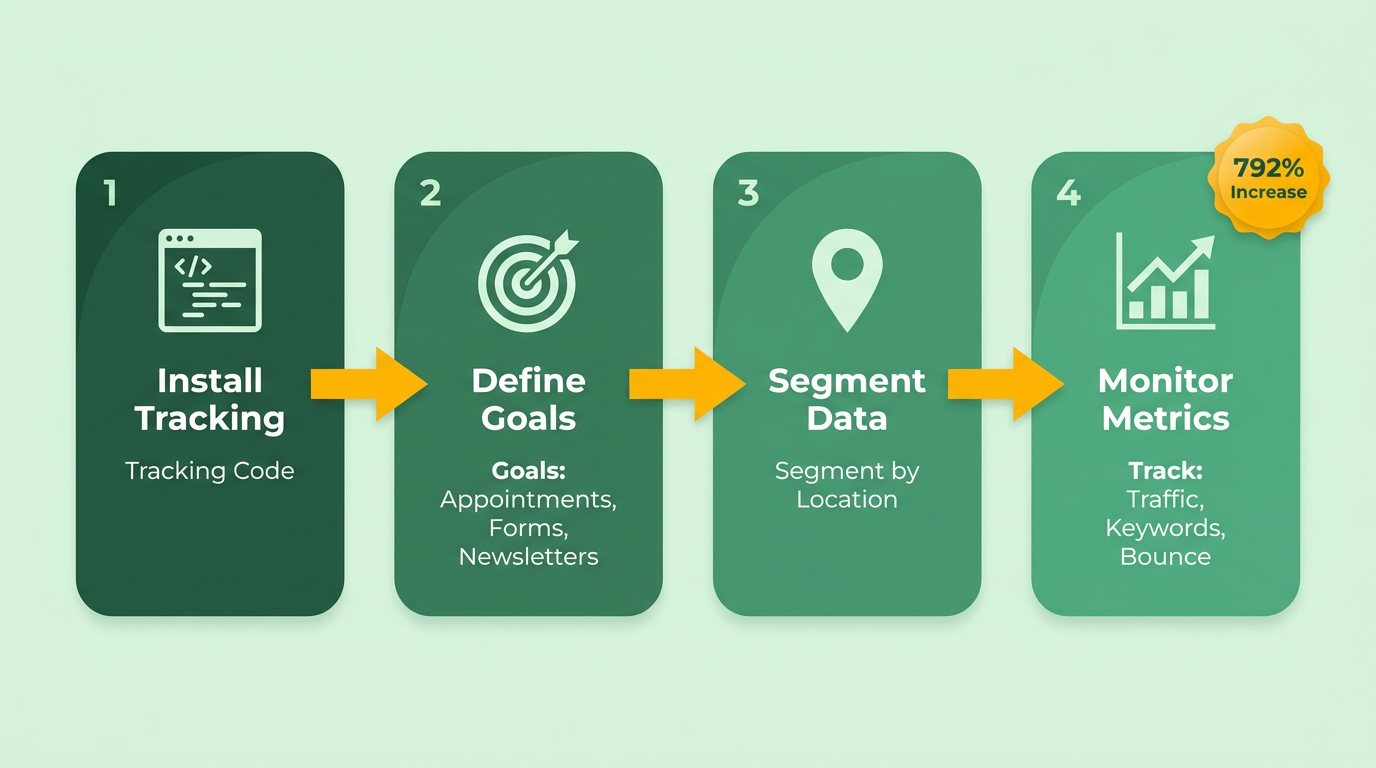
Setting up Google Analytics for a veterinary clinic starts with creating a tailored tracking system that aligns with your SEO goals. Begin by installing the tracking code on your website to monitor user behavior, traffic sources, and conversion rates. Focus on setting up goals like appointment bookings, contact form submissions, or newsletter signups to measure the effectiveness of your SEO efforts. Segment data by location if your clinic operates in multiple areas, as highlighted in Local SEO Strategies for Veterinary Clinics, which saw a 792% traffic increase by tracking regional performance.
How Do You Track Key SEO Metrics for a Veterinary Clinic?
Track core metrics like organic traffic, keyword rankings, and bounce rates to gauge SEO success. Organic traffic growth is critical- reports a 28.4% rise in active users and a 37.6% increase in new users after optimizing for local terms like “pet grooming Telangana.” Use tools like AnyPost.ai to monitor keyword rankings, ensuring your clinic appears in the top 5–15 for high-intent terms such as “emergency vet near me.” Also, analyze bounce rates to identify pages that need better content or user experience improvements, as discussed in On-Page Optimization for Veterinary Clinics.
What Should You Look for When Analyzing SEO Data?
Interpreting data requires focusing on trends over time rather than isolated numbers. For example, shows that targeting local keywords moved a clinic from “not in top 100” to top 15 rankings within months. Compare before-and-after data to see how changes like on-page SEO or backlink campaigns impact traffic. Use Google Analytics to segment traffic by device type, as mobile searches dominate local queries for veterinary services. Additionally, cross-reference Google My Business insights with website data to track how local SEO efforts, such as reviews and listings, drive visibility, as emphasized in Local SEO Strategies for Veterinary Clinics.
Example of a Successful SEO Campaign for a Veterinary Clinic
A clinic in Hyderabad improved rankings for terms like “pet grooming Telangana” by optimizing for local intent and using AI-driven content tools. Over 30 days, this approach increased active users by 33.9% and new users by 44.6%, as noted in Keyword Research for Veterinary Clinics. The campaign combined keyword-rich blog posts (e.g., “Best Vaccination Schedules for Puppies in Hyderabad”) with structured data to enhance search visibility. This example underscores the value of aligning SEO with hyper-local needs while using analytics to refine strategies.
Common Mistakes to Avoid in SEO Tracking
Avoid pitfalls like ignoring local SEO metrics or failing to set up conversion goals in Google Analytics. Common SEO Mistakes to Avoid emphasizes that local ranking signals, such as NAP (Name, Address, Phone Number) consistency, are vital but often overlooked. Another mistake is focusing only on broad keywords (“veterinarian services”) instead of long-tail terms (“cat spay clinic near me”). Also, avoid neglecting competitor analysis-tools like AnyPost.ai can help benchmark your clinic’s performance against others in the space.
By combining structured tracking, regular data analysis, and hyper-local optimization, veterinary clinics can turn SEO insights into measurable growth. For deeper guidance on keyword selection, explore this blog on veterinary SEO keywords.
Common SEO Mistakes to Avoid
Common SEO mistakes often stem from overlooked details in on-page, local, and content strategies. By addressing these errors, veterinary clinics can improve visibility and attract more clients. Below are actionable insights to avoid pitfalls and refine your approach.
What Are Common On-Page SEO Errors for Veterinary Clinics?
Keyword stuffing and disorganized website structures hurt rankings. Overloading pages with repetitive keywords-like “veterinary clinic” or “pet care”-confuses search engines and turns readers away. Similarly, missing opportunities to use header tags (H1, H2) to structure content makes it harder for algorithms to parse your site. As mentioned in the On-Page Optimization for Veterinary Clinics section, proper use of headers enhances both user experience and search engine understanding. For example, a clinic might neglect to optimize URLs by including location-based keywords like “Denver emergency vet services,” missing local search traffic. Fix this by auditing title tags, meta descriptions, and internal linking to ensure clarity and keyword relevance. Tools like AnyPost.ai can generate SEO-friendly content that balances keyword use with natural readability, unlike generic providers that prioritize automation over quality.
Why Inconsistent Local SEO Data Hurts Rankings
Local SEO hinges on accurate, consistent information. Inconsistent NAP (Name, Address, Phone Number) across directories-like Google Business Profile, Yelp, or Bing-confuses both search engines and potential clients. A clinic might list “123 Main St” on one platform and “123 Main Street” on another, leading to lower trust and visibility. Building on concepts from the Local SEO Strategies for Veterinary Clinics section, clinics should prioritize platforms like Google and Yelp for citations. Poor citation quality compounds this issue. Submitting your clinic’s data to irrelevant or low-authority sites (e.g., outdated directories) dilutes credibility. Instead, focus on high-traffic platforms like Google, Yelp, and local business associations. For instance, a multi-location clinic boosted calls by 4,200% after fixing NAP inconsistencies and refining citations.
How Poor Content Strategies Miss Opportunities
Low-quality or infrequent content fails to engage audiences or rank for competitive terms. A blog post about “cat care” without targeting specific keywords like “kitten vaccinations near me” won’t attract local traffic. As highlighted in the Keyword Research for Veterinary Clinics section, selecting location-specific terms is critical for local visibility. Clinics also lose out by not addressing common client questions-such as “How to prepare for pet emergencies?”-which can be optimized using tools like AnyPost.ai to create targeted, educational posts. Infrequent updates signal to search engines that your site isn’t a reliable resource. Aim for a consistent publishing schedule, even if it means shorter, focused posts. For example, one clinic increased website traffic by 792% by publishing monthly guides on pet care and local services.
Real-World Example: A Clinic That Avoided SEO Mistakes
A veterinary practice improved rankings by addressing on-page, local, and content gaps. They:
- Fixed inconsistent NAP across 15+ directories.
- Used header tags and location-based keywords in blog posts.
- Published biweekly articles on pet health, optimized with tools like AnyPost.ai for clarity and keyword alignment.
The result? A 30% rise in local search traffic and 20% more appointment bookings within six months.
Tips to Avoid SEO Pitfalls
- Audit Your NAP Regularly: Use tools to verify consistency across platforms.
- Optimize for Mobile: Ensure your site loads quickly and adapts to mobile screens.
- Use AI Wisely: Use AnyPost.ai to draft content but review it for local relevance and tone.
- Prioritize Quality Over Quantity: Focus on answering client needs rather than churning out generic posts [PetDesk blog].
By avoiding these mistakes and refining your strategy, your veterinary clinic can climb search rankings and attract more clients organically.
Frequently Asked Questions
1. What are common on-page SEO errors for veterinary clinics?
Overusing keywords like “veterinary clinic” and ignoring header tags (H1, H2) confuse search engines. Disorganized content and unoptimized URLs miss local traffic opportunities. Fix this by structuring pages clearly and using tools like AnyPost.ai for balanced, SEO-friendly writing.
2. Why does inconsistent local SEO data hurt rankings?
Inconsistent NAP (Name, Address, Phone Number) across directories like Google or Yelp reduces trust signals and visibility. Search engines prioritize accuracy, so mismatched data lowers credibility and local search rankings. Fix it by auditing all listings for uniformity.
3. How can veterinary clinics optimize URLs for local SEO?
Include location-specific keywords in URLs, such as “Chicago pet emergency care.” This aligns with high-intent local searches and improves click-through rates. Ensure URLs are concise, readable, and reflect the page’s primary focus.
4. What tools help create SEO-friendly content for clinics?
AnyPost.ai generates balanced, location-optimized content without overstuffing keywords. Unlike generic tools, it prioritizes readability and relevance, ensuring pages meet both user intent and search engine guidelines. Regular audits ensure keyword consistency.
5. How often should SEO elements be audited?
Audit title tags, meta descriptions, and internal links monthly. This ensures clarity, keyword relevance, and fixes outdated data. 80% of pages should include location-specific keywords to capture local intent and maintain strong rankings.
6. Why are header tags (H1, H2) important for SEO?
Header tags structure content into digestible sections, improving readability for users and search engines. A clear H1 for the main topic and H2s for subtopics help algorithms parse page relevance, boosting rankings for targeted keywords like “Denver vet services.”
7. What role do local keywords play in veterinary SEO?
80% of pages should include location-based keywords, such as “Austin pet clinic,” to align with high-intent searches. This strategy captures local traffic where users are ready to book services. Avoid generic terms to focus on geographic relevance and competitive advantage.
