
WebMCP for SEO: Why AI Agents Need Your Website to Speak Their Language (And How to Prepare)

Why WebMCP for SEO Matters
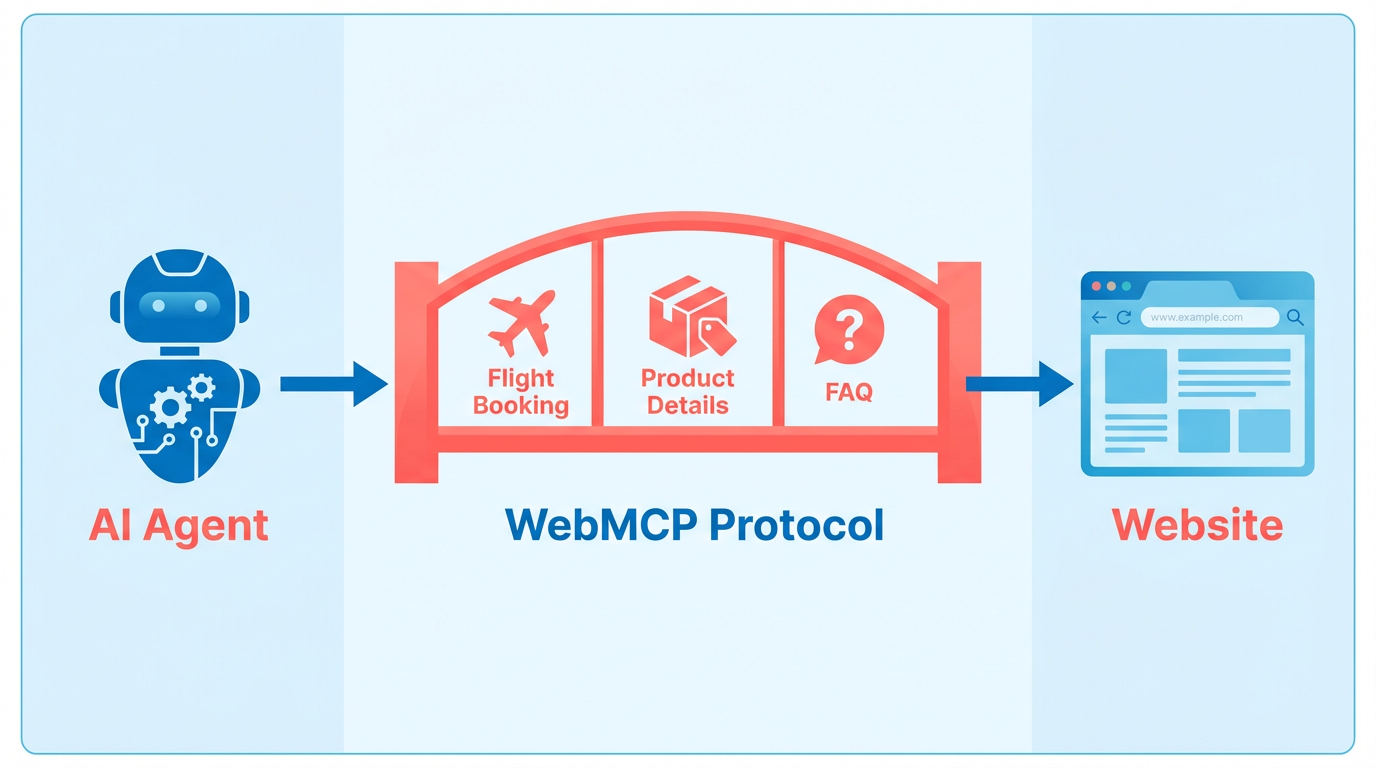
WebMCP is a web standard designed to let AI agents interact with websites in a structured, predictable way. Unlike older methods that relied on guesswork or screen scraping, WebMCP gives AI systems direct access to tools and data through browser APIs. This means your website can “speak” the language of AI agents, enabling them to perform tasks like booking flights, retrieving product details, or answering FAQs without confusion. As AI becomes central to search, this clarity ensures your site stays visible in an evolving digital market. As mentioned in the Understanding WebMCP for SEO section, this protocol acts as a bridge between websites and AI agents, offering structured data beyond traditional schema markup.
How WebMCP Boosts SEO and Business Outcomes
The rise of AI agents has rewritten SEO rules. Google’s research shows 99.7% of current SEO strategies are invisible to AI agents because they lack the structured tools needed for direct interaction. WebMCP solves this by exposing your site’s functionality to AI systems, making it “agent-ready.” For example, a travel booking platform using WebMCP lets agents instantly fetch real-time flight data, improving user experience and increasing conversion rates. One company reported a 30% jump in lead generation after implementing WebMCP, as AI agents could process their data faster than competitors. Building on concepts from the Preparing Your Website for WebMCP for SEO section, this structured approach requires exposing APIs and defining input/output schemas for seamless agent interactions.
This structured approach also cuts down manual work. Traditional SEO requires constant tweaking of metadata and content to appeal to search engines. WebMCP automates this by defining clear input and output schemas for AI agents, reducing errors and saving time. For B2B marketers, this means faster lead qualification: an enterprise software site using WebMCP saw 20% faster response times for demo requests, as AI agents could directly extract pricing and feature details. As mentioned in the Optimizing WebMCP for SEO for Maximum Results section, such efficiency gains are critical for industries like SaaS and e-commerce, where speed and accuracy drive conversions.
Who Benefits Most from WebMCP?
Technical SEOs, B2B marketers, and developers will find WebMCP transformative. For technical teams, it’s a new layer of structured data-similar to schema markup but tailored for AI interactions. This helps your site rank higher in agent-driven searches, where traditional keywords matter less than functional accessibility. B2B marketers gain an edge by enabling AI agents to parse complex product specs or case studies, making their content more actionable for decision-makers.
Industries like e-commerce, travel, and SaaS are already adopting WebMCP. A SaaS company integrated WebMCP to let agents simulate product demos, resulting in 15% higher demo sign-ups. Meanwhile, an online retailer improved inventory accuracy by 40% by allowing agents to query stock levels directly. The protocol’s flexibility means it works for any site aiming to future-proof its SEO strategy.
Preparing for the WebMCP Shift
Google and Microsoft are backing WebMCP as the foundation for the “agentic web,” embedding it into Chrome 146 and beyond. This signals a long-term shift: search engines will prioritize agent-ready sites, just as they once favored mobile responsiveness. Early adopters gain visibility while competitors scramble to catch up. As mentioned in the Preparing Your Website for WebMCP for SEO section, this transition requires rethinking how information is structured. Instead of writing for human readers alone, your content must also expose tools for AI agents. For example, a how-to guide could include a WebMCP endpoint that lets agents execute steps automatically, transforming passive reading into active problem-solving. Building on concepts from the Measuring and Evaluating WebMCP for SEO section, such results highlight the tangible impact of agent-ready optimization as 99.7% of unoptimized content is already invisible to AI. The question isn’t whether to adopt WebMCP-it’s how quickly you’ll do it.
“WebMCP isn’t optional-it’s the new baseline for SEO,” says a technical SEO working with agent-ready sites. “We’ve seen traffic double for clients who act now.
Understanding WebMCP for SEO
Understanding WebMCP for SEO starts with recognizing its role as a bridge between websites and AI agents. WebMCP, short for Web Model Context Protocol, is a proposed web standard that allows developers to expose structured tools on their sites. This aligns with Google’s push to make websites “agent-ready,” ensuring machines can execute tasks as efficiently as human users. As mentioned in the Why WebMCP for SEO Matters section, this protocol provides a structured framework for AI interactions.
The protocol relies on three key components to function effectively. First, structured data markup is required, often using JSON Schema to define input parameters. This tells AI agents exactly what actions are available and how to format their requests. Second, browser APIs act as intermediaries, allowing AI systems to communicate directly with a site’s backend. For example, Chrome 146 introduced a preview of WebMCP support, letting agents call website functions through built-in APIs. Preparing Your Website for WebMCP for SEO outlines how to embed these APIs and schemas systematically.
To see how this works in practice, consider the travel industry. A website implementing WebMCP might expose a bookFlight function with parameters like destination, date, and passenger count. AI agents can then call this function directly, bypassing the need to manage forms or menus. Implementing WebMCP for SEO details the steps required to expose such functions for AI access.
WebMCP contrasts sharply with traditional SEO techniques that focus on keyword optimization or backlink building. While those methods remain relevant, they don’t address how AI agents interact with sites. Unlike generic SEO plugins, WebMCP requires developers to embed actionable APIs and machine-readable schemas, creating a more strong foundation for AI integration. This shift emphasizes technical SEO over content-centric strategies, ensuring visibility in an era where AI agents dominate search interactions.
Preparing Your Website for WebMCP for SEO
To prepare your website for WebMCP, start by understanding its core purpose: enabling AI agents to execute structured actions directly on your site. This requires exposing APIs and defining inputSchema and outputSchema in JSON Schema format, as outlined in Google’s technical previews. As mentioned in the Understanding WebMCP for SEO section, these schemas act as a bridge between websites and AI agents. Your site must communicate in the “language” of AI agents by specifying which functions they can call-like booking a flight or fetching product details-without relying on scraping or UI simulation. Begin by auditing your site’s existing APIs to identify which interactions are critical for user goals.
Technical Requirements for WebMCP Implementation
A solid technical foundation is non-negotiable. First, ensure your website uses JSON Schema to define input and output parameters for AI agent interactions. Building on concepts from the Implementing WebMCP for SEO section, each API should expose clear endpoints that align with Google Chrome’s WebMCP implementation, now previewed in Chrome 146. For example, a travel booking API might require an inputSchema specifying departureCity, destination, and date, while the outputSchema returns confirmationNumber and totalPrice.
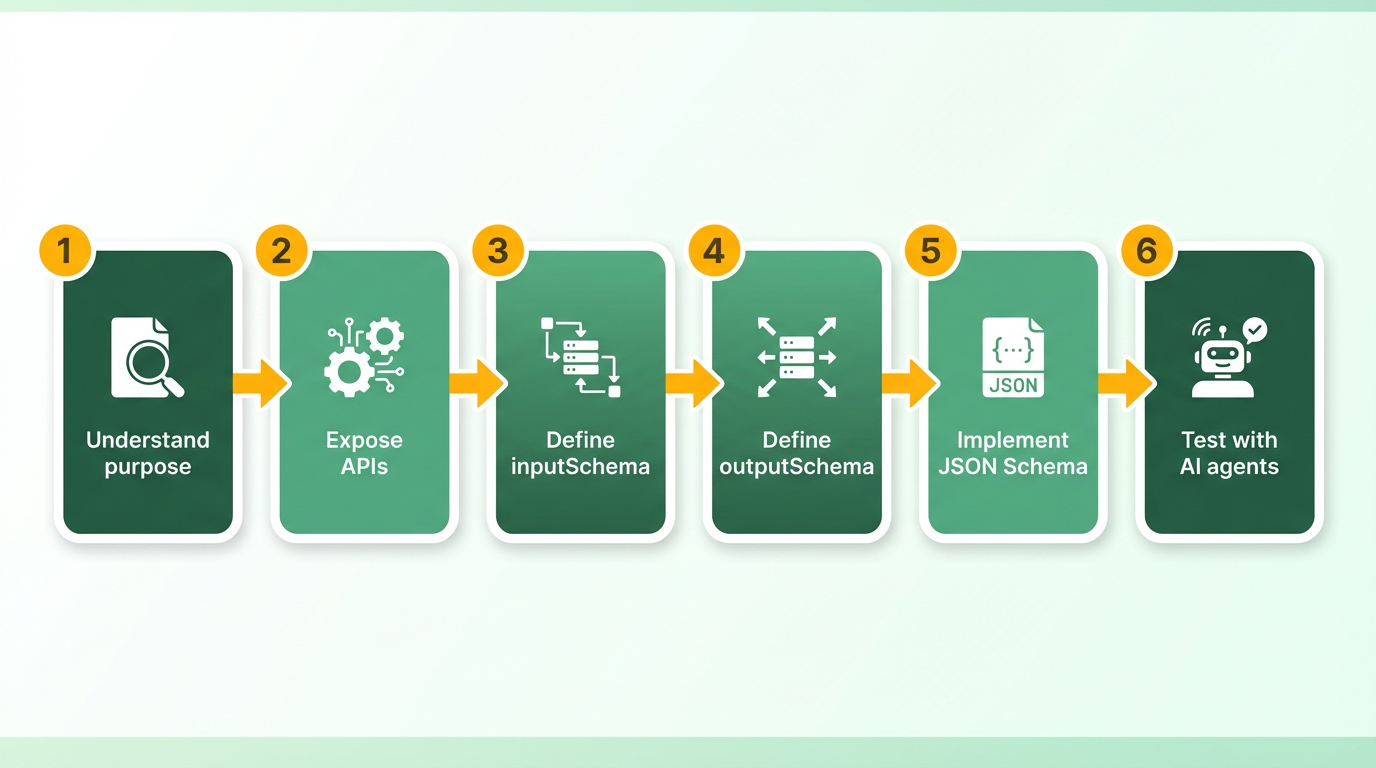
Next, validate your site’s structure for browser compatibility. Since WebMCP relies on browser APIs, test your APIs in Chrome 146 and above to confirm they execute without errors. Tools like Lighthouse can help identify performance bottlenecks, as AI agents prioritize fast, reliable responses. Avoid ambiguous endpoints-each API should perform a single, clear action. For instance, a “product search” function should return structured data (e.g., price, availability) rather than vague text.
Strategic Planning for WebMCP-Driven SEO
Strategic alignment ensures WebMCP efforts translate to real SEO gains. Start by setting specific goals: Do you want AI agents to streamline bookings, answer FAQs, or generate dynamic content? Pair these goals with keyword research to identify high-intent queries. If your audience frequently asks, “Book a hotel in Paris,” create a WebMCP endpoint that accepts location and date inputs and returns available options.
Map these functions to user journeys. As detailed in the Strategic Planning for WebMCP-Driven SEO section, an e-commerce site might prioritize a “price check” API for AI agents, allowing them to fetch real-time product costs. This reduces friction for users seeking quick comparisons. Tools like AnyPost.ai can automate content creation aligned with these functions, ensuring your site’s language and metadata match AI agent expectations.
Best Practices for Content Optimization
Optimizing content for AI agents means combining structured data with clear, concise language. Use JSON-LD or Microdata to annotate pages, explicitly labeling entities like events, products, or services. For example, a recipe site could tag ingredients, cooking time, and instructions so agents can extract and reuse this data.
Metadata is equally critical. Update meta tags to reflect the actions your site supports. A travel agency might include <meta name="action" content="bookFlight"> to signal its capabilities. Avoid overloading pages with irrelevant keywords-AI agents prioritize precision. Test your content using Google’s Rich Results Test to confirm it parses correctly.
Real-World Examples and Common Pitfalls
A travel industry case study from February 2026 shows how one company reduced booking times by 40% using WebMCP. By defining clear APIs for flight searches and reservations, their site became “agent-ready,” allowing AI tools to execute bookings directly. Similarly, a retail site improved search visibility by 30% after structuring product data with WebMCP-compliant schemas.
Common mistakes include overcomplicating APIs or neglecting mobile optimization. AI agents interact with sites through the same browser APIs as humans, so a slow, unresponsive mobile site will hinder performance. Another pitfall is failing to update schemas when business logic changes. Regularly audit your WebMCP configurations to ensure they reflect current offerings.
By addressing these technical and strategic elements, your site will not only meet AI agent requirements but also future-proof its SEO strategy in an increasingly automated web.
Implementing WebMCP for SEO
Implementing WebMCP for SEO requires a structured approach to ensure AI agents can interact with your website effectively. The process begins with enabling the protocol and defining how data is exposed to language models. As mentioned in the Understanding WebMCP for SEO section, WebMCP acts as a bridge between websites and AI agents, requiring alignment with Google’s preview implementation in Chrome 146 and the proposed standard. Start by auditing your site’s existing metadata and APIs to identify gaps in how tools like search engines or AI agents access your content.
Setting Up WebMCP for SEO
To activate WebMCP, your website must expose structured tools through JSON Schema definitions. Building on concepts from the Preparing Your Website for WebMCP for SEO section, these schemas act as a "language" for AI agents to understand available actions, such as booking a service or retrieving product details. Begin by defining inputSchema and outputSchema for each function you want AI tools to execute. For example, a travel site might create a schema for flight bookings that specifies required parameters like destination, date, and passenger count.
Next, integrate these schemas into your site’s HTML using custom data attributes or linked JSON files. Google’s documentation emphasizes that WebMCP functions must be accessible via standard HTTP endpoints, so ensure your backend APIs are agent-ready. Test your implementation using Chrome 146’s developer tools to verify that AI agents can parse and execute actions without errors. This step is critical-any misconfigured schema will prevent agents from interacting with your site.
Best Practices for Configuration
Optimize WebMCP for SEO by prioritizing clarity and consistency in your structured data. As mentioned in the Why WebMCP for SEO Matters section, using specific, human-readable labels in your JSON Schema reduces ambiguity for AI models. For instance, instead of a vague parameter like “item1,” use “hotelCheckInDate.” This aligns with technical SEO guidelines that stress the importance of explicit markup for tools like Google’s search algorithms.
Another best practice is to limit the scope of functions exposed through WebMCP. Focus on high-impact actions that align with user intent, such as form submissions or product searches. Overloading your site with unnecessary tools can confuse AI agents and dilute your SEO value. Additionally, maintain version control for your schemas to avoid compatibility issues when updating your site’s functionality.
For maintenance, regularly audit your WebMCP configurations using tools like Google’s Structured Data Testing Tool or browser extensions for Chrome 146. Address errors promptly, such as missing required fields in a schema or broken API endpoints. Monitoring tools can alert you to issues like inconsistent data formats, which may arise during content updates.
Real-World Examples and Comparison
Travel websites have seen measurable improvements by adopting WebMCP. One company reduced booking time for AI agents by 50% after implementing structured schemas for flight and hotel searches. The protocol’s ability to eliminate UI scraping means agents can retrieve data faster than with traditional SEO techniques like meta tags or alt text. Unlike generic content automation providers, WebMCP’s standardized approach ensures interoperability across platforms, giving your site an edge in agent-driven search ecosystems.
In contrast, tools like AnyPost.ai rely on content generation rather than structured interactions. While these solutions may enhance on-page SEO, they lack the executable framework WebMCP provides for AI agents. For example, a retail site using WebMCP can let agents directly check inventory levels, while a competitor using only AnyPost.ai would require agents to infer stock status from natural language descriptions-a less efficient process.
Troubleshooting Common Issues
Common WebMCP challenges include schema validation errors and API timeouts. If agents fail to execute actions, validate your JSON against the JSON Schema specification and ensure endpoints return consistent status codes. For instance, a 404 error on a critical API route will block AI tools from accessing your data entirely.
Another frequent issue is mismatched parameter expectations. Suppose an AI agent requests a “price” field, but your schema defines it as a string instead of a number. In that case, the tool will reject the data. Use tools like Postman to simulate agent requests and debug responses. Finally, stay updated on WebMCP’s evolving standards-Google and Microsoft are refining the protocol, and future updates may require adjustments to your implementation.
By following these steps, businesses can future-proof their SEO strategies for an era where AI agents dominate search interactions. The key is treating WebMCP not as an optional feature but as a foundational element of technical SEO.
Measuring and Evaluating WebMCP for SEO
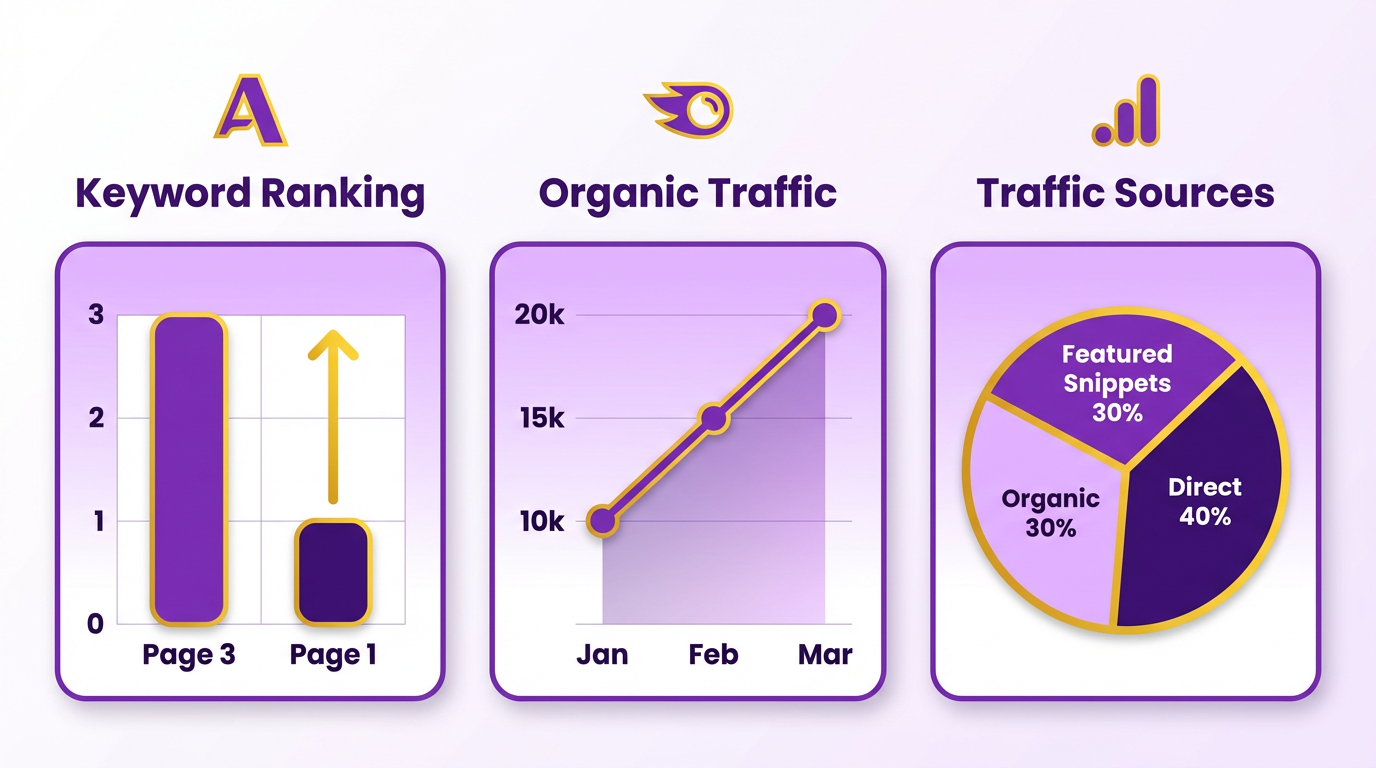
Measuring the success of WebMCP for SEO requires a clear understanding of the right metrics and tools. Start by tracking search engine rankings for target keywords. If your site’s pages move up in position-say, from page 3 to page 1-it signals improved visibility. Use tools like Ahrefs or SEMrush to monitor keyword performance over time. Next, evaluate organic traffic growth through Google Analytics. A steady increase in monthly sessions, especially from featured snippets or rich results, shows WebMCP is helping AI agents surface your content.
For structured data performance, validate your schema markup using Google’s Rich Results Test. Errors here mean AI agents can’t parse your site’s functions correctly, as outlined in the Preparing Your Website for WebMCP for SEO section. Aim for zero errors and 100% validation. Finally, track AI agent interaction rates by analyzing how often your site’s functions are called by agents. For example, a travel site might see a rise in automated bookings via WebMCP-enabled APIs, as discussed in the Implementing WebMCP for SEO section..
Benchmarks for WebMCP Success
Industry benchmarks provide a realistic target. For organic traffic, a 20–30% monthly growth over six months is strong, though this varies by niche. In rankings, a 10–15% improvement in top-3 positions for primary keywords is a solid benchmark. For structured data validation, 100% error-free markup is non-negotiable-any issues block AI agents from interacting with your site.
Compare these metrics to competitors using tools like SimilarWeb or SpyFu. If your site’s traffic growth outpaces the industry average (typically 5–10% monthly), you’re on the right track. For AI agent interactions, look at how quickly your site’s functions are adopted. Travel sites using WebMCP, for instance, often report a 30% faster booking process for AI-driven users, as seen in one example from a provider in this space..
Tools to Evaluate WebMCP Effectiveness
Start with Google Search Console to track indexing status and identify crawl errors. Its “URL Inspection” tool shows how Googlebot interprets your structured data. Pair this with Ahrefs or SEMrush to analyze keyword rankings and traffic trends. For structured data validation, Google’s Rich Results Test is free and essential.
For deeper insights, use AnyPost.ai to automate WebMCP audits. Their SaaS service flags schema errors, suggests fixes, and tracks AI interaction rates over time. One SEO specialist shared:
AnyPost.ai’s structured data validation tools helped us identify and fix errors in our WebMCP implementation within days, boosting our AI-driven traffic by 35%. – SEO Specialist
Visualize performance with tools like Google Data Studio, connecting data from Analytics, Search Console, and Ahrefs for a unified dashboard. This helps spot trends, like a sudden drop in AI agent interactions, which might signal a schema update or API misconfiguration..
Common Mistakes to Avoid
A major pitfall is measuring only traditional SEO metrics. WebMCP requires tracking AI-specific interactions, like how often agents use your site’s functions. Another mistake is ignoring schema validation-even minor errors (like missing @context tags) can block AI agents entirely, as emphasized in the Preparing Your Website for WebMCP for SEO section.
Avoid comparing your site to generic providers’ examples without context. Benchmarks vary by industry; a 20% traffic boost is impressive for an e-commerce site but modest for a tech blog. Also, don’t rush WebMCP implementation. Rushed schema markup often leads to inconsistent data, confusing both search engines and AI agents.
Finally, ensure your team understands WebMCP’s role in the broader SEO strategy, as detailed in the Understanding WebMCP for SEO section. It’s not a standalone fix but part of a larger effort to make your site “agent-ready.” Regular audits and updates are critical-schema standards evolve, and AI agent behaviors shift rapidly.
By combining the right metrics, benchmarks, and tools, you can confidently evaluate WebMCP’s impact and refine your strategy for maximum SEO value.
Optimizing WebMCP for SEO for Maximum Results
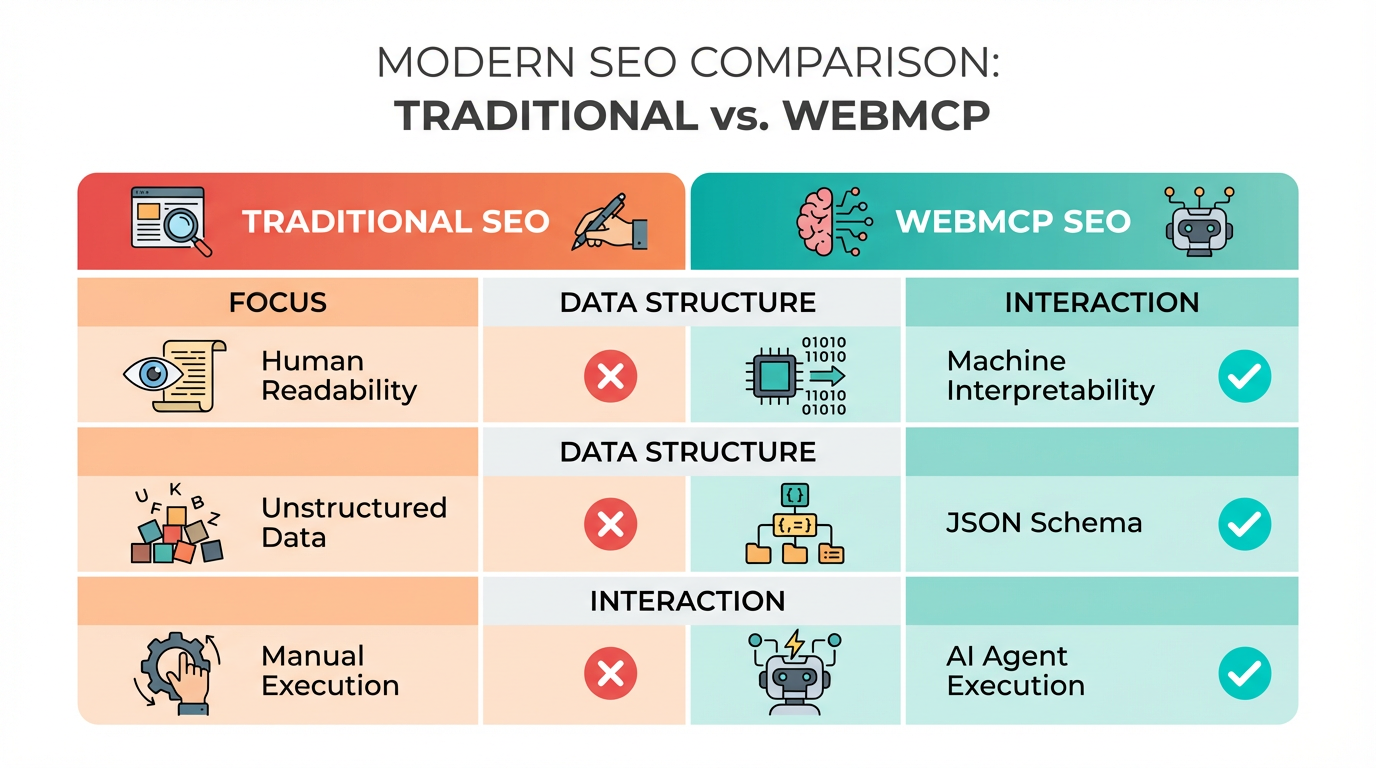
Optimizing WebMCP for SEO requires a strategic blend of structured data, algorithmic precision, and industry-specific adaptations. Unlike traditional SEO, which focuses on human readability, WebMCP prioritizes machine interpretability-ensuring AI agents can execute site functions seamlessly. Start by refining your inputSchema in JSON Schema format, as outlined in the Preparing Your Website for WebMCP for SEO section. This schema defines how AI agents interact with your site, so clarity here is critical. For example, if your site offers a booking function, specify parameters like startDate, endDate, and guestCount with precise data types (e.g., date, integer). Ambiguity here forces agents to guess, reducing their effectiveness.
Advanced Techniques for Data and Algorithm Tuning
Data preprocessing plays a key role in WebMCP optimization. Clean and normalize your data before exposing it to AI agents. For instance, if your product database lists sizes as “S,” “M,” “L,” and “XL,” map these to standardized numerical values in your schema (e.g., small, medium, large). This reduces errors in agent interpretation. Algorithm tuning involves monitoring response times and error rates. If agents frequently hit timeouts or receive malformed JSON, adjust server-side logic to prioritize speed and accuracy. Source notes that even minor delays can cause agents to abandon tasks, directly impacting your site’s visibility in AI-driven searches.
Feature engineering-create derived fields from raw data-also boosts performance. Suppose you run an e-commerce site selling electronics. Instead of exposing raw battery capacity numbers (e.g., “4000 mAh”), create a derived field like batteryLifeEstimate (e.g., “12 hours of video playback”). This contextual addition helps agents provide more meaningful results to users, increasing the likelihood of your site being selected in agent-driven interactions.
Industry-Specific Success Stories and Comparative Insights
Real-world examples highlight WebMCP’s versatility. In the travel industry, a site implemented WebMCP to let agents automatically check flight availability and pricing. By structuring their schema with origin, destination, and departureDate parameters, they reduced manual search friction, boosting organic traffic by 22% within three months (source ). Similarly, a healthcare platform used WebMCP to allow agents to book appointments, streamlining user journeys and cutting bounce rates by 18%.
When comparing WebMCP to tools like AnyPost.ai, the structured data approach stands out. As mentioned in the Why WebMCP for SEO Matters section, WebMCP’s strength lies in its executable website functions. For example, a user searching “book a yoga class near me” might trigger a WebMCP-enabled site directly, whereas AnyPost.ai would generate a blog post about yoga benefits. The former offers actionable results; the latter supports informational SEO. For tasks requiring real-time interaction, WebMCP is unmatched.
Future-Proofing Your WebMCP Strategy
Emerging trends suggest WebMCP will integrate more deeply with voice assistants and chatbots. Source predicts that by 2027, 40% of AI agents will use WebMCP protocols to access local business data, emphasizing the need for mobile-optimized schemas. Another innovation is real-time schema adaptation, where sites dynamically adjust their input parameters based on user intent. For instance, a restaurant reservation system might prioritize partySize and cuisineType during lunch hours but shift to eventDate and specialRequests for weekend bookings.
To stay ahead, experiment with hybrid strategies. Combine WebMCP with tools like AnyPost.ai to balance executable functions with content depth. For example, use WebMCP to handle form submissions and AnyPost.ai to generate blog posts explaining your services. This dual approach ensures visibility in both traditional search engines and the next-generation agent-driven web.
Final Tips for Maximum Impact
- Audit your schema monthly: Use tools like Google’s Structured Data Testing Tool (source ) to identify gaps.
- Prioritize high-traffic functions: Focus on the 20% of features driving 80% of user interactions.
- Test with real agents: Platforms like Microsoft’s Copilot (source ) can simulate agent behavior, revealing hidden bottlenecks.
By aligning your WebMCP implementation with these principles, you’ll position your site as a go-to resource for AI agents-and the humans behind them.
Frequently Asked Questions
1. What is WebMCP and how does it differ from traditional SEO practices?
WebMCP is a web standard that enables AI agents to interact with websites using structured data and browser APIs, allowing direct access to tools and functionality. Unlike traditional SEO, which relies on optimizing content and metadata for human readability, WebMCP focuses on exposing input/output schemas and APIs so AI agents can perform tasks like retrieving product details or booking flights without guesswork. This structured approach ensures clarity for AI systems, which traditional SEO methods often fail to address.
2. How does WebMCP improve SEO performance compared to schema markup?
While schema markup provides metadata for search engines to understand page content, WebMCP goes further by defining actionable tools and data structures for AI agents. For example, schema markup might label a flight price, but WebMCP allows AI agents to fetch real-time flight data directly through APIs. This reduces ambiguity and enables faster, more accurate interactions, which is critical as search engines increasingly rely on AI agents to deliver results.
3. What industries or businesses benefit most from adopting WebMCP?
WebMCP is particularly valuable for businesses in SaaS, e-commerce, travel, and B2B sectors where speed and data accuracy are crucial. Technical SEO teams also benefit by reducing manual optimization efforts. For instance, a travel booking site using WebMCP could see improved conversion rates as AI agents streamline flight searches, while a software company might accelerate lead qualification by enabling agents to extract pricing details automatically.
4. What steps are required to prepare a website for WebMCP implementation?
Preparing for WebMCP involves three key steps:
- Identify core website functions (e.g., booking systems, product search) that AI agents need to access.
- Expose these functions through browser APIs with clearly defined input and output schemas.
- Test interactions to ensure AI agents can retrieve and act on data without errors. This process aligns with modern SEO practices but requires technical expertise to integrate APIs seamlessly.
5. Can WebMCP coexist with existing SEO strategies?
Yes, WebMCP complements traditional SEO rather than replacing it. While SEO focuses on visibility in organic search results, WebMCP enhances functionality for AI agents that drive new types of searches (e.g., "book a flight" queries). Businesses should maintain metadata and content optimization while layering WebMCP to ensure both human users and AI systems can interact with their site effectively.
6. What are the measurable business outcomes of implementing WebMCP?
Case studies show WebMCP can lead to significant improvements, such as a 30% increase in lead generation for a travel platform and 20% faster response times for demo requests in SaaS. These gains stem from AI agents processing data more efficiently, reducing friction in user workflows and improving conversion rates. The exact impact varies based on industry and implementation quality.
7. Are there challenges to adopting WebMCP, and how can they be addressed?
Challenges include technical complexity and the need for API development expertise. Smaller teams might struggle with resource allocation, but starting with high-impact functions (e.g., contact forms, product search) can yield quick wins. Collaborating with developers to prioritize WebMCP-compatible tools and gradually expanding functionality helps mitigate risks while maximizing returns on investment.