
What is a backlink? How to optimize using backlinks

Understanding Backlinks
A backlink, also referred to as an inbound or incoming link, is a hyperlink from one website to another, serving as a reference or endorsement of the linked content [2]. This fundamental concept underpins much of search engine optimization (SEO), where backlinks act as a vote of confidence from one site to another [7]. Search engines like Google use backlinks as a key metric to assess the authority and relevance of web pages, directly influencing their rankings in search results [14]. When a reputable website links to your content, it signals to search engines that your site is a trustworthy source of information, potentially boosting your visibility in organic search results [5].
Types of Backlinks
Backlinks can be categorized based on their function and attributes. External backlinks originate from websites outside your domain, while internal backlinks connect pages within the same website. Internal links help search engines crawl and index your content more effectively, but they are not considered backlinks in the traditional SEO sense [8]. For SEO purposes, external backlinks are the primary focus, as they represent third-party validation of your content’s value [2].
Another critical distinction lies in dofollow and nofollow backlinks. Dofollow links pass authority and ranking power to the linked page, directly impacting SEO performance [10]. In contrast, nofollow links include a rel="nofollow" attribute, instructing search engines not to transfer authority to the linked page. While nofollow links do not directly influence rankings, they can still drive referral traffic and are valuable for building relationships with other websites [5]. Understanding these types allows marketers to prioritize high-quality dofollow links from authoritative domains [14]. See the Strategies for Building High-Quality Backlinks section for more details on prioritizing dofollow links.
Impact on Website Rankings and SEO
The number and quality of backlinks significantly affect website rankings. Search engines interpret a higher volume of backlinks as a sign of popularity and relevance, but this metric alone does not guarantee success [14]. A single backlink from a high-authority domain, such as a well-established industry blog, can have more SEO value than multiple links from low-quality or spammy sites [7]. Tools like Ahrefs measure domain rating, which quantifies a site’s backlink strength, helping SEO professionals identify opportunities for improvement [10]. See the Measuring and Tracking Backlink Performance section for more details on using tools like Ahrefs to assess backlink strength.
Backlinks also contribute to off-page SEO, which encompasses all activities outside your website that influence rankings. As mentioned in the The Role of Backlinks in SEO Optimization section, backlinks are key signals of trust and authority to search engines. According to research, strategic backlink building is essential for increasing online visibility and driving organic traffic [15]. However, the focus must remain on relevance and authority rather than sheer volume. For example, a local business might benefit more from backlinks from regional directories than from generic, unrelated websites [13]. This aligns with the principle that backlinks should reflect natural, editorially given links rather than manipulative tactics [7].
Common Myths and Misconceptions
Despite their importance, several myths surround backlinks. One prevalent misconception is that quantity always trumps quality. While more backlinks can enhance rankings, irrelevant or low-quality links often harm SEO by triggering penalties from search engines [13]. Another myth is that all backlinks are equal, ignoring the nuanced value of dofollow versus nofollow links or the authority of the linking domain [5]. Additionally, some assume that internal links function as backlinks, but they serve a different purpose by improving site navigation and content discovery [8].
A final misconception is that backlinks alone guarantee top rankings. While backlinks are a critical factor, they must be part of a holistic SEO strategy that includes on-page optimization, technical SEO, and user experience improvements [14]. Search engines evaluate websites based on a combination of metrics, and backlinks are just one piece of the puzzle [7]. By debunking these myths, marketers can adopt a more balanced approach to backlink building and avoid costly mistakes.
By understanding the role of backlinks in SEO, businesses can develop strategies that prioritize quality, relevance, and authority. This foundational knowledge sets the stage for implementing actionable techniques to acquire and optimize backlinks effectively.
The Role of Backlinks in SEO Optimization
Backlinks play a central role in SEO optimization by acting as signals of trust, authority, and relevance to search engines. Search algorithms, such as those used by Google, interpret backlinks as endorsements from one website to another, with each link representing a vote of confidence in the linked content’s value [2]. This mechanism directly influences rankings, as search engines prioritize websites that demonstrate widespread credibility through organic backlink acquisition [14]. The cumulative weight of these links contributes to a site’s authority, which is a foundational factor in determining its position in search results [6]. However, the impact of backlinks extends beyond mere quantity; relevance and the contextual placement of links within content are equally critical for effective SEO [7].
Ranking Factors Influenced by Backlinks
Three primary ranking factors—authority, relevance, and trust—are directly shaped by backlinks. Authority is determined by the number and quality of backlinks from high-domain-rating sites, as these signals indicate that a website is a reliable information source [10]. For example, a site with backlinks from well-established domains in its niche is likely to rank higher than one with links from unrelated or low-traffic websites [14]. Relevance is equally vital: search engines evaluate whether the linking site’s content aligns with the target page’s topic. A backlink from a finance blog to a page about investment strategies carries more weight than a similar link from a gaming site [7]. Trust is reinforced when backlinks originate from reputable, secure (HTTPS) websites with strong historical performance, as these links reduce the risk of associating with spammy or low-quality content [13].
Importance of High-Quality Backlinks
High-quality backlinks are essential for sustainable SEO success, as they provide long-term visibility benefits while minimizing risks. Unlike low-value links, quality backlinks are earned through strategies such as content marketing, guest blogging, and partnerships with authoritative domains [4]. For instance, Backlinko emphasizes that backlinks from sites with high domain authority and strong traffic metrics can significantly boost search rankings [5]. See the Strategies for Building High-Quality Backlinks section for more details on tactics like guest blogging and content marketing. Additionally, quality links often arise from natural engagement, such as when other websites reference original research or expert insights [6]. This organic growth is critical, as search engines prioritize links that reflect genuine interest in a site’s content over artificially acquired links [14].
Identifying and Avoiding Low-Quality Backlinks
Low-quality backlinks can harm SEO performance by associating a site with spammy or irrelevant sources. To identify these, tools like Google Search Console and Ahrefs enable backlink analysis by revealing metrics such as domain rating, link text diversity, and referral traffic [9]. As mentioned in the Measuring and Tracking Backlink Performance section, these tools help evaluate the health of a backlink profile. For example, a sudden influx of links from domains with poor SEO hygiene—such as those hosting malware or excessive low-quality content—signals potential risks [10]. Strategies to avoid such pitfalls include disavowing harmful links via Google’s Disavow Tool and auditing backlink profiles regularly [14]. Furthermore, focusing on earning links from niche-specific websites with high relevance and traffic ensures that backlink profiles remain aligned with SEO best practices [13].
By prioritizing quality over quantity and aligning backlink acquisition with strategic SEO goals, websites can enhance their visibility in search engine results while maintaining credibility. The interplay between backlinks and ranking factors underscores their indispensable role in modern SEO optimization.
Strategies for Building High-Quality Backlinks
To build high-quality backlinks, prioritize strategies that emphasize value creation, relationship-building, and technical optimization. Guest blogging remains a foundational tactic, as it allows you to publish content on authoritative sites while earning backlinks to your own domain. When selecting platforms for guest posts, focus on sites with relevant audiences and strong domain authority, as this increases the likelihood of both referral traffic and search engine credibility [3]. BrightEdge emphasizes using tools to audit backlink profiles and identify guest blogging opportunities aligned with your niche [3], while Backlinko highlights the importance of crafting content that addresses specific audience pain points to maximize engagement and link equity [5]. Additionally, guest blogging fosters relationships with site owners, which can lead to future collaboration opportunities [8]. See the Measuring and Tracking Backlink Performance section for more details on tools like Backlink Audit that support this process [1].
Creating resource pages is another effective method for earning backlinks. A well-structured resource page—such as a roundup of industry tools, guides, or case studies—positions your site as a go-to reference, encouraging other websites to link to it. To optimize this strategy, ensure the page includes internal links to your other relevant content and strategically references high-quality external sources. This reciprocal linking not only enhances user experience but also signals to search engines that your site curates valuable information [7]. According to a study on optimizing online visibility, resource pages that systematically address search intent and user needs are more likely to attract organic backlinks [13]. Building on concepts from the Advanced Backlink Optimization Techniques section, optimizing anchor text and internal linking further strengthens this strategy [7]. Use tools like Backlink Audit to analyze competitors’ resource pages and identify gaps your content can fill [1].
Broken link building involves identifying non-functional links on external websites and offering your content as a replacement. This strategy benefits both parties: the site owner fixes a technical issue, and you earn a contextual backlink. Start by using tools like Backlink Analytics to find broken links in your niche, then reach out to site administrators with a polite, value-driven pitch [4]. This method is particularly effective because it leverages existing link equity from the host site, as the link is often in a relevant context [7]. Addressing broken links also aligns with the Common Backlink Optimization Mistakes to Avoid section, as poor technical execution can harm user experience and SEO [4].
Leveraging relationships with other websites and influencers is critical for sustainable backlink growth. Direct outreach to industry leaders—whether through social media, email, or collaborative projects—can result in natural backlinks when your content is referenced or shared. For example, Backlinko notes that personal connections with influencers often lead to guest posting opportunities or mentions in their content [5]. Tools like Link Intersect can help identify websites that frequently link to competitors but not to your site, enabling targeted outreach efforts [8]. BrightEdge also recommends maintaining a database of potential link partners and consistently nurturing these relationships through shared value, such as co-created content or mutual promotions [3].
Optimizing Backlinks with Automated Content Generation
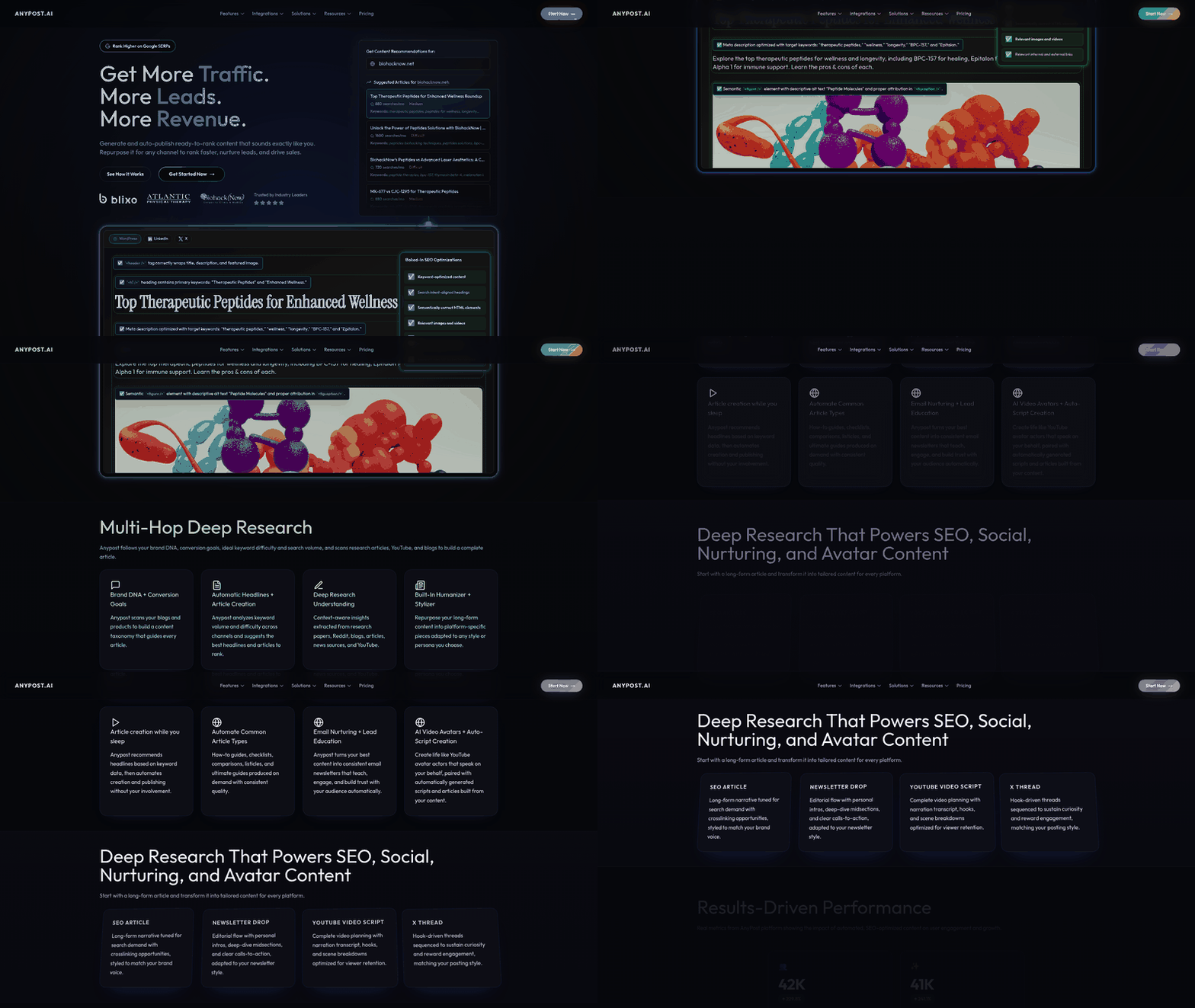
Automated content generation leverages AI and SaaS tools to streamline the creation of high-quality, SEO-optimized content that attracts backlinks. By analyzing data patterns and search trends, these systems identify topics and keywords with high link-potential, allowing marketers to focus on areas likely to drive organic backlink growth [3]. For instance, AI-driven platforms can automate keyword research, draft content outlines, and even generate full articles tailored to specific audience segments, ensuring alignment with backlink acquisition goals [13]. This approach minimizes guesswork by prioritizing data-driven decisions, such as targeting under-optimized keywords that competitors overlook [3]. As mentioned in the [Understanding Backlinks] section, backlinks serve as endorsements of content quality, making targeted content creation a cornerstone of effective SEO.
How AI-Powered Tools Enhance Backlink Optimization
AI-powered tools refine backlink strategies by automating tasks like competitor analysis, content gap identification, and performance tracking. These systems use machine learning to scan competitor backlink profiles, highlighting high-authority domains or pages that can be targeted for link-building [13]. For example, an AI tool might analyze which topics generate the most backlinks for competitors and recommend similar themes for original content creation [3]. Building on concepts from [Strategies for Building High-Quality Backlinks], this data-informed approach mirrors manual competitor research but at scale. Additionally, AI can optimize on-page elements—such as meta tags, headers, and internal linking structures—to improve the visibility of content, indirectly boosting backlink acquisition [13]. By continuously learning from search engine updates and user engagement metrics, these tools adapt strategies in real time, ensuring sustained backlink growth [13].
Streamlining Backlink Management with SaaS Platforms
SaaS platforms centralize backlink management by integrating automated content generation with SEO analytics, reporting, and monitoring. These tools often include dashboards that track key metrics like domain authority, referral traffic, and backlink quality, enabling teams to prioritize high-impact opportunities [3]. See the [Measuring and Tracking Backlink Performance] section for more details on the metrics used to evaluate backlink effectiveness. For example, a SaaS solution might automatically flag broken backlinks or toxic links requiring disavowal, reducing manual auditing efforts [13]. Many platforms also offer collaboration features, allowing teams to assign tasks, share insights, and align content creation with backlink goals [3]. Advanced SaaS tools further automate workflows by connecting content generation with distribution channels, such as guest posting networks or social media, to amplify link-building potential [13]. By consolidating these functions into a single interface, SaaS platforms reduce friction between content creation and SEO execution [3].
Best Practices for Integration
To maximize the synergy between automated content generation and backlink optimization, adopt strategies that emphasize quality, relevance, and continuous improvement. First, align AI-generated content with existing SEO goals by inputting specific keywords, audience personas, and competitor benchmarks into the automation tools [13]. This ensures that generated content addresses search intent and fills gaps in the current backlink profile [3]. Second, use SaaS platforms to conduct regular backlink audits, identifying high-performing content for further promotion and underperforming assets for revision or removal [13]. Third, prioritize content that offers unique value—such as in-depth guides, original research, or industry-specific insights—to naturally attract backlinks from authoritative sources [3]. Finally, combine automated tools with manual efforts by leveraging AI for initial drafting but involving human reviewers to refine tone, accuracy, and strategic relevance [13]. This hybrid approach balances scalability with the nuanced quality needed to earn and retain backlinks.
By integrating automated content generation with structured backlink management practices, organizations can achieve a more dynamic and responsive SEO strategy. The key lies in using AI and SaaS tools not as replacements for human expertise but as accelerators that enhance precision, efficiency, and scalability in link-building efforts [3][13].
Measuring and Tracking Backlink Performance
Measuring and tracking backlink performance is critical to optimizing SEO strategies, as it enables data-driven adjustments to improve website visibility and authority. Key metrics for evaluating backlink effectiveness include domain authority (DA), page authority (PA), domain rating (DR), and the quantity and quality of backlinks. Domain authority, a metric developed by Moz [14], predicts a website’s ability to rank based on its backlink profile, while domain rating, tracked by tools like Ahrefs [10], measures the strength of a site’s backlink profile relative to competitors. Page authority focuses on individual pages rather than entire domains [14], helping identify high-performing content. Additionally, the ratio of dofollow to nofollow links, as well as the diversity of referring domains, are essential indicators of link equity and spam score risk [6]. These metrics collectively provide a comprehensive view of a site’s backlink health. See the [Understanding Backlinks] section for foundational definitions of backlink terminology.
Tools for Tracking Backlink Performance
Several tools streamline backlink monitoring and analysis. Ahrefs [10] offers domain rating tracking and competitor comparison features, allowing users to identify gaps in their backlink profiles. SEMrush and Moz [1] provide similar functionalities, including backlink audits and link-building prospect identification. Google Search Console [9] is a free, native tool for tracking indexed backlinks and identifying toxic links requiring disavowal. SiteGuru’s Backlink Insights [6] emphasizes competitor analysis, enabling users to benchmark their profiles against industry peers. BrightEdge [3] highlights the importance of integrating these tools to leverage comprehensive data for strategic decision-making. For advanced analysis, Link Intersect tools [8] help uncover overlapping backlink opportunities between competitors and target sites, refining outreach efforts. Building on concepts from [Strategies for Building High-Quality Backlinks], these tools support actionable outreach and content creation.
Analyzing and Interpreting Backlink Data
Analyzing backlink data involves evaluating metrics like traffic contribution, anchor text diversity, and link placement relevance. High-authority domains with relevant content contribute more to rankings than low-quality, spammy links [14]. Ahrefs’ Backlink Gap feature [10] identifies competitors’ backlinks that your site lacks, guiding targeted outreach campaigns. Moz’s Link Explorer [1] categorizes links by equity, helping prioritize high-value acquisition opportunities. It is also crucial to assess anchor text distribution; over-optimized keywords may trigger penalties, while natural variations improve SEO performance [9]. Tools like BrightEdge [3] recommend auditing nofollow links to assess referral traffic potential, even if they do not directly boost rankings. Regular audits help detect broken links or outdated content requiring updates [13], maintaining a clean and effective backlink profile. See the [Common Backlink Optimization Mistakes to Avoid] section for guidance on preventing over-optimization pitfalls.
Using Data to Refine Backlink Strategies
Backlink performance data should inform iterative improvements to SEO strategies. For instance, if analysis reveals underperforming pages with high authority potential [14], content optimization and internal linking can amplify their impact. Competitor benchmarking via tools like SEMrush [1] identifies high-value domains for outreach, while low-hanging opportunities—such as guest post requests to sites linking to competitors [8]—can expand backlink diversity. Adjusting strategies based on domain rating trends [10] ensures focus on acquiring links from domains with strong SEO value. BrightEdge [3] emphasizes using real-time analytics to track the ROI of backlink campaigns, correlating link acquisition efforts with ranking improvements. Finally, disavowing toxic links through Google Search Console [9] mitigates risks from low-quality or manipulative backlinks, safeguarding long-term SEO health. By systematically measuring metrics, leveraging specialized tools, and interpreting data to refine tactics, SEO practitioners can optimize backlink profiles for sustainable growth. Regular audits and competitor comparisons ensure strategies remain adaptive to algorithmic changes and market dynamics [6].
Common Backlink Optimization Mistakes to Avoid
Common backlink optimization mistakes often stem from a misunderstanding of how search engines evaluate link equity and relevance. Over-optimization, keyword stuffing, and reliance on low-quality link schemes are pitfalls that can damage a website’s credibility and rankings [3]. These errors typically arise when marketers prioritize short-term gains over sustainable strategies, leading to unnatural link profiles that trigger algorithmic penalties. To avoid these issues, it is critical to align backlink-building efforts with guidelines from authoritative sources like BrightEdge [3] and incorporate tools designed for analysis and optimization [9].
Over-Optimization and Anchor Text Imbalance
Over-optimization occurs when anchor text becomes too repetitive or overly targeted, signaling manipulation to search engines [3]. For example, using the same exact-match keyword (e.g., “best SEO tools”) for every backlink diminishes the authenticity of the link profile. This practice can lead to manual penalties or algorithmic downgrades, as demonstrated by BrightEdge’s emphasis on diversity in anchor text [3]. Instead, a balanced approach includes variations such as branded terms, Naked URLs, and generic phrases like “click here” [3]. Tools like SiteGuru [6] can audit anchor text distribution to identify over-optimized patterns. See the [Strategies for Building High-Quality Backlinks] section for more details on how to naturally incorporate diverse anchor text through content creation and outreach.
The Risks of Keyword Stuffing in Link Acquisition
Keyword stuffing in backlink optimization involves creating or soliciting links with anchor text packed with primary keywords, often in unnatural ways [3]. This tactic violates search engine guidelines and reduces user experience by making links appear spammy. For instance, a directory listing with anchors like “SEO services, digital marketing, SEO company” for a single URL is a red flag [3]. To mitigate this, focus on creating high-quality content that naturally earns diverse backlinks, as outlined in [4]. Building on concepts from [The Role of Backlinks in SEO Optimization], prioritize user intent over keyword targets when crafting anchor text, ensuring links provide value beyond search rankings.
Avoiding Low-Quality Link Schemes
Low-quality link schemes include tactics like buying links, participating in link farms, or using automated tools to generate backlinks [3]. These methods violate Google’s Webmaster Guidelines and can result in severe ranking drops [7]. For example, purchasing links from irrelevant websites or spammy directories dilutes the authority of a site’s backlink profile [3]. To avoid this, focus on earning links through legitimate outreach, guest blogging, and partnerships, as advocated in [4]. See the [Measuring and Tracking Backlink Performance] section for insights on using tools to identify and remove toxic links from untrustworthy sources.
Best Practices for a Natural Backlink Profile
Maintaining a healthy backlink profile requires a strategic balance of quality, diversity, and relevance. BrightEdge [3] emphasizes the importance of earning links from authoritative domains within your niche, as these carry more weight than generic links. Additionally, [4] highlights the role of content quality in attracting organic backlinks, suggesting that in-depth guides, case studies, and original research are more likely to be shared. Tools like Ahrefs or SEMrush [9] can track competitors’ backlink strategies to identify untapped opportunities while avoiding over-saturated tactics. Finally, prioritize user-centric content creation over technical manipulations, as search engines increasingly reward websites that deliver real value [10].
By avoiding these common mistakes and adhering to established best practices, marketers can build a robust backlink profile that enhances both search visibility and user trust. Regular monitoring with analytical tools [3][9] and a commitment to ethical link-building ensure long-term sustainability in an evolving SEO landscape.
Advanced Backlink Optimization Techniques
Advanced backlink optimization requires a strategic approach that combines technical precision with creative content development. By leveraging internal linking, optimizing anchor text, and creating high-value linkable assets, websites can enhance their authority and visibility in search engine rankings. These techniques, supported by competitive analysis and advanced tools, provide a framework for sustaining long-term SEO success. Below are actionable strategies for implementing these methods effectively.
Internal Linking Strategies
Internal linking connects pages within your website, distributing authority and improving navigation for both users and search engines. As mentioned in the [Measuring and Tracking Backlink Performance] section, a backlink audit reveals opportunities to strengthen internal linking by identifying underlinked pages or siloed content. For example, linking from high-authority pages (e.g., blog posts) to lower-authority pages (e.g., product pages) can boost the latter’s rankings [9]. Tools like Ahrefs [10] help analyze domain ratings and track how internal links contribute to page authority. Additionally, [4] emphasizes optimizing internal links for user experience (UX), ensuring pathways align with search intent and reduce bounce rates. To maximize impact, prioritize linking to cornerstone content—comprehensive guides or pillar pages—that serve as central hubs for related topics.
Anchor Text Optimization
Anchor text—the clickable text in a hyperlink—plays a critical role in signaling a page’s relevance to search engines. [3] highlights best practices, such as varying anchor text to avoid over-optimization penalties and using natural language. For instance, instead of repeatedly using exact-match keywords (e.g., “best SEO tools”), mix in branded terms, partial matches, and long-tail phrases. See the [Strategies for Building High-Quality Backlinks] section for more details on analyzing competitors’ anchor text profiles to identify gaps and opportunities. Tools like BrightEdge [3] and Backlinko [5] provide insights into anchor text distribution, helping marketers balance keyword targeting with semantic diversity. [14] further notes that keyword density and backlink gap analysis can refine anchor text strategies, ensuring alignment with evolving search algorithms.
Creating Linkable Assets
High-quality, shareable content—such as infographics, eBooks, and webinars—attracts backlinks by offering intrinsic value to audiences. [4] identifies these as key strategies for 2026, emphasizing their role in generating organic link equity. For example, an infographic summarizing industry trends can be embedded on third-party websites, earning contextual backlinks [8]. [5] suggests pairing such assets with case studies or whitepapers to establish thought leadership. To amplify reach, promote linkable assets through guest posts, email campaigns, and social media, as outlined in [6]. Additionally, [15] advises optimizing these resources for SEO by incorporating targeted keywords and ensuring mobile responsiveness.
Competitive Backlink Analysis
Analyzing competitors’ backlink profiles uncovers untapped opportunities for link-building. [1] recommends using backlink analytics tools to compare your site’s link equity with competitors, identifying high-authority domains for outreach. For instance, the Link Intersect tool [8] reveals overlapping backlink sources, enabling targeted campaigns to acquire similar links. [9] further suggests auditing competitors’ broken backlinks and reaching out to webmasters to replace them with your content—a technique known as “broken link building.” By leveraging tools like SiteGuru [6] or BrightEdge [3], marketers can assess competitors’ anchor text strategies and content gaps, refining their own tactics for a competitive edge. As mentioned in the [Measuring and Tracking Backlink Performance] section, continuous backlink monitoring is essential to adapt to algorithmic changes and maintain relevance. [13] underscores this importance.
Advanced Techniques for Sustainable Growth
Beyond foundational strategies, advanced techniques include leveraging user-generated content (UGC) and optimizing for semantic SEO. [10] highlights UGC—such as reviews or forums—as a low-cost way to earn natural backlinks. Additionally, [4] and [14] stress the importance of semantic SEO, where content is optimized for related terms and topics to align with search engines’ evolving understanding of context. For example, using schema markup to enhance rich snippets can indirectly improve backlink acquisition by increasing click-through rates. Finally, [5] advocates for a data-driven approach, combining backlink audits with content performance metrics to prioritize high-impact initiatives. By integrating these advanced methods, websites can secure a lasting competitive advantage in search rankings.
Backlink Optimization for Multi-Channel Content Repurposing
Multi-channel content repurposing involves distributing the same or adapted content across multiple platforms to maximize reach and engagement. This strategy enhances backlink opportunities by increasing visibility and driving traffic from diverse audiences [10]. For example, a blog post can be transformed into a Twitter thread, a YouTube video, and a newsletter article, each serving as a potential source of backlinks when linked strategically. The primary benefit of this approach is the ability to leverage platform-specific audiences to amplify content authority and improve search engine rankings, as discussed in the [Role of Backlinks in SEO Optimization] section [4]. By aligning backlink optimization with multi-channel distribution, content creators can systematically build a network of referring domains, as emphasized in backlink strategy frameworks [7].
Optimizing Backlinks for Social Media Platforms
Twitter and similar platforms require concise, high-engagement content to drive traffic and earn backlinks. A key strategy is to embed links to long-form content (e.g., blogs or landing pages) in tweets, ensuring they are accompanied by hashtags and mentions that align with niche communities [3]. For instance, sharing a data-driven Twitter thread and linking to a detailed blog post can attract niche websites to reference the content, generating contextual backlinks [5]. Additionally, engaging in Twitter conversations by responding to industry leaders and sharing their content can create reciprocal backlink opportunities, as outlined in the [Strategies for Building High-Quality Backlinks] section [6].
To maximize effectiveness, track the performance of shared links using UTM parameters to identify which tweets drive the most referral traffic. This data informs future content repurposing efforts, allowing prioritization of high-performing topics [9]. However, note that social media platforms themselves rarely provide direct SEO value through backlinks; instead, their role is indirect, as they drive traffic that may lead to backlinks from external websites, a concept explored in depth in the [Measuring and Tracking Backlink Performance] section [2].
Leveraging YouTube and Video Content for Backlink Optimization
YouTube is a powerful channel for backlink acquisition due to its high domain authority and user engagement. To optimize backlinks through video content, include links to relevant blog posts, tools, or resources in the video description box. Custom YouTube URLs can also redirect viewers to targeted landing pages, increasing the likelihood of backlinks from third-party sites [6].
Another strategy is to collaborate with other YouTubers for guest appearances or co-created content, which can result in natural backlinks when collaborators reference each other’s channels or linked resources [5]. Additionally, embedding YouTube videos on blogs or websites creates reciprocal backlinks, enhancing the SEO value of both the video and the host site [7].
For maximum impact, optimize video metadata (titles, descriptions, tags) with keywords that align with the linked content. This improves YouTube’s own search visibility and increases the chances of external websites discovering and citing the content [12].
Backlink Strategies for Newsletters and Email Marketing
Newsletters serve as a direct channel to engage subscribers while promoting content that earns backlinks. Including links to in-depth blog posts, case studies, or whitepapers in newsletters encourages readers to share or reference the content, creating indirect backlink opportunities [10]. To enhance this, segment email lists based on interests and tailor linked content to specific audience needs, increasing the likelihood of engagement [3].
Another approach is to use newsletters for outreach. For example, sharing a newsletter with industry-specific email lists or partnerships can lead to backlinks when recipients cite the distributed content [8]. Additionally, embedding newsletter signup forms on blogs or websites creates a feedback loop, where increased signups lead to broader content distribution and referral traffic [9].
While newsletters themselves rarely generate backlinks, their role in nurturing relationships with influencers, clients, or partners can facilitate direct backlink requests. For instance, clients or collaborators may reference a company’s newsletter content in their own blogs or websites, providing valuable backlinks [8].
Cross-Channel Synergy and Performance Tracking
To optimize backlinks across all channels, ensure consistency in messaging and linking strategies. For example, a YouTube video, Twitter thread, and newsletter article on the same topic should all link to a central blog post, consolidating referral traffic and backlink value [4]. Tools like Google Analytics and backlink analysis platforms (e.g., SiteGuru [6]) can track referral sources, helping identify which channels contribute most to backlink growth.
Regularly audit backlink profiles to detect low-quality or broken links, as these can harm SEO. Tools such as Ahrefs or SEMrush (not explicitly cited in sources) are commonly referenced in backlink analysis, but the principles of monitoring and refining link quality are universally applicable [9]. By integrating multi-channel content with disciplined backlink tracking, creators can systematically improve their site’s authority and search visibility.
References
[1] Optimize Backlinks - https://www.semrush.com/kb/1210-optimize-backlinks
[2] What Are Backlinks in SEO & Why You Need Them - https://backlinko.com/hub/seo/backlinks
[3] How to get Backlinks | BrightEdge - https://www.brightedge.com/resources/backlink-strategies
[4] 7 Strategies to Get High Quality Backlinks in 2026 - https://backlinko.com/high-quality-backlinks
[5] Backlinko: SEO, Content Marketing, & Link Building Strategies - https://backlinko.com/
[6] Backlink Insights | SiteGuru - https://www.siteguru.co/features/backlink-insights
[7] The Role of Backlinks in SEO: Building a Backlink Strategy ... - https://www.americaneagle.com/insights/blog/post/the-role-of-backlinks-in-seo
[8] Backlinks from Client Sites, Sites You Own, Widgets, & Embedded ... - https://moz.com/blog/backlinks-maximize-benefits-avoid-problems-whiteboard-friday
[9] Backlink Analysis for SEO: Tools, Strategies, and Techniques - https://www.promodo.com/blog/backlink-analysis-guide
[10] Four Ways to Increase Website Visibility with Off-Page SEO - https://netpeak.us/blog/four-ways-to-increase-website-visibility-with-off-page-seo/
[11] (PDF) The Role of Backlinks in Search Engine Ranking - https://www.researchgate.net/publication/303856621_The_Role_of_Backlinks_in_Search_Engine_Ranking
[12] (PDF) Optimizing online visibility: A comprehensive study on ... - https://www.researchgate.net/publication/383056529_Optimizing_online_visibility_A_comprehensive_study_on_effective_SEO_strategies_and_their_impact_on_website_ranking
[13] Optimizing online visibility: A comprehensive study on effective SEO ... - https://www.researchgate.net/publication/383056529_Optimizing_online_visibility_A_comprehensive_study_on_effective_SEO_strategies_and_their_impact_on_website_ranking
[14] (PDF) The Role of Backlinks in Search Engine Ranking - https://www.researchgate.net/publication/303856621_The_Role_of_Backlinks_in_Search_Engine_Ranking
[15] (PDF) The Optimization of Website Visibility and Traffic by ... - https://www.researchgate.net/publication/343235216_The_Optimization_of_Website_Visibility_and_Traffic_by_Implementing_Search_Engine_Optimization_SEO_in_Palembang_Polytechnic_of_Tourism
Frequently Asked Questions
1. Why are backlinks important for SEO?
Backlinks act as endorsements from other websites, signaling to search engines that your content is trustworthy and valuable. High-quality backlinks from authoritative domains increase your site's credibility and visibility in search results. They contribute to off-page SEO, which is a critical factor in search engine algorithms like Google's PageRank. However, quality matters more than quantity—relevance and authority of the linking site are key.
Q: How can I get high-quality backlinks?
A: Focus on creating valuable, unique content that others naturally want to link to. Strategies include guest blogging on reputable sites, collaborating with influencers, participating in industry forums, and reaching out to websites for backlink opportunities. Tools like Ahrefs can help identify potential linking domains with high domain ratings. Additionally, broken link building (finding broken links and offering your content as a replacement) and leveraging user-generated content (e.g., reviews or comments) can also generate quality backlinks.
Q: What's the difference between dofollow and nofollow links?
A: Dofollow links pass SEO authority to the linked page, directly improving rankings, while nofollow links, marked with rel="nofollow", do not transfer authority. Nofollow links still drive referral traffic and build relationships but don’t impact search engine rankings. While dofollow links are prioritized for SEO, a balanced mix of both can enhance your strategy, especially in contexts like social media or user comments where nofollow is standard.
Q: Can having too many low-quality backlinks hurt my SEO?
A: Yes. Excessive low-quality or spammy backlinks can trigger penalties from search engines like Google. Google’s Penguin algorithm specifically targets manipulative backlink practices, such as buying links or participating in link farms. Regularly audit your backlink profile using tools like Google Search Console or Ahrefs to identify and disavow harmful links. Focus on acquiring backlinks from reputable, niche-relevant sources instead.
Q: How do I measure the effectiveness of my backlinks?
A: Use SEO tools like Ahrefs, Moz, or SEMrush to track metrics such as domain rating, number of referring domains, and keyword rankings. Monitor changes in organic traffic and search engine rankings over time to assess backlink impact. Additionally, analyze the relevance of linking domains and ensure they align with your niche. A steady increase in high-authority backlinks typically correlates with improved SEO performance.
Q: How long does it take for backlinks to impact my rankings?
A: The time varies depending on factors like the authority of the linking site, your site’s existing SEO strength, and keyword competitiveness. Generally, it can take several weeks to months for backlinks to show measurable effects. Consistent, high-quality backlink building yields the best results, as search engines gradually update their algorithms to reflect new link equity.
Q: Are all backlinks equally valuable?
A: No. Backlinks from high-authority, relevant websites hold significantly more value than those from low-authority or unrelated sites. A single backlink from an industry leader can have more impact than multiple from obscure domains. Prioritize quality over quantity, and ensure backlinks come from sites with engaged audiences and strong domain authority for maximum SEO benefits.