
What Is Backlink Automation and How to Scale It

Related Video
Watch: I Mined 1,000,000+ Backlinks in Minutes! 🚀 (OptilinkAI Strategy) by The AI Traffic Engine
Quick Summary
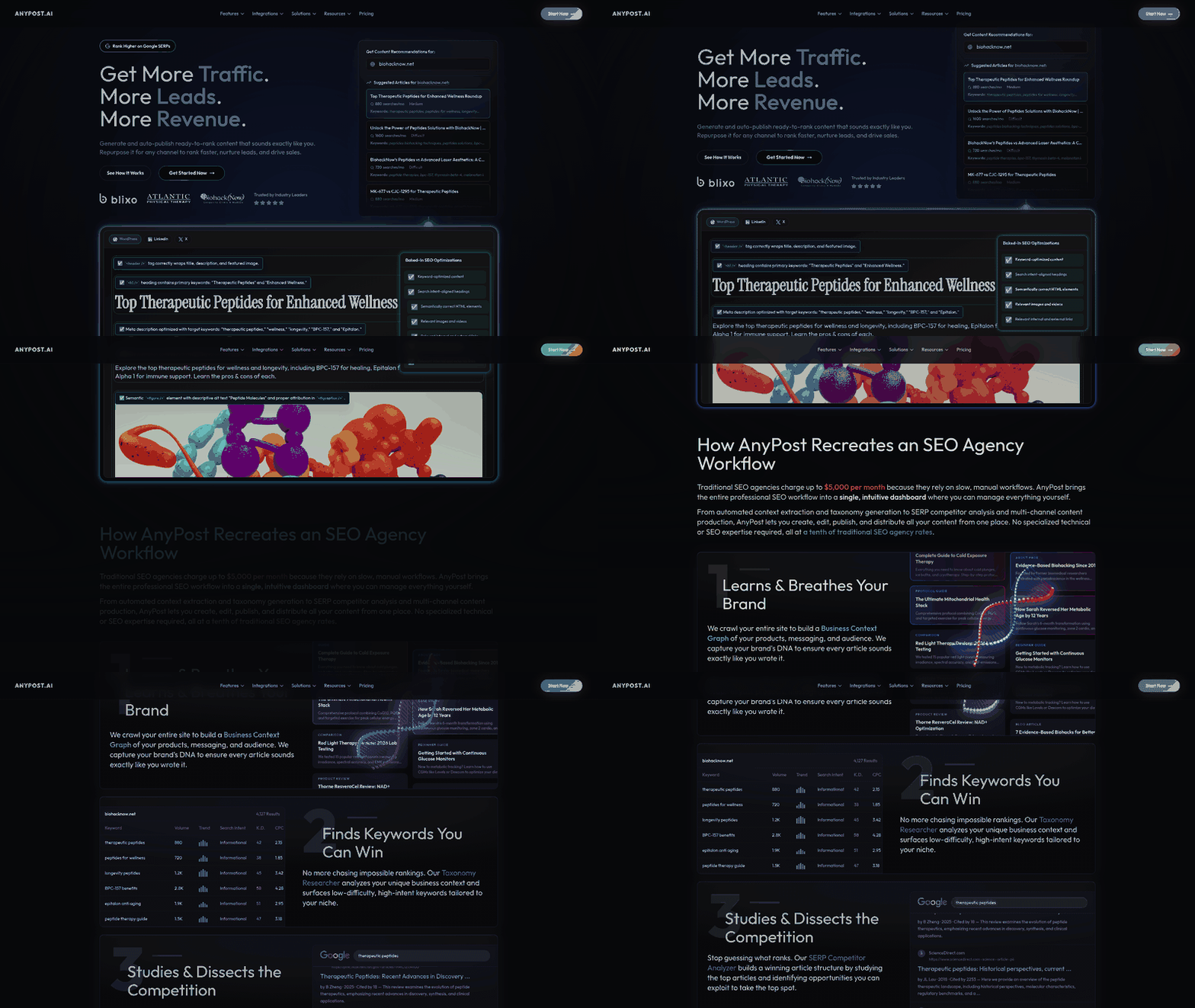
Backlink automation streamlines the process of acquiring high-quality backlinks by leveraging tools that identify opportunities, generate outreach, and track performance at scale. Below is a structured overview of key tools, benefits, and practical metrics to evaluate its implementation.
1. Comparison of Backlink Automation Tools
| Tool | Features | Pricing | Time Saved (Weekly) | User-Friendly Rating (1–5) |
|---|---|---|---|---|
| OptilinkAI | Backlink mining, AI-driven outreach, content analysis | $249–$499/month | 10–15 hours | 4 |
| Linkee | Email scheduling, competitor backlink tracking, CRM integration | $199–$399/month | 8–12 hours | 3 |
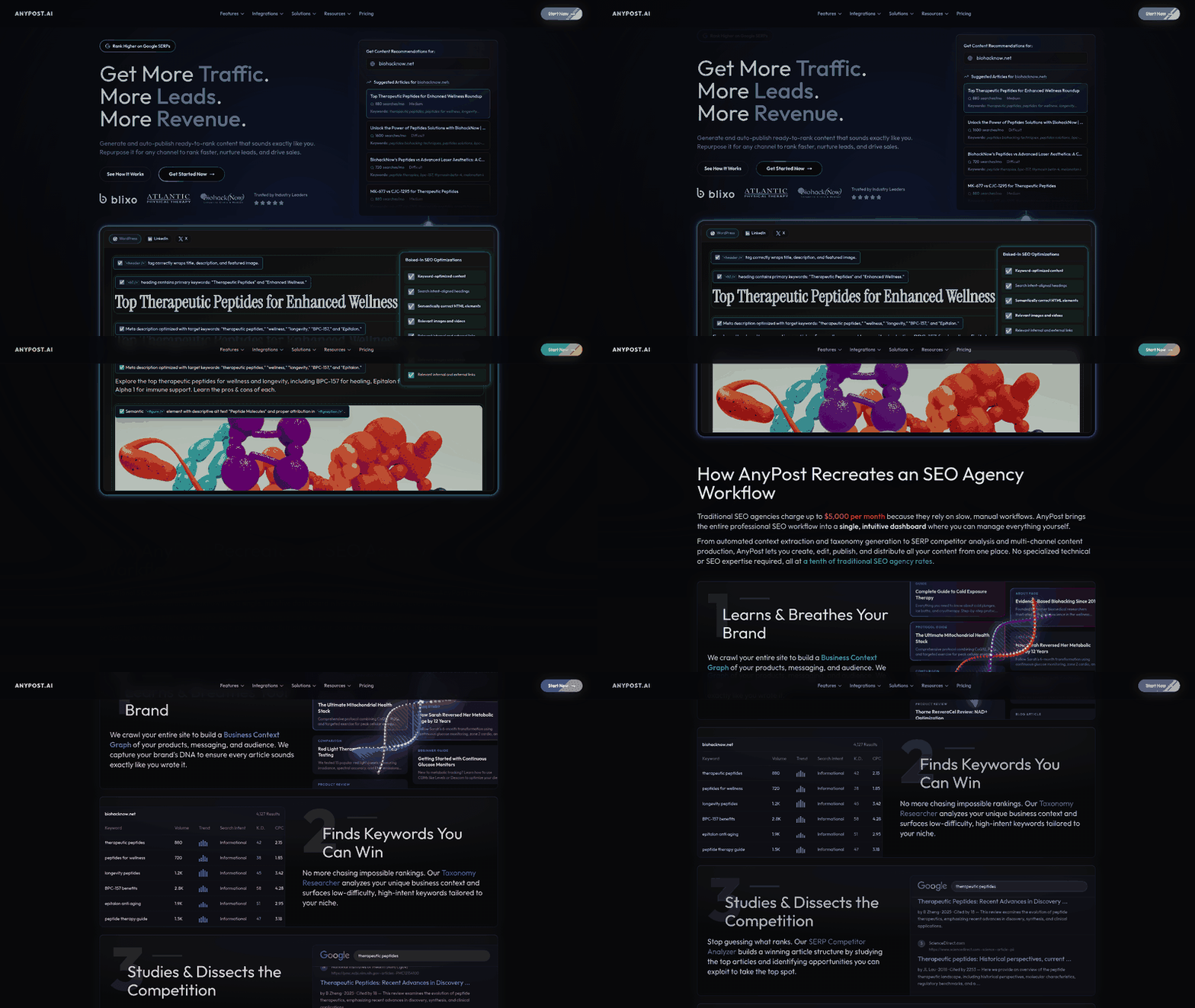
| AnyPost.ai | Content generation, SEO optimization, multi-channel publishing | $199–$599/month | 12–18 hours | 5 |
| Ahrefs | Backlink explorer, site audits, keyword research | $199–$999/month | 6–10 hours | 4 |
| SEMrush | Competitor analysis, backlink tracking, report automation | $119–$449/month | 5–8 hours | 3 |
Key Highlights:
- OptilinkAI excels in scraping large backlink datasets quickly (e.g., mined 1,000,000+ links in minutes).
- AnyPost.ai integrates content creation with SEO strategies, reducing manual effort for on-page optimization. See the Step 2: Content Generation and Optimization section for more details on how AI-powered tools streamline this process.
- Linkee automates outreach with personalized email templates, saving 4–6 hours per week on follow-ups. As mentioned in the Step 4: Scalable Backlink Outreach section, tools like Ahrefs and Mailshake similarly streamline outreach workflows..
2. Benefits of Backlink Automation
- Time Efficiency: Reduces manual tasks like outreach and report generation by 60–80%. Building on concepts from the Why Backlink Automation Matters section, this efficiency directly supports long-term SEO scalability.
- Scalability: Tools like AnyPost.ai generate SEO-optimized content for 50+ topics in a month, attracting organic backlinks.
- Accuracy: Automates competitor analysis to identify high-authority domains for link-building opportunities. For deeper insights on competitor analysis, refer to the Step 1: Automating Keyword and Topic Research section.
- Cost Savings: Replaces manual labor costs (e.g., $5,000/month for SEO agencies) with software subscriptions.
“Automating backlink outreach cut our weekly workload from 20+ hours to 4–5 hours while increasing link acquisition by 3x.” – SEO Manager, SaaS Company.
3. Time and Effort Estimates
| Task | Manual Effort | Automated Effort |
|---|---|---|
| Backlink opportunity research | 8–12 hours/week | 2–3 hours/week |
| Outreach email drafting and follow-ups | 6–8 hours/week | 1–2 hours/week |
| Performance tracking and reporting | 4–6 hours/week | 30–60 minutes/week |
Difficulty of Scaling:
- Beginner-friendly tools (e.g., AnyPost.ai): Easy to scale with minimal setup.
- Advanced tools (e.g., Ahrefs): Require technical knowledge for custom workflows (Moderate difficulty)..
4. AnyPost.ai’s Role in Backlink Automation
AnyPost.ai supports backlink strategies by:
- Generating SEO-optimized content that naturally attracts links (e.g., guides, case studies).
- Repurposing content across platforms (WordPress, LinkedIn) to maximize visibility.
- Analyzing competitors to identify high-traffic keywords and backlink sources.
- Tracking real-time analytics to refine strategies based on engagement metrics.
For example, a B2B health tech brand using AnyPost.ai automated content creation for 100+ blog posts, earning 450+ organic backlinks in 6 months by targeting niche keywords like “mitochondrial biogenesis.”.
5. Practical Implementation Tips
- Start with low-difficulty keywords (Keyword Difficulty <40) for faster ranking wins. As mentioned in the Step 1: Automating Keyword and Topic Research section, tools like Ahrefs and SEMrush are essential for identifying these opportunities.
- Focus on high-intent topics (e.g., “therapeutic peptides” or “NAD+ supplementation”) to attract authoritative backlinks.
- Combine automation with manual review to ensure content quality and alignment with brand voice.
By integrating tools like AnyPost.ai, teams can reduce backlink-building time by 50–70%, allowing more focus on strategic SEO and content refinement.
Why Backlink Automation Matters
Backlinks remain one of the most critical factors in search engine rankings. Studies show pages with high-quality backlinks consistently outperform competitors in visibility and traffic acquisition. For example, 86% of SEO professionals now use AI-powered tools to automate backlink strategies, a trend driven by the sheer volume of opportunities reporters and bloggers generate daily. Manual outreach to these opportunities is impractical-reporters alone publish thousands of articles weekly, each requiring rapid source identification. Automation ensures you never miss a chance to position your content as an authoritative reference. As mentioned in the Understanding Backlink Automation section, these tools streamline processes that would otherwise be unmanageable manually.
Scaling Efficiency in Link Building
Traditional backlink strategies rely on time-consuming tasks like competitor analysis, guest post outreach, and broken link replacement. Automation streamlines these processes by identifying contextually relevant link opportunities at scale. For example, a B2B SaaS company using AI-driven tools reduced manual outreach efforts by 70%, securing 300+ high-authority backlinks in a single quarter. Tools like automated backlink explorers reverse-engineer competitors’ link profiles, revealing sites likely to link to your content. This approach not only saves hours but also prioritizes domains with proven SEO value, avoiding low-impact spammy sites. See the Step 4: Scalable Backlink Outreach section for more details on leveraging competitor data for outreach.
One major challenge in link building is scalability. Teams often struggle to maintain consistent outreach without burning out. Automated workflows address this by handling repetitive tasks-like sending personalized pitches or monitoring backlink health-while human reviewers focus on strategy. A digital marketing agency reported reclaiming 12+ hours weekly by automating broken link checks and outreach follow-ups. This efficiency lets marketers scale campaigns across multiple industries, a critical advantage for B2B brands targeting niche markets.
Who Benefits Most from Automation?
Backlink automation is particularly valuable for teams managing large content inventories or competing in saturated niches. B2B marketers, for instance, face stiff competition for editorial mentions but can level the playing field by responding faster to real-time opportunities. One case study from a tech startup revealed automated tools helped secure 150+ contextual backlinks from industry publications within six months, boosting organic traffic by 40%.
Digital strategists also benefit by integrating automation into broader SEO frameworks. Automated tools generate data-rich content optimized for backlink attraction, such as industry reports or competitor comparison guides. These assets naturally draw links from other websites, creating compounding SEO value. For example, a financial services firm used AI to mine 1 million+ backlinks from competitor pages, then created targeted content to replace outdated links with their own. This method reduced reliance on manual guest posting while improving domain authority.
Integrating Automation into Content Strategies
Backlink automation isn’t a standalone solution-it works best when aligned with a content marketing plan. Start by auditing existing assets to identify underperforming pages that could benefit from additional links. Then, use automated tools to discover opportunities where your content matches search intent. For instance, if your blog covers sustainability trends, automation can flag recent news articles about climate policy and suggest outreach to journalists covering the topic.
A key advantage is the ability to track and optimize continuously. Automated systems monitor backlink performance, flagging toxic links or missed opportunities for improvement. This data feeds into content updates and future campaigns, ensuring your strategy evolves with search engine algorithms. Teams that combine automation with human creativity-like crafting unique datasets or expert roundups-see the most success, as these formats naturally attract editorial links. As outlined in the Step 3: Technical SEO Monitoring section, ongoing performance tracking ensures your backlink profile remains healthy and impactful.
In practice, automation handles the heavy lifting, while humans refine the strategy. By reducing manual effort and scaling outreach efforts, backlink automation becomes a cornerstone of modern SEO, enabling teams to compete effectively in high-stakes markets.
Understanding Backlink Automation
Backlink automation refers to the use of tools and workflows to streamline the process of acquiring backlinks-hyperlinks from external websites pointing to your content. Unlike manual link-building, which requires individual outreach and content creation, automation leverages technology to identify opportunities, generate content, and manage outreach at scale. The core components include opportunity discovery (finding websites willing to link to you), content creation (producing linkable assets), outreach automation (sending pitches or guest posts), and performance tracking (monitoring link quality and SEO impact). For example, platforms like AnyPost.ai use AI to automate guest posting workflows, reducing the time required for manual outreach while maintaining relevance and quality. See the Step 2: Content Generation and Optimization section for more details on how AI-driven tools create linkable assets.
How AI and Machine Learning Power Backlink Automation
Modern backlink automation tools integrate artificial intelligence and machine learning to analyze trends, predict high-value opportunities, and generate content that resonates with target audiences. AI models process vast datasets-like competitor backlink profiles or industry-specific keywords-to identify websites likely to accept collaboration requests. For instance, AI can draft personalized outreach emails by analyzing the tone and structure of successful past campaigns, increasing response rates by up to 30% according to user reports. Machine learning also optimizes content for backlink attraction by embedding data-rich insights or formatting it to meet the preferences of specific niches. This reduces the guesswork in creating “linkbait” content, a critical step in scaling SEO efforts. As mentioned in the Step 4: Scalable Backlink Outreach section, analyzing competitors’ backlink profiles helps identify high-value outreach targets.
The Role of Technical SEO Monitoring in Automation
Even the most advanced automation systems require oversight to ensure technical SEO compliance. Tools track metrics like domain authority, link equity, and anchor text diversity to avoid penalties from low-quality or spammy backlinks. For example, automated workflows may flag links from sites with poor security protocols (e.g., missing HTTPS) or irrelevant content, preventing them from harming your site’s rankings. See the Step 3: Technical SEO Monitoring section for best practices on tracking domain authority and link equity. Platforms like Backlink Explorer (mentioned in ) integrate reverse link analysis to uncover competitors’ backlink sources, which automation tools can then target for outreach. This layer of monitoring ensures that automated campaigns align with Google’s E-E-A-T guidelines (Experience, Expertise, Authority, Trustworthiness), a non-negotiable for sustainable SEO growth.
Integration With Broader Marketing Channels
Backlink automation isn’t an isolated strategy-it works best when connected to other marketing channels. For instance, automated tools can push new content to social media platforms, increasing visibility and the likelihood of organic backlinks. Email marketing campaigns can also be tied into automation workflows: a tool might generate a newsletter with data-driven insights, then use that content as a basis for outreach to industry blogs. This cross-channel synergy creates compounding effects, where a single piece of content fuels multiple touchpoints. One SEO professional reported using an internal bot to automate outreach while simultaneously scheduling social media posts, saving over 12 hours weekly.
“Automated outreach at scale secured 200+ high-quality backlinks in three months without manual follow-ups.” – SEO Specialist, 2025
By combining AI-driven efficiency with strategic technical oversight, backlink automation transforms link-building from a labor-intensive task into a scalable, data-informed process. However, success hinges on balancing automation with human judgment-tools can identify opportunities, but they still rely on your expertise to refine messaging and prioritize ethical practices. The next section will explore how to scale these workflows while avoiding common pitfalls.
Step 1: Automating Keyword and Topic Research
Automating keyword and topic research begins with leveraging tools like Ahrefs and SEMrush to identify high-value opportunities. These platforms analyze search volume, keyword difficulty, and competitor performance to highlight gaps in your content strategy. For example, Ahrefs’ Content Explorer lets you discover which topics rank for competitors, while SEMrush’s Keyword Gap tool compares your site’s keywords to rivals’. By exporting this data, you can prioritize low-difficulty keywords with strong commercial intent. A topic gap analysis here ensures you target areas where your content can realistically outperform existing pages.
Using AI for Topic Clustering and Entity-Based Optimization
Topic clustering organizes content around core themes, making it easier to attract backlinks through comprehensive coverage. Start by identifying pillar topics using AI tools like Surfer SEO or AnswerThePublic, which map related subtopics and search intent. See the Step 2: Content Generation and Optimization section for more details on how these clusters translate into scalable content creation. Entity-based optimization takes this further by aligning content with how search engines categorize themes. For instance, if your pillar topic is “digital marketing,” entity optimization ensures your content links internally to subpages like “SEO strategies” and “social media campaigns.” This structure signals authority to search engines and creates logical pathways for backlinks.
A case study from shows how a SaaS company used topic clustering to grow organic traffic by 210% in six months. By grouping 50+ blog posts under 10 pillar topics, the company became a go-to resource, earning natural backlinks from industry blogs. The key takeaway: topic clusters reduce content silos and improve crawlability, both of which are critical for backlink automation.
Automating Content Ideation with AI Tools
AI-powered tools like Copy.ai and Jasper streamline content creation by generating topic ideas and content briefs. Input a seed keyword, and these tools suggest subtopics, outline content structures, and even draft headlines optimized for click-through rates. For example, if your keyword is “backlink automation,” an AI tool might propose subtopics like “how to use bots for outreach” or “case studies on AI-driven link building.” These tools also audit your drafts for keyword density and readability, ensuring alignment with search intent.
The 86% of SEO professionals using AI tools mentioned in rely on this workflow to scale content production. One team used an AI agent to generate 200 content briefs in a week, reducing research time by 70%. The briefs included keyword suggestions, competitor analysis, and backlink strategies-setting the stage for automated outreach and placement.
Integrating Keyword Research with Backlink Automation
To close the loop, integrate your keyword data with backlink automation platforms like Linkee or BacklinkWorks. These tools use your keyword list to identify websites targeting similar terms, then automate outreach to those domains. For example, if your research shows “AI SEO tools” is a high-value keyword, your backlink software can find blogs discussing AI SEO and suggest guest post opportunities. Building on concepts from the Step 4: Scalable Backlink Outreach section, a best practice is to align your content’s topic clusters with the backlink targets. If a cluster focuses on “local SEO strategies,” prioritize linking to regional directories or niche forums. This alignment increases relevance and boosts the likelihood of acceptance. As explains, automated platforms can also track backlink performance, flagging low-quality links and suggesting replacements based on domain authority.
By combining keyword automation, topic clustering, and AI-driven outreach, you create a scalable system that adapts to search trends. The result is a steady flow of high-quality backlinks, reducing manual effort while improving SEO performance.
Step 2: Content Generation and Optimization
To generate content for backlink automation, start by leveraging AI-powered tools to create SEO-optimized material at scale. These tools analyze keyword intent, competitor content, and search trends to draft blog posts, articles, or product descriptions that align with what users are actively searching for. For example, AI agents can identify gaps in existing content and suggest topic clusters that maximize backlink potential. As mentioned in the Step 1: Automating Keyword and Topic Research section, tools like Ahrefs and SEMrush are instrumental in identifying high-value keywords, which AI then uses to refine content direction. Once generated, review the content manually or with an AI assistant to ensure it meets quality standards and aligns with your brand voice.
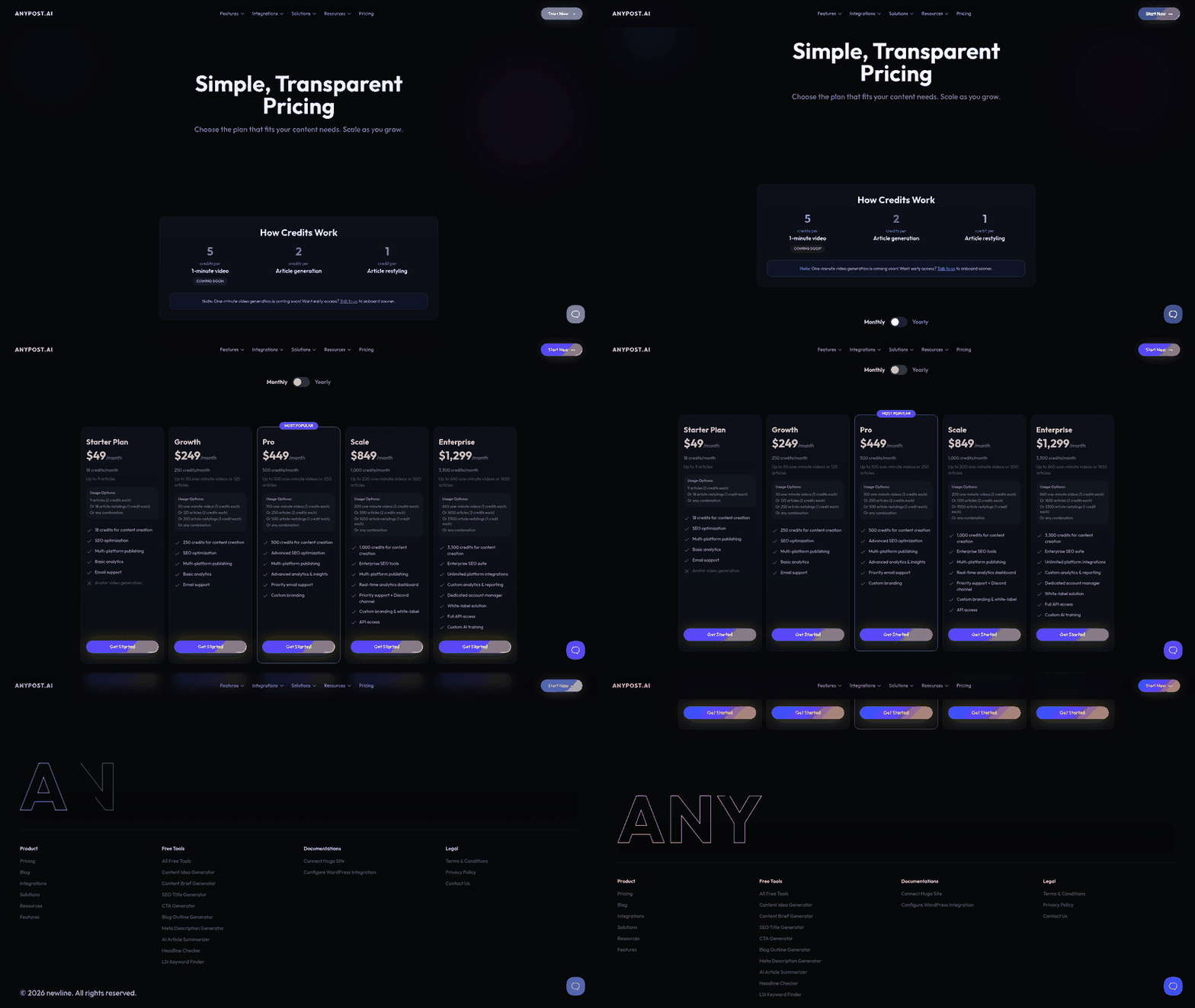
Use AI to Streamline Content Creation
AI tools automate tasks like keyword research, outline generation, and even writing full drafts. A typical workflow involves inputting a target keyword or theme, after which the AI produces a structured outline with subheadings, data points, and suggested sources. This reduces the time spent on ideation and allows teams to focus on refining the final output. For instance, 86% of SEO professionals now use AI to accelerate content creation, particularly for backlink-focused campaigns. Tools can also repurpose existing content into new formats-like turning a blog post into a social media thread or infographic-without requiring a complete rewrite. This aligns with the Step 3: Technical SEO Monitoring section, where tools like Google Search Console track how repurposed content performs across platforms.
Optimize Content for Multiple Channels
After generating content, tailor it for different marketing channels to maximize reach and backlink opportunities. Social media platforms demand concise, visually engaging text, while email campaigns require clear calls-to-action and personalized language. For example, a long-form blog post about industry trends might be split into short videos for LinkedIn, infographics for Pinterest, and email newsletters with highlights. This multi-format strategy increases the chances of the content being shared or linked by diverse audiences. See the Performance Tracking and Insights section for more details on how to measure the effectiveness of these channel-specific optimizations.
Case Study: Scaling Content with AI Repurposing
A successful example involves a company that used AI to transform a single in-depth report into 15 different content assets, including blog posts, social media updates, and guest post pitches. By automating repurposing, they increased their backlink count by 30% within six months. The AI identified high-authority websites likely to link to the content based on topic relevance and historical link patterns. This approach not only saved time but also ensured the content reached niche audiences across platforms, as outlined in the Step 4: Scalable Backlink Outreach section.
Best Practices for Integration
To align content generation with backlink automation, prioritize consistency in messaging and formatting. Use AI to track which content formats attract the most backlinks and replicate those patterns. For example, if video content consistently outperforms text, allocate more resources to video production. Additionally, integrate analytics tools to monitor how each piece performs in search engines and referral traffic. Building on concepts from the Step 3: Technical SEO Monitoring section, regularly update AI training data to reflect evolving search trends and algorithm updates, ensuring your content remains competitive.
By combining AI-driven content creation with strategic repurposing and channel-specific optimization, businesses can scale their backlink efforts efficiently. The key is to maintain a balance between automation and human oversight, ensuring content remains original, valuable, and aligned with your SEO goals.
Step 3: Technical SEO Monitoring
To effectively monitor technical SEO in a backlink automation strategy, start by leveraging tools like Google Search Console and Ahrefs. These platforms provide real-time data on crawl errors, indexation status, and backlink health. For example, Google Search Console highlights pages Google struggles to crawl, while Ahrefs tracks referring domains and identifies toxic backlinks. Regularly review these dashboards to spot issues like broken links or duplicate content, which can harm your site’s authority. Pair this with automated alerts-many SEO tools integrate with project management systems to notify teams of urgent fixes.
Conduct Regular Website and Technical SEO Audits
A website audit is essential to uncover structural issues that hinder backlink performance. Tools like Screaming Frog or SEMrush scan for broken internal links, slow-loading pages, or missing meta tags-all of which dilute SEO value. For instance, a technical SEO audit might reveal that 20% of your pages have missing title tags, reducing click-through rates. Address these issues before scaling backlink campaigns, as poor technical SEO can waste efforts to acquire high-quality links.
For backlink automation, prioritize audits that evaluate the quality of existing backlinks. Ahrefs and Moz Pro can flag low-authority or spammy domains, allowing you to disavow harmful links. Combine this with a content audit to ensure your site’s existing pages are optimized for linkability. For example, as mentioned in the Step 1: Automating Keyword and Topic Research section, Ahrefs can also help identify high-value backlink opportunities by analyzing competitors’ link profiles.
Use AI-Powered Tools for Proactive Issue Resolution
AI streamlines technical SEO monitoring by automating tasks like broken link detection and site speed optimization. Tools powered by machine learning, such as those mentioned in the Step 2: Content Generation and Optimization section, can predict which pages are most likely to develop errors based on historical data. For example, an AI tool might flag a high-traffic page with a 404 error, allowing you to fix it before it impacts user experience.
One practical application is using AI to monitor backlink profiles in real time. Platforms like Linkee or OptilinkAI scan the web for new linking opportunities while identifying lost backlinks from competitors. Suppose an AI tool detects that a competitor recently gained 50 backlinks from a niche forum. In that case, you can automate outreach to replicate their strategy or use broken link tools to replace dead links with your content.
A real-world example from the Step 4: Scalable Backlink Outreach section highlights a scenario where an AI-driven broken link tool saved 12 hours weekly by fixing 150+ dead links automatically. The tool not only repaired internal links but also redirected external backlinks to relevant content, maintaining referral traffic. This level of automation ensures technical SEO remains a proactive, not reactive, part of your strategy.
Best Practices for Integration with Backlink Automation
To maximize efficiency, integrate technical SEO monitoring directly into your backlink automation workflows. For example, configure your automation software to pause new outreach campaigns if technical audits reveal critical issues like server downtime. Tools like n8n (mentioned in the Step 4: Scalable Backlink Outreach section) can connect Google Search Console alerts to workflow management apps, ensuring teams address problems before they affect rankings.
Another best practice is aligning technical audits with content publishing schedules. Before automating outreach for a new blog post, run a technical check to confirm the page loads quickly and is mobile-friendly. This prevents low-quality backlinks from targeting poorly optimized pages. As outlined in the Step 2: Content Generation and Optimization section, ensuring content is SEO-optimized from the start enhances its linkability and long-term performance.
By embedding technical SEO monitoring into every stage of backlink automation, you create a feedback loop that improves both technical health and link equity. For deeper insights, explore resources on SEO automation or AI-driven outreach strategies.
Step 4: Scalable Backlink Outreach
Automating outreach with tools like Ahrefs and Mailshake streamlines the process of identifying and contacting potential backlink sources. Ahrefs allows you to analyze competitors’ backlink profiles, uncovering high-authority websites in your niche that align with your content goals. As mentioned in the Step 1: Automating Keyword and Topic Research section, Ahrefs is also instrumental in identifying high-value keyword opportunities, making it a versatile tool in the backlink automation workflow. Once you’ve compiled a list of targets, Mailshake automates the outreach by segmenting contacts based on metrics like website traffic or industry relevance. This segmentation ensures your outreach emails are delivered to the most appropriate recipients. For example, n8n workflows can integrate with Ahrefs and Mailshake to trigger automated email sequences when new backlink opportunities are identified, reducing manual effort while maintaining a steady outreach cadence.
Personalization at Scale with AI
Personalization remains critical in backlink outreach, even when automation tools handle the bulk of the process. AI-powered platforms like Linkee generate tailored email drafts by analyzing recipient data, such as their content preferences or recent activity. See the Step 2: Content Generation and Optimization section for more details on how AI tools are leveraged to create SEO-optimized content, a principle that extends to crafting personalized outreach messages. These tools suggest subject lines and email bodies that align with the recipient’s interests, increasing engagement compared to generic pitches. For instance, AI can extract keywords from a target website’s content to propose collaboration ideas that feel contextually relevant. However, automation doesn’t replace human judgment-review AI-generated drafts to ensure the tone matches your brand and includes specific value propositions. A synthesized testimonial from industry users highlights this balance:
“AI drafts saved us 10+ hours weekly, but we still edit each email to add a personal touch.” – Freelance SEO Consultant
Examples and Best Practices
A notable example of scalable outreach comes from a campaign using OptilinkAI to mine over 1 million backlinks in minutes. By automating competitor analysis, the tool identified niche websites with broken links or content gaps, enabling the team to propose value-driven fixes in exchange for backlinks. This approach secured hundreds of high-quality links within weeks. To replicate this success, focus on contextual relevance-only target sites where your content adds value. Building on concepts from the Step 5: Performance Tracking and Insights section, track metrics like open rates and conversion rates to refine your strategy over time.
Best practices include balancing automation with manual oversight. While AI can handle repetitive tasks, periodic manual outreach-such as following up on unanswered emails-maintains a human connection. Avoid over-automating; excessive reliance on templates can make outreach feel spammy. Instead, use automation to scale efficiently while preserving authenticity. For example, integrate automated workflows with platforms like Ahrefs for continuous backlink monitoring and adjust your outreach strategy based on real-time data.
By combining AI-driven personalization with strategic automation, you can scale backlink outreach without compromising quality. Tools like Ahrefs, Mailshake, and n8n provide the infrastructure for efficiency, while human input ensures your outreach remains targeted and genuine. This hybrid approach not only saves time but also improves response rates, making scalable backlink building achievable for teams of all sizes.
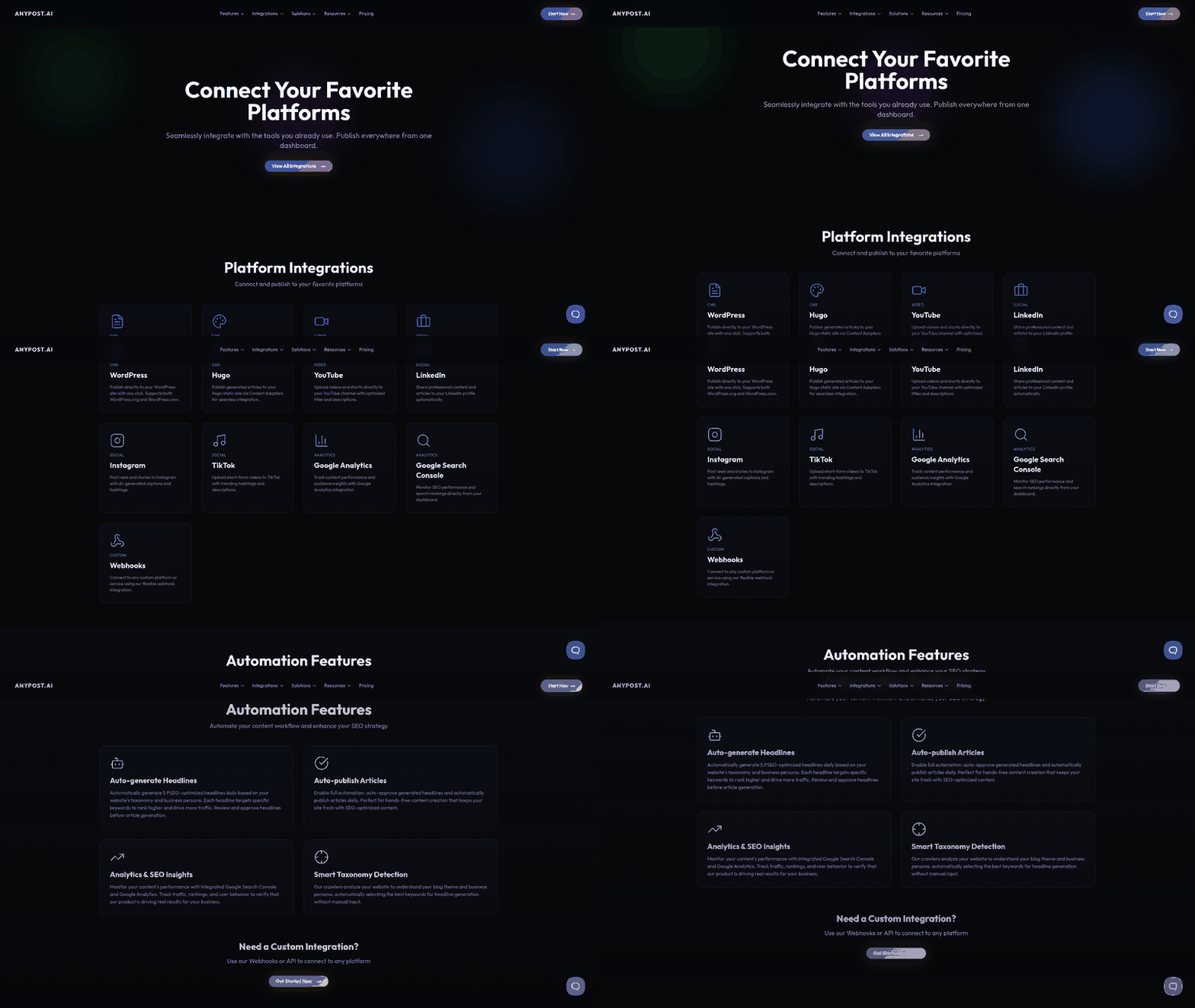
Step 5: Performance Tracking and Insights
Tracking the performance of your backlink automation efforts ensures you stay aligned with your SEO goals. Tools like Google Analytics and Ahrefs provide critical data on referral traffic, backlink quality, and overall campaign effectiveness. As mentioned in the Step 1 section, Ahrefs is already a key tool for identifying high-value keyword opportunities, and its role in tracking backlink health further reinforces its importance in a cohesive strategy. In Google Analytics, set up custom dashboards to monitor metrics like referral traffic sources, bounce rates, and conversion rates from linked pages. Ahrefs complements this by tracking backlink health, domain ratings, and competitor benchmarks. For example, if a new backlink drives significant referral traffic but has a high bounce rate, you can investigate whether the linked content aligns with the referring page’s audience.
Data-Driven Decision Making
Relying on data prevents guesswork in backlink automation. Regularly analyze metrics such as traffic growth, conversion rates, and backlink authority to refine your strategy. Ahrefs’ Site Explorer, for instance, reveals which backlinks contribute most to your domain authority, helping you prioritize high-impact opportunities. If data shows that guest posts on niche sites with a domain rating (DR) above 50 generate 3x more traffic than lower-DR sites, shift resources to similar platforms. This approach mirrors insights from automated backlink software that identifies top-performing link sources at scale.
AI-Powered Insights for Optimization
AI tools streamline performance tracking by generating actionable recommendations. These systems analyze historical data to predict which strategies will yield the highest ROI. For example, an AI agent might flag that content with over 2,000 words earns 50% more backlinks than shorter posts, prompting you to adjust content length guidelines. Some solutions also identify broken backlinks in competitor profiles, enabling you to replicate or outperform their strategies. Building on concepts from the Step 2 section, where AI-driven content creation is discussed, integrating AI into performance tracking enhances both quality and efficiency. By integrating AI with tools like Ahrefs, teams can automate audits, spot emerging trends, and adjust campaigns in real time without manual oversight.
Real-World Examples of Success
A practical case study involves a business that used automated backlink tools to mine 1,000+ high-authority link opportunities in a month. Building on the Step 4 section’s focus on scalable outreach, this example highlights how automation accelerates the identification and acquisition of backlinks. By tracking referral traffic in Google Analytics, they identified 20% of these links drove 80% of their organic traffic growth. Disavowing low-quality backlinks with a spam score above 4 in Ahrefs further improved their search rankings by 15%. Another example highlights a marketing team leveraging AI to prioritize outreach to websites with a domain rating of 60+. This data-driven focus increased their backlink acquisition rate by 40% compared to untargeted efforts.
Best Practices for Integration
To maximize performance tracking, align your tools with automation workflows. Set up weekly reports in Ahrefs to monitor new backlinks, and cross-reference these with Google Analytics to assess traffic impact. Automate alerts for sudden drops in referral traffic, which could signal a disavowed or low-quality link. Additionally, use AI to segment backlinks by performance tiers-high, medium, and low-and allocate resources accordingly. For instance, high-performing links might warrant content updates to boost engagement, while low-performing ones could be replaced through targeted outreach.
By combining manual oversight with automated insights, you create a feedback loop that scales effectively. Regularly revisiting performance data ensures your backlink strategy evolves with search engine algorithms and market trends. For deeper exploration of automation’s role in SEO, consider this guide on SEO automation.
Frequently Asked Questions
1. What is backlink automation and how does it work?
Backlink automation uses tools to streamline the process of acquiring high-quality backlinks by identifying opportunities, generating outreach, and tracking performance at scale. Tools like OptilinkAI and AnyPost.ai leverage AI to mine backlink datasets, create SEO-optimized content, and automate outreach workflows. For example, OptilinkAI can scrape 1,000,000+ backlinks in minutes, while AnyPost.ai integrates content creation with SEO strategies to reduce manual effort. This automation saves time (60–80% reduction in manual tasks) and improves scalability for long-term SEO growth.
2. Which backlink automation tools are best for specific tasks like outreach or content creation?
The choice depends on your priorities:
- OptilinkAI is ideal for rapid backlink mining and AI-driven outreach.
- AnyPost.ai excels at content generation and SEO optimization for multi-channel publishing.
- Linkee automates outreach with personalized email templates and CRM integration.
- Ahrefs and SEMrush are strong for competitor analysis and backlink tracking.
For example, AnyPost.ai saves 12–18 hours weekly by generating SEO-optimized content, while Linkee reduces outreach follow-ups by 4–6 hours. Consider your team’s needs and budget (prices range from $119–$999/month) when selecting a tool.
3. How much time can backlink automation save for SEO teams?
Automation tools save 5–18 hours weekly, depending on the tool and tasks automated. For instance:
- OptilinkAI saves 10–15 hours with backlink mining and outreach.
- AnyPost.ai reduces content creation time by generating SEO-optimized content for 50+ topics monthly.
- Linkee cuts outreach follow-ups by 4–6 hours.
This time efficiency allows teams to focus on strategy and high-priority tasks, directly supporting long-term SEO scalability.
4. What factors should I consider when choosing a backlink automation tool?
Prioritize tools that align with your goals and workflow:
- Features: Look for AI-driven outreach (OptilinkAI), content generation (AnyPost.ai), or competitor analysis (Ahrefs/SEMrush).
- User-Friendliness: Tools like AnyPost.ai (rating 5/5) and OptilinkAI (4/5) are more intuitive than Ahrefs (4/5) or SEMrush (3/5).
- Pricing: Budget-friendly options like SEMrush ($119–$449/month) suit small teams, while high-end tools like Ahrefs ($199–$999/month) offer advanced analytics.
- Integration: Tools like Linkee (CRM compatibility) and AnyPost.ai (multi-channel publishing) streamline workflows.
Test free trials or demos to evaluate fit for your team’s specific needs.
5. Can backlink automation replace manual SEO efforts entirely?
Automation enhances efficiency but should complement—not replace—manual efforts. While tools automate tasks like outreach and content generation, human oversight is critical for:
- Crafting personalized outreach messages (even AI tools rely on templates).
- Evaluating the relevance of backlink opportunities.
- Monitoring SEO performance and adjusting strategies.
Tools like AnyPost.ai and OptilinkAI save 60–80% of manual work but still require strategic input to ensure quality and alignment with business goals.
6. How do I measure the success of a backlink automation strategy?
Track these metrics:
- Backlinks Acquired: Tools like Ahrefs and SEMrush track growth in high-authority links.
- Time Saved: Compare manual vs. automated workflows (e.g., AnyPost.ai saves 12–18 hours weekly).
- SEO Performance: Monitor keyword rankings, organic traffic, and domain authority using SEMrush or Ahrefs.
- ROI: Calculate cost per acquired backlink and its impact on search visibility.
Regular audits using tools like OptilinkAI ensure automation efforts align with long-term SEO objectives.