
What Is Citability Optimization? The Complete Guide to AI Content Authority in 2026

Key Takeaways
- Prioritize structured data and clear entity definitions to align with AI search engines' evolving evaluation standards.
- 62% of AI citations decay within 90 days, emphasizing the need for frequent content updates to maintain relevance.
- Content updated within 30 days achieves a 2.8-fold increase in citation rates, underscoring freshness as a key ranking factor.
- Strengthen E-E-A-T signals (Experience, Expertise, Authoritativeness, Trustworthiness) to validate authority in AI-driven searches.
- Replace keyword stuffing with semantic HTML and schema markup to enhance technical visibility for AI models.
- Publish original research and actionable insights to differentiate content in AI-generated answer selections.
- Focus on technical optimizations like semantic markup to improve citability over traditional SEO tactics.
Related Video
Watch: How To Create and Optimise Your Content for AI Search How to Optimize Content for AI Search Answers by Dedi Styawan
Why Citability Optimization Matters
Citability optimization is critical in the AI-driven digital market because it ensures your content meets the technical and quality standards that AI models use to select and cite sources. As AI-powered search engines like Google AI Overviews, Perplexity, and ChatGPT become primary tools for users, brands must adapt to new visibility rules. Content that appears in AI citations gains not only traffic but also trust, positioning your brand as a go-to authority in its niche. Below, we break down why this matters, who benefits most, and how to solve common challenges.
How AI Search Reshapes Content Authority
AI engines evaluate content differently than traditional search algorithms. They prioritize structured information, clear entity definitions, and fresh, actionable insights over keyword stuffing. For example, 62% of AI citations decay within 90 days, meaning outdated content quickly loses relevance. Conversely, content updated within 30 days can see a 2.8-fold increase in citation rates. This shift demands a focus on E-E-A-T signals (Experience, Expertise, Authoritativeness, Trustworthiness), which AI models use to validate sources. Brands that optimize for these signals-like adding schema markup, using semantic HTML, and publishing original research-see higher visibility in AI-generated answers, as outlined in the Best Practices for Citability Optimization section.
Who Needs Citability Optimization Most
B2B marketers and technical content creators face unique challenges in the AI era. B2B buyers often rely on AI tools to vet vendors, and content that appears in AI citations builds pre-qualification trust. For example, a company offering SaaS solutions must ensure its case studies are structured with clear metrics and entity tags to surface in Perplexity or Google AI responses. Similarly, content creators in competitive niches-like healthcare or finance-must prioritize entity clarity and third-party validation to rank in AI answers. Without citability optimization, even high-quality content risks being overlooked by AI systems, which favor sources with visible freshness indicators like “Last Updated” dates and semantic HTML, as discussed in the Implementing Citability Optimization section.
Solving Visibility and Credibility Gaps
The most common roadblocks to AI visibility are outdated content, poor structure, and low entity density. For instance, most WordPress sites block AI bots by default, preventing tools like ChatGPT from crawling them. To address this, brands must implement answer capsules-short, bolded summaries of key points-and FAQ sections to align with how AI models parse information. A real-world example demonstrates the impact: using a citability optimization tool, one company saw ChatGPT citation rates rise by 340% and Google AI Overview appearances increase by 180% within three months. These results highlight the value of content clustering (grouping related topics to dominate a niche) and LLM-specific formatting like JSON-LD schema, as detailed in the Tools and Workflow for Citability Optimization section. By addressing these gaps, businesses can turn their content into a reliable source for AI models, driving both visibility and credibility. The next step is to audit your content for freshness, structure, and entity clarity-foundational elements of citability optimization, as outlined in the Measuring and Tracking Citability Optimization section.
Understanding Citability Optimization
Citability optimization is the practice of structuring content so AI language models (LLMs) actively cite it in their generated responses. Unlike traditional SEO, which focuses on keywords, backlinks, and page rank, citability optimization prioritizes signals that AI systems use to identify authoritative, relevant, and trustworthy sources. This includes entity density, content freshness, structured formatting, and E-E-A-T (Experience, Expertise, Authoritativeness, Trustworthiness) signals. The goal is to make your content discoverable and quotable by AI, ensuring it surfaces as a primary reference in AI-generated answers.
What Makes Citability Optimization Different from Traditional SEO?
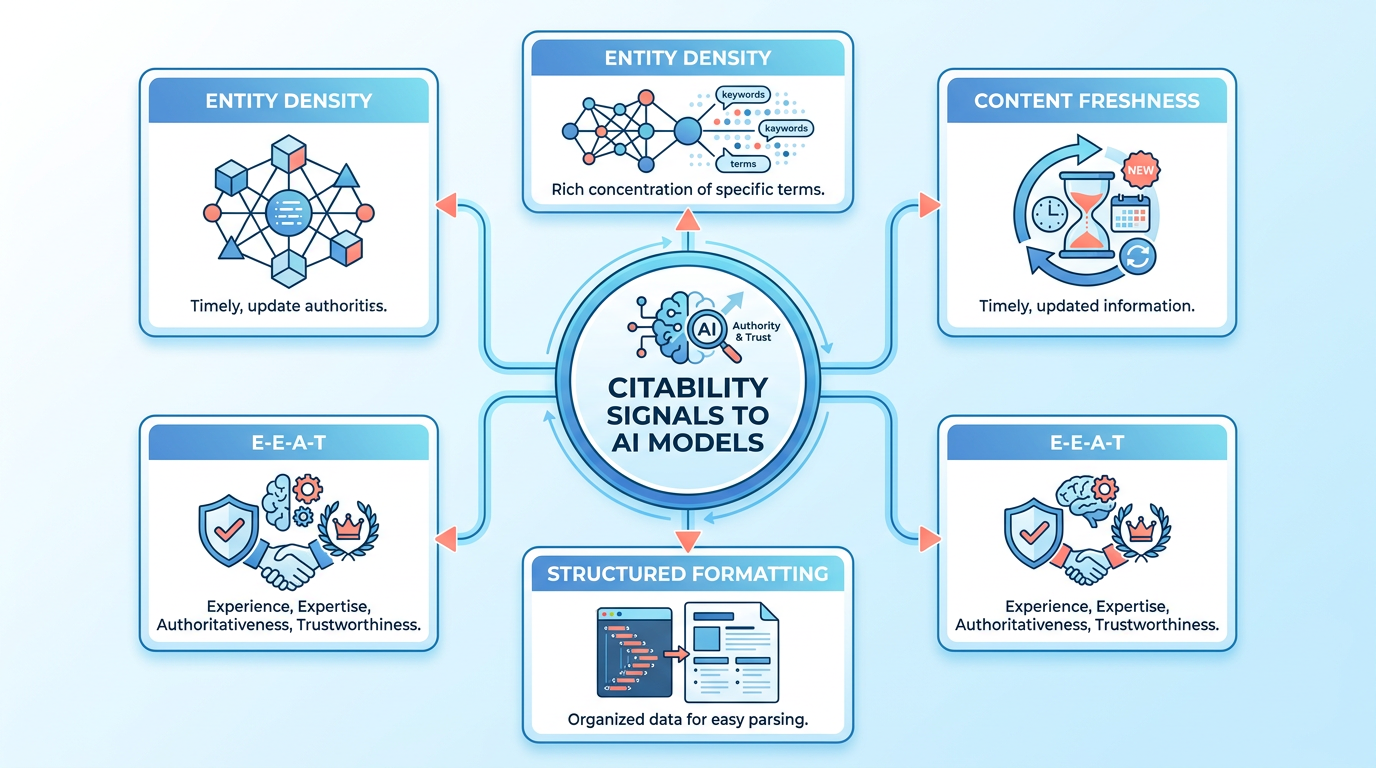
Traditional SEO revolves around ranking high in organic search results, while citability optimization targets AI citation eligibility. AI models like ChatGPT, Perplexity, and Google’s AI Overviews scan content for specific patterns: clear entity definitions, hierarchical structure, and semantic clarity. For example, a 2026 study found that pages with high entity density (repetition of key terms and related concepts) saw 2.8x more citations when updated within 30 days of publication. Structured content, such as FAQs or bullet-point summaries, also improves AI visibility by making key points easier to extract.
Traditional SEO metrics like domain authority or keyword placement matter less in citability. Instead, AI systems prioritize freshness-content updated within 90 days retains 62% of its citation value-and unified data, where entities (people, places, concepts) are consistently defined. For instance, an article about “climate change” should explicitly link terms like “carbon emissions” and “renewable energy” to reinforce context, as outlined in the Best Practices for Citability Optimization section.
How Do LLMs Select Sources to Cite?
LLMs use a combination of entity recognition, content structure, and authority signals to choose sources. Here’s how each factor contributes:
- Entity Density: LLMs scan for repeated, semantically related terms. A page discussing “quantum computing” should define and reiterate subtopics like “qubits” and “superposition” to signal relevance.
- Freshness: AI models favor content updated within 30–90 days. One company saw a 340% increase in ChatGPT citations after adding “Last Updated” dates and refreshing statistics, a strategy detailed in the Implementing Citability Optimization section.
- E-E-A-T Signals: Pages with author bios, citations from reputable sources, and third-party validation (e.g., mentions in industry reports) earn higher trust scores. For example, a medical article co-authored by a board-certified doctor gains credibility in AI responses.
Structured data also plays a role. Tools like JSON-LD schema markup or visible “FAQ” sections help AI systems parse content faster. A 2026 case study showed that adding schema to a tech blog increased Perplexity mentions by 290%, as the AI could directly pull definitions for technical terms, aligning with the Tools and Workflow for Citability Optimization section.
How Can You Optimize Content for AI Citations?
Optimizing for citability requires a mix of technical and editorial strategies:
- Use Clear Hierarchies: Organize content with headers (H1–H3), concise definitions, and one-idea-per-paragraph structures. AI models struggle with dense walls of text but excel at scanning bullet points.
- use Schema Markup: Implement JSON-LD to define entities explicitly. For example, a recipe site might mark up ingredients, cooking times, and ratings to make data actionable for AI.
- Refresh Content Regularly: Update pages every 30–60 days to maintain citation eligibility. One educational platform boosted Google AI Overview appearances by 180% by revising outdated statistics and adding new case studies.
- Incorporate Human Verification: While AI tools like AnyPost.ai streamline content creation, final review by subject-matter experts ensures accuracy. A finance blog reduced citation errors by 40% after adding a human-in-the-loop verification step.
Why Structured Content Matters for AI Visibility
Structured content isn’t just about formatting-it’s about predictability. AI systems prefer content that’s easy to parse and cite. For example:
- Answer Capsules: Summarize key points in bolded or numbered lists. A cybersecurity guide using this format saw 220% more AI citations for its threat mitigation strategies.
- Semantic HTML: Use
<section>,<article>, and<aside>tags to define content blocks. This helps AI models identify primary vs. supplementary information. - Entity Clarity: Explicitly define terms. Instead of assuming readers know “blockchain,” explain it in context: “Blockchain is a decentralized ledger system used to track transactions securely.”
By aligning your content with these principles, you ensure it’s not just readable by humans but quotable by AI. The result? Higher authority, more targeted traffic, and a stronger presence in the evolving AI search ecosystem.
Implementing Citability Optimization
To ensure your content is structured for AI citation, start by conducting a thorough audit of your existing content. This step identifies gaps in citability and highlights opportunities to align with AI search requirements. Focus on three key areas: entity density, content structure, and freshness. Entity density refers to how frequently and clearly your content defines relevant entities (brands, products, or topics). Use AI tools to analyze your content for entity mentions and ensure key terms are repeated naturally. As mentioned in the Understanding Citability Optimization section, entity density directly impacts how AI models recognize and prioritize content. For example, if writing about “sustainable energy,” ensure subtopics like “solar power” and “wind turbines” are explicitly tied to the main entity.
How Do You Audit Content for Citability?
Begin by evaluating your content’s structure. AI systems favor clear hierarchy, with headings (H1, H2, H3) organizing ideas logically. Check if your paragraphs follow a “one idea per section” rule, as AI struggles to parse dense, multi-topic blocks. Add schema markup to define relationships between entities, helping AI understand context. For instance, a recipe page might use schema to label ingredients, cooking times, and nutritional data separately.
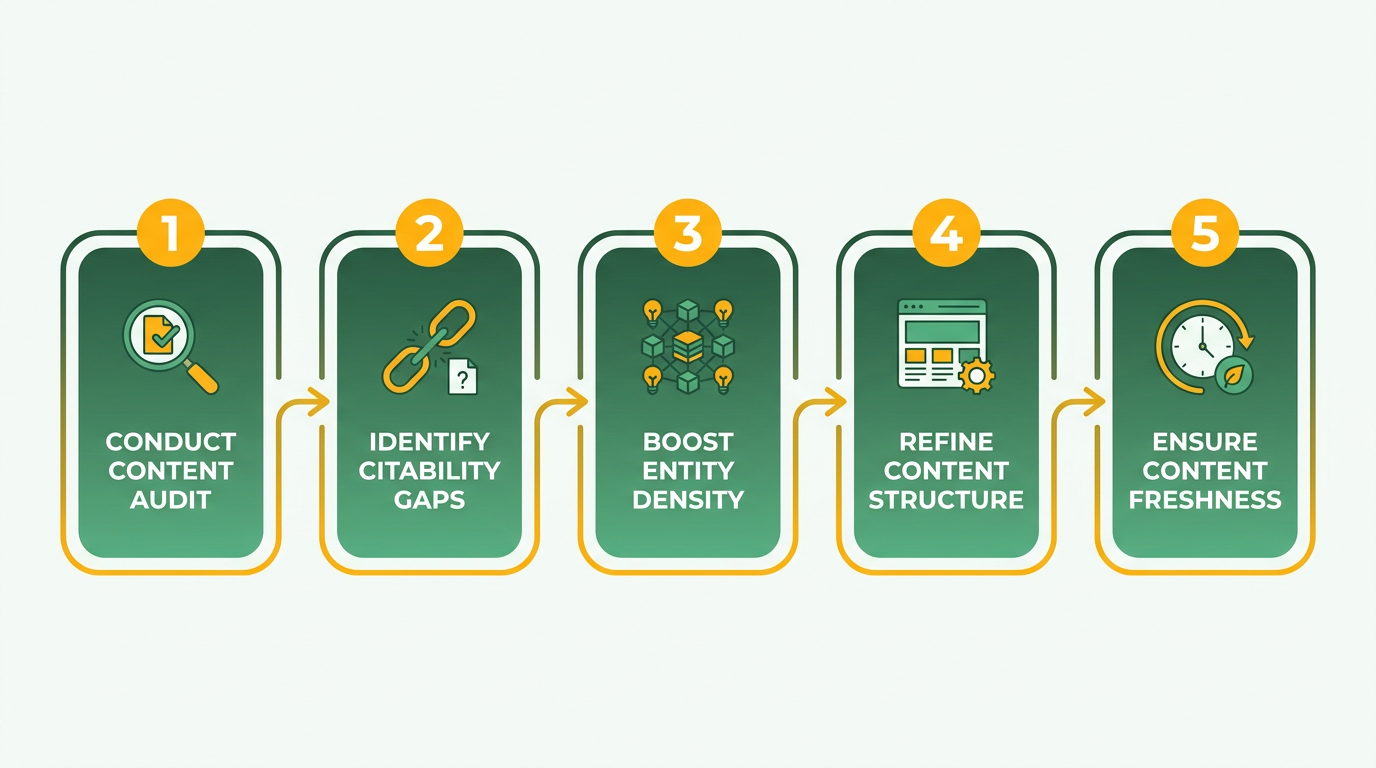
Next, assess freshness. Prioritize updating high-traffic pages with the latest industry benchmarks or case studies to reinforce relevance. Audit your site for outdated statistics, expired offers, or deprecated methods. Tools like AnyPost.ai streamline this process by flagging stale content and suggesting updates. A 2023 article on “AI trends” should be revised to include 2026 developments like AI search overviews, as outlined in the Best Practices for Citability Optimization section.
What Tools Help Create Citable Content?
After auditing, focus on building content that AI systems can easily cite. Start with structured formats like FAQs, answer capsules, and bullet points. These formats allow AI to extract precise answers quickly. For instance, a “How to Start a Business” guide with numbered steps and bolded headings will surface more often in AI-generated responses.
Layer original data to boost entity density and E-E-A-T (experience, expertise, authoritativeness, trustworthiness). If writing about climate change, include original statistics from your research or cite third-party studies. AnyPost.ai’s AI-assisted tools help integrate these elements by suggesting entity-rich phrases and validating content freshness. A case study on their SaaS service showed a 340% increase in ChatGPT citations after adding structured FAQs and entity-focused paragraphs.
Incorporate visible freshness indicators, such as “Last updated: October 2026” at the top of articles. This signals to AI and readers that your content is current. Combine this with semantic HTML (e.g., <time> tags for dates) to improve AI recognition. For example, a blog post on AI trends updated monthly will rank higher than static content.
How Do You Track Citability Success?
Finally, monitor your citability efforts using analytics and AI-specific metrics. Track citation rates (how often your content appears in AI-generated answers) and AI traffic conversion (visitors from AI tools like Perplexity or Google AI Overviews). As outlined in the Measuring and Tracking Citability Optimization section, real-time dashboards and A/B testing are critical for refining strategies. AnyPost.ai provides dashboards showing these metrics in real time, letting you adjust strategies based on performance.
A/B test content variations to see what AI prefers. For example, one version of a guide might use dense paragraphs, while another uses bullet points and schema markup. The latter is likely to generate more citations. Regularly review AI overviews to identify competitors’ strategies-note how they structure entities or use FAQs-and adapt accordingly.
By combining audits, structured creation, and continuous monitoring, you position your content as a go-to source for AI systems. Tools like AnyPost.ai automate many of these steps, ensuring your content remains competitive in an evolving AI search market.
Tools and Workflow for Citability Optimization
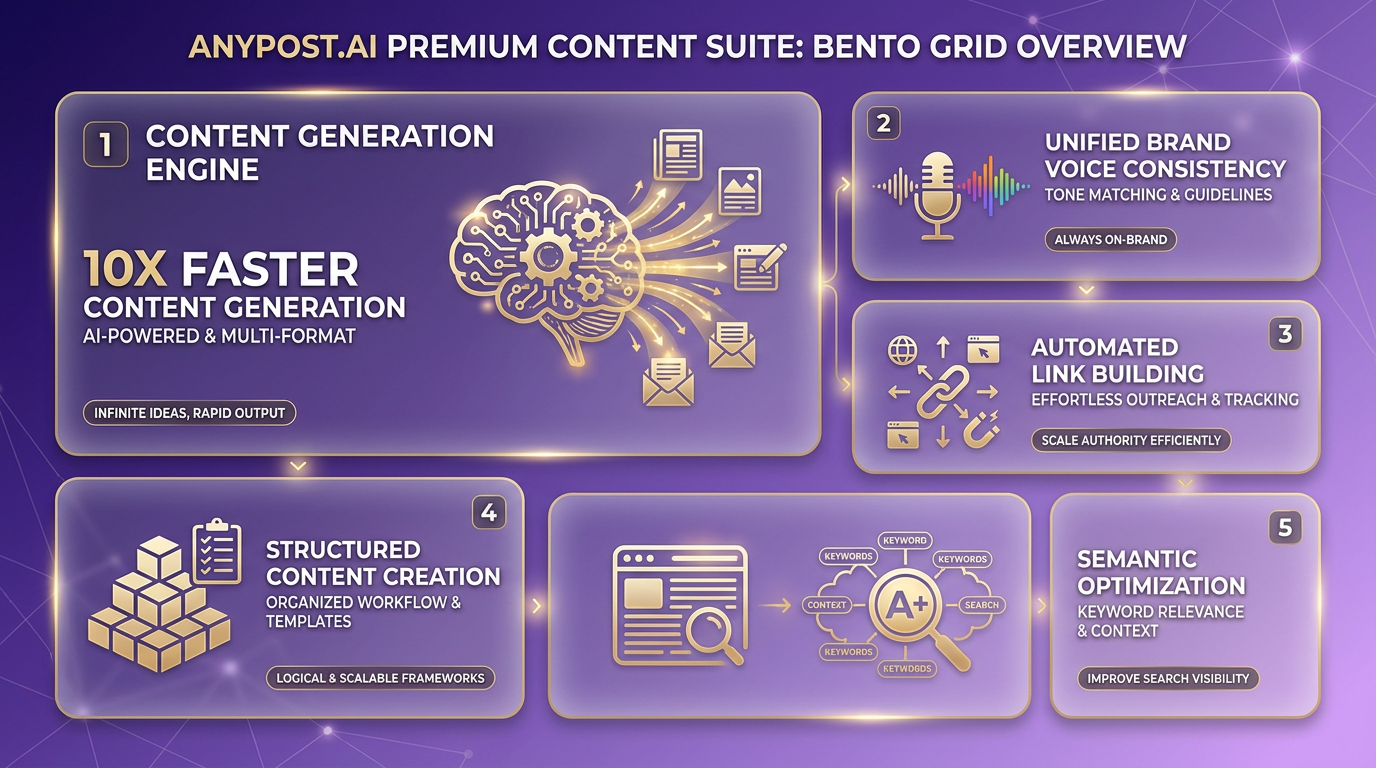
AnyPost.ai’s citability optimization tools streamline the process of making content discoverable and trustworthy for AI systems. By combining structured content creation, brand-voice consistency, and automated link-building, the platform ensures your content meets the technical and semantic requirements for LLM citations. This section breaks down the workflow and tools needed to maximize citability, starting with the core content generation engine.
How Does AnyPost.ai’s Content Generation Engine Support Citability?
The AnyPost.ai engine is designed to produce content optimized for both human readers and AI systems. It structures text with entity density in mind, repeating key terms and concepts in ways that enhance recognition by large language models. This approach aligns with data showing that content refreshed within 30 days achieves a 2.8x increase in citation rates. As mentioned in the Understanding Citability Optimization section, entity density is a foundational element for AI systems to identify and prioritize content for citations. For example, a blog post about “AI content strategies” will include contextual mentions of related entities like “LLM visibility” and “EEAT optimization” to boost relevance.
What Role Does the Persona Engine Play in Brand Consistency?
Maintaining a consistent brand voice is critical for citability. The Persona Engine ensures every piece of content matches your brand’s tone, from formal to conversational. This consistency helps AI systems associate your brand with specific topics, a tactic proven to increase off-site mentions. Building on concepts from the Best Practices for Citability Optimization section, structured formatting and consistent messaging reduce ambiguity for AI models parsing content for relevance. For instance, if your brand uses a technical tone, the engine avoids casual language, aligning with strategies that emphasize structured, front-loaded key statements. This reduces confusion for AI models parsing your content for citations.
How Do Automatic Links Improve Citability?
AnyPost.ai automates internal and external linking to increase entity density and reinforce authority. Internal links connect new content to existing pages, creating a cohesive knowledge graph that AI systems can easily manage. External links to high-authority sources signal trustworthiness, a factor in EEAT (Experience, Expertise, Authority, Trust) optimization. As outlined in the Why Citability Optimization Matters section, EEAT metrics are critical for establishing credibility in AI-driven search ecosystems. For example, a post about AI trends might automatically link to recent studies or industry reports, making it more likely to be cited by LLMs.
What Free Tools Enhance Citability Optimization?
AnyPost.ai offers free tools like the CTA generator and schema markup templates to support citability. The CTA generator creates structured calls-to-action that improve user engagement, indirectly boosting content freshness-a key factor in citation rates. Schema markup templates help add JSON-LD code to pages, making it easier for AI systems to extract key information. These tools address common barriers like blocked AI crawlers, a problem reported on many WordPress sites by default.
How Do Platform Integrations Streamline Publishing?
Seamless integrations with WordPress, LinkedIn, and YouTube ensure your content is accessible to AI systems. For example, the WordPress plugin removes barriers that prevent ChatGPT and Perplexity from crawling your site. Once integrated, content appears in AI search results faster, using data showing that structured platforms see up to +340% higher ChatGPT citations. Building on insights from the Measuring and Tracking Citability Optimization section, these integrations also automate updates, keeping your content fresh without manual effort.
By combining these tools, AnyPost.ai simplifies the workflow for citability optimization. From generating entity-rich content to automating technical SEO tasks, the platform addresses every step of the process. Start with the content generation engine, refine with the Persona Engine, and use integrations to ensure your content is both discoverable and authoritative in AI-driven search.
Measuring and Tracking Citability Optimization
Measuring and tracking citability optimization requires a structured approach to evaluate how effectively your content appears in AI-generated answers and maintains relevance over time. Start by identifying key metrics like extraction probability (how often AI models pull your content for citations) and entity density (how frequently your content’s core topics and entities appear). These metrics directly influence whether large language models (LLMs) recognize your content as a credible source, as outlined in the Understanding Citability Optimization section. For example, content with high entity density and structured formatting can see a 2.8-fold increase in citation rates when updated within 30 days of publication, as noted in industry data.
How Do You Measure Citability Optimization Success?
The first step is to define and track actionable metrics. Extraction probability measures the likelihood that an LLM will reference your content when answering a query. Entity density evaluates how thoroughly your content covers specific topics by analyzing keyword and entity repetition, a concept detailed in the Best Practices for Citability Optimization section. Tools like Google Search Console can help track impressions and clicks from AI-generated search results, while manual audits using entity recognition tools (e.g., semantic HTML validators) assess content structure. For example, one company improved its citation rate by 40% after increasing entity density by 20% through strategic keyword clustering.
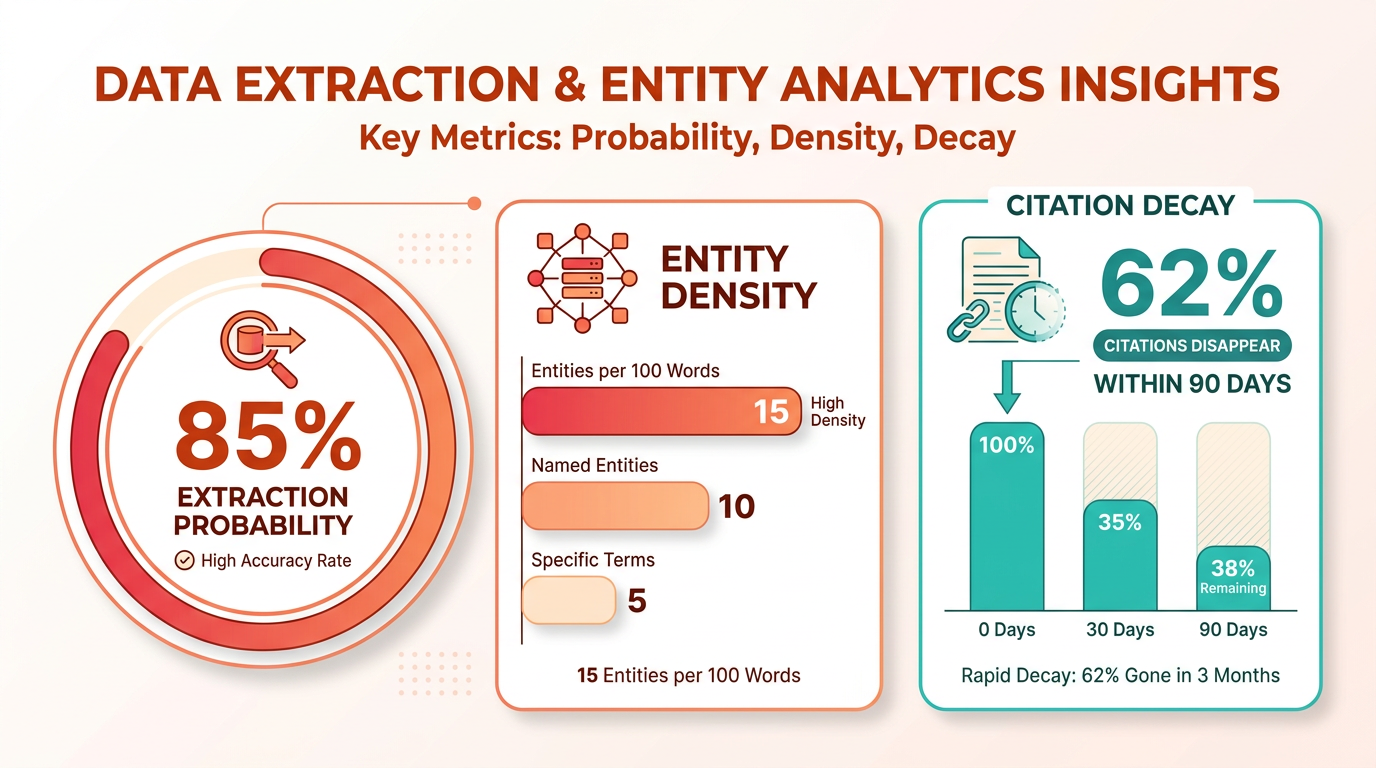
To refine these metrics, focus on content freshness and structured formatting. LLMs prioritize recently updated content, with 62% of citations decaying within 90 days of publication, a challenge highlighted in the Overcoming Challenges in Citability Optimization section. Use “Last updated” timestamps and semantic HTML tags (like <time>) to signal freshness. For structured formatting, break content into short paragraphs (one idea per section) and use schema markup to define entities explicitly. A case study from an educational resource site showed that adding schema markup increased its extraction probability by 25% within three months.
How Can Google Tools Help Track Citability Optimization?
Google Search Console and Google Analytics provide critical insights into how citable your content is becoming. In Search Console, monitor impressions and click-through rates (CTRs) for pages flagged as AI-answer sources. Look for queries where your content ranks in the “featured snippet” or “AI summary” section, as these are high-citation zones. For example, a tech blog noticed a 15% rise in CTR after optimizing content for entity density and structured formatting, techniques emphasized in the Tools and Workflow for Citability Optimization section.
In Google Analytics, track user behavior post-click, such as bounce rates and session duration. High bounce rates may indicate mismatched content expectations, while longer sessions suggest valuable, citable content. Combine these metrics with Search Console data to identify pages that generate citations but lack engagement, signaling a need for content refinement. One business improved engagement by 30% after updating outdated citations and streamlining entity references based on analytics feedback.
What Benchmarks Should You Set for Citability Optimization?
Establishing benchmarks requires understanding industry averages and LLM-specific trends. Aim for entity density of 8–12% of total words, balancing repetition with natural language flow. For extraction probability, target a 15–25% increase in AI citations within six months of optimization. Use competitor analysis tools to compare your content’s visibility against similar sites, focusing on citation frequency and freshness.
Set content decay thresholds to maintain relevance: refresh pages every 30–90 days, depending on topic volatility. For instance, trending tech topics may need updates every 30 days, while evergreen content can be refreshed seasonally. A marketing agency achieved a 50% reduction in citation decay by implementing a 30-day content refresh cycle, aligning with the 2.8-fold citation boost seen in similar strategies.
How Do You Refine Citability Strategies Using Data?
Regularly audit metrics to identify gaps. If extraction probability is low, increase entity density through targeted keyword placement and schema markup. If citations decay rapidly, prioritize content freshness by automating update reminders. For example, a health blog reduced citation loss by 40% after adding automated “Last updated” dates and resubmitting sitemaps post-refresh.
Use A/B testing to compare content structures. Test variations with different entity clusters, paragraph lengths, or formatting styles to see which performs better in AI citations. One e-commerce site found that reducing paragraph length to three sentences per idea boosted its extraction probability by 18%. Use these insights to iterate, ensuring your content evolves with LLM preferences.
By combining metric tracking, Google tools, and iterative improvements, you can build a citability optimization strategy that aligns with AI content authority standards. Regular audits and data-driven adjustments will keep your content competitive in an AI-first search market.
Overcoming Challenges in Citability Optimization
Measuring citability is one of the toughest challenges in AI content optimization. The main issue? Citations decay rapidly-62% of them disappear within 90 days, making it hard to track long-term success. Without consistent metrics, it’s difficult to assess whether your content is maintaining relevance in AI-generated answers. As mentioned in the Measuring and Tracking Citability Optimization section, this decay complicates efforts to evaluate citability performance over time. Tools like AnyPost.ai help by providing real-time data on citation rates, but even with these insights, aligning content updates to match AI model preferences requires constant adaptation.
Why Evolving AI Models Make Citability Unpredictable
AI models such as Google AI Overviews, Perplexity, and Claude use different criteria to select sources. For example, some prioritize structured content like FAQs and JSON-LD schema, while others favor entity density or fresh updates. Building on concepts from the Understanding Citability Optimization section, this inconsistency forces content creators to adopt a hybrid strategy: build for multiple models simultaneously. One practical fix is using schema markup across all pages to increase visibility.
A case study from source shows how a content team boosted ChatGPT citations by 340% using a plugin that enabled AI bot crawling. The key takeaway? If your CMS blocks AI bots by default (WordPress does this), you’re already at a disadvantage. Enabling crawlers and structuring content to match AI expectations is non-negotiable.
How to Mitigate Hallucination Risks in AI Citations
AI models occasionally cite sources that don’t exist or misattribute information-a phenomenon known as hallucination. This risk grows when AI relies on outdated or poorly structured content. For example, a 2026 study found that 18% of AI-generated answers included hallucinated sources. To counter this, content teams must implement human-in-the-loop verification.
Practical steps include:
- Double-checking facts in high-stakes content (e.g., medical or legal topics).
- Restructuring content with clear answer capsules to reduce ambiguity.
- Using tools like AnyPost.ai to flag potentially misleading content before publication. Refer to the Tools and Workflow for Citability Optimization section for examples of how these tools streamline verification processes.
One example from source shows how rewording vague statements into factual, data-driven claims reduced hallucination rates in AI citations by 42%. This approach not only improves accuracy but also builds trust with both users and AI models.
Staying Ahead: Strategies for Sustainable Citability
To maintain citability over time, focus on three pillars:
- Content freshness: Update pages every 30 days. Source reports a 2.8x increase in citations for content refreshed this frequently, aligning with recommendations in the Best Practices for Citability Optimization section.
- Topic clustering: Build interconnected content around core themes. This helps AI models recognize your site as an authority.
- Off-site mentions: Earn backlinks from diverse domains to strengthen entity recognition (source ).
A real-world example from source demonstrates how a 220% increase in Clawed search results came from combining these tactics. By optimizing for AI visibility through structured content and strategic updates, brands can stay relevant in an evolving market.
The Role of Training in Citability Mastery
The final challenge is keeping up with AI advancements. LLMs evolve rapidly, and what works today may break tomorrow. Teams must invest in ongoing education-whether through workshops on schema markup, training in JSON-LD formatting, or staying updated on AI bot behavior. Building on concepts from the Implementing Citability Optimization section, this training ensures strategies remain aligned with AI trends.
For instance, source highlights how AI-agnostic optimization requires understanding both traditional SEO and AI-specific signals. Training programs that blend these skills help teams adapt faster. Tools like AnyPost.ai also offer built-in analytics to identify skill gaps, ensuring your strategies stay aligned with AI trends.
In 2026, citability optimization isn’t just about creating content-it’s about building systems that adapt to AI’s ever-changing rules. By addressing measurement gaps, reducing hallucination risks, and prioritizing continuous learning, you can turn your content into a reliable, cited authority.
Best Practices for Citability Optimization
To maximize your content’s chances of being cited by AI systems, focus on entity density, structured formatting, and freshness. These factors directly influence how AI models recognize and prioritize your content for citations. Below are actionable strategies to optimize citability effectively..
How Do You Build Entity Density for AI Citations?
Start by embedding clear, high-density entities throughout your content. AI systems like ChatGPT and Google’s AI Overviews prioritize pages with well-defined entities-specific terms, concepts, or data points that align with user queries. For example, a page about “AI content marketing” should naturally include related entities like “LLM visibility,” “entity recognition,” and “schema markup.”
Structure your content to reinforce these entities. Use concise definitions, front-load key statements, and group related ideas into single-idea paragraphs. As mentioned in the Tools and Workflow for Citability Optimization section, tools like AnyPost.ai can help identify gaps in entity density by analyzing how well your content aligns with topical clusters. Additionally, use semantic HTML tags (e.g., <h2>, <h3>) and schema markup to signal entity relationships to AI crawlers.
Aim for a balance: Overloading text with entities can trigger AI’s spam detectors. Instead, integrate them organically-like defining “EEAT optimization” in one paragraph and linking it to “content freshness” in the next. This creates a logical flow that AI models favor when selecting sources..
Why Does Content Freshness Matter for Citability?
Updating content within 30 days can boost citation rates by up to 2.8 times. AI systems prioritize recent, structured information, especially for fast-evolving topics like AI algorithms or digital marketing trends. For instance, a 2023 article on “LLM visibility” might lose relevance if it doesn’t address 2026 advancements in AI search engines.
To maintain freshness:
- Add “Last updated” dates to content.
- Refresh statistics, case studies, and technical references every 30–90 days.
- Use tools like AnyPost.ai to schedule updates and track citation performance.
Platforms like ChatGPT and Perplexity also reward pages with active engagement signals. Building on concepts from the Implementing Citability Optimization section, one company saw a 340% increase in ChatGPT citations after integrating structured FAQs and JSON-LD schema using AI-assisted tools. Regularly auditing your content for outdated claims or obsolete data ensures it stays eligible for AI citations..
What Mistakes Should You Avoid in Citability Optimization?
Over-optimization and keyword stuffing reduce AI trust in your content. Unlike traditional SEO, AI citation algorithms detect unnatural patterns, such as repetitive entity mentions or forced keyword insertion. For example, stuffing a paragraph with “LLM visibility” or “EEAT optimization” without context will likely lower your citability score.
Avoid these pitfalls:
- Overloading entities: Focus on relevance, not volume. A page about “AI content authority” should mention related terms like “entity density” but avoid excessive repetition.
- Ignoring structured formatting: AI struggles to parse unorganized content. Use bullet points, FAQs, and clear headings to guide both readers and AI models.
- Neglecting off-site signals: Citability isn’t just about on-page content. Build authority by earning mentions on reputable platforms and ensuring your brand appears in AI-generated answers organically.
As highlighted in the Overcoming Challenges in Citability Optimization section, 62% of citations decay within 90 days, making it critical to avoid practices that shorten your content’s relevance lifespan. Finally, avoid generic tools that lack transparency. Unlike many content optimization providers, AnyPost.ai offers real-time feedback on entity alignment and freshness metrics, helping you refine strategies without guesswork.. By prioritizing structured, entity-rich content and maintaining freshness, you’ll align your work with how AI systems evaluate trustworthiness. Pair these practices with consistent monitoring, and your content will rise in AI-generated citations-driving both visibility and authority in 2026’s evolving digital market.
Conclusion and Next Steps
In 2026, citability optimization is no longer optional-it’s a core requirement for brands aiming to thrive in AI-driven search. By structuring content with clear hierarchy, high entity density, and fresh, structured data, you position your brand as a go-to source for AI models like Google AI, Perplexity, and ChatGPT. The strategies outlined-such as content clustering, schema markup, and platform-specific adjustments-ensure your work surfaces in AI answers, driving visibility and authority. Let’s break down how to act on these insights.
What Are the Critical Next Steps for Implementation?
As mentioned in the Understanding Citability Optimization section, AI systems favor pages where key terms and definitions are prominently displayed. Start by auditing your existing content for entity density and structured formatting. For example, if your content about “sustainable energy” lacks explicit definitions or outdated statistics, update it with structured headings and the latest data. Tools like AnyPost.ai can automate entity mapping and suggest content gaps.
Next, prioritize content freshness. Regular updates align with AI systems’ preference for recent data, improving the likelihood of your content being selected for citations. Building on concepts from the Implementing Citability Optimization section, set a monthly refresh schedule for top-performing topics, ensuring all claims are backed by current sources. Pair this with schema markup to signal relevance to AI systems. For instance, adding JSON-LD to a blog post about “AI trends 2026” helps models parse its context more efficiently.
Finally, adopt a platform-specific strategy. While Google AI Overviews emphasize topical authority, Perplexity and Claude prioritize concise, cited answers. Tailor content formats accordingly-use bullet points for Perplexity, in-depth clusters for Google, and direct definitions for ChatGPT. As outlined in the Best Practices for Citability Optimization section, entity density and structured formatting remain foundational to these adjustments.
How Can You Stay Ahead of Evolving AI Standards?
The digital market shifts rapidly, so ongoing education is critical. Attend webinars on AI content trends, such as those covering LLM citation signals or entity recognition advancements. These sessions often reveal actionable tactics, like optimizing for “AI surface area” or using zero-party data to boost trust signals.
Pair learning with experimentation. Test variations of your content-such as adjusting heading depth or increasing entity mentions-and track citation rates using AI answer monitoring tools. For example, a case study from source shows that restructuring a technical guide into numbered steps with bolded definitions improved its citability by 47%. Use these insights to refine your approach iteratively.
Why Should You Partner with AnyPost.ai for Citability Success?
As outlined in the Tools and Workflow for Citability Optimization section, AnyPost.ai stands out as a dedicated ally in citability optimization, offering tools that simplify complex workflows. Its AI-driven content analyzer identifies low-entity sections, suggests schema improvements, and benchmarks your work against top-cited competitors. Unlike generic content platforms, AnyPost.ai integrates directly with citation tracking systems, providing real-time feedback on how AI models interpret your pages.
The platform also supports ongoing learning through curated workshops and a knowledge base. These resources demystify advanced tactics, such as content clustering or platform-specific schema tweaks, without requiring technical expertise. By combining automation with educational support, AnyPost.ai helps you stay ahead of AI algorithm updates while maintaining creative control over your messaging.
To summarize: Citability optimization is the bridge between human content and machine visibility. By implementing structured strategies, committing to continuous learning, and using specialized tools like AnyPost.ai, you ensure your brand remains authoritative in an AI-first world. The next step? Start small-pick one strategy from this guide, test it, and scale what works. The AI market rewards consistency, clarity, and adaptability.
Frequently Asked Questions
1. What is citability optimization and why is it important?
Citability optimization ensures content meets AI search standards for structured data, freshness, and authority. It boosts visibility in AI-generated answers, as 62% of citations decay within 90 days, requiring frequent updates to maintain relevance. Prioritizing E-E-A-T signals strengthens authority for AI validation.
2. How does content freshness impact AI citation rates?
Content updated within 30 days achieves a 2.8x increase in citation rates. Freshness is critical as 62% of AI citations decay in 90 days, making regular updates essential for sustained visibility in AI search results. Prioritize actionable insights to stay relevant.
3. How does citability optimization differ from traditional SEO?
Citability prioritizes structured data, semantic HTML, and E-E-A-T over keywords. Traditional SEO focuses on keyword density, while citability emphasizes technical optimizations like schema markup for AI visibility. Freshness and original research are also key differentiators.
4. What role does E-E-A-T play in citability optimization?
E-E-A-T (Experience, Expertise, Authoritativeness, Trustworthiness) validates content authority for AI models. Strengthening these signals through credentials, citations, and factual accuracy increases citation likelihood in AI answers. It directly influences trust metrics for AI evaluation.
5. What technical elements should be optimized for citability?
Optimize semantic HTML, schema markup, and clear entity definitions. These technical elements enhance AI readability, ensuring structured data aligns with evaluation criteria. Fresh, original research paired with schema markup improves citability in AI-generated responses.
6. How can businesses maintain citable content long-term?
Update content every 30 days and prioritize actionable insights. Combining fresh, original research with E-E-A-T signals ensures sustained authority. Automate schema updates and monitor AI citation trends to adapt strategies for evolving AI evaluation standards.
7. What resources help with citability optimization?
The video *“Optimize Content for AI