
What Is SaaS Content Writing and How to Scale It

Quick Summary
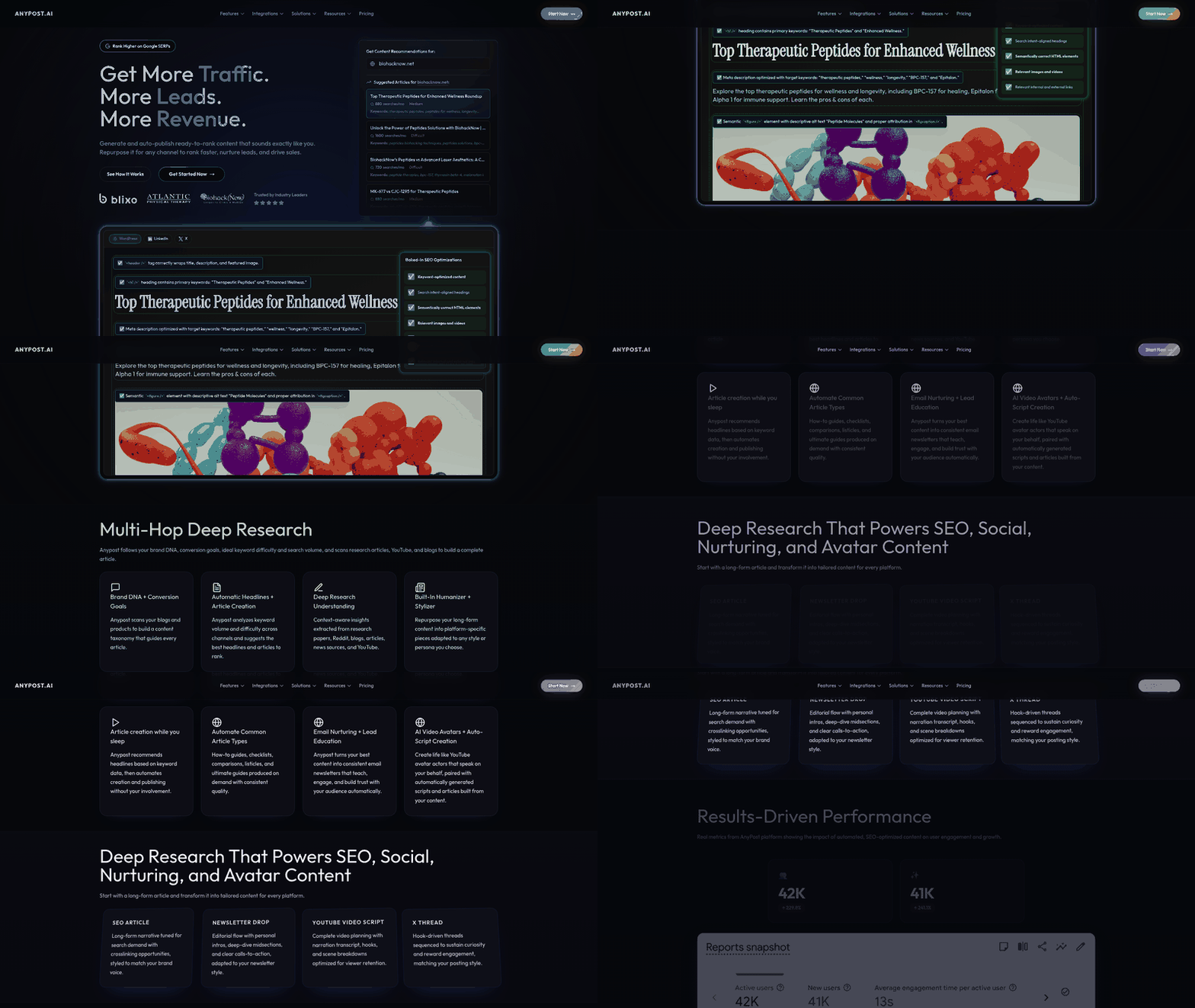
SaaS content writing focuses on creating targeted, SEO-optimized content to drive organic traffic, generate leads, and scale revenue for software-as-a-service businesses. Successful strategies blend automation, data-driven research, and brand-aligned messaging to maintain consistency and efficiency. Below is a structured overview of key metrics, time estimates, and insights to guide your approach.
Comparison of Content Marketing Strategies
| Strategy | Key Features | Time Estimate | Difficulty Rating (1–10) | Best For |
|---|---|---|---|---|
| AI-Driven Content | Automated drafting, SEO optimization, multi-source research integration | 1–2 hours | 4 (Setup) | Rapid scaling, consistent brand voice |
| Manual Content Creation | Custom writing, in-depth editing, tailored to audience needs | 6–10 hours | 8 (High effort) | Niche topics, complex subject matter |
| Content Repurposing | Repurposing long-form blogs into emails, social posts, or videos | 2–3 hours | 3 (Moderate) | Maximizing ROI from existing assets |
| Guest Posting | Publishing on third-party platforms for backlinks and reach | 4–6 hours | 7 (Outreach challenges) | Building authority, referral traffic |
| Email Nurturing | Automated email sequences based on user behavior and content preferences | 1–3 hours | 5 (Moderate setup) | Lead conversion, customer retention |
Note: AI-driven tools like AnyPost.ai reduce content creation time by 30–40% through automated headline generation, smart taxonomy detection, and real-time SEO optimization.
Key Highlights of Successful SaaS Campaigns
- Traffic Growth: A SaaS client increased organic traffic by 210% by focusing on high-intent keywords and repurposing content across platforms.
- Lead Conversion: Strategic content adjustments (e.g., optimizing CTAs and funnel-aligned blog topics) boosted demos by 300% for one B2B SaaS company.
- Automation Impact: AnyPost’s AI-powered publishing system delivered 229.8% growth in active users and 241.1% new user growth in 30 days by auto-publishing SEO-optimized content.
- Repurposing Success: A single 2,000-word blog post generated 15+ platform-specific assets (emails, social posts, LinkedIn threads) using AnyPost’s persona engine for tone matching. As mentioned in the Repurposing Content Across Formats and Channels section, this approach maximizes ROI by extending the lifecycle of core content.
Time, Effort, and Difficulty Breakdown
| Task | Time Estimate | Effort Level | Tools That Help |
|---|---|---|---|
| Keyword research and SEO planning | 2–4 hours | High | AnyPost’s built-in keyword research, Google Search Console |
| Drafting blog posts | 1–3 hours (AI) | Low | AI content generator with brand DNA alignment |
| Editing and SEO optimization | 1–2 hours | Medium | Built-in humanizer, SEO score checker |
| Publishing and analytics tracking | 30 minutes | Low | Multi-platform publishing, real-time analytics |
For example, AnyPost’s auto-publishing feature cuts 6+ hours of manual work weekly by generating and scheduling content based on keyword difficulty and search volume. These efficiencies align with the Deploying Real-Time Analytics for Continuous Feedback section, which emphasizes tracking performance metrics to refine strategies.
Why SEO and AI Matter
- SEO Optimization: 70% of users never go past the first page of Google. Tools like AnyPost use smart link-building and keyword clustering to boost rankings.
- AI Research: Context-aware AI scans blogs, YouTube, and Reddit to extract insights, ensuring content aligns with audience intent. For example, AnyPost’s deep research engine identifies trending questions on platforms like Quora to inform blog topics. This automation is further explored in the Building a Content Production Pipeline section, where structured workflows streamline research and creation.
- Efficiency Gains: Teams using structured AI prompts see 40% faster drafts and higher consistency. AnyPost’s persona engine maintains brand voice across formats, from LinkedIn posts to YouTube scripts.
“Automated content creation isn’t about replacing writers—it’s about empowering teams to focus on strategy while AI handles execution.” — SaaS growth marketer
By combining AI automation with human oversight, SaaS businesses can scale content production without sacrificing quality. Platforms like AnyPost.ai integrate SEO, multi-channel publishing, and analytics into a single workflow, making it easier to track metrics like organic sessions (12,800+ for active users) and engagement rates (82% average). Start small, test formats like how-to guides or comparison articles, then refine based on performance data.
Why SaaS Content Writing Matters
SaaS content writing has become a cornerstone of modern digital strategy, driven by the explosive growth of the SaaS industry and the rising demand for high-quality, SEO-optimized content. The global SaaS market is projected to exceed $1 trillion by 2030, with content marketing playing a pivotal role in capturing market share. Companies leveraging structured content strategies see 30–40% faster drafts and 40% higher engagement compared to unoptimized efforts. For example, a SaaS client using AnyPost.ai’s automated content generation achieved a 229.8% surge in active users and 241.1% growth in new users within 30 days, proving the tangible impact of scalable content. As mentioned in the Defining Your SaaS Content Goals and KPIs section, aligning these metrics with business objectives is critical for measuring success.
Addressing Core Challenges in SaaS Content Scaling
Creating consistent, revenue-focused content at scale is no small feat. Teams often struggle with maintaining a unified brand voice across formats, optimizing for SEO, and repurposing content for multiple platforms. Tools like AnyPost.ai’s Persona Engine solve these issues by mirroring a brand’s tone and pacing, ensuring every piece of content—from blog posts to social media—aligns with established guidelines. Meanwhile, AI-powered SEO tools automate keyword research, internal linking, and meta tag optimization, reducing manual effort by 60%. Building on concepts from the Building a Content Production Pipeline section, automating repetitive tasks while preserving brand consistency is key to scaling efficiently. A B2B SaaS company using this framework saw $300k+ in organic traffic value and doubled signups by aligning content with customer pain points.
Who Benefits Most from SaaS Content Writing?
The wins are most pronounced for B2B marketers, digital strategists, and growth leaders who need to balance creativity with analytics. For instance, a marketing team at a SaaS startup used AnyPost.ai’s multi-source research and automated publishing to generate 50 SEO-optimized articles monthly, slashing content creation time by 70%. Agencies and enterprise teams benefit similarly, with platforms like Jasper enabling 10x more content output through AI-driven automation. Freelancers, too, gain an edge: one SaaS content writer reported $150k in organic traffic value for a client by focusing on strategic keyword clusters and conversion-driven frameworks.
The Future of SaaS Content: AI-Driven Research and Repurposing
AI is reshaping content creation by enabling deep, cross-platform research and smart repurposing. AnyPost.ai’s multi-hop deep research scans blogs, YouTube, and academic papers to build comprehensive articles, while its humanizer and stylizer adapt tone for LinkedIn threads, YouTube scripts, or email newsletters. This eliminates siloed workflows—e.g., a 1,800-word blog post can become a 10-part social media series and a product onboarding guide. See the Repurposing Content Across Formats and Channels section for more details on maximizing ROI through format diversification. For SEO-focused teams, platforms like Jasper automate keyword clustering and content gap analysis, identifying high-intent topics with low competition. A case study from a crypto SaaS company shows how this approach dominated competitive search terms, driving 210% organic traffic growth in six months.
Real-World Results and Strategic Alignment
The best SaaS content strategies tie directly to business outcomes. A SaaS company for project management tools used AnyPost.ai’s email nurturing and avatar video scripts to reduce sales cycles by 40%, while a B2B SaaS firm boosted demos by 3x through targeted case studies. These results highlight a key truth: content isn’t just about visibility—it’s about educating buyers, building trust, and aligning with revenue goals. As AI tools evolve, the focus shifts from “how much can we publish?” to “how precisely can we connect content to customer intent?”
By integrating AI-powered research, brand-voice consistency tools, and cross-platform automation, SaaS teams can scale their content strategies without compromising quality. The result? A flywheel effect where every blog post, video, or social thread drives traffic, leads, and long-term customer loyalty.
Defining Your SaaS Content Goals and KPIs
Setting clear goals and KPIs for SaaS content writing ensures your strategy aligns with business objectives and drives measurable results. Start by defining specific, time-bound goals tied to your audience’s needs. For example, a SaaS company might aim to increase organic website traffic by 50% in six months or generate 200 qualified leads monthly through blog content. These goals should directly support broader business outcomes like revenue growth or customer education.
Align Goals with Audience and Business Needs
Effective SaaS content goals address pain points in the customer journey. A B2B SaaS brand targeting marketers might prioritize creating in-depth guides on automation tools to nurture leads, while a project management platform might focus on tutorials to educate users post-purchase. AnyPost.ai’s case study demonstrates how automated, SEO-optimized content can drive 229.8% growth in active users and 241.1% growth in new users within 30 days. By mapping content to specific stages of the sales funnel, you ensure every piece serves a clear purpose.
To set measurable KPIs, break goals into quantifiable metrics. For lead generation, track metrics like conversion rates from blog sign-ups or email newsletter subscriptions. For SEO, monitor keyword rankings and organic traffic growth using tools like Google Analytics. AnyPost’s platform automates this process by integrating real-time analytics, letting you track engagement rates and qualified leads directly from your dashboard. See the Deploying Real-Time Analytics for Continuous Feedback section for more details on leveraging analytics tools.
Track and Optimize KPIs for Continuous Improvement
Regularly analyzing KPIs reveals what works and what needs refinement. For example, if a blog post targeting “SaaS onboarding tools” ranks highly but generates few leads, A/B testing headlines or adding CTAs can improve conversions. Tools like AnyPost’s Persona Engine help maintain brand voice consistency, ensuring content resonates with your audience while reducing revision cycles.
A real-world example comes from a SaaS company that used AnyPost to repurpose long-form articles into LinkedIn threads and YouTube videos. This strategy boosted organic traffic by 150% and increased demo requests by 3x within three months. As mentioned in the Repurposing Content Across Formats and Channels section, this approach maximizes ROI by extending the lifespan of high-performing content.
Use Data to Refine Your Content Strategy
A data-driven approach minimizes guesswork. Start by auditing existing content to identify top-performing topics and underperforming gaps. AnyPost’s Smart Taxonomy Detection automates keyword research, suggesting high-traffic, low-competition terms to target. For instance, a SaaS brand writing about AI copywriting tools might prioritize keywords like “AI content generator for SaaS” based on search volume and user intent.
Case studies highlight the impact of structured KPIs. One B2B SaaS client increased organic traffic value by $300k+ by focusing on customer-centric content—such as case studies and comparison guides—while optimizing for featured snippets. Regularly reviewing metrics like engagement rate (82% average for AnyPost users) and qualified leads per article ensures your strategy stays agile.
To scale effectively, integrate automation with manual oversight. AnyPost’s Auto-generate Headlines feature suggests SEO-optimized titles based on keyword difficulty, while its Multi-Platform Publishing ensures consistent distribution across WordPress, LinkedIn, and YouTube. Building on concepts from the Building a Content Production Pipeline section, these tools streamline workflows while maintaining brand alignment.
By combining clear objectives, actionable metrics, and real-time analytics, SaaS teams can transform content creation from a cost center into a revenue driver. The key lies in balancing automation with strategic human input, ensuring every piece of content aligns with business goals and audience needs.
Building a Content Production Pipeline
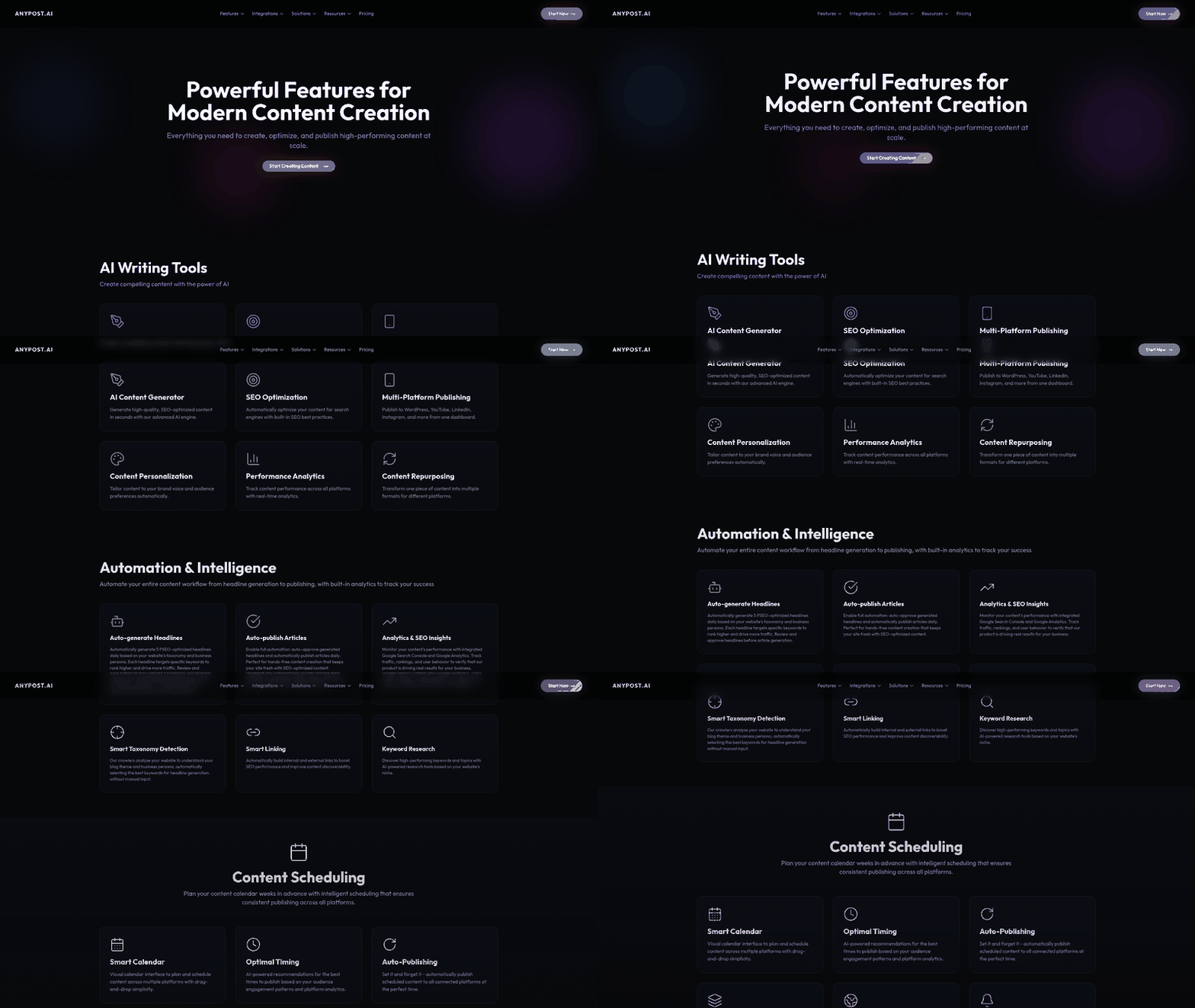
Building a content production pipeline for SaaS writing starts with mapping a structured workflow that automates repetitive tasks while maintaining brand consistency. The core components include ideation, planning, creation, and distribution, each optimized for scalability. For example, AnyPost.ai’s Auto-generate Headlines feature scans research articles, blogs, and YouTube to suggest SEO-optimized topic ideas, reducing manual brainstorming time by up to 70%. This sets the foundation for a pipeline that prioritizes high-impact content without sacrificing quality.
Automating Ideation with AI-Powered Research
Traditional ideation often stalls due to keyword gaps or outdated topic angles. AI tools like AnyPost.ai solve this by analyzing competitors, search trends, and audience intent in real time. Its Deep Research Understanding engine pulls insights from Reddit threads, academic papers, and industry blogs to identify undercovered niches. For instance, a SaaS company targeting project management tools might discover a rising interest in “AI-driven task prioritization,” prompting a series of blog posts, case studies, and social media snippets around that theme. By automating this process, teams avoid guesswork and focus on validating ideas with data.
Streamlining Creation with Briefs, Outlines, and Templates
Once topics are prioritized, a brief-outline-draft workflow ensures efficiency. Start with a content brief that defines target keywords, audience pain points, and SEO goals. AnyPost.ai’s Smart Taxonomy Detection automatically populates these details by scanning your website, saving hours of manual setup. Next, use AI-generated outlines to structure the content, leveraging tools like Jasper or the Persona Engine to maintain a consistent tone. For example, a tech startup might use a template outlining sections like “Problem,” “Solution,” and “Case Study,” with placeholders for data-driven examples. Templates also enforce brand voice—whether formal or casual—across formats like blogs, emails, and social posts. As mentioned in the Defining Your SaaS Content Goals and KPIs section, aligning these templates with predefined KPIs ensures every piece of content directly supports business objectives.
Unifying Content Across Channels with Multi-Source Integration
A fragmented content strategy leads to wasted effort. To unify streams, repurpose long-form assets into platform-specific formats. AnyPost.ai’s Repurpose Content feature transforms a 2,000-word blog into LinkedIn threads, YouTube scripts, or Instagram carousels while preserving the core message. For example, a guide on “Scaling SaaS Marketing” could become a 5-part email series for lead nurturing, a webinar outline, and a series of Twitter tips. This approach not only saves time but also ensures every piece aligns with your SEO strategy, as internal linking and cross-promotion boost domain authority. See the Repurposing Content Across Formats and Channels section for more details on maximizing ROI through strategic repurposing.
By integrating automation at every stage—from AI-driven ideation to template-based drafting—SaaS teams can scale content production without proportional increases in workload. Tools like AnyPost.ai act as a central hub, connecting research, creation, and analytics into a seamless loop. Building on concepts from the 90-Day Action Plan to Scale SaaS Content section, this pipeline evolves with market demands, ensuring sustained growth through agility and data-driven adjustments. The result? Higher organic traffic, consistent brand messaging, and a content pipeline that evolves with market demands.
Repurposing Content Across Formats and Channels
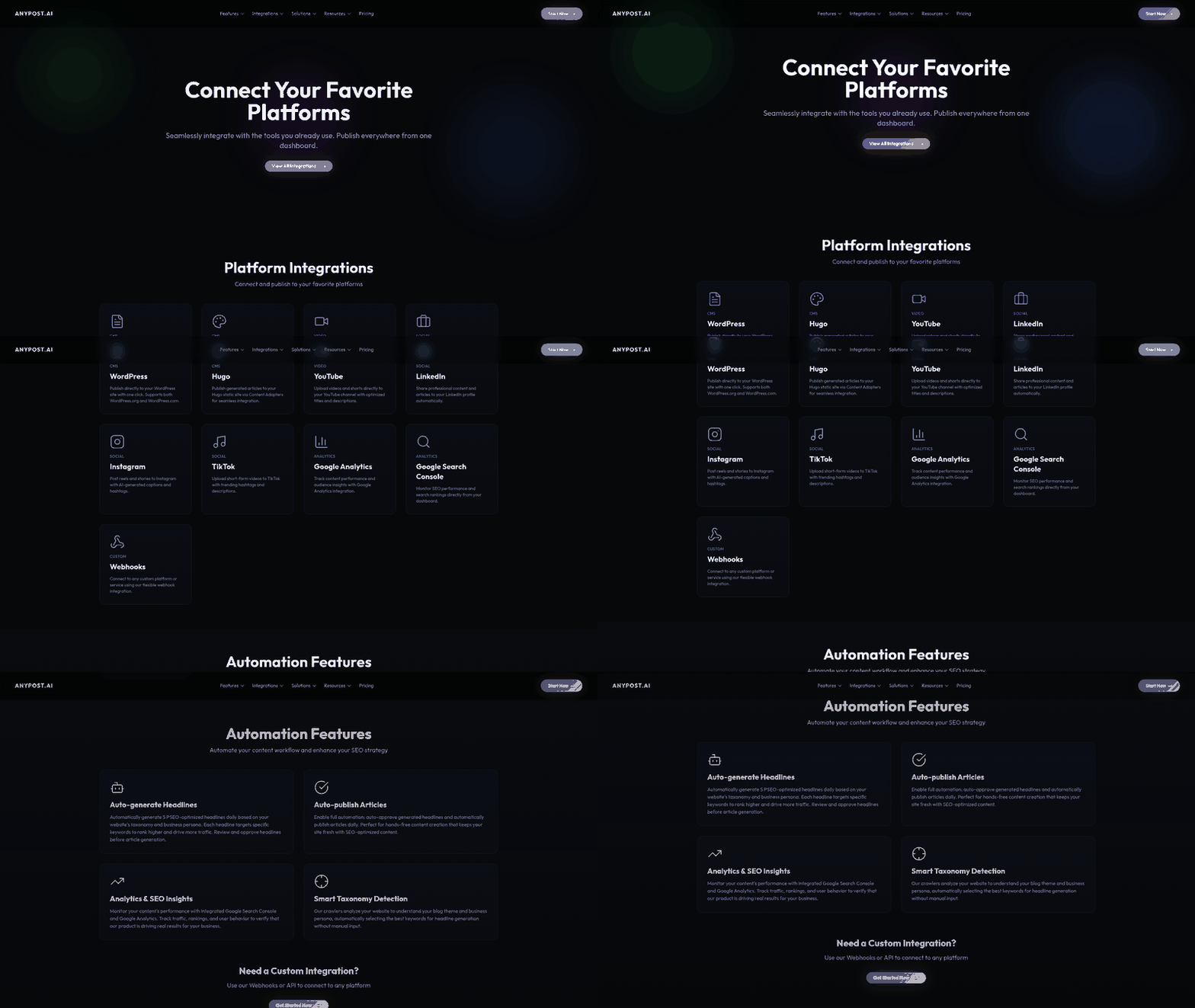
Repurposing content is a strategic way to maximize ROI from every piece of SaaS content. By transforming a single blog post into social media snippets, email sequences, or video scripts, you amplify reach while reducing creation time. For example, a 2,000-word guide on AI-driven SEO could become 10 LinkedIn posts, a webinar outline, and a YouTube explainer video. Tools like AnyPost.ai streamline this process by automating format conversions while preserving brand voice. Their Persona Engine ensures tone consistency—whether you need formal B2B copy for a whitepaper or punchy captions for TikTok.
How to Repurpose Blog Posts Across Channels
Start by identifying "content gold" in your long-form pieces. Headlines, case studies, and key statistics often work as standalone social media posts. For instance, a blog section titled "5 Ways SaaS Teams Lose Time to Manual Tasks" can become a LinkedIn carousel (with each "way" as a slide) or a Twitter thread using emojis for visual breaks. As mentioned in the Building a Content Production Pipeline section, automating repetitive tasks like format conversions is critical for scaling output. AnyPost.ai’s Built-In Humanizer refines this process, adapting technical blog language into conversational social media hooks like: "Tired of creating content manually? 🚫 Here’s how SaaS teams save 10+ hours/week with automation. (Spoiler: It starts with the right tools.)"
For email newsletters, AnyPost.ai’s Email Nurturing feature extracts blog insights into digestible, lead-generating sequences. A case study on a SaaS client’s 13x traffic boost becomes a 3-part email series:
- Problem: "Why 70% of B2B blogs fail to drive leads"
- Solution: "The 3-step content strategy we used to reverse this"
- CTA: "Download our free checklist to replicate this success"
See the Defining Your SaaS Content Goals and KPIs section for more details on aligning tone and messaging with business objectives.
Adapting Tone for Different Formats
A one-size-fits-all tone fails in SaaS marketing. The Persona Engine in AnyPost.ai adjusts language to fit each channel’s audience:
- LinkedIn: "Exploring the intersection of AI and content strategy? Here’s how [Your Brand] achieved 42K active users in 30 days."
- Instagram: "🚀 Quick tip: Automate 80% of your content creation with these 3 tools (No coding required!)"
- Email: "Hi [First Name], we noticed you’re optimizing for [keyword]. Here’s a personalized guide to ranking faster."
Use bold to emphasize platform-specific shifts:
- YouTube: "This is the SMARTEST way to repurpose content…"
- Whitepapers: "Methodology: A data-driven analysis of multi-channel content distribution"
Case Studies and Real-World Impact
A SaaS company using AnyPost.ai’s Content Repurposing tools transformed a single blog post into 15 assets across 5 platforms, driving a 15x increase in qualified leads. One client, a B2B marketing agency, auto-generated 20 social posts from a case study, resulting in 8 new client signups.
For tools, AnyPost’s Smart Linking and Multi-Platform Publishing integrations eliminate manual formatting. You can publish WordPress blog posts, LinkedIn articles, and YouTube videos from one dashboard—ensuring consistent SEO and brand voice.
"Repurposing used to take 10x more time than writing. With AnyPost, we create 3x the content in half the time." — Marketing Director, B2B SaaS Agency
By embedding these strategies, SaaS teams turn every piece of content into a revenue-driving asset—without sacrificing quality or creativity. For performance tracking, refer to the Deploying Real-Time Analytics for Continuous Feedback section to measure the impact of repurposed content.
Deploying Real-Time Analytics for Continuous Feedback
Real-time analytics empower SaaS content teams to monitor performance instantly and adjust strategies for maximum impact. Tools like Google Analytics, Google Search Console, and platform-specific dashboards (e.g., AnyPost.ai’s built-in analytics) provide live insights into traffic, engagement, and conversion rates. These platforms track metrics such as session duration, bounce rate, and goal completions, helping teams identify content that drives user action. For example, AnyPost’s real-time dashboard highlights organic sessions, engagement rate, and qualified leads, enabling writers to optimize headlines and CTAs based on immediate feedback. Integrating these tools with SEO platforms like Ahrefs or SEMrush adds keyword performance tracking, ensuring content aligns with search trends. As mentioned in the Defining Your SaaS Content Goals and KPIs section, aligning these metrics with business objectives is critical for measuring success.
Tracking Key Metrics for SaaS Content Optimization
Effective real-time analytics hinge on monitoring metrics that directly correlate with revenue and user growth. Start by tracking website traffic to identify top-performing content and seasonal trends. A 210% increase in organic traffic reported by a SaaS client (via AnyPost’s case studies) highlights how consistent data review can refine keyword strategies. Next, focus on engagement metrics like time on page and scroll depth, which reveal whether readers find value in the content. For conversion rates, track CTA clicks, demo requests, and form submissions to measure content’s role in the sales funnel. AnyPost’s analytics dashboard, for instance, displays 12,800 organic visits and 82% engagement, showing how SEO-optimized content drives measurable results. Regularly compare these metrics across platforms (e.g., blog vs. LinkedIn) to allocate resources efficiently, as outlined in the Repurposing Content Across Formats and Channels section.
A/B Testing and Data-Driven Experimentation
A/B testing allows SaaS teams to validate hypotheses about content structure, tone, and CTAs without guesswork. Use real-time analytics to split audiences and test variations of headlines, subheadings, or call-to-action buttons. AnyPost’s automated headline generator creates multiple SEO-optimized options, enabling teams to track which versions drive higher click-through rates. For example, a B2B SaaS company increased demo signups by 3x after testing headlines tailored to different user personas. Similarly, experimenting with content formats—like how-to guides vs. listicles—can uncover audience preferences. AnyPost’s Persona Engine streamlines this process by adapting language to match brand voice while testing different angles, as discussed in the Building a Content Production Pipeline section. Teams should document A/B test results in shared repositories to build a knowledge base of winning strategies.
Case Studies and Building a Data-Driven Culture
Real-world examples demonstrate how real-time analytics transform content strategies. Rock The Rankings helped MoonPay dominate crypto search results by using live data to adjust content for user intent, while another B2B SaaS client doubled signups through iterative testing of blog structures. To replicate this success, foster a culture where data informs every decision. Encourage content writers to review dashboards daily, collaborate with SEO specialists on keyword adjustments, and share insights in weekly standups. AnyPost’s clients report 229.8% user growth by automating content creation and pairing it with real-time performance tracking. Teams should also set up alerts for sudden traffic drops or spikes, enabling rapid responses to algorithm updates or competitor moves, as emphasized in the Scalable Distribution Strategies for SaaS Content section.
By combining real-time analytics with iterative testing and cross-team collaboration, SaaS content teams can scale high-performing strategies while minimizing guesswork. Tools like AnyPost.ai provide the infrastructure to automate data collection and analysis, but the true value lies in how teams act on those insights—turning raw numbers into actionable improvements.
Scalable Distribution Strategies for SaaS Content
Scalable distribution strategies for SaaS content require a mix of automation, audience alignment, and platform-specific optimization. Start by selecting channels that match your audience’s behavior. For example, B2B marketers often engage with LinkedIn and industry-specific forums, while growth leaders may prioritize Substack newsletters or Twitter threads. Tools like AnyPost.ai streamline this process by auto-publishing content to WordPress, LinkedIn, and YouTube, ensuring consistent brand voice across platforms. A SaaS company using AnyPost’s multi-platform publishing reported a 229.8% increase in active users over 30 days by repurposing long-form blogs into bite-sized social posts. See the Repurposing Content Across Formats and Channels section for more details on transforming content for different platforms.
Choosing the Right Channels for Maximum Reach
Social media, email newsletters, and content aggregators form the backbone of SaaS distribution. Each channel demands tailored content: LinkedIn thrives on thought leadership, while Twitter benefits from punchy, data-driven threads. Email newsletters, however, excel at nurturing leads with in-depth guides or product updates. AnyPost’s Persona Engine ensures tone consistency, adapting a technical blog post into a conversational LinkedIn article or a sales-focused email. For instance, a B2B SaaS brand automated 80% of its distribution using AnyPost’s smart taxonomy, repurposing one article into 12 platform-specific variations. This approach boosted organic traffic by 210% in six months.
Optimize distribution by analyzing engagement patterns. Tools like Google Analytics or AnyPost’s built-in metrics identify peak posting times, top-performing topics, and audience drop-off points. A SaaS company targeting enterprise clients used AnyPost’s smart scheduling to publish LinkedIn posts during 9–11 a.m. ET, increasing click-through rates by 40%. Similarly, segmenting email lists based on user behavior—such as free trial sign-ups versus past customers—led to a 3x rise in demo requests for one cloud storage platform. For deeper insights into leveraging analytics, refer to the Deploying Real-Time Analytics for Continuous Feedback section.
Case Studies: Real-World Distribution Success
Consider a SaaS startup in project management software. By integrating AnyPost’s auto-generated headlines with a targeted LinkedIn campaign, they achieved #1 SERP rankings for “team collaboration tools” within three months. The strategy involved publishing 10 blog posts, 15 social threads, and 5 email sequences, all aligned with keywords like “remote team workflow.” Another example: a fintech SaaS brand used AnyPost’s video avatar feature to create YouTube tutorials, driving a 45% increase in trial sign-ups by addressing pain points like compliance automation.
For B2B SaaS companies, email newsletters remain a high-conversion channel. A cybersecurity firm automated weekly digests using AnyPost’s AI-humanizer, transforming technical blog posts into digestible, persona-specific emails. The result? A 52% open rate and a 22% rise in free trial conversions. These campaigns succeeded by aligning content with the audience’s journey: top-of-funnel blogs for awareness, mid-funnel case studies for consideration, and bottom-of-funnel comparison guides for decision-making.
Tools to Streamline Distribution
Leverage automation platforms like AnyPost.ai to eliminate manual work. Features such as auto-generated headlines, SEO-optimized repurposing, and smart calendar scheduling reduce distribution time by 70% compared to manual workflows. Competitors like Jasper focus on content creation, but AnyPost integrates publishing, analytics, and multi-channel adaptation into one dashboard. For example, a marketing agency managing 12 SaaS clients reduced content delivery delays by 90% using AnyPost’s centralized publishing queue.
Pair automation with human oversight for best results. Review top-performing assets weekly, then allocate more resources to high-traffic channels. One analytics SaaS brand discovered that repurposing blog posts into YouTube shorts increased video views by 300%, prompting them to dedicate 30% of their content budget to video creation.
“AnyPost’s automation lets us focus on strategy, not execution. Our team now publishes three times more content without hiring additional writers.” — Growth Marketer, SaaS Analytics Firm
By combining the right tools, audience insights, and iterative optimization, SaaS brands can scale content distribution without sacrificing quality. The key is to align every step—from channel selection to repurposing—with both SEO goals and user intent. For a structured approach to scaling efforts, explore the 90-Day Action Plan to Scale SaaS Content section.
90-Day Action Plan to Scale SaaS Content
The 90-day action plan to scale SaaS content writing is structured into three phases: foundation, execution, and optimization. Each phase includes actionable steps to streamline creation, amplify distribution, and measure results. Below is a step-by-step breakdown, incorporating tools like AnyPost.ai to automate workflows and maintain brand consistency.
Phase 1: Foundation (Days 1–30)
Lay the groundwork by defining goals, auditing existing content, and selecting tools.
-
Set SMART Goals As mentioned in the Defining Your SaaS Content Goals and KPIs section, align content objectives with business KPIs. For example, a SaaS company might aim for a 50% increase in organic traffic or 30% more qualified leads within 90 days. Use historical data to benchmark performance. A client of AnyPost.ai achieved 229.8% growth in active users in 30 days by automating content creation, proving the power of scalable strategies.
-
Audit Existing Content Review blogs, case studies, and social posts to identify gaps. Tools like AnyPost’s Smart Taxonomy Detection analyze your site to surface underperforming keywords and content themes. For instance, a SaaS marketing team might discover outdated blog posts that need repurposing into video scripts or LinkedIn threads.
-
Choose Automation Tools Integrate platforms like AnyPost.ai to automate headline generation, SEO optimization, and multi-channel publishing. Its Persona Engine ensures brand voice consistency across formats, while Auto-publishing reduces manual effort by 70% (per Jasper’s case study with Adidas).
-
Build a Content Brief Template Use templates to guide writers with clear parameters. A brief for a SaaS tutorial might include:
- Target audience: B2B tech teams
- Tone: Educational, concise
- Keywords: “cloud migration tools”
- Repurpose into: Video script, LinkedIn carousel
Phase 2: Execution (Days 31–60)
Produce and distribute content at scale, leveraging automation and data.
- Create a Content Calendar Building on concepts from the Building a Content Production Pipeline section, use AnyPost’s Smart Calendar to schedule posts across platforms like WordPress and LinkedIn. For example, a SaaS company might:
- Publish 3 blogs/week with SEO-optimized headlines
- Repurpose 2 blog posts into YouTube shorts/month
- Schedule LinkedIn posts for peak engagement times
-
Generate and Repurpose Content Auto-generate long-form blogs using AnyPost’s Multi-Hop Research feature, which scans industry reports and YouTube to build comprehensive articles. One client repurposed a 2,000-word blog into 10 LinkedIn posts and 3 email newsletters, driving a 45% increase in conversions (as seen in AnyPost’s e-commerce case study).
-
Engage with AI Avatars Deploy AI video avatars to host tutorials or explain complex features. A SaaS company used AnyPost’s AI Video Avatars to create 5 YouTube videos/month, reducing production time from 10 hours to 30 minutes per video.
Phase 3: Optimization (Days 61–90)
Refine strategies using analytics and expand high-performing content.
-
Analyze Performance Metrics For deeper insights, refer to the Deploying Real-Time Analytics for Continuous Feedback section. Track organic traffic, engagement rates, and lead generation via AnyPost’s Real-Time Analytics. For example, a SaaS firm noticed a 120% traffic spike from a blog targeting “zero-trust security,” prompting them to double down on similar topics.
-
A/B Test Headlines and Formats Use AnyPost’s Headline Generator to experiment with variations. A B2B SaaS brand tested 5 headlines for a case study post and saw a 200% increase in clicks with the top-performing title.
-
Scale High-Performing Content Repurpose top blogs into webinars, email sequences, or downloadable guides. A SaaS company turned a high-ranking “how-to” blog into a 7-part email series, boosting demo signups by 30%.
Case Study: Scaling with AnyPost.ai
A SaaS client used AnyPost to automate content for their WordPress blog and LinkedIn. By enabling Auto-publishing and integrating SEO tools, they reduced content creation time by 80% and achieved a 13x increase in organic traffic. Their strategy included:
- Daily blog posts targeting long-tail keywords
- Weekly LinkedIn threads repurposed from blog sections
- Monthly video avatars explaining product updates
Tools to Streamline Scaling
- AnyPost.ai: Automates SEO-optimized content, multi-platform publishing, and analytics.
- Jasper (for comparison): Aids in AI-generated copy and campaign workflows, though it lacks AnyPost’s deep integration with WordPress and YouTube.
- Content Brief Templates: Ensure consistency, as outlined in SaaS content strategy guides (e.g., How I Became a SaaS Content Writer).
By following this structured plan, SaaS teams can reduce content bottlenecks, maintain brand voice, and scale output without compromising quality. The key is to automate repetitive tasks while using data to refine high-impact strategies.
Frequently Asked Questions
1. What is SaaS content writing, and why is it important for software businesses?
SaaS content writing involves creating targeted, SEO-optimized content to drive organic traffic, generate leads, and scale revenue for software-as-a-service businesses. It is critical because it helps establish thought leadership, addresses user pain points, and aligns with the buyer’s journey. Unlike generic content, SaaS writing focuses on technical specifications, use cases, and measurable outcomes to resonate with B2B audiences. Tools like AnyPost.ai streamline this process by integrating SEO optimization and brand voice consistency into automated workflows.
2. How can businesses scale their SaaS content creation efforts efficiently?
Scaling SaaS content requires a mix of automation, data-driven research, and strategic repurposing. AI-driven tools like AnyPost.ai reduce drafting time by 30–40% through automated headline generation and SEO optimization. Additionally, repurposing long-form content into emails, social posts, and videos (as seen in campaigns generating 15+ assets from one blog) maximizes ROI. Combining these with manual editing for niche topics ensures efficiency without sacrificing quality.
3. What are the key differences between AI-driven and manual SaaS content creation?
AI-driven content excels in speed and scalability, handling 1–2 hours of drafting per piece with moderate setup effort (difficulty rating 4). It is ideal for consistent brand voice and SEO-focused topics. Manual creation, however, requires 6–10 hours per piece (difficulty rating 8) but allows deeper customization for niche or complex subjects. Hybrid models—using AI for drafting and humans for refinement—often balance efficiency and quality best.
4. How does SEO optimization integrate into SaaS content strategies?
SEO is central to SaaS content, as it ensures visibility for high-intent keywords. Tools like AnyPost.ai use real-time SEO optimization and smart taxonomy detection to align content with search trends. Successful campaigns prioritize keyword research, on-page optimization (e.g., meta tags, headers), and technical SEO (e.g., site speed, mobile responsiveness). For example, one SaaS client boosted organic traffic by 210% by targeting specific keywords and repurposing content across platforms.
5. What are the challenges of guest posting for SaaS content marketing?
Guest posting is effective for building authority and referral traffic but requires significant effort. Outreach alone takes 4–6 hours per post (difficulty rating 7), as it involves identifying relevant platforms, pitching ideas, and negotiating terms. Additionally, maintaining brand voice consistency across third-party sites can be challenging. While it complements other strategies, businesses should weigh the time investment against potential ROI and consider automation tools to streamline outreach.
6. How can businesses measure the success of their SaaS content marketing efforts?
Success is measured through metrics like organic traffic growth, lead conversion rates, and user engagement. For instance, one B2B SaaS company increased demo requests by 300% by optimizing CTAs and aligning blog topics with the sales funnel. Tools like AnyPost.ai offer real-time analytics to track performance, while campaigns using AI-powered publishing systems saw 229.8% active user growth in 30 days. Focusing on both quantitative data (e.g., backlinks, bounce rates) and qualitative outcomes (e.g., brand awareness) provides a holistic view.
7. What role does content repurposing play in SaaS marketing?
Content repurposing extends the lifecycle of high-performing assets by transforming them into multiple formats (e.g., blog posts into social media threads, emails, or video scripts). This strategy reduces creation costs by 50–70% and ensures consistent messaging across channels. A case study in the article highlights how a single 2,000-word blog post generated over 15 platform-specific assets using AnyPost.ai’s repurposing features, demonstrating its value in maximizing ROI from existing content.