
What Is Semantic SEO Automation and How Do Teams Use It

What Is Semantic SEO Automation and How Does It Work?

Key Takeaways
- Semantic SEO automation converts one research effort into a repeatable workflow. It addresses search intent, entity coverage, and brand voice.
- AI‑driven SaaS platforms score a low setup difficulty of 2. They adapt tone using a built‑in persona engine.
- Custom script plus API solutions generate 5‑10 articles weekly. They require manual tone rules and have a higher setup difficulty rating of 4.
- Hybrid CMS‑plug‑in workflows produce the fastest output. They publish 10‑25 pieces per week while maintaining template‑based style guides and a moderate difficulty score of 3.
- Enterprise SEO platforms deliver 15‑30 weekly articles. They centralize style guides and provide full topic‑cluster dashboards, yet their voice granularity remains limited.
- Manual spreadsheet‑plus‑copy processes produce only 2‑5 articles per week. They rely entirely on individual writers for tone and score the highest setup difficulty of 5.
Quick Summary
Semantic SEO automation turns a single research effort into a content engine. It respects search intent, entity coverage, and brand voice in one repeatable workflow. Teams that adopt this approach boost content output while keeping their brand recognizable.
Here's the quick‑reference table I use when sizing up options for my own stack:
| Tool family | Brand‑voice alignment | Content speed (articles/week) | Core SEO features | Setup difficulty (1‑5) |
|---|---|---|---|---|
| AI‑driven SaaS | Persona engine matches tone to existing copy | Varies by plan | Intent clustering, entity extraction, auto‑internal linking | 2 |
| Custom script + API | Requires manual tone rules, easy to break | 5‑10 | Keyword clustering, basic schema | 4 |
| Hybrid workflow (CMS plug‑in + AI) | Uses template‑based style guides | 10‑25 | SERP alerts, FAQ generation | 3 |
| Enterprise SEO platform | Centralized style guide, but limited granularity | 15‑30 | Full topic‑cluster dashboards, ranking alerts | 3 |
| Manual process (spreadsheet + copy) | No automation, tone depends on individual writers | 2‑5 | Manual keyword list only | 5 |
What key metrics should we track in semantic SEO automation?
Focus on content velocity, entity coverage score, brand‑voice consistency index, time‑to‑publish, and setup difficulty. Content velocity measures how many pieces the system outputs weekly. Entity coverage score evaluates how well each article hits the relevant concepts identified during clustering. The consistency index audits tone‑match percentages against a reference corpus. Time‑to‑publish captures the end‑to‑end lag from brief to live page. Setup difficulty helps you gauge the resources needed to get the workflow running.
How does semantic SEO automation affect implementation time and effort?
Initial configuration involves an onboarding period where the system learns your site's structure and brand DNA. After that, the workflow runs with minimal oversight. The most time‑intensive step is the entity‑extraction and clustering phase. You can automate that with AI tools to group keywords into semantic clusters quickly. Once clusters are established, weekly maintenance usually takes a few hours for internal‑link updates and performance monitoring.
How does semantic SEO automation preserve brand voice across channels?
Feed a brand‑DNA graph into the generation engine, and every output mirrors the style of your existing content. This approach lets you scale without the risk of "AI‑slop" that ignores tone, because the system references the same voice model for blog posts, landing pages, and social snippets. The result is a cohesive experience for users across formats, protecting the brand equity you've built over years.
Why Semantic SEO Automation Matters
By mapping intent, entities, and internal links into a single automated pipeline, you create pages that collectively answer a whole topic. Search engines reward that with higher rankings.
The workflow starts with a Taxonomy Researcher. It groups keywords by shared intent. The platform then generates AI‑created briefs that incorporate the identified concepts and align with your brand's voice using a Persona Engine. Finally, built‑in internal‑link suggestions connect the new content to existing assets, completing the semantic loop.
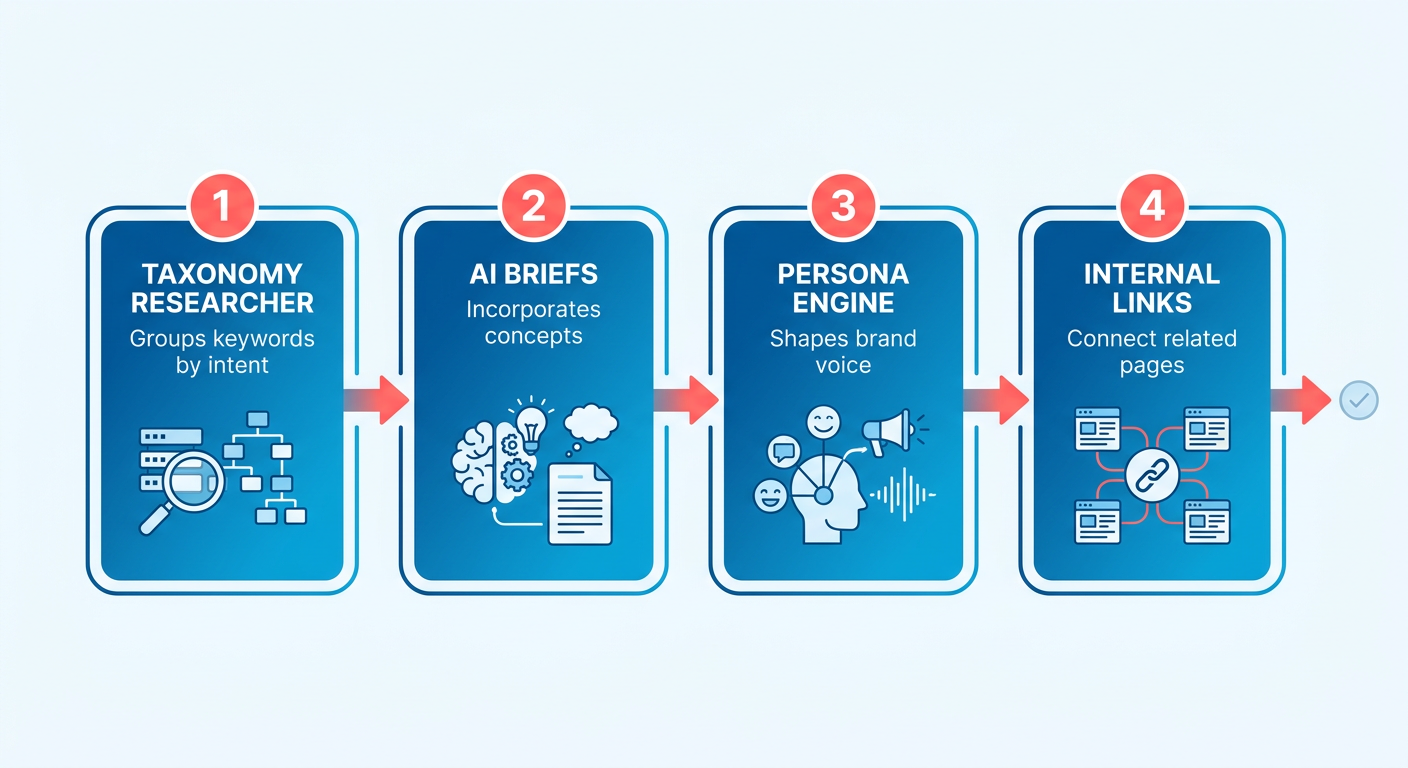
- Intent‑based clusters reduce overlap and improve crawl efficiency.
- AI‑generated briefs ensure coverage of relevant concepts without manual gap analysis.
- Automated internal linking creates a web of relevance that boosts page authority.
"Semantic SEO automation focuses on creating content that covers search intent, entities, internal linking, and content gaps."
Which Teams Gain the Most From It?
Small to medium content squads, especially B2B marketers and growth leaders, realize the biggest ROI because the system scales their output without sacrificing brand voice.
Teams with limited copywriters can still publish a steady stream of high‑quality pieces. By automating brief generation and link planning, writers spend most of their time polishing tone and adding strategic insights rather than hunting keywords. This preserves the brand's distinctive voice across every channel.
Typical candidates include:
- Content marketers looking to dominate niche clusters.
- Digital strategists who need measurable topic authority.
- Growth leaders who must prove ROI on SEO spend quickly.
If a team already has a strong style guide, feeding that guide into the prompt library helps the automation respect phrasing, terminology, and overall brand personality.
What Role Does AI Play in Keeping Brand Voice Consistent?
AI acts as a disciplined assistant. It enforces style rules while handling data extraction and clustering.
The Persona Engine embeds your brand's preferred terminology directly into the generated briefs. The AI drafts content that aligns with your voice guide, and you review the output for nuance before publishing. Internal‑link recommendations also use the same brand‑aligned language.
Key steps:
- Load the brand style guide into the AI prompt library.
- Generate a draft that incorporates the identified entities and respects the brand tone.
- Apply internal‑link suggestions that use consistent anchor text and phrasing.
Real‑time analytics tracking lets you monitor ranking shifts and content gaps, so you can adjust quickly as search trends evolve.
Automating Topic Research and Keyword Clustering
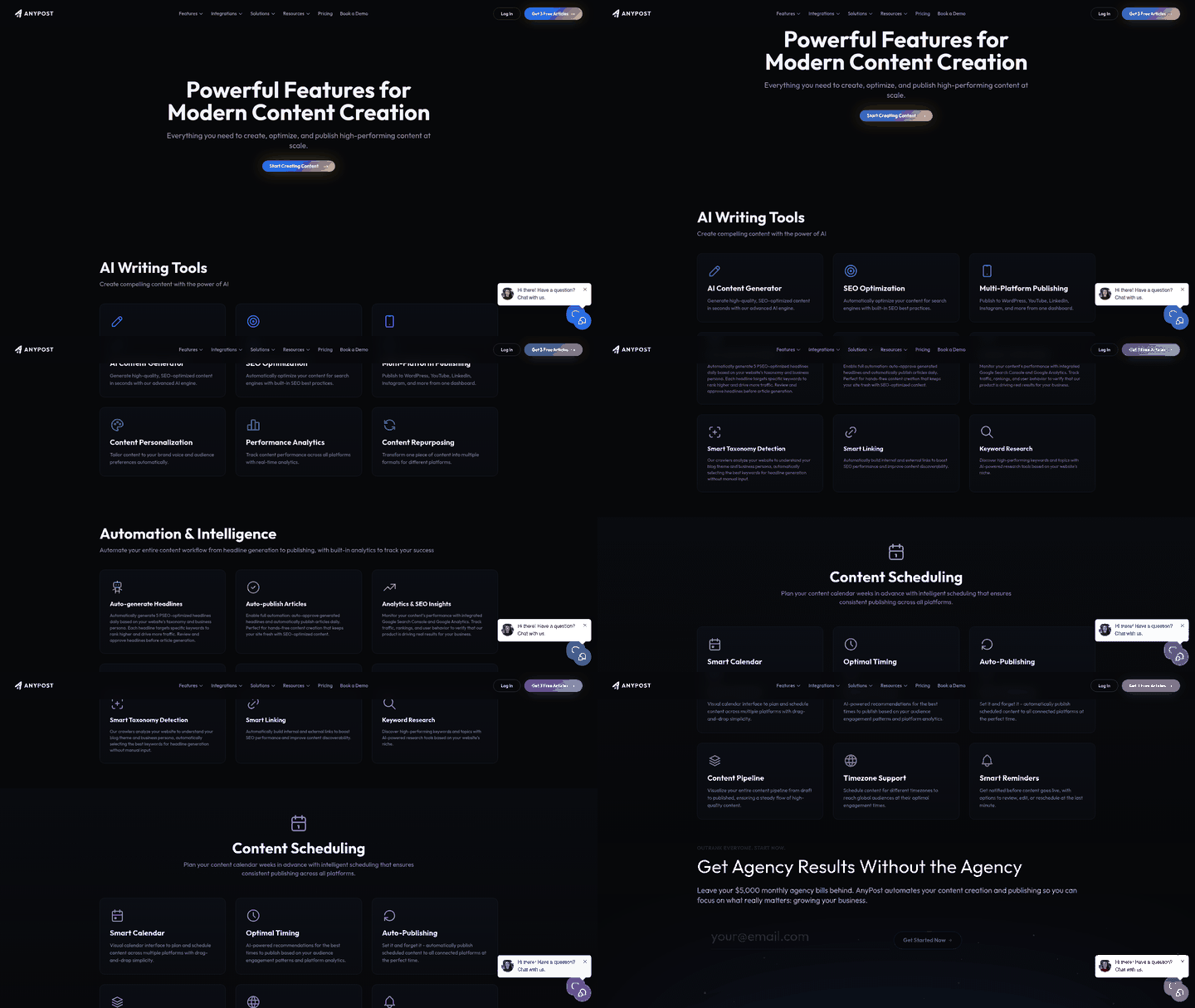
Semantic SEO automation is the bridge between raw keyword data and a brand‑consistent content roadmap. Using a Taxonomy Researcher, you transform a raw list of queries into organized topic groups that align with your defined tone. This enables a small team to publish dozens of aligned pages without manually re‑creating the voice each time.
The first step is to export a keyword dump from any source, search console, Ahrefs, or a paid‑search tool, and feed it into a workflow that groups terms by shared intent. The resulting clusters map directly to the entities and concepts your audience cares about, while the Persona Engine ensures each brief reflects the brand's personality.
How Do We Generate Intent‑Based Keyword Clusters?
Apply a built‑in language model to assess semantic similarity. Then group related terms together.
- Extract the raw list – Export keywords from your preferred research tool into a CSV.
- Import into the platform – The system automatically tags each keyword with intent (informational, navigational, transactional) and creates clusters based on topic overlap.
- Validate the clusters – Review the top three keywords per cluster to confirm a clear user goal; split any cluster that mixes intents before moving forward.
This approach eliminates manual gap analysis and ensures each cluster targets a distinct search purpose.
What Role Do Entity Extraction and Brand Voice Play?
Entity extraction enriches each cluster with the concepts that search engines associate with the topic, while the Persona Engine applies the brand's voice to the brief.
- Built‑in entity extraction pulls relevant people, products, and technical terms from top‑ranking pages for each cluster.
- The Persona Engine maps those entities to tone guidelines, formal, friendly, or witty, so the generated brief already reflects the brand voice.
- The content brief output includes a list of mandatory entities, suggested sub‑topics, and a tone‑style tag that writers can follow verbatim.
By coupling entities with a calibrated voice, you avoid the "generic AI" trap and keep every piece on‑brand.
Which Metrics Should We Track to Refine the Clusters?
Monitor three core signals to gauge whether your automated clusters are delivering authority and brand cohesion.
- Coverage score – Percentage of identified entities that appear in the final article. A high score means the content fully answers the semantic intent.
- Keyword cannibalization index – Detects overlapping keywords across clusters; aim for a low index to keep each page distinct.
- Brand‑tone consistency rating – An internal audit where editors rate how well the published copy matches the tone guide (1–5).
When any metric drifts, loop back to the clustering workflow, adjust the intent tags, or fine‑tune the Persona Engine prompts. Teams that close the feedback loop regularly see a steady lift in topical authority without sacrificing voice.
Automating Content Drafting and Optimization
Once the keyword clusters are finalized, the workflow transitions from planning to execution. The system uses the structured briefs to generate initial drafts, ensuring that the extracted entities and brand guidelines are integrated directly into the prose from the start.
Before drafting begins, the system verifies that each brief contains the necessary semantic markers. This preparation ensures the AI writer has a clear roadmap of required terms and tone instructions before generating a single sentence.
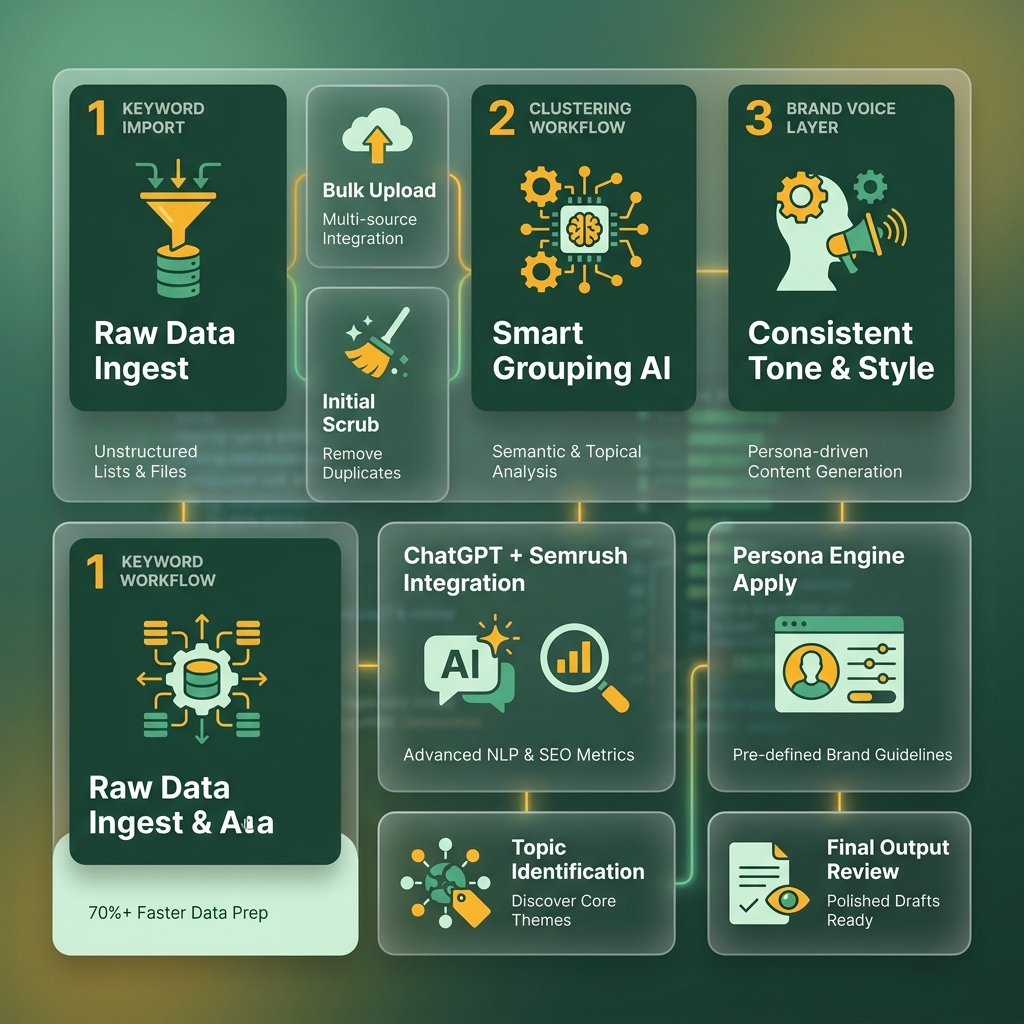
What Does the Automated Drafting Workflow Look Like?
Once the brief is ready, an AI writer spins a full draft. A set of post‑processing agents handle internal linking, SEO checks, and voice consistency before the article goes live.
- Generate the draft: a generative model receives the brief and produces a structured article, complete with headings that mirror the brand's style.
- Run the internal‑link planner (ChatGPT + WordPress integration) to suggest anchor texts and linking destinations that reinforce the cluster's semantic graph.
- Apply the rewrite reviewer (Qwen AI + Google Docs), which scans the draft for gaps in entity coverage and flags sentences that drift from the prescribed voice.
- Publish via automation: the final markdown is pushed to the CMS, triggering a workflow that tags the page, updates the sitemap, and notifies the content team.
This streamlined workflow helps the team deliver a polished, brand‑aligned article with far fewer manual revisions than traditional processes.
How Do We Optimize and Refine Drafts with Data?
Continuously feed performance signals back into the workflow, letting the system learn which phrasing, entities, and linking patterns drive higher rankings.
- Collect weekly SERP and ranking data using a monitoring bot (Semrush + Telegram alerts) that flags shifts in position or visibility.
- Digest the data in a performance digest (Perplexity AI + Google Sheets) that surfaces clusters that under‑perform or show keyword cannibalization.
- Trigger refresh tasks automatically (ChatGPT + Trello) to assign rewrite or link‑addition jobs to the appropriate team member.
- Iterate the brand‑voice model: if analytics reveal that a more conversational tone boosts dwell time for a particular cluster, adjust the Persona Engine parameters and re‑run the affected briefs.
By closing the loop between draft creation and real‑world results, the content stays both SEO‑strong and unmistakably on‑brand.
Implementing and Integrating Semantic SEO Automation
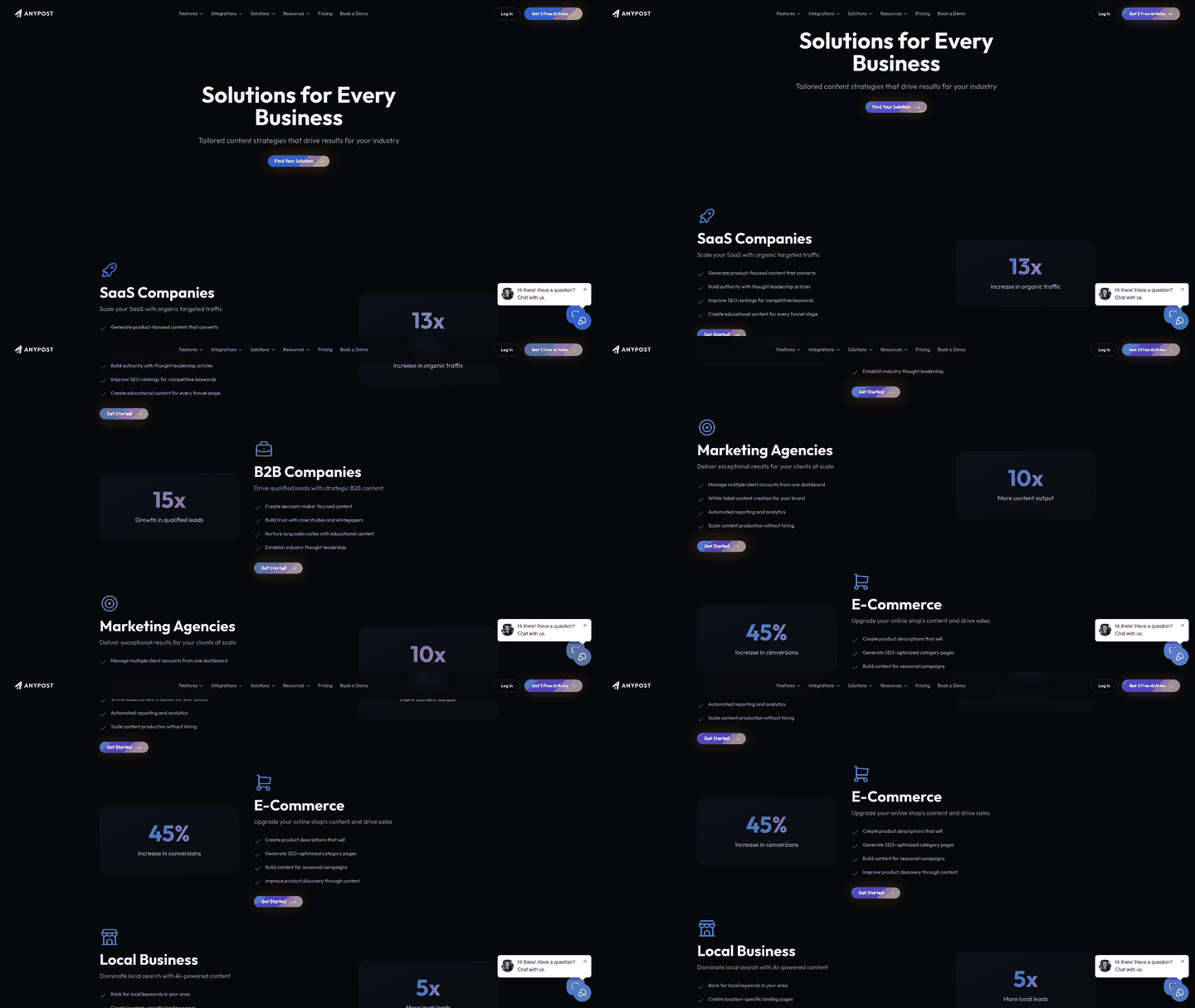
Integrating automated workflows into daily operations requires aligning your existing software stack with the new generation tools. By connecting your research, drafting, and publishing platforms, you establish a continuous pipeline where data flows smoothly from one stage to the next.
Start with a quick audit of the existing pipeline. List every hand‑off, from keyword gathering to publishing, and note where humans add tone, where tools add data, and where gaps cause bottlenecks. This map reveals the exact spots where automation can add value without breaking the brand narrative.
Audit checklist
- Capture the tools you already use (search console, CRM, CMS).
- Record who writes, reviews, and publishes each piece.
- Identify any manual tone‑adjustment steps.
- Note data formats (CSV, JSON, API) that flow between systems.
If the audit shows a repetitive brief‑creation loop and a separate tone‑editing step, you have a prime opportunity to replace both with a single automated flow.
How Do We Set Up the Automation Engine?
Initial configuration focuses on establishing baseline settings within the platform. This involves mapping your target audience profiles, defining default content lengths, and selecting the primary language models that will handle the initial drafting phases.
Built‑in SEO checks verify each draft covers the relevant concepts and aligns with search intent, helping you maintain comprehensive semantic coverage without extra manual review.
How Can We Connect the Engine to Our Existing CMS and CRM?
Standard connectors allow you to push ready‑to‑publish drafts directly into your publishing workflow. Content metadata can be synced to your CRM so sales and marketing teams stay informed about new topics that go live.
Map your CMS fields (title, meta description, body) to the platform's output, and configure the CRM to receive the associated topic details. This two‑way sync keeps marketing, sales, and product teams aligned on the same semantic narrative.
What Are Real‑World Integration Successes?
Teams that have integrated these systems with their content platforms report higher content output and a consistently recognizable tone across blogs, help centers, and landing pages. Internal linking structures expand naturally as new articles are generated, contributing to stronger topic authority over time.
Best Practices for a Smooth Rollout
- Start small: pilot the workflow on a single topic cluster before scaling.
- Document the persona: capture voice guidelines in a living document that the persona engine references.
- Validate early: review the first drafts to ensure key concepts are covered and the tone matches expectations.
- Monitor the dashboard: keep an eye on publishing status and any error notifications during the initial month to fine‑tune mappings.
- Iterate the tone: after the first publishing cycle, assess a handful of pages and adjust the persona settings if the voice needs refinement.
By following these steps, you can embed semantic SEO automation into any existing stack, keep your brand voice intact, and let a small team publish at scale.
Measuring and Optimizing Semantic SEO Automation
The most reliable signals combine ranking movement, traffic quality, and brand‑voice alignment. Monitor a blend of SEO and engagement indicators to decide if the system is meeting both search and brand objectives.
- Organic traffic lift – total visits from search after the workflow goes live.
- Average SERP position – weighted rank across the cluster's primary keywords.
- Engagement metrics – bounce rate and average dwell time, which reveal whether users find the on‑brand content useful.
- Real‑time analytics insights – dashboards that surface trends in traffic, conversions, and content performance.
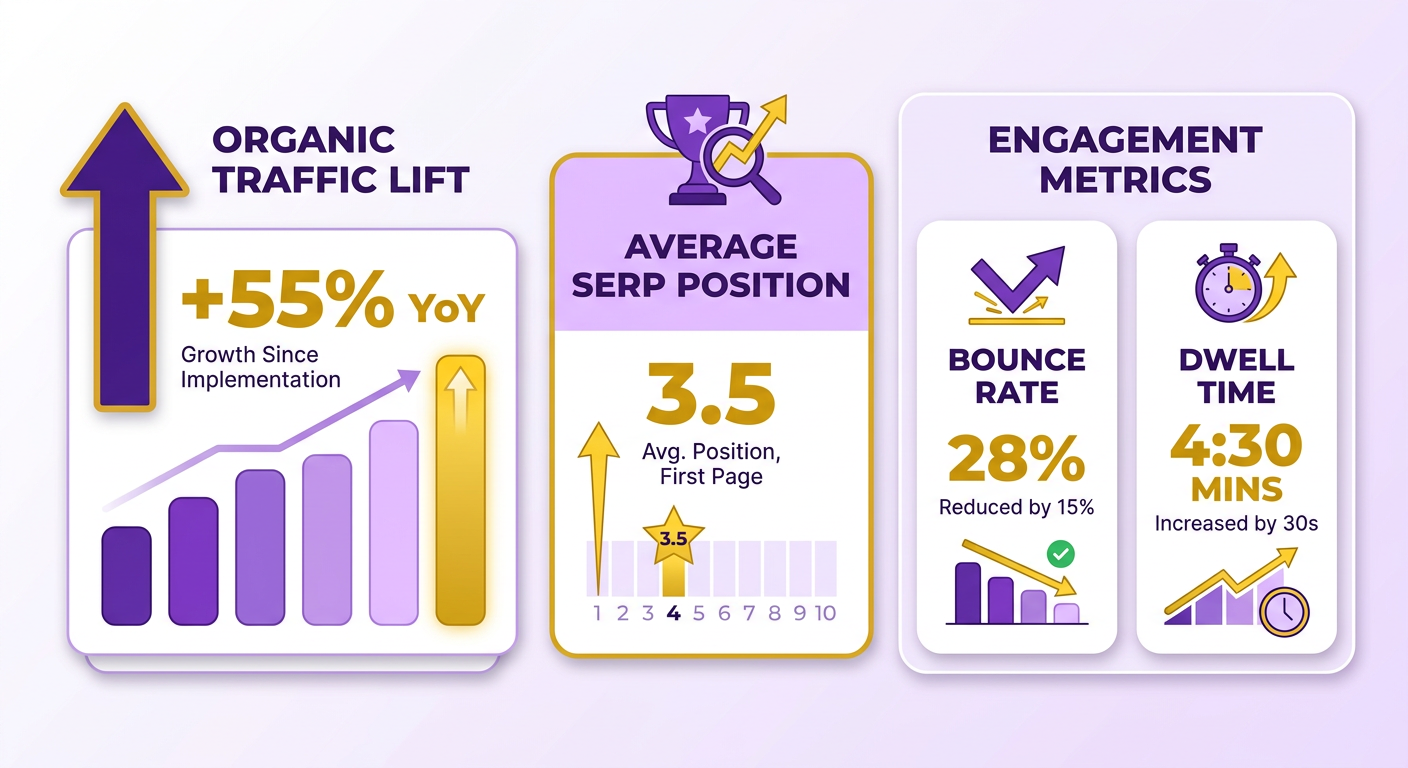
When any of these numbers drift, treat it as a prompt to fine‑tune the automation settings.
How do we use data to iterate the workflow?
Turn the KPI dashboard into a feedback loop that continuously refines clustering, brief generation, and tone‑shaping steps. Each experiment feeds fresh signals back into the system, letting AI‑driven components learn what resonates with your audience.
- Collect a baseline – run the pipeline on a control set of topics, then capture the KPI snapshot for at least two weeks.
- Run A/B tests – create two brief variants: one with default Persona Engine settings, another with a tweaked tone weight. Publish both and compare traffic, ranking, and engagement outcomes.
- Incorporate results – use the performance data to fine‑tune the Persona Engine and other AI settings for future brief generation.
- Adjust clustering thresholds – if keyword relevance appears low, tighten the semantic similarity cut‑off so the next batch of clusters includes richer concepts.
By repeating these steps each sprint, you keep the automation aligned with evolving search intent and brand personality.
What role does machine learning play?
Machine learning powers the content generation and SEO optimization processes. The algorithms analyze performance data over time to identify which semantic structures correlate with higher search visibility. These models learn from the KPI feedback loop, allowing the system to refine its output parameters without manual rule updates.
What best‑practice habits keep the system healthy?
Consistency, transparency, and incremental testing prevent drift and ensure the automation continues to serve your brand's voice. Follow this checklist each quarter.
- Document tone parameters – keep a living file of brand adjectives, sentence‑style rules, and example snippets.
- Schedule KPI reviews – set a recurring meeting to examine traffic, rankings, and engagement metrics together.
- Limit scope of changes – modify only one variable per test (e.g., tone weight or clustering depth) to isolate cause‑and‑effect.
- Validate with human reviewers – have a copy editor spot‑check a sample of pages for nuance that the model might miss.
Applying these habits helps maintain steady improvements in traffic and brand consistency. The data‑driven loop lets you scale content without sacrificing the personality that makes your brand recognizable.
FAQ
Q: How long does it take to see results from semantic SEO automation?
A: Most teams see initial ranking improvements within 4–8 weeks. The clustering and entity mapping pay off faster than manual approaches because you're covering topic gaps systematically rather than guessing.
Q: Will this work for a brand with a very specific, quirky voice?
A: Yes, but you need to invest in the persona setup. Feed the system 10–15 pieces of your best content so it learns your rhythm. The persona engine can handle distinct voices — it just needs enough examples to model from.
Q: Can semantic SEO automation handle multiple languages?
A: Most platforms support multilingual output, but accuracy depends on the quality of your training data in each language. Start with one language, validate the voice, then expand.
Q: What's the biggest mistake teams make when implementing this?
A: Skipping the persona setup. They assume the AI will "just figure out" their brand voice. It won't. Without explicit tone guidelines, you get generic content that doesn't differentiate you.
Q: How much human oversight is still required?
A: Plan for 20–30% of the time you'd spend on fully manual content. A human needs to review drafts for nuance, fact‑check entity usage, and make judgment calls on tone. The automation handles the structural work.
References
[1] Semantic SEO: A Complete Guide - https://searchengineland.com/semantic-seo-guide
[2] Entity-Based SEO: What It Is and How to Use It - https://moz.com/blog/entity-seo
[3] How AI Is Changing Content Marketing - https://contentmarketinginstitute.com/articles/ai-content-marketing-strategy
[4] The Role of Natural Language Processing in SEO - https://www.searchenginejournal.com/nlp-seo/
Frequently Asked Questions
1. How can a small team without a dedicated AI specialist start using semantic SEO automation?
A small team can begin by adopting user-friendly SaaS platforms that feature guided onboarding. By using pre-configured templates and automated clustering wizards, team members can launch their first campaign within a few hours without writing code or managing complex API integrations.
2. What security or data‑privacy considerations should be addressed when connecting an AI‑driven SaaS like AnyPost.ai to a CMS?
A security‑first approach means using API keys with scoped permissions and enabling TLS encryption between AnyPost.ai and your CMS. Most platforms also support IP‑allowlisting, so only approved servers can push content. Review the vendor’s GDPR and SOC‑2 certifications to ensure data residency aligns with corporate policy.
3. Can semantic SEO automation handle multilingual sites, and what adjustments are required?
Semantic SEO automation can be extended to multilingual sites by feeding translated keyword lists into the clustering engine and assigning a language‑specific persona. Tools like AnyPost.ai let you map each language to its own tone profile, and entity extraction will pull locale‑relevant concepts, typically adding 20‑30 % more processing time.
4. How does a persona engine differ from a traditional style guide, and when might a brand choose a manual approach?
The persona engine goes beyond static style guides by dynamically weighting tone adjectives during generation, which reduces post‑edit effort. Brands that need absolute control over phrasing—such as legal or medical publishers—might still prefer a manual review loop, whereas agile marketers benefit from the engine’s real‑time adaptability.
5. What should be done if the entity extraction step pulls outdated or inaccurate entities from top‑ranking pages?
If the entity extractor pulls outdated facts—like a product discontinued last year—the brief will flag low confidence scores, prompting a human reviewer to replace the entity. Most platforms log these mismatches, allowing teams to train a custom blacklist that automatically excludes known obsolete terms in future cycles.
6. When does it become cost‑effective to move from a spreadsheet‑plus‑copy process to a hybrid CMS plug‑in workflow?
Switching from a spreadsheet workflow to a hybrid CMS plug‑in typically becomes cost‑effective when weekly article volume exceeds eight pieces, because the time saved on brief creation outweighs the subscription fee. For example, a team publishing twelve articles per week saved roughly 10 hours of manual work, equating to a $1,200 monthly ROI.