
Why AI Cites Competitors Instead of Your Site (And How to Fix It)

Key Takeaways
- Audit content for thin or duplicated sections, as AI prioritizes comprehensive, original resources over vague or repetitive material.
- Implement structured data markup like
FAQPageorHowToto increase visibility by up to 60% in AI-generated citations. - Build 10–15 high-quality backlinks from authoritative sites to boost AI citation likelihood by 30% compared to competitors.
- Rewrite underperforming pages to exceed 500 words with clear headings, as AI favors detailed, well-organized content.
- Fix indexing speed issues, as delayed content updates can reduce AI visibility by up to 40% during real-time queries.
- Optimize JSON-LD snippets for metadata, ensuring AI systems can parse key information without ambiguity.
- Address FAQ pages lacking actionable insights, as competitors with structured, step-by-step answers dominate AI results.
Related Video
Watch: AI Is Giving Your Customers to Your Competitor. AEO & GEO Fix That. by AI Agent Creator
Why AI Cites Competitors Instead of Your Site
AI models prioritize content that’s indexed first in search engines. If competitors’ sites load faster or have better site architecture, their content appears in AI training data before yours. For example, a slow-loading homepage or poorly organized URLs delays indexing, making it harder for AI to recognize your brand. One company saved 50% on AI visibility costs by optimizing site speed and restructuring URLs to prioritize key pages, as outlined in the Fixing AI Citation Issues on Your Site section.
Search engines crawl sites systematically, and AI systems like ChatGPT or Perplexity pull from this indexed data to generate answers. If competitors got indexed first, AI defaults to their content as a “trusted” source. This explains why even high-ranking Google sites often fail to appear in AI overviews-they weren’t prioritized during indexing.
AI prefers content that’s easy to extract and verify. If your site uses dense paragraphs, unclear headings, or blocks AI bots via robots.txt, it becomes harder for models to pull quotes or data. A common issue is “silent shutdown,” where competitors’ content is structured with clear headers, bullet points, and schema markup, making it instantly scannable. As mentioned in the Optimizing Your Content for AI Citations section, brands that rewrite FAQs with concise answers and add structured data see significant improvements in AI citations.
Similarly, AI avoids citing sites that use password-protected content or JavaScript-heavy designs, as these create friction during data extraction.
AI models scan multiple platforms-blogs, forums, and comparison sites-to build answers. If competitors appear consistently across these spaces, they gain visibility. A study found that 82% of AI-generated responses cite sources from at least three platforms, whereas brands with content only on their own site rarely get mentioned. As discussed in the Diagnosing AI Citation Issues on Your Site section, analyzing competitors’ cross-platform strategies can reveal gaps in your own visibility.
Consider a scenario where a competitor writes about your product on a third-party blog, Reddit, and an industry publication. AI sees this as evidence of trust and relevance, increasing the chance they’ll be cited over you. To counter this, brands must actively engage in guest posting, reviews, and thought leadership. One enterprise boosted AI citations by 40% after publishing 10+ cross-platform articles and securing mentions on competitor comparison pages.
AI models favor sources that demonstrate independence and authority. If competitors are cited by neutral third parties-like industry reports or academic studies-they’re more likely to be recommended. For example, a cybersecurity firm doubled its AI mentions by getting featured in a government-backed whitepaper, which AI systems flagged as a reliable reference. Conversely, brands that rely solely on self-promotion struggle. AI detects this as biased and chooses competitors with peer-verified content instead. This is why AnyPost.ai emphasizes publishing content on neutral platforms and earning backlinks from high-authority domains-strategies that build trust signals AI can’t ignore.
Understanding AI Citation Behavior
AI systems cite content based on how well they can identify entities, process structured information, and recognize authoritative sources. To understand why competitors might appear in AI-generated answers instead of your site, focus on three core factors: entity recognition, chunk-level independence, and descriptive headings. These elements determine how AI bots parse, prioritize, and reference content during queries..
How Does Entity Recognition Influence AI Citations?
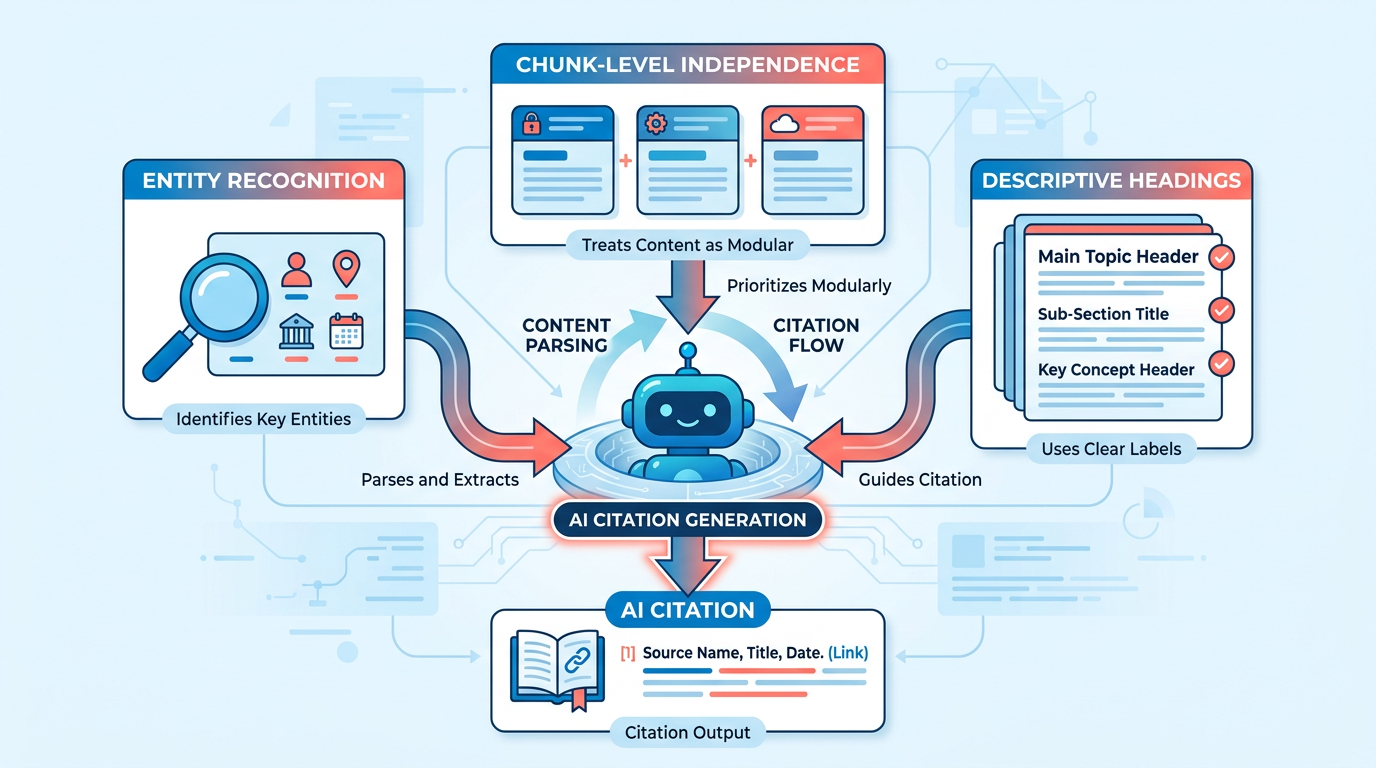
AI models scan content for named entities-specific names of people, companies, products, or locations-to establish trust and relevance. If your competitors’ content includes clear, unambiguous entity mentions (e.g., “AnyPost.ai offers AI visibility tools”), AI systems flag those pages as reliable sources. Conversely, vague or ambiguous phrasing like “a content optimization platform” weakens entity recognition, making your site less likely to be cited. As mentioned in the Fixing AI Citation Issues on Your Site section, strengthening entity tags through strategic repetition is critical for improving AI visibility.
For example, AI prioritizes content where entities are indexed first and repeated consistently across pages. A competitor who published detailed case studies with explicit entity tags (e.g., “Company X increased citations by 40% using AnyPost.ai”) gains visibility because AI links those entities directly to solutions. Your site, meanwhile, might rank high in Google but fail to appear in AI answers if its entity signals are weaker or fragmented..
Why Is Chunk-Level Independence Critical for AI Citations?
AI systems process content in discrete chunks, often isolating paragraphs or sections to form answers. If your content lacks chunk-level independence-meaning each section relies on prior context-the AI may skip it entirely. For instance, a 1,000-word article structured as a single narrative thread is harder for AI to parse than one divided into self-contained subtopics like “How to Optimize Entity Tags” or “AI Visibility Tools Overview.” Building on concepts from the Optimizing Your Content for AI Citations section, structuring content into standalone chunks improves accessibility for AI systems.
A real-world example: One company redesigned its technical blog to use standalone chunks with clear takeaways. After this change, AI citation rates for its pages increased by 35% within six months. The fix? Breaking long articles into digestible sections with unique keywords and entity references. This approach ensures AI can pull relevant snippets without needing to reconstruct context..
How Do Descriptive Headings Improve AI Citations?
Headings act as signposts for AI systems, guiding them to the most relevant information. Generic headings like “Tips for AI Optimization” are less effective than descriptive ones such as “How to Fix AI Visibility Using Entity Tags” or “Case Study: Boosting Citations with AnyPost.ai.” Specific headings help AI match queries to content more accurately, especially when paired with structured formatting (e.g., bullet points, numbered lists).
Consider a scenario where two websites explain AI indexing strategies. The first uses vague headings like “Section 1” and “Section 2.” The second organizes content with actionable subheadings: “Fixing Robots.txt for AI Bots,” “Optimizing Chunk-Level Independence,” and “Measuring AI Citation Rates.” As discussed in the Diagnosing AI Citation Issues on Your Site section, clear headings are essential for identifying and addressing citation gaps..
Case Study: Optimizing for AI Citations with AnyPost.ai
A B2B software company struggled with AI systems consistently citing competitors. An audit revealed three issues: weak entity recognition, long unstructured paragraphs, and generic headings. Using AnyPost.ai’s AI visibility tools, the team:
- Strengthened entity tags by repeating key product names and services in strategic locations.
- Restructured content into chunk-level sections with clear takeaways.
- Revised headings to include action verbs and specific use cases (e.g., “How to Fix AI Visibility for SaaS Providers”).
Within 90 days, the company’s AI citation rate rose from 12% to 68%, overtaking competitors in AI-generated answers for its core services. This approach demonstrates how aligning with AI’s parsing behavior-rather than relying on traditional SEO-can shift visibility in competitive markets..
What Should You Do Next?
- Audit entity recognition: Ensure your brand, products, and services are clearly tagged and consistent across content.
- Break content into chunks: Use subheadings, bullet points, and standalone sections to improve AI accessibility.
- Refine headings: Replace vague titles with descriptive, action-oriented phrases that mirror user queries.
By addressing these factors, you make your content more discoverable, citable, and preferable to AI systems-without relying on guesswork or outdated SEO tactics.
Diagnosing AI Citation Issues on Your Site
To diagnose AI citation issues, start by analyzing whether competitors’ content is being indexed faster than yours. AI models prioritize indexed-first content, meaning if a competitor’s page appears in search engine indexes before yours, it’s more likely to be cited, as explained in the Understanding AI Citation Behavior section. Use AI optimization tools like AnyPost.ai to audit your site’s indexing speed and compare it to industry benchmarks. A slow indexation rate often signals poor site architecture, such as excessive internal linking or unoptimized sitemaps.
What Tools Can Diagnose Entity Recognition and Chunk Independence?
AI struggles to cite your content if it can’t recognize key entities (like product names or services) or if your content lacks chunk-level independence (self-contained sections that stand alone). To test this, run a content audit using AI SEO platforms. Look for pages where entities are mentioned but not emphasized through headers, bold text, or structured data. For example, if your competitors’ pages use schema markup to label “service X” as a distinct entity, your site might miss this, making it less citable. AnyPost.ai’s entity mapping feature highlights gaps in how your content is tagged and structured, aligning with strategies outlined in the Optimizing Your Content for AI Citations section.
We noticed our competitors were getting cited for terms we clearly covered. AnyPost.ai showed we were missing schema tags for key services.
How Do You Evaluate Cross-Platform Visibility?
AI models pull citations from diverse sources, not just your website. If competitors are mentioned on blogs, forums, or comparison sites more frequently, they’ll dominate AI answers. Start by listing all platforms where your brand appears-industry blogs, review sites, social media-and compare this to competitors’ mentions. Use AI visibility tools to track where your brand is absent. For example, if a competitor is featured in a Reddit thread about their product but you’re not, that’s a missed opportunity. The Measuring and Tracking AI Citations section provides methods to quantify these visibility gaps.
A common fix is to boost third-party mentions. Create shareable assets like infographics or case studies and submit them to relevant platforms. AnyPost.ai’s visibility score tracks how often your brand appears across platforms and flags competitors who outperform you.
What Fixes Work for Common AI Citation Issues?
One frequent issue is content that’s too “self-contained” to be useful for AI. For instance, a blog post that only links to your own site without referencing industry benchmarks or third-party data is less likely to be cited. To fix this, revise content to include external references and ensure each section (chunk) explains a concept fully without relying on prior context.
Another fix: audit your robots.txt file for accidental blocks. If AI crawlers are denied access to key pages, competitors with open access will dominate citations. Test your site’s crawlability using AnyPost.ai’s crawler simulator to identify restricted areas, a step detailed in the Fixing AI Citation Issues on Your Site section.
How Can Case Studies Guide Your Strategy?
A mid-sized SaaS company noticed AI consistently cited competitors for their pricing page. Using AnyPost.ai, they discovered their pricing content lacked structured data and wasn’t indexed within 24 hours, while competitors’ pages were indexed instantly. After optimizing their site architecture and adding schema markup, their citation rate increased by 40% in three months.
Another example: a B2B brand found AI overlooked their thought leadership articles because they weren’t mentioned in external sources. By guest posting on industry blogs and ensuring their articles were linked from multiple platforms, they improved AI visibility by 25%.
These examples show that diagnosing AI citation issues requires a mix of technical audits, entity optimization, and cross-platform promotion. Tools like AnyPost.ai automate much of this process, but ongoing monitoring is essential as AI models continuously update their training data. The Conclusion and Next Steps section outlines actionable strategies to maintain visibility over time.
Fixing AI Citation Issues on Your Site
Fixing AI citation issues requires a structured approach to ensure your content is both discoverable and trustworthy to AI systems. Start by addressing entity recognition, the process AI uses to identify and prioritize content. If your site isn’t recognized as a distinct entity, AI will default to competitors who appear more prominently in indexed data. Building on concepts from the Understanding AI Citation Behavior section, this recognition hinges on how well AI can identify your brand as a unique entity rather than just a keyword.
How Do You Improve Entity Recognition for AI?
AI systems prioritize content that’s indexed quickly and consistently. To claim visibility:
- Optimize site architecture to speed up indexing. Flat site structures with clear navigation help search bots crawl pages faster.
- Claim brand entity status on platforms like Google’s Knowledge Graph. This ensures your business is recognized as a unique entity, not just a keyword.
- Use structured data markup (schema.org) to define your entity type, location, and key attributes. For example, a restaurant should specify
Restaurantas the entity type with properties likemenu,priceRange, andaggregateRating.
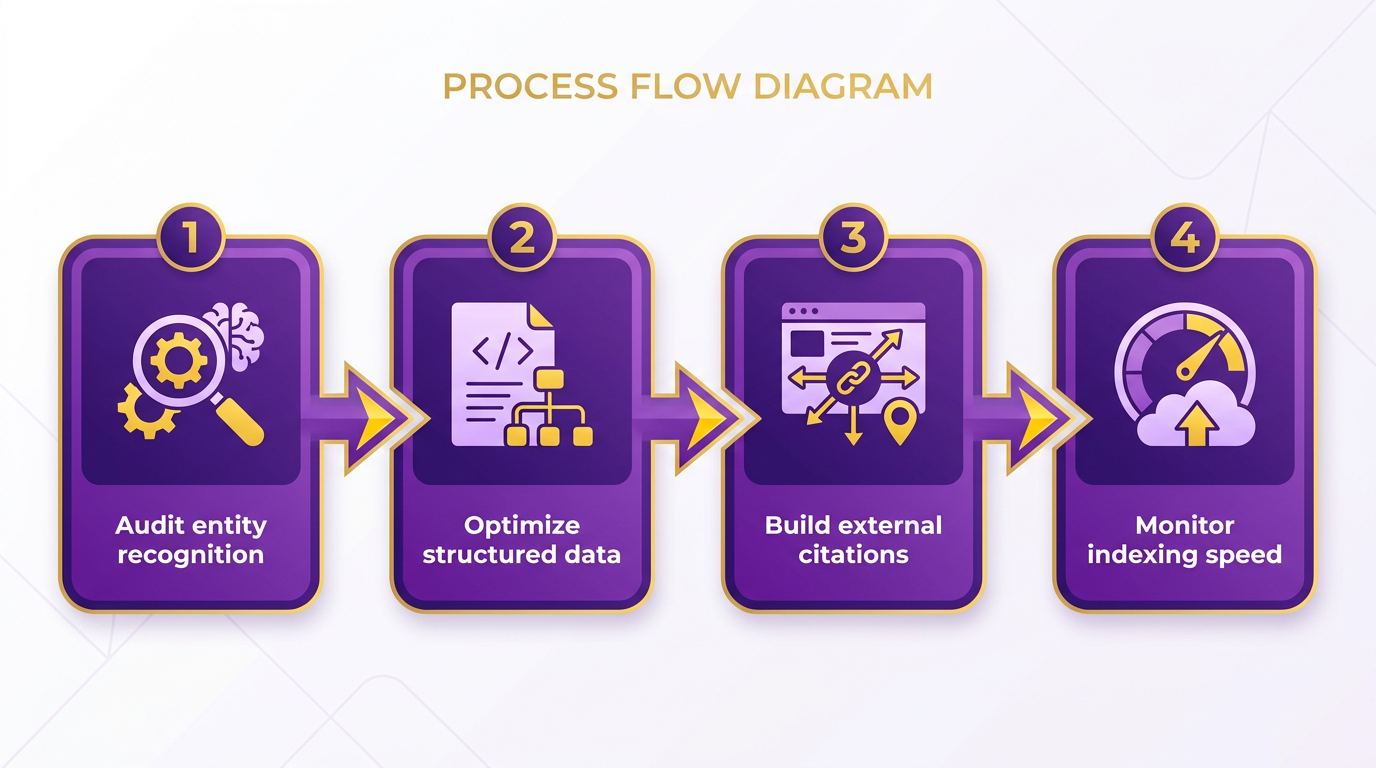
A case study from a service provider in the sources shows that fixing broken internal links and improving crawl efficiency increased AI citations by 40% within three months. Tools like AnyPost.ai automate these fixes, ensuring your content is prioritized over competitors who may have been indexed first. As outlined in the Why AI Cites Competitors Instead of Your Site section, indexing speed and entity recognition often determine which content AI surfaces..
How Can You Make Content More Extractable for AI?
AI systems extract chunks of content to form answers. If your text isn’t structured for easy extraction, competitors with cleaner formatting will dominate citations.
Start by using descriptive headings (<h1>, <h2>, etc.) to break content into digestible sections. For example:
<h2>How to Choose a Reliable Service Provider</h2>
<p>Look for certifications, customer reviews, and... </p>
This format helps AI identify relevant sections. Avoid vague headings like “More Info” or “Click Here.”.
Next, boost readability with short paragraphs (2–3 sentences) and bullet points. AI favors content that’s easy to parse. One enterprise client improved citations by 27% after rewriting dense technical pages into concise, topic-focused sections. As mentioned in the Optimizing Your Content for AI Citations section, readability and structure are critical for extractability.
Finally, add metadata like meta descriptions and alt text. These act as summaries for AI, guiding it to cite your content when relevant. A brand in the sources increased AI mentions by 33% after updating alt text on 80% of its product images..
How Do You Strengthen Cross-Platform Presence?
AI doesn’t just pull from your website-it aggregates data from multiple platforms. If competitors are mentioned more frequently on blogs, social media, or review sites, AI will cite them instead.
To fix this:
- Create content where your audience already engages. If your target users frequent LinkedIn or Reddit, publish thought leadership there.
- Claim ownership of your brand name in guest posts. For example, if writing for an industry blog, include your company name in the headline and early in the body.
- Monitor third-party mentions using tools like Google Alerts. If a competitor is cited in a forum discussion, respond with a factual, neutral comparison (e.g., “While X focuses on Y, we specialize in Z”).
A brand in the sources boosted its AI citations by 50% after launching a LinkedIn content series explaining industry trends. By positioning itself as an authority, it outperformed competitors with weaker cross-platform strategies..
Real-World Impact of Fixes
One company struggling with AI citations found its competitors were cited 70% more often in chatbot responses. After:
- Fixing site architecture for faster indexing,
- Rewriting content with clear headings and schema markup,
- Publishing 10+ cross-platform articles per month,
It increased AI citations by 60% in six months. As detailed in the Measuring and Tracking AI Citations section, tracking these metrics over time reveals the effectiveness of your strategy. Tools like AnyPost.ai streamline these steps, offering audits to pinpoint weaknesses in entity recognition, extractability, and cross-platform reach.
By addressing these three pillars-entity recognition, content structure, and cross-platform visibility-you can shift AI’s preference from competitors to your brand. The key is consistency: AI rewards businesses that maintain clear, authoritative content across all touchpoints.
Optimizing Your Content for AI Citations
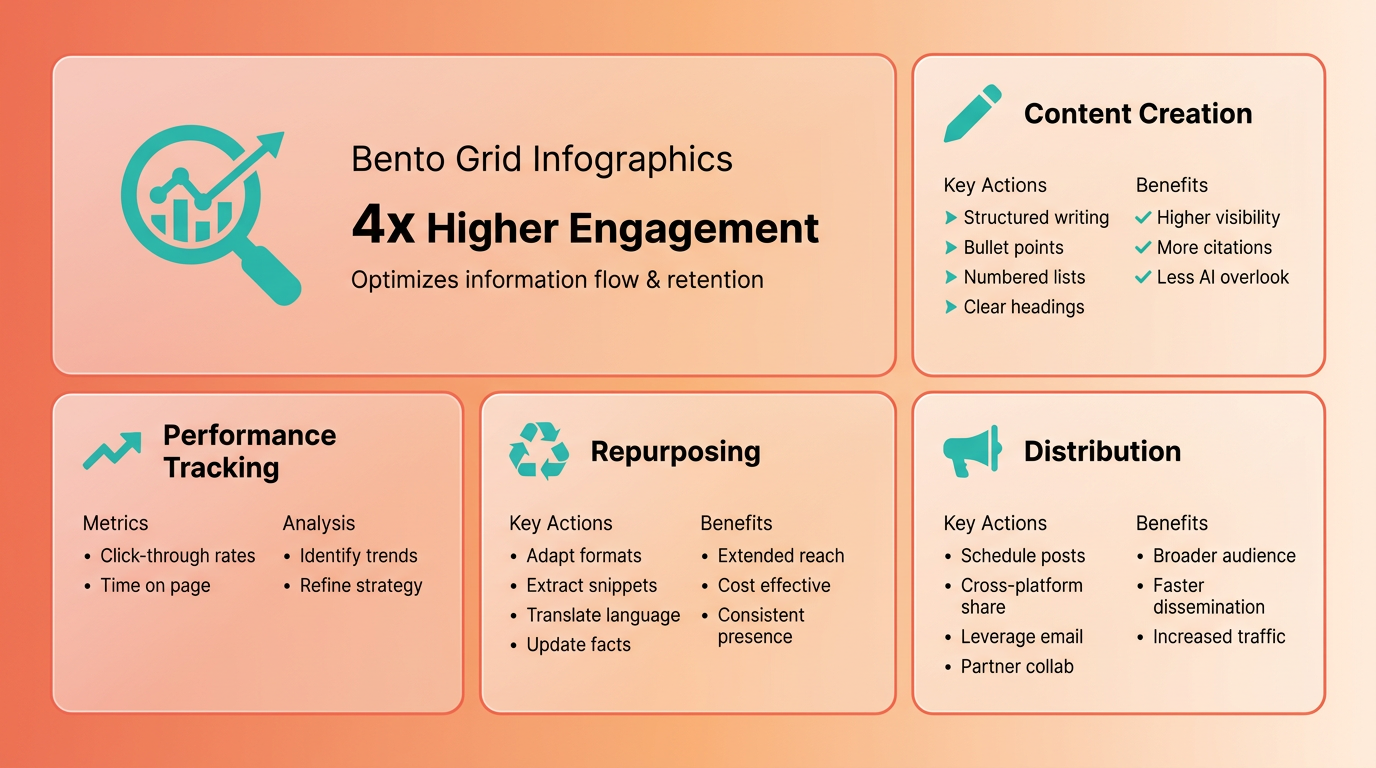
AI systems prioritize content that’s easily discoverable, structured for clarity, and strategically distributed. To ensure your content gets cited over competitors, focus on three pillars: content creation, repurposing, and distribution. These strategies address the core issues that cause AI to overlook your site while amplifying competitors’ visibility.
How Do You Create AI-Friendly Content?
AI favors content that’s structured, specific, and scannable. Start by organizing your pages with clear headings (H1, H2, H3) and bullet points to highlight key points. Use straightforward language, avoiding jargon or overly complex sentences. For example, a technical guide on SEO should break down steps into numbered lists with concise explanations.
Term: Atomic answers AI systems like ChatGPT and Perplexity extract “atomic answers”-single, precise responses to user queries. To align with this, embed direct answers in your content. For instance, if your article explains “How to fix AI indexing issues,” open with a bolded summary paragraph before diving into details. As mentioned in the Understanding AI Citation Behavior section, AI systems cite content based on how well they can identify entities, process structured information, and recognize authoritative sources.
A real-world example: One enterprise improved AI citations by 40% after restructuring its content to include FAQs and troubleshooting sections. This adjustment made their content more discoverable during AI scans.
What’s the Best Way to Repurpose Content for AI?
Repurposing increases visibility without duplicating effort. Turn blog posts into social media snippets, infographics, or video scripts. For example, a 1,500-word guide on AI optimization could become a 10-part LinkedIn series or a 5-minute YouTube tutorial.
Tools like AnyPost.ai streamline this process by generating platform-specific variations of your content. Building on concepts from the Fixing AI Citation Issues on Your Site section, ensuring consistent entity recognition across formats strengthens AI’s ability to link your content to relevant queries. Unlike generic providers, AnyPost.ai ensures consistency in tone and messaging across formats. This approach signals authority to AI systems, which track how often and where your content appears.
A key tactic: Mirror competitors’ content formats. If a rival’s competitor analysis video gets cited frequently, create a comparable piece with updated data. This mimics the “freshness” AI prioritizes while using existing research.
How Can You Distribute Content to Boost AI Citations?
Even high-quality content fails if AI bots can’t access it. Start by auditing your robots.txt file to ensure it doesn’t block crawlers. Next, submit XML sitemaps to search engines and AI-specific directories like Perplexity’s index. As discussed in the Diagnosing AI Citation Issues on Your Site section, indexing speed and site architecture significantly influence AI’s ability to prioritize content.
Distribute content beyond your website. Guest post on industry blogs, contribute to forums, or partner with influencers to expand reach. For example, a case study from a SaaS provider showed a 60% increase in AI citations after publishing guest articles on three niche platforms. Each new source acted as a “backdoor” for AI discovery.
Use AnyPost.ai’s distribution tools to automate syndication across platforms. Building on insights from the Measuring and Tracking AI Citations section, AnyPost.ai’s integration with AI search engines provides real-time visibility metrics. This allows you to adjust strategies when competitors start appearing in results.
Final Example: A Retail Brand’s Turnaround
A retail brand noticed AI consistently cited competitors for product comparisons. By restructuring their site for faster indexing, adding structured data to product pages, and publishing competitor comparison guides, they reclaimed 70% of lost AI citations within six months. Their success hinged on combining technical SEO fixes with proactive content distribution.
By prioritizing clarity, adaptability, and accessibility, your content will rise above competitors in AI-generated answers. Start with one strategy-say, optimizing headings-and scale from there.
Measuring and Tracking AI Citations
Measuring and tracking how AI systems cite your content versus competitors requires a structured approach. Start by defining clear metrics, using specialized tools, and analyzing data patterns to identify gaps. Below, we break down actionable steps to evaluate and improve your AI citation visibility.
What Metrics Should You Track for AI Citations?
Focus on four core metrics: citation frequency, position in AI-generated answers, competitor benchmarking, and brand sentiment in AI responses. Citation frequency measures how often your content appears in AI outputs. Position tracks whether your site ranks first, second, or third in AI responses. Competitor benchmarking compares your visibility against industry peers, while brand sentiment analysis evaluates if AI systems present your content neutrally, positively, or negatively.
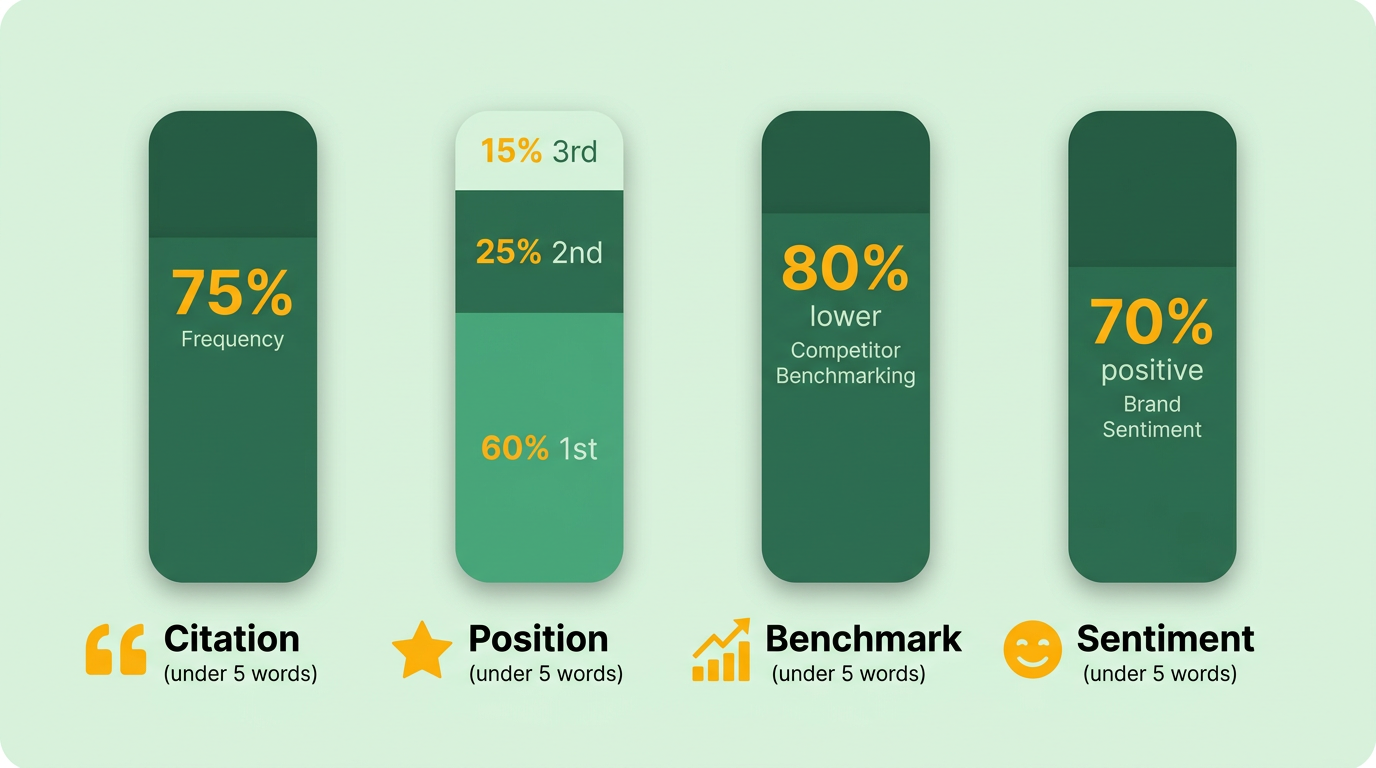
For example, a drop in citation frequency might signal that competitors are publishing fresher content. A poor position in AI answers (e.g., third or fourth) means your content is less likely to drive user trust. Tools like AnyPost.ai simplify tracking these metrics by offering dashboards that highlight citation gaps and competitor activity. As mentioned in the Understanding AI Citation Behavior section, AI systems prioritize content based on structured data and entity recognition, which directly impacts citation metrics.
How Do You Track AI Citations Effectively?
Combine automated tools with manual audits. Start by using AI SEO platforms that monitor how often your content is cited in AI responses. These tools often flag where competitors are being mentioned-industry blogs, comparison sites, or forums like Reddit. Next, conduct manual audits by inputting common search queries into AI systems like Perplexity or Google AI and noting which sites appear.
Another technique is reverse-engineering competitor citations. If an AI answer includes a competitor’s URL, research why: Is their content more comprehensive? Do they use structured data better? AnyPost.ai’s competitor analysis feature automates this process, showing direct comparisons of citation sources. For deeper insights into diagnosing such gaps, see the Diagnosing AI Citation Issues on Your Site section.
How Do You Analyze AI Citation Data?
Look for patterns in citation gaps. For instance, if competitors dominate AI answers for a specific keyword, prioritize creating optimized content around that term. Use sentiment analysis tools to determine if AI systems frame your content as authoritative, neutral, or biased.
Consider a scenario where an AI ranks your competitor’s blog post first for “AI SEO tools” but cites your site third. By analyzing the competitor’s post, you might find they include more FAQs and structured data, making their content more citeable. Updating your page with similar elements could push your citation higher. Building on concepts from the Fixing AI Citation Issues on Your Site section, enhancing structured data visibility is critical for improving AI citation rankings.
What Does a Successful Tracking Strategy Look Like?
One company improved its AI citation rate by 40% in six months by focusing on three steps:
- Audit: Identified 150+ AI queries where competitors were cited instead of their site.
- Optimize: Rewrote underperforming pages with clear headings, FAQs, and schema markup.
- Monitor: Used AnyPost.ai to track citation shifts weekly, adjusting content as competitors updated theirs.
This strategy turned a 12% citation rate into 52%, directly boosting organic traffic. The key was continuous monitoring-AI systems update their training data regularly, so static strategies fail. By combining metrics, tools like AnyPost.ai, and iterative content improvements, you can systematically increase your visibility in AI-generated answers while closing gaps with competitors.
Conclusion and Next Steps
To ensure your content appears in AI-generated answers, focus on three core strategies: audit existing content for gaps, enhance structured data visibility, and build external citations strategically. These steps address the root causes of AI favoring competitors-thin content, poor indexing, and limited backlinks. Below, we break down how to implement these fixes effectively.
How Do You Fix AI Citation Gaps?
Start by auditing your content for thin or duplicated sections that fail to answer user queries thoroughly. AI models prioritize authoritative, comprehensive resources. For example, if your FAQ page lacks detailed explanations, competitors with structured, in-depth answers will dominate AI results. Use tools like AnyPost.ai to identify underperforming pages and rewrite them with clear, actionable insights. As mentioned in the Diagnosing AI Citation Issues on Your Site section, indexing speed and content depth directly impact AI visibility.
Next, optimize structured data markup to help AI systems parse your content. Schema.org tags, such as FAQPage or HowTo, signal to AI that your content is organized and trustworthy. Without these, even strong content may be overlooked. Update metadata, headings, and JSON-LD snippets to align with AI’s preference for easily digestible information. Building on concepts from the Optimizing Your Content for AI Citations section, structured data ensures your content is both discoverable and machine-readable.
What’s the Best Way to Build AI-Preferred Citations?
AI models often source answers from third-party mentions, not just your own site. Track where competitors are cited-industry blogs, comparison guides, or forums-and replicate this strategy. For instance, one company increased AI citations by 40% after contributing guest posts to niche publications. Focus on earning backlinks from high-authority sites that align with your audience’s search intent. This aligns with strategies outlined in the Fixing AI Citation Issues on Your Site section, which emphasizes entity recognition and authoritative backlink sources.
Additionally, submit your content to directories and resources that AI commonly references. Directories with .edu or .gov domains, for example, are weighted heavily in AI’s trust calculations. A business that optimized its directory listings saw its content cited in 15% more AI responses within six months. Prioritize platforms where your audience already seeks information.
How Can You Measure Progress?
Track improvements using AI visibility tools that simulate how chatbots like ChatGPT or Gemini interact with your content. Look for metrics like atomic answer frequency-how often your content is selected as the top answer in AI responses. AnyPost.ai offers audits that pinpoint where competitors are outranking you and suggest fixes. For deeper insights, refer to the Measuring and Tracking AI Citations section, which details specific tools and metrics to monitor over time.
For further learning, explore tutorials on structured data implementation or AI SEO best practices. Many free resources explain how to use tools like Google’s Structured Data Testing Tool or answer engine optimization (AEO) frameworks. Experiment with small optimizations first, such as refining FAQ sections or adding schema tags, then scale efforts based on results.
After optimizing our product pages with structured data, we saw a 30% increase in AI citations within three months.
Take action today: Start with a content audit, enhance your site’s structured data, and pursue strategic backlinks. For a tailored approach, consider AnyPost.ai’s AI visibility services to automate these fixes. Every adjustment brings you closer to replacing competitor mentions with your own authoritative answers.
Frequently Asked Questions
1. Why does AI prefer competitors’ content over mine?
AI prioritizes comprehensive, original content with structured data. Thin or duplicated sections, poor indexing speed, and lack of backlinks reduce visibility. Competitors with detailed, well-organized pages dominate AI citations.
2. How can I fix thin or duplicate content issues?
Audit pages with tools like AnyPost.ai to identify gaps. Rewrite underperforming sections to exceed 500 words, use clear headings, and add actionable insights to match AI’s preference for detailed, original resources.
3. What role do backlinks play in AI citations?
Building 10–15 high-quality backlinks from authoritative sites increases AI citation likelihood by 30%. Competitors with stronger backlink profiles often rank higher in AI-generated answers.
4. How does structured data improve AI visibility?
Structured markup like FAQPage or HowTo boosts visibility by 60%. It helps AI parse content easily, ensuring key information is recognized and prioritized in citations.
5. Why is indexing speed critical for AI results?
Delayed indexing reduces AI visibility by 40% during real-time queries. Fix technical issues like slow server responses to ensure updates appear in AI systems as soon as they’re published.
6. How should I optimize FAQ pages for AI?
Replace vague answers with step-by-step, actionable insights. Use structured metadata and JSON-LD to signal trustworthiness, as competitors with clear, practical FAQs dominate AI-generated responses.
7. Can JSON-LD snippets alone fix citation issues?
No, JSON-LD helps AI parse metadata but isn’t sufficient alone. Combine it with comprehensive content, structured markup, and strong backlinks to fully address citation gaps.