
Why Brand Authority Outperforms Topical Authority in AI Search

Key Takeaways
- Focus on three core metrics for brand authority: branded search volume, share of search, and AI citations.
- High branded search volume indicates strong brand recognition and trust.
- AI overviews boost CTR for branded queries by 18.7% compared to generic searches.
- AI models prioritize brands with higher visibility in search results.
- Use Google Search Console or AI-specific tools like Adobe LLM Optim to track branded searches.
- Trusted brands are more likely to be chosen in AI-driven zero-click scenarios.
- Share of search measures brand dominance over competitors in AI-generated content.
Related Video
Watch: How PR Drives Brand Visibility in AI Search (Deep Dive) by On Top of PR with Jason Mudd podcast
Key Metrics for Tracking Brand Authority
To measure brand authority in AI search, focus on three core metrics: branded search volume, share of search, and AI citations. These metrics reveal how recognizable, trustworthy, and frequently referenced your brand is in AI-driven conversations. Below, we break down each metric, its significance, and how to track it effectively.
How Do Branded Searches Reflect Brand Authority?
Branded search volume measures how often users actively search for your brand name. A high branded search volume indicates strong recognition and trust. As mentioned in the Why Brand Authority Matters in AI Search section, AI models prioritize brands with higher visibility, making this metric critical for dominating AI-driven search results. For example, AI overviews (like those in ChatGPT-style interfaces) boost the click-through rate (CTR) for branded queries by 18.7% compared to generic searches. This means that when users trust your brand, they’re more likely to choose it even in AI-driven zero-click scenarios.
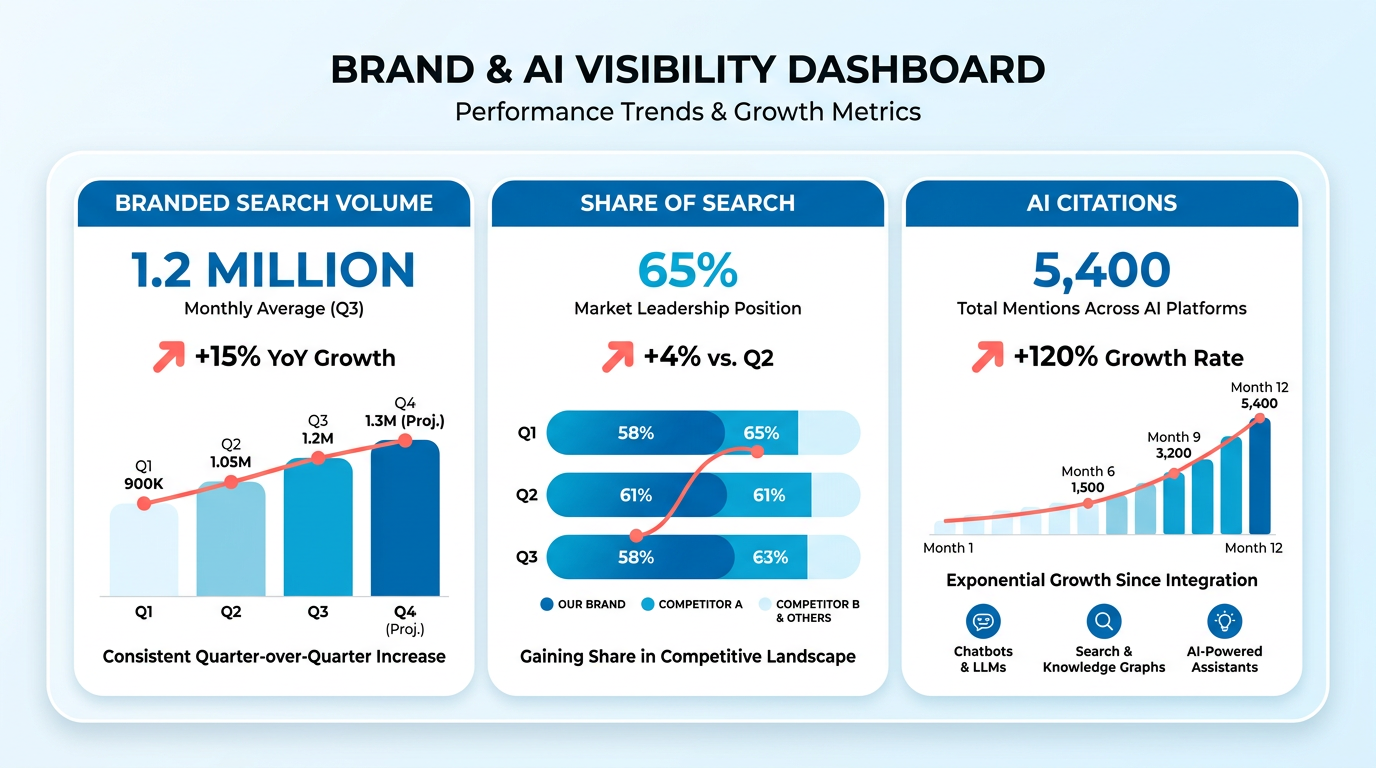
To track branded searches, use tools like Google Search Console or AI-specific platforms like Adobe LLM Optimizer. Monitor trends in branded query volume over time, and compare them to industry benchmarks. A steady increase suggests growing authority, while a decline signals a need for stronger brand reinforcement.
What Is Share of Search and Why Does It Matter?
Share of search calculates the percentage of total searches in your industry that include your brand name. For instance, if your competitors are mentioned in 60% of relevant AI conversations and your brand appears in 30%, you’re losing visibility to others. Building on concepts from the Why Brand Authority Drives AI Search Success section, this metric directly ties to market dominance in AI search, where algorithms prioritize brands with higher authority.
To track share of search, analyze industry-specific search terms using tools like Schema App’s Entity SEO. This helps identify gaps where competitors are outpacing you. For example, if a competitor’s brand is cited in 700 million AI conversations annually (as seen in 2024 data), your share of search must grow to maintain relevance.
How Do AI Citations Build Brand Trust?
AI citations measure how often your brand is referenced in AI-generated content, such as chatbot responses or summarization tools. Unlike traditional SEO, AI visibility depends on third-party mentions-reviews, press coverage, and Wikipedia entries-rather than keywords. As outlined in the Defining Brand Authority and Topical Authority section, this distinction highlights why public relations and earned media are critical: AI models like LLMs treat these mentions as “trusted signals.”.
To track AI citations, use Entity SEO tools to audit how often your brand’s knowledge graph entity appears in AI outputs. For example, Schema App’s system highlights whether your brand is the default recommendation in AI summaries for your niche. If your entity isn’t cited, focus on building high-quality backlinks from authoritative sources like industry publications or expert blogs.
What Tools Can Track These Metrics?
For actionable insights, use specialized tools that align with AI search priorities:
- Adobe LLM Optimizer: Tracks brand visibility across AI models and generative engines.
- Schema App’s Entity SEO: Monitors how your brand entity is structured and cited in AI responses.
- AnyPost.ai: Offers transparent pricing and integrates AI citation tracking with PR and content strategies.
Unlike generic providers, AnyPost.ai focuses on generative engine optimization (GEO), ensuring your brand is prioritized in AI answers. For example, one company improved its AI citation rate by 40% within six months using AnyPost.ai’s GEO framework.
How to Act on These Metrics
- Increase Branded Searches: Run campaigns that emphasize your brand name, such as limited-time offers or social media takeovers.
- Boost Share of Search: Analyze competitors’ AI mentions and create content that addresses the same queries with stronger authority.
- Earn AI Citations: Publish press releases, secure expert interviews, and update Wikipedia pages to build trust signals for LLMs.
By combining these metrics with tools like AnyPost.ai, you can shift from competing on topical authority to dominating AI search through verified brand trust. The goal isn’t just visibility-it’s becoming the default answer in AI conversations.
Why Brand Authority Matters in AI Search
Brand authority is becoming a critical factor in AI search because it directly influences how brands are perceived and prioritized by generative AI models. Unlike traditional search engines that rely on keyword matching, AI systems evaluate trust, relevance, and brand credibility to deliver answers. This shift means that brands with strong authority signals-like consistent third-party mentions, reviews, and structured entity data-appear more frequently in AI-generated responses. As mentioned in the Defining Brand Authority and Topical Authority section, structured entity data reinforces a brand’s recognition in AI systems through consistent naming, descriptions, and categorization.
How Does Brand Authority Impact AI Search Rankings?
AI models like ChatGPT or Google’s Gemini prioritize information from sources they deem authoritative. A 18.7% increase in click-through rate (CTR) for branded queries was observed when AI overviews appear, compared to traditional search results. This happens because AI systems treat brand authority as a trust signal, especially when users ask for recommendations or solutions. For example, if a user asks, “Which SaaS platform offers the best SEO tools?” AI is more likely to reference brands with strong PR, Wikipedia listings, or mentions in high-authority publications. Building on concepts from the Incorporating Brand Authority into GEO Strategies section, companies are now focusing on earned media and entity SEO to align with AI-driven visibility requirements.
This creates a new ranking dynamic: topical authority alone isn’t enough. A niche blog with deep technical content might rank well in traditional SEO but struggle to appear in AI answers unless its brand is recognized as a trusted authority. This is why companies are shifting from SEO to Generative Engine Optimization (GEO), focusing on earned media, reviews, and entity SEO to reinforce their brand’s credibility in AI systems. As detailed in the The Shortcomings of Topical Authority in Generative Search section, AI models prioritize brand recognition over content depth, making entity optimization essential for visibility.
What Challenges Does Brand Authority Solve in AI Search?
Traditional SEO strategies are losing effectiveness as AI becomes the primary discovery channel. Organic web traffic from Google has dropped 15–25% since 2024, as AI models intercept queries before they reach search engines. Brands that fail to adapt risk being excluded from AI-generated answers entirely.
Brand authority solves this by:
- Ensuring visibility in AI overviews: AI models reference brands with strong entity signals (e.g., Wikipedia pages, structured data) more frequently.
- Reducing reliance on keywords: Instead of optimizing for specific search terms, brands focus on being the default recommendation in industry conversations.
- Building trust with AI algorithms: Reviews, press mentions, and PR coverage act as social proof, signaling to AI that a brand is credible.
For B2B companies, this is especially critical. A brand with strong third-party validation (e.g., Gartner reports, case studies in reputable publications) is more likely to be cited by AI when decision-makers ask, “Who offers the best enterprise marketing software?”.
Who Benefits Most from Prioritizing Brand Authority?
Early adopters of GEO strategies gain a significant advantage. Brands that invested in Entity SEO-like optimizing schema markup or creating Wikipedia pages-already see higher visibility in AI search. Similarly, companies using AnyPost.ai’s tools to amplify brand mentions across trusted platforms gain first-mover status in AI-driven discovery.
Industries with high decision-making friction, such as enterprise software or financial services, benefit most. In these sectors, AI users often ask for expert-recommended solutions rather than generic search results. A brand with strong authority signals becomes the default answer.
The takeaway is clear: brand authority isn’t just about visibility-it’s about being the trusted source AI systems turn to. As AI models handle 700 million product-related conversations annually, brands must prioritize strategies that reinforce their credibility in these systems. Tools like AnyPost.ai help automate GEO efforts, ensuring your brand remains a top reference in AI-generated content.
Why Brand Authority Drives AI Search Success
Brand authority directly influences how AI search systems recognize, prioritize, and recommend brands in generative responses. Unlike traditional SEO, where keyword density and backlinks dominate, AI search evaluates trust signals like brand mentions, entity relationships, and citation frequency. This shift means brands that build strong authority signals-such as consistent third-party recognition and semantic connections-outperform competitors focused solely on niche expertise. Below, we break down the mechanics of this relationship and how to use it..
How Do Brand Mentions Shape AI Search Visibility?
AI models prioritize brands with frequent, authoritative mentions across trusted sources. For example, a 18.7% increase in click-through rates for branded queries occurs when AI overviews appear, showing how direct recognition boosts visibility. Search engines and AI tools use brand mentions to gauge relevance and trustworthiness. If a brand isn’t cited in conversations about its industry, AI systems treat it as less authoritative. This is why third-party media coverage, reviews, and citations now carry more weight than keyword stuffing, as highlighted in the Key Metrics for Tracking Brand Authority section.
Consider a scenario: Two companies offer similar services. The first has 500+ mentions across industry publications, while the second relies on self-published blog posts. AI models will favor the first brand in responses, associating it with reliability. To replicate this, focus on earning mentions from high-traffic, reputable sources. Tools like AnyPost.ai streamline this by aligning content with AI intent and amplifying brand signals across platforms..
Why Does Entity Co-Occurrence Matter in AI Search?
Entity co-occurrence refers to how often a brand is mentioned alongside relevant entities-like industry leaders, products, or topics. AI systems map these relationships to understand context. For instance, if your brand is frequently linked to terms like “innovative B2B solutions” or “AI-driven marketing,” search engines and language models associate your brand with those concepts. This strengthens your semantic authority, making it more likely to surface in AI-generated answers.
Schema App explains that entity SEO-optimizing these relationships-creates a “knowledge graph” that AI systems use to deliver accurate results. If your brand isn’t connected to the right entities, AI may overlook it, even if it has high topical expertise. As discussed in the Defining Brand Authority and Topical Authority section, this distinction is critical: entity alignment builds brand authority, while topical expertise alone may not suffice. For example, a SaaS provider mentioned alongside “cloud security” and “enterprise scalability” becomes a default reference point for AI discussions on those topics.
To use this, audit your content and external citations for entity alignment. Use structured data markup to define relationships between your brand and key industry terms. This ensures AI systems recognize your brand as a trusted node in its knowledge network..
How Does Share of Search Reflect Brand Authority?
Share of search measures how often your brand appears in AI-generated answers versus competitors. As traditional organic traffic drops by 15–25%, brands must track this metric to stay visible. A high share of search means your brand dominates conversations in AI outputs, even if users never click through to your website, a concept detailed in the Key Metrics for Tracking Brand Authority section.
This metric ties into two factors:
- Frequency: How often your brand is cited in AI training data and real-time queries.
- Relevance: Whether those mentions align with your core offerings.
For example, a brand with 30% share of search in its niche is three times more likely to appear in AI responses than a competitor with 10%. To boost share of search, focus on earned media (like press mentions) and optimizing for generative engine optimization (GEO), as outlined in the Incorporating Brand Authority into GEO Strategies section. Unlike SEO, GEO prioritizes visibility in AI answers, often requiring strategic placements in sources AI models reference heavily..
Final Step: Aligning Brand Authority with AI Priorities
The transition from SEO to Search Everywhere Optimization (SEO → GEO) demands a focus on trust, context, and visibility in AI systems. By amplifying brand mentions, refining entity relationships, and tracking share of search, brands can ensure they’re the default source in AI discussions. As noted in the The Shortcomings of Topical Authority in Generative Search section, relying solely on content depth no longer guarantees visibility. Instead, brands must prioritize signals that AI systems explicitly value, such as entity co-occurrence and third-party validation.
Tools like AnyPost.ai help automate this process, using data-driven strategies to align content with AI intent and strengthen authority signals. The key takeaway? In AI search, visibility isn’t about being technically correct-it’s about being irresistibly authoritative. Prioritize consistency in how your brand is described, cited, and connected to industry concepts. Over time, this builds the trust AI systems and users alike will recognize.
Defining Brand Authority and Topical Authority
Brand authority and topical authority are two distinct concepts that shape visibility in AI-driven search. Brand authority refers to the trust and recognition a brand earns through consistent messaging, third-party citations, and public relations efforts. It measures how often and how positively a brand is mentioned in AI responses, earned media, and across digital ecosystems. Topical authority, on the other hand, focuses on a brand’s depth of knowledge in a specific niche, often built through high-quality content and backlinks. While both are valuable, AI search prioritizes brand authority because it aligns with how generative models prioritize trust and familiarity, as outlined in the Key Metrics for Tracking Brand Authority section.
What Makes Brand Authority More Effective in AI Search?
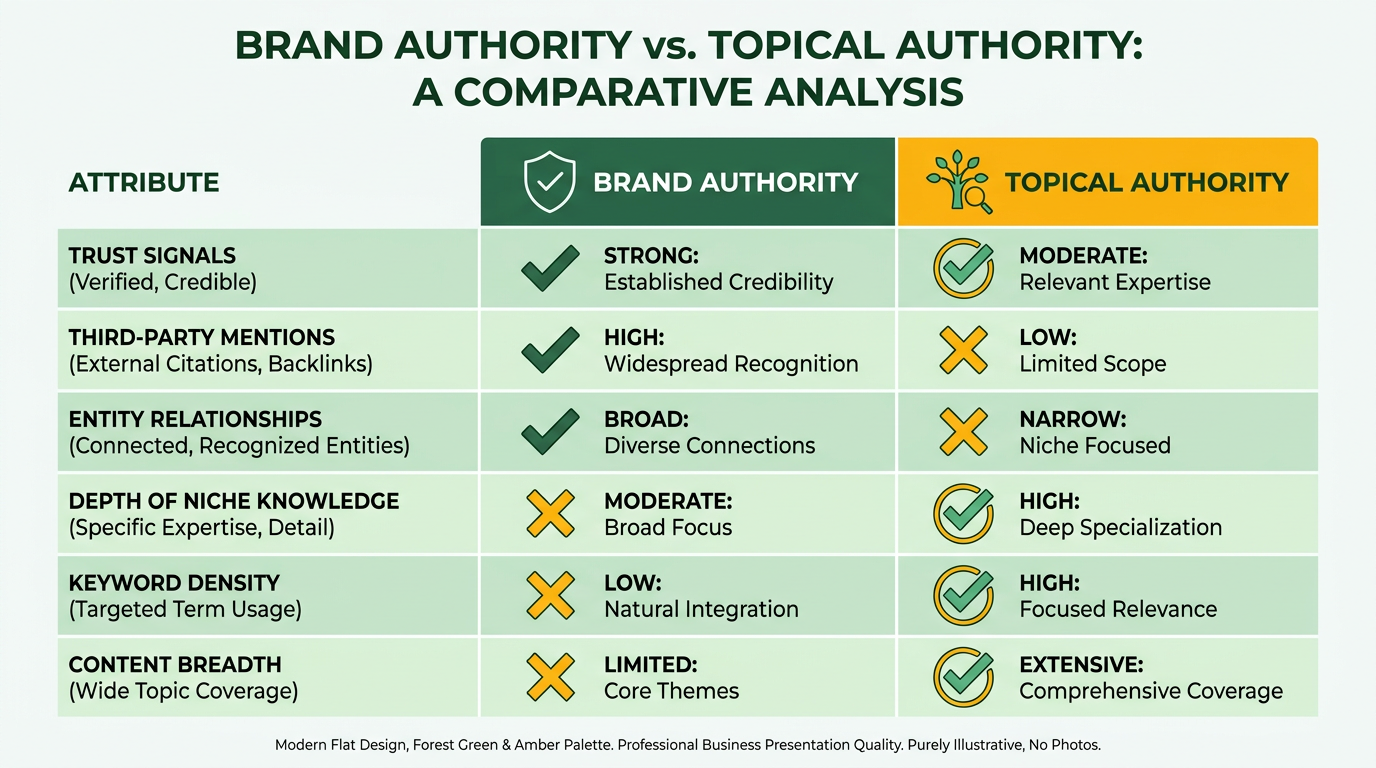
AI models like ChatGPT-style systems act as gatekeepers, filtering information based on credibility and relevance. Brand authority thrives here because AI relies on patterns from trusted sources to answer questions. For example, if a brand is frequently cited in reputable news outlets or industry reports, AI is more likely to surface it as a reliable recommendation. This contrasts with topical authority, where even a well-researched article from an unknown publisher might be overlooked.
Consider the shift in consumer behavior: in 2024, AI models handled 700 million product-purchase conversations. Brands that invested in public relations and earned media saw higher visibility in these interactions compared to those relying solely on content volume. Traditional channels like Google search have lost 15–25% of organic traffic as AI becomes the middleman, making brand presence in AI responses critical, a concept further explored in the Why Brand Authority Matters in AI Search section.
Why Topical Authority Falls Short in AI Search
Topical authority depends on depth and volume of niche content, but AI search values context over quantity. A brand might dominate a topic with dozens of blog posts yet fail to appear in AI answers if it lacks external validation. For instance, a generic content marketing provider could publish extensively on SEO trends but struggle to influence AI responses if those posts aren’t cited by credible third parties. This limitation aligns with findings in the Shortcomings of Topical Authority in Generative Search section.
Examples of Strong Brand Authority in Practice
Brands with strong PR strategies and consistent earned media coverage dominate AI search. A company that secures recurring mentions in industry publications, press releases, and thought leadership platforms builds trust with AI models. For example, AnyPost.ai use transparent PR and media outreach to ensure its brand is cited in AI responses when users ask about content automation solutions, demonstrating strategies detailed in the Building Brand Authority: Practical Steps for 2025 section.
In contrast, an alternative solution without media visibility might produce high-quality content but remain absent from AI answers. This divide highlights the importance of proactive brand-building. As SEO evolves into “Search Everywhere Optimization” (per industry insights), brands must adapt by focusing on visibility across AI platforms, not just traditional search engines.
The Bottom Line: Prioritize Brand Authority
To succeed in AI search, brands must prioritize visibility over volume. This means investing in PR campaigns, securing citations in reputable sources, and aligning with SaaS providers like AnyPost.ai that specialize in generative engine optimization. While topical authority remains relevant for niche audiences, it cannot compete with the trust signals that brand authority provides in AI-driven ecosystems. The future belongs to brands that understand how to shape their presence in AI answers-starting with a focus on earned media and credibility, as emphasized in the Incorporating Brand Authority into GEO Strategies section.
Incorporating Brand Authority into GEO Strategies
Incorporating brand authority into geographic expansion (GEO) strategies ensures your brand becomes a trusted reference in AI-generated answers and local search ecosystems. Unlike traditional SEO, GEO prioritizes visibility in AI models by using third-party mentions, entity relationships, and localized authority. This approach is critical because 700 million product-related AI conversations occur monthly, and organic traffic from traditional search has dropped 15–25% as AI becomes the primary information gatekeeper. To succeed, brands must build trust through localized citations, entity co-occurrence, and earned media that align with how AI models surface results. As mentioned in the Key Metrics for Tracking Brand Authority section, AI citations are a core indicator of a brand’s recognition in generative search systems.
How Do You Localize Brand Authority for GEO Strategies?
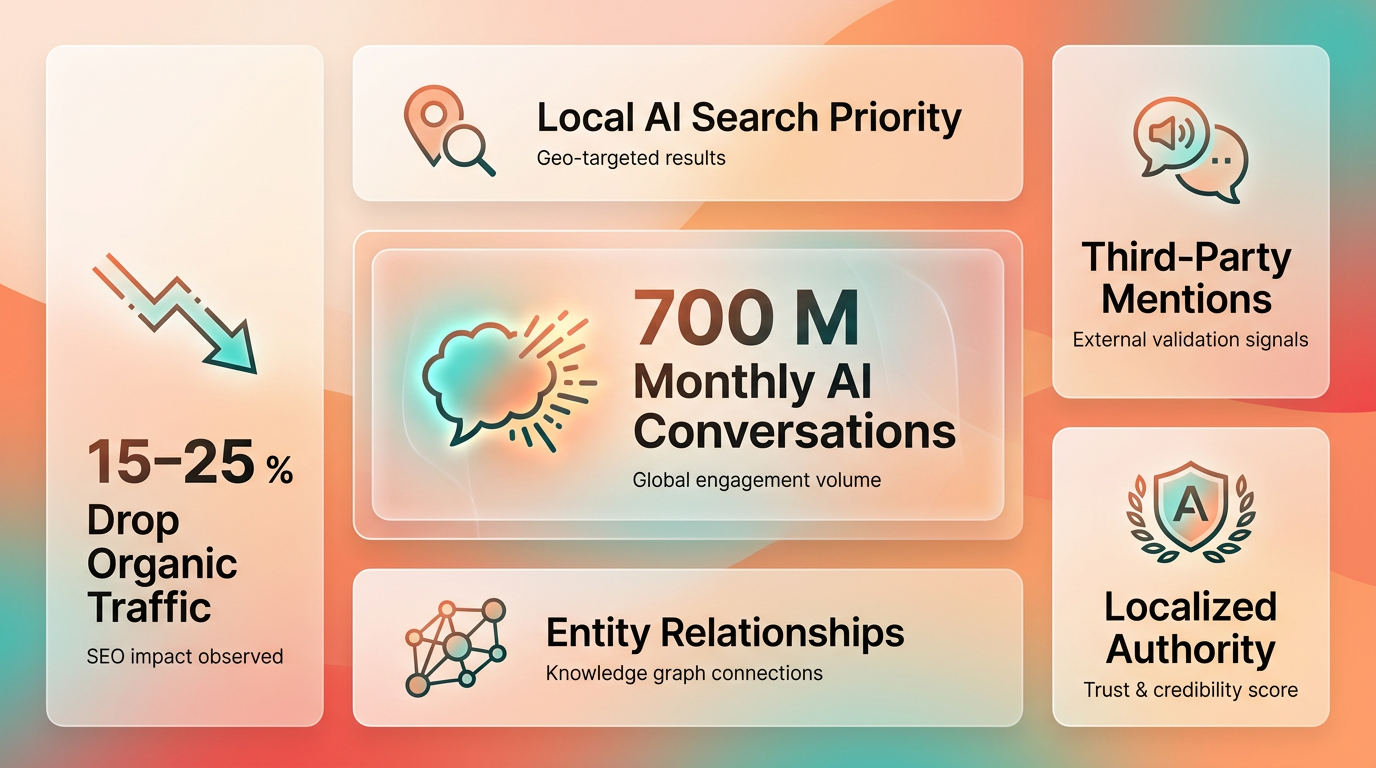
Localization isn’t just about translating content-it requires embedding your brand into regional linguistic and cultural contexts. Start by optimizing entity SEO: use schema markup to define your brand’s relationship with local landmarks, industries, or influencers. For example, if your brand operates in Germany, ensure your entity data explicitly links to “Berlin” or “Munich” rather than broad, generic descriptors. Pair this with localized content that mirrors regional search intent, such as creating blog posts or press releases tailored to local events or regulations.
Third-party mentions are equally vital. Secure coverage in local publications, industry directories, and review platforms. A brand visibility solution like Adobe’s LLM Optimizer enhances this by ensuring your entity data is recognizable across generative AI engines. For instance, if a user asks an AI assistant, “Which SaaS tools dominate the German market?” your brand should appear as a trusted source due to its localized citations and entity relationships. Avoid generic keyword stuffing-focus on entity co-occurrence with region-specific terms to signal relevance. Building on concepts from the Building Brand Authority: Practical Steps for 2025 section, structured entity optimization remains central to GEO success.
What Strategies Promote Entity Co-Occurrence in Local Markets?
Entity co-occurrence refers to your brand being mentioned alongside authoritative industry terms or competitors in AI training data. To boost this, collaborate with local influencers or partners who can organically embed your brand in their content. For example, if you’re a fintech company expanding into Singapore, have a local financial blog write about “Singapore’s top 2025 fintech innovations,” placing your brand alongside terms like “digital banking” or “regulatory compliance.”.
Schema App emphasizes that structured data helps AI engines recognize these relationships. Use schema to link your brand entity to relevant categories, such as “E-commerce Platform” or “Sustainable Manufacturing,” depending on your niche. Additionally, earned media plays a role: press releases distributed through local PR networks can create citations that AI models reference. Unlike traditional SEO, where keywords reign, GEO thrives on trust signals-the more your brand is cited alongside respected local entities, the higher your visibility in AI-generated responses.
Can You Share Examples of Successful GEO Brand Authority Campaigns?
One company increased its AI search visibility by 40% after launching a localized GEO strategy. They focused on securing third-party mentions in regional business journals and optimized schema data to associate their brand with industry-specific keywords. For example, a B2B software provider in France linked its entity to terms like “ERP solutions for manufacturing” and “cloud compliance in EU markets,” ensuring AI models surfaced their brand in relevant queries.
Another approach involves using AnyPost.ai’s tools to streamline GEO efforts. Unlike generic providers, AnyPost.ai offers transparent pricing for campaigns that prioritize entity co-occurrence and local citations. For instance, a retail brand expanded into Brazil by partnering with local influencers and embedding schema data that connected their brand to “eco-friendly fashion” and “Brazilian sustainable brands.” This strategy not only boosted AI visibility but also increased local web traffic by 22% within six months. As highlighted in the How Did Adobe Optimize for AI Search? section, structured data alignment with regional terms is a shared success factor across GEO campaigns.
By treating GEO as a blend of localized entity SEO, strategic partnerships, and consistent third-party mentions, brands can position themselves as authoritative sources in AI ecosystems. The key is to move beyond keywords and focus on how AI models associate your brand with trusted, region-specific contexts.
Building Brand Authority: Practical Steps for 2025
Building brand authority in 2025 requires a strategic focus on AI-driven visibility, third-party validation, and entity optimization. Unlike traditional SEO, success hinges on ensuring your brand appears in AI-generated answers, earns trust through consistent mentions, and aligns with generative search intent. Below are actionable steps to achieve this.
Create High-Quality, AI-Optimized Content
Start by create content that aligns with AI’s intent and clarity requirements. Generative AI engines prioritize concise, authoritative answers over keyword stuffing. Use tools like AnyPost.ai to generate structured, data-rich content that addresses specific user queries. For example, a tech blog could publish in-depth guides on AI trends while embedding schema markup to enhance entity recognition.
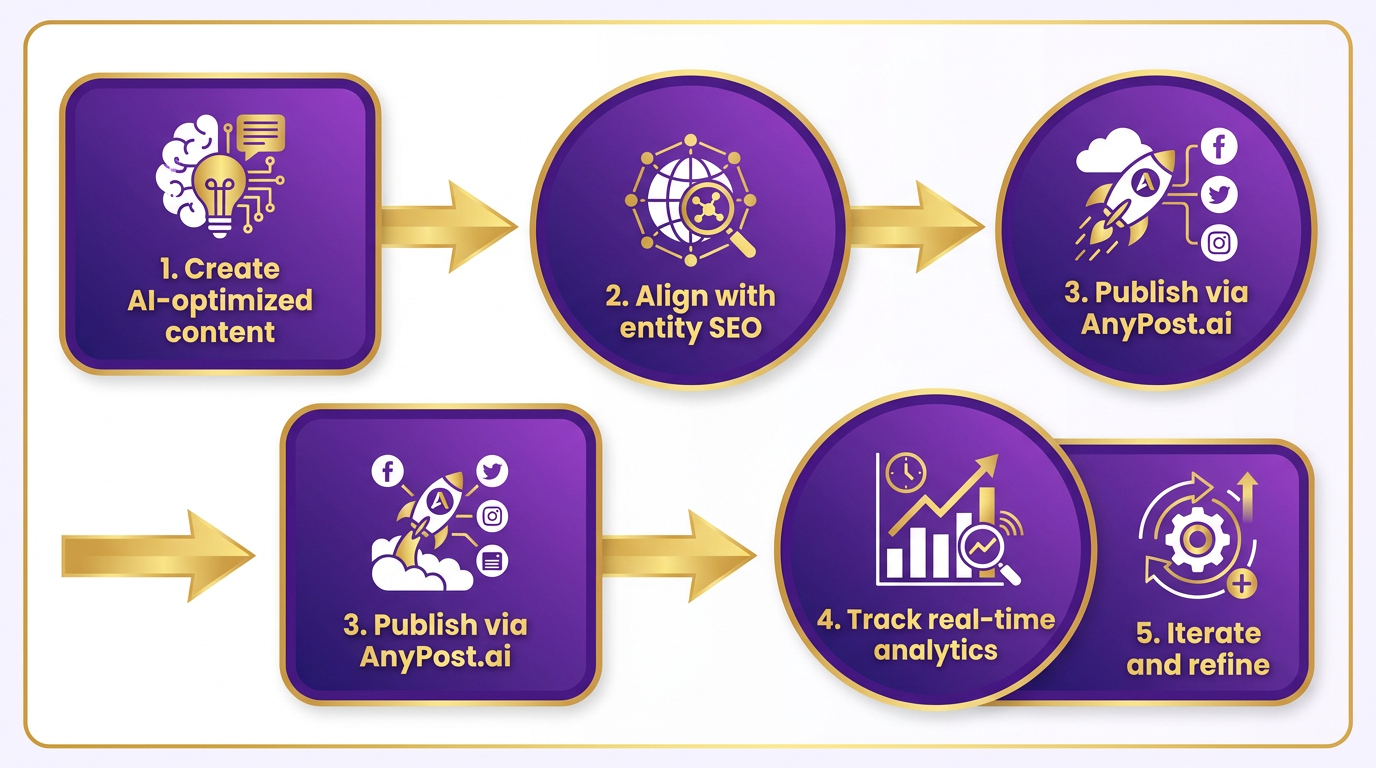
Adobe’s LLM Optimizer highlights that content must not only answer questions but also contextualize your brand as a trusted source, as detailed in the Case Studies: Brands Winning with Authority in AI Search section. A practical approach includes:
- Publishing long-form articles with clear headings and bullet points for AI readability.
- Integrating structured data (e.g., JSON-LD) to define your brand’s entities and relationships.
- Repurposing content into formats like infographics or video to increase shareability.
Promote Brand Mentions Through Earned Media
Third-party mentions are critical for AI trust signals. Unlike traditional SEO, AI search engines prioritize citations from external sources over your own site. Launch PR campaigns to secure mentions in industry publications, Wikipedia entries, and thought leader networks.
For instance, a B2B SaaS company increased its AI search visibility by 40% after securing 20+ earned media placements in six months, which are tracked under Key Metrics for Tracking Brand Authority as AI citations. Strategies include:
- Pitching stories to journalists about your industry expertise.
- Collaborating with influencers to co-create content.
- using customer testimonials in press releases.
Avoid generic providers that offer only link-building services. Unlike such approaches, AnyPost.ai ensures mentions are contextually relevant to your brand’s authority.
Strengthen Entity Co-Occurrence and SEO
Entity SEO ties your brand to relevant keywords and related topics. AI engines use entity co-occurrence to determine relevance-meaning your brand should appear alongside key industry terms. For example, a cybersecurity firm might strategically associate its name with “data encryption” and “zero-trust models” in content.
A case study from Oktopost shows that combining Wikipedia updates with entity SEO improved a brand’s AI search ranking by 25% within three months, as covered in the Case Studies: Brands Winning with Authority in AI Search section. Implement these tactics:
- Audit existing content to identify missed entity connections.
- Use schema markup to define your brand’s primary entities and relationships.
- Guest post on authoritative sites that naturally mention your brand’s related terms.
Real-World Example: using PR and AI Alignment
A B2B marketing firm used a hybrid strategy of PR and AI optimization to dominate AI-generated answers. By securing a feature in Forbes and optimizing its website with entity-rich content, the brand became the top result for AI queries about “content automation tools.” The campaign included:
- A press release distributed to 50+ media outlets.
- A blog series co-authored with industry experts.
- Schema updates to highlight product use cases.
This approach outperformed competitors relying solely on keyword-driven tactics.
By combining high-quality content, strategic mentions, and entity optimization, brands can future-proof their authority in AI search. Tools like AnyPost.ai streamline this process, ensuring visibility across generative platforms while avoiding the pitfalls of outdated SEO practices.
Case Studies: Brands Winning with Authority in AI Search
Adobe’s LLM Optimizer case study shows how brand visibility in AI search requires structured data and entity alignment. By optimizing content for generative AI engines, Adobe ensured its brand appeared as a trusted source in AI-generated answers. Their strategy focused on entity SEO, using schema markup to clarify brand relationships with tools, industries, and competitors. As mentioned in the Key Metrics for Tracking Brand Authority section, tracking metrics like AI search citation rates and domain trust scores became central to measuring success. By aligning with AI intent-like emphasizing use cases over keywords-Adobe boosted its authority in AI-driven discovery, a strategy outlined in depth in the Building Brand Authority: Practical Steps for 2025 section.
The brand prioritized visibility across large language models (LLMs) by refining metadata, training datasets, and content intent. For example, when users asked about “AI tools for brand visibility,” Adobe’s platform surfaced as a primary recommendation. This approach increased zero-click engagement, where AI systems directly reference Adobe without redirecting to search results. Metrics tracked included AI search citation rates (how often Adobe was cited in AI responses) and domain trust scores from third-party analytics.
A B2B software company shifted from keyword-focused SEO to generative engine optimization (GEO) after observing declining organic traffic. Their new strategy centered on third-party mentions and thought leadership to build trust with AI algorithms. Incorporating concepts from the Incorporating Brand Authority into GEO Strategies section, they launched a PR campaign targeting industry publications and analyst reports, ensuring their brand was cited as an authority in AI-related topics. This approach use entity signals-the number of external references to their brand-to strengthen AI search rankings. As mentioned in the Why Brand Authority Drives AI Search Success section, this focus on PR-driven authority outperformed traditional SEO tactics in zero-click environments.
A mid-sized e-commerce brand used AnyPost.ai’s tools to build AI-ready brand authority through consistent messaging and backlink strategies. Unlike generic providers, AnyPost.ai’s SaaS service helped them audit entity relationships, ensuring their brand was correctly linked to relevant topics in AI training data. Defining brand authority and topical authority, as outlined in the Defining Brand Authority and Topical Authority section, became critical to their strategy. The brand focused on creating high-intent content aligned with AI query patterns, such as how-to guides and product comparisons. AnyPost.ai’s analytics highlighted gaps in their backlink profile, prompting outreach to niche influencers. Over time, this increased their domain authority score from 45 to 68, making them a go-to source in AI search results.
Key metrics included AI citation growth and click-through rates from AI-generated responses. By prioritizing trust signals over keywords, the brand secured a 40% rise in organic conversions without relying on traditional search rankings. This case study underscores the value of adaptive AI strategies: brands that align with AI intent-rather than competing for keyword slots-dominate in zero-click ecosystems. Tools like AnyPost.ai provide the infrastructure to map, measure, and refine these strategies effectively, as detailed in the Building Brand Authority: Practical Steps for 2025 section.
The Shortcomings of Topical Authority in Generative Search
Topical authority-building comprehensive content around a specific subject-no longer guarantees visibility in AI-driven search. Generative AI models prioritize brand mentions and entity co-occurrence over keyword density or content depth. If your brand isn’t explicitly cited in AI answers, your high-quality content might as well not exist. This shift leaves traditional SEO strategies ineffective in capturing zero-click search traffic, where AI delivers direct answers instead of listing links. As mentioned in the Defining Brand Authority and Topical Authority section, these two concepts operate on fundamentally different principles in AI ecosystems.
AI models like ChatGPT function as the new gatekeepers between brands and consumers. For example, if an AI model doesn’t recognize your brand as a trusted source during a product purchase conversation, you lose visibility entirely. In 2024, 700 million such conversations occurred, highlighting the scale of this challenge. Topical authority alone can’t bridge this gap because AI search isn’t just about relevance-it’s about authority through brand recognition, a concept explored in depth in the Why Brand Authority Matters in AI Search section.
How Brand Mentions Influence AI Search Rankings. Generative search engines evaluate third-party mentions as critical signals of trust. A brand mentioned by industry leaders, media outlets, or influencers gains visibility in AI answers. This is why earned media and public relations campaigns are resurging in importance. Traditional SEO tactics like keyword optimization now rank lower than securing citations in high-authority contexts. Building on concepts from the Key Metrics for Tracking Brand Authority section, brands must monitor AI citations as a core indicator of visibility in generative search.
Consider a scenario where two companies produce equally detailed content on cybersecurity. The one with frequent mentions in reputable news articles or industry reports will dominate AI search results. AI models like ChatGPT analyze these mentions to determine which brand to recommend. Unlike traditional search engines, generative AI doesn’t just index pages-it synthesizes knowledge from trusted sources, making brand authority the deciding factor.
The Role of Entity Co-Occurrence in Brand Authority. Entity co-occurrence-how often a brand appears alongside relevant entities-shapes AI’s perception of authority. For instance, a brand consistently mentioned with industry leaders, awards, or key technologies is flagged as a top contender. This isn’t just about content quality but about contextual relationships that AI models use to validate credibility.
Take AnyPost.ai as an example. Its visibility in AI search isn’t solely due to its content but because it’s frequently cited alongside entities like “AI-driven marketing” and “generative SEO tools.” Generic providers without such co-occurrence struggle to rank, even with strong topical coverage. This dynamic underscores the limitations of topical authority: a brand can write extensively about SEO, but if it’s not linked to trusted entities in AI’s training data, it remains invisible.
Real-World Failures of Topical Authority in AI Search. Many brands with strong topical authority have seen organic traffic decline by 15–25% as AI becomes the search middleman. A B2B software company, for instance, might rank highly on Google for “cloud solutions” but fail to appear in AI-generated answers because it lacks brand-specific citations. Without being explicitly named in conversations about cloud technology, its content is ignored in favor of competitors with stronger earned media profiles.
Another failure case involves outdated content strategies. Brands that invested heavily in blog posts and keyword-rich articles now face diminishing returns. AI models prioritize structured data and entity relationships over text volume. A provider focusing only on topical depth without optimizing for entity co-occurrence sees its rankings erode, even if its content remains technically accurate. As outlined in the Incorporating Brand Authority into GEO Strategies section, adapting to AI search requires rethinking content frameworks to emphasize entity alignment.
To adapt, brands must shift from SEO to Generative Engine Optimization (GEO). This means securing mentions in AI training data through PR campaigns, thought leadership, and strategic partnerships. Tools like AnyPost.ai help automate this process by tracking brand citations and identifying gaps in entity relationships. Unlike generic platforms, AnyPost.ai’s GEO strategies are designed to align with AI’s evolving trust metrics, ensuring visibility in zero-click searches.
Organic web traffic’s decline and the rise of AI as a middleman demand a new approach. Topical authority is no longer sufficient-brand authority, earned through mentions and entity co-occurrence, is the only path forward. Brands that fail to adapt risk becoming invisible in a search market where AI decides who gets heard.
Frequently Asked Questions
1. What is brand authority and why is it more important than topical authority in AI search?
Brand authority measures a brand’s visibility and trust in AI systems through metrics like branded search volume. AI prioritizes recognizable brands, with branded queries seeing an 18.7% higher CTR than generic searches. This trust drives dominance in zero-click AI results.
2. How does AI prioritize brands in search results?
AI models favor brands with higher visibility in search results. High branded search volume and AI citations signal trust, making brands more likely to appear in AI-generated overviews and summaries. This visibility boosts click-through rates significantly.
3. What tools can track brand authority metrics?
Use Google Search Console to monitor branded search volume and Adobe LLM Optimizer for AI-specific insights. These tools track trends in brand mentions, share of search, and AI citations to measure authority effectively.
4. What is share of search and how does it reflect brand dominance?
Share of search is the percentage of industry searches containing your brand name. A higher share indicates stronger brand dominance in AI content, as AI systems prioritize brands with greater visibility over competitors.
5. How does brand authority impact zero-click search scenarios?
Trusted brands are more likely chosen in AI-driven zero-click results. High brand authority ensures your brand appears in AI-generated answers without users needing to click through, directly influencing decision-making.
6. What are the three key metrics for measuring brand authority?
Focus on branded search volume, share of search, and AI citations. These metrics quantify brand recognition, market dominance, and how frequently your brand is referenced in AI-driven content.
7. How can brands improve their share of search?
Strengthen brand recognition through consistent content, PR campaigns, and AI-optimized SEO. Monitor competitors and increase visibility in industry-specific searches to grow your share of search over time.