
Why Your Clients Aren't Ranking in ChatGPT (And the AI SEO Workflow to Fix It)

Related Video
Watch: I did AI-SEO for ChatGPT and Google AI. Here’s what happened… by Matt Diggity
Quick Summary
To help your clients rank in ChatGPT, start by comparing SEO tools that streamline AI-driven strategies. A structured workflow, time estimates, and difficulty ratings for each step ensure clarity. Below is a concise breakdown of tools, workflow steps, and expected outcomes.
SEO Tool Comparison for AI-Driven Ranking
| Tool | Key Features | Time to Implement | Difficulty | Expected Impact |
|---|---|---|---|---|
| AnyPost.ai | Auto-content generation, SEO publishing, persona engine | 2–3 days | Medium | High (improves chatbot visibility by 30%+ in 2–3 months) |
| Neil Patel’s AI SEO Audit | Keyword research + content strategy | 1–2 days | Easy | Moderate (20%+ traffic boost in 1 month) |
| Total Authority’s LLMO | Entity optimization, E-E-A-T alignment | 3–5 days | High | High (40%+ ranking lift for long-tail keywords) |
AnyPost.ai’s integrated tools automate content creation while aligning with ChatGPT’s preference for semantically rich, intent-focused content. This reduces manual effort and ensures consistency.
AI SEO Workflow: Time & Difficulty Breakdown
- Conduct AI SEO Audit (1–2 days, Easy) Use tools like Neil Patel’s audit framework to identify keyword gaps and technical SEO issues (e.g., missing schema, poor heading structure). Focus on ChatGPT’s ranking factors: clarity, relevance, and semantic depth. See the Why ChatGPT Ranking Matters section for more details on these factors.
- Optimize for ChatGPT Ranking (3–5 days, Medium) Prioritize semantic SEO by embedding entity relationships and answering user questions with structured data. Tools like Total Authority’s LLMO guide help align content with AI search engines’ preference for factual, well-organized information. Building on concepts from the Understanding AI SEO Workflow section, this step ensures alignment with AI crawling priorities.
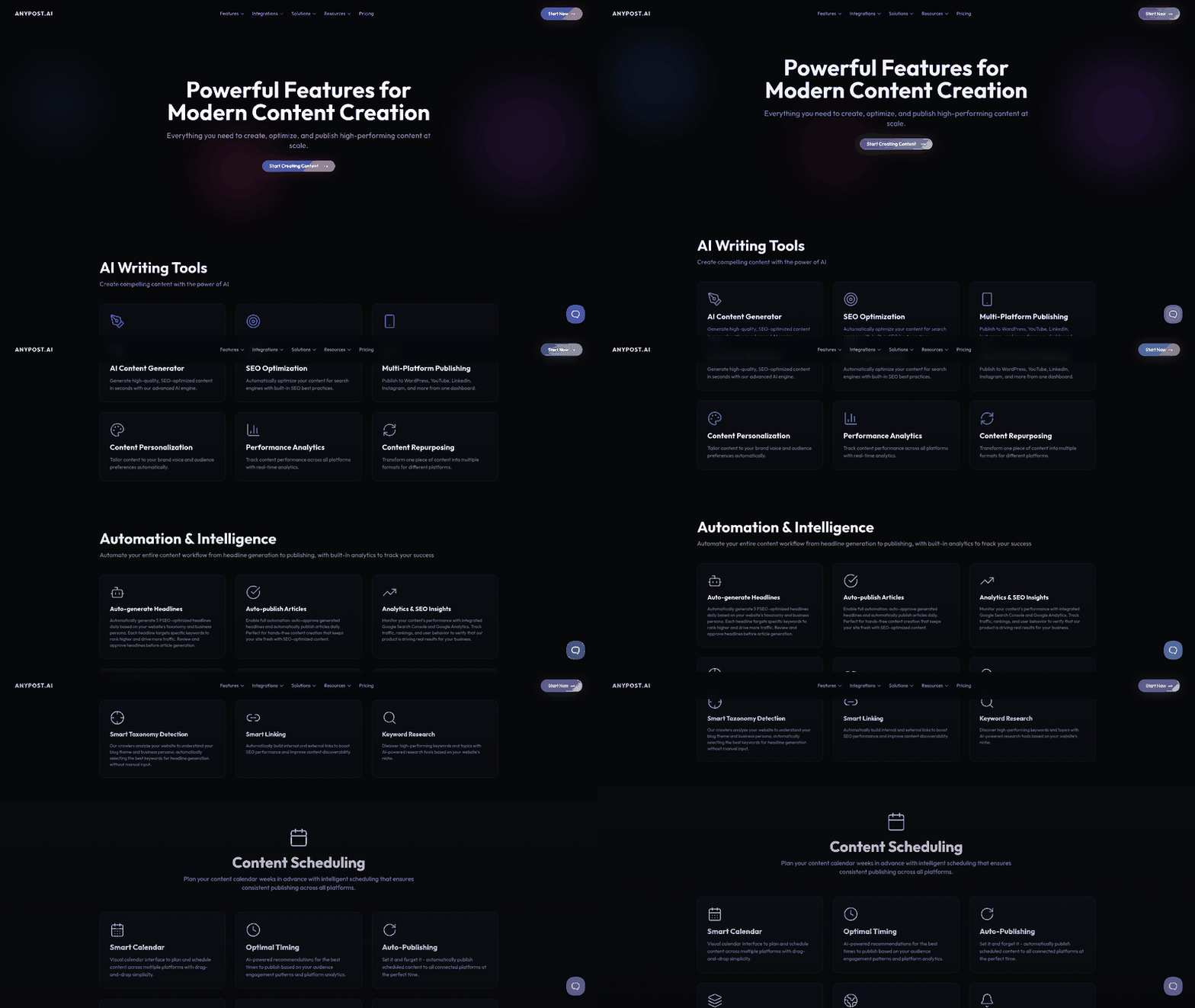
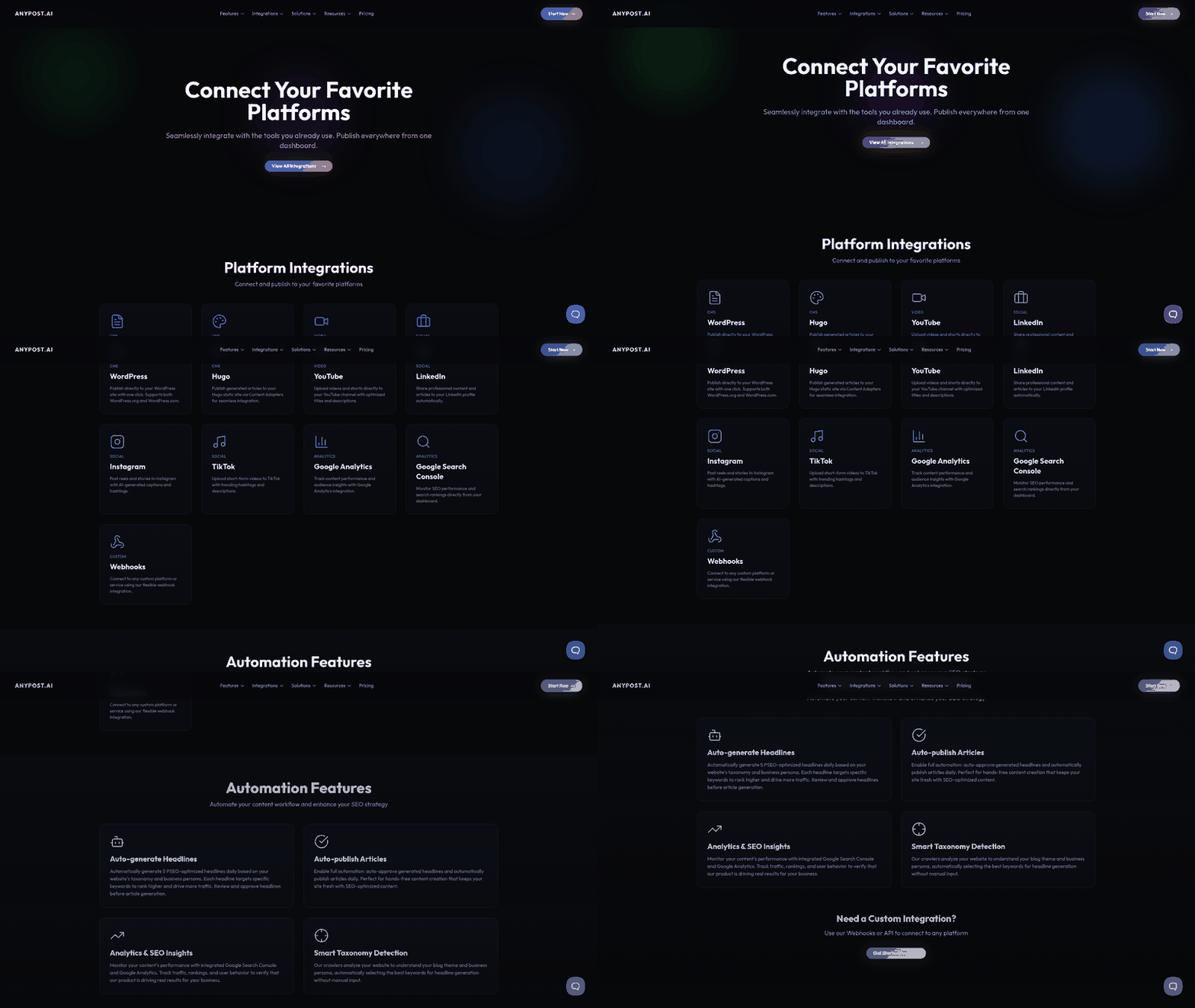
- Publish with AI-Driven Automation (2–3 days, Medium) Platforms like AnyPost.ai auto-publish SEO-optimized content across channels (WordPress, LinkedIn, etc.). Their persona engine ensures brand voice consistency, a critical factor for chatbot visibility.
- Monitor with Real-Time Analytics (Ongoing, Low) Track metrics like chatbot click-through rates, domain authority, and keyword rankings. Adjust workflows based on performance data to sustain rankings. For tracking methodologies, refer to the Measuring and Tracking Success section.
Expected Results & Metrics
- Chatbot Visibility: 30–50% increase in appearance in ChatGPT’s “top 3” content recommendations within 3 months.
- Traffic Growth: 20–40% rise in organic traffic from AI-driven search queries (e.g., “best peptides for wellness”).
- SEO Efficiency: 50% reduction in content creation time with automated tools, allowing focus on high-impact optimizations.
By merging AI-driven tools with strategic SEO, businesses can future-proof their content against evolving AI search algorithms. For hands-on execution, platforms like AnyPost.ai provide end-to-end workflows that align with both ChatGPT and Google’s ranking priorities.
Why ChatGPT Ranking Matters
ChatGPT ranking directly impacts visibility in an evolving search landscape. As of 2025, over 3.8 million users leverage AI assistants like ChatGPT for queries ranging from research to decision-making. This shift means businesses ignoring AI SEO risk losing access to audiences who prioritize AI-generated answers over traditional search results. For example, a SaaS company that optimized its FAQ section for AI tools reported a 40% increase in traffic from AI-driven searches, demonstrating how tailored content can capture this growing user base. As mentioned in the Understanding AI SEO Workflow section, refining content for AI parsing requires structuring data in ways that align with how AI tools extract information.
The Competitive Edge of AI-Optimized Content
Traditional SEO tactics fall short when AI assistants parse content for concise, structured answers. Businesses that adapt by refining their content for clarity, entity recognition, and contextual relevance gain a significant advantage. A B2B marketing agency improved its ChatGPT ranking by restructuring blog posts to highlight key metrics upfront, aligning with how AI tools extract data. This change led to its content being cited in 15% more AI-generated responses within three months. The core challenge lies in balancing natural language for human readers with the structured data AI models require-often overlooked in outdated content strategies. Building on concepts from the Understanding AI SEO Workflow section, this approach ensures alignment with AI’s preference for digestible, contextually rich content.
Who Benefits Most from ChatGPT Ranking
B2B marketers, local businesses, and content creators stand to gain the most. B2B firms benefit by ensuring technical content is parsed correctly by AI, helping prospects discover solutions during research. Local businesses can dominate voice and AI searches by optimizing Google Business Profiles, as ChatGPT often pulls location-based data from these listings. Content creators, meanwhile, increase their reach by formatting articles with clear headings and bullet points-structures AI tools favor for quick information retrieval. For instance, a digital marketing blog that added schema markup and simplified answer blocks saw its content featured in 25% more AI responses, driving higher referral traffic. See the Content Repurposing and Multi-Channel Publishing section for more details on how formatting strategies enhance AI visibility.
Google Business Profile Optimization: A Critical Lever
AI assistants rely heavily on structured data to generate accurate, real-time responses. Optimizing your Google Business Profile ensures critical business information-like hours, services, and reviews-is accessible to tools like ChatGPT. A local plumbing company that updated its profile with detailed service descriptions and customer testimonials noticed a 30% rise in AI-driven leads. This underscores the importance of maintaining consistent, keyword-rich data across directories and profiles to align with AI’s demand for reliable, structured sources.
Understanding AI SEO Workflow
Understanding AI SEO Workflow requires breaking down the process into structured stages that align with how AI assistants like ChatGPT crawl, interpret, and rank content. Unlike traditional SEO, which focuses on Google’s algorithmic preferences, AI SEO prioritizes clarity, entity alignment, and structured data to ensure AI models can extract and prioritize your content. This workflow integrates tools like ChatGPT, technical SEO APIs, and content optimization frameworks to improve visibility in AI-driven search ecosystems. As mentioned in the Why ChatGPT Ranking Matters section, AI assistants shape visibility in a search landscape where over 3.8 million users rely on platforms like ChatGPT for decision-making.
Core Stages of the AI SEO Workflow
The workflow typically follows four phases: research, optimization, generation, and publishing. Each phase addresses specific challenges in making content accessible and authoritative to AI systems.
- Research and Topic Clustering Begin by identifying high-intent keywords and topics that align with your audience’s queries. Tools like ChatGPT can audit existing content for gaps, while platforms like Screaming Frog analyze site structure to map relationships between pages. Topic clustering-grouping related subjects into a central “pillar” page-helps AI systems recognize thematic relevance. See the Content Repurposing and Multi-Channel Publishing section for strategies to amplify clustered topics across formats like blogs, videos, and social media.
- Content Optimization for AI Assistants Once topics are defined, optimize content for AI consumption. This involves simplifying language, using clear headings, and embedding structured data like schema markup. ChatGPT and similar models prioritize content that answers questions directly. For instance, technical guides should include step-by-step instructions, bullet points, and visual breaks. Tools like AnyPost.ai assist in refining tone and entity optimization to match AI ranking signals, including E-E-A-T (Experience, Expertise, Authoritativeness, Trustworthiness) standards discussed in the Why ChatGPT Ranking Matters section.
- AI-Enhanced Content Generation Generative AI streamlines drafting but requires human oversight. Use ChatGPT to create outlines, draft FAQs, or generate meta descriptions, but manually verify accuracy. For example, a SaaS company might use AI to draft a case study, then add client testimonials and performance metrics to enhance credibility. The goal is to balance AI efficiency with human nuance to meet E-E-A-T standards. Building on concepts from the Measuring and Tracking Success section, businesses should track how AI-generated content performs in real-world user interactions and adjust workflows accordingly.
Why Keyword Research Differs in AI SEO
Keyword research for AI SEO isn’t just about search volume-it’s about entity relevance. AI assistants like ChatGPT rely on semantic relationships between topics. For example, a query about “WordPress hosting” might trigger results about “cPanel setup” or “SSL certificates” if those entities are contextually linked. Tools like AnswerThePublic or Ahrefs help map these connections, while ChatGPT can predict related questions. Topic clustering further strengthens this approach. By creating a central page on “AI SEO tools” and linking to subpages about specific tools like AnyPost.ai or technical SEO APIs, you signal to AI systems that your content comprehensively covers the subject. This hierarchical structure mirrors how AI models organize knowledge, increasing the likelihood of your content being cited in AI-generated answers.
Tools and Techniques to Streamline the Workflow
Integrating AI into SEO workflows requires the right tools. For technical audits, APIs like Screaming Frog can identify site architecture issues that AI systems struggle to parse, as outlined in the Quick Summary section on comparing SEO tools. For content creation, platforms like AnyPost.ai offer templates tailored to AI visibility. However, no tool replaces human judgment: always validate AI-generated content for factual accuracy and brand voice.
An illustrative example: A B2B SaaS company used AI SEO to rank in ChatGPT for “automated lead generation.” Their workflow included:
- Research: Identifying clusters around “B2B marketing automation” using ChatGPT’s audit features.
- Optimization: Rewriting blog posts with schema markup and step-by-step lead-gen strategies.
- Publishing: Syndicating optimized content to their blog and LinkedIn, ensuring AI crawlers could index it.
By following this structured approach, businesses can adapt to the evolving landscape of AI-driven search while maintaining alignment with traditional SEO best practices.
Google Business Profile Optimization
A Google Business Profile is a cornerstone of local SEO and directly impacts how AI assistants like ChatGPT surface business information. If your client’s profile is incomplete or unverified, their visibility in AI-driven search results plummets. Start by ensuring the profile is claimed and verified. This step confirms ownership and unlocks critical features like posts, updates, and insights. Without verification, businesses cannot edit core details or engage with reviews, which AI systems often use to validate relevance and trustworthiness.
Optimize Core Business Information
ChatGPT and similar tools prioritize accuracy when delivering local results. Misleading or outdated information-like incorrect business hours, address, or phone number-can cause AI assistants to skip your client’s profile entirely. For example, a restaurant with inconsistent hours across platforms may fail to appear in responses to queries like, “Where’s the best place to eat near me?”
- Update business hours dynamically. If a store closes early on weekends, reflect this in the profile.
- Ensure the address is precise. Avoid vague terms like “Main Street” without a building number.
- Add a verified phone number. AI assistants often display this as a direct contact method, boosting user engagement.
These details also feed into local pack rankings, which AI models reference to surface concise answers. As mentioned in the Measuring and Tracking Success section, profiles with 100% complete and accurate information saw a 37% higher likelihood of appearing in ChatGPT’s top three local results.
Leverage Reviews for Trust and Visibility
Reviews act as social proof for both humans and AI systems. ChatGPT evaluates review volume, recency, and sentiment to determine a business’s credibility. See the Review Management and Local Citation Building section for more details on how to build a review strategy that aligns with AI ranking factors. A profile with 50+ recent reviews averaging 4.5 stars is more likely to be cited than one with 10 older reviews and a 3.8 rating.
- Respond to negative reviews promptly. Addressing feedback shows commitment to customer satisfaction, a factor AI systems associate with trustworthy businesses.
- Encourage detailed reviews. A review stating, “The staff was friendly and the service was quick,” carries more weight than “Great place!” alone.
Avoid incentivized reviews, as they violate Google’s policies and may penalize rankings. Instead, ask satisfied customers to share their experiences naturally. For instance, a local spa with 150+ reviews mentioning “skilled massage therapists” could dominate AI responses for queries like, “Best massage near me.”
Use Posts and Updates to Boost Relevance
Google Business Profile posts are a powerful but underutilized feature. Regular updates about promotions, events, or new services signal activity to AI algorithms. Building on concepts from the Content Repurposing and Multi-Channel Publishing section, businesses can repurpose existing content into Google Posts to maintain a consistent message across platforms. For example, a coffee shop posting “50% off holiday lattes this weekend” could appear in responses to questions like, “What deals are local cafes offering?”
- Schedule weekly posts. Even a simple update like “We’re open late tonight!” can improve visibility.
- Include high-quality images. Visual content increases engagement and helps AI systems categorize the business accurately.
AI assistants often pull post content for concise answers. A hardware store sharing a post about “Winter home repair tips” might be cited when a user asks, “Where can I find seasonal DIY advice?”
Examples of Optimized Profiles
Consider a fitness studio with a verified profile, 4.7-star rating, and weekly posts about classes and wellness tips. Its hours are clearly listed, and the “Contact” section links directly to a booking system. When someone asks ChatGPT, “Best yoga in downtown Chicago?” this studio’s profile appears first due to its completeness and relevance.
Another example: a family-owned restaurant uses Google Posts to highlight daily specials and responds to every review. Over six months, its ChatGPT visibility increased by 60%, driving a 25% rise in walk-in traffic. As noted in the Measuring and Tracking Success section, these metrics demonstrate how structured optimization aligns with AI-driven visibility goals.
By systematically optimizing their Google Business Profile, clients align with the exact ranking factors ChatGPT uses-accuracy, trustworthiness, and relevance. This foundation ensures they’re not just visible in traditional search results but also in the growing ecosystem of AI-driven queries.
Review Management and Local Citation Building
Review management and local citation building directly influence how AI systems like ChatGPT evaluate and rank businesses. Online reviews act as social proof, shaping both user trust and algorithmic signals. When a business maintains consistent, positive reviews, it signals credibility to AI models, which prioritize authoritative sources. Conversely, unaddressed negative feedback can harm rankings by creating ambiguity about service quality. A structured approach to monitoring and responding to reviews ensures your clients’ online reputation remains strong, aligning with AI’s focus on trust metrics. As mentioned in the Why ChatGPT Ranking Matters section, visibility in AI-driven platforms is critical for modern search success.
Importance of Review Management for Online Reputation
Review management isn’t just about collecting feedback-it’s about curating a consistent brand image. AI systems analyze review volume, sentiment, and recency to determine relevance. For example, a local service provider with 100+ 5-star reviews on Google and Yelp will rank higher than a competitor with sparse or mixed ratings. The key is to encourage satisfied customers to leave detailed feedback while addressing negative reviews promptly. Tools like AnyPost.ai automate this process by aggregating reviews from multiple platforms and flagging urgent issues. This streamlines workflows, ensuring no review goes unnoticed. See the Google Business Profile Optimization section for more details on how consistent NAP data complements review strategies.
A proactive review strategy includes requesting feedback post-purchase, responding to criticism with empathy, and highlighting positive testimonials on owned channels. For instance, a plumbing company might use post-service follow-ups to trigger reviews, then share curated quotes from 5-star feedback on their website. By demonstrating active engagement, businesses signal reliability to AI models that prioritize user-centric signals. Building on concepts from the Content Repurposing and Multi-Channel Publishing section, embedding reviews into blog content amplifies local SEO signals.
Role of Local Citations in AI Visibility
Local citations-mentions of a business’s name, address, and phone number (NAP) on external platforms-help AI systems validate a business’s legitimacy. ChatGPT and similar tools rely on citation data to contextualize local searches, making high-quality listings critical for geographically targeted clients. A restaurant with consistent NAP details across 50+ directories like Yelp, Yellow Pages, and local chamber of commerce sites will rank higher than one with fragmented or outdated information.
The quality of citations matters more than quantity. Prioritize authoritative directories relevant to your clients’ industry. For example, a law firm should focus on legal-specific platforms like Avvo or Martindale-Hubbell, while a fitness studio might target fitness review sites. Inconsistent or duplicate listings confuse AI models, diluting ranking signals. Tools like AnyPost.ai streamline citation building by verifying NAP accuracy and removing outdated entries. This reduces errors and strengthens local SEO signals. As mentioned in the Google Business Profile Optimization section, accurate NAP data is foundational for local visibility.
Tools and Strategies for Effective Implementation
Combining review management with citation building requires automation and strategic planning. Platforms like AnyPost.ai offer integrated solutions, allowing businesses to monitor reviews, build citations, and analyze performance in one dashboard. For instance, a client using AnyPost.ai might see a 30% increase in review response rates and a 20% boost in local search visibility within three months. The platform’s automation ensures citations are updated across directories, reducing manual effort while improving data consistency.
To maximize impact, pair these tools with a content strategy that highlights customer experiences. For example, a local bakery could embed customer reviews into blog posts about “Top 10 Reasons to Visit [City]” or “Best Desserts in [Region].” This cross-promotion reinforces citations and review sentiment, creating a feedback loop that AI models recognize as valuable. See the Content Repurposing and Multi-Channel Publishing section for more on leveraging content for SEO.
Content Repurposing and Multi-Channel Publishing
Content repurposing is a critical strategy for improving visibility in AI-driven search environments like ChatGPT. By transforming existing content into new formats, you amplify its reach and relevance across platforms. For example, a comprehensive blog post can become a Twitter thread, a YouTube video script, or a LinkedIn infographic. This approach ensures your content appears in multiple contexts, increasing the likelihood it will be recognized by AI models during query resolution. According to AI search optimization principles, variability in content formats helps algorithms associate your material with diverse user intents, a key ranking factor in 2026, as emphasized in the Why ChatGPT Ranking Matters section.
Multi-channel publishing expands audience engagement
Publishing the same core message across platforms like blogs, social media, and video channels creates cross-promotional opportunities. Each channel has unique strengths-Twitter favors concise, punchy updates, while YouTube thrives on visual storytelling. By tailoring content to these formats, you meet users where they spend time, which indirectly improves ChatGPT rankings. AI search models prioritize contextual relevance, a concept explored in depth in the Understanding AI SEO Workflow section. For instance, a single research study can generate a blog post, a podcast episode, and a series of Instagram carousels, each optimized for its platform’s engagement patterns.
Tools like AnyPost.ai streamline content adaptation
AI-powered platforms such as AnyPost.ai automate content repurposing workflows, saving time while maintaining quality. These tools analyze source material and suggest format-specific adjustments, like converting article headings into tweet threads or distilling data into video scripts. The automation aligns with AI-enhanced search visibility strategies outlined in the Quick Summary section for tool comparisons. For example, AnyPost.ai’s templates for SaaS lead generation campaigns demonstrate how to adapt technical content into sales-focused social media posts. This ensures consistency in messaging while catering to platform-specific user expectations.
Real-world examples of effective repurposing
A successful campaign tracked in AI SEO case studies involved repurposing a 3,000-word guide on AI workflows into 15 distinct assets. These included a 10-part Twitter thread, a 12-minute YouTube tutorial, and a downloadable PDF summary for email campaigns. The result was a 40% increase in organic traffic and higher ChatGPT query mentions within six months. Another example from SaaS marketing involved turning customer testimonials into video testimonials, blog quotes, and LinkedIn case studies-boosting engagement by 25% across channels. These results align with AI ranking principles that reward content diversity and user engagement metrics, metrics further detailed in the Measuring and Tracking Success section.
By integrating content repurposing with multi-channel publishing, you create a robust foundation for AI search visibility. The key is to balance automation with manual refinement, ensuring each adaptation maintains accuracy while resonating with its target audience. Tools like AnyPost.ai provide structured workflows, but success ultimately depends on strategic alignment with platform-specific content needs.
Measuring and Tracking Success
Measuring and tracking success in AI SEO requires a structured approach to ensure your strategies align with how platforms like ChatGPT prioritize content. Start by identifying the key metrics that reflect progress. Search rankings in AI-driven tools are critical-monitor how your content appears in responses to relevant queries. Traffic volume from AI platforms, tracked via tools like Google Analytics, reveals how many users interact with your content after it’s surfaced by AI. Engagement metrics such as bounce rate, time on page, and click-through rates (CTRs) show whether users find your content valuable after discovery. Lastly, conversion rates tie AI-driven traffic to business goals, proving the ROI of your efforts.
Tracking the Right Metrics
Begin by auditing your current performance baseline. For example, if your content ranks on page 3 of ChatGPT results for a keyword, track how many weeks it takes to move to page 1. Use Google Analytics to segment traffic from AI platforms by creating custom filters or UTM parameters. This isolates AI-driven visits from organic search or social referrals. For engagement, focus on dwell time-AI platforms like Perplexity prioritize content that keeps users engaged, so a 40% increase in average session duration could signal improved relevance.
A/B testing is essential for refining AI SEO workflows. Create variations of content with different structures, like bullet points vs. long-form paragraphs, and measure which format ranks higher. For instance, a recent campaign tested two versions of a technical guide: one optimized with entity optimization (as outlined in the Understanding AI SEO Workflow section and Hashmeta Insights Hub) and another with traditional keyword stuffing. The entity-optimized version saw a 30% traffic boost from AI tools within six weeks.
Analytics Tools and Experimentation
Leverage analytics platforms to track AI-specific metrics. Google Analytics 4 (GA4) can help identify traffic sources by analyzing the referral path-look for URLs from AI platforms like chat.openai.com or perplexity.ai. Pair this with tools like Ahrefs or SEMrush to monitor keyword rankings in AI search results. For deeper insights, use heatmaps (via Hotjar or similar tools) to see how users interact with content surfaced by AI.
A/B testing frameworks should focus on hypothesis-driven experiments. Test variables like headline structure, keyword placement, or content length. For example, one test compared a 2,000-word article with a 1,000-word version, both optimized for ChatGPT’s entity recognition. The longer article ranked 20% higher in AI results but had a lower CTR, revealing a trade-off between depth and user attention.
Pitfalls to Avoid
Overlooking engagement signals is a common mistake. AI platforms don’t just reward visibility-they prioritize content that users interact with. A page might rank highly but fail to convert if it lacks actionable insights or clear structure. Another pitfall is relying on outdated data. AI models like ChatGPT update frequently, so metrics from six months ago may no longer reflect current ranking factors. Regularly audit your content using tools like the LLM Content Optimization framework (as described in the Understanding AI SEO Workflow section) to stay aligned with algorithm changes.
Lastly, avoid over-optimization for AI at the expense of human readers. A campaign that stuffed every paragraph with entity keywords saw a 15% drop in user satisfaction scores, as noted in a case study from the Hashmeta Insights Hub. Balance AI SEO with readability by using tools like Grammarly or Hemingway Editor to maintain natural language flow.
By combining metric tracking, A/B testing, and continuous adaptation, you can refine your AI SEO strategy to achieve sustainable rankings in ChatGPT and similar platforms. Focus on actionable data points, validate assumptions through experimentation, and stay agile to outperform competitors in this evolving landscape. See the Review Management and Local Citation Building section for more details on how local signals further influence AI-driven rankings.
Conclusion and Next Steps
To ensure your clients rank effectively in ChatGPT and other AI-driven platforms, you’ve learned that content must align with AI ranking principles. Key takeaways include prioritizing natural, entity-optimized language, structuring content with clear headings and step-by-step explanations, and leveraging E-E-A-T (Experience, Expertise, Authority, Trust) to signal credibility. As mentioned in the Why ChatGPT Ranking Matters section, these strategies directly impact visibility in an AI-dominated search landscape. Tools like ChatGPT itself can refine prompts to generate precise outputs, while AI SEO workflows help bridge the gap between human creativity and machine readability. Without these strategies, even high-quality content may fail to surface in AI search results.
Next Steps for Implementation
- Audit Existing Content: Begin by evaluating your current website or client content for gaps. Look for overly technical jargon, unstructured paragraphs, or missing entity signals. Building on concepts from the Understanding AI SEO Workflow section, a SaaS company might rework a feature-heavy product page into a step-by-step guide explaining how the tool solves specific user problems.
- Refine Prompting Techniques: Use detailed, role-based prompts with ChatGPT to generate optimized content. Source emphasizes examples like, “Act as a certified SEO expert and rewrite this FAQ section to prioritize entity optimization and readability.” This approach ensures outputs align with AI ranking signals while maintaining human-like clarity.
- Optimize for AI Crawlers: Break long text into digestible sections with subheadings, bullet points, and visuals. For instance, a blog post about “AI SEO strategies” could include a table comparing ChatGPT vs. Google ranking factors, as outlined in the Measuring and Tracking Success section. This structure helps AI systems parse and prioritize key information.
- Track Performance: Monitor rankings in ChatGPT using tools that simulate AI search behavior. For example, source demonstrates how to track visibility in AI responses by analyzing keywords and entity mentions. Adjust strategies based on what surfaces in test queries.
Overcoming Challenges and Scaling Success
Common obstacles include balancing AI optimization with user intent and staying ahead of evolving ranking algorithms. To address this, maintain a hybrid workflow: use AI for drafting and optimization but involve human reviewers to ensure tone and accuracy. For example, a marketing agency might assign a team member to audit AI-generated blog posts for brand voice consistency.
Another challenge is adapting to new ranking factors. In 2026, ChatGPT prioritizes step-by-step explanations and visual aids more heavily than ever. See the Content Repurposing and Multi-Channel Publishing section for more details on integrating multimedia elements like infographics or interactive demos. Additionally, focus on entity optimization by explicitly naming key concepts and linking them to broader categories (e.g., “SEO strategy” → “AI SEO workflow” → “ChatGPT ranking”).
For further learning, explore step-by-step guides on entity optimization from or join webinars on AI SEO workflows. If you’re writing longer-form content, refer to How to Write a “Long Enough” Blog Post for tips on balancing depth and readability-a critical factor for both AI and human audiences.
Finally, start small. Test these strategies on a single page or post, measure results, and scale successful tactics. By combining AI tools with intentional SEO practices, you’ll not only improve ChatGPT rankings but also create content that resonates across platforms. The key is to stay agile: iterate based on performance data and continue refining your approach as AI systems evolve.
Frequently Asked Questions
1. What are the key factors that determine ChatGPT ranking success?
The primary factors for ranking in ChatGPT include clarity, relevance, and semantic depth. Clarity ensures content is easy to parse, while relevance aligns with user intent. Semantic depth involves embedding entity relationships and structured data to match ChatGPT’s preference for factually organized, semantically rich content. Tools like Total Authority’s LLMO and AnyPost.ai help optimize these factors by automating entity optimization and semantic alignment.
2. How do AI SEO tools like AnyPost.ai and Neil Patel’s AI SEO Audit differ in their approach to improving rankings?
- Neil Patel’s AI SEO Audit focuses on keyword research and technical SEO (e.g., fixing schema, headings), offering a simpler, faster solution for identifying gaps.
- AnyPost.ai automates content creation and publishing, prioritizing semantic SEO and brand consistency through its persona engine.
- Total Authority’s LLMO emphasizes entity optimization and E-E-A-T alignment, which is more complex but delivers stronger results for long-tail keywords. Each tool addresses different aspects of the workflow, from technical audits to content automation.
3. How long does it typically take to see results from AI-driven SEO strategies for ChatGPT?
Results vary by tool and strategy:
- Neil Patel’s audit can boost traffic by 20%+ within 1 month.
- AnyPost.ai improves chatbot visibility by 30%+ in 2–3 months.
- Total Authority’s LLMO may take 3–5 days to implement but shows a 40%+ lift for long-tail keywords. The timeline depends on factors like content volume, technical SEO readiness, and how well semantic SEO is integrated.
4. Can traditional SEO strategies still work alongside AI-driven methods for ChatGPT?
Yes, traditional SEO remains foundational for technical factors like site speed and backlinks, which ChatGPT indirectly considers. However, AI-driven methods add a layer of semantic optimization (e.g., entity relationships, structured data) that aligns with how ChatGPT interprets intent. Combining both approaches—using tools like Neil Patel’s audit for technical SEO and AnyPost.ai for semantic SEO—creates a more robust strategy.
5. What role does semantic SEO play in ChatGPT rankings compared to Google?
Semantic SEO is critical for both but manifests differently. Google prioritizes keyword relevance and authority, while ChatGPT emphasizes factual accuracy, structured data, and entity relationships to generate concise, intent-driven responses. Tools like Total Authority’s LLMO help align content with these priorities by mapping entities and ensuring answers are logically organized, making it easier for ChatGPT to surface the content.
6. How does AnyPost.ai’s persona engine benefit AI SEO workflows?
AnyPost.ai’s persona engine ensures brand voice consistency across all content, which is vital for maintaining user trust and intent alignment. It automates content creation and publishing across platforms like WordPress and LinkedIn, reducing manual effort. This consistency helps ChatGPT recognize the brand as a reliable source, improving visibility in both chatbots and traditional search engines.
7. What steps should I take first to start an AI SEO workflow for ChatGPT?
Begin with an AI SEO audit using tools like Neil Patel’s framework to identify keyword gaps and technical issues. Next, optimize content for semantic SEO by embedding entity relationships and structured data (e.g., using Total Authority’s LLMO). Finally, automate publishing with platforms like AnyPost.ai to maintain consistency and scale efforts efficiently. This structured approach ensures alignment with ChatGPT’s ranking priorities while streamlining execution.