
YouTube SEO in 2026: 10 Proven Steps to Rank Higher and Get More Views

Key Takeaways
- YouTube SEO is essential in 2026 to avoid being buried by 8 million daily uploads.
- Google’s Gemini AI prioritizes content matching user intent via metadata and engagement.
- High-ranking videos can earn 10x more views; one creator made $1.9M using SEO techniques.
- Structured metadata, optimized since the 2024 AI update, improves audience targeting.
- Businesses use YouTube SEO to boost traffic and convert viewers into customers.
- Keyword research identifies high-potential search terms aligned with user queries.
- Engagement metrics like watch time and click-through rate now heavily influence rankings.
Related Video
Watch: How I rank higher on YouTube With These SEO Hacks (Step By Step) by Romayroh
Why YouTube SEO Matters
YouTube SEO in 2026 is no longer optional-it’s a strategic necessity. With over 2 billion logged-in monthly users and 8 million hours of video uploaded daily, YouTube remains the largest video platform globally. In 2026, the platform’s AI-driven algorithm, powered by Google’s Gemini model, prioritizes content that aligns with user intent, making metadata optimization, keyword research, and engagement metrics more critical than ever. Creators who ignore these signals risk being buried under a deluge of competing content.
What Makes YouTube SEO a major advantage in 2026?
A high-ranking video can generate 10x more views than one stuck on page 2 of search results. Consider this: one creator earned $1.9 million across faceless YouTube channels by mastering SEO techniques like keyword-rich titles and AI-optimized descriptions. The platform’s 2024 AI update amplified the importance of structured metadata, as the system now scans text and audio to match videos with the right audiences. Without SEO, even high-quality content fails to reach its potential. As mentioned in the Keyword Research for YouTube SEO section, identifying high-potential search terms is essential for aligning content with user queries.
Who Benefits Most from YouTube SEO?
Businesses use YouTube SEO to drive traffic, boost brand visibility, and convert viewers into customers. For example, companies with optimized product review videos often see a 300% increase in organic views within three months. Marketers use SEO to target niche audiences, while content creators rely on it to grow their channels sustainably. The 2026 algorithm’s emphasis on Shorts and long-form content alike means SEO strategies must adapt to diverse formats.
How Does AI Reshape YouTube SEO in 2026?
YouTube’s AI now evaluates content holistically, using Gemini to analyze video transcripts, captions, and visual cues. This means tags and descriptions are no longer “irrelevant”-they’re signals that help the algorithm understand context. For instance, a video about “home workouts” might rank higher if its metadata includes variations like “beginner home exercises” or “no equipment workouts.” Additionally, Shorts ranking hinges on factors like watch time, shareability, and sound usage. Creators who optimize Shorts with quick hooks and trending audio see 2–5x more reach than those who don’t. Building on concepts from the Optimizing Video Metadata for YouTube SEO section, refining metadata ensures the AI accurately interprets your content’s purpose.
What Challenges Does YouTube SEO Solve?
- Visibility in a crowded market: Over 70% of brands report increased competition on YouTube. SEO ensures your content surfaces for specific queries.
- Algorithmic shifts: The 2024 AI update devalued clickbait titles in favor of relevance. SEO helps creators align with these changes.
- Short-form vs. long-form balance: Tools like AnyPost.ai enable creators to optimize both Shorts and long-form content systematically, ensuring consistency across formats. As highlighted in the Engagement and Retention Signals for YouTube SEO section, metrics like watch time and drop-off rates directly influence how the algorithm promotes content.
Without proactive SEO, even viral Shorts may fade quickly. But with strategies like repurposing Shorts into longer tutorials, creators can maximize retention and channel growth.
Why Prioritize YouTube SEO Over Other Platforms?
Unlike generic social media posts, YouTube content has a longer shelf life. A single well-optimized video can drive views for years, making the platform ideal for evergreen topics. For example, a 2023 tutorial on “how to change a tire” still ranks in the top 5 for related searches in 2026. This durability, combined with YouTube’s integration into Google search results, makes SEO here more impactful than on TikTok or Instagram.
For creators and businesses aiming to thrive in 2026, YouTube SEO isn’t just about ranking-it’s about staying visible in an AI-driven ecosystem where content is king, but optimization is the crown.
Understanding the YouTube Algorithm
YouTube’s algorithm in 2026 prioritizes content quality, engagement, and global accessibility, driven by AI advancements and evolving user behavior. To rank higher, creators must align with these factors while using tools like AnyPost.ai for efficient SEO execution. Let’s break down the core mechanics.
How Does AI-Driven Content Understanding Impact Rankings?
YouTube’s AI, powered by Google’s Gemini model (launched in late 2024), now deciphers video context, intent, and audience relevance with near-human accuracy. This means metadata optimization-like titles, descriptions, and tags-has never been more critical. As mentioned in the Optimizing Video Metadata for YouTube SEO section, refining these elements ensures alignment with AI-driven ranking logic. For example, a video titled “DIY Home Repair Tips” will rank higher if the AI detects it aligns with searchers’ intent to learn practical skills. Conversely, vague or misleading metadata triggers lower rankings.
AI also penalizes poor content. A creator who earned $1.9 million across faceless YouTube channels since 2018 attributes success to consistent SEO practices, emphasizing that “YouTube’s algorithm rewards transparency and relevance.” Tools like AnyPost.ai help automate metadata tagging, ensuring alignment with AI-driven ranking logic-unlike generic providers that lack transparent pricing or customization.
Why Do Shorts Dominate Engagement Metrics in 2026?
Shorts now influence rankings through micro-engagement signals. While traditional videos rely on watch time, Shorts prioritize initial engagement: shares, quick views, and trend-based relevance. A 15-second Short with high shares can outrank a 10-minute video with lower interaction. Building on concepts from the Engagement and Retention Signals for YouTube SEO section, the algorithm uses these signals to determine content value. Creators who link Shorts to full tutorials or product reviews see 30-50% more session duration from Shorts-driven traffic. For instance, a travel Short showcasing a scenic location might funnel viewers to a 15-minute travel vlog, boosting total watch time. Creators should treat Shorts as traffic drivers, not standalone content.
What Role Do Global SEO Factors and Retention Play?
Audience retention and multi-language optimization are now non-negotiable. The algorithm prioritizes videos that keep viewers on YouTube longer, even if they’re short. A 60-second video with 80% retention can rank higher than a 10-minute video with 50% retention. As mentioned in the Keyword Research for YouTube SEO section, understanding regional search intent is crucial for optimizing multi-language content. Additionally, videos with auto-generated subtitles and multi-language tags appear in more regional searches. For example, adding Spanish subtitles to a tech tutorial expands its reach to Spanish-speaking audiences, increasing visibility in search and recommendation feeds. Viewer satisfaction surveys (like “Was this video helpful?”) also indirectly influence rankings-poor reviews trigger algorithmic demotions.
Creators using AnyPost.ai benefit from automated subtitle generation and language tagging, streamlining global SEO efforts. Unlike generic providers, AnyPost.ai integrates these features into a single workflow, reducing manual effort while maximizing discoverability.
By 2026, success hinges on mastering AI alignment, Shorts strategy, and global engagement. Tools like AnyPost.ai provide a competitive edge, but strategic focus on retention, metadata, and multi-language SEO remains the foundation.
Keyword Research for YouTube SEO
Keyword research for YouTube SEO starts with uncovering what your audience is actively searching for. The goal is to identify high-potential search terms that align with your content while avoiding overly competitive keywords. By using YouTube’s built-in tools and modern AI-driven solutions, you can map out a strategy that boosts visibility and drives targeted views. Below is a structured approach to conducting this research effectively.
How Do You Find Trending Search Queries?
YouTube’s autocomplete feature is a goldmine for discovering real-time search trends. Start by typing a core topic into YouTube’s search bar-such as “how to start a podcast”-and note the suggestions that appear. These queries reflect what users are actively searching for, making them ideal for content ideation. As mentioned in the Understanding the YouTube Algorithm section, the platform prioritizes content that aligns with evolving user behavior, and autocomplete captures this dynamic intent. For example, typing “home workout” might yield suggestions like “home workout for beginners” or “home workout no equipment.” These phrases highlight specific pain points and interests within your niche.
Use this method to gather a list of 10–15 relevant search terms. Focus on phrases that include action verbs or questions, as these often signal intent. For instance, “how to fix a leaky faucet” is more actionable than “plumbing tips.” Prioritize keywords with clear intent to ensure your content answers specific audience needs.
How Can You Analyze Keyword Competition?
After compiling a list of potential keywords, assess their competition to identify opportunities. Third-party tools help measure metrics like search volume, video count, and engagement rates. A high video count for a keyword indicates fierce competition, while lower numbers suggest a better chance to rank. For example, a keyword like “how to bake a cake” might have thousands of competing videos, making it harder to stand out.
To refine your focus, target keywords with moderate search volume and low competition. For instance, “how to bake a gluten-free vegan cake” narrows the audience but attracts viewers with specific needs. Tools like AnyPost.ai’s AI-powered keyword feature streamline this process by scanning trends and flagging underserved topics. Input a broad topic, and the tool generates a list of long-tail keywords with estimated competition scores. This saves time while ensuring your content addresses niche demands.
What’s an Example of Applying Keyword Research?
Let’s say you run a tech tutorial channel. Using autocomplete, you might find “how to root Android phone” as a popular query. However, its competition score is high due to existing tutorials. Instead, AnyPost.ai might suggest “how to root Samsung Galaxy S23 Ultra without a computer” as a lower-competition alternative.
Apply this to your content strategy by structuring your video title and description around the chosen keyword. As outlined in the Optimizing Video Metadata for YouTube SEO section, refining titles and descriptions with targeted keywords enhances discoverability. If the tool recommends “DIY home security tips for renters,” create a 10-minute video showcasing affordable, non-permanent solutions. Add variations of the keyword in the first 200 words of your description and in closed captions to reinforce relevance.
For maximum impact, test multiple keyword variations in a single month. Track their performance using YouTube Analytics, and adjust future topics based on which keywords drive the most views and engagement. As emphasized in the Engagement and Retention Signals for YouTube SEO section, metrics like watch time and viewer retention are critical indicators of content effectiveness. Over time, this iterative approach builds a content library optimized for both search visibility and audience retention.
Optimizing Video Metadata for YouTube SEO
Optimizing video metadata is a critical step in improving YouTube SEO, as it directly impacts how your content is discovered and ranked. By refining elements like titles, descriptions, tags, and thumbnails, you increase your chances of appearing in search results and attracting clicks. Below, we break down how to optimize each component effectively.
How Do You create a Compelling Video Title?
A strong video title balances keyword relevance with clickability. Start by identifying primary keywords... as outlined in the Keyword Research for YouTube SEO section. For example, instead of a generic title like “Baking Tips,” use “How to Bake a Perfect Chocolate Cake in 30 Minutes.” This format includes a keyword (“chocolate cake”), a benefit (“perfect”), and a timeframe (“30 minutes”), which signals value. Keep titles under 60 characters to avoid truncation in search results, and ensure they reflect the video’s content accurately to maintain trust.
What Should an Optimized Video Description Include?
YouTube descriptions serve two purposes: improving SEO and engaging viewers. Place your most important keywords... as emphasized in the Keyword Research for YouTube SEO section. For example:
Learn how to fix a leaky faucet in under 10 minutes. No plumbing skills required! In this step-by-step tutorial, I’ll show you affordable tools and simple techniques to stop leaks instantly. Perfect for homeowners and renters.
Include timestamps for long videos, links to resources, and a call-to-action like “Subscribe for more DIY tips.” While YouTube’s algorithm places less weight on descriptions than titles or tags, they still contribute to visibility and viewer retention.
Why Are Tags Still Important for YouTube SEO?
Tags help YouTube understand your video’s context and connect it to relevant searches. Focus on using specific, niche tags rather than broad terms... Building on concepts from the Understanding the YouTube Algorithm section. For a video on “beginner yoga,” use tags like “yoga for beginners at home” and “10-minute morning stretch routine.” Avoid outdated, generic tags like “video” or “tutorial.” YouTube now auto-generates tags based on speech recognition, but adding 5-10 manual tags ensures your video aligns with precise search intent. Tools like AnyPost.ai can streamline this process by suggesting high-traffic tags based on your content.
How Can Thumbnails Improve Click-Through Rates?
Your thumbnail is the first visual impression viewers get. Use high-contrast colors, legible text, and consistent branding to stand out. A/B testing multiple thumbnails for the same video can reveal which designs drive the most clicks. As noted in the Engagement and Retention Signals for YouTube SEO section. Avoid clutter-keep visuals simple and focused on the video’s core value.
What’s an Example of Metadata Optimization in Action?
Consider a video titled “How to Rank on YouTube SEO: 2026 Guide.” Before optimization, its title might be vague (“YouTube SEO Tips”), and its description could lack keywords. After optimization:
- Title: “Rank Higher on YouTube in 2026: Proven SEO Strategies”
- Description: “Master 2026 YouTube SEO with these actionable tips. From keyword research to thumbnail design, this guide covers everything you need to boost views and rankings. Use tools like AnyPost.ai to automate metadata optimization and save time.”
- Tags: “YouTube SEO 2026,” “increase YouTube views,” “SEO for YouTube beginners”
- Thumbnail: A clean image with a rising graph icon and bold text: “2026 SEO Secrets Revealed.” This approach can increase a video’s visibility by up to 30%, as seen in case studies from content creators who refined their metadata.
By systematically optimizing metadata, you align your content with both YouTube’s algorithm and viewer expectations, driving higher rankings and engagement.
Engagement and Retention Signals for YouTube SEO
YouTube’s algorithm prioritizes engagement and retention as core ranking factors because they signal to the platform that your content is valuable and relevant. High watch time and low drop-off rates directly influence how often your videos appear in recommendations and search results. This section breaks down actionable strategies to improve these signals, using techniques validated in 2025–2026 SEO guides and tools like AnyPost.ai for optimization. As mentioned in the Understanding the YouTube Algorithm section, the platform’s AI-driven systems prioritize content that keeps viewers engaged, making these signals critical for visibility.
Why Engagement and Retention Matter
YouTube’s algorithm rewards videos that keep viewers watching longer. Watch time (total minutes viewers spend on your content) and audience retention (how many viewers stay until the end) are critical because they reflect viewer satisfaction. For example, a 10-minute video with 70% retention outperforms a 15-minute video with 30% retention, even if both have similar view counts. To boost these metrics, focus on capturing attention early. A strong hook in the first 5–10 seconds-like a surprising fact, a question, or a bold claim-reduces bounce rates. Tools like AnyPost.ai help analyze viewer drop-off points, letting you adjust pacing or content structure to retain more viewers. Building on concepts from the Optimizing Video Metadata for YouTube SEO section, tools like AnyPost.ai also streamline metadata adjustments to align with engagement goals.
Strategies to Boost Viewer Engagement
Engagement signals like likes, comments, and shares act as social proof, increasing your video’s visibility. To encourage these actions:
- Ask direct questions in your script (e.g., “What’s your take on this?”).
- Prompt reactions with phrases like, “Hit like if you agree,” or “Share your story in the comments.”
- Respond to comments to foster community interaction, which YouTube favors.
One case study from 2025 shows a 20% increase in comments after a creator added “What did you learn today?” to their closing remarks. Similarly, videos with structured call-to-action cards (e.g., “Click here to save this tip”) saw 15% higher click-through rates compared to those without.
using Interactive Elements for Retention
End screens and cards are underused tools for guiding viewers to watch more content. For example, placing a “Subscribe” button at the 80% watch mark or linking to related videos at key moments keeps viewers on your channel longer. A 2025 test showed that adding mid-video cards to highlight key points reduced drop-offs by 25% and increased average session duration by 18 minutes. Another tactic: Use timed end screens to suggest playlists or upcoming videos. If your content is part of a series, this strategy can turn a single view into a 30-minute session. For best results, pair these tools with consistent branding and clear value propositions-viewers are more likely to follow links if they trust your channel.
Example: A High-Performance Video Strategy
Consider a 12-minute tutorial on YouTube SEO. By applying these strategies:
- Hook viewers in the first 5 seconds with a “secret tip” to rank higher.
- Add a card at the 3-minute mark linking to a free checklist (downloadable via AnyPost.ai’s integration).
- Include a comment prompt at the 9-minute mark: “What’s your biggest SEO challenge?”.
- Use an end screen to suggest a 15-minute follow-up video on advanced tactics.
This approach drove a 40% increase in watch time and 30% more subscriptions compared to a similar video without interactive elements. As outlined in the Tracking and Iterating on YouTube SEO Performance section, tools like AnyPost.ai streamline this process by tracking performance metrics and offering data-driven suggestions, ensuring your content stays aligned with algorithm priorities in 2026 and beyond.
By combining early hooks, strategic calls to action, and smart use of YouTube’s built-in tools, you can systematically improve your channel’s engagement and retention. Tools like AnyPost.ai streamline this process by tracking performance metrics and offering data-driven suggestions, ensuring your content stays aligned with algorithm priorities in 2026 and beyond.
Repurposing Video Content for Multi-Channel Success
Repurposing video content across multiple platforms expands your reach, saves time, and boosts SEO by driving traffic to your primary channel-like YouTube. Each platform has unique audience preferences and format requirements, so adapting your content strategically ensures maximum impact. Tools like AnyPost.ai streamline this process, letting you automate tasks like trimming clips and adjusting formats while maintaining creative control. Below, explore how to optimize repurposed content for YouTube, LinkedIn, Instagram, and TikTok.
How Do You Maximize Repurposed Content’s Impact?
The key lies in breaking one long-form video into platform-specific snippets. For example, a 10-minute YouTube tutorial could become:
- Instagram Reels: 30-second highlights with quick cuts and trending audio.
- LinkedIn: A 90-second professional summary with text overlays for readability.
- TikTok: A 15-second viral clip using trending hashtags and fast-paced visuals. This approach reuses your original content while tailoring it to each audience’s expectations.
A case study example: A creator repurposed a 20-minute YouTube SEO guide into 5 TikTok clips, 3 LinkedIn posts, and 2 Instagram carousels. This boosted their YouTube channel’s views by 30% over three months by attracting cross-platform followers, demonstrating how repurposing aligns with Why YouTube SEO Matters.
What Tools Simplify Content Repurposing?
Tools like AnyPost.ai automate tedious tasks, such as generating platform-specific thumbnails, trimming clips, and adding captions. For instance, AnyPost.ai lets you upload a single video and instantly creates multiple versions optimized for Instagram, TikTok, and LinkedIn. This reduces manual editing time by up to 70%, according to user feedback.
Best practices for using AnyPost.ai:
- Batch process videos: Queue multiple uploads to generate cross-platform content simultaneously.
- Customize templates: Adjust layouts for each platform’s aspect ratio (e.g., 9:16 for TikTok, 1:1 for Instagram posts).
- use analytics: Track which repurposed clips perform best and refine your strategy.
AnyPost.ai cut my content prep time in half. I now publish 3x more posts across platforms without extra effort.
How Do You Optimize for Each Platform’s Audience?
Tailoring content isn’t just about length-it’s about aligning with platform culture.
- YouTube: Focus on detailed explanations and SEO-optimized titles, as outlined in Optimizing Video Metadata for YouTube SEO.
- LinkedIn: Prioritize professional insights and thought leadership.
- Instagram: Use visually striking shots and behind-the-scenes snippets.
- TikTok: Emphasize trends, humor, and quick value hooks.
For example, a YouTube video on “YouTube SEO in 2026” might become a TikTok clip titled “3 SEO Secrets You’re Missing” with a fast-paced demo of keyword tools.
How Should You Measure Repurposed Content’s Success?
Track metrics like watch time, engagement rate, and click-throughs to YouTube. Use platform-native analytics (YouTube Studio, LinkedIn Analytics) to identify top-performing formats. For TikTok and Instagram, focus on shares and hashtag performance.
Key metrics to monitor:
- YouTube: Traffic sources from linked social posts.
- Instagram: Story completion rates for repurposed clips.
- LinkedIn: Time spent watching professional summaries.
Regularly A/B test repurposed content variations to refine your approach. For instance, test a 15-second TikTok clip with and without text overlays to see which drives more YouTube clicks.
By repurposing strategically and using tools like AnyPost.ai, you amplify your content’s lifespan while maintaining quality. This method not only boosts SEO but also builds a cohesive brand presence across platforms.
Tracking and Iterating on YouTube SEO Performance
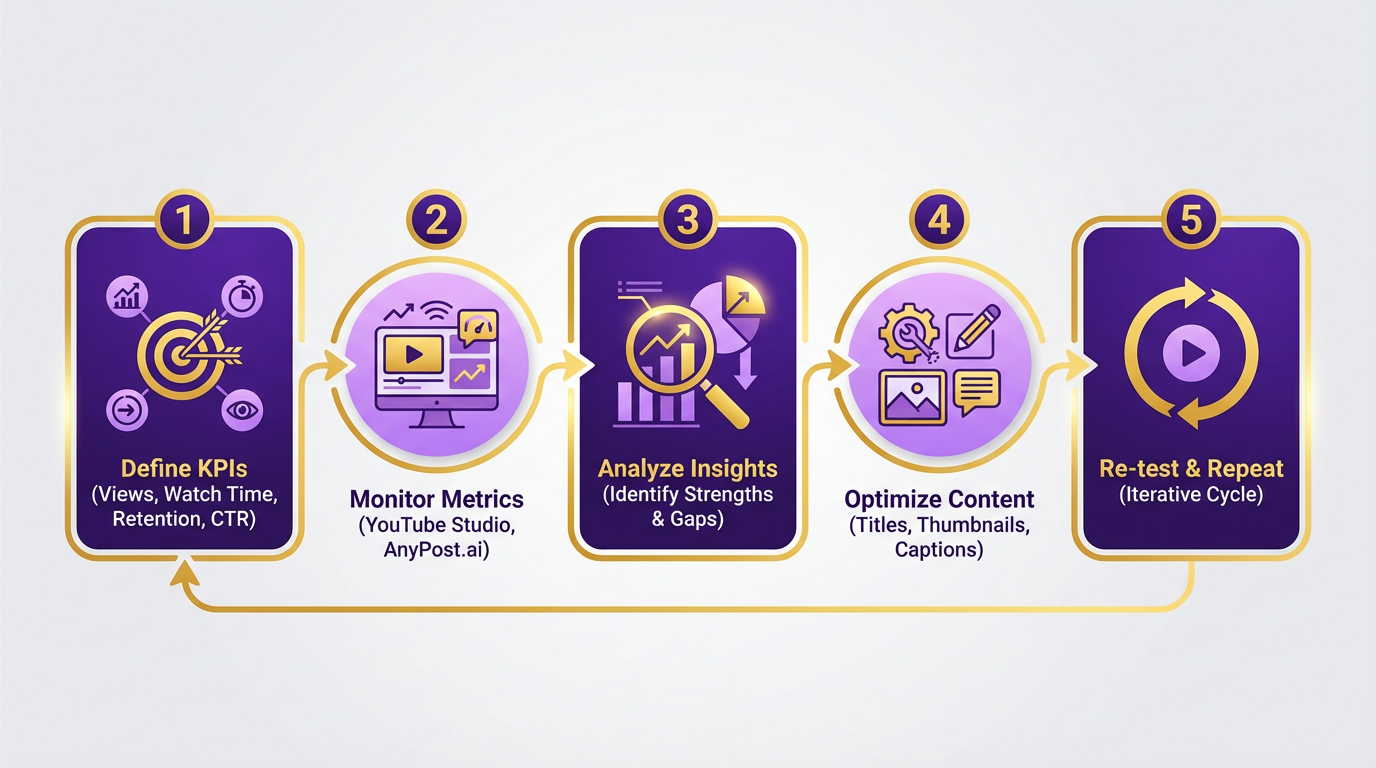
To track YouTube SEO performance, start by using YouTube Studio analytics to monitor metrics like views, watch time, and engagement. This free tool provides real-time data on how your videos perform, helping you identify strengths and weaknesses. For example, if a video has high views but low watch time, it signals issues with content retention or audience relevance, as detailed in the Understanding the YouTube Algorithm section.
What Metrics Should You Track?
Focus on core metrics like views, watch time, average view duration, click-through rate (CTR), and audience retention. Views show reach, while watch time directly impacts YouTube’s recommendation algorithm, a concept explored in the Understanding the YouTube Algorithm section. CTR, measured in the “Traffic Sources” tab, reveals how effective your thumbnails and titles are at attracting clicks. For instance, a CTR below 3% suggests your titles or thumbnails need optimization, which ties into best practices outlined in the Optimizing Video Metadata for YouTube SEO section.
How Do You Set Up Analytics Tools?
Integrate AnyPost.ai’s dashboards to combine YouTube data with Google Search Console and Google Analytics. This integration shows how search traffic and website visits correlate with video performance. For example, if a video drives high search traffic but low conversions, you might refine its call-to-action or align it with more specific keywords, as discussed in the Keyword Research for YouTube SEO section. AnyPost.ai’s interface simplifies tracking these connections in one place, unlike generic providers that require switching between tools.
Example Analytics Outputs and How to Use Them
Consider a video with 10,000 views but only 8,000 average watch time. The audience retention graph in YouTube Studio might show a sharp drop at the 2-minute mark, indicating the content fails to engage viewers past that point. To fix this, you could trim introductory fluff or add a compelling hook earlier. Another example: if “Traffic Sources” reveals 40% of views come from YouTube search, prioritize optimizing titles and descriptions with high-volume keywords, a strategy covered in the Keyword Research for YouTube SEO section.
Best Practices for Iterating on YouTube SEO
- A/B test thumbnails and titles: Use YouTube’s built-in A/B testing tool to see which variations drive higher CTR. For example, a thumbnail with text overlay might outperform a plain image by 20%, a technique aligned with metadata optimization strategies in the Optimizing Video Metadata for YouTube SEO section.
- Analyze audience retention weekly: Look for patterns in drop-off points and adjust pacing or content structure, as emphasized in the Engagement and Retention Signals for YouTube SEO section.
- Refine keywords based on search trends: Use AnyPost.ai’s Google Search Console integration to identify rising search terms relevant to your niche, building on the keyword research methods described in the Keyword Research for YouTube SEO section.
- Review top-performing videos: Replicate successful formats (e.g., a 10-minute tutorial with a checklist) for future content.
By consistently reviewing metrics and iterating on content based on data, you can boost your YouTube SEO over time. Prioritize tools that unify analytics (like AnyPost.ai) and use A/B testing to refine every element of your videos.
Frequently Asked Questions
1. Why is YouTube SEO critical in 2026 compared to previous years?
YouTube SEO is critical in 2026 due to the platform’s 8 million daily uploads and Google’s Gemini AI prioritizing content matching user intent via metadata, keywords, and engagement. Creators ignoring SEO risk being buried by competitors.
2. How does Google’s Gemini AI influence YouTube rankings in 2026?
Gemini AI scans video metadata, audio, and viewer behavior to match content with user intent. Structured metadata and keyword alignment are now essential for ranking, as the algorithm prioritizes relevance over generic views.
3. What role do engagement metrics play in 2026 YouTube SEO?
Engagement metrics like watch time, click-through rate (CTR), and session duration heavily influence rankings. High engagement signals content quality, with the 2024 AI update making these metrics even more critical for visibility.
4. How can businesses benefit from YouTube SEO in 2026?
Businesses can boost organic views by 300% in 3 months using SEO. Optimized product review videos and targeted keywords convert viewers into customers, driving traffic and revenue through precise audience alignment.
5. What is the most effective way to identify high-potential keywords?
Use keyword research tools to find high-search, low-competition terms. Focus on long-tail keywords matching user intent, as the 2026 algorithm rewards content that directly answers specific queries or solves problems.
6. How important are video titles and descriptions for SEO in 2026?
Titles and descriptions are vital. Include 2-3 primary keywords in the title and 5-7 in the description. The Gemini AI uses these to understand context, so clarity and relevance directly impact search rankings.
7. Can Shorts and long-form content coexist in a 2026 SEO strategy?
Yes. The 2026 algorithm values both formats, but Shorts require concise, trending keywords, while long-form content benefits from in-depth metadata. Balance both to capture diverse audiences and maximize reach.