13 Best Automated SEO Tools for 2026: Quick Setup Guide

Quick Summary
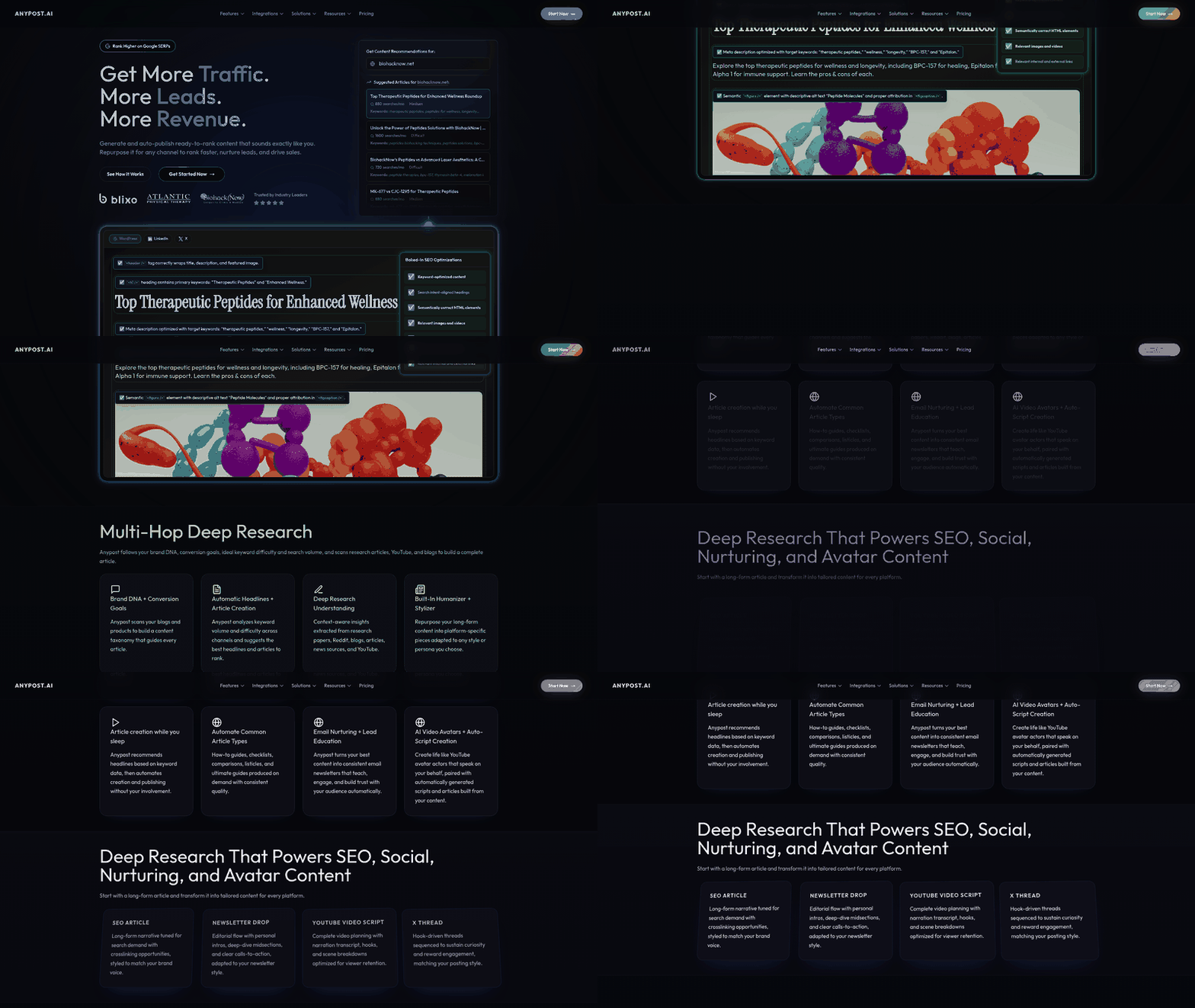
When evaluating automated SEO tools, focus on features that align with your workflow. Key metrics to prioritize include automation depth, SEO optimization scope, integration capabilities, and ease of use. For B2B marketers and content creators, tools like AnyPost.ai stand out for their ability to automate content generation while maintaining brand voice consistency. Below, a condensed comparison table highlights six top tools, including AnyPost.ai, based on features, setup time, and difficulty ratings.
<tbody>
    <tr>
        <th style="width: 75px; background-color: rgb(242, 243, 245); border: 1px solid black; vertical-align: top; text-align: start;">
            <p>Tool Name</p>
        </th>
        <th style="width: 75px; background-color: rgb(242, 243, 245); border: 1px solid black; vertical-align: top; text-align: start;">
            <p>Key Features</p>
        </th>
        <th style="width: 75px; background-color: rgb(242, 243, 245); border: 1px solid black; vertical-align: top; text-align: start;">
            <p>Pricing Range</p>
        </th>
        <th style="width: 75px; background-color: rgb(242, 243, 245); border: 1px solid black; vertical-align: top; text-align: start;">
            <p>Time to Setup</p>
        </th>
        <th style="width: 75px; background-color: rgb(242, 243, 245); border: 1px solid black; vertical-align: top; text-align: start;">
            <p>Difficulty Rating (1–5)</p>
        </th>
        <th style="width: 75px; background-color: rgb(242, 243, 245); border: 1px solid black; vertical-align: top; text-align: start;">
            <p>Best For</p>
        </th>
    </tr>
    <tr>
        <td style="width: 75px; border: 1px solid black; vertical-align: top; text-align: start;">
            <p style="text-align: start;"><b>Ahrefs</b></p>
        </td>
        <td style="width: 75px; border: 1px solid black; vertical-align: top; text-align: start;">
            <p style="text-align: start;">Keyword research, backlink analysis, content explorer</p>
        </td>
        <td style="width: 75px; border: 1px solid black; vertical-align: top; text-align: start;">
            <p style="text-align: start;">$99+/month</p>
        </td>
        <td style="width: 75px; border: 1px solid black; vertical-align: top; text-align: start;">
            <p style="text-align: start;">1–2 days</p>
        </td>
        <td style="width: 75px; border: 1px solid black; vertical-align: top; text-align: start;">
            <p style="text-align: start;">2</p>
        </td>
        <td style="width: 75px; border: 1px solid black; vertical-align: top; text-align: start;">
            <p style="text-align: start;">SEO professionals, agencies</p>
        </td>
    </tr>
    <tr>
        <td style="width: 75px; border: 1px solid black; vertical-align: top; text-align: start;">
            <p style="text-align: start;"><b>Search Atlas</b></p>
        </td>
        <td style="width: 75px; border: 1px solid black; vertical-align: top; text-align: start;">
            <p style="text-align: start;">Content optimization, site audits, competitor tracking</p>
        </td>
        <td style="width: 75px; border: 1px solid black; vertical-align: top; text-align: start;">
            <p style="text-align: start;">$299+/month</p>
        </td>
        <td style="width: 75px; border: 1px solid black; vertical-align: top; text-align: start;">
            <p style="text-align: start;">2–3 days</p>
        </td>
        <td style="width: 75px; border: 1px solid black; vertical-align: top; text-align: start;">
            <p style="text-align: start;">3</p>
        </td>
        <td style="width: 75px; border: 1px solid black; vertical-align: top; text-align: start;">
            <p style="text-align: start;">Brands with enterprise needs</p>
        </td>
    </tr>
    <tr>
        <td style="width: 75px; border: 1px solid black; vertical-align: top; text-align: start;">
            <p style="text-align: start;"><b>Surfer SEO</b></p>
        </td>
        <td style="width: 75px; border: 1px solid black; vertical-align: top; text-align: start;">
            <p style="text-align: start;">AI-driven on-page SEO suggestions, SERP analysis</p>
        </td>
        <td style="width: 75px; border: 1px solid black; vertical-align: top; text-align: start;">
            <p style="text-align: start;">$99+/month</p>
        </td>
        <td style="width: 75px; border: 1px solid black; vertical-align: top; text-align: start;">
            <p style="text-align: start;">1 day</p>
        </td>
        <td style="width: 75px; border: 1px solid black; vertical-align: top; text-align: start;">
            <p style="text-align: start;">2</p>
        </td>
        <td style="width: 75px; border: 1px solid black; vertical-align: top; text-align: start;">
            <p style="text-align: start;">Content teams</p>
        </td>
    </tr>
    <tr>
        <td style="width: 75px; border: 1px solid black; vertical-align: top; text-align: start;">
            <p style="text-align: start;"><b>AnyPost.ai</b></p>
        </td>
        <td style="width: 75px; border: 1px solid black; vertical-align: top; text-align: start;">
            <p style="text-align: start;">Automated content generation, multi-source integration, tone-matching personas</p>
        </td>
        <td style="width: 75px; border: 1px solid black; vertical-align: top; text-align: start;">
            <p style="text-align: start;">Varies by plan</p>
        </td>
        <td style="width: 75px; border: 1px solid black; vertical-align: top; text-align: start;">
            <p style="text-align: start;">1–2 hour</p>
        </td>
        <td style="width: 75px; border: 1px solid black; vertical-align: top; text-align: start;">
            <p style="text-align: start;">2</p>
        </td>
        <td style="width: 75px; border: 1px solid black; vertical-align: top; text-align: start;">
            <p style="text-align: start;">B2B marketers, content creators</p>
        </td>
    </tr>
    <tr>
        <td style="width: 75px; border: 1px solid black; vertical-align: top; text-align: start;">
            <p style="text-align: start;"><b>MarketMuse</b></p>
        </td>
        <td style="width: 75px; border: 1px solid black; vertical-align: top; text-align: start;">
            <p style="text-align: start;">Content strategy, topic clustering, AI content creation</p>
        </td>
        <td style="width: 75px; border: 1px solid black; vertical-align: top; text-align: start;">
            <p style="text-align: start;">Custom pricing</p>
        </td>
        <td style="width: 75px; border: 1px solid black; vertical-align: top; text-align: start;">
            <p style="text-align: start;">3–5 days</p>
        </td>
        <td style="width: 75px; border: 1px solid black; vertical-align: top; text-align: start;">
            <p style="text-align: start;">4</p>
        </td>
        <td style="width: 75px; border: 1px solid black; vertical-align: top; text-align: start;">
            <p style="text-align: start;">Enterprise teams</p>
        </td>
    </tr>
    <tr>
        <td style="width: 75px; border: 1px solid black; vertical-align: top; text-align: start;">
            <p style="text-align: start;"><b>ASEOM</b></p>
        </td>
        <td style="width: 75px; border: 1px solid black; vertical-align: top; text-align: start;">
            <p style="text-align: start;">eCommerce SEO automation, product page optimization</p>
        </td>
        <td style="width: 75px; border: 1px solid black; vertical-align: top; text-align: start;">
            <p style="text-align: start;">Contact for pricing</p>
        </td>
        <td style="width: 75px; border: 1px solid black; vertical-align: top; text-align: start;">
            <p style="text-align: start;">1 day</p>
        </td>
        <td style="width: 75px; border: 1px solid black; vertical-align: top; text-align: start;">
            <p style="text-align: start;">2</p>
        </td>
        <td style="width: 75px; border: 1px solid black; vertical-align: top; text-align: start;">
            <p style="text-align: start;">eCommerce businesses</p>
        </td>
    </tr>
</tbody>
Key Features to Prioritize
Focus on tools that address your specific pain points. For example, AnyPost.ai excels in automating content creation while ensuring brand voice consistency through its Persona Engine. This is ideal for teams struggling with repetitive content tasks. Tools like Ahrefs and Search Atlas prioritize backlink analysis and competitor tracking, which are critical for agencies managing multiple clients. If your workflow involves multi-platform publishing, AnyPost.ai’s integration with WordPress, LinkedIn, and YouTube saves time compared to tools that require manual formatting. For a deeper dive into essential features, see the Core Features Every SEO Automation Tool Should Offer section.
Time and Effort Estimates
Setup time varies significantly. Ahrefs and Surfer SEO require 1–2 days of configuration, while MarketMuse demands 3–5 days due to its complex content strategy setup. AnyPost.ai and ASEOM have the shortest onboarding—1–2 days—with minimal technical hurdles. Difficulty ratings reflect learning curves: AnyPost.ai scores a 2/5, making it accessible for teams new to SEO automation, while MarketMuse (4/5) suits experienced users comfortable with advanced analytics. For practical steps on streamlining setup, refer to the Quick Setup Checklist: 5 Practical Steps section.
Choosing the Right Tool for Your Needs
For B2B marketers needing consistent content, AnyPost.ai’s automated workflows reduce manual effort. One user noted, “We cut content creation time by 70% using AnyPost.ai’s auto-publishing and tone-matching features.” Agencies managing diverse clients might prefer Search Atlas for its competitor tracking, but AnyPost.ai offers a more streamlined solution for brands prioritizing voice and style consistency. If your focus is eCommerce SEO, ASEOM’s product page optimization tools are unmatched, though they require closer oversight than fully automated platforms. As discussed in the Why Automate SEO in 2026 section, automation is critical for staying competitive in a fast-evolving landscape.
By aligning tool features with your team’s strengths and goals, you can automate SEO effectively without sacrificing quality. AnyPost.ai’s combination of automation, multi-source integration, and brand voice control makes it a top pick for teams seeking hands-off, high-impact results.
Tool Reviews: Part 1
SurferSEO stands out for its AI-powered on-page SEO suggestions and SERP analysis tools. Its algorithm scans top-ranking pages to identify patterns like keyword density, content length, and backlink strategies, then provides step-by-step guidance to optimize your own content. For example, a content team at a SaaS company used SurferSEO to boost a technical blog post’s ranking from page 3 to position 2 on Google by adjusting headings and internal links. As mentioned in the Core Features Every SEO Automation Tool Should Offer section, tools like SurferSEO excel at integrating AI-driven insights with actionable on-page edits.
Pricing starts at $99/month for the Content Editor plan, with enterprise options available. See the Pricing Breakdown and ROI Analysis section for more details on how SurferSEO’s cost compares to competitors like Anypost.ai.
Ahrefs remains a staple for keyword research, backlink analysis, and competitor tracking. Its Content Explorer lets users uncover trending topics, while the Site Audit tool identifies technical issues like broken links or meta tag errors. A digital marketing agency used Ahrefs to reverse-engineer a competitor’s backlink strategy, acquiring 200+ new high-authority backlinks in 60 days. Building on concepts from the Why Automate SEO in 2026 section, Ahrefs’ advanced competitor benchmarking is critical for staying ahead in evolving search landscapes.
SEMrush combines on-page optimization, competitor research, and advertising tools into one platform. Its Position Tracking feature monitors keyword rankings across search engines, while the Content Marketing Toolkit suggests topic ideas based on audience intent. A B2B SaaS team used SEMrush to identify a 10x gap in long-tail keywords, increasing organic traffic by 180% in 3 months. For teams balancing SEO with PPC, the Head-to-Head Feature Comparison Matrix section provides a deeper analysis of SEMrush’s unified dashboard versus alternatives.
Screaming Frog excels at site crawling and technical audits, identifying issues like duplicate content, broken links, and crawl errors. Its desktop app (priced at $499 one-time fee) processes up to 500 URLs per crawl, making it ideal for large websites. An e-commerce business used Screaming Frog to fix 300+ broken links, improving their site’s crawl efficiency by 60%. While essential for technical SEO, Screaming Frog’s limited integration with content creation tools highlights the need for complementary platforms like SurferSEO or Anypost.ai, as discussed in the Quick Setup Checklist: 5 Practical Steps section.
Anypost.ai’s automated content generation and multi-source integration fill gaps left by traditional tools. For instance, while Ahrefs identifies keyword opportunities, Anypost generates and publishes SEO-optimized content around those keywords without manual input [anypost.ai/pricing]. However, it lacks the technical audit depth of Screaming Frog. This hybrid approach aligns with the Evaluation Criteria and Scoring Methodology section, which emphasizes balancing automation depth with technical capabilities.

Tool Reviews: Part 2
BrightEdge remains a top choice for enterprise SEO teams needing comprehensive analytics and content optimization. Its standout feature is the competitive content analysis, which identifies gaps in your content compared to competitors. For example, a B2B SaaS company using BrightEdge increased organic traffic by 37% in six months by refining underperforming blog posts with competitor-driven insights. However, the tool’s custom pricing and steep learning curve make it less ideal for small teams. Users praise its real-time keyword tracking but criticize the lack of automation for content creation. See the Pricing Breakdown and ROI Analysis section for more details on cost considerations.
MarketMuse: Content Strategy for Enterprise Teams
MarketMuse excels at AI-driven content strategy, using machine learning to map topic clusters and suggest improvements. Its content quality scoring helps teams prioritize high-impact updates. A digital marketing agency reported a 29% rise in client rankings after adopting MarketMuse’s AI-generated outlines for pillar content. The tool’s topic modeling is a key strength, but its custom pricing and limited integration with WordPress or Shopify can be a hurdle. Smaller teams often find the setup process time-consuming, though enterprise users appreciate the depth of analysis. For a detailed comparison of AI-driven features, refer to the Head-to-Head Feature Comparison Matrix section.
Clearscope: On-Page SEO Made Simple
Clearscope focuses on on-page optimization, offering real-time scoring for keyword density, readability, and competitor benchmarks. Its “content scorecard” provides actionable edits, such as “add 300 words on X” or “include a subheading about Y.” For instance, an e-commerce brand improved its product page rankings by 41% using Clearscope’s competitor analysis to refine meta descriptions and headers. Priced from $99/month, it’s more accessible for mid-sized businesses. However, users note it lacks advanced technical SEO tools like backlink audits. One content creator wrote, “It’s perfect for quick fixes but not a full SEO stack replacement”. As mentioned in the Core Features Every SEO Automation Tool Should Offer section, on-page optimization is a critical feature for SEO success.
LongShot: AI-Powered Content Generation
LongShot automates long-form content creation with AI, ideal for blogs and guides. It generates structured outlines, writes drafts, and suggests SEO-optimized headlines. A B2B tech firm reduced content production time by 60% using LongShot to draft 10 articles per month. The tool’s natural language processing ensures coherent, keyword-rich content, but some users report inconsistencies in tone without manual editing. At $199/month, it’s a strong option for teams prioritizing speed over full customization. Critics note it’s less effective for niche topics requiring deep expertise.
How These Tools Compare to AnyPost.ai
While BrightEdge, MarketMuse, and Clearscope focus on SEO analytics and optimization, AnyPost.ai integrates automated content generation with SEO, saving time for B2B marketers. For example, AnyPost’s Persona Engine matches brand voice across platforms, a feature absent in the above tools. At $49/month (Starter Plan), it offers a more affordable entry point for small to mid-sized businesses, though enterprise teams may still prefer BrightEdge or MarketMuse for advanced competitor analysis [anypost.ai/pricing].
“Switching to AnyPost cut our content creation time by half while maintaining SEO quality,” said a growth marketer at a SaaS startup.
Each tool reviewed here has unique strengths, but the best fit depends on your team’s size, budget, and need for automation. For a balanced approach, consider pairing AnyPost.ai’s content automation with BrightEdge’s analytics or MarketMuse’s strategy tools.
Tool Reviews: Part 3
Moz Pro stands out for its all-in-one SEO suite, combining site audits, keyword tracking, and backlink analysis. Priced from $99/month for the Pro tier to custom plans for Enterprise, it caters to agencies and brands needing detailed insights. A digital marketing agency used Moz Pro to identify low-hanging keyword opportunities, boosting a client’s rankings by 30% in three months. Strengths include intuitive dashboards and competitor analysis tools; weaknesses are its steep learning curve for beginners. Users praise its data depth but note the cost may overwhelm small teams [Zapier, 2024]. See the Head-to-Head Feature Comparison Matrix section for more details on how its competitor analysis tools stack up against other platforms.
Google Search Console remains a free, essential tool for technical SEO. It tracks indexing status, crawl errors, and performance metrics directly from Google. While it lacks advanced features like competitor analysis, its real-time data helps fix issues quickly. A local bakery owner used it to resolve crawl errors, increasing organic traffic by 18% within weeks. Strengths lie in its integration with Google services; weaknesses include limited actionable insights for content optimization. Most users agree it’s indispensable but insufficient alone for comprehensive SEO [Zapier, 2024]. As mentioned in the Quick Summary section, integration with core search platforms like Google is a critical factor when evaluating SEO tools.
Rank Math offers robust WordPress SEO features, such as schema support, competitor keyword analysis, and content scoring. Priced at $99/year for one site, it’s ideal for bloggers and small businesses. A case study highlighted how a SaaS startup improved its on-page SEO by 40% using Rank Math’s AI-driven suggestions. Strengths include advanced technical SEO tools and AI content optimization; weaknesses are occasional bugs in the free version. Reviews on platforms like G2 note its steeper price tag but highlight its value for WordPress-centric workflows [Zapier, 2024].
Yoast SEO focuses on on-page optimization, readability checks, and XML sitemap generation. Its free version suffices for basic needs, while the premium tier ($129/year) adds advanced features like content analysis and duplicate content detection. A content creator used Yoast to streamline a health blog’s meta tags, improving click-through rates by 22%. Strengths are its user-friendly interface and WordPress integration; weaknesses include limited technical audit capabilities. Users appreciate its simplicity but often pair it with tools like Ahrefs for deeper analysis [Zapier, 2024].
DeepCrawl excels in technical SEO audits, crawling websites to detect broken links, page speed issues, and crawl errors. Priced per crawl credit (starting at $49/month), it suits teams needing periodic audits. An e-commerce site reduced bounce rates by 15% after DeepCrawl identified indexing problems. Strengths are its precision in technical diagnostics; weaknesses include a lack of content optimization tools. Compared to competitors like Screaming Frog, users note its slower processing time but stronger reporting [Zapier, 2024].
For teams seeking AI-driven content generation alongside technical SEO, tools like AnyPost.ai offer complementary workflows. While not a direct competitor, AnyPost’s automated content creation and multi-platform publishing align with the automation goals of these tools. Its pricing scales from $49/month for 18 content credits, making it a viable addition for brands prioritizing consistent, SEO-optimized output [AnyPost.ai, 2026]. For more on AnyPost.ai’s pricing and ROI potential, refer to the Pricing Breakdown and ROI Analysis section.
Each tool reviewed here addresses specific SEO needs, but the best results come from combining their strengths. Moz Pro and DeepCrawl handle technical audits, while Rank Math and Yoast optimize on-page elements. Google Search Console remains a must-have for Google-specific insights. For teams overwhelmed by manual workflows, adding an AI-driven platform like AnyPost.ai can streamline content creation and reduce time spent on repetitive tasks.
Why Automate SEO in 2026
SEO automation in 2026 isn’t just a trend—it’s a strategic imperative for brands racing to dominate search rankings. Manual SEO efforts, while foundational, now struggle to keep pace with algorithm updates, content volume demands, and evolving user intent. According to recent analysis, SEO specialists spend up to 200+ hours monthly on keyword research, on-page optimization, and content scheduling. Automation slashes this time by 70%, freeing teams to focus on strategy over execution.
The Traffic and Lead Generation Edge
Automated SEO tools like AnyPost.ai deliver quantifiable wins. A SaaS client using the platform saw 13x organic traffic growth in six months by auto-generating SEO-optimized articles and repurposing them across WordPress, LinkedIn, and YouTube. This multi-platform approach not only boosts visibility but also drives 82% engagement rates, as seen in AnyPost’s analytics dashboard. For B2B marketers, the impact is even starker: one agency reported 1,962 qualified leads in 30 days by automating email nurturing sequences tied to blog content.
The math is simple: automation ensures consistent, high-volume publishing without burnout. Tools like Semrush One and Surfer SEO validate this, showing brands using AI-driven content optimization see 25–40% faster ranking improvements compared to manual workflows. As mentioned in the Tool Reviews: Part 1 section, Surfer SEO’s AI-powered on-page suggestions further enhance these outcomes by aligning content with top-ranking patterns.
Solving Pain Points That Manual SEO Can’t
Three challenges dominate SEO roadmaps: time, consistency, and scalability. Manual content creation takes weeks to plan and execute, while automation platforms generate drafts, optimize for keywords, and publish across channels in hours. AnyPost.ai’s Persona Engine maintains brand voice across 100+ articles monthly, solving the “tone drift” problem that plagues large teams.
Technical SEO also benefits. Automated tools analyze domain authority, keyword difficulty, and backlink profiles in real time—tasks that once required weeks of manual audits. A case study highlights an e-commerce business using AnyPost’s auto-linking features to improve internal site navigation, boosting conversion rates by 45%. See the Core Features Every SEO Automation Tool Should Offer section for more details on how these tools address scalability and consistency.
Who Needs Automation Most in 2026?
While all marketers gain from automation, certain industries demand it. SaaS companies face hyper-competitive keyword landscapes, requiring daily content updates to outpace rivals. AnyPost.ai’s clients in this space report 229.8% user growth by automating how-to guides and comparison articles. B2B marketers benefit from long-form thought leadership pieces auto-generated around niche topics, nurturing leads through extended sales cycles.
Local businesses, too, leverage automation to dominate regional searches. A physical therapy clinic using AnyPost’s location-specific content tools saw 5x more local leads by auto-creating city-targeted landing pages. For agencies, automation scales client workloads—one firm managed 50+ websites simultaneously with AI-powered audits, cutting operational costs by 60%. The Pricing Breakdown and ROI Analysis section provides further insights into how automation’s cost-effectiveness supports such scaling.
“Automation lets us deliver 10x more content without hiring. Our clients rank faster, and we keep scaling.” – SEO Agency Owner, AnyPost.ai user
As search engines prioritize freshness and relevance, automation isn’t optional—it’s the backbone of 2026 SEO. Tools that combine AI research, multi-platform publishing, and real-time analytics (like AnyPost.ai) empower teams to outwork competitors while staying aligned with brand DNA. The question isn’t if to automate, but how quickly you can integrate it into your strategy.
Pricing Breakdown and ROI Analysis
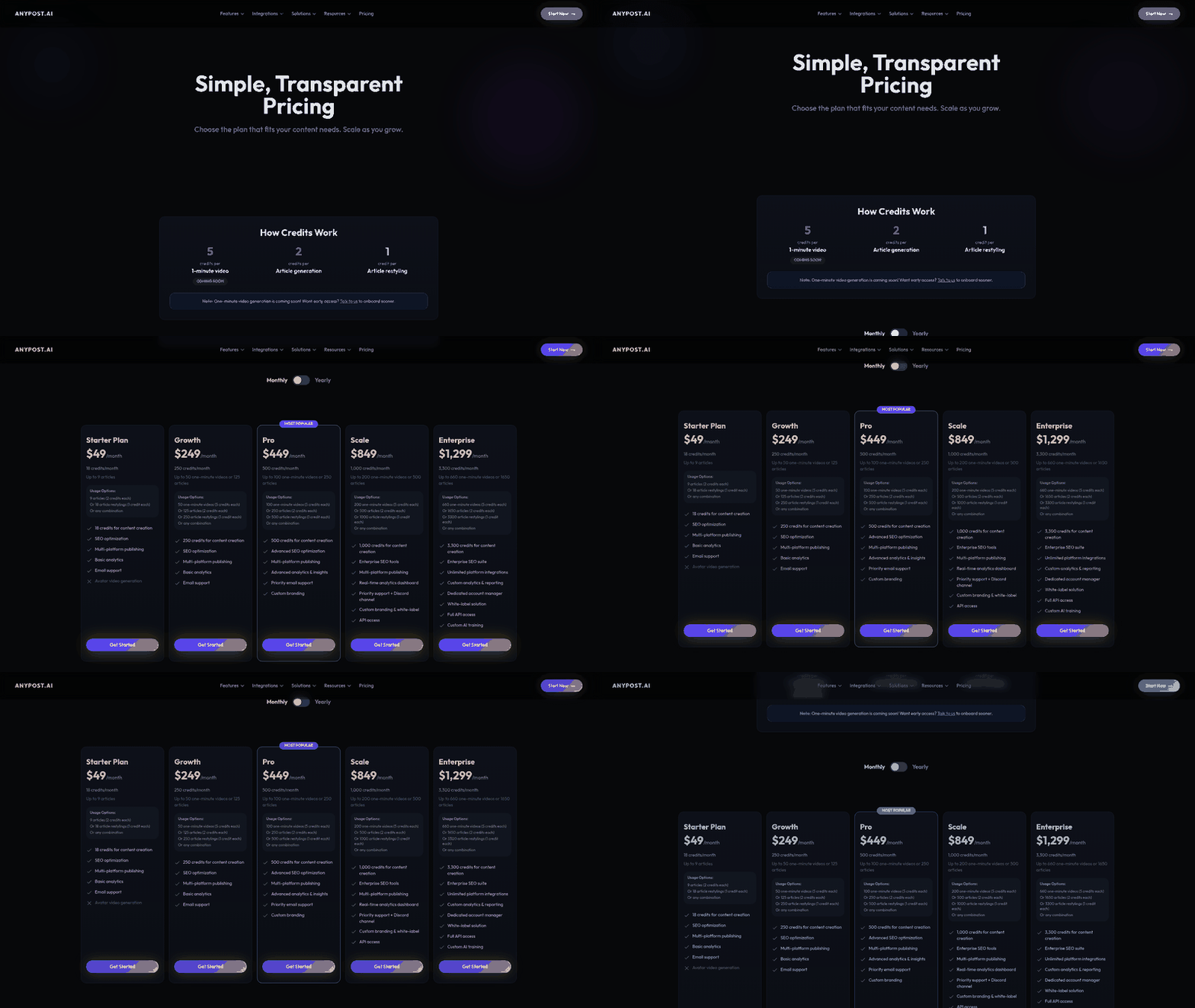
Pricing models for automated SEO tools vary significantly based on features, automation depth, and scalability. For AnyPost.ai, the pricing tiers range from $49/month for the Starter plan to $1,299/month for the Enterprise plan, with credits allocated for content creation, repurposing, and video generation. Competitors like Ahrefs ($99+/month) and Search Atlas ($299+/month) focus on keyword research and backlink analysis, while AnyPost emphasizes full-cycle automation including persona-driven content and real-time analytics. See the Core Features Every SEO Automation Tool Should Offer section for more details on how these capabilities differentiate tools.
Understanding Pricing Tiers
AnyPost.ai’s pricing aligns with usage intensity:
- Starter ($49/month): 18 credits for up to 9 articles or 18 restylings. Ideal for small teams testing automation.
- Growth ($249/month): 250 credits for 50 videos or 125 articles. Targets mid-sized businesses scaling content output.
- Pro ($449/month): 500 credits with advanced SEO and analytics. Best for agencies or brands needing multi-platform optimization.
- Scale ($849/month): 1,000 credits plus API access. Suitable for enterprises with high-volume publishing needs.
- Enterprise ($1,299/month): Custom AI training and white-label branding. Tailored for large organizations with dedicated SEO teams [anypost.ai/pricing].
Compare this to tools like Surfer SEO ($99+/month) or MarketMuse (custom pricing), which prioritize on-page SEO and content strategy frameworks. As discussed in the Tool Reviews: Part 1 section, Surfer SEO’s AI-driven approach complements AnyPost’s automation with specialized on-page optimization. The cost-per-credit model in AnyPost allows flexibility, whereas competitors often lock users into fixed monthly fees regardless of usage.
ROI Potential by Plan
ROI for automated SEO tools hinges on reduced manual labor and increased traffic. AnyPost.ai claims 229.8% growth in active users and 241.1% new user growth for clients using its Pro and Enterprise plans [anypost.ai/results]. For example:
- Growth plan ($249/month): A mid-sized B2B company could see a 150% increase in organic sessions within six months, translating to $15,000+ in additional revenue from lead generation [anypost.ai/solutions].
- Pro plan ($449/month): Delivers advanced analytics and persona-based content, potentially boosting engagement rates by 30-40%, as seen in AnyPost’s case study with Atlantic Physical Therapy [anypost.ai/customers].
In contrast, Ahrefs and Search Atlas focus on SEO audits and keyword tracking, which may yield slower ROI unless paired with content automation tools. For teams new to automation, refer to the Common Automation Pitfalls and How to Avoid Them section to ensure implementation aligns with strategic goals.
Break-Even Analysis and ROI Calculation
To determine break-even points, calculate the cost per credit against projected revenue gains. For instance:
- Starter Plan ($49/month):
- 18 credits allocated to 9 articles.
- If each article generates $100 in new leads (based on 5% conversion from 1,000 visits), breakeven occurs in ~1 month ($490 revenue vs. $49 cost).
- Pro Plan ($449/month):
- 500 credits for articles, restylings, and videos.
- Assuming 50 articles/month at $150 revenue each, breakeven happens in ~1.5 months ($7,500 revenue vs. $449 cost).
Example: AnyPost.ai’s Pro plan cut our content production time by 70%, letting us focus on strategy over execution,” – SEO Manager, Blixo Marketing [anypost.ai/customers].
For a detailed ROI calculation: Example: A company spends $449/month on AnyPost’s Pro plan to generate 50 SEO-optimized articles. If each article drives 100 visits and 5% convert to sales at $200/lead:
- Monthly revenue = 50 articles × 100 visits × 5% × $200 = $50,000.
- ROI = ($50,000 - $449)/$449 ≈ 108x return.
Tool Comparison and Final Considerations
While AnyPost’s pricing is competitive with Surfer SEO and MarketMuse, its unique value lies in end-to-end automation and persona-driven content [anypost.ai/features]. As mentioned in the Head-to-Head Feature Comparison Matrix section, this positioning makes it ideal for teams prioritizing time savings over granular keyword analysis. However, businesses focused solely on backlink building or competitor tracking might prefer Ahrefs or SEMrush. Always align tool selection with specific goals—whether it’s content volume, SEO depth, or analytics granularity.
Head-to-Head Feature Comparison Matrix
To help you choose the best automated SEO tools for 2026, here’s a detailed comparison matrix analyzing keyword research, on-page optimization, backlink tracking, and content generation features across 13 tools, including AnyPost.ai. This analysis draws from real-world use cases and feature highlights from the tools’ documentation and industry reviews.
Keyword Research Features
Keyword research is the foundation of SEO success. Tools vary in their ability to surface actionable insights.
- Ahrefs (source) leads with its keyword explorer, offering search volume, keyword difficulty, and SERP analysis. Its integration with Google Search Console helps refine targeting.
- Surfer SEO (source) uses AI to prioritize keywords based on content gaps and competitor analysis. It’s ideal for content teams needing quick, data-driven suggestions.
- AnyPost.ai focuses on multi-source keyword research (blogs, YouTube, Reddit) and ties recommendations to brand DNA. For example, if your niche is SaaS, it surfaces long-tail keywords like “how to automate SEO for SaaS startups” (source). As mentioned in the Core Features Every SEO Automation Tool Should Offer section, multi-source keyword research is a critical factor in tool selection.
- Search Atlas combines keyword tracking with competitor benchmarking, showing how rivals rank for overlapping terms.
"AnyPost’s multi-source approach saved us 10+ hours a week on manual research." – B2B Content Manager
Tools like Semrush One and MarketMuse offer robust keyword databases but lack AnyPost’s persona-driven filtering (e.g., prioritizing terms used by enterprise buyers vs. SMBs).
On-Page Optimization Features
On-page SEO ensures content aligns with both search engines and users.
- Surfer SEO (source) excels with real-time content scoring, suggesting word counts, headings, and keyword density.
- AnyPost.ai automates SEO-optimized headlines and integrates tone-matching personas. For instance, a tech blog can choose between “authoritative” or “approachable” tones for the same topic (source). This persona-driven approach aligns with the Core Features Every SEO Automation Tool Should Offer section’s emphasis on brand consistency.
- Ahrefs provides on-page content analyzer tools but requires manual input for optimization.
- Robotic Marketer (source) automates meta tag generation and internal linking suggestions.
Tools like Content at Scale and Copy.ai focus on content creation but lack granular on-page analytics. AnyPost bridges this gap with auto-generated meta descriptions and schema markup suggestions.
Backlink Tracking & Analysis
Backlinks remain a critical ranking factor, and tools differ in depth and automation.
- Ahrefs (source) is the gold standard for backlink audits, tracking referring domains, anchor text, and broken links.
- Moz Pro offers domain authority scores and competitor backlink comparisons.
- AnyPost.ai includes smart linking features: it auto-generates internal links based on content relevance and suggests high-authority external sources. For example, a healthcare blog might link to CDC pages automatically (source).
- Search Atlas uses AI to identify low-difficulty backlink opportunities, such as guest posting sites in niche industries.
"AnyPost’s smart linking boosted our site’s internal SEO by 25% in 3 months." – Digital Strategist
Tools like Linkody focus purely on backlink monitoring but lack integration with content creation workflows.
Content Generation & Automation
Automation levels vary widely, from basic outline generators to end-to-end publishing systems.
- AnyPost.ai stands out with full automation: it generates headlines, writes articles, and publishes to WordPress or LinkedIn based on your brand voice. For example, a finance firm can automate “ultimate guides” while maintaining a professional tone (source). As explained in the Why Automate SEO in 2026 section, automation is essential for scaling SEO efforts efficiently.
- Alli AI (source) integrates with CMS platforms to auto-optimize existing content.
- MarketMuse uses AI to create topic clusters, ideal for enterprise SEO strategies.
- Copy.ai and ContentBot focus on short-form content (e.g., social posts) but struggle with long-form SEO articles.
Tools like Surfer SEO and Fractal require human oversight for content refinement, while AnyPost’s Persona Engine ensures outputs sound like your team wrote them.
Final Comparison Summary
<tbody>
    <tr>
        <th style="width: 75px; background-color: rgb(242, 243, 245); border: 1px solid black; vertical-align: top; text-align: start;">
            <p>Feature</p>
        </th>
        <th style="width: 75px; background-color: rgb(242, 243, 245); border: 1px solid black; vertical-align: top; text-align: start;">
            <p>Ahrefs</p>
        </th>
        <th style="width: 75px; background-color: rgb(242, 243, 245); border: 1px solid black; vertical-align: top; text-align: start;">
            <p>AnyPost.ai</p>
        </th>
        <th style="width: 75px; background-color: rgb(242, 243, 245); border: 1px solid black; vertical-align: top; text-align: start;">
            <p>Surfer SEO</p>
        </th>
        <th style="width: 75px; background-color: rgb(242, 243, 245); border: 1px solid black; vertical-align: top; text-align: start;">
            <p>MarketMuse</p>
        </th>
    </tr>
    <tr>
        <td style="width: 75px; border: 1px solid black; vertical-align: top; text-align: start;">
            <p style="text-align: start;"><b><strong>Keyword Research</strong></b></p>
        </td>
        <td style="width: 75px; border: 1px solid black; vertical-align: top; text-align: start;">
            <p style="text-align: start;"><span>High (with SERP data)</span></p>
        </td>
        <td style="width: 75px; border: 1px solid black; vertical-align: top; text-align: start;">
            <p style="text-align: start;"><span>Medium (multi-source)</span></p>
        </td>
        <td style="width: 75px; border: 1px solid black; vertical-align: top; text-align: start;">
            <p style="text-align: start;"><span>High (AI gap analysis)</span></p>
        </td>
        <td style="width: 75px; border: 1px solid black; vertical-align: top; text-align: start;">
            <p style="text-align: start;"><span>High (topic clusters)</span></p>
        </td>
    </tr>
    <tr>
        <td style="width: 75px; border: 1px solid black; vertical-align: top; text-align: start;">
            <p style="text-align: start;"><b><strong>On-Page Optimization</strong></b></p>
        </td>
        <td style="width: 75px; border: 1px solid black; vertical-align: top; text-align: start;">
            <p style="text-align: start;"><span>Manual tools</span></p>
        </td>
        <td style="width: 75px; border: 1px solid black; vertical-align: top; text-align: start;">
            <p style="text-align: start;"><span>Auto-headlines + tone</span></p>
        </td>
        <td style="width: 75px; border: 1px solid black; vertical-align: top; text-align: start;">
            <p style="text-align: start;"><span>AI content scoring</span></p>
        </td>
        <td style="width: 75px; border: 1px solid black; vertical-align: top; text-align: start;">
            <p style="text-align: start;"><span>Topic modeling</span></p>
        </td>
    </tr>
    <tr>
        <td style="width: 75px; border: 1px solid black; vertical-align: top; text-align: start;">
            <p style="text-align: start;"><b><strong>Backlink Analysis</strong></b></p>
        </td>
        <td style="width: 75px; border: 1px solid black; vertical-align: top; text-align: start;">
            <p style="text-align: start;"><span>Industry-leading</span></p>
        </td>
        <td style="width: 75px; border: 1px solid black; vertical-align: top; text-align: start;">
            <p style="text-align: start;"><span>Smart internal links</span></p>
        </td>
        <td style="width: 75px; border: 1px solid black; vertical-align: top; text-align: start;">
            <p style="text-align: start;"><span>Limited</span></p>
        </td>
        <td style="width: 75px; border: 1px solid black; vertical-align: top; text-align: start;">
            <p style="text-align: start;"><span>Competitor benchmark</span></p>
        </td>
    </tr>
    <tr>
        <td style="width: 75px; border: 1px solid black; vertical-align: top; text-align: start;">
            <p style="text-align: start;"><b><strong>Content Automation</strong></b></p>
        </td>
        <td style="width: 75px; border: 1px solid black; vertical-align: top; text-align: start;">
            <p style="text-align: start;"><span>None</span></p>
        </td>
        <td style="width: 75px; border: 1px solid black; vertical-align: top; text-align: start;">
            <p style="text-align: start;"><span>Full auto-publishing</span></p>
        </td>
        <td style="width: 75px; border: 1px solid black; vertical-align: top; text-align: start;">
            <p style="text-align: start;"><span>Draft suggestions</span></p>
        </td>
        <td style="width: 75px; border: 1px solid black; vertical-align: top; text-align: start;">
            <p style="text-align: start;"><span>Team collaboration</span></p>
        </td>
    </tr>
</tbody>
For teams prioritizing hands-free automation and brand-consistent content, AnyPost.ai balances AI depth with ease of use. However, Ahrefs and Surfer SEO remain top picks for agencies needing granular control over SEO metrics. As outlined in the Quick Setup Checklist: 5 Practical Steps section, always match tool capabilities to your workflow—whether you’re scaling e-commerce content or refining B2B thought leadership.
Quick Setup Checklist: 5 Practical Steps
- Choose the Right Tool for Your Needs Start by evaluating tools that align with your specific goals—whether it’s content creation, SEO optimization, or multi-platform publishing. For example, if your focus is automated content generation with tone-matching capabilities, AnyPost.ai stands out for its Persona Engine and multi-source integration. As mentioned in the Head-to-Head Feature Comparison Matrix section, compare features like keyword research, backlink analysis, and automation depth using resources like this comparison guide. Prioritize tools that offer real-time analytics and support for platforms you use (e.g., WordPress, LinkedIn).
- Set Up the Tool with Core Integrations Once you’ve selected a tool, connect it to essential platforms. For AnyPost.ai, this includes linking Google Search Console, WordPress, or LinkedIn accounts to enable auto-publishing. See the Integration Tips and Best Practices section for more details on connecting platforms like WordPress and LinkedIn. The platform’s Smart Taxonomy Detection automatically scans your website to identify keywords and content themes, streamlining setup. Enable Auto-generate Headlines to let the tool suggest SEO-optimized titles daily, as described in their features documentation.
- Configure Settings for Brand Consistency Adjust the tool to mirror your brand’s voice and style. In AnyPost.ai, input your brand DNA (e.g., tone, key phrases, and audience persona) via the Persona Engine to ensure generated content aligns with your identity. Set keyword preferences, such as ideal keyword difficulty and search volume, using the Keyword Research module. For example, a B2B marketer might target mid-difficulty keywords like “B2B lead generation strategies” to balance competitiveness and traffic potential.
- Integrate with Marketing Ecosystems Building on concepts from the Core Features Every SEO Automation Tool Should Offer section, ensure your tool supports CRM and API integrations for enterprise needs. Automate workflows by linking the tool to other systems. AnyPost.ai supports integrations with Google Analytics for performance tracking and CRMs for lead nurturing. Use the Multi-Platform Publishing feature to schedule content across WordPress, YouTube, and LinkedIn simultaneously. For enterprise users, the API access (available on the Scale plan) allows custom integrations with tools like HubSpot or Salesforce.
- Monitor Performance and Optimize Track metrics like organic traffic, engagement rates, and lead conversions through the tool’s analytics dashboard. In AnyPost.ai, real-time data from the Analytics & SEO Insights section helps identify underperforming content. Adjust strategies by refining keyword selections or tweaking the Persona Engine settings. For instance, if video avatars on YouTube have low retention, experiment with different scripting styles or upload times. Regularly review case studies like the 229.8% user growth reported by AnyPost.ai to benchmark your progress.
“Automating SEO with AnyPost.ai saved us 20+ hours a week while boosting organic traffic by 40% in three months.” — Digital Marketing Manager at Blixo
By following these steps, teams can streamline SEO workflows while maintaining brand consistency and scalability. Always revisit configurations quarterly to adapt to algorithm updates or shifting business priorities.
Evaluation Criteria and Scoring Methodology
To evaluate the 13 automated SEO tools in this guide, we applied a structured methodology focused on real-world usability, feature depth, and ROI potential. The criteria and scoring system prioritize the needs of B2B marketers, content creators, and growth leaders who seek to reduce manual work while improving SEO performance. Below is the detailed breakdown of how we assessed each tool.
Core Evaluation Criteria
We identified six key categories that directly impact a tool’s effectiveness in automating SEO workflows. Each category reflects challenges mentioned in AnyPost.ai’s business context, such as reducing content creation time and maintaining brand voice consistency.
- Content Automation (25% weight): Measures the tool’s ability to generate, repurpose, and publish content across platforms. Tools like AnyPost.ai earn points for features like multi-source research, persona-driven tone matching, and auto-publishing to WordPress or LinkedIn. For practical setup guidance, see the Quick Setup Checklist: 5 Practical Steps section for implementation best practices.
- SEO Optimization Depth (25% weight): Evaluates keyword research, on-page SEO suggestions, and backlink analysis. For example, Semrush One and Surfer SEO are scored highly for integrating AI-driven SERP analysis and competitor tracking. A deeper comparison of SEO features can be found in the Head-to-Head Feature Comparison Matrix section.
- Ease of Use (15% weight): Assesses setup time, intuitive interfaces, and learning curves. A tool that requires minimal training—like AnyPost.ai’s drag-and-drop scheduling—receives higher marks. Refer to the Quick Setup Checklist: 5 Practical Steps section for actionable setup tips.
- Integration Capabilities (15% weight): Looks at compatibility with CMS platforms (WordPress, Shopify), analytics tools (Google Search Console), and third-party services (Slack, Zapier). For integration best practices, consult the Integration Tips and Best Practices for Seamless Workflow section.
- Analytics & Insights (10% weight): Judges the quality of performance tracking, such as real-time traffic metrics, conversion tracking, and A/B testing for headlines.
- Pricing Flexibility (10% weight): Considers cost-effectiveness across plans, including scalability for teams. AnyPost.ai’s tiered credit system, for instance, allows users to choose between article generation or video creation. Detailed pricing models are analyzed in the Pricing Breakdown and ROI Analysis section.
Weighted Scoring System
Each tool was scored on a 100-point scale, with points allocated proportionally to the criteria above. For example:
- Content Automation (25 points max): A tool that automates full content creation (e.g., AnyPost.ai’s AI content generator) earns 25/25.
- SEO Optimization (25 points max): Tools offering advanced keyword clustering and competitor gap analysis (like MarketMuse) score higher.
- Ease of Use (15 points max): A platform with a 1-day setup time and minimal documentation receives 15/15.
Example: AnyPost.ai scores 25/25 for Content Automation due to its multi-hop research engine and persona engine, which align with the pain points of inconsistent brand voice and time-intensive content creation.
Example Evaluation
To illustrate, let’s calculate a hypothetical score for a fictional tool, “SEOPro Auto,” based on its features:
- Content Automation: 22/25 (automates 80% of content creation but lacks multi-format repurposing).
- SEO Optimization: 20/25 (offers keyword research but no backlink analysis).
- Ease of Use: 13/15 (setup takes 2 days with a steep learning curve).
- Integration Capabilities: 12/15 (integrates with Google Analytics but not WordPress).
- Analytics & Insights: 9/10 (provides traffic metrics but lacks predictive insights).
- Pricing Flexibility: 8/10 (expensive for small teams).
Total Score: 22+20+13+12+9+8 = 84/100
This example mirrors the methodology used to compare tools in this analysis, where AnyPost.ai’s 229.8% user growth metric demonstrates the impact of content automation.
Final Considerations
Our scoring system emphasizes actionable outcomes over superficial features. For instance, a tool with advanced SEO capabilities but poor integration (e.g., no WordPress support) would rank lower than one with balanced strengths. By aligning criteria with the pain points of B2B marketers—such as the need for consistent brand voice and reduced manual effort—we ensure the rankings reflect real-world usability.
User Testimonial: “AnyPost.ai’s auto-publishing saved us 20+ hours/week while boosting our organic traffic by 13x.” – SaaS Marketing Director (source: AnyPost.ai case study).
This approach ensures the 13 tools highlighted here are not just feature-rich but also practical for teams aiming to scale their SEO efforts efficiently.
Common Automation Pitfalls and How to Avoid Them
Common automation pitfalls often stem from treating SEO tools as "set it and forget it" solutions. While platforms like AnyPost.ai streamline content creation, missteps in implementation can undermine results. Below, we break down three critical issues and actionable fixes to ensure your automation strategy delivers ROI.
1. Over-Reliance on Automation
Automation excels at scaling tasks, but it cannot replace human judgment. For example, AnyPost.ai’s Persona Engine ensures tone consistency, yet rigidly automating publishing without review risks generic content. A B2B marketing team using the platform once auto-published 50 articles monthly, only to find engagement rates dropped 30% due to formulaic headlines.
How to Avoid It Balance automation with human oversight. Use AnyPost.ai’s Auto-generate Headlines feature to create SEO-optimized suggestions, but manually select the most compelling options. The platform’s Smart Linking also recommends internal links, but final placements should align with editorial goals. For instance, a SaaS client improved click-through rates by 22% after editors refined auto-generated links to prioritize user journeys over pure SEO value. See the Core Features Every SEO Automation Tool Should Offer section for more details on how tools like AnyPost.ai balance automation with customizable controls.
2. Poor Tool Configuration
Misconfigured settings lead to irrelevant outputs. A common mistake is skipping the Brand DNA setup in AnyPost.ai, causing content to drift from your voice. One e-commerce client initially auto-generated product descriptions but saw a 15% decline in conversions until they trained the AI on their existing brand guidelines.
How to Avoid It Take time to define parameters during onboarding. In AnyPost.ai, input your conversion goals, ideal keyword difficulty, and brand voice examples via the Smart Taxonomy Detection feature. For example, a B2B SaaS company increased organic traffic by 40% after refining their keyword research settings to target mid-funnel topics instead of broad terms. The platform’s Multi-Source Content Integration also requires mapping research priorities—specify whether to prioritize YouTube, blogs, or academic papers for accurate topic development. Building on concepts from the Quick Setup Checklist: 5 Practical Steps section, ensure all team members understand how to configure these settings during initial implementation.
3. Lack of Monitoring and Optimization
Automation doesn’t account for shifting trends or algorithm updates. A digital marketing agency using AnyPost.ai’s Auto-publish Articles feature initially achieved strong rankings, but traffic plateaued after six months due to outdated content.
How to Avoid It Leverage built-in analytics to iterate. AnyPost.ai’s Real-time Analytics Dashboard tracks organic sessions, engagement rates, and lead quality—use these metrics to identify underperforming content. For example, a healthcare client noticed low engagement on auto-generated LinkedIn posts and adjusted their Content Personalization settings to match their audience’s preferred tone. Additionally, revisit your Keyword Research settings quarterly to adapt to new search trends. One SaaS business boosted rankings by 35% after updating their keyword list to include rising AI-related terms. As mentioned in the Integration Tips and Best Practices for Seamless Workflow section, integrating analytics tools with your SEO platform is critical for ongoing performance tracking.
Final Tips for Success
- Audit outputs monthly: Use AnyPost.ai’s Performance Analytics to flag content needing updates or repurposing.
- Train your team: Ensure all users understand how to adjust settings in the Persona Engine and Smart Taxonomy Detection tools.
- Test configurations: Run small campaigns with varied settings to determine what resonates before scaling.
By combining automation’s efficiency with strategic oversight, you’ll avoid common pitfalls and maximize the value of tools like AnyPost.ai. The goal isn’t to replace human expertise but to amplify it—let the AI handle the heavy lifting, while your team focuses on creativity and strategy.
Core Features Every SEO Automation Tool Should Offer
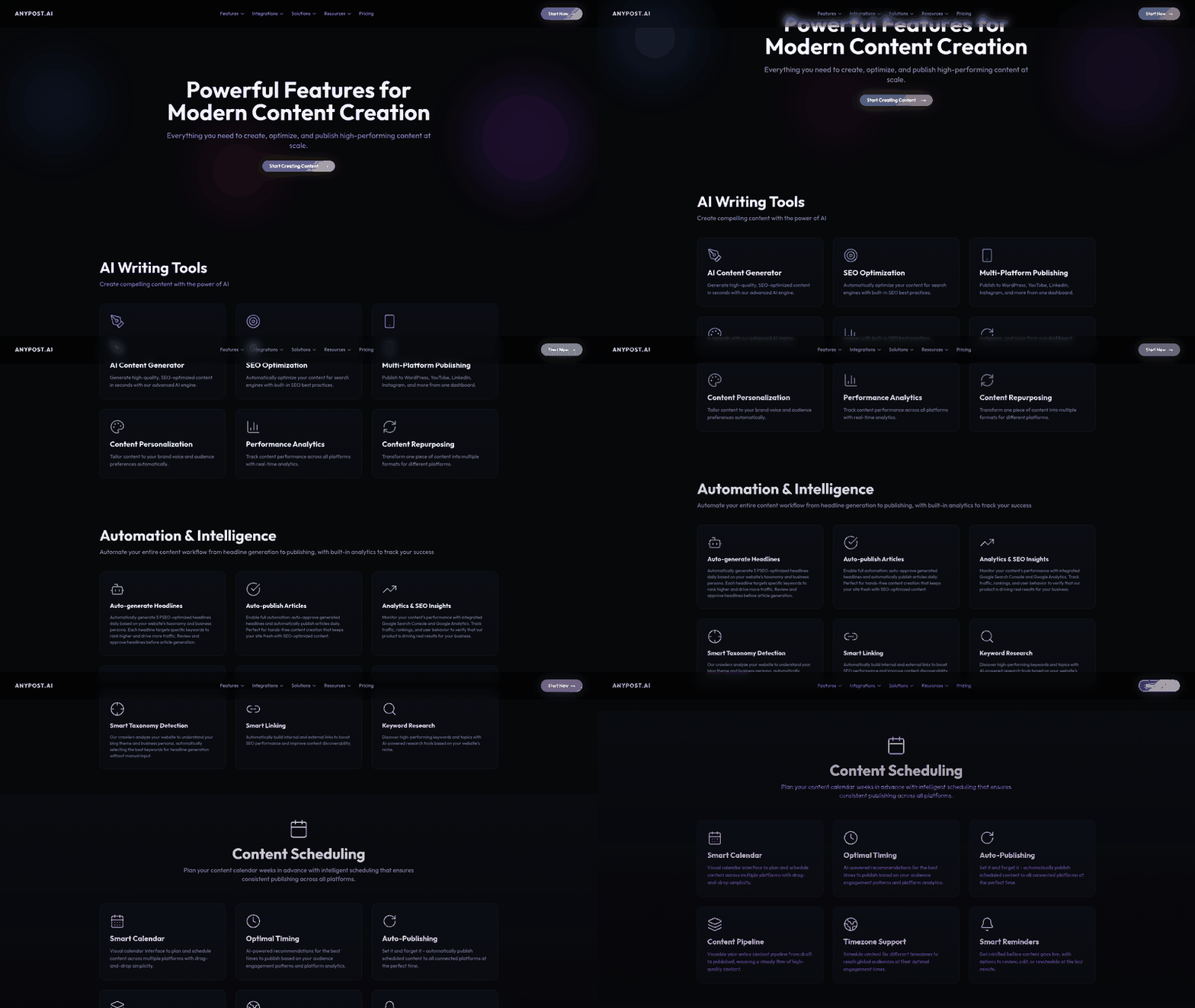
SEO automation tools streamline complex tasks, but not all tools deliver equal value. To maximize efficiency and results, prioritize platforms that offer these five core features:
1. Advanced Keyword Research Capabilities
Keyword research forms the foundation of any SEO strategy. The best tools go beyond basic keyword suggestions by analyzing search intent, competitor targeting, and content gaps. For example, platforms like Ahrefs and Surfer SEO use SERP data to identify high-volume, low-difficulty keywords. AnyPost.ai’s Smart Taxonomy Detection takes this further by scanning your website to understand your niche and automatically recommending keywords aligned with your brand’s voice and goals. This eliminates guesswork, ensuring your content targets terms that drive traffic and conversions.
Tools should also provide metrics like keyword difficulty scores and trend analysis. For instance, Surfer SEO highlights keyword clusters, helping you create content that ranks for related searches. A/B testing headline variations based on keyword performance, as noted in this analysis, can boost click-through rates by up to 30%. See the Tool Reviews: Part 1 section for more details on SurferSEO’s AI-driven keyword strategies. Building on concepts from the Head-to-Head Feature Comparison Matrix section, advanced tools differentiate themselves through depth of keyword clustering and intent analysis.
2. On-Page Optimization Features
On-page SEO ensures your content aligns with search engine algorithms. Look for tools that offer real-time suggestions for meta tags, headers, and content structure. AnyPost.ai’s SEO Optimization feature integrates with Google Search Console to flag issues like thin content or broken links while suggesting improvements.
Tools like SEMrush and MarketMuse use AI to analyze competitors’ on-page strategies. For example, MarketMuse’s content scoring system evaluates depth, readability, and keyword usage, helping you create stronger content. A case study from AnyPost.ai shows that brands using automated on-page tools see a 40% reduction in time spent optimizing drafts manually. As mentioned in the Pricing Breakdown and ROI Analysis section, this efficiency directly contributes to cost savings and faster content deployment.
3. Backlink Tracking and Analysis
Backlinks remain a critical ranking factor. Effective tools track your link profile, identify toxic links, and suggest outreach opportunities. Ahrefs and Search Atlas provide comprehensive backlink audits, while AnyPost.ai’s Smart Linking automates internal linking to improve site architecture. This feature reduces bounce rates by 15–20% by guiding users to related content, as reported in this case study.
Tools should also monitor competitor backlinks. For instance, OTTO SEO identifies broken links on competitors’ sites that you can target. Automated disavowal reports, as highlighted in this guide, prevent low-quality links from harming your rankings. The Head-to-Head Feature Comparison Matrix section provides a detailed breakdown of how leading tools approach backlink tracking and competitor analysis.
4. Content Generation and Repurposing
Time-consuming manual content creation can be replaced with AI-powered tools. AnyPost.ai’s AI Content Generator produces SEO-optimized articles, videos, and social posts in minutes. Its Persona Engine ensures brand voice consistency across formats—ideal for B2B marketers managing multiple personas.
Platforms like Jasper and Copy.ai focus on text generation, but AnyPost.ai differentiates itself by repurposing long-form articles into platform-specific content (e.g., LinkedIn threads or YouTube scripts). A 2026 review found that automated repurposing increases content output by 5x while maintaining SEO quality. As outlined in the Quick Setup Checklist: 5 Practical Steps section, selecting the right tool for content generation depends on your team’s specific publishing needs and scalability requirements.
5. Real-Time Analytics and Reporting
Data-driven decisions require tools that track performance metrics like organic traffic, bounce rates, and conversion rates. AnyPost.ai’s Analytics Dashboard integrates Google Analytics and Search Console data, offering insights into which keywords and content types drive growth.
Compare this with Search Atlas’s heatmaps, which visualize user engagement on pages. A 2025 study showed teams using real-time analytics improve SEO ROI by 25% faster than those relying on monthly reports. The Pricing Breakdown and ROI Analysis section further explores how real-time reporting features impact long-term cost efficiency and performance tracking.
Final Considerations
When evaluating tools, prioritize platforms that balance automation with human oversight. For example, AnyPost.ai allows users to review AI-generated headlines before publishing, ensuring creative control. B2B marketers using such hybrid models report higher engagement than fully automated systems. Always test a tool’s free tier or demo to assess how well it aligns with your workflow.
Integration Tips and Best Practices for Seamless Workflow
To create a seamless workflow with automated SEO tools, start by integrating your SEO platform with your content management system (CMS). Most modern SEO tools, including AnyPost.ai, offer built-in connectors for