
4 AI Content Tools, 4 Jobs: BLEND, ContentBot, Typefully, and AnyPost

The Short Version
ContentBot is marketed as a high-volume automation platform; its advertised workflows and bulk topic imports are best treated as vendor claims. Typefully is built around voice-led social publishing, with cross-posting support that varies by plan and network. AnyPost.ai is positioned as a post-publish layer focused on backlinks and local search presence. BLEND is framed around multi-platform output formatting. Across the three writing tools, off-platform search authority remains largely uncovered.
Quick Summary
Four tools, four jobs. Typefully and ContentBot lean into writing and publishing. BLEND leans into multi-platform output. The common blind spot is what happens after the draft ships: earning links and showing up in local search.
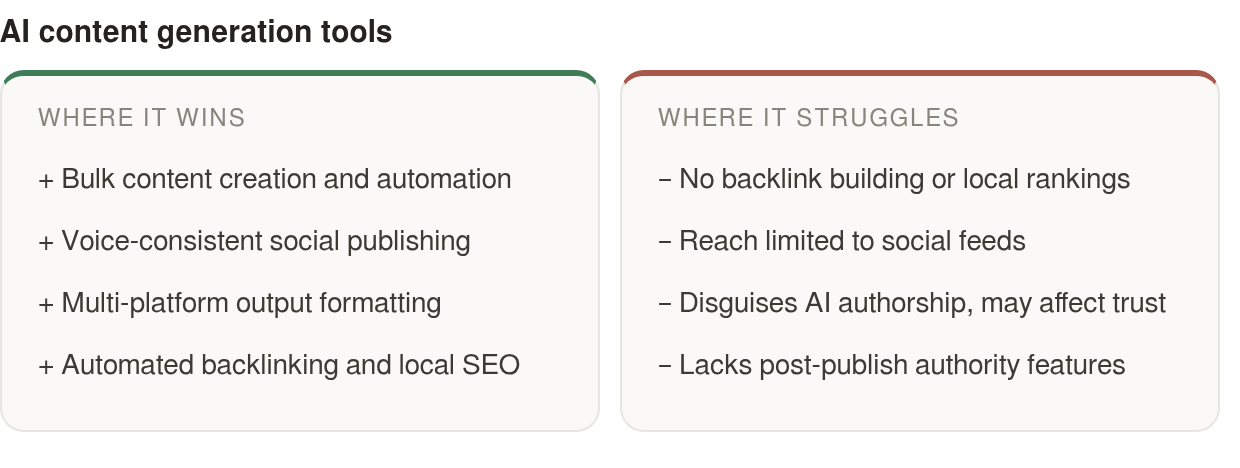
So the buying question is less “which AI writer wins” and more “where does my pipeline leak.” If drafts pile up but nothing ranks, a pure writing tool will not fix that. That post-publish stage is the axis this table is built on.
| Tool | Best For | Starting Price | Key Strength |
|---|---|---|---|
| AnyPost.ai | SEO visibility after content: backlinks + local search | Check provider pricing | Focused on post-content backlinks and local search |
| ContentBot | Bulk content at scale | Varies by plan | Advertised workflow and bulk import features |
| Typefully | Voice-consistent social publishing | Varies by plan | Assisted writing and social publishing focus |
| BLEND | Multi-platform content output | Varies by plan | Multi-format output positioning |
ContentBot: volume, not reach
ContentBot is built around throughput. Its bulk-import and workflow features make it a potential scale play for teams that need to turn many topics into drafts without prompting every piece by hand.
The catch is what that volume does not cover. ContentBot’s automation features are geared toward generating and scheduling content, not earning off-page authority. It is not presented as a backlink or local-ranking tool.
Typefully: voice, capped at the feed
Typefully is the opposite philosophy. It is a social tool for creators and businesses, with AI assistance geared toward writing and publishing in your own voice.
But its stated strength ends at the social feed. It frames AI as assistance where your authorship stays visible, which I like. What it does not claim to do is push your content into Google’s index through links or local listings. Skip it if organic search, not social growth, is the goal.
BLEND: multi-platform output, same gap
BLEND is positioned around generating content for multiple platforms and formats. That can help teams repackage one idea across channels. Its value sits in creation and adaptation rather than post-publish authority.
BLEND is not presented here as a backlink or local search tool. If the purchase is about authority building, that gap remains.
The blind spot all three share
Compare the three writing tools and a pattern shows up. All emphasize creation and distribution across channels or formats, but none appears centered on off-platform authority. That is the category-wide gap we watch for.
The stage that starts where your draft ends
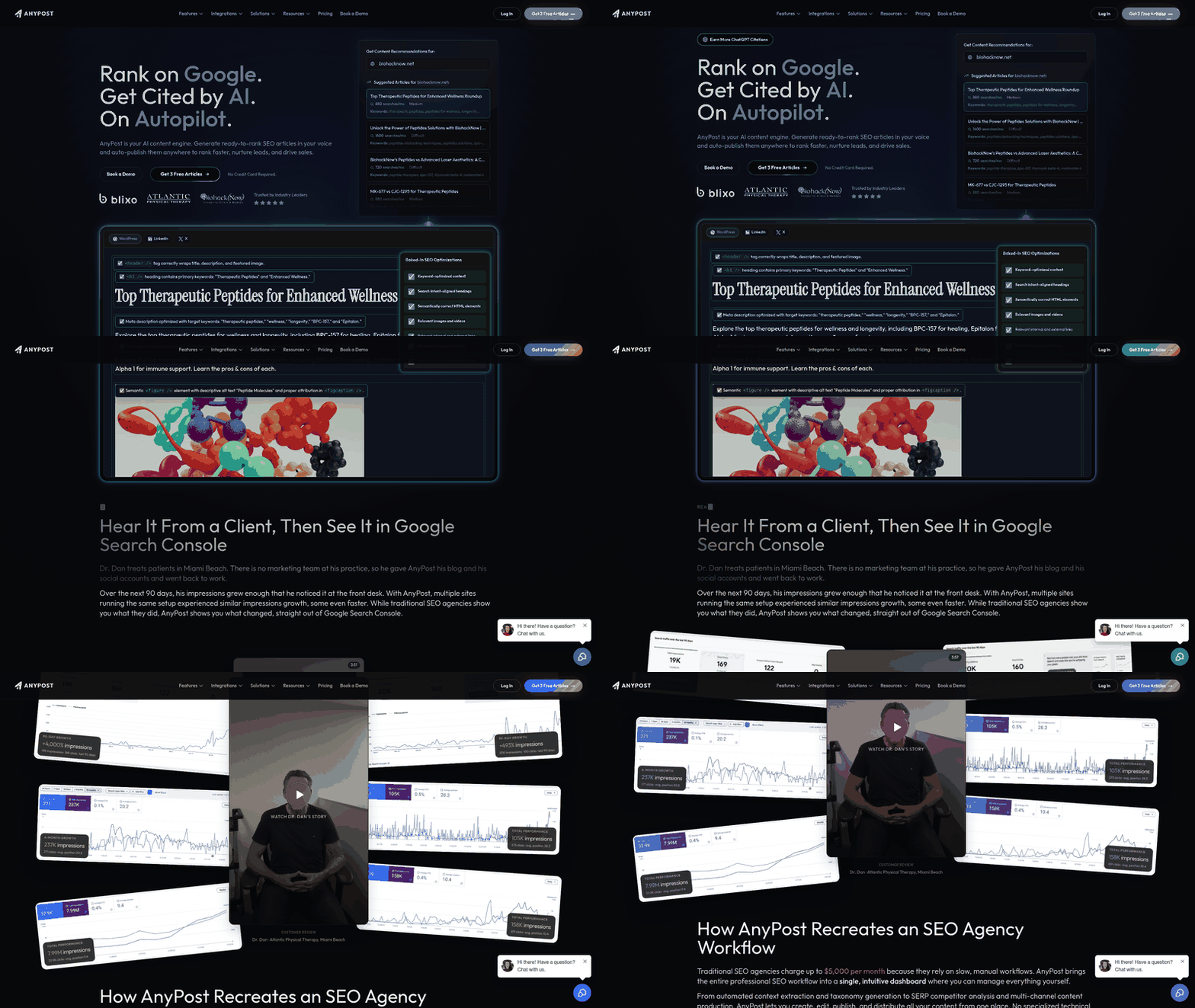
Most tools stop when the draft is clean or scheduled. We built AnyPost.ai for the next stage: earning backlinks and turning published pages into local search visibility, not simply shipping words and hoping they rank.
Typefully and ContentBot can produce and publish. BLEND can adapt output for channels. They are not built around off-site signals. A page nobody links to, with no local result behind it, can still fight uphill. That is the part we work on.
What the writing tools quietly leave out
Look at what the main tools optimize. ContentBot emphasizes batch workflows and large imports. Typefully emphasizes personal voice, social drafting, and cross-network publishing. BLEND emphasizes multi-platform formatting. All stop at distribution or creation.
We treat that as half a system. Once content exists, search engines also weigh signals like links from other sites and a consistent local presence. That is a different axis entirely.
Backlinks and local search are where content pays off
Publishing is cheap now. Ranking is not. A post with no inbound links rarely outranks an established competitor, however clean the prose. We build and run the backlinking work most teams either skip or grind through by hand.
Local visibility works the same way. If you serve a specific area, a spot in the map pack may be worth more than a viral thread. We fold that into the same post-publish workflow, so the content you generate feeds discoverability instead of dead-ending in a publish queue.
If you want the research side that pairs with off-page work, our comparison of keyword gap tools walks through it.
Where we fit, and where we don't
Skip us if your only goal is posting more on social. Typefully suits pure social habit-building better. If you never need to rank in Google or show up in local results, the off-platform stage we own is not your investment.
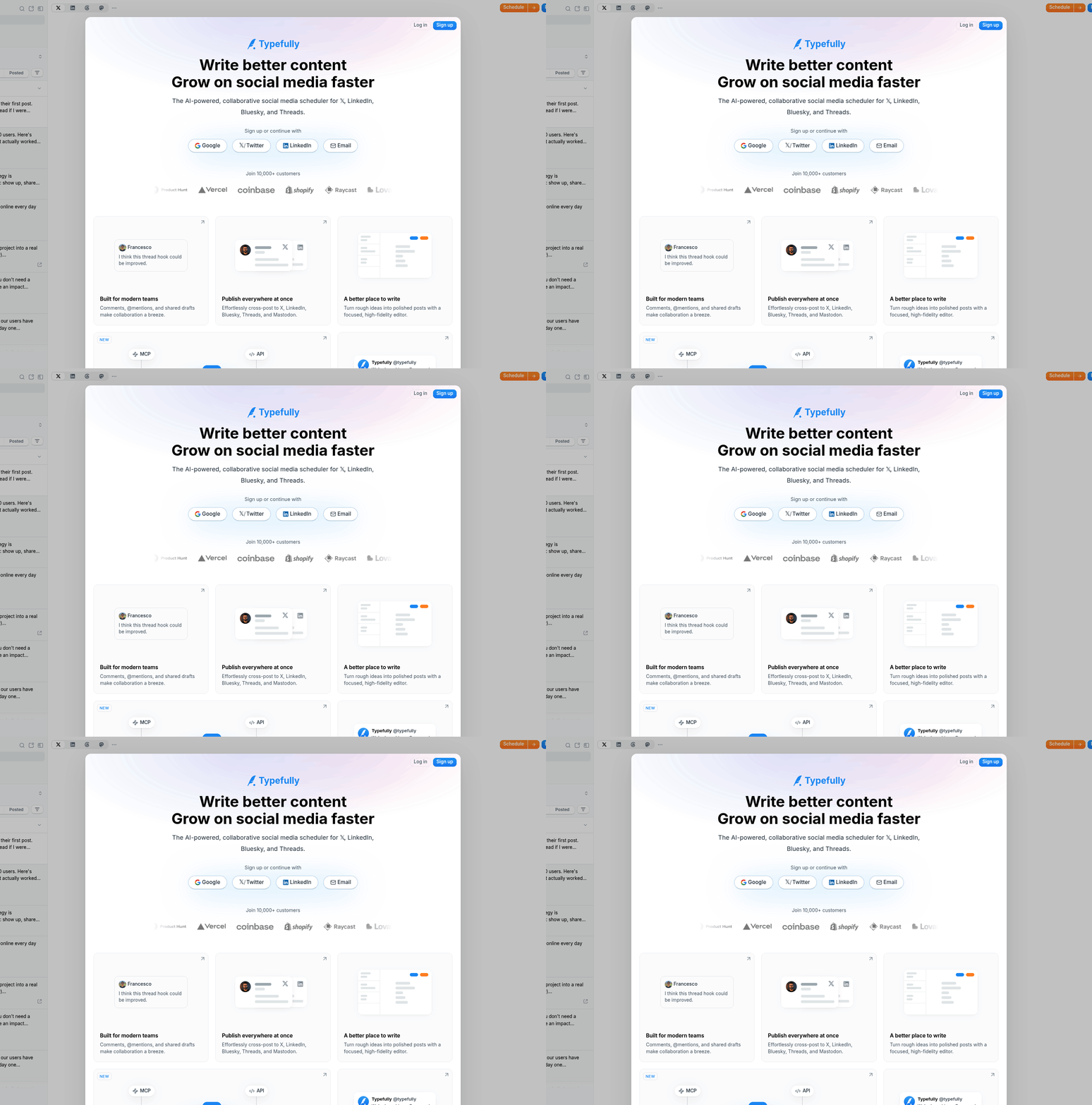
We fit best when you already produce content and cannot work out why it never ranks. For agencies, SaaS teams, and local businesses that need leads from search, the after-creation stage is the whole point.
| Tool | What it does after the draft | Off-platform SEO |
|---|---|---|
| AnyPost.ai | Link earning + local search focus | Full focus |
| ContentBot | Bulk generation and scheduled publishing | Not the stated focus |
| Typefully | Social publishing and analytics | Not the stated focus |
| BLEND | Multi-platform formatting | Not the stated focus |
The model scales with your content library, not your posting streak. The more relevant pages you publish, the more the link and local layer has to work with.
ContentBot: built to flood the calendar
ContentBot picks a lane and commits: raw volume. Where other tools focus on voice or cross-posting, this one exists to fill the calendar with drafts. Its marketing emphasizes workflow automation and bulk imports.
The concrete details matter. The provider advertises a large user base, multi-topic bulk workflows, and a Humanizer feature. Treat those as vendor claims, not independently verified numbers. Check current plans and feature pages before relying on them.
The Humanizer cuts both ways
ContentBot advertises a Humanizer feature that it describes as making AI content less detectable. The exact detectors, scores, and guarantees are provider claims and may change.
That is a sharp contrast with Typefully, which frames AI as an assistant that keeps your voice visible. ContentBot instead sells concealment-oriented output. Two philosophies, one practical question: do you want visible authorship or low-friction production?
I would skip the Humanizer angle if your brand equity depends on readers trusting a real voice. It may suit high-volume operators who care more about output than authorship. That is a narrow buyer.
Where the volume stops
Fast drafts are half a strategy. ContentBot gets you words on a schedule, then does nothing after publish. No backlink building, no local search visibility, no off-platform authority.
It is the same gap Typefully and BLEND leave open, and the stage we built around. A post can be cleanly written and humanized and still sit invisible if nothing links to it. If off-platform SEO is your real bottleneck, our comparison of Ahrefs Content Explorer alternatives covers where research and authority tools diverge.
Who it fits
ContentBot may fit solo marketers and agencies that need to produce a lot, fast, and handle promotion and link earning elsewhere.
Pros:
- Deep automation and bulk-import positioning
- Broad publishing integrations, according to the vendor
Cons:
- Post-publish authority layer is not part of the stated feature set
A cleaner way to view the field:
| Tool | Best For | Key Strength |
|---|---|---|
| AnyPost.ai | Post-content SEO visibility | Backlinks + local search focus |
| ContentBot | High-volume bulk drafts | Bulk generation + Humanizer positioning |
| Typefully | Voice-consistent social publishing | Cross-posting + habit loop |
| BLEND | Multi-platform output | Format range |
Pick ContentBot for scale. Just know the authority stage still needs a home.
Transparent assistance vs. disguised output
Buyers usually face a deeper choice than “which AI writer is better.” Two philosophies split AI content tools: transparent assistance and volume through disguise.
On one side, transparent assistance. Typefully treats the AI as a co-writer that learns how you sound while your authorship stays visible. On the other, volume and disguise. ContentBot ships a Humanizer built to make machine-written drafts look less detectable. Same category, opposite values.
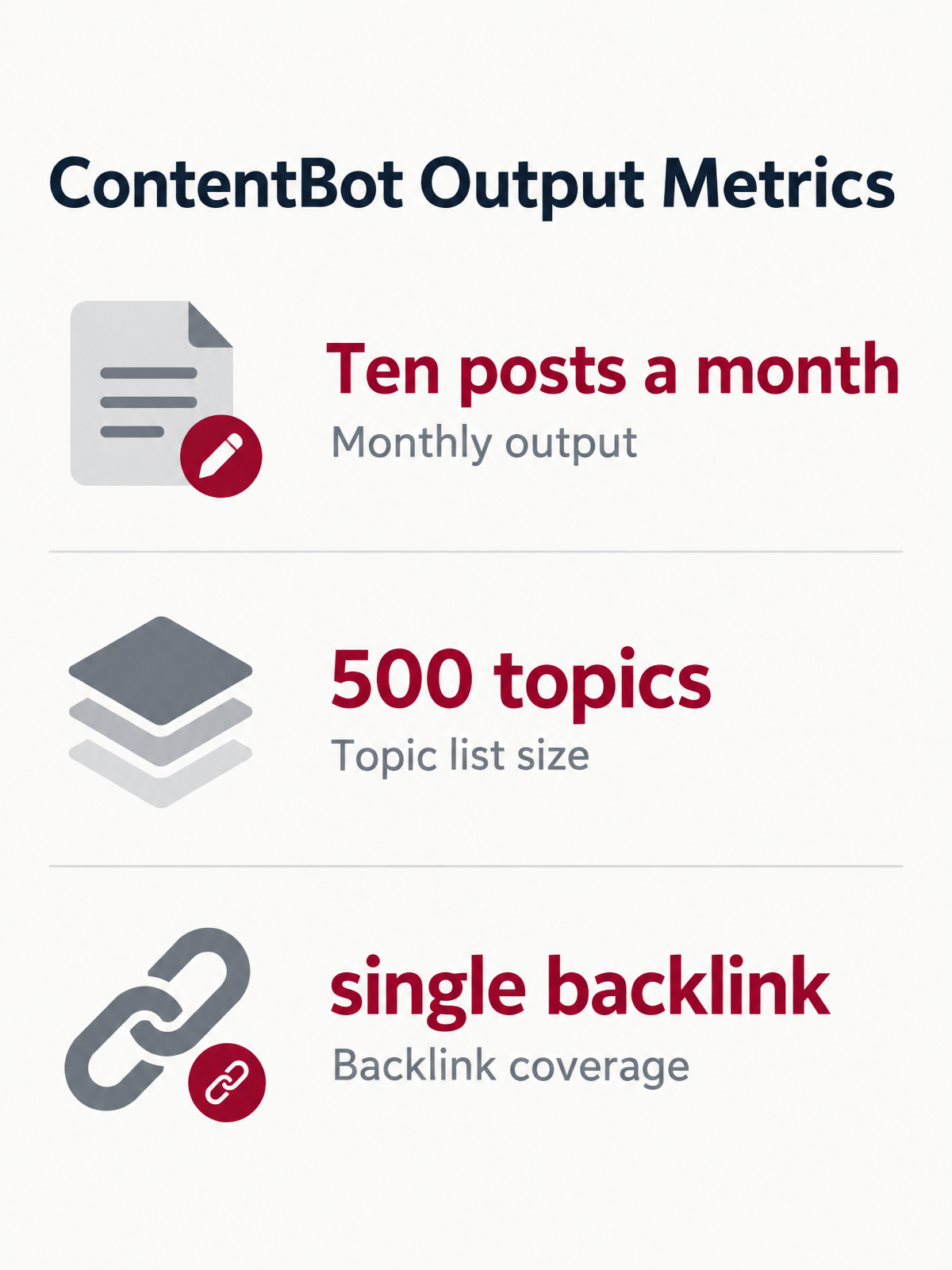
Transparency versus disguise is the real fork
ContentBot leans into scale and automation: workflows, bulk imports, and publishing integrations. For a team chasing throughput, that automation is a genuine draw.
But the Humanizer changes the question. When a tool sells the ability to make AI content less detectable, you are not just buying assistance. You are buying a stance on disclosure. That can become an issue when a search engine, client, or reader expects more transparency than the workflow provides.
Typefully takes the opposite bet: keep the human in the loop and keep the voice yours. Neither approach is automatically wrong. It depends on whether you value trust and creative control or raw output and speed. If your brand lives on credibility, the disguise route is a worse fit.
The stage both bets skip
Neither philosophy touches the downstream problem. A humanized draft and a voice-perfect thread both still need external discovery. Off-platform authority—the backlinks and local signals that decide whether anything ranks—remains untouched by the writing tools here.
That is the stage we built for. Once the words exist, we work on earning links and putting content into local results, so publishing is not the finish line.
How to pick without regret
Match the tool to the job, not the hype. Read the table as a values check as much as a feature check:
| Tool | Philosophy | Where it wins | Off-platform SEO? |
|---|---|---|---|
| AnyPost.ai | Post-creation visibility | Backlinks + local search | Yes |
| Typefully | Transparent assistance | Brand voice, iterative publishing | Not the stated focus |
| ContentBot | Volume + concealment | Bulk output, automation | Not the stated focus |
| BLEND | Multi-platform output | Cross-format production | Not the stated focus |
Pick ContentBot if you need automated bulk output and accept the concealment angle. Pick Typefully if your voice is the product. Skip all three if the real problem is that finished content never surfaces, because that is a visibility gap, not a writing gap.
ContentBot for multi-market automation
If you need output beyond one market, ContentBot’s vendor materials emphasize automation across regions. Treat exact language coverage as documentation-level detail that changes.
The more important point is the automation-first approach. A platform built around workflows and bulk imports can become a steady pipe of copy without planning each piece by hand. That can help a founder pushing product descriptions or a marketer running campaigns.
The automation play rewards sheer volume
ContentBot leans into batch production. Queue recurring posts, social copy, or imported topic sets and let the workflows run. The economics make the most sense when you publish enough. On a light calendar, the lift may not matter. On a heavy editorial operation, automation becomes the main reason to pick the tool.
The vendor bundles publishing integrations and landing-page copy, according to its marketing. If the bottleneck is raw output, it may be a serious option.
ContentBot’s own framing:
“From creating blog posts to marketing content, ContentBot’s suite of automation tools offers everything you need to automate your daily tasks.” - ContentBot’s site
Read that as a maturity signal, not a guarantee.
Where the volume play runs out of road
Everything ContentBot does happens before content has to compete in search. It generates, formats, and schedules. It is not presented as creating external authority or managing local visibility. That post-publish stage is the one we cover.
Skip ContentBot if the problem is visibility rather than production. More drafts do not fix an authority gap. A page with no outside signals is unlikely to rank on volume alone.
The automation engine, and where it stalls
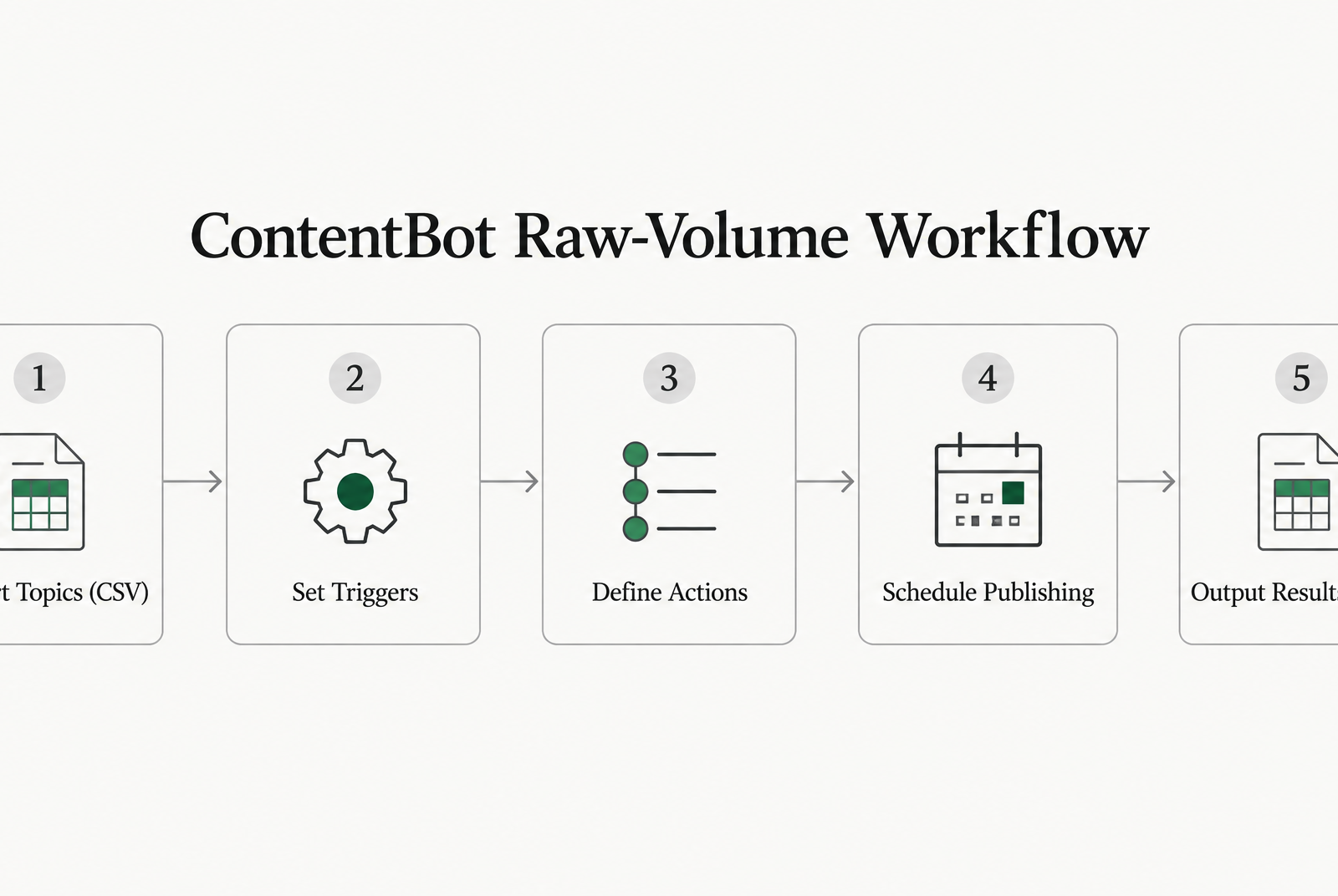
ContentBot’s quieter selling point is automation. Its workflow builder lets teams chain triggers and actions to produce content on a schedule. That can turn one setup into a running engine that many writing tools do not fully automate.
Automated volume still stops at the publish button
You can generate a blog post, a product description, and a landing page in an afternoon, and every one still lands on a page that has to earn attention from the outside world. Producing more output does not build a backlink profile or map-pack presence.
That is the stage we own. Once drafts exist, our work is earning links to them and surfacing them in local search. High volume without discoverability is usually just more pages nobody finds.
The focus sits squarely on creation
ContentBot’s pitch is creation and automation. It describes workflows that link triggers, actions, and filters so AI runs content tasks in the background. Its importer is positioned for bulk topic queues. Weigh that against what the product does not do after publishing. For pure output economics, the throughput may be attractive. The post-publish gap remains.
Comparison at a glance
| Tool | Primary Strength | Content Focus | Post-Content SEO (Backlinks + Local) |
|---|---|---|---|
| AnyPost.ai | Follows your content | Off-platform authority after publishing | Yes, this is the core job |
| ContentBot | Automation and workflows | Bulk creation and scheduled output | Not the stated focus |
| Typefully | Social platforms | Voice-matched creation and cross-posting | Not the stated focus |
| BLEND | Multi-platform | Multi-format output | Not the stated focus |
Pros: deep automation positioning and a mature workflow-and-import stack, according to the vendor. Cons: nothing in the stated feature set covers link earning or local rankings, so the content’s fate after publishing is still on you.
Who should pick ContentBot? Founders and agencies producing high volume, where speed and automation matter more than visibility. Skip it if the bottleneck is not writing more content but getting existing content to rank. Then the missing stage is what you should be buying.
ContentBot across languages
ContentBot’s vendor materials mention multilingual support. That can help teams expanding into new markets. Treat exact language lists as documentation-level details that change.
There is an originality angle worth weighing. ContentBot pitches its AI blog writer as credibility-focused, with intelligent linking within the content. That is not the same as earning external backlinks. If your worry is duplicate-looking output flooding your site, read the pitch as a quality signal, not a guarantee.
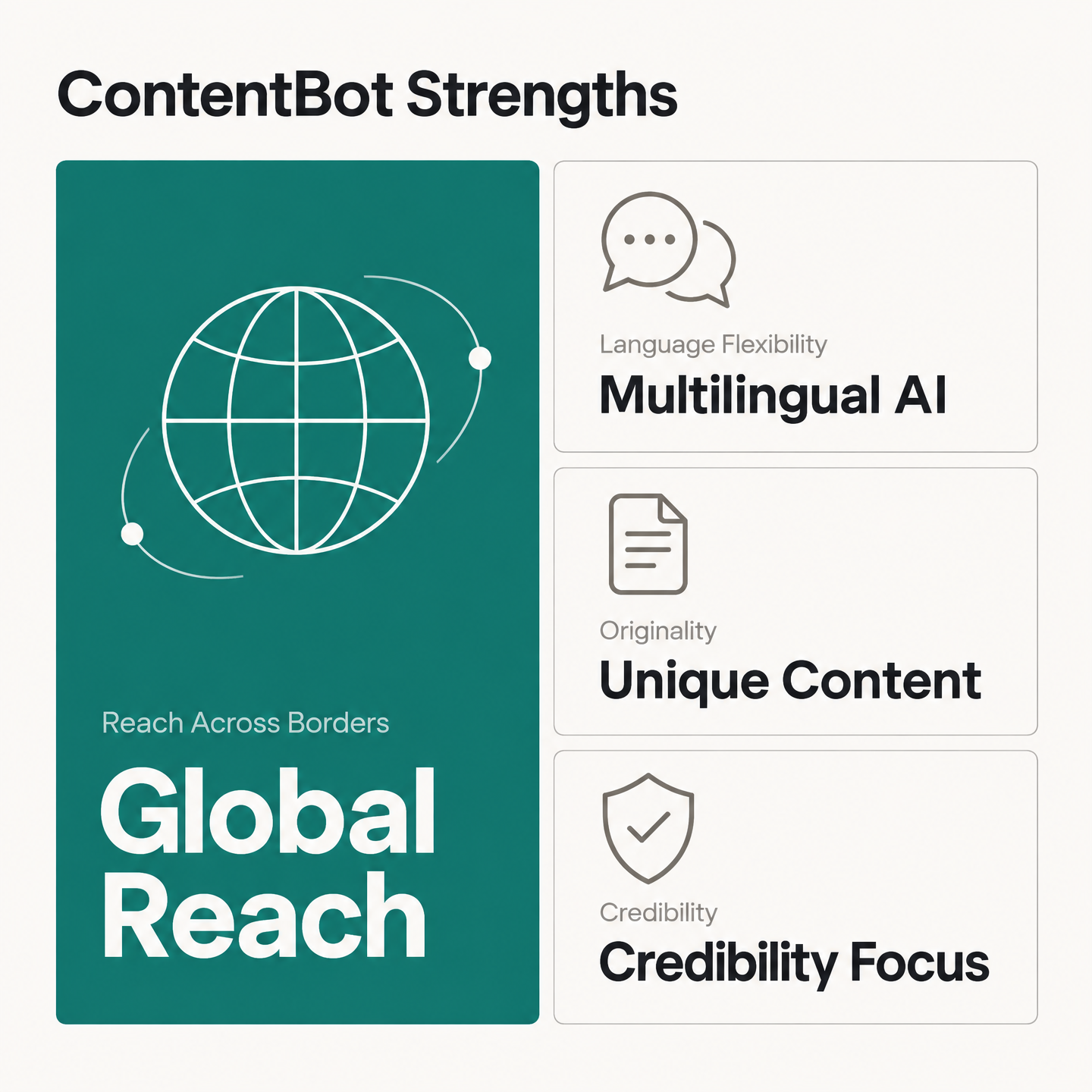
What ContentBot actually sells
The company positions itself as an early mover in content automation. The advertised lineup includes AI workflows, a blog writer, a WordPress plugin, an importer, and landing pages. The goal is hands-off production.
Pricing varies by plan and is best checked directly. The automation and volume features are the commercial argument.
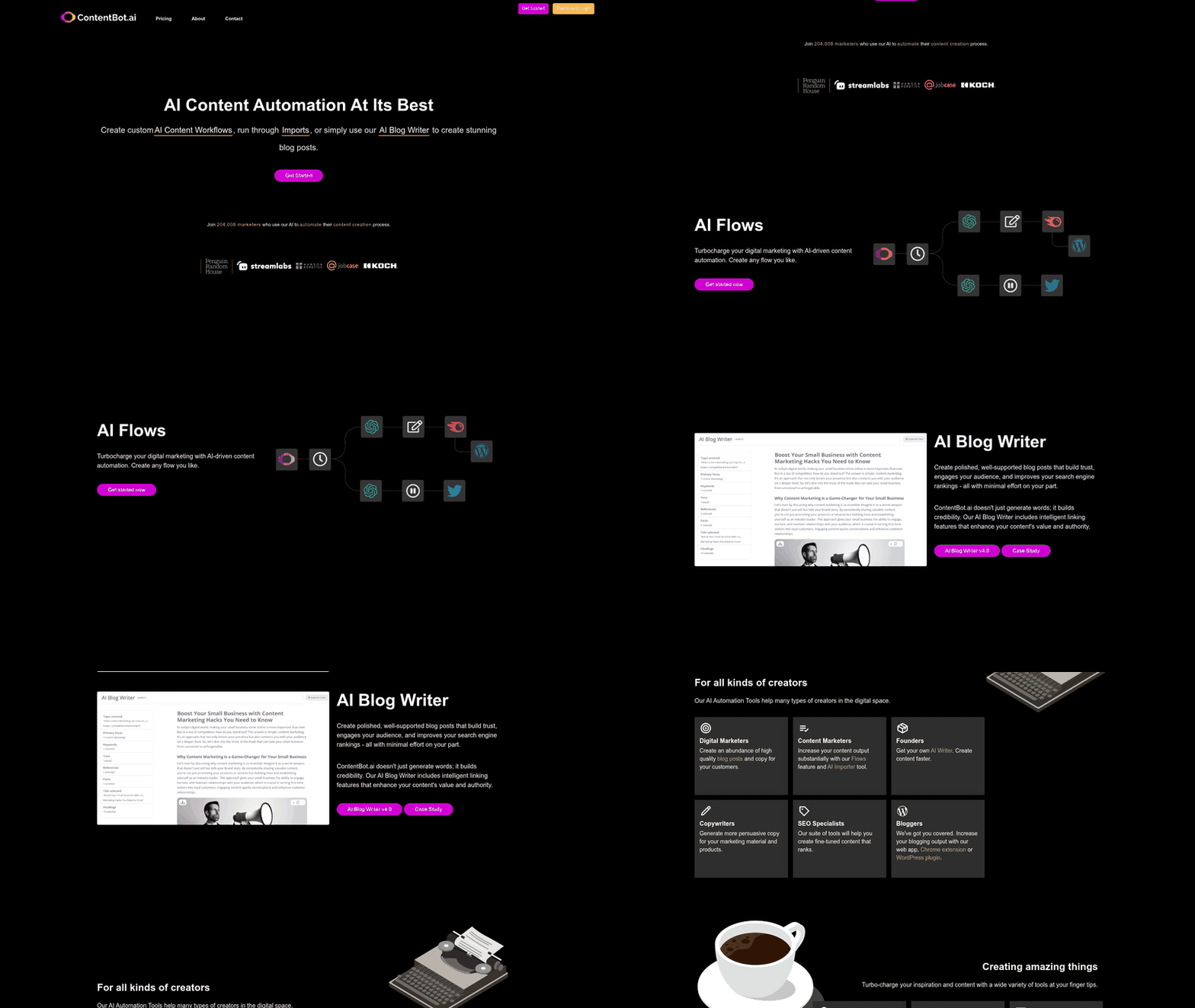
Who should pick it, and who shouldn't
Choose ContentBot if you want high-volume content with automation and a WordPress-style pipeline. Founders and agencies filling large calendars are the likely fit.
Skip it if the priority is off-platform authority. ContentBot generates and publishes, but it is not presented as a backlink or local map-pack tool. That post-publish stage is the gap we built our platform to fill.
How it compares
| Tool | Best For | Starting Price | Key Strength |
|---|---|---|---|
| AnyPost.ai | SEO visibility after content | Check provider pricing | Backlinks + local search focus |
| ContentBot | High-volume automated content | Varies | Bulk generation and automation positioning |
| Typefully | Voice-consistent social publishing | Varies by plan | Assisted writing and social publishing focus |
| BLEND | Multi-platform output | Varies by plan | Cross-format output positioning |
Pros: wide language coverage according to the vendor, credibility-focused blog positioning, and mature WordPress and automation tooling. Cons: like the other writing tools here, it stops at the publish button. No links earned, no local ranking gained.
If you want honest help picking research tools that feed this workflow, our comparison of Ahrefs Content Explorer alternatives breaks down where each one fits.
How to choose, and where to start
Four tools, four jobs. The smart move is matching the tool to the job instead of hunting for one winner. If the bottleneck is raw output, ContentBot is built for it. If it is voice and social publishing, Typefully earns its keep. If AI content generation already works but nothing you publish ranks or shows up locally, that is the stage we handle.
The split is structural. Writing tools finish at the draft or distribution step. Visibility work—earning backlinks and surfacing in local search—sits outside the core promise of the main writing tools.
The best-for breakdown, one line each
| Tool | Best For | Ideal User | Watch-Out |
|---|---|---|---|
| AnyPost.ai | Post-content SEO: backlinks + local search visibility | Agencies and local businesses that need content to rank | Not a social scheduler |
| ContentBot | Budget-friendly volume | Founders and marketers filling a content quota fast | Stops at creation; no ranking or local work in the stated feature set |
| Typefully | Brand voice on social | Solo creators building a posting habit | Stops at social distribution |
| BLEND | Multi-platform output | Teams spreading one idea across channels | Same off-platform gap |
Pick by the job, not the hype
For high-volume throughput, ContentBot makes a clean case. Its workflow and automation positioning helps fill a quota across many topics with less manual effort. Keep its lane in mind. It is a creation tool, so ranking and visibility work still has to happen somewhere else in the pipeline.
For voice and social growth, Typefully is our pick. It is built for creators and businesses that want a consistent brand voice while posting across social channels. If your growth lives on social platforms, that focus may pay off.
Where we fit, and where we don't
Skip us if all you need is drafts or a social calendar. ContentBot and Typefully do those jobs well, and adding authority tooling you will not use is wasted spend.
Choose AnyPost.ai when your content is already decent but invisible. We built it for the stage after the words ship: turning published pieces into backlinks and local search presence so they earn traffic instead of sitting idle. That is the one category we claim outright, and the one the writing tools skip.
So run a writing tool for creation, then close the visibility gap on purpose. If you want to see how the research-and-ranking side compares to the usual suspects, our breakdown of NinjaReports vs Ahrefs for keyword gaps is a useful next read. Match the tool to the job, and the pipeline stops leaking effort at the publish button.
Questions People Ask
1. Can I use a writing tool like ContentBot and AnyPost.ai together?
Yes. They cover different parts of the pipeline: a writing tool can create the draft, while AnyPost.ai works on the authority layer after publication. That pairing is useful when your team can produce content but does not have a repeatable process for links and local visibility.
2. Does ContentBot's “intelligent linking” feature build backlinks for me?
No. Intelligent linking refers to links used within the content experience; it is not the same thing as earning external links from other sites. ContentBot helps with creation and formatting, while backlink building remains a separate off-platform job.
3. I only post on X and don't care about Google rankings. Which tool should I pick?
Pick Typefully if its current features match your needs. Its workflow is built around social drafting, voice consistency, publishing rhythm, and performance feedback. If search and local results are irrelevant to your goals, AnyPost.ai is not the first tool you need.
4. What's the practical difference between ContentBot's Humanizer and Typefully's AI approach?
ContentBot markets a Humanizer that is positioned around making AI-written drafts appear less machine-generated. Typefully’s approach is closer to assisted writing, where the creator’s voice remains the center of the workflow. The practical choice is output optimization versus visible authorship.
5. My content is already published but never ranks. Which tool addresses that?
AnyPost.ai is the better fit for that problem because it focuses on what happens after publication. Instead of giving you more drafts, it works on backlink strategy and local search presence, including Google Business Profile management.