Ninja Reports vs Ahrefs for Keyword Gap Analysis: Which Finds Better Blog Topics in 2026

Key Takeaways
- Ahrefs runs native keyword gap analysis through its Content Gap report. Ninja Reports packages that data for clients.
- Ahrefs handles research and competitive digging. Ninja Reports handles presentation.
- Neither tool writes the posts that close the gaps.
- Agencies juggling multiple client accounts save hours with Ninja Reports.
- Ahrefs is a full SEO suite, not just a reporting layer.
- Three jobs, three tools: Ahrefs for discovery, Ninja Reports for visualization, a content engine for closing gaps.
- You need raw competitive data from Ahrefs before Ninja Reports can build a dashboard.
The 30-second version
Ahrefs gives you the deepest keyword gap data. Ninja Reports packages that data into clean, client-ready reports. The value you capture comes from what you do with the gaps after that. That last step is where teams get stuck.
Run Ninja Reports vs Ahrefs for keyword gap analysis side by side, and the split is obvious. Ahrefs is the research engine. Ninja Reports is the reporting layer. Neither writes the blog post that closes the gap, which is the entire reason you went looking for it.
What actually separates them
Ahrefs is a full SEO suite. Keyword gap analysis lives inside its Content Gap report. It compares your domain against competitors and surfaces terms they rank for and you don't. Ninja Reports pulls that same kind of gap data and visualizes it into shareable dashboards for agencies reporting to clients.
The difference shapes your workflow. Ahrefs is where you dig. Ninja Reports is where you present. Manage five client accounts, and Ninja Reports saves hours of manual report assembly. Need the raw competitive data first? Ahrefs is the source.
Comparison table
| Factor | Ahrefs | Ninja Reports | AnyPost.ai |
|---|---|---|---|
| Primary job | Keyword & backlink research | Client reporting dashboards | Content generation & publishing |
| Keyword gap analysis | Deep, native Content Gap report | Repackages gap data for reports | Consumes gap data to generate topics |
| Turns gaps into published articles | No | No | Yes, automatically |
| Best for | In-depth research | Agency reporting | Closing gaps with published content |
| Learning curve | Steep | Low | Low |
We left pricing out on purpose. Both Ahrefs and Ninja Reports shuffle their tiers often, and we won't quote numbers we can't stand behind. Check their current pages before you commit. Ahrefs sits at the premium end because it's a full suite, while reporting-first tools usually cost less because they do one job.
Where does the gap data actually go?
A keyword gap is worthless until you publish something that ranks for it. Both Ahrefs and Ninja Reports stop right before that step. They hand you a list. You still need a writer, a brief, and a calendar.
That's the workflow gap we care about. Export the missing keywords, group them by intent, and feed them straight into production. The teams that win aren't the ones with the biggest keyword list. They're the ones who turn that list into published posts fastest.
This is the handoff AnyPost.ai automates. It takes the gap keywords, drafts SEO-optimized articles in your brand voice, and publishes them to your site without the brief-and-writer bottleneck.
Which should you pick?
Pick Ahrefs if research depth is the priority and you've got someone to act on the data. Pick Ninja Reports if client-facing reports eat your week. If your real bottleneck is publishing the content those gaps demand, the research tool matters less than the production engine you connect it to.
Why these three are even in the conversation
Choosing between Ninja Reports vs Ahrefs for keyword gap analysis comes down to what you're trying to do with the data. Both surface the same competitive intelligence: the keywords your competitors rank for and you don't. They differ in how they package that insight and what happens next.
Three scenarios drive the choice.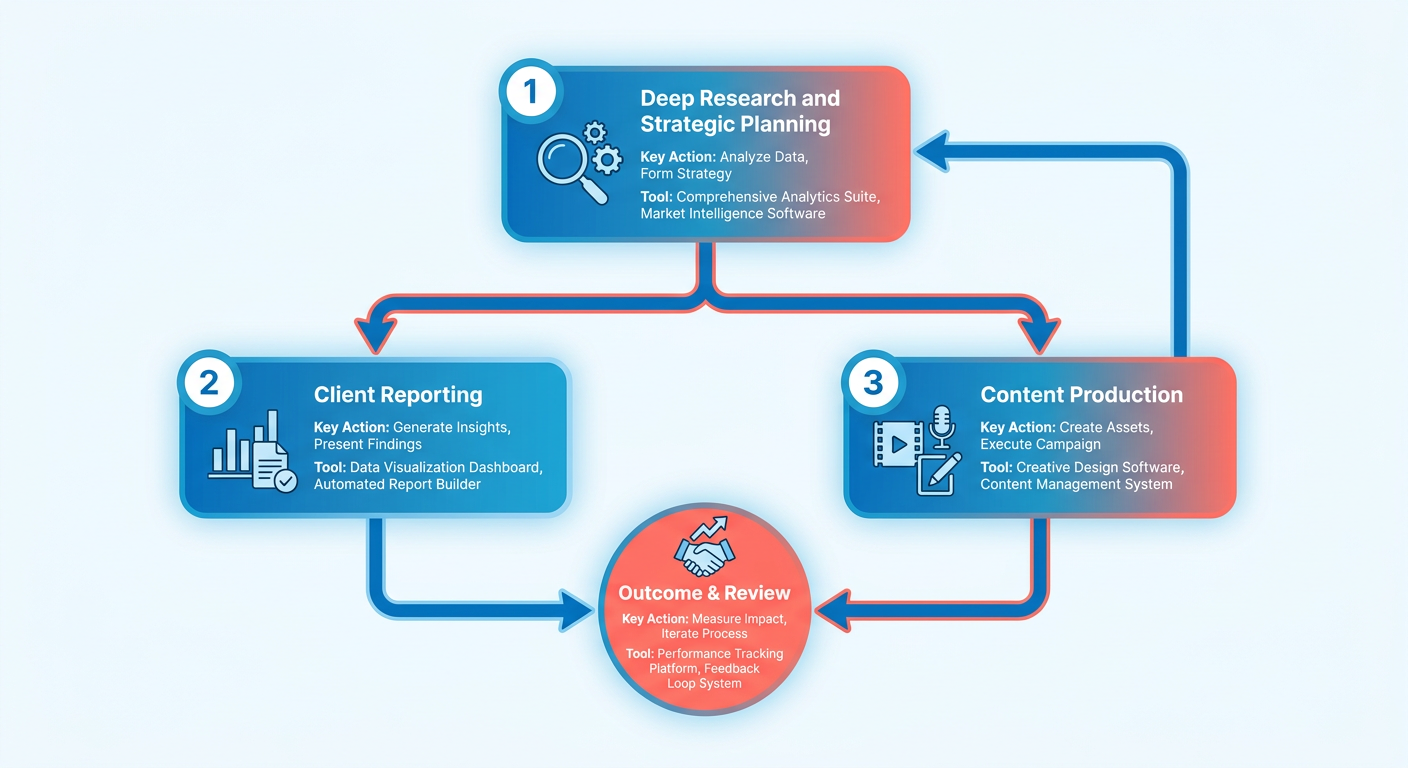
You need deep research and strategic planning
Ahrefs is the research engine. Mapping a quarterly content strategy or pitching a new client means you need full context: search volumes, difficulty scores, SERP features, and the ability to compare several competitors at once. Ahrefs delivers that depth.
Its Content Gap tool lets you input competitor domains and surface keyword opportunities quickly. You can filter by volume, difficulty, and whether a term triggers featured snippets or video results. That granularity matters when you're prioritizing topics across a calendar.
The catch? You're staring at raw data. Ahrefs won't format that list into a client-ready document or tell you which gaps to tackle first. You export the CSV, clean it up, and build the narrative yourself.
You need client-ready reports without the manual grind
Ninja Reports solves the presentation problem. It pulls keyword gap data from Ahrefs, through an Ahrefs API connection, and wraps it into white-labeled PDF reports that look polished out of the box. For agencies running keyword audits across multiple clients, that cuts hours of formatting.
It focuses on one-vs-one competitor comparisons, simpler than Ahrefs' multi-domain setup but often enough for a client deck. You pick a client domain, pick a competitor, and Ninja Reports generates a branded report showing the gaps.
Here's the trade: you lose some filtering and advanced metrics Ahrefs gives you. Ninja Reports is built for speed and presentation, not deep exploration. Want to slice the data by keyword difficulty ranges or isolate long-tail variations? You'll still be back in Ahrefs.
| Feature | Ahrefs | Ninja Reports |
|---|---|---|
| Competitor limit per analysis | Up to 10 domains | 1-vs-1 comparison |
| Filtering options | Volume, difficulty, SERP features, word count | Basic volume and position filters |
| Output format | CSV export, dashboard view | White-labeled PDF report |
| Automation | Manual export | Scheduled report delivery |
| Content creation | None | None |
You need to turn gaps into published content
Neither tool writes the blog post. That's where most teams stall. You run the analysis, identify 50 missing keywords, and those 50 keywords sit in a spreadsheet because nobody has time to write 50 articles.
We work on the content side. AnyPost's Taxonomy Researcher reads your business context and surfaces low-difficulty, high-intent keywords for your niche, then auto-generates ready-to-rank articles and publishes SEO-optimized posts straight to your site. The flow: we crawl your site to build a Business Context Graph, identify the keywords you can win, and handle the writing, optimization, and publishing.
That closes the loop. The whole point of finding gaps is to rank for them. If the analysis never becomes published content, the research was wasted effort.
For teams that want the full workflow of research, reporting, and execution, pairing a discovery tool like Ahrefs with automated content creation is the setup that doesn't leave work half-done.
Feature by feature
The feature split comes down to one question: what happens after you find the gaps? Ahrefs wins on research depth. Ninja Reports wins on client reporting. Neither one closes the gap by publishing, which is where our workflow picks up.
Here's how the three stack up against the step most teams actually stall on.
| Feature | Ahrefs | Ninja Reports | AnyPost.ai |
|---|---|---|---|
| Keyword gap research depth | Deep (multi-domain analysis) | Packages gap data into reports | Surfaces winnable keywords via contextual discovery |
| Client-ready reporting | Limited | Strong | Not the focus |
| Auto-creates blog topics from keywords | No | No | Yes |
| Publishes SEO content | No | No | Yes |
| Best for | Research + strategy | Agency reporting | Turning topics into published posts |
What each tool actually does well
Ahrefs surfaces the raw gap keywords through its Content Gap report, comparing your domain against competitors to find terms they rank for and you don't. Ninja Reports takes that data and formats it into reports a client will actually read. AnyPost.ai uses its semantic discovery engine to surface low-difficulty, high-intent keywords for your niche, then turns each one into a published, SEO-optimized post.
The first two share the same limitation. Both stop at the insight. A Content Gap report can return keyword opportunities when you load several competitor URLs. That's a strength on paper and a problem in practice.
Why volume becomes the real constraint
The bottleneck isn't finding gaps. It's acting on them. When a single analysis hands you a long list of keyword ideas, the manual prioritizing and writing become the thing that slows you down. The tool that finds five percent more keywords doesn't matter if you can only write four posts a month.
This is the part competitors skip past. Ahrefs keeps adding research features. Ninja Reports keeps refining how the data looks in a slide. Neither connects keyword research to a publishing engine.
Our approach closes that loop. The Taxonomy Researcher surfaces the keywords you can actually win, the SERP Competitor Analyzer builds a winning article structure, and we publish SEO-optimized posts on a schedule. The reporting stays in Ahrefs or Ninja Reports. The execution moves into a system built to produce and publish at scale.
When to skip the auto-publishing layer
Skip it only if your content needs are tiny. Run one site with a handful of new topics a quarter, and you'll clear them by hand faster than any automation setup pays off. The workflow earns its keep at volume.
It also won't replace the research tools. You still need Ahrefs or Ninja Reports to find and package the gaps. We handle what comes after: generating and publishing SEO-optimized posts at scale, straight to your existing site. If you want to see which SEO platforms offer customized reporting alongside that, we've broken that down separately.
The feature comparison is really a workflow comparison. Research, report, publish. Most teams buy the first two and do the third by hand. That's the gap worth closing.
How fast do you actually get to a published post?
Ahrefs and Ninja Reports both move quickly through research and reporting. The slow part is everything after.
Here's the piece the Ninja Reports vs Ahrefs conversation tends to miss. Every tool quantifies the output. A gap report might surface a big list of missed search terms. None of them tell you how long the content itself takes to produce.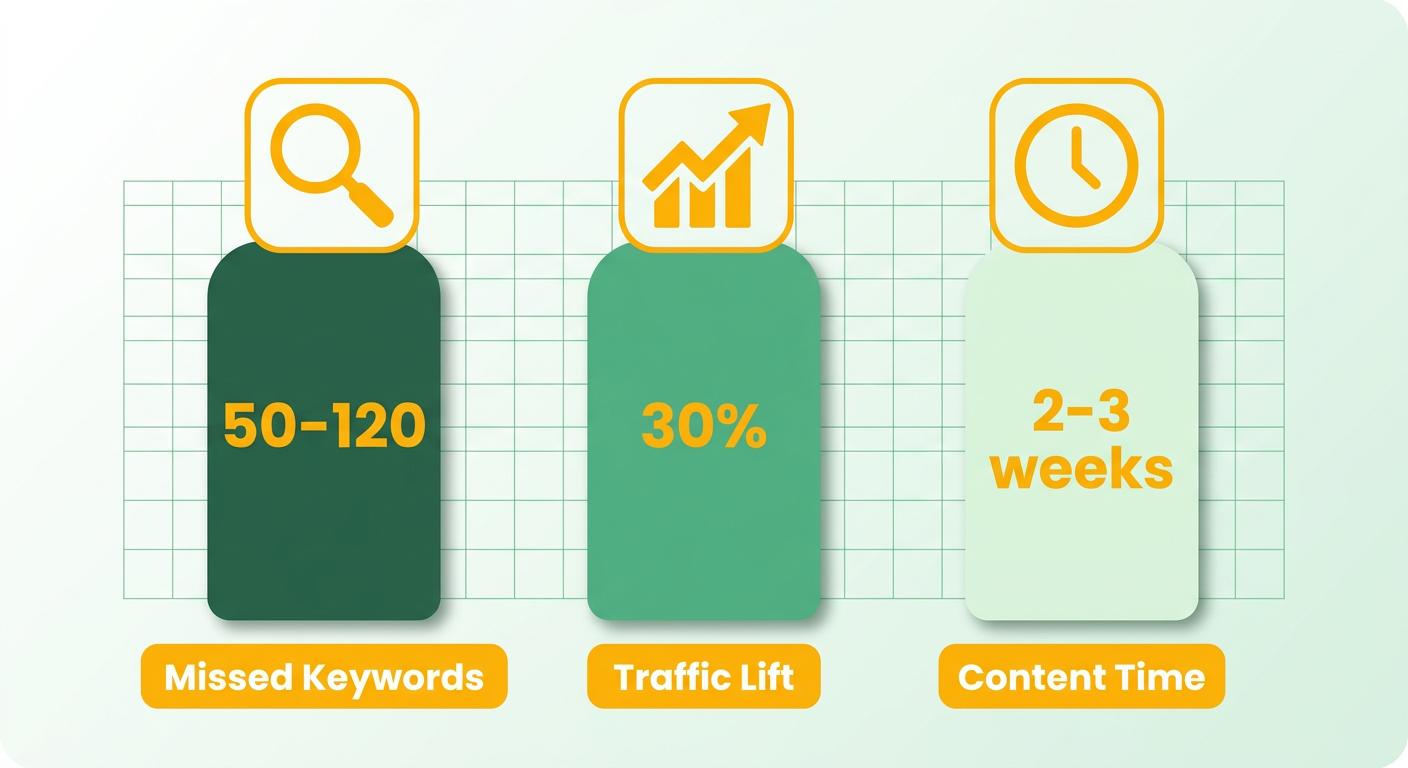
How fast does each run the analysis?
Ahrefs is fast at research. Its Content Gap report compares multiple rival sites in seconds and returns a ranked keyword list. Ninja Reports adds a reporting layer that packages those same gaps into client-ready deliverables, also in minutes.
So discovery isn't your bottleneck. Both scale cleanly here. You can run gap analysis across a dozen client accounts in an afternoon.
The drag shows up later. In the case study we found, the traffic lift arrived about three months after the analysis. That lag isn't keyword discovery. It's writing, editing, and publishing the posts that fill the gap.
Where the real time sink hides
Content production is the true cost of gap analysis. Finding dozens of missed keywords takes an afternoon. Turning them into live posts takes months of manual writing, and that's where teams stall and reports go stale.
This is the resource-usage story nobody puts in the comparison table. Ahrefs and Ninja Reports both scale discovery output far faster than any team can scale its writing throughput. The gap report grows. The content backlog grows faster.
Automated content platforms address that lag by turning keyword lists into drafted, SEO-optimized articles ready for review. Instead of a spreadsheet of missed opportunities, you get a pipeline of scheduled content that moves from research to publication without manual drafting.
How the three scale under real load
| Stage | Ahrefs | Ninja Reports | Automated Content Platform |
|---|---|---|---|
| Gap research speed | Seconds (up to 10 domains) | Fast, packaged into reports | Fast (own keyword research) |
| Reporting speed | Limited | Fast, client-ready | Not the focus |
| Content production speed | Manual, weeks to months | Manual, weeks to months | Automated, days to weeks |
| Scales with account volume | Yes, research only | Yes, reporting only | Yes, through publishing |
The pattern holds across all three. Research scales. Reporting scales. Writing is where humans hit a wall.
If you publish one or two articles a month, manual writing keeps pace with discovery easily, and an automated pipeline is overkill. The automated workflow earns its keep once the gap report outpaces your content calendar. For agencies juggling multiple clients, that happens almost immediately.
Our take: the winner of the speed contest isn't the tool that finds gaps fastest. It's the one that keeps the publishing pipeline moving after the report is filed.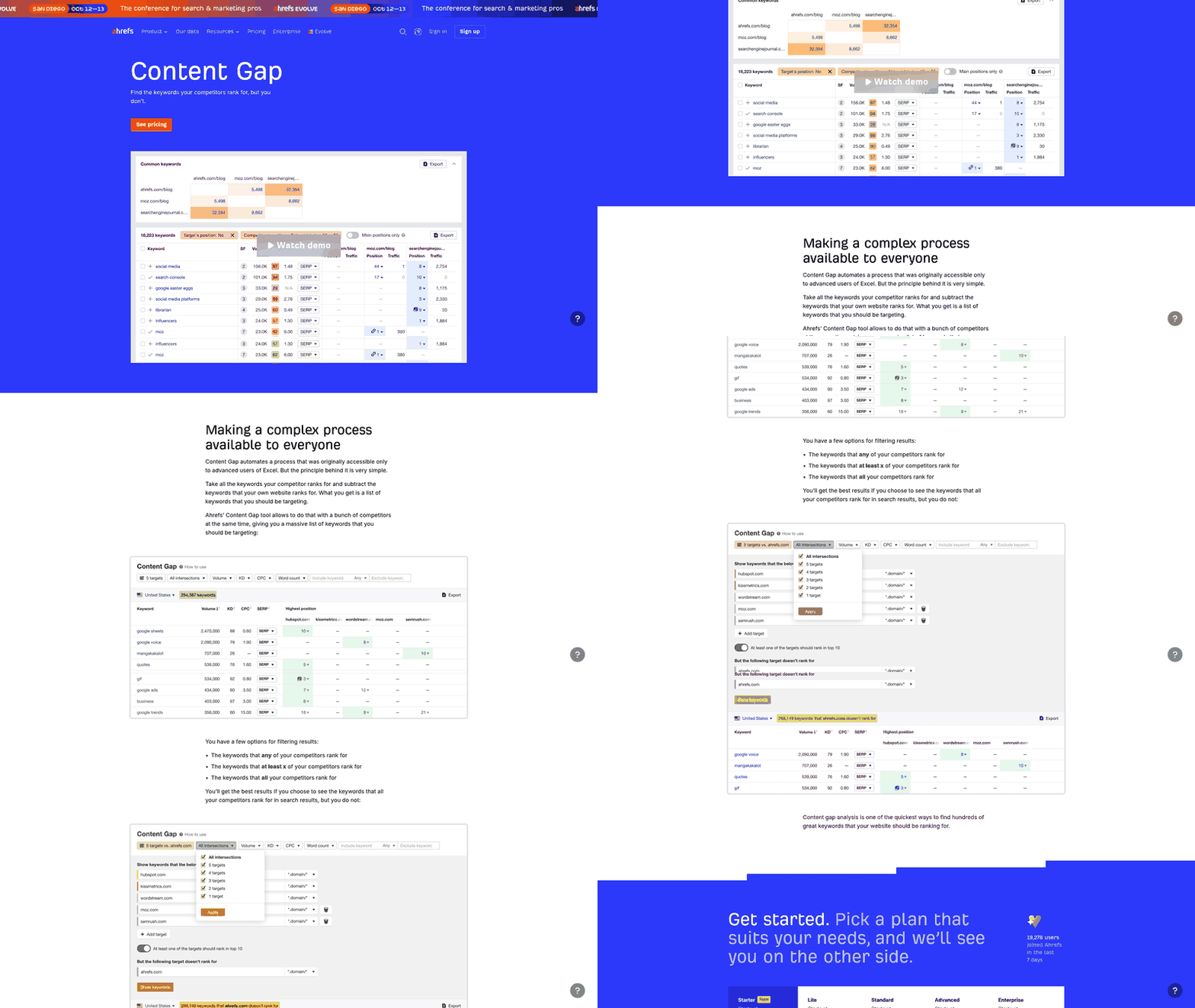
Strengths and holes
Every tool here earns its place, but each leaves a hole the others fill. Weigh Ninja Reports vs Ahrefs for keyword gap analysis, and the reality is that no single tool takes you from gap to published post on its own. That's the trade worth understanding before you commit budget.
Here's how the strengths and weaknesses land across the three.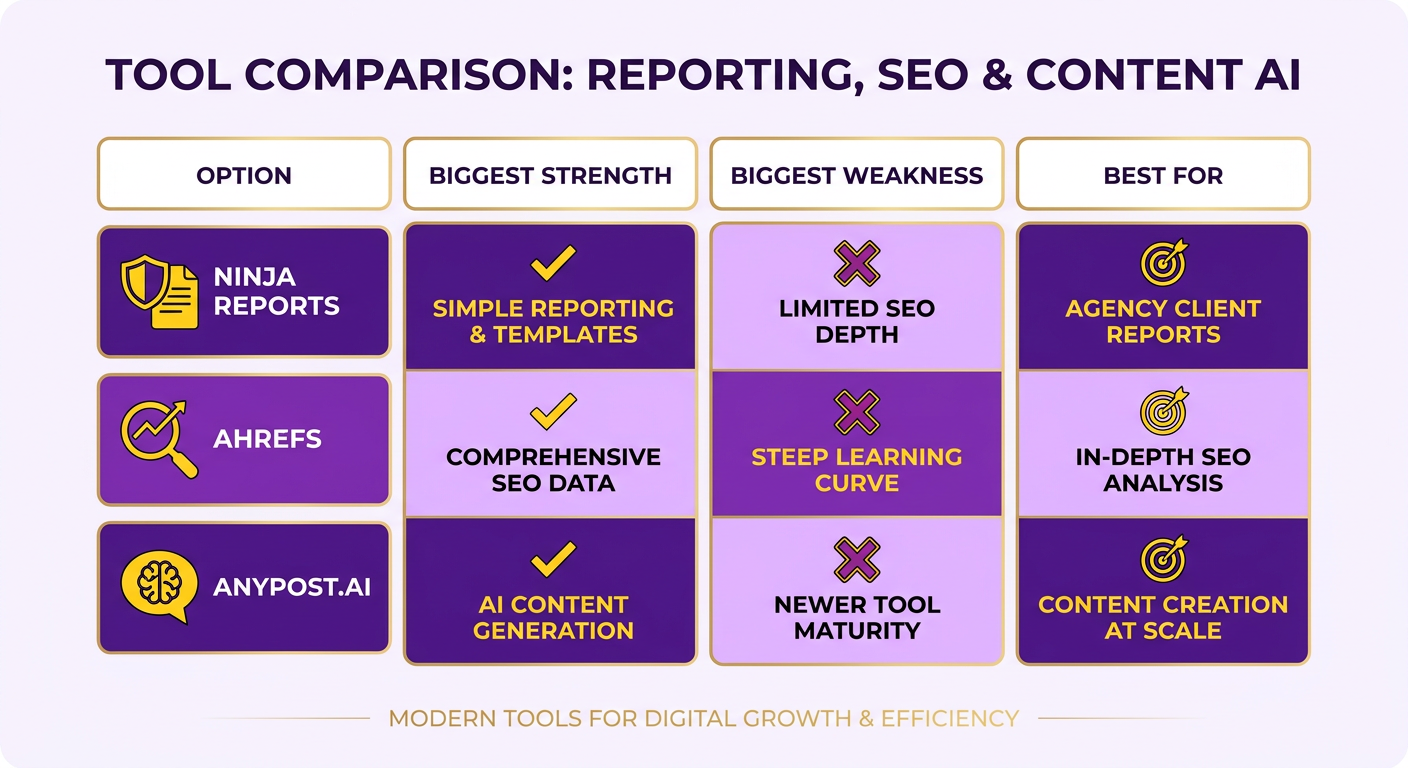
| Option | Biggest strength | Biggest weakness | Best for |
|---|---|---|---|
| AnyPost.ai | Turns gap keywords into published SEO posts automatically | Not built for deep competitor research | Closing gaps at scale |
| Ahrefs | Deepest research and competitive data | Stops at the keyword list | Strategy and planning |
| Ninja Reports | Clean, client-ready gap reporting | No content creation step | Agency reporting |
What Ahrefs does well, and where it stops
Ahrefs is the strongest research tool of the three. You get competitive keyword data with the context to prioritize it, which matters when you're planning a quarter or defending a pitch.
The weakness is where it ends. Ahrefs hands you a ranked list and walks away. Nobody on your team gets an hour back because the report exists. The writing still has to happen.
Skip Ahrefs if research isn't your bottleneck. If you already know your gaps and the backlog is content production, you're paying for depth you won't use.
Where Ninja Reports fits, and what it misses
Ninja Reports shines at the handoff. It packages gap data into reports a client actually reads, which saves agencies real time on deliverables and makes the work legible to non-SEO stakeholders.
Its limit is the same one Ahrefs hits. The report is the finish line, not the content. You walk out with a to-do list and no posts written.
Skip it if you're an in-house team with no client to report to. The reporting polish is its whole value, and you may not need that layer.
How AnyPost.ai changes the trade
The platform picks up exactly where the other two quit. Take the gap keywords Ninja Reports surfaces, feed them in, and the system drafts and publishes SEO-optimized posts built around those exact terms. That closing step is the one competitors ignore.
Its built-in keyword discovery can surface winnable terms too, so you're not locked into importing from elsewhere. The honest weakness: it isn't a replacement for Ahrefs-grade competitive research. If you need to compare a dozen rivals across historical data, use the research tool for that job.
Our take: the strongest setup pairs Ninja Reports' gap data with automated publishing rather than betting on one tool to do everything. Research finds the gap. Reporting explains it. Publishing closes it.
Highly technical or heavily regulated industries are a different story. When every post needs compliance and specialist review before it goes live, manual oversight stays essential. For standard top-of-funnel blog coverage, letting the workflow run end to end is where the time savings show up. If reporting flexibility is your priority, our breakdown of SEO platforms with customized reporting options covers that angle in more detail.
Who each tool is actually for
Picking the right tool starts with knowing who you are and what happens after you find the gaps. Map out Ninja Reports vs Ahrefs for keyword gap analysis, and the answer almost always hinges on your team size, your reporting obligations, and whether you have the hours to write the content the gap points to.
Most teams get stuck at that last part. You run the analysis, you get a clean list of keywords competitors rank for and you don't, and then the list sits there. So the real question isn't which tool finds gaps. It's which setup gets you from gap to published post without a massive backlog.
Who benefits most from each tool
Different roles pull different value from a gap workflow. Here's the breakdown across the three.
| User profile | Best fit | Why |
|---|---|---|
| In-house content team | AnyPost.ai | Feeds gap keywords straight into auto-created, published posts |
| SEO strategist / consultant | Ahrefs | Deep research, competitor comparison, difficulty scoring |
| Agency serving multiple clients | Ninja Reports | Clean, white-labeled gap reports clients actually read |
Ahrefs suits the strategist who lives in the data. If your job is planning quarters, pitching accounts, or auditing a domain against several rivals, you need the research depth. Ninja Reports suits the agency reporting to clients weekly that needs those gaps packaged without manual formatting.
When to feed gap data into a content engine
Feed gap data into an automated content workflow when your bottleneck is production, not research. If you already know which keywords you're missing but can't write fast enough to close them, the analysis tool isn't your problem. The publishing step is.
Ninja Reports surfaces and packages the gap. Ahrefs supplies the raw competitive intelligence. Neither writes the post. Our approach takes those same gap keywords and turns them into drafted, SEO-structured topics that publish on a schedule, so the list never goes stale.
A practical example: an agency pulls a gap report showing dozens of missed keywords for a client. Instead of assigning each to a writer and waiting weeks, the keywords flow into AnyPost.ai's topic pipeline. The posts get created and published while the strategist moves to the next account. Pair that with a dedicated reporting layer and you cover both content production and client communication without extra manual work.
When to skip automation
One-off, high-stakes research projects or pieces that need a specialized subject-matter expert's voice are better handled by hand. A single competitive audit for a pitch doesn't need a publishing engine. Neither does a flagship pillar page you want a specialist to write.
For those jobs, Ahrefs alone is the right call. Automation earns its place when you're closing gaps at volume, week after week, and the writing itself is what's holding you back. That's the line we draw.
What we'd actually recommend
Here's where we land after running these tools against each other on real work. The choice in Ninja Reports vs Ahrefs for keyword gap analysis isn't about which finds better gaps. Both surface the same competitive intelligence. The winner is whichever setup turns that gap list into published posts without stalling.
That's why we built our workflow around the handoff. Ahrefs finds the keywords your competitors rank for and you don't. Ninja Reports packages those gaps into a report a client will actually read. Then the list sits there. Once you know which topics to target, AnyPost auto-creates and publishes SEO-optimized articles in your voice, turning the list into live content. That's the step most tools skip.
Which tool should you pick?
Pick based on where your team gets stuck, not on feature counts. Bottleneck is research depth? Ahrefs. Client reporting? Ninja Reports. Turning the keyword list into live content? That's our lane.
| Your situation | Best pick | Why |
|---|---|---|
| Content sits unpublished after research | AnyPost.ai | Auto-creates and publishes SEO posts from your target keywords |
| Deep quarterly strategy and competitor mapping | Ahrefs | Deepest research across multiple competitor domains |
| Agency client-facing gap reports | Ninja Reports | Clean, presentation-ready reporting layer |
In practice, most teams need two of these, not one. Ahrefs plus a publishing engine covers research and output. Ninja Reports plus a publishing engine covers reporting and output. The common thread: the research tool alone never gets you to a live post.
When to skip our approach
When content demands deep manual expertise, like thought-leadership pieces carrying a named author's voice or highly technical documentation, hands-on writing is irreplaceable. We won't pretend otherwise.
Our setup shines when you have a backlog of winnable, mid-difficulty keywords and no capacity to write them fast enough. That's the exact spot where a long content queue kills your momentum. Publishing one flagship post a quarter? You don't need this. Trying to close fifty gaps before your competitor does? You do.
The practical next step
Run the gap analysis in whichever research tool you already pay for, then take those target keywords into a publishing workflow. Don't buy a new research suite just to find gaps. Buy the piece that fills the hole you actually have.
Our take after doing this across plenty of accounts: the gap report is the easy 20 percent. The writing and publishing is the 80 percent that decides whether traffic lift ever shows up. For a deeper look at how reporting integrates with execution, our breakdown of SEO platforms with customized reporting walks through where reporting ends and publishing begins.
Find your gaps with the tool that does it best. Just make sure something is standing by to close them.
Frequently Asked Questions
1. Can I use Ninja Reports without an Ahrefs subscription?
No, Ninja Reports requires an active integration with your Ahrefs account to pull keyword gap data. It acts as a reporting layer that reformats Ahrefs data into client-ready dashboards, not a standalone research tool. You need both subscriptions if you want Ninja Reports to generate gap analysis reports.
2. How many competitor domains should I analyze at once for keyword gap research?
Start with one to three direct competitors rather than maxing out Ahrefs' multi-domain comparison limit. Analyzing too many competitors simultaneously returns hundreds of keywords that overwhelm your content calendar. Focus on the closest rivals in your niche, then expand once you've published content for the highest-priority gaps.
3. What happens to keyword gap reports when no one writes the content?
The reports go stale and the gaps remain unfilled, which is the most common outcome. Identifying a large batch of missed keywords takes an afternoon, but turning them into live, published posts takes months of manual writing. The competitive advantage only materializes when content actually ranks, not when the spreadsheet exists.
4. Does Ahrefs tell me which keyword gaps to prioritize first?
Ahrefs provides volume, difficulty, and SERP feature data but doesn't rank the gaps for you. You still need to filter and prioritize manually based on your domain authority, business goals, and content resources. The tool surfaces opportunities; strategic prioritization remains your job or requires a layer like automated content platforms.
5. Can white-labeled gap reports replace the need for strategic SEO consulting?
No, white-labeled reports from Ninja Reports present the data cleanly but don't interpret business context, content feasibility, or strategic fit. Clients still need guidance on which gaps align with their offerings, which topics their team can credibly cover, and how gap-closing content fits their broader marketing calendar.
6. How long after publishing gap-focused content should I expect traffic increases?
Case studies show traffic lifts appearing about a quarter after keyword gap analysis, but that timeline depends entirely on how fast you publish and how competitive the keywords are. The lag isn't the analysis itself; it's the weeks or months spent writing, optimizing, and waiting for search engines to index new posts.
