AI SEO Content Generator vs Ahrefs Plus AI Writer: Research Depth or Publishing Cadence

Quick Summary
Most teams treat this as a feature contest. The actual choice is between how deeply each article gets researched and how often anything ships. We assess the tools qualitatively and give no scores. Ahrefs offers a "Start for Free" option, but we could not verify its plan quotas, collaboration limits, or publishing features here, so we don't calculate per-document costs or credit it with automation.
| Workflow Stage | Verified Feature | What It Does | Pricing Detail Verified | Verified Strength |
|---|---|---|---|---|
| Research and drafting | Editor-based workflow | Keeps research and drafting in one editor | A "Start for Free" option is offered; plan prices sit on a separate pricing page | Lower-risk way to test the workflow before committing |
Should an AI SEO Content Generator Prioritize Research Depth or Cadence?
Prioritize whichever one is your bottleneck. Research depth is the work done before drafting: keyword clusters, SERP analysis (reading the search results page you want to rank on), and intent mapping. Cadence is the work that keeps a calendar full after drafting, such as auto-publishing, multi-channel distribution, and scheduling. Ahrefs' verified features sit squarely on the research side. We haven't verified any cadence claims for any tool in this comparison. So run a quick diagnostic on your own pipeline. If research swallows whole afternoons before anyone writes a word, depth tools can pay for themselves. If finished drafts sit in a folder for weeks, deeper research only makes the pile taller.
Where Content Pipelines Actually Stall
The part most teams underestimate isn't the research. You can know your keywords cold and still publish two articles a month. The gap between a finished keyword list and a live page is where lean agencies and SaaS teams tend to lose the most time, and that gap is the reason an AI SEO content generator is worth evaluating at all. In our experience, the pain shows up in a few predictable places. Keyword exports pile up faster than anyone can brief them. Drafts wait on one editor, then on whoever has CMS access. Research lives in one tool, writing in a second, scheduling in a third, and every handoff between them becomes a hidden tax on output. Long-tail queries often suffer most. Each one rarely justifies a manual brief on its own, so they sit in the spreadsheet indefinitely.
What do research depth and publishing cadence actually mean?Research depth: how thoroughly you analyze a keyword before writing, covering the SERP, competing pages, and search intent.
Publishing cadence: how consistently content moves from draft to approval to distribution, and how much of that runs without someone pushing it along.
Most tools lean toward one or the other.
| Dimension | What it covers | Where it tends to break |
|---|---|---|
| Research depth | Keyword, SERP, competitor, and intent analysis | Too many keywords, too few finished briefs |
| Publishing cadence | Drafting, approving, and distributing content | Drafts stall in review or CMS queues |
The right priority depends on your backlog. If you ship a handful of high-stakes pages a quarter, put your effort into depth, because cadence tooling adds little at that volume. If your backlog holds hundreds of long-tail terms, cadence is your constraint. We cover the research side in more detail in our comparison of Ahrefs Content Explorer and AI content helpers.
Research Depth: How Ahrefs AI Writer and Competitors Dig for Keywords
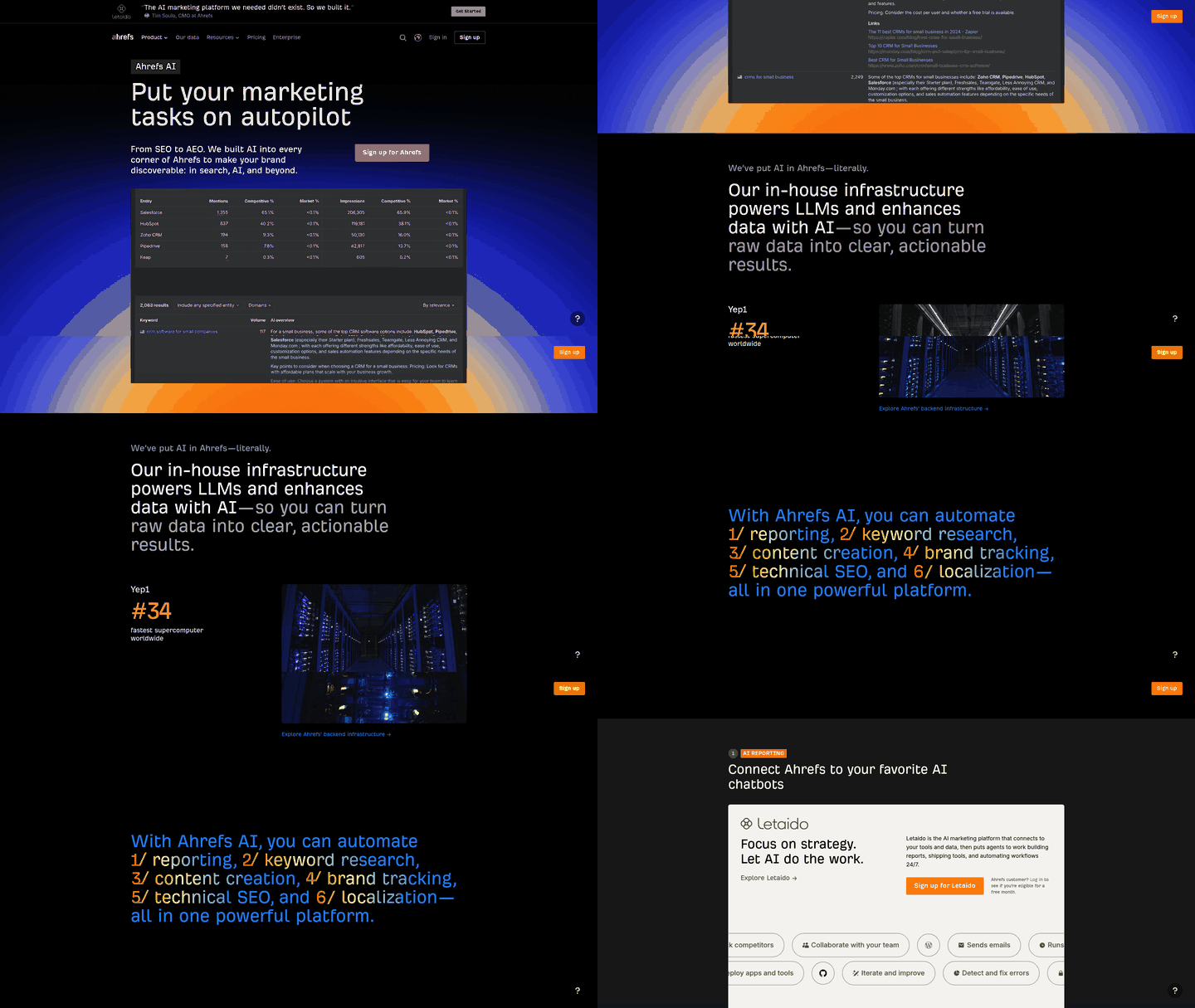
A long feature list often gets read as proof of deep keyword research. It isn't. Ahrefs AI Content Helper keeps research and drafting in one editor. That says nothing about how far it digs. We don't credit any tool here with keyword clustering, query volume limits, or data freshness.### What does each tool's research actually cover?
| Tool | Research features listed | Writing help listed | Publishing listed |
|---|---|---|---|
| Ahrefs AI Content Helper | Editor-based research workflow | Drafting in the same editor | Not verified |
| AnyPost.ai | SEO-optimized article generation; Programmatic SEO pages for long-tail search traffic | Persona Engine for tone matching | Publishes to your existing website, plus LinkedIn, X, Instagram, TikTok, and YouTube |
Where does the research pinch?
Research checks can close coverage gaps, but they won't supply original information. The practical fix is a division of labor: use them to assess topic coverage, and bring the original data, customer examples, or product knowledge yourself. There's also a limit no research check addresses. Publishing cadence tends to be the wall lean agencies hit first, and an editor that sharpens drafts still leaves you to write, schedule, and push every article live. A deep research process counts for little if the finished piece never reaches the calendar. If you write every piece yourself and want a second pair of eyes on coverage, an editor-based research workflow can fit well. If your bottleneck is getting content out the door consistently, an automated generation and publishing workflow often matters more than another layer of research.
Publishing Cadence: From Draft to Multi‑Channel Distribution
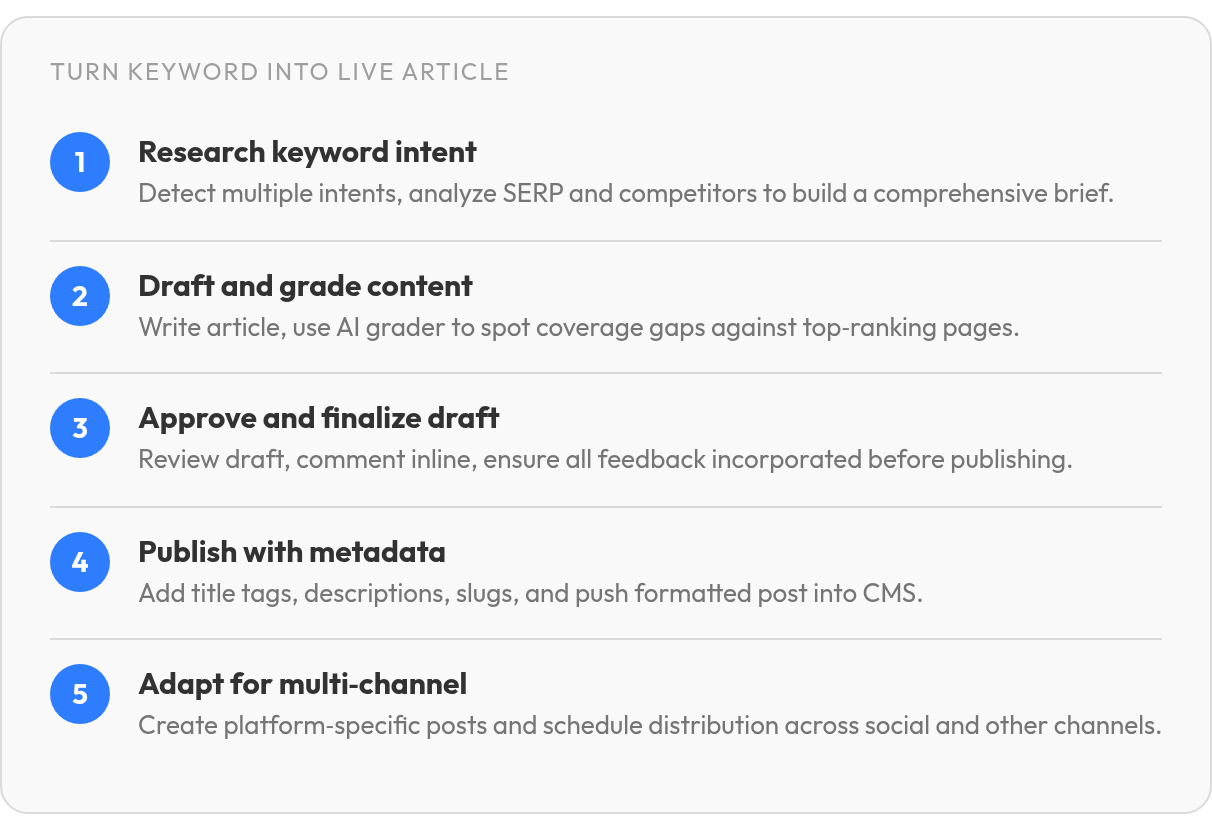
A finished draft feels like the end of the job, so nobody owns the next five steps. Those steps decide your cadence. Any AI SEO content generator can hand you a draft. In our experience, the delays tend to pile up after that, in approvals and CMS uploads. Treat the checklist below as trial questions, not features we credit to any product.
| Stage | What to check | Why it affects cadence |
|---|---|---|
| Draft approval | Who signs off, and can they comment inline? | A single reviewer can stall a whole batch for days. |
| CMS push | Does the draft land as a formatted post or as pasted text? | Manual reformatting often eats whole afternoons. |
| Metadata | Are title tags, descriptions, and slugs filled before publish? | Missing fields send posts back to the queue. |
| Internal linking | Does the tool suggest links to your existing pages? | New posts without links sit isolated from your site. |
| Social adaptation | Can one article become platform-sized posts? | Rewriting for each channel by hand slows distribution. |
Which cadence features should you ask about?
A publishing queue holds approved posts and releases them in order, so output doesn't stop when your editor goes on holiday. A drip-release calendar spreads a batch across weeks, which can look steadier to readers than ten posts landing on the same Tuesday. Analytics-triggered republishing refreshes a page when its traffic or rankings slip. It sounds great in a demo. Skip it if you publish fewer than ten posts a month, though. At that volume your team can catch drops by hand, and the extra setup tends to cost more time than it saves.
AnyPost.ai Under the Same Rules
This is the section where a vendor tends to oversell, so we're going to do the opposite. We built our platform for businesses, agencies, SaaS companies, and marketing teams that want steady leads without running content, SEO, and social media by hand. The tables list what our product says it does, not documented evidence of how the workflow performs, and we won't fill that gap with promises. Until written documentation backs a claim, treat it as a sales pitch. Ours included.
What should you ask us before a trial?
Run one batch from keyword to live article during the trial. Track who approves each draft, whether it reaches the CMS formatted, whether metadata and internal links are complete, and how long social adaptation takes. Ask us for plan limits and channel support in writing, with the plan name attached. A weekly calendar stalls the moment you hit a monthly cap, no matter how slick the editor is.### When should you skip us for now?
If your main need is draft-level research checks you can confirm today, base the decision on documented features rather than this section. Book a trial with us when publishing volume is the bottleneck. Then judge the platform by the posts that actually go live during that trial, not by the demo.
The Bottom Line on Research-First vs Cadence-First
Research checks can catch coverage gaps. They can't supply the original insight that niche B2B pages and high-competition keywords tend to need. That limit shapes which playbook fits you.Go research-first when one strong page is worth more than ten adequate ones. That describes a narrow vertical where buyers spot shallow claims quickly, or a keyword where the top results are already thorough.Go cadence-first when timing matters more than depth. A SaaS product launch needs release notes and comparison pages live in the same week. A local business usually gets more from frequent, timely updates than from exhaustive briefs. One caveat: skip cadence-first if you can't yet keep a single pillar page accurate. Publishing more of something shaky just spreads the problem.### What Each Tool Documents Sets Your Ceiling
| Tool | Documented strengths | Pricing | Notes |
|---|---|---|---|
| Ahrefs AI Content Helper | Research and drafting in one editor | Free start offered; check Ahrefs' pricing page | Test the workflow with your own backlog |
| AnyPost.ai | SEO-optimized articles in your voice through our Persona Engine; publishes directly to your existing website | Not documented here | Ask us for written plan details |
| AnyPost.ai distribution | Turns content into social carousels and posts for LinkedIn, X, Instagram, TikTok, and YouTube | Not documented here | Also covers newsletters, backlinking, and Google Business Profile management |
Ahrefs' tool keeps research and drafting inside one editor. Our workflow concentrates on getting finished content published and distributed without manual uploads. Don't let this table make the call for you; use the trial tests above.
Match Your Constraints to a Playbook
- Team size: If one editor signs off every post, test inline comments and review with that person before adding more handoffs. If several editors share the work, confirm how co-editing and review work on the plan you're considering.
- Research complexity: Specialist topics tend to favor research-first.
- Bottleneck: If drafts wait on research, go research-first. If finished drafts wait on approvals or uploads, go cadence-first.
- Channels: If you need posts beyond your blog, test distribution during the trial rather than taking it on faith.
- Budget: Divide the plan price by the number of articles you'll actually ship each month. That per-article number is the one to compare, and a weekly calendar still stalls if you hit the monthly cap.