
Automate Backlinks with AI Generated Content for Faster Ranking Gains

Key Takeaways
- AI‑generated content on AnyPost can significantly reduce the time spent drafting articles, helping you move faster on backlink projects.
- Built‑in SEO structures such as keyword‑focused headings, semantic HTML, and internal linking can make articles more appealing to external publishers.
- Real‑time analytics can show inbound links as they appear, giving you immediate visibility into impact.
- The three‑stage workflow (create, auto‑publish, monitor) can run with minimal manual intervention, allowing you to scale backlink generation.
- The Growth plan offers automated backlink generation as an alternative to traditional outreach services.
- The Persona Engine helps keep brand voice consistent across a large volume of posts.
- Automated backlink acquisition can support authority growth, potentially shortening the time needed to see ranking improvements.
Why automating backlinks with AI content actually works
Manual link building often involves a lot of repetitive work—researching prospects, drafting pitches, following up, and hoping for conversions. Automating backlinks with AI‑generated content can turn that process into a repeatable system. With AnyPost’s content generation and SEO‑ready publishing, you can produce articles that attract links on their own merits, reducing the need for extensive outreach.
How does AI‑driven automation support backlink acquisition?
Three levers do the work:
- Speed: Voice‑customization drafts articles in your brand tone at scale, freeing up hours that would otherwise be spent writing.
- Relevance: Keyword‑focused headings, semantic HTML, and internal linking keep each article aligned with search intent, making it more likely that publishers will cite it.
- Visibility: Live dashboards can display incoming links as they land, allowing you to see what’s working and make adjustments.
How to automate backlinks with AI‑generated content
The process is organized into three stages, all managed inside AnyPost:
- Content creation – Feed keyword research and brand‑voice profiles into the platform to generate SEO‑optimized drafts.
- Auto‑publishing – Push articles to your chosen channels (WordPress, LinkedIn, X) through the built‑in publishing module, eliminating manual uploads.
- Link tracking – Monitor new referring domains in the analytics dashboard to see which pieces drive the most backlink activity.
| Stage | Core Action | AnyPost Feature | Output | Typical Setup |
|---|---|---|---|---|
| Content | Generate keyword‑focused drafts | Persona Engine & SEO optimizer | Publish‑ready articles | Minutes |
| Publishing | Auto‑post to selected platforms | Integrated publishing hub | Live content across channels | Minutes |
| Analytics | Track inbound links & performance | Real‑time analytics | Insightful backlink reports | Ongoing |
Once connected, the loop keeps cycling: new keyword gaps trigger fresh articles, those are auto‑published, and they begin attracting natural links. Each round can add a bit more domain authority, which in turn helps subsequent content rank higher.
Who gets the most out of this?
Teams that already produce solid, on‑brand content and need a way to amplify its reach tend to benefit most:
- B2B marketers looking to establish presence in niche industry forums.
- Content creators who want authority without sacrificing creative time.
- Growth leaders who need fast, measurable ROI.
Smaller teams can extend outreach without hiring additional staff, while larger teams can maintain a steady output and a consistent voice across all assets.
Auto‑publishing brand‑aligned AI content across niche sites creates a compounding authority cycle. You gain speed, scale, and relevance—factors that search engines reward—while removing the traditional bottleneck.
For the mechanics behind this, see our guide on what backlink automation is and how to scale it.
Matching content themes to the audiences that link to them
Start with detailed personas, then match each persona’s information needs to a set of evergreen topics your AI can turn into audience‑specific articles. When done well, the pieces attract links from niche sites that share the same interests, illustrating how automated backlinks work in practice.
First move: audit the audience segments that actually drive referral traffic—B2B marketers seeking ROI data, content creators looking for fresh angles, growth leaders after strategic frameworks. Translate those pain points into higher‑level themes (e.g., “data‑driven attribution models,” “AI‑enhanced content calendars”) that become the backbone of your publishing pipeline.
How do you identify the right audience for each theme?
Run persona workshops, then validate each persona against signals such as search intent, social listening, and existing backlink profiles.
Gather qualitative input from sales and support to sketch buyer personas, including job title, primary goals, and preferred formats. Cross‑reference those personas with keyword clusters that show steady search volume and a healthy backlink market. Tools that reveal which domains already link to similar topics can indicate where new articles might earn links. Aligning persona intent with proven keyword clusters creates a clear map from theme to audience.
Which content formats win links from which audiences?
- Industry reports and thought‑leadership pieces tend to attract links from executives and strategists.
- How‑to guides and checklist templates are popular with community blogs and niche forums.
- Strategic frameworks packaged as slide decks or interactive tools often get shared in professional groups and newsletters.
Matching format to persona turns each piece into a natural link magnet.
How do you automate the mapping to scale?
Feed the persona‑theme matrix into the publishing engine, which then generates, schedules, and distributes articles to niche sites that match the target audience.
The workflow begins with a content calendar that tags each slot with a persona and a theme. The AI drafts in your established tone, inserts SEO‑optimized headings, and adds appropriate outbound citations. After a quick human QA, the system pushes the article to publishers whose audience profiles align with the persona. Because the content already speaks to those readers, publishers are more likely to link without a separate outreach ask. Over time, the acquired links lift domain authority, which helps subsequent pieces rank better—creating a sustainable authority cycle.
For more on this, explore our guide on scaling automated link acquisition.
Automating outreach with AI‑generated emails
AI‑generated content can support outreach while preserving editorial standards. AnyPost can help you draft tailored pitches and schedule them, turning a manual slog into a repeatable workflow.
Three parts carry it: AI‑generated copy, brand‑consistent messaging from your voice customization profiles, and scheduling tools you already use. Start with a list of relevant sites, feed the details into AnyPost to create personalized outreach, then send from your preferred email platform.
Setting up the pipeline
Build a repeatable flow that extracts target sites, generates a brand‑aligned pitch, and sends the series with minimal manual work.
-
Build a prospect list.
- Identify niche publishers or sites that fit your audience, using your own research or existing databases.
- Organize the list in a spreadsheet with contact name, email address, and relevant content topics.
-
Generate the outreach copy.
- Upload the prospect data to AnyPost and let the writing assistant draft subject lines and body copy in your brand tone.
- Request variations that reference the prospect’s recent content or industry trends to increase relevance.
- Review the drafts, make final edits, and lock the approved version.
-
Schedule sends and follow‑ups.
- Export the finalized copy to your email service provider and use its scheduling features to send the first touch at an appropriate time.
- Set simple follow‑up reminders in your email tool to keep the conversation moving if you don’t hear back.
What keeps reply rates up?
Dynamic fields and references to recent content make each email feel hand‑written. Personalization tends to improve response because recipients see a clear link between their work and your pitch.
- Insert the prospect’s first name and article title in the opening line.
- Quote a specific insight from their latest post to show you’ve read it.
- Align the angle with a current niche pain point (e.g., “improving conversion tracking for B2B SaaS”).
- Keep the tone matched to your brand persona so every message sounds cohesive.
Do results back this up?
Many users report higher reply rates and a more efficient outreach process after adopting AI‑generated, brand‑aligned emails. Results can vary based on list quality and niche.
Pair AI‑generated emails with auto‑publishing on niche sites, and the workflow can compound in ways that are harder to achieve with purely manual processes. For more on building these pipelines, see our overview of automated link‑building systems.
Scoring and prioritizing backlink prospects with AI
Scoring helps you automate backlinks without getting bogged down in low‑quality outreach. Assigning a numeric score to each prospect lets you quickly see which sites are worth the effort.
Why score prospects before reaching out?
A clear score guides you toward the opportunities that are most likely to deliver value, allowing you to avoid a “spray‑and‑pray” approach that can waste resources. When you focus on sites that already trust your niche, the odds of earning a natural link improve.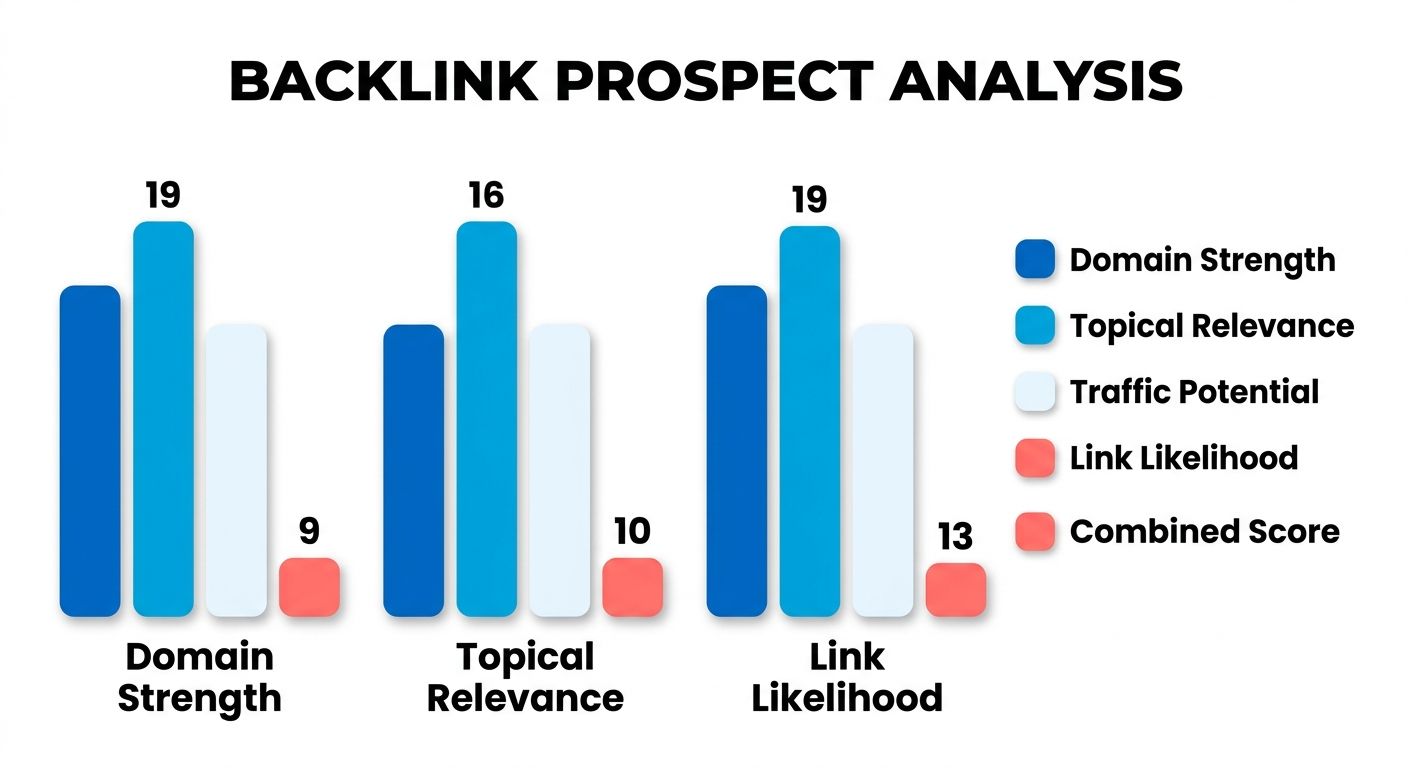
- Domain authority and referring‑domain count provide a baseline for link power.
- Topical similarity from semantic analysis confirms that the target audience cares about the content.
- Traffic estimates give an idea of how many people might see the link.
Skipping this step can lead to outreach that never converts.
How AnyPost ranks the opportunities
The platform feeds raw SEO data into an AI model that outputs a relevance score. Built‑in tools such as the Taxonomy Researcher and SERP Competitor Analyzer surface context from your site and highlight low‑difficulty, high‑intent keywords. Combining those signals with domain metrics yields a single priority rating for each prospect.
Because the model can evaluate many signals quickly, research time drops and the resulting lists focus on prospects that align with your content strategy. You can generate, score, and publish faster than building spreadsheets manually.
Which prospect types tend to score highest?
Guest‑blog slots and resource‑page listings often receive high scores because they allow you to place tailored AI content directly into an editorial flow, and they tend to attract traffic and relevance. Industry round‑ups, case‑study showcases, and tool‑comparison pages can also rank well when an AI‑generated article fills a genuine content gap, turning a citation into a backlink without a hard sell.
Monitoring backlink quality and content performance with AI
Live links are only part of the picture. Tracking their ongoing value and effect on domain authority completes the automation loop and helps prevent acquired links from losing impact. AnyPost’s AI analytics turn a static list of published pieces into a live performance board, so you can spot traffic spikes or drops before they affect rankings.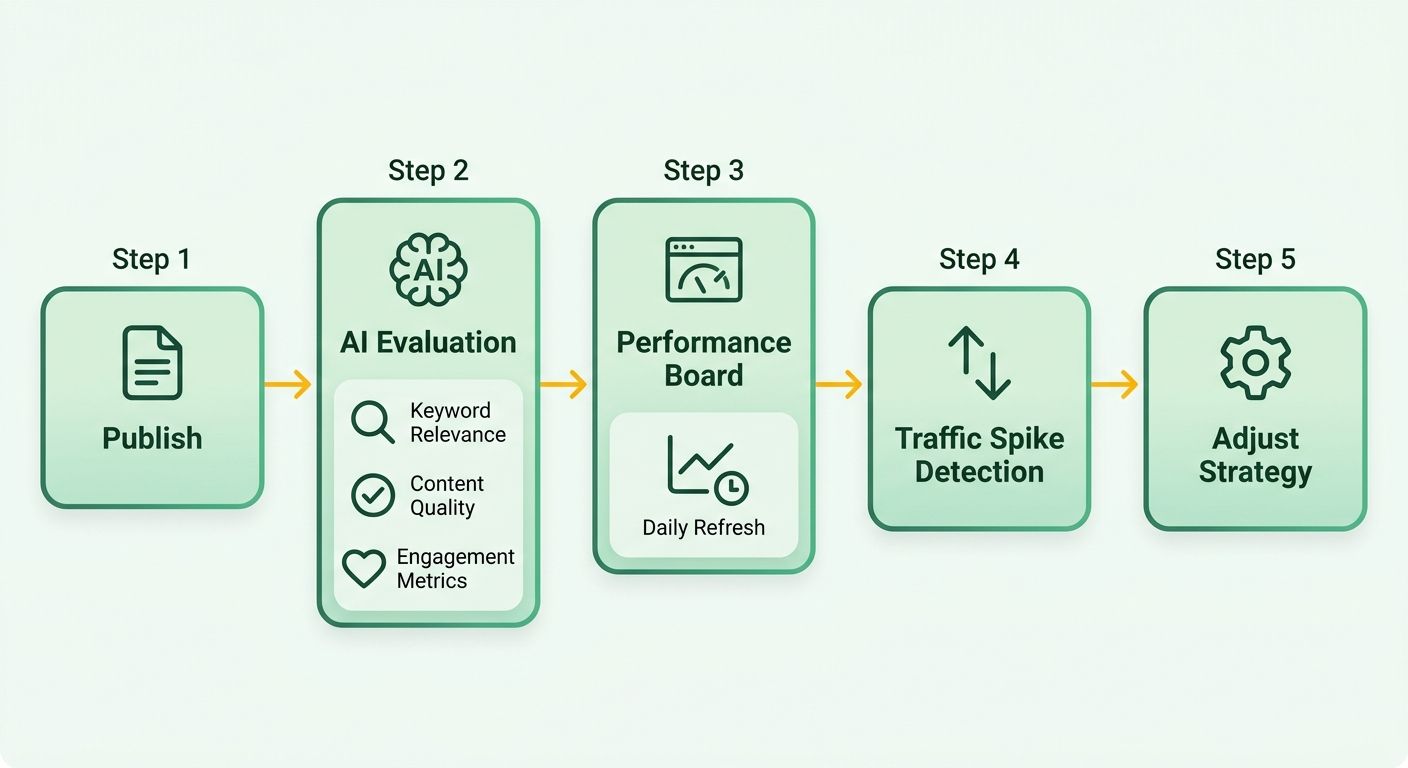
Each new piece feeds into an AI model that evaluates keyword relevance, content quality, and engagement in a single score. The model refreshes regularly, giving you an up‑to‑date view of what’s delivering and what may need attention.
How do we evaluate SEO authority with AI?
Three signals commonly associated with search‑performance shifts:
- Keyword relevance – alignment with target terms and user intent.
- Content quality – readability, depth, and consistency with brand‑voice guidelines.
- Engagement metrics – click‑through, dwell time, and bounce rate, indicating how users interact with the page.
When the AI flags an article for low relevance, weak quality, or poor engagement, it is marked for review and suggested updates.
What signals a low‑performing asset, and when to adjust?
Indicators that an article may need attention include:
- Keyword relevance falling below a recommended threshold.
- High bounce or short dwell time compared with similar pages.
- Content‑quality metrics (readability, brand‑voice consistency) below expected levels.
For smaller publishing schedules, monitoring these key indicators can be more efficient than reviewing every item.
How do we set up a continuous monitoring loop?
- Data ingestion – AnyPost pulls performance data from your CMS and connected analytics tools on a regular basis.
- AI analysis – The model scores each article against the primary metrics and assigns an overall health score.
- Alert and action – When a score drops below your threshold, a dashboard notification prompts you to edit, repurpose, or boost the piece.
Treat monitoring as an ongoing feedback loop rather than a one‑off audit, allowing each article to reinforce your site’s authority over time.
Frequently Asked Questions
1. Can AI‑generated backlink articles still benefit a site that already has a large existing content library?
AI‑generated pieces can target uncovered keyword gaps and add fresh, link‑ready assets, complementing an existing library rather than replacing it. Publishing new, SEO‑optimized articles at scale keeps the site attractive to niche publishers and encourages fresh inbound links.
2. How does AI‑generated outreach email differ from manual outreach in terms of response quality?
AI creates subject lines and body copy that reflect your established tone while inserting dynamic fields like the prospect’s name and recent article title. This personalized, consistent messaging can improve relevance and lead to higher reply rates compared with generic manual pitches.
3. Is the automated backlink process compliant with Google’s quality guidelines?
The system aims to generate natural, high‑quality articles that earn links because they match user intent and provide value, rather than through paid or manipulative schemes. By following SEO best practices and maintaining editorial standards, the approach aligns with Google’s emphasis on relevant, trustworthy content.
4. How does the Persona Engine keep brand tone consistent across thousands of AI‑written posts?
You provide the engine with defined voice guidelines; it then applies those parameters to each draft, adjusting word choice, sentence structure, and style. This helps each article read as if authored by the same team, preserving brand identity at scale.
5. What advantage does AnyPost’s live link‑tracking dashboard provide over traditional monthly SEO reports?
The dashboard updates as soon as a new referring domain appears, giving you immediate visibility into the impact of each published piece. This instant feedback enables rapid tweaks—such as repurposing high‑performing content—without waiting for a periodic report.
6. How does AI scoring prioritize backlink prospects, and can I focus only on the highest‑scoring sites?
The AI combines domain authority, topical similarity, and traffic estimates into a standardized priority rating. Prospects with the highest scores—often editorial placements and curated resource directories—are flagged for immediate outreach, allowing teams to concentrate effort where link value is most evident.