
Automated Rank Checker Workflows Changed. Here Is What Still Matters.

Planning article markdown cleanupOutlining moderate article rewritingStarting full article redraft

Key Takeaways
- Automated rank checkers pull position data on a schedule.
- They flag movement and send it into existing tools.
- Manual tracking used to eat a full day weekly.
- Reports often arrived three weeks after rankings changed.
- A keyword sliding from position 3 to 8 hurts revenue.
- Automated tracking catches drops the same day.
- That gives teams time to diagnose and respond.
- Rank data in Slack, email, or webhooks breaks silos.
- Manual copy-paste can easily introduce transcription errors.
- Scheduled runs keep going through holidays and sick days.
Why the manual reporting model quietly costs you money
Legacy reporting creates a delay between search changes and team response. Someone compiles the spreadsheet, formats arrows, and sends the deck. By then, the drop is already old news. Automated tracking removes that friction. Position updates flow into the channels your team already uses.
That delay matters because visibility drives pipeline. A sudden slide on a high-intent term can reduce organic traffic and conversions. It may happen weeks before a monthly audit catches it. Catch it the same day, and you can investigate the cause. It may be technical, competitive, or algorithmic.
Why manual workflows cost you money
Manual reporting fails for a simple reason: proper rank checks take time. It is not a lack of care. A thorough check uses hours most teams do not have. That is where drops go unnoticed.
The pain usually shows up in three ways. Automation helps with each one.
- Get the data out of the SEO silo. When performance data stays in one tool, writers and developers miss it. Move those streams into a shared workspace. Then the people touching the site can see trends in real time.
- Kill transcription errors. Hand-keyed data drifts. Typos happen. Formatting shifts. Numbers land in the wrong row. Programmatic collection keeps the record accurate and structured.
- Keep reporting running when people don't. If one person runs exports, you have a bottleneck. Vacations and crunch weeks will break the process. Scheduled tracking keeps moving.
Who gets the biggest payoff
Agencies past 50 clients benefit most. So do in-house growth teams and SaaS platforms that publish constantly. For them, manual tracking is not slow. It is impractical. AccuRanker earned its spot with brands like IKEA and Tripadvisor because on-demand accuracy at that scale cannot be done by hand.
But raw data is not the end goal. The real gap is between spotting a drop and fixing it. Most SEO teams use AI tools regularly now. Yet many still cannot connect insight to action. Rank data ends up in a Slack thread.
Our view is simple: the better workflow turns detection into action. When you lose a top-three placement, you need content that can reclaim it. It should match your brand voice, target the right keywords, and publish quickly. That is where automated content generation narrows the gap between finding the issue and solving it. If you want the mechanics, our guide on how an automated rank tracker works and what to measure walks through it.
Does automation future-proof your reporting?
On two fronts, yes: audit trails and AI search. Scheduled tracking leaves a timestamped record stakeholders can trust. No manual log is required. It also prepares you for AI answers, where a stable ranking can hide a real problem. Rank may look fine. Visibility may not. Automation lets you watch both.
The visibility metrics that survived 2025
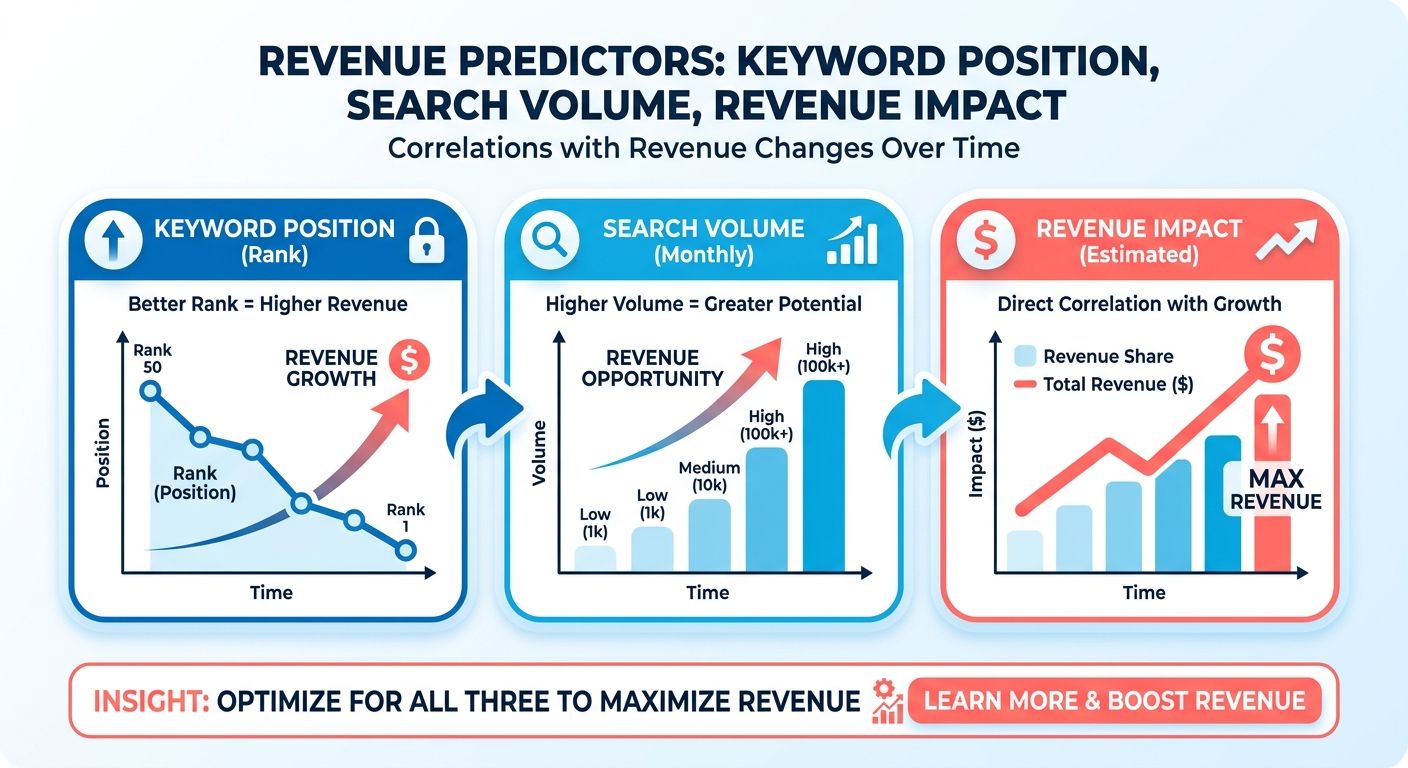
Not every data point deserves a dashboard tile. After the num=100 parameter was deprecated in September 2025, many "essential metrics" became guesswork. What survived is a short list of numbers that still predict revenue. Three matter most. An automated rank checker should show all three in one view before you touch a page.
Here is the shift that changed everything. Over 60% of searches now end without a click. AI Overviews reduce organic CTR by 61% when they appear. Some call it "The Great Decoupling": the gap between ranking and being seen.
The three metrics that still predict traffic
Rank alone says little now. You need position, pixel depth, and answer-citation presence together. A stable rank with zero AI citations is both a win and a warning.
- Track absolute vs. relative position on high-intent terms first. Focus on the terms that convert.
- Calculate Visibility Share from Search Console impressions. Divide impressions for a keyword set by total available impressions. This catches decline before rank drops, because impressions fall first when AI Overviews push you below the fold.
- Log SERP feature presence per keyword: featured snippets, People Also Ask, video carousels, AI answers. A page can hold a strong position and still disappear from AI answers. That is an answer-prominence issue, not a ranking issue. Rank data alone will not show it.
How often should the data refresh?
Daily for active campaigns. Weekly for stable pages. The sources conflict here, and both are right in context. Some argue weekly updates leave gaps that hide drops. Others prefer trend focus over short-term noise. Our view: collect daily, but use trend-based alert thresholds. Then you act on real movement, not a one-day wobble.
Freshness matters most in fast-moving niches. 70% of AI Overview results change completely within a 2-3 month window. Weekly checks can miss that churn.
| Metric | Why It Matters | Typical Frequency | Automation Options | Effort Rating |
|---|---|---|---|---|
| Keyword Position | Direct revenue signal on intent terms | Daily | Scheduled rank pulls + alerts | Low |
| Visibility Share | Early warning before rank drops | Weekly | Search Console API sync | Medium |
| SERP Feature Presence | Catches AI-citation loss | Daily | Feature-parsing crawl | Medium |
| Search Intent Alignment | Flags bounce/dwell mismatch | Weekly | Analytics + rank join | High |
| Competitive Gap Index | Shows top-3 position deltas | Weekly | Competitor tracking module | Medium |
| Conversion Correlation | Links rank moves to leads | Monthly | Rank-to-funnel attribution | High |
What closes the loop
Watching numbers is not the point. Acting on them is. When visibility drops on a ranked page, automated content systems can refresh and optimize it faster than a manual workflow. That is the difference between a report and a fix.
Automation saves real time compared with spreadsheet tracking. As one SEO put it, "the best rank tracker is the one you will actually open every day." Metrics only matter when you measure them consistently.
Building a rank-tracking workflow that actually ships fixes
A full workflow follows a fixed path: collect position data, normalize it, store it, alert on meaningful drops, and trigger action. The last step is where most teams fail. An automated rank checker that stops at a Slack ping is only half a system.
Most rank insights die in a spreadsheet or Slack thread. They never become a fix. AnyPost helps close that gap. Our Persona Engine captures your brand's voice, so updates read the way you write.
What sources and credentials do you need first?
Start with your sources, then lock down access. You want first-party position data plus third-party depth, all running on a schedule you control.
- Connect Google Search Console and Bing Webmaster Tools for first-party impression and position data straight from the engines.
- Add a third-party rank API (Ahrefs, SEMrush, or similar) for competitor positions and SERP-feature coverage your own consoles miss.
- Store every API key in environment variables or a secrets vault, never in the script itself. Leaked credentials are the fastest way to lose an integration.
- Write a nightly extraction script in Python or Node that pulls keyword positions across desktop and mobile separately, since the same keyword often ranks differently by device.
How do you store and schedule the data?
Normalize before you store it, then automate the cadence. Unify column names, fill missing dates, and push clean rows into a cloud warehouse like BigQuery. Then let a scheduler run the whole thing untouched.
- Orchestrate the pipeline with Airflow, Zapier, or Make so the pull fires on your chosen cadence without manual kicks.
- Set a consistent data cadence. Match collection to reporting needs. High-priority terms benefit from frequent updates to catch volatility. Broader keyword sets can run on a rolling basis to manage API costs and avoid data fatigue.
- Add a quality gate that flags API errors, impossible spikes, or missing rows before the data reaches anyone. Validation is not optional when automated feeds drive downstream decisions.
- For campaigns above 10,000 keywords, batch with pagination and parallel requests so a single run does not time out.
How do you turn a drop into a same-day content fix?
This step separates a report from a system. Set an alert threshold, then wire it to your content process, not just a channel.
- Fire alerts through a Slack bot, email digest, or a publishing webhook when any tracked keyword drops more than 5%.
- When a flagged URL surfaces, bring it into AnyPost to generate a voice-aligned update. Our SERP Competitor Analyzer studies the top-ranking articles and builds a structure around them, so the rewrite targets the gap you need to close.
- Monitor citation ownership, not just rank. Parse the specific HTML of AI-generated summaries. Losing a citation while keeping your standard organic link tells you to restructure your content's direct answers.
- Feed results into an auto-refreshing dashboard in Google Data Studio or Power BI so trends stay visible without anyone rebuilding a deck.
Closing the gap between collection and execution takes integrated publishing pipes. Wire the rank tracker straight to your CMS API, and you move from spotting a gap to shipping the update with no handoff.
Reporting and segmentation: agency vs. in-house
Automated rank checkers pull position data on a schedule. Turning that signal into action is where most teams stall. Agencies need client-level dashboards and white-label PDFs customized per contract. In-house teams need KPI alignment that ties traffic drops to leads, MQLs, and revenue. The difference is structural, not cosmetic.
What agency workflows need that in-house teams skip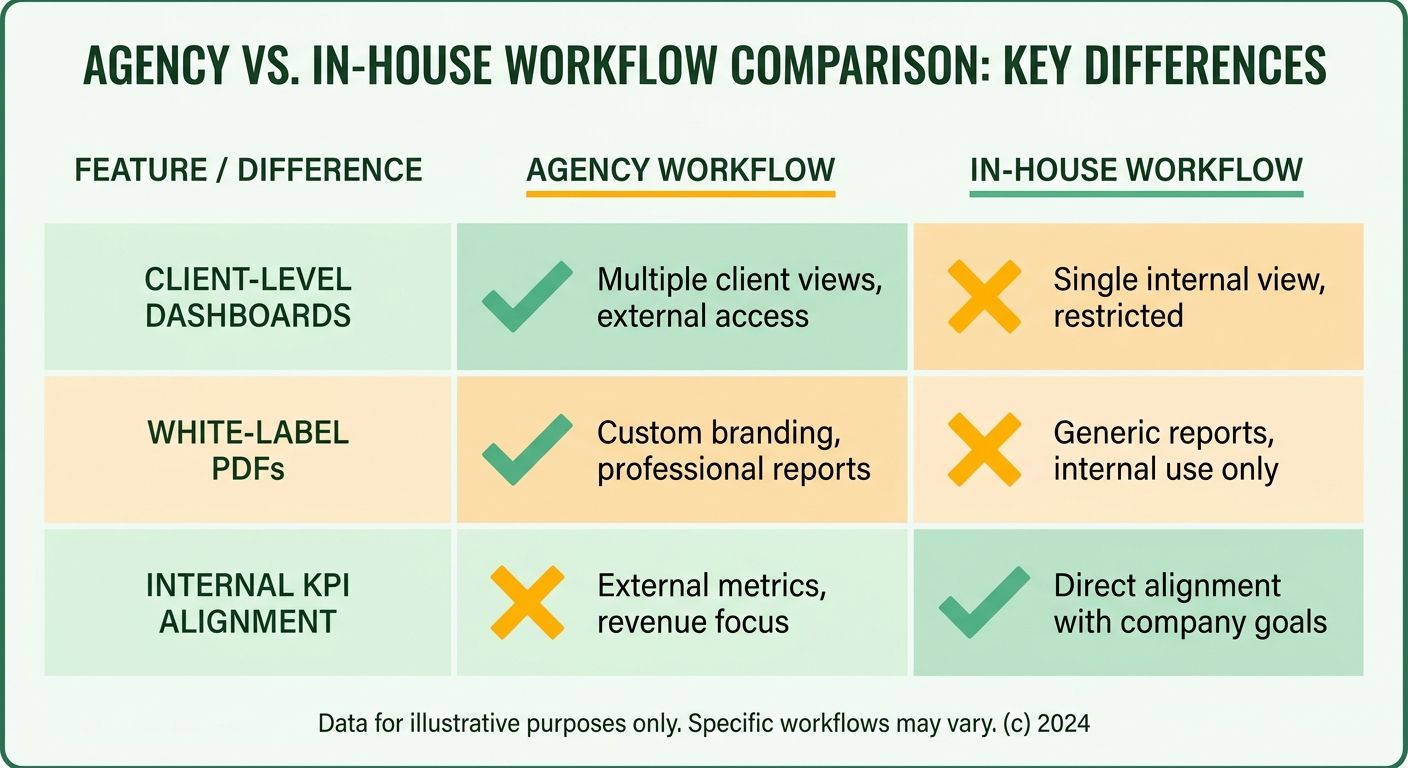
Agencies juggle multiple clients under different SLAs, so reporting has to segment by client, vertical, and content type with zero copy-paste. One workflow may serve an e-commerce client tracking 2,000 product keywords. Another may serve a SaaS client tracking 150 blog terms. Each client sees only their data, branded with their logo, and delivered weekly as a PDF they can forward to their CMO.
The mechanics are straightforward. A rank tracker API pulls fresh positions. A script maps each keyword to the right client ID. A template engine fills a Google Slides or PowerPoint deck with charts, tables, and commentary. The alternative is manual CSV exports into sixteen decks. That eats six hours every Friday and guarantees you will miss an important drop.
White-label reporting is not optional at agency scale. Clients forward those decks to leadership. Every chart, footer, and URL has to read as their brand, not yours. Most enterprise trackers do this natively. Budget tools make you strip logos after the fact or build your own templating layer.
- Set up client-level segmentation so each login sees only their keywords, competitors, and SERP features.
- Automate PDF generation with a Google Slides API or PowerPoint script that pulls fresh data, populates charts, and exports a branded deck untouched.
- Customize KPI thresholds per contract. One client cares about top-3 visibility, another tracks top-10 share of voice, and your alerting should reflect both.
- Schedule weekly micro-reports for agencies and monthly strategic decks for in-house teams. Agencies need frequent proof of progress. In-house teams need time to act on it.
How in-house teams align rank data with revenue
An in-house growth team tracks one brand, so the workflow can wire rank data directly into the numbers the CEO reads: traffic, leads, pipeline contribution, and closed-won revenue. The question is not "did we drop two spots?" It is "how much pipeline did we lose, and what update closes the gap today?"
Shared dashboards reduce the disconnect between SEO, product, and sales. A product team ships a feature. The content team publishes a comparison page. The rank tracker flags a competitor leapfrogging you two days later. Without a shared view, that signal dies in a Slack thread. With automation, the alert sends a Slack summary that tags product, content, and growth in one message. The loop closes before damage compounds.
Rank tracking stopped being a retrospective audit and became a forward signal when automation connected it to the content engine. AnyPost supports that on the production side: its Taxonomy Researcher surfaces low-difficulty, high-intent keywords for your niche, so teams can build topical authority before competitors occupy those spaces.
- Map keywords to funnel stages and personas so a drop in "enterprise CRM comparison" alerts demand gen, not your blog editor.
- Wire rank alerts into the Slack channels where the people who can fix the problem actually work: product, sales, content. Not a monthly deck.
- Store raw API responses for compliance and audits. If an executive questions a ranking claim six months later, you want timestamped proof.
- Automate Slack summaries for weekly check-ins and save executive PDFs for monthly reviews. Stakeholders do not need sixteen charts. They need three numbers and one recommended action.
What happens when rank insights never trigger a content update
The gap between detection and action is where most rank trackers fail. Recent data shows 87% of SEO teams use AI regularly, yet only 1% call their work fully automated. That twenty-two-week lag between spotting a drop and shipping a fix is not a data problem. It is a workflow problem. Your tracker sends an alert into Slack, the team discusses it, someone opens a Jira ticket, a writer drafts an update three weeks later, and by the time the revised page ships, you have lost thousands in revenue.
AnyPost shortens the production half of that loop. Once you know a page needs work, our Persona Engine draws on the Business Context Graph we build by crawling your site. It captures your brand's voice, so the article sounds like you wrote it. Our Humanizer Module then delivers clear, natural prose. You review the draft, approve it, and auto-publish the same day. The difference between a tracker that alerts and an engine that produces ready-to-ship drafts is the difference between knowing you are losing and having the fix in hand.
One agency documented workflows across every department to customize its AI tool, then found 12% of AI-assisted data points were wrong after manual audits. The lesson is simple: automation without verification is noise. Keep a human checkpoint after the AI drafts the update and before it goes live. That helps catch hallucinated stats, off-brand phrasing, and logic gaps no model self-corrects.
Choosing a rank checker (with AnyPost.ai as a reference point)
Picking a rank checker in 2026 comes down to one question: does it turn a drop into a fix, or only report the drop? The global SEO software market hit $74.6B in 2024 and grows around 13.5% a year, so you have plenty of options. Most stop at the alert.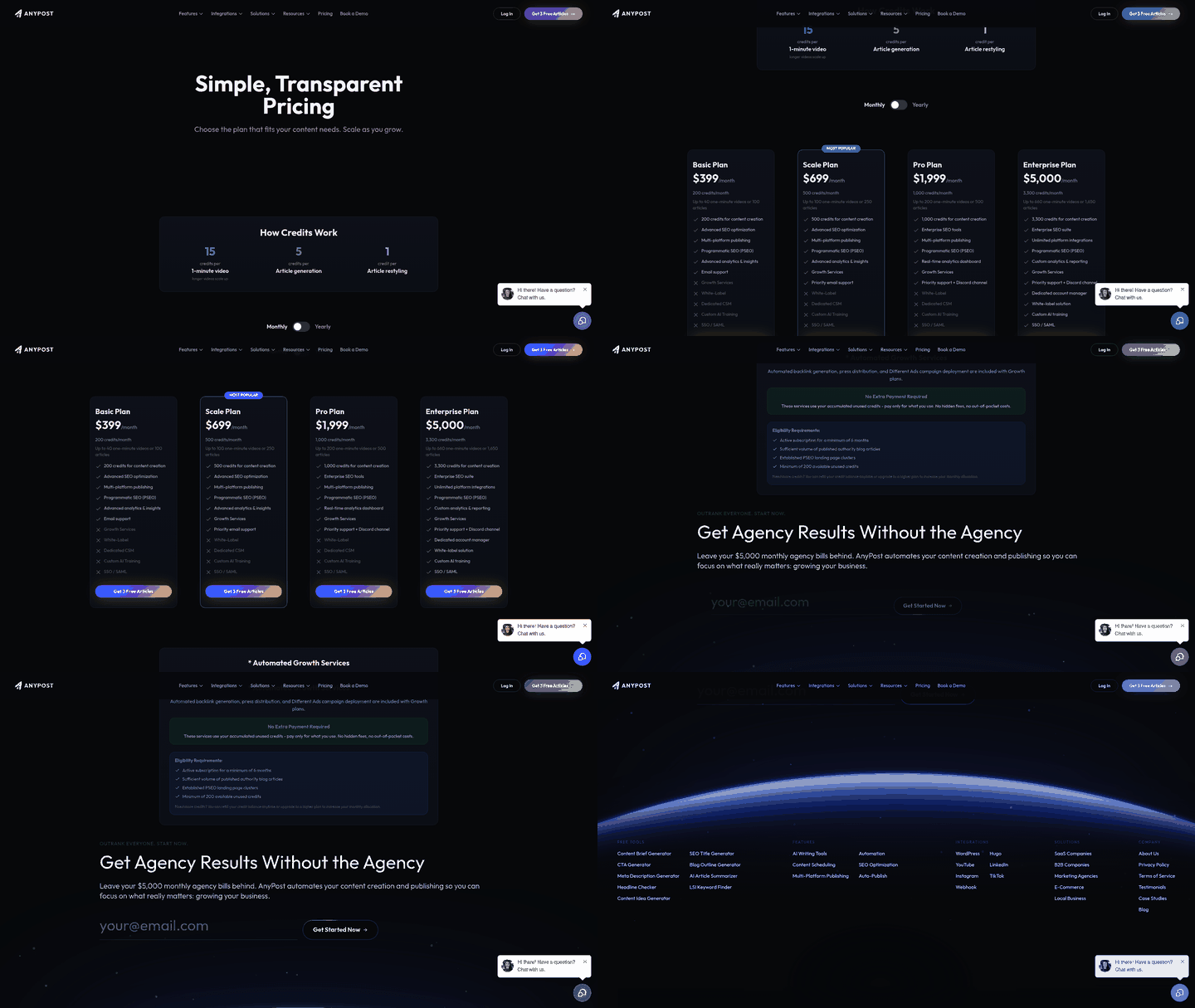
An automated rank checker that pings Slack and quits leaves the hardest step to a human who is already buried. The tool that matters is the one that connects the data to the content edit that answers it.
The non-negotiable capabilities
Start with the data layer. Without daily freshness and AI-answer tracking, you are measuring the wrong thing.
- API access so you can pipe position data into your own pipelines instead of living inside one dashboard.
- Multi-search-engine and multi-device support, since mobile and desktop rankings diverge and matter separately.
- SERP feature detection, because a position-1 result means little when an AI answer above it cites a rival. Track local packs, snippets, and AI Overviews or you will misread page health.
- Historical data retention to separate a real drop from noise. The #1 organic result changes on 31.7% of consecutive days, so single-day panic is a trap.
Daily updates and trend context are not in conflict. Set alert thresholds on the trend, not the raw number.
How to judge integration and accuracy
Integration friendliness decides whether the tool gets used. If monitoring fits the daily routine your team already has, it becomes a habit instead of a chore.
- Webhook support to trigger internal workflows the moment a keyword moves.
- Zapier or Make connectors for teams without engineering time to spare.
- Native reporting templates so client or exec updates build themselves.
On accuracy, ignore any vendor "accuracy score." Accuracy is geo-precision times freshness, not one headline number. Independent testing puts mean local ranking variance across cities at 0.82, which is why hyperlocal tools scan full city grids on a schedule. If you track multiple regions or languages, that variance is your real accuracy test.
How pricing and scale should shape your pick
Pricing usually splits three ways, and each serves a different team.
- Per-keyword pricing suits small, focused campaigns but gets expensive once you scale past a few hundred terms.
- Per-site pricing fits in-house teams with deep keyword sets on one domain.
- Enterprise tiers handle 50k-plus keywords and multi-regional tracking without per-term math eating your budget.
Where AnyPost fits
AnyPost works as an execution layer on top of your performance data. Instead of exporting drops and briefing writers by hand, it runs the content lifecycle from gap detection to distribution in one interface, keeping brand voice and style guidelines consistent.
If you only need raw positions and never touch content, a lightweight tracker is enough. AnyPost fits when the insight has to become published content, not just a data point.
Future-proofing your rank-tracking strategy
Rank tracking is about to measure something it was never built to see. When AI answer boxes, voice results, and image SERPs decide who wins, tracking position #1 is not enough. The job now is to future-proof your automated rank checker so it survives the next three shifts instead of breaking the next time Google changes the rules.
A guide for "project management templates" can keep its organic ranking while a fresh AI summary above it cites only a competitor's checklist. Standard position tracking would call that a win. It would miss a serious drop in actual search real estate.
Tracking AI answers and zero-click visibility
Start by treating AI citation presence as a first-class metric, not a footnote. AI answers rewrite themselves constantly, and the same query can pull different sources from one week to the next. You need weekly answer-visibility logging next to your position data to catch those swings before they harden into lost traffic.
- Log answer presence per provider, not just rank. Track whether your page gets cited across ChatGPT, Perplexity, and Google AI so you catch prominence drops that rankings hide.
- Make impression share and CTR trend your health indicators, not position #1. A quiet slide in impressions often surfaces a prominence problem weeks before your average position moves at all.
- Monitor semantic relevance, not just placement. AI boxes reward answers that match intent, so track whether your content actually answers the query, not where it sits.
What a future-proof voice and visual workflow includes
Voice and visual search change the signals you monitor. Voice results rely heavily on local pack visibility and featured snippet presence. Image SERPs mean tracking how your visuals rank. Different data sources, and your workflow has to handle all of them.
- Track local pack and snippet presence for voice queries, since spoken results usually read from one snippet or one map result.
- Watch image rankings through visual search, because a growing slice of discovery starts with a photo, not a text box.
- Cluster keywords by user intent with topic modeling, so reports group queries by what people actually want rather than by string match.
How to keep the workflow from breaking
Build with a modular architecture so individual data connectors update independently. When search engines deprecate legacy parameters or change output formats, a decoupled setup lets you swap one API integration without rebuilding the whole pipeline.
- Run a quarterly audit of API deprecations and new data sources so a silent break does not corrupt months of trend data.
- Design plug-and-play micro-services that let you drop in a new ranking API as a component, not a code overhaul.
- Close the loop from insight to edit. The signal is worthless if it dies in a dashboard. When a drop surfaces, the fix should become a voice-matched update the same week, not a ticket that ages for a month.
The combined metric that matters going forward is rank plus pixel depth plus AI citation presence. Track one without the others, and you may report success while traffic slowly declines.
Frequently Asked Questions
1. How does the num=100 deprecation from September 2025 affect my existing rank tracking setup?
This change limited the volume of search results accessible through one query parameter. As a result, legacy tools that relied on deep-page scraping must now use paginated or API-driven collection methods. To maintain accuracy, setups must focus on immediate SERP features and pixel-depth metrics instead of deep, low-intent organic positions.
2. Can a page rank in position 1 and still be losing traffic?
Yes. If search engines display rich interactive elements, direct answers, or AI-generated summaries above traditional organic results, users often find what they need without clicking links. That means a top organic ranking no longer guarantees the same click-through rate it once did. Visual prominence and citation tracking are now essential.
3. How do I calculate Visibility Share, and why does it matter more than position?
This metric compares your actual search impressions with the total search volume for a specific keyword group. It acts as a leading indicator of search layout changes. If search engines add visual elements that push organic listings down, impressions fall even when your ranking stays the same.
4. Should agencies and in-house teams set up rank tracking the same way?
No, because their operational goals differ. Service providers need scalable, multi-tenant setups that isolate data and generate customized reports for different stakeholders. Internal teams benefit from deeper integration between search data and CRM or web analytics systems to trace organic performance directly to business pipeline.
5. What accuracy score should I trust when comparing rank checkers?
Do not rely on proprietary vendor scores. Instead, evaluate a tool's ability to track rankings at specific geographic coordinates and ZIP codes. Because search results vary based on the searcher's physical location, a reliable tool must offer localized IP emulation to capture what users in different regions actually see.
6. Why do rank alerts often fail to improve rankings even when teams see them?
Alerts fail when they are not tied to action. If a notification only tells the team about a drop without assigning a task, starting a content review, or triggering an optimization workflow, the insight stays unresolved. Success requires clear protocols for who updates the content and how quickly those changes are published.
7. How does AnyPost help after a rank checker flags a drop?
The platform automates the response phase by analyzing the top-performing pages for the affected keyword and drafting targeted content updates. By aligning these drafts with your established brand guidelines and providing direct publishing integrations, it lets teams quickly refresh underperforming pages and push updates live without manual drafting delays.