
From Brief to Published Post: Which Platforms Close the Loop

What You Need to Know
Marketing teams can lose hours every week to manual scheduling and cross-posting, but a larger cost may be the attribution gap that keeps content disconnected from revenue. Some publishing platforms may shorten or rewrite tracking links or override custom UTM parameters, which can fragment analytics across channels. Different tools emphasize different parts of the workflow: some optimize for publishing speed, some for integration breadth, and some for multichannel orchestration depth. PostOnce, Gumloop, and Insider One are often described in those respective terms, but specific capabilities should be checked against current documentation. Many marketing automation platforms close the loop through publishing, then stop there. Performance analysis and content iteration often remain manual. The platform you choose determines which handoffs disappear and which stay manual, and that directly shapes the gap between content published and results measured. Some social publishing tools attribute posts to the connected account owner's name, not to the team member who drafted the content.
Why the Last Mile Eats Your Week
The part many teams underestimate isn't writing the content. It's the operational drag that follows: cross-posting to multiple platforms, chasing analytics across several dashboards, and losing track of which campaign actually produced a lead. Automating workflow execution from planning through reporting can save hours. It can also close a measurement gap that leaves many marketers blind to what's working.
Teams that automate these workflows often report reclaiming meaningful time each week by cutting manual scheduling, cross-posting, and reporting. Consistency often improves. But many marketers still struggle to tie content efforts to pipeline and revenue. If you can't see what drove results, the loop isn't closed.
Where fragmented handoffs actually hurt
When you treat content creation, distribution, and measurement as separate workflows, inconsistency can creep in. Cadence may become irregular because scheduling is manual. Tone can shift when different team members handle different channels. Optimization opportunities can slip away because there's no unified view of performance.
Attribution gaps can show up in the same way. Publish through one tool, track with another, manage leads in a third, and you may end up with three partial stories instead of one complete loop. The operational tax isn't just the hours lost. It's the strategic decisions you can't make because the signal isn't clean.
Speed vs. control: the automation trade-off
Different platforms demonstrate different ways to close the distribution loop. One approach is to make workflow setup fast, publish shortly after content is detected, and support large-scale cross-platform publishing. That speed can come with a trade-off. You may give up some custom control and per-platform tweaking in exchange for consistent cross-channel presence.
Other platforms emphasize native integrations for building custom automation chains that connect content creation to an existing stack. Still others consolidate multichannel orchestration, supporting major marketing channels and audience targeting attributes. Each platform appears to prioritize a different part of the loop: publishing speed, integration breadth, or multichannel depth.
The platform you choose determines which handoffs disappear and which remain manual. The goal is to reduce the operational distance between content published and results measured.
HubSpot: Integrated Hub, Unfinished Loop
HubSpot is often evaluated as an integrated hub for social publishing. Social post creation and scheduling are core capabilities in many such hubs, but the documented loop may end at publishing. You can typically draft posts and schedule them across multiple networks from one composer. How a tool attributes posts and handles tracking links can vary by configuration and account setup. Depending on the platform and settings, links may be shortened or parameters rewritten, which can make cross-tool attribution harder.
This possible link handling can create an analytics consistency problem. If social campaigns run through one system and email through another, you may end up with fragmented analytics: one link format in one dashboard, custom tracking in another. The unified attribution many marketers expect from automation can become siloed measurement. Comparing social performance to email or blog performance may require manually stitching reports together.
After publishing, the loop goes quiet
Once posts are live, automation in some platforms stops. There may be no re-optimization loop, no performance monitoring that triggers a second round of edits, and no workflow that says an underperforming post should generate a variant for the next time slot. HubSpot may help automate content marketing workflow execution up to the publish button, but measurement and iteration can remain manual.
That's the core tension in many marketing hubs. They centralize scheduling and distribution, but they may not close the feedback loop that turns performance data into next-step actions. You still have to check the dashboard, interpret what worked, and decide what to change for the next campaign. The brief-to-publish path may be automated; the published-to-improved path may not be.
This pattern can repeat across platforms. Automation may handle the broadcast phase, getting content out the door on schedule, then leave the diagnostic and response phases to humans. Without that second loop, you may be running a well-organized publishing machine that doesn't learn from its own output. For teams that want to automate content marketing workflow execution end-to-end, a hub approach may solve distribution but not iteration.
CoSchedule: Marketing Calendar, Verification Gap
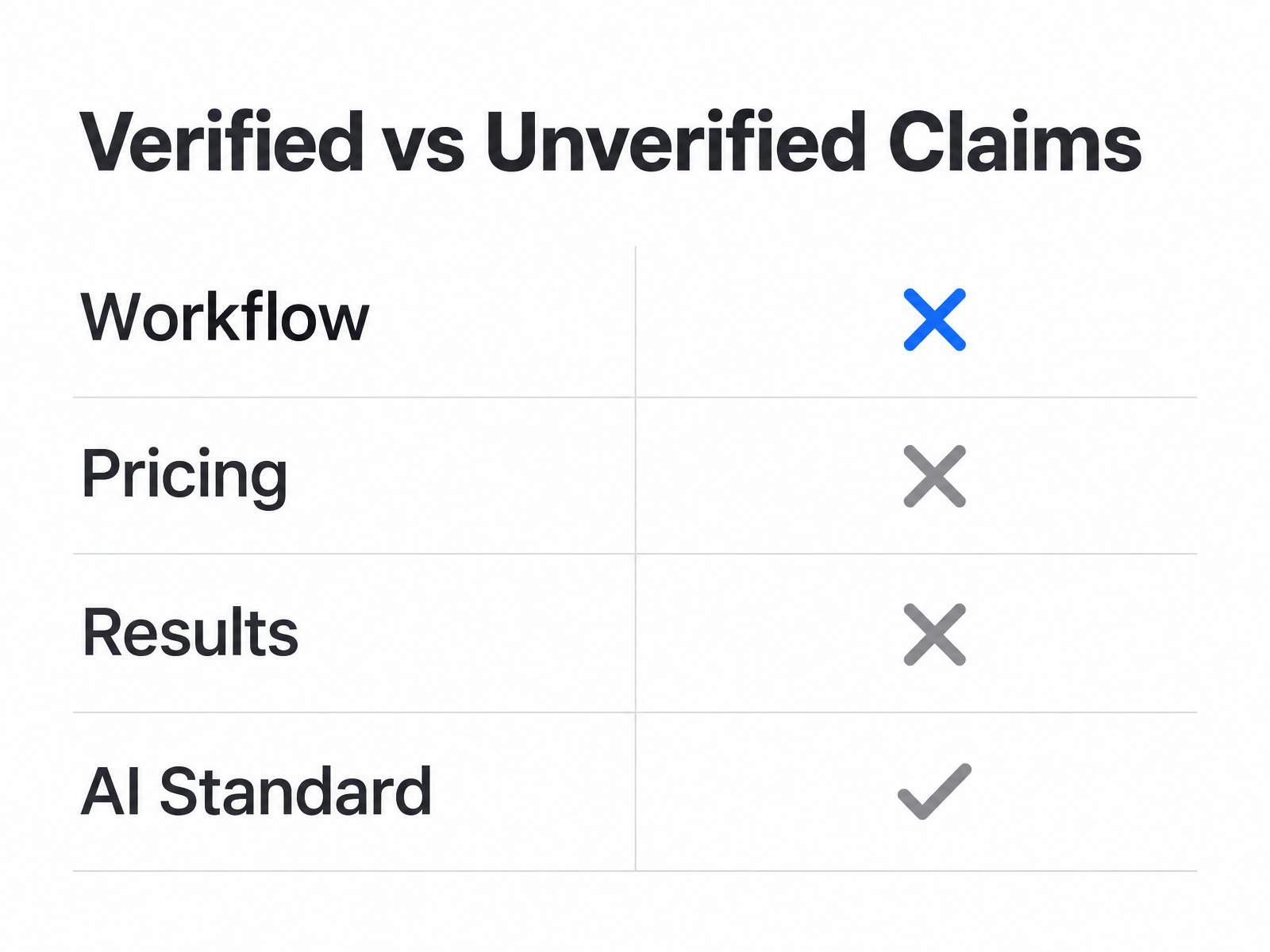
The problem with writing this section is straightforward: the available evidence we have doesn't support specific claims about CoSchedule's workflow, pricing, or results. So we're not going to invent them.
That matters when you're deciding how to automate a content marketing workflow. If a platform's loop-closing claims aren't independently verifiable, you're making a purchasing decision on marketing copy, not proof. We'd rather flag the gap than fill it with guesses.
What's actually verifiable about calendar automation
What the available research does support is a broader shift, not a CoSchedule-specific one. Industry commentary in this space often argues that AI is becoming a baseline expectation for calendar tools, not an add-on. That sets the bar any calendar tool now has to clear. Scheduling posts across channels is basic plumbing. The question is whether the tool reacts to what happens after you hit publish.
Many calendar-first tools stall at exactly this point. They broadcast in parallel. A brief becomes a post, the post goes out to several channels at once, and automation ends there. The documented tools in this comparison have not been shown to trigger the next message based on how an audience responded to the last one. That conditional logic, where engagement data loops back into your next move, is the piece that actually closes the loop. Parallel distribution isn't the same thing.
So we treat CoSchedule as a research-needed slot. Until verified specifics surface on its advertised brief-to-schedule flow, profile limits, SEO-tool scores, supported destinations, and real time-saved numbers, we won't present estimates as facts. You deserve the same scrutiny we'd apply to any tool, including our own.
| What You'd Want Verified | Status in Current Evidence |
|---|---|
| Brief-to-scheduled-post workflow | Not substantiated |
| Pricing tiers / profile limits | Not substantiated |
| SEO assistance review scores | Not substantiated |
| Supported destinations | Not substantiated |
| Quantified time-saved case study | Not substantiated |
| Post-publish response-driven iteration | Not documented in sources |
If calendar automation is your priority, that's a reasonable need. Just press any vendor for numbers on the stage that matters most: what happens after the post ships. For a closer look at turning one draft into multi-channel output, our guide on running one AI draft across five channels covers that ground.
AnyPost.ai: The Handoff Test That Matters
AnyPost.ai belongs in this comparison because the real buying question isn't just whether a tool can publish. It's whether the platform reduces the distance between a content brief, the assets it becomes, the channels it reaches, and the evidence a team needs to decide what to do next. At the time of this writing, the verified product-specific details we can publish about AnyPost.ai are limited. We are not going to fill that gap with unsourced workflow claims.
The strongest end-to-end publishing systems treat a post as part of a workflow, not as a finished asset sitting in a calendar. The brief should carry strategy forward into drafting, repurposing, approval, publishing, and review instead of forcing the team to rebuild context at every step.
For teams comparing AnyPost.ai with hub-based, calendar-first, or integration-heavy tools, the practical evaluation should focus on handoffs. Ask where the brief lives, who can revise it, how channel versions are created, how publishing destinations are managed, and what information returns to the team after content goes live. A platform that removes only the upload step can still leave your writers, editors, and campaign managers doing the hardest coordination work by hand.
The clearest distinction is between automation that moves content and automation that preserves intent. Moving content from one place to another is useful. Preserving the campaign objective, audience, offer, format, and next-step learning across the entire process is what turns a workflow into a closed loop.
Questions People Ask
1. Why do many marketing automation platforms stop at publishing instead of closing the full loop?
Because the easy part is moving approved content into a queue. The harder part is using post-publish data to make a decision: revise the message, create another variant, change the channel mix, or update the next campaign brief. Many tools are built around calendars and distribution permissions, not around that decision layer.
2. If a platform blocks custom UTMs or forces its own link shortener, how do teams running multi-tool campaigns track attribution?
They usually need a separate reporting process to reconcile what each system records. The issue is less about whether any single platform reports on its own activity and more about whether its link structure fits cleanly beside campaigns run elsewhere. When naming conventions, link formats, and reporting destinations differ, attribution becomes an operations problem instead of a built-in workflow.
3. What's the actual difference between integration breadth and multichannel depth when choosing a platform?
Integration breadth is about how easily a platform connects with the rest of your stack. Multichannel depth is about how much control it gives you inside its own environment for audiences, messages, and channel execution. One favors flexibility across separate tools; the other favors centralized orchestration.
4. Does faster publishing always mean better results, or are there cases where speed creates new problems?
Faster publishing helps when the main challenge is consistency. It can create problems when the same message needs different framing by channel, audience, or format. The best fit depends on whether your bottleneck is getting content out at all or making each version precise enough to perform.