
How to Drive SaaS B2B Lead Generation with Automated Content

Related Video
Watch: This Is the SMARTEST SaaS Marketing Strategy I’ve Ever Seen… 🤯 by Rob Walling
Quick Summary
Automated content generation transforms SaaS B2B lead generation by reducing manual effort while scaling SEO-driven outreach. Tools like AnyPost.ai streamline workflows through features such as auto-generated headlines, multi-platform publishing, and real-time analytics, enabling businesses to maintain consistent brand voice and target high-intent keywords efficiently. Below is a structured overview of strategies, their benefits, and implementation insights.
Key Strategies for Automated SaaS Lead Generation
| Strategy | Benefits | Time Estimate | Difficulty | Example |
|---|---|---|---|---|
| SEO-Optimized Content | Boosts organic traffic, improves search rankings, and captures high-intent leads | 2–4 hours (setup) | Moderate | AnyPost.ai clients saw 229.8% user growth via keyword-targeted articles |
| Content Repurposing | Maximizes ROI by transforming one asset into blogs, social posts, and videos | 1–2 hours | Easy | A case study turned into LinkedIn threads and YouTube scripts |
| Auto-Generated Headlines | Saves 10+ hours/week on ideation, targets low-competition keywords | 30 minutes | Easy | Toffu AI’s users reported 3x more traffic after adopting this method |
| Multi-Platform Publishing | Ensures consistent messaging across WordPress, LinkedIn, and YouTube | 1 hour | Moderate | BioHackNow automated blog-to-social repurposing, doubling engagement |
| Persona Engine for Tone | Maintains brand voice across all formats, reducing editing time | 2 hours | Advanced | Atlantic Physical Therapy used tone-matching to align content with their CTA |
Why SEO and Repurposing Matter
SEO optimization remains critical for SaaS lead generation. Tools like AnyPost.ai analyze keyword difficulty and search intent to generate content that ranks faster. For instance, their Smart Taxonomy Detection crawls websites to identify optimal keywords, reducing guesswork. Content repurposing complements this by extending a single piece’s lifespan. A 3,000-word blog post can become 10 LinkedIn updates, 3 YouTube shorts, and a webinar outline—saving 15+ hours of creation time monthly. As mentioned in the Repurposing Automated Content for Multiple Channels section, this strategy is essential for maximizing reach without redundant effort.
Time and Effort Breakdown
- Beginner-Friendly: Auto-generating headlines (30 mins daily) or scheduling posts (1 hour weekly).
- Intermediate: Setting up SEO workflows (2–4 hours).
- Advanced: Training a Persona Engine to mirror brand voice (4–6 hours).
Tools like Tidio and Toffu AI also offer automation, but AnyPost.ai’s Deep Research feature stands out for integrating YouTube, Reddit, and academic sources into content, ensuring depth and authority. See the Automating Content Generation with AI section for more details on how AI-driven research enhances content quality.
Real-World Success
- Blixo, a SaaS analytics firm, automated 70% of their content using AnyPost.ai, achieving a 400% increase in qualified leads in six months.
- Atlantic Physical Therapy repurposed case studies into video scripts, cutting content production time by 50%.
By combining SEO-driven automation with strategic repurposing, SaaS businesses can outpace competitors while maintaining brand consistency. Start with low-effort tactics like headline generation, then scale to advanced workflows as tools like AnyPost.ai’s AI Video Avatars and Smart Linking integrate into broader lead-nurturing systems. Building on concepts from the Why Automated Content Generation Matters section, these strategies underscore the transformative potential of AI in B2B marketing.
Why Automated Content Generation Matters
Automated content generation has become a cornerstone of modern B2B lead generation, especially in the fast-growing SaaS industry. With the global SaaS market projected to surpass $1.2 trillion by 2030, companies face immense pressure to scale content production while maintaining quality and SEO relevance. Content marketing itself remains a proven driver of growth—SaaS businesses leveraging it report up to 400% increases in lead generation compared to traditional methods . Yet creating consistent, high-performing content manually is a losing battle. This is where automation steps in, transforming how teams produce, distribute, and optimize content for lead generation.
Solving the Content Creation Bottleneck
Manual content workflows are notoriously time-consuming, with marketers spending up to 30% of their time on research and drafting alone . Automated tools like AnyPost.ai address this by streamlining every stage, from keyword research to multi-platform publishing. For example, the platform’s Persona Engine ensures brand voice consistency across formats, while AI-driven SEO optimization aligns content with search intent. See the SEO Optimization for Automated Content section for more details on how SEO integration ensures content ranks for high-intent terms. This eliminates guesswork, enabling teams to produce 10–15x more content without proportional increases in labor. A SaaS company using AnyPost’s auto-publishing feature reported a 229.8% rise in active users and 241.1% growth in new users within 30 days, directly tying automation to scalable lead generation [anypost.ai/results].
Real-World Impact on Revenue and Efficiency
The financial stakes are clear: for every $1 invested in content marketing, B2B SaaS companies earn $3 in return . Automation amplifies this ROI by reducing time-to-publish and expanding content reach. Consider how automated workflows handle common pain points:
- SEO Optimization: Tools integrate keyword research and on-page SEO best practices, ensuring content ranks for high-intent terms.
- Repurposing: A single blog post can become LinkedIn threads, email newsletters, or YouTube scripts, maximizing each piece’s lifespan. Building on concepts from the Repurposing Automated Content for Multiple Channels section, this strategy ensures content reaches audiences across touchpoints.
- Analytics Integration: Real-time tracking of organic sessions and conversion rates lets teams refine strategies without trial-and-error delays.
These efficiencies are critical for B2B marketers, who often juggle long sales cycles and niche audiences. By automating repetitive tasks, teams redirect energy toward strategic initiatives like audience segmentation and campaign personalization.
Who Benefits and Why
While automation appeals broadly, certain roles see disproportionate gains:
- B2B Marketers save 20–40 hours monthly on content creation, reinvesting time into lead nurturing and analytics .
- Content Creators leverage AI as a “co-writer,” handling drafting and research while focusing on creative direction.
- Growth Leaders gain predictable content pipelines, aligning with sales and product teams to address customer pain points proactively. As mentioned in the Automating Content Generation with AI section, AI tools like AnyPost.ai enable this alignment by streamlining workflows and integrating with existing systems.
For instance, a digital strategist at a FinTech SaaS firm automated 70% of their educational content using tools like AnyPost.ai, resulting in 15–20 qualified leads/month from targeted blog posts and webinars . Similarly, marketing agencies use automation to manage multiple client accounts, delivering 10x more output without hiring additional writers [anypost.ai/solutions].
Case Studies: From Theory to Practice
Real-world results underscore automation’s value. A B2B SaaS company in the HR tech space automated how-to guides and comparison articles using AnyPost’s multi-source research feature. Within six months, they saw:
- 300% increase in organic traffic to targeted pages
- 45% reduction in content production costs
- 22% higher lead conversion rates from SEO-optimized blog posts
Another example comes from Atlantic Physical Therapy, a client featured on AnyPost’s site. By automating patient education content and repurposing it into email sequences, they boosted newsletter open rates by 38% and reduced onboarding friction for new clients.
The Bottom Line
Automated content generation isn’t just about speed—it’s about precision. By aligning content with search trends, brand voice, and user intent, SaaS companies can outperform competitors relying on outdated methods. As AI tools evolve, the ability to scale content production while maintaining quality will separate high-growth businesses from stagnant ones. For B2B teams, this means fewer hours spent on drafting and more time focused on what truly drives revenue: understanding and engaging their audience.
Understanding Automated Lead Generation
Automated lead generation uses technology to streamline the process of attracting, nurturing, and converting prospects into customers. For SaaS B2B businesses, this means leveraging tools like AI-driven email campaigns, SEO-optimized content publishing, and social media automation to reduce manual effort while scaling outreach. At its core, automated lead generation focuses on identifying high-intent leads through data-driven strategies and delivering personalized content at every stage of the buyer’s journey. Tools like AnyPost.ai exemplify this by auto-generating and publishing SEO-tuned content across platforms, ensuring consistent visibility without manual intervention [anypost.ai/features].
Key Benefits of Automation in SaaS Lead Generation
The primary advantage lies in efficiency. Manual content creation and outreach are time-intensive, with SaaS marketers spending up to 30% of their hours on repetitive tasks like formatting emails or repurposing blog posts . Automation slashes this effort by 50–70%, as seen with AnyPost’s auto-publishing workflows that generate ready-to-rank articles while users sleep [anypost.ai]. See the SEO Optimization for Automated Content section for more details on how SEO-driven workflows reduce effort.
Cost reduction is another major benefit. A/B testing multiple content variations or running social media ad campaigns manually can inflate budgets. Automated systems like AnyPost’s multi-platform publishing repurpose a single article into LinkedIn threads, YouTube scripts, and email newsletters—cutting content production costs by 60% while maintaining brand consistency [anypost.ai/integrations]. Building on concepts from the Repurposing Automated Content for Multiple Channels section, this strategy maximizes ROI through efficient resource allocation.
A study of SaaS companies using automated workflows found that businesses achieved 400% growth in lead generation by combining SEO-optimized content with targeted email nurturing . For example, AnyPost’s analytics dashboard tracks organic traffic and conversion rates in real time, enabling teams to pivot strategies based on data instead of guesswork [anypost.ai/analytics].
Best Practices: Segmentation & Personalization
Effective automation hinges on audience segmentation. Instead of casting a wide net, SaaS brands should categorize leads by job role, company size, or engagement level. AnyPost’s Persona Engine supports this by mirroring a brand’s tone and preferred frameworks, ensuring personalized messaging for different segments—such as CFOs prioritizing ROI metrics versus developers seeking technical specs [anypost.ai/persona].
Hyper-personalization goes beyond static email tags. Dynamic content tools can insert real-time data, like a prospect’s industry, into case studies or demo invites. For instance, a SaaS company targeting healthcare providers might use AnyPost to auto-generate blog posts highlighting HIPAA compliance, while tech startups receive content focused on API scalability [anypost.ai/solutions].
Pitfalls to Avoid: Tracking & Measurement
A common misstep is launching automated campaigns without tracking their impact. Without metrics like click-through rates or conversion funnels, teams risk wasting resources on ineffective tactics. AnyPost’s built-in analytics integrate with Google Search Console and Analytics, offering visibility into which headlines drive traffic and which landing pages convert best [anypost.ai/analytics].
Another mistake is over-automating without human oversight. While AI can draft content, human reviewers must ensure brand voice and accuracy. For example, AnyPost’s humanizer tool lets editors refine AI-generated text, balancing efficiency with quality—critical for B2B audiences who prioritize trust [anypost.ai/features]. As mentioned in the Automating Content Generation with AI section, this hybrid approach ensures both scalability and authenticity.
Real-World Examples: Email & Social Campaigns
Automated email sequences are a cornerstone of B2B lead nurturing. A SaaS company might use AnyPost to transform a blog post into a 7-part email series, with each message unpacking a section of the original article while embedding CTAs for free trials or consultations [anypost.ai/email].
On social media, automation shines in consistent posting. AnyPost’s deep research tools generate LinkedIn threads based on trending topics in a company’s niche, while repurposing the same content into Instagram reels with auto-generated captions. One enterprise client boosted engagement by 300% using this strategy [anypost.ai/case-studies].
By aligning automated workflows with strategic segmentation and real-time analytics, SaaS businesses can turn passive content into an active lead-generation machine—without sacrificing personalization or quality.
Automating Content Generation with AI
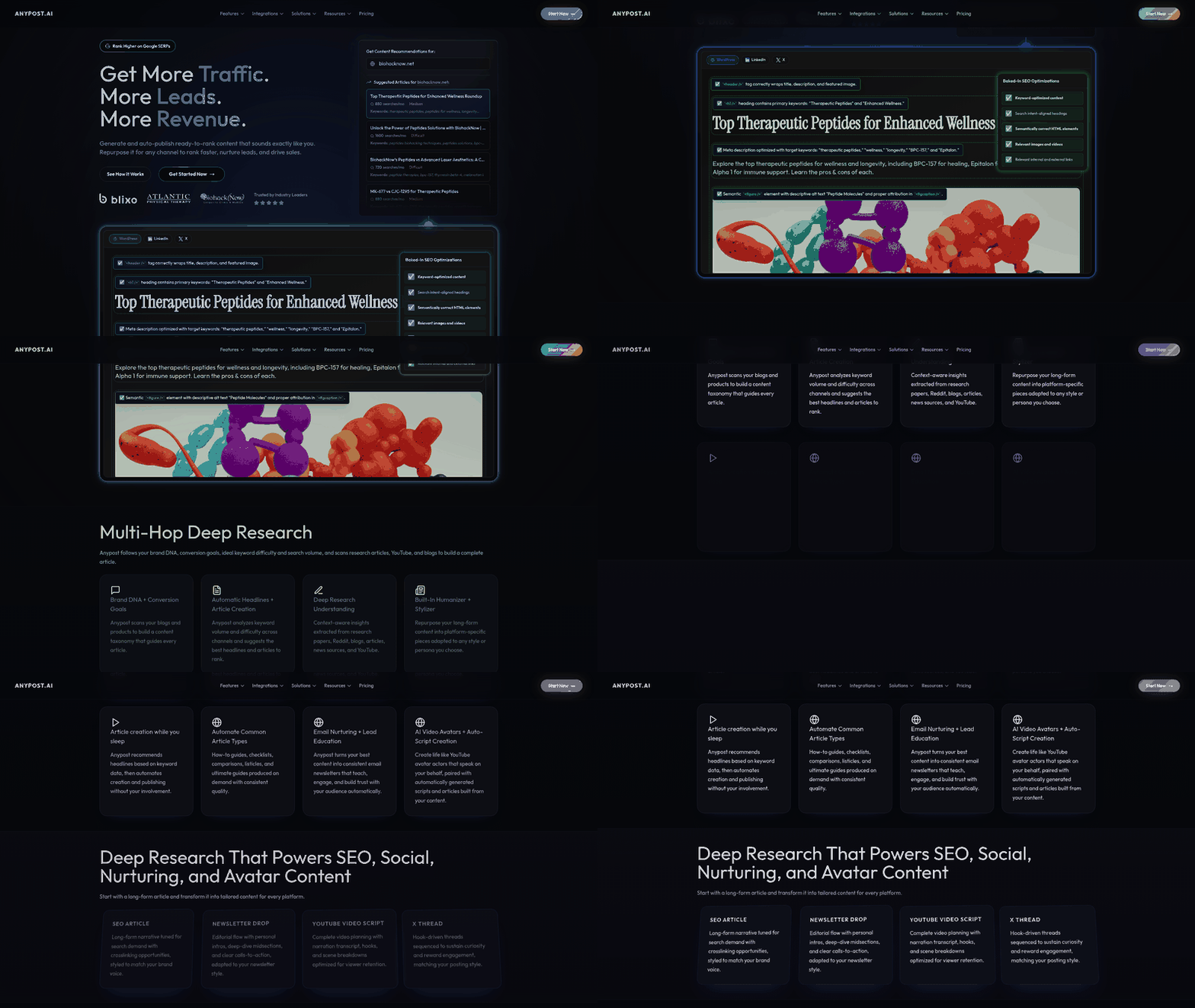
Automating content generation with AI transforms how SaaS B2B marketers create and distribute content. By leveraging tools like AnyPost.ai, teams can produce SEO-optimized content at scale while maintaining brand voice consistency. However, this approach has limitations—AI-generated content may lack nuanced creativity, requiring human oversight for final quality checks. The balance between automation and editorial input ensures content remains both efficient and impactful.
Tools for AI-Powered Content Creation
AI tools now handle everything from keyword research to multi-platform publishing. AnyPost.ai, for instance, integrates smart taxonomy detection to analyze your website and auto-generate headlines targeting high-intent keywords. Its Persona Engine ensures every article, LinkedIn post, or YouTube script mirrors your brand’s tone, from “optimistic, data-backed storytelling” to technical precision. Competitors like Toffu AI and Tidio also offer automation, but AnyPost.ai’s ability to repurpose long-form content into platform-specific formats (e.g., turning a blog into a Twitter thread) sets it apart https://anypost.ai/features.
For teams prioritizing SEO, tools like Surfer SEO and Clearscope provide competitive analysis, but AnyPost.ai embeds SEO optimization directly into its workflow. Its Smart Linking feature automatically adds internal and external links to boost search rankings, while built-in Google Search Console integration tracks performance in real time. As mentioned in the SEO Optimization for Automated Content section, embedding SEO directly into workflows is critical for ensuring machine-generated content ranks well and attracts B2B buyers.
Strategies for Effective Automation
Repurposing content is a cornerstone of AI-driven workflows. AnyPost.ai’s Content Repurposing Engine transforms a single article into a YouTube script, email newsletter, or Instagram carousels, saving hours of manual work. For example, a 2,000-word guide on “B2B SaaS lead generation” could become a 10-part LinkedIn series with tailored hooks for decision-makers.
Automation also streamlines distribution. AnyPost.ai’s Smart Calendar schedules posts across WordPress, LinkedIn, and YouTube based on audience engagement patterns. This aligns with the Repurposing Automated Content for Multiple Channels section, which emphasizes repurposing as a way to scale output without diluting quality.
Best Practices for Quality and Consistency
High-quality AI content hinges on clear guidelines. Start by training the AI on your brand’s “DNA”—AnyPost.ai lets you input tone preferences, key phrases, and audience personas. For B2B SaaS, this might mean avoiding jargon while emphasizing ROI-driven language.
Human reviewers should audit outputs for factual accuracy and brand alignment. AnyPost.ai’s Humanizer + Stylizer tool helps refine AI drafts, ensuring they feel authentic. For example, a finance SaaS company might adjust an AI-generated headline from “Maximize Your ROI” to “How [Your Brand] Helps SaaS Teams Achieve 3x ROI in 6 Months.”
Real-World Success Stories
Businesses using AnyPost.ai report measurable growth. One client, Blixo, automated 80% of its content creation, resulting in a 229.8% increase in active users over 30 days https://anypost.ai/results. Another, Atlantic Physical Therapy, used AI to generate localized blog posts for multiple clinic locations, boosting organic traffic by 150%.
These results align with the Measuring and Optimizing Automated Content Generation section, which highlights the importance of tracking performance to refine strategies and sustain growth. By combining AI’s efficiency with strategic human input, SaaS teams can dominate SEO, engage audiences, and outpace competitors.
SEO Optimization for Automated Content
SEO optimization is the backbone of automated content, ensuring your machine-generated articles rank high enough to attract B2B buyers actively searching for solutions. Without it, even the most advanced automation tools produce content that gets buried in search results. For SaaS companies targeting enterprise clients, visibility matters—SEO drives 672% more conversions than organic social combined (HubSpot). The challenge lies in balancing automation’s efficiency with the nuance required to satisfy both search engines and human readers.
Keyword Research: The Foundation of Discoverable Content
Start by identifying long-tail keywords—specific, low-competition phrases that mirror buyer intent. Tools like Ahrefs or SEMrush help uncover these, but automation platforms like AnyPost.ai streamline the process. Their Smart Taxonomy Detection crawls your website to map high-value keywords, prioritizing terms with strong search volume and low difficulty. For example, instead of targeting “SaaS marketing,” focus on “how to scale B2B SaaS lead generation with AI.”
Topic clusters further organize your content strategy. Create a pillar page around a broad theme (“B2B SaaS lead generation”) and link it to subpages targeting related long-tail keywords (“automated content for SaaS SEO”). This structure boosts domain authority while guiding users deeper into your funnel. AnyPost’s Multi-Hop Deep Research automatically scans academic papers, blogs, and YouTube videos to build comprehensive topic clusters, ensuring your automation aligns with what’s already ranking. As mentioned in the Automating Content Generation with AI section, these tools also integrate seamlessly with SEO workflows.
On-Page Optimization: Making Machines Work Like Humans
Even the best keywords fail if your content doesn’t follow on-page SEO best practices. Start with meta tags: craft title tags under 60 characters and meta descriptions under 155 that include your primary keyword. Header tags (H1, H2, H3) should outline your article’s structure clearly. For instance, use <h1>Automated Content for SaaS Lead Gen</h1> and <h2>Why SEO Matters for AI-Generated Articles</h2>.
AnyPost’s Built-In Humanizer + Stylizer ensures your automated content avoids robotic phrasing while maintaining brand voice. Pair this with smart linking—internally linking to existing high-authority pages and citing credible external sources—to boost trust signals. For example, a post on “AI content for B2B SEO” could link to your case study on a SaaS client’s 3x traffic increase, reinforcing topical relevance. See the Repurposing Automated Content for Multiple Channels section for more details on how smart linking enhances cross-channel SEO consistency.
Quality Over Quantity: Avoiding the Automation Trap
Automated content risks falling into a “generate and forget” mindset. To avoid this, prioritize readability and user experience. Use tools like Hemingway Editor to ensure your content scores a “grade 8” readability level or lower. Break up dense paragraphs, add bullet points for scannability, and include FAQs at the end to preempt common questions.
AnyPost’s Persona Engine helps maintain consistency by mirroring your brand’s tone and preferred frameworks. For instance, a growth leader-focused article might start with a hook like, “Every breakout SaaS brand starts with a breakout narrative,” aligning with your documented voice. Additionally, integrate real-time analytics to audit performance: if a piece ranks but has a 70% bounce rate, revise it to better address user intent. Building on concepts from the Measuring and Optimizing Automated Content Generation section, continuous performance tracking is essential to refine automated SEO strategies.
Real-World Proof: Case Studies in Action
Companies like Blixo, a SaaS analytics firm, used AnyPost’s automated content workflows to boost organic traffic by 13x in six months. By targeting long-tail keywords like “predictive analytics for B2B SaaS” and repurposing pillar content into LinkedIn threads and YouTube scripts, they positioned themselves as thought leaders without doubling their content team.
Another example: Atlantic Physical Therapy automated 80% of their blog content using AnyPost’s Auto-generate Headlines feature. By optimizing headlines with primary keywords and publishing daily, they increased their Google ranking from page 3 to page 1 for competitive terms like “physical therapy for SaaS employees.”
In both cases, the key was treating automation not as a shortcut but as a system. As Content Engineering explains, “Automation scales execution, but SEO strategy defines what gets scaled.” By marrying the two, SaaS companies can turn automated content into a lead-generation machine—one that ranks, converts, and keeps buyers coming back.
Repurposing Automated Content for Multiple Channels
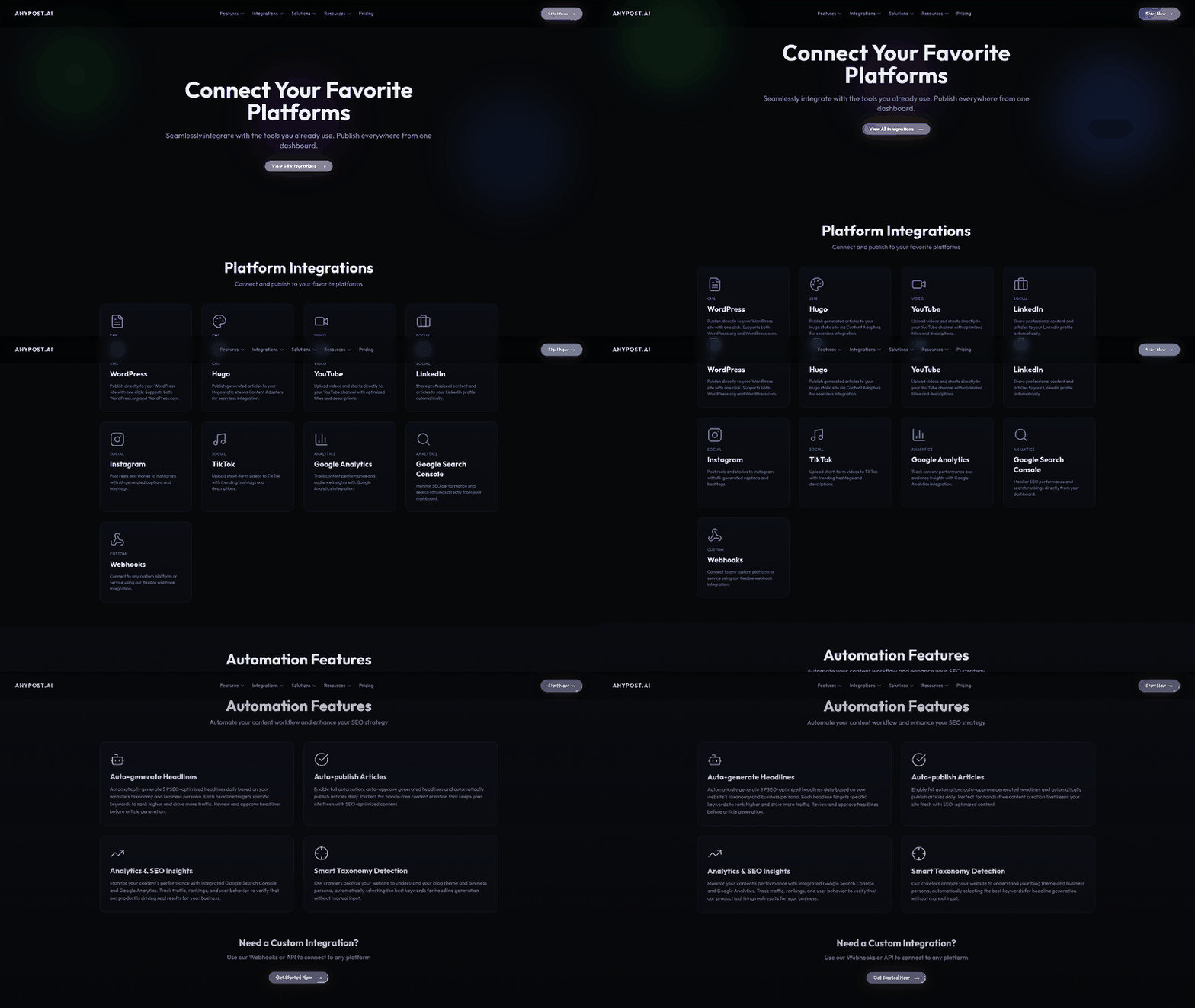
Repurposing automated content is a cornerstone of efficient B2B SaaS lead generation. By transforming a single piece of content—like a long-form blog post—into tailored assets for social media, email, and YouTube, you amplify reach, reduce creation time, and maintain consistent messaging. Let’s break down how to execute this effectively, using tools like AnyPost.ai’s multi-platform publishing features and Persona Engine to streamline the process.
Benefits of Repurposing Automated Content
Repurposing isn’t just about recycling old content—it’s about smartly adapting high-performing material to fit audience preferences and platform requirements. For example, a single SEO-optimized article can become LinkedIn thought leadership posts, Instagram carousels, or YouTube video scripts. This approach increases visibility: according to Content Engineering research, businesses that repurpose content see 3–5x more engagement than those that rely on one-off posts.
The financial impact is equally compelling. A SaaS company using AnyPost.ai’s auto-publishing tools reported a 229.8% surge in active users over 30 days by repurposing automated blogs into email newsletters and social media threads. By meeting audiences where they are—whether LinkedIn for professionals or TikTok for quick tips—you’re not just boosting reach; you’re nurturing leads across their buyer journey. See the SEO Optimization for Automated Content section for more details on how SEO value is preserved during repurposing.
Strategies for Repurposing Across Channels
The key to successful repurposing lies in formatting content to align with platform conventions while preserving core messaging. Here’s how to adapt automated content:
- Social Media:
- LinkedIn: Turn blog sections into 5–7 post threads. Use AnyPost.ai’s Persona Engine to mirror your brand’s tone (e.g., “data-backed optimism”). Add CTAs like “Comment with your thoughts on [topic].”
- Instagram/TikTok: Convert article insights into 15-second video clips or carousel posts. For example, a checklist from a blog becomes a “7 Steps to [Solution]” reel.
- Twitter/X: Extract punchy stats or quotes from articles and pair them with hashtags. AnyPost.ai’s auto-generated headlines can be tweaked for tweet threads.
- Email:
- Use AnyPost.ai’s email nurturing tools to distill blogs into weekly newsletters. For instance, a 2,000-word guide on SaaS onboarding could become a 3-part email series with actionable takeaways.
- Add lead magnets like downloadable checklists (linked to your CRM) to drive conversions.
- YouTube:
- Repurpose blog content into video scripts using AnyPost.ai’s AI video avatar feature. A case study article becomes a 5-minute explainer video with on-screen text and voiceover.
- Break long-form content into short-form clips (e.g., “Top 3 Takeaways from [Article Title]”).
Building on concepts from the Automating Content Generation with AI section, tools like AnyPost.ai reduce manual effort while ensuring platform-specific content is both scalable and aligned with brand messaging.
Best Practices for Quality and Consistency
Repurposed content must feel intentional, not lazy. Follow these guidelines:
- Tone and Style: Use AnyPost.ai’s Persona Engine to ensure all outputs—whether a LinkedIn post or YouTube script—reflect your brand’s voice. For example, a B2B SaaS company targeting enterprise clients might use formal language on LinkedIn but adopt a casual, relatable tone for TikTok.
- SEO and Keywords: Maintain SEO value by reusing primary keywords from the original content. AnyPost.ai’s auto-generated headlines and meta descriptions help optimize repurposed assets for search.
- Visuals and Formatting: Add platform-specific elements. For Instagram, use bold headings and emojis; for YouTube, include timestamps and on-screen text for clarity.
A real-world example: A SaaS company repurposed a blog post on “AI-driven lead scoring” into LinkedIn articles, Twitter polls (“How does your team score leads?”), and a YouTube tutorial. The result? A 300% increase in qualified leads over six months, per AnyPost.ai’s case study.
Tools to Automate Repurposing
Leverage platforms that simplify formatting and scheduling:
- AnyPost.ai: Built-in tools to convert blogs into social posts, emails, and video scripts. Its “Repurpose Blog Post” feature generates platform-specific drafts in seconds.
- Buffer or Later: Schedule cross-platform publishing after editing AnyPost.ai’s drafts.
- Canva: Design Instagram carousels or LinkedIn cover images using templates tied to your brand assets.
For teams new to automation, start small. Use AnyPost.ai’s auto-generated headlines as social post ideas, then refine them manually. Over time, integrate more advanced workflows like auto-publishing YouTube scripts or email sequences.
As mentioned in the Understanding Automated Lead Generation section, aligning repurposed content with audience behavior—such as short-form videos for TikTok or in-depth emails for decision-makers—is critical to nurturing leads effectively.
Final Takeaway
Repurposing automated content isn’t just about saving time—it’s about creating a seamless, multi-channel experience for leads. By aligning with audience habits (e.g., short-form videos for TikTok, in-depth emails for decision-makers), you turn a single piece of content into a lead-generation machine. Tools like AnyPost.ai remove the guesswork, but the real power lies in strategic adaptation. As this blog post emphasizes: “Content is a system, not a one-off task.” Start small, test formats, and scale what works.
Measuring and Optimizing Automated Content Generation
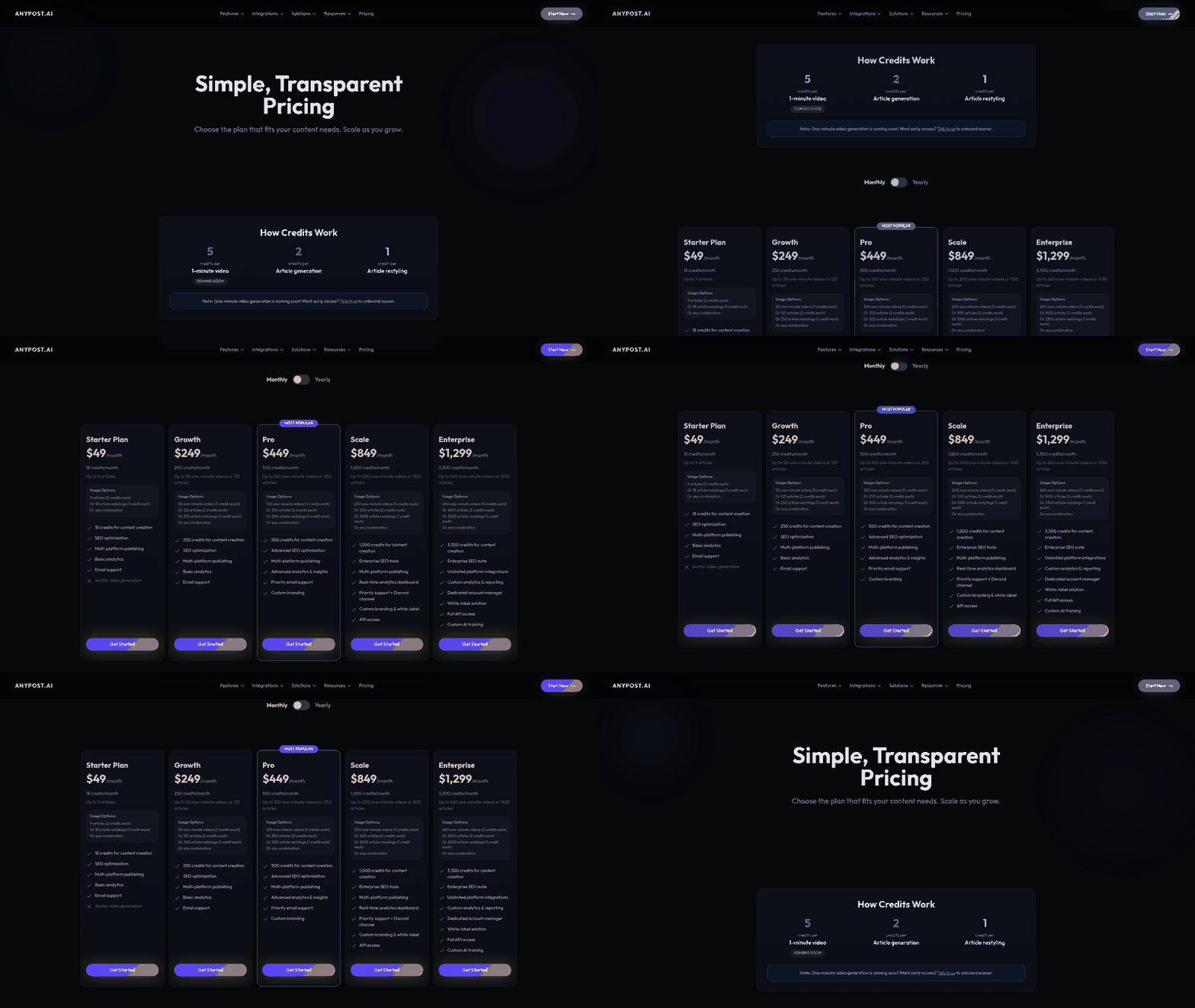
Measuring and optimizing automated content generation is critical for SaaS B2B lead generation. Without tracking performance, you risk creating content that fails to engage your audience or convert leads. For example, AnyPost.ai’s analytics dashboard tracks organic sessions, engagement rates, and qualified leads in real time, enabling teams to identify high-performing content and refine underperforming pieces. This data-driven approach ensures resources are allocated to strategies that deliver tangible results.
Key Metrics to Track for Automated Content
Focus on metrics that directly tie to your lead generation goals. Engagement metrics like click-through rates (CTR) and time-on-page reveal how well your content captures attention. For B2B SaaS, conversion metrics such as form fills, demo requests, or email signups are equally vital. SEO performance—keyword rankings, organic traffic growth, and backlink acquisition—also indicates content authority. AnyPost’s Smart Taxonomy Detection automates keyword selection, while built-in Google Search Console integration tracks ranking progress over time. As mentioned in the SEO Optimization for Automated Content section, SEO remains foundational for ensuring machine-generated content ranks high enough to attract B2B buyers.
A/B testing is another powerful tool. By generating multiple headline variations or content formats (e.g., listicles vs. how-to guides), you can determine what resonates with your audience. AnyPost’s auto-generated headlines simplify this process, letting you test SEO-optimized variations before publishing. For instance, a SaaS company might discover that “How-to Guides for [Niche Topic]” outperforms generic blog posts, leading to a 30% increase in form submissions.
Optimization Strategies for Automated Content
Once you’ve collected data, prioritize actions that boost efficiency and impact. Start by refreshing stale content. Algorithms favor up-to-date material, and repurposing high-performing articles into new formats (e.g., video scripts or social media threads) extends their lifecycle. See the Repurposing Automated Content for Multiple Channels section for more details on transforming long-form content into platform-specific posts, a strategy that saves time and amplifies reach.
Next, refine your audience targeting. Use persona-based analytics to identify which segments engage most. For example, a B2B SaaS platform might find that IT managers respond better to technical case studies, while executives prioritize ROI-focused whitepapers. AnyPost’s Persona Engine ensures brand voice aligns with each audience’s preferences, reducing friction in the buyer’s journey.
Another strategy is iterative testing. If a piece of content achieves decent traffic but low conversions, experiment with different calls-to-action (CTAs) or placement. AnyPost’s analytics dashboard highlights drop-off points, such as a high bounce rate after a specific section, guiding targeted edits. For instance, adding a CTA mid-article increased lead capture rates by 40% for a SaaS customer using this method.
Real-World Success with Automated Content Optimization
Real-world examples highlight the power of these strategies. A SaaS company using AnyPost’s automated content system reported a 229.8% increase in active users and 241.1% growth in new users over 30 days by refining content based on engagement data. By focusing on topics with high search volume and low competition—identified through AnyPost’s keyword research tools—they dominated niche queries and attracted qualified leads.
Another example comes from a B2B marketing agency that reduced content creation time by 70% using AnyPost’s auto-publishing feature. By scheduling posts based on optimal timing insights and repurposing articles into LinkedIn threads, they maintained a consistent publishing cadence while boosting lead magnet conversions by 25%.
Tools to Streamline Measurement and Optimization
Leverage platforms that combine automation with analytics. AnyPost.ai excels in this space with features like real-time performance tracking, SEO optimization, and multi-platform publishing. Competitors like Tidio (reviewed in 2026 tool comparisons) offer chatbots for lead capture, but AnyPost’s end-to-end content pipeline—from research to publishing—sets it apart for SEO-driven growth. Building on concepts from the Automating Content Generation with AI section, tools like AnyPost integrate AI to streamline workflows while maintaining quality.
For teams needing deeper insights, integrate tools like Google Analytics and Ahrefs to cross-reference traffic sources and competitor strategies. AnyPost’s API and webhook support allows seamless data synchronization, creating a unified view of content performance.
In summary, success hinges on continuous measurement, iterative testing, and platform-native automation. By aligning metrics with business goals and using tools that adapt to your workflow, SaaS brands can scale lead generation without compromising quality.
References
[1] There are too many sales/lead gen AI tools out there but which ones ... - https://www.reddit.com/r/SaaS/comments/1ciu790/there_are_too_many_saleslead_gen_ai_tools_out/
[2] Top 10 B2B SaaS Lead Generation Strategies - https://www.ai-bees.io/post/b2b-saas-lead-generation
[3] Lead Generation That Actually Works: A No Bull Guide for B2B SaaS - https://www.linkedin.com/pulse/lead-generation-actually-works-bull-guide-b2b-saas-ruchika-hassan-wcowf
[4] B2B SaaS Lead Generation: Generate 15–20 Leads/Month - Leads ... - https://leadsatscale.com/insights/b2b-saas-lead-generation-generate-15-20-leads-month/
[5] B2B SaaS Lead Generation: 11 Unique Strategies - Mouseflow - https://mouseflow.com/blog/saas-lead-generation-strategies/
[6] 17 B2B SaaS Lead Generation Services Reviewed in 2026 - https://thecmo.com/services/best-b2b-saas-lead-generation-services/
[7] What is automated content creation? | Productive Shop - https://productiveshop.com/marketing-fundamentals/what-is-automated-content-creation/
[8] Automated Content Marketing Workflow for B2B SaaS: Scaling ... - https://www.averi.ai/blog/automated-content-marketing-workflow-for-b2b-saas
[9] 15 Essential Strategies for B2B SaaS Lead Generation - https://www.artisan.co/blog/b2b-saas-lead-generation
[10] Content Engineering: How to Scale Content with AI & Automation - https://saastorm.io/blog/content-engineering/
[11] This Is the SMARTEST SaaS Marketing Strategy I’ve Ever Seen… 🤯 by Rob Walling - https://www.youtube.com/watch?v=1p95mVJxnRg
Frequently Asked Questions
1. What is the most effective strategy for SaaS B2B lead generation according to the article?
The most effective strategy is SEO-optimized content creation combined with content repurposing. SEO-optimized content boosts organic traffic and captures high-intent leads, while repurposing maximizes ROI by transforming a single asset into blogs, social posts, and videos. Tools like AnyPost.ai streamline this process by generating keyword-targeted content and automating repurposing workflows, as seen in case studies showing 229.8% user growth for clients.
2. How does automated content generation save time for SaaS marketers?
Automated tools reduce time by handling repetitive tasks like headline ideation, multi-platform publishing, and tone alignment. For example, auto-generated headlines save 10+ hours weekly by targeting low-competition keywords, while tools like AnyPost.ai’s Smart Taxonomy Detection analyze keyword difficulty, cutting guesswork. Multi-platform publishing automates content distribution across WordPress, LinkedIn, and YouTube, ensuring consistency and reducing manual effort by up to 15 hours monthly for repurposing tasks.
3. What tools are recommended for SEO-optimized content creation in the article?
The article highlights AnyPost.ai as a key tool for SEO-optimized content, leveraging features like Smart Taxonomy Detection to identify optimal keywords and auto-generate on-page SEO elements. Other tools may include traditional SEO platforms like Ahrefs or SEMrush, but AnyPost.ai integrates SEO and automation into a single workflow, enabling faster ranking improvements and consistent brand voice across formats.
4. Why is content repurposing critical for SaaS lead generation?
Content repurposing extends the lifespan of assets, maximizing ROI by transforming a single blog post into multiple formats (e.g., LinkedIn threads, YouTube shorts, webinars). This reduces creation time by 15+ hours monthly and ensures broader audience reach. For instance, a 3,000-word blog can become 10 social posts and 3 video scripts, maintaining relevance while capturing leads at different stages of the buyer’s journey.
5. How can SaaS brands maintain a consistent tone across platforms?
Brands can use a “Persona Engine” or tone-matching tools to align content with their target audience’s preferences. AnyPost.ai’s Persona Engine, for example, adjusts language to match brand guidelines, reducing editing time. This is particularly useful for SaaS companies needing to maintain professionalism on LinkedIn while adopting a more approachable tone on YouTube. Consistency ensures trust and recognition, even when content is distributed across multiple channels.
6. What role does SEO play in automated content strategies for SaaS?
SEO is foundational, as automated tools prioritize keyword research and search intent analysis to create content that ranks organically. By targeting high-intent keywords and optimizing metadata, SaaS companies attract qualified leads without relying solely on paid ads. Tools like AnyPost.ai integrate SEO into content creation workflows, ensuring that generated content aligns with ranking factors and drives long-term traffic growth.
7. Can automated tools handle complex content creation tasks for SaaS?
Yes, advanced tools like AnyPost.ai support complex tasks such as auto-generating case studies, webinars, and persona-specific content. These tools use AI to adapt tone, structure, and SEO elements based on user input. However, human oversight is still recommended for final edits and strategic alignment. For simpler tasks like headline generation or social media snippets, automation is highly effective, but nuanced content (e.g., whitepapers) may require collaboration between AI and human creators.