
How to Scale AI Backlink Building Automation With Outreach APIs and Prospecting Bots

The Short Version
- Many SEO professionals now name link building as one of the hardest jobs in search.
- From first outreach email to a live backlink often runs for days or weeks, depending on the niche and process.
- Many marketers who build links manually land only a small number per month.
- Cold link-building outreach often gets very low reply rates. Personalized pitches to well-matched sites tend to perform better.
- Many SEO professionals now use AI somewhere in their process, so manual-only teams may spend more time per link.
- An AI backlink stack generally has four parts: prospecting tools find domains, enrichment APIs verify contacts, outreach platforms sequence the sends, and analytics dashboards track live links.
Why cycle time, not effort, is the thing to fix
Backlinks still play a major role in Google rankings, and building them by hand is often the slowest part of the whole job. Many SEO professionals call link building one of the hardest tasks in search. That difficulty is a common reason AI backlink building automation moved from nice-to-have to something that can decide whether a small team keeps up.
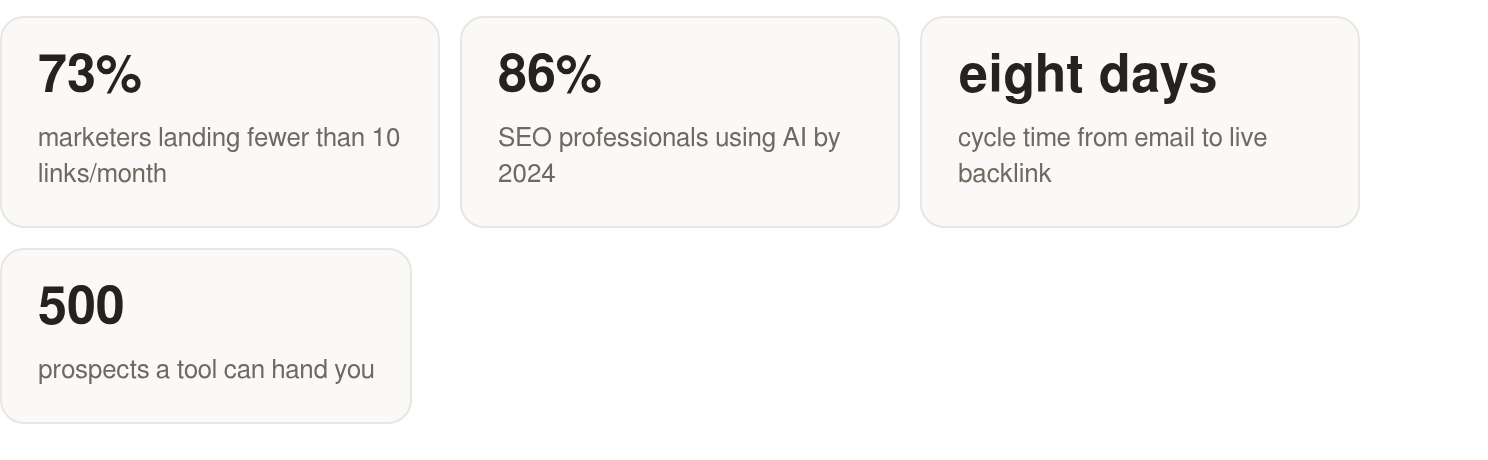
The pattern we keep circling back to is cycle time. Link-building cycles often stretch for days or weeks from a single outreach email to a live backlink, and many teams stay stuck at a low monthly link count. The bottleneck is not always effort. It is cycle time per link. That reframes what scaling actually means.
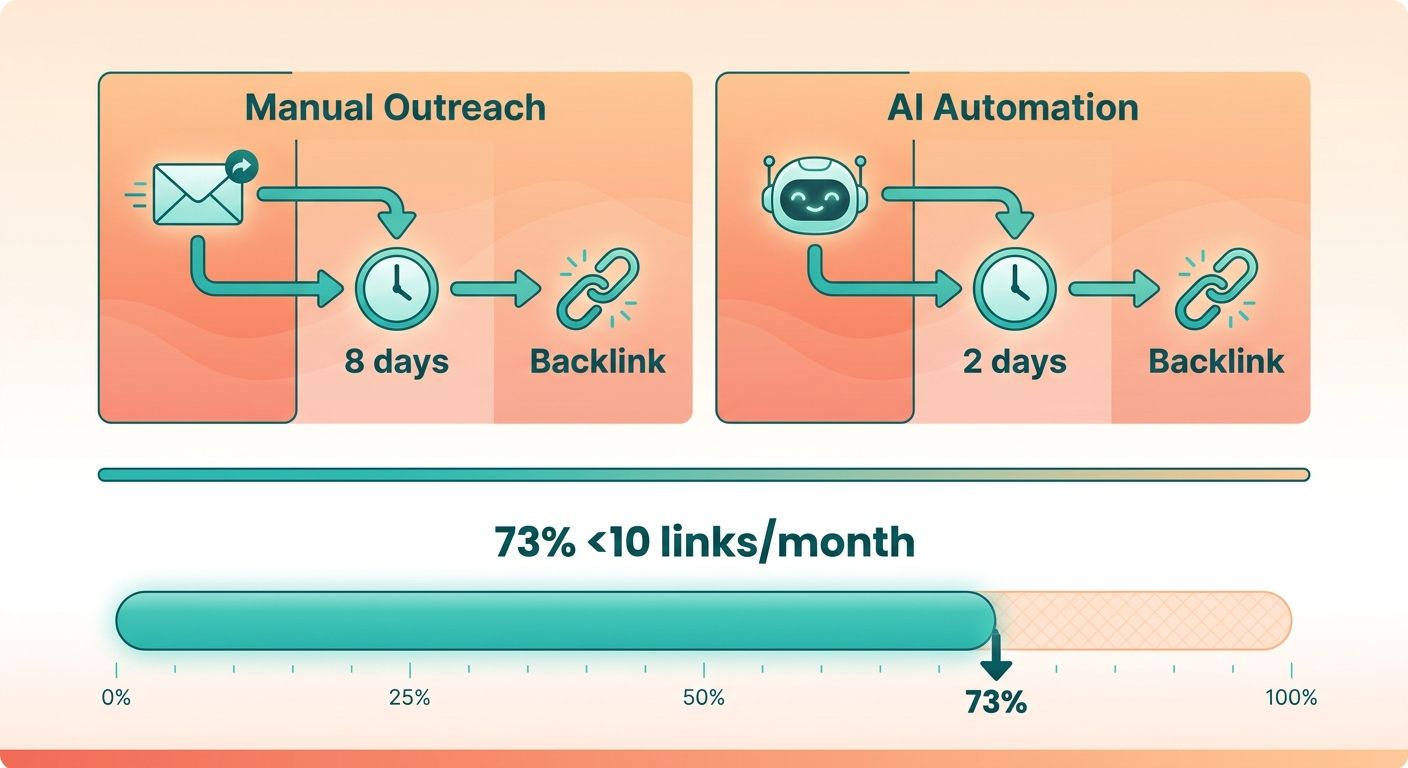
The real bottleneck is cycle time, not reach
Most teams think scaling means sending more emails. That is usually the wrong target. With link-building cycles often running for days or weeks and many teams stuck at low monthly volumes, the win comes from compressing that cycle and lifting the ceiling, not from flooding more inboxes.
Automation earns its keep by shortening the gap between “we published a post” and “someone linked to it.” AI can group prospects by industry, authority, and relevance, then draft personalized outreach at scale instead of requiring every email to be written by hand. That shift can move a team from a small monthly baseline toward something that compounds. Our guide on scaling link building without spam goes deeper on keeping quality intact while you speed up.
Qualified throughput beats raw prospect count
More prospects is not the goal. A tool that hands you a large list padded with irrelevant domains is worse than one that gives you a smaller set of clean, relevant targets. Teams can burn weeks chasing inflated prospect lists that never reply.
So tune automation for qualified-prospect throughput, not gross reach. Speed only helps when the prospects are ones a human would have picked anyway. Volume without relevance is a vanity metric. It can lower reply rates and dirty your data at the same time.
And if your outreach data is a mess, skip aggressive automation entirely. Feeding dirty lists into a bot just scales the noise faster.
Every new post becomes a backlink source
Some voice-aligned content platforms can be configured to create SEO-oriented articles in a brand voice and connect that content to link-building workflows. When fresh, publish-ready content and an automated outreach workflow run together, each new post can become a candidate backlink target.
Hypothetical before/after: Suppose a post is created as [draft title]. The platform might generate anchor text like [anchor phrase] and an outreach pitch that opens by referencing [prospect domain]’s existing resource page. The same record could include a prospect score based on domain quality and topical fit, then move into follow-up tracking once the email is opened. This is illustrative—the actual post, anchor, pitch, and score depend on your inputs.
There is a second potential payoff. Some practitioners optimize for citations in AI chat answers, where comparison pages and listicles sometimes appear when models recommend products. Pitching your fresh post as a source for those roundups can give each new piece two jobs: a backlink target and a possible future AI citation.
Because many SEO teams already use AI somewhere in their workflow, manual-only teams are not just slower. They may be paying for every link with time they could spend on strategy.
The four-part stack, and the piece everyone's missing
Four moving parts make up any AI backlink building automation stack, and they hand work to each other in a chain. Prospecting tools find the domains. Enrichment APIs verify who to email and whether the site is worth pitching. Outreach platforms send and sequence the messages. Analytics dashboards track which links go live and stay live.
Most teams bolt these together tool by tool, stitching exports and CSVs between vendors that were never built to talk to each other. The pieces exist. What is often missing is a content layer that feeds the outreach engine something worth linking to.
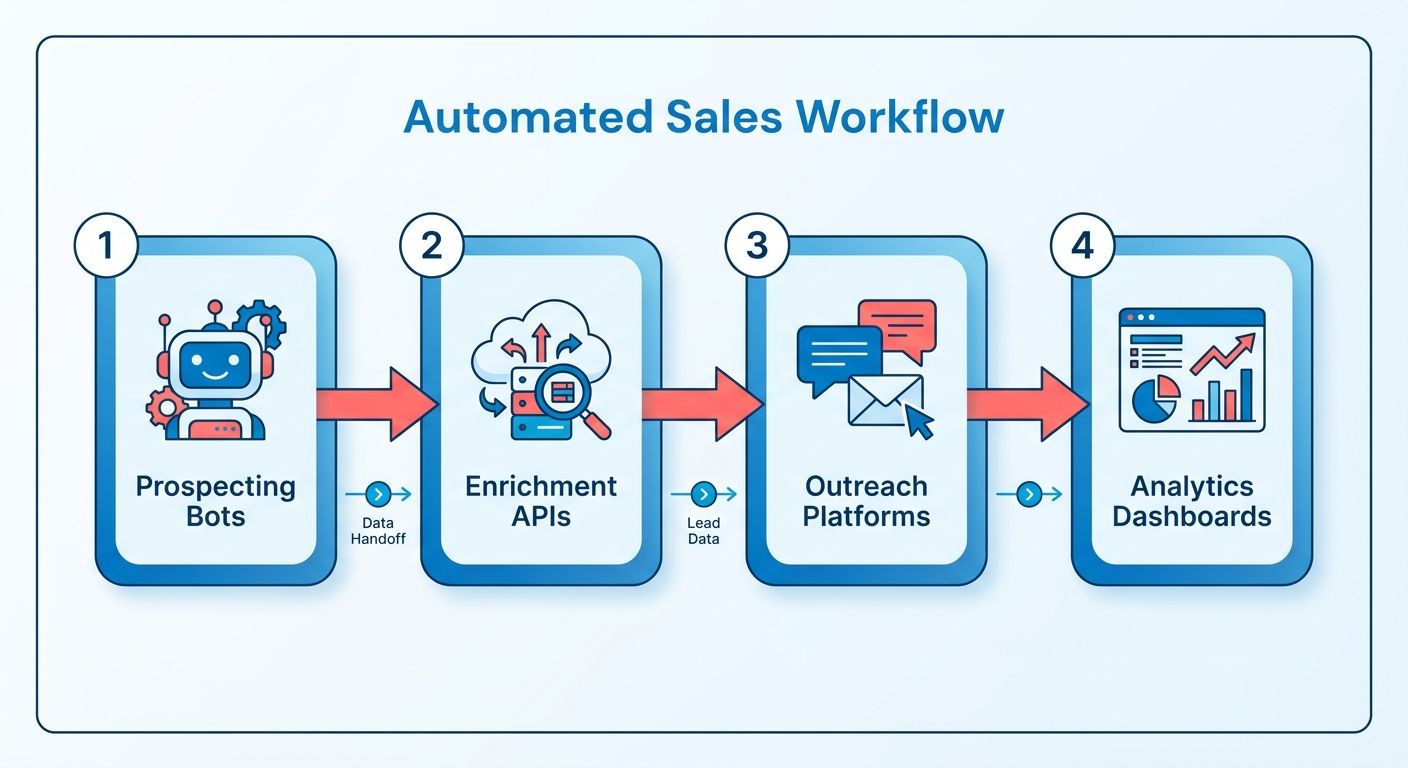
Which tools handle each stage
Prospecting tools crawl the web and scrape candidate sites against your filters. The useful ones let you segment by industry, site authority, and topical relevance, so you are not staring at a wall of junk domains.
Enrichment APIs sit downstream. They find and verify contact emails, then score each prospect. This matters more than it sounds. Some enrichment tools can filter publishers on multiple dimensions and stand behind the placements they surface.
Outreach services run the send. They merge personalization fields, sequence follow-ups, and report open and reply rates. Watch your bounce rate here. High bounce rates can hurt sender reputation and drag down deliverability for your whole domain.
Does more volume actually help
There is a real tension in the tooling. Vendors selling automation often promise faster prospecting at greater scale. Practitioners who run live campaigns are more cautious.
Response rates settle it. Cold link-building outreach often gets very low reply rates, and personalized pitches to well-matched sites tend to perform meaningfully better. Raw prospect count can be a vanity metric. Tune your bot and API combo for qualified throughput instead of gross reach, and reply rates may improve while bounce rates stay safer.
The quality-first read holds up in practice. Traditional outreach is slow and resource-heavy, often taking days or weeks to turn an email into a live link. Precision beats spray-and-pray.
Where voice-aligned content fits
Two evaluation models often compete. The classic one judges links by cross-referencing domain rating, domain authority, referring domains, anchor text, and link velocity against Search Console data. A newer model scores semantic relevance and brand alignment, partly because some teams optimize for citations in AI chatbots, not just Google rankings.
Some platforms, including AnyPost, can be configured to crawl a site to build a context map and generate SEO-oriented content in the brand’s voice. That on-brand content and its anchor-ready links can fit the semantic-relevance model.
With that setup, each post can become a backlink source and a possible citation target at once. Some practitioners pitch new posts as sources for comparison pages and listicles, which occasionally appear in AI answers.
If your program only chases Google’s authority metrics, the classic tools may still be enough. If you are building for visibility across search and chatbots, consider feeding the pipeline voice-aligned content from the start.
Prospecting and enrichment: harvest narrow, verify hard
Prospecting is where most teams start their automation, and it is also where they waste the most time. Tools crawl niche blogs, resource pages, and directories, then return a list of candidate domains against filters you set. Simple enough. The trap is treating that list as the finish line.
Here is the split that matters. Many practitioners find that raw prospect count is a vanity metric. A tool returning a large list padded with irrelevant domains is worse than one giving you a smaller set of clean, qualified targets. So when you configure automated scraping, tune it for qualified throughput, not gross reach.
Filter before a single email goes out
Set your prospecting filters to segment by industry, site authority, and topical relevance before you send anything. That front-loaded filtering is what keeps your list from ballooning with dead sites.
Once you have candidates, enrichment APIs verify who to contact and whether the domain is worth the pitch. This step can decide deliverability. High bounce rates can damage your sender reputation, so email verification is not optional. Clean and deduplicate the scraped list first, then enrich.
The data fields that earn their keep: verified contact emails, domain authority signals, and topical fit. Skip enrichment on domains that already failed your relevance filter. Paying to enrich junk is money down the drain.
The quality signal is shifting under your feet
Two schools clash on how to score a prospect. The classic approach cross-references domain rating, referring domains, anchor text, and link velocity against Search Console data. It is built for Google rankings, and it can catch tools that inflate traffic estimates or miss toxic backlinks.
The newer approach scores prospects on semantic relevance and brand alignment, not authority metrics alone. It is built for a different target: getting cited by AI chatbots, not just ranked by Google.
Which is right? Both, for different goals. Chasing blue-link rankings, authority metrics still matter. Wanting ChatGPT to surface your brand, semantic fit may be more important. Most teams need both scores side by side.
Feed the engine something worth linking to
Here is the connection some tool reviews miss. Some content engines can be configured to generate outreach copy with freshly drafted anchor text aligned to the page. That kind of on-brand anchor text fits the semantic-relevance model better than generic anchors.
That means a new post can become a usable backlink source, not a bolt-on. The prospecting tool finds the domain, enrichment confirms the contact, and the content layer hands the outreach engine a pitch that reads as on-brand and relevant.
There is a bonus target here too. Comparison pages and listicles sometimes get cited by AI models. Pitching your post as a source for those roundups can chase both a backlink and a possible AI citation. That dual payoff is why the content layer, not the bot, can be the real scaling lever. For a deeper walkthrough, see our guide on how to automate backlink building and grow traffic.
Personalized outreach at AI speed
Personalization at scale sounds like a contradiction. Send more emails, they get more generic. Slow down to personalize, and volume collapses. Automation can break that trade-off, but only when you feed it something specific to say.
Natural language generation is where this clicks. Language models can speed up drafting personalized outreach, writing custom email copy tailored to each recipient’s topics instead of the generic template that lands in the trash. That is the difference between reaching a prospect and being ignored.
Value-first copy beats volume every time
Quality of prospects beats raw quantity, and the same logic runs straight through your email copy. A smaller list of clean, qualified targets often outperforms hundreds packed with junk. Templated spam gets ignored, no matter how many you send.
So tune your automation for qualified throughput, not raw send count. When a model drafts each email, it should reference the recipient’s actual content, then offer something they would want to link to before asking for anything.
Instead of merging a generic name field into a stock template, some workflows generate outreach that opens with a hook about the prospect’s site and points to a relevant post. The anchor text can be prepared so the ask is ready to apply.
Personalization tokens that don't trip spam filters
Deliverability is the constraint nobody prices in until it breaks. High bounce rates can damage your sender reputation and undermine the whole campaign. Piling on personalization variables to look human can backfire if the data is dirty or the send list is unverified.
Keep your tokens meaningful and few. A recipient’s name, their site, and one specific reference to their recent work do more than a dozen shallow merge fields. Verify contact data before you send, because a great pitch to a dead inbox is just a bounce waiting to hurt you.
Here is a practical build for high-reply outreach:
- Open with relevance. Reference the prospect’s actual post or resource page, generated fresh per recipient.
- Lead with value. Point to your new content as the thing worth linking to, with anchor text ready to drop in.
- Keep variables clean. Name, domain, one recent-work reference. Verified, not padded.
- Sequence follow-ups. Track open and reply rates, then let the data pick your winning version.
A/B testing turns guesses into winners
Subject lines decide whether the rest gets read. Generate several variants per campaign, split your list, and let reply rate settle the argument. AI drafting makes this cheap, because writing multiple subject lines costs you little.
There is a second potential payoff. Third-party comparison pages and listicles sometimes get cited by AI chatbots when they recommend tools. When your outreach pitches a new post as a source for one of those pages, you are chasing two targets at once: a live backlink and a possible mention in AI answers.
If you want to see the full workflow from post creation to sent pitch, our guide on how to automate backlink building and grow traffic walks through it end to end.
Automating follow-ups and reply management
A first email rarely lands the link. The follow-up does. That is where most teams leak the majority of their results, and it is also where automation can help, because the sequencing can run on webhook events instead of a human remembering to check inboxes.
Many link-building cycles include a stretch of silence between first email and response. That silence can be filled with well-timed follow-ups. When your outreach platform fires an event on every open, click, and reply, you can branch the next step on real behavior rather than a fixed calendar.
How to branch follow-ups on engagement signals
Build the sequence around what the prospect actually did. A three-to-five-step cadence gives you enough room to react without wearing anyone down.
- Step 1: The initial pitch, sent with the linkable asset.
- Step 2: No open after a few days. Resend with a new subject line to the same address.
- Step 3: Opened but no reply. Send a shorter nudge that leads with the specific value your post adds to their existing page.
- Step 4: Clicked the link but stayed quiet. This prospect is warm. Follow up with a concrete anchor-text suggestion they can paste in.
- Step 5: Still nothing after the click branch. One final soft close, then stop.
The trigger for each branch can be a webhook payload from your outreach API. An open event routes to one path, a click to another, and a reply pulls the prospect out of the automated cadence entirely. That last rule matters most. Nobody should get an automated nudge after they have already written back.
An illustrative payload might look like:
This is a simplified illustration; the actual fields depend on your provider.
Where AI-assisted reply triage fits
Inbound replies are the moment automation should hand off to judgment, not the moment to fire another canned line. Automation can parse the incoming message, sort it by intent, and draft a response for a human to approve.
Sort replies into three buckets. Interested prospects get a draft that confirms the placement and supplies ready-to-use anchor text. Objections, such as charging for links or rejecting relevance, get a tailored counter. Hard nos get suppressed so they never receive another message.
When the same content platform that drafts a post also drafts the reply, the anchor text you propose can be fresh, on-brand, and relevant. You are not retrofitting a link into old copy. A new post can ship as a candidate outbound asset with its own outreach attached.
The cadence that avoids fatigue and protects deliverability
Space follow-ups by a few days, not hours, and cap the whole sequence at five touches. A clean, verified prospect list protects deliverability, so list hygiene matters as much as the timing.
One warning worth stating plainly. Watch your bounce rate before you scale a send. Mailbox providers can throttle delivery when hard bounces climb, and a single throttled domain can drag down every campaign you run from it. Verify addresses at the point of import, not after the first batch has already fired. Tune the follow-up engine for qualified throughput, and let reply triage catch the ones worth a human’s attention.
Measuring what actually moves rankings
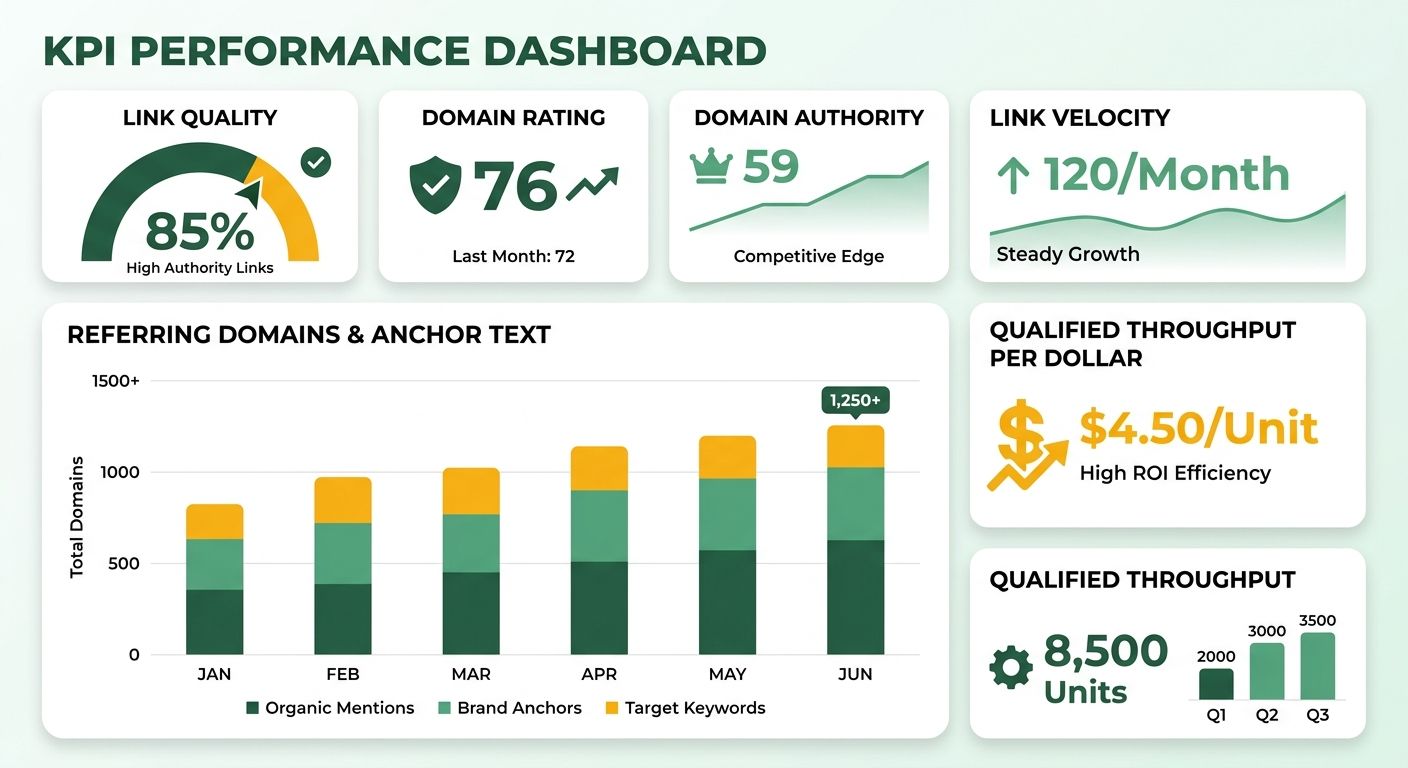
Most teams measure the wrong thing. They count links acquired and stop there. The number that tells you whether your automation is working is qualified throughput per dollar, and that takes a few metrics stacked together.
Start with link quality, because a big link count hides junk. Domain Rating, Domain Authority, referring domains, anchor text, and link velocity are all worth checking against your Google Search Console data before you trust any placement. Some tools inflate traffic estimates or miss toxic backlinks entirely, so the tool’s own dashboard is never the final word.
Which KPIs actually predict ranking gains
Track four things and you will know more than most teams do. Link quality scores tell you if a placement is worth keeping. Traffic uplift from Search Console tells you if the link moved anything real. Cost-per-acquired-link keeps the automation honest. Anchor-text relevance tells you whether the link fits the page it points to.
That last one matters if you optimize for AI responses as well as classic rankings. Classic evaluation judges links primarily on authority metrics. Newer tools weigh alignment instead. Both may be right for different targets: authority metrics for Google rankings, semantic fit for whether ChatGPT cites your page. Our read is that on-brand anchor text can serve both at once, which is why a content platform that prepares anchor text alongside outreach copy may fit this measurement model.
How to calculate ROI without fooling yourself
Cost-per-acquired-link is the baseline. Add up tool costs, enrichment credits, and the hours your team spends, then divide by links that went live and stayed live. Remember that link-building cycles often take days or weeks, so short measurement windows can understate your real return.
Then decide which figure you actually report. Attribution matters more than raw cost. A link that lifts a page from just below the first page into a top position may be worth more than one moving a lower page slightly upward. Segment your cost-per-link by the ranking tier it moved, not by volume, and weight recurring placements over one-off mentions that decay. That framing tells you where the next dollar of budget should go, instead of just what the last one bought.
Closing the feedback loop
Watch deliverability as closely as reply rate. High bounce rates can undermine the whole sequence, so verified contact data feeds directly back into prospect quality. A/B test subject lines and follow-up timing, then pipe the winners back into the content engine that drafts your outreach.
Scheduling outreach around the content calendar can trigger a fresh batch of emails with prepared anchor text. Each post can become an outbound link target, and performance data can show which posts earn links fastest. That signal then feeds the next content cycle.
Compliance, deliverability, and the ethical line
Automated outreach lives or dies on one thing: whether your emails land in the inbox or the spam folder. Scale the sending and you scale the risk right along with it. This is where automation trips up teams who chase volume and ignore the rules that govern cold email.
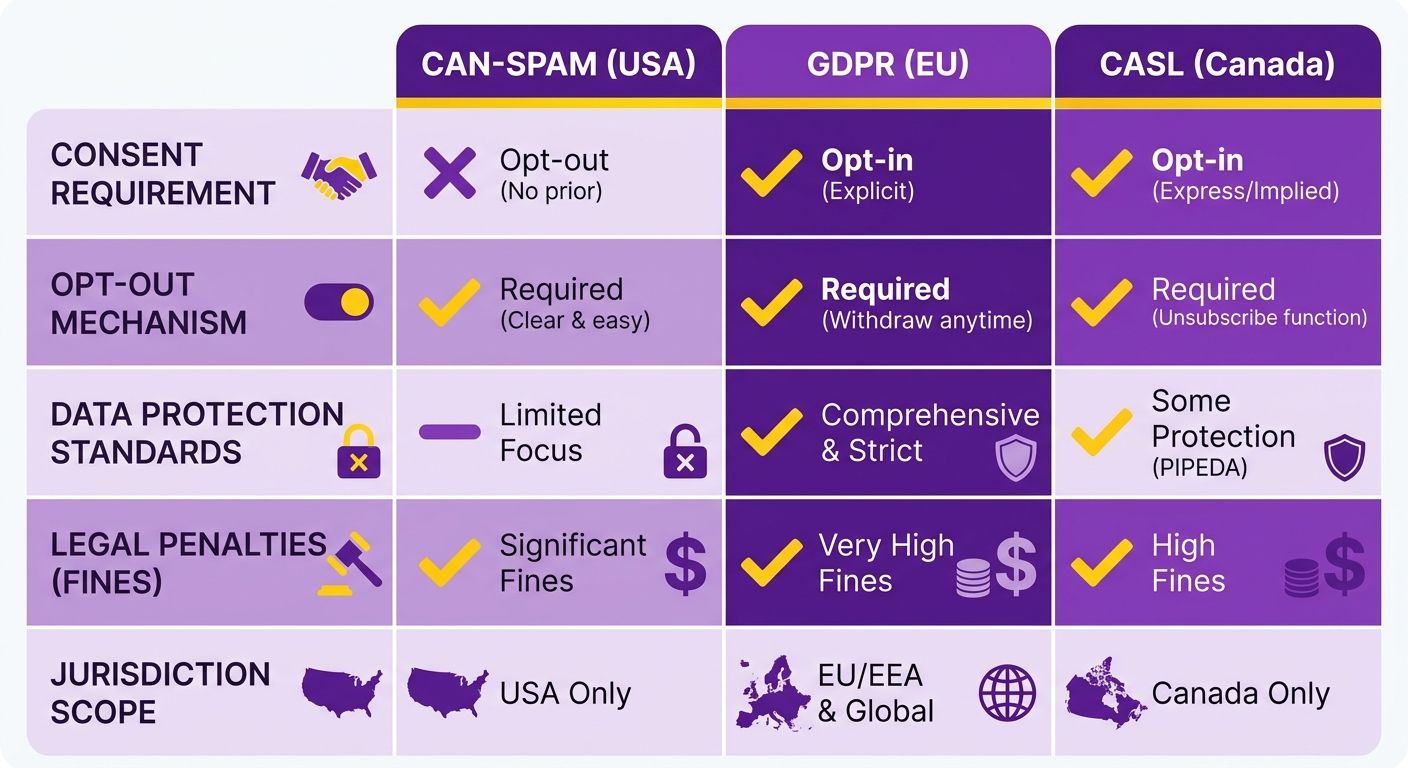
Three laws set the boundaries. CAN-SPAM in the US, GDPR in the EU, and CASL in Canada each demand something slightly different, and you may be accountable for all three the moment your prospect list crosses borders. CAN-SPAM requires a real physical address and a working unsubscribe. GDPR requires a lawful basis for processing personal data. CASL is often the strictest, requiring consent before you send.
Does automation break spam law
The tool does not break the law. How you configure it does. Automating the send is generally fine. Automating your way around consent, opt-outs, or accurate sender identity is what can create problems.
Keep a clean list. Scrape publicly listed business contacts relevant to your pitch, honor every unsubscribe on the first request, and never mask who you are. When your outreach engine fires messages on webhook events, wire the suppression list into that same flow so an opt-out stops the sequence instantly.
Data sourcing is the ethical line most teams cross without noticing. Pulling a contact from a public resource page is often defensible. Buying a bulk list and blasting it is where reputational damage can start, and no link is worth that.
How to protect deliverability at high volume
Sender reputation is the currency here. Send too much too fast from a cold domain and mailbox providers may throttle you before your prospect ever sees the message.
Warm the domain first. Ramp volume gradually over weeks rather than launching at full send. Set up SPF, DKIM, and DMARC so receiving servers can verify you are who you claim to be. These three records are standard components of a serious sending operation.
Watch your AI-generated copy too. High-volume identical-looking emails can trip filters, which is exactly why personalization matters beyond reply rates. Outreach that references the specific post you are pitching can read as more human than a template stamped a thousand times.
Where the ethical path and the effective path converge
Mailbox providers watch bounce rates. If bounces climb too high, they may filter or throttle your domain. Compliance failures can compound this, because a flagged sender may see delivery collapse across every campaign at once, not just the offending one.
So the ethical path and the effective path often converge. Content that genuinely deserves the link, pitched with an accurate sender identity to a consented or publicly listed contact, tends to stay legal and land in the inbox. When a content platform prepares relevant anchor text tied to a post worth citing, you are building a backlink source that is easier to defend.
Skip aggressive automation entirely if your list is bought, scraped indiscriminately, or spans jurisdictions you cannot vouch for. The risk can swamp the link value there. For clean, relevant, consented outreach, automation can compress the cycle without putting your domain at risk.
Quick Questions, Straight Answers
1. Does automated cold outreach need to comply with email laws in every country?
Any time your prospect list crosses borders, multiple laws may apply at once: CAN-SPAM in the US requires a physical address and working unsubscribe, GDPR in the EU requires a lawful basis for processing data, and CASL in Canada is often the strictest, requiring consent before you send.
2. What bounce rate is safe before it starts hurting my whole domain?
Keep hard bounces as low as possible. Mailbox providers can throttle delivery when bounces climb, and a single throttled domain can affect every campaign you run from it. Verify addresses at import, not after your first batch has already fired.
3. When should I avoid link-building automation entirely?
Skip aggressive automation when your outreach data is a mess. Feeding dirty, unverified lists into a bot can scale the noise faster, lower reply rates, and dirty your data further. Clean, deduplicate, and enrich your list first, then automate once the inputs are trustworthy.
4. How many follow-ups should a sequence include before I stop?
Cap the sequence at five touches spaced a few days apart. A three-to-five-step cadence gives room to react to opens, clicks, and silence without wearing prospects down. Any reply should pull the prospect out of the automated cadence entirely, so nobody gets a nudge after writing back.
5. Should I score prospects on domain authority or semantic relevance?
It depends on your target. Authority metrics like Domain Rating and referring domains are often used for Google rankings, while semantic relevance and brand alignment may influence whether ChatGPT cites your page. Most teams need both scores side by side. On-brand anchor text can serve both, depending on the page and the pitch.