
Measuring ROI from Automated Content: Attribution Models That Track Cross-Channel Impact

Quick Summary
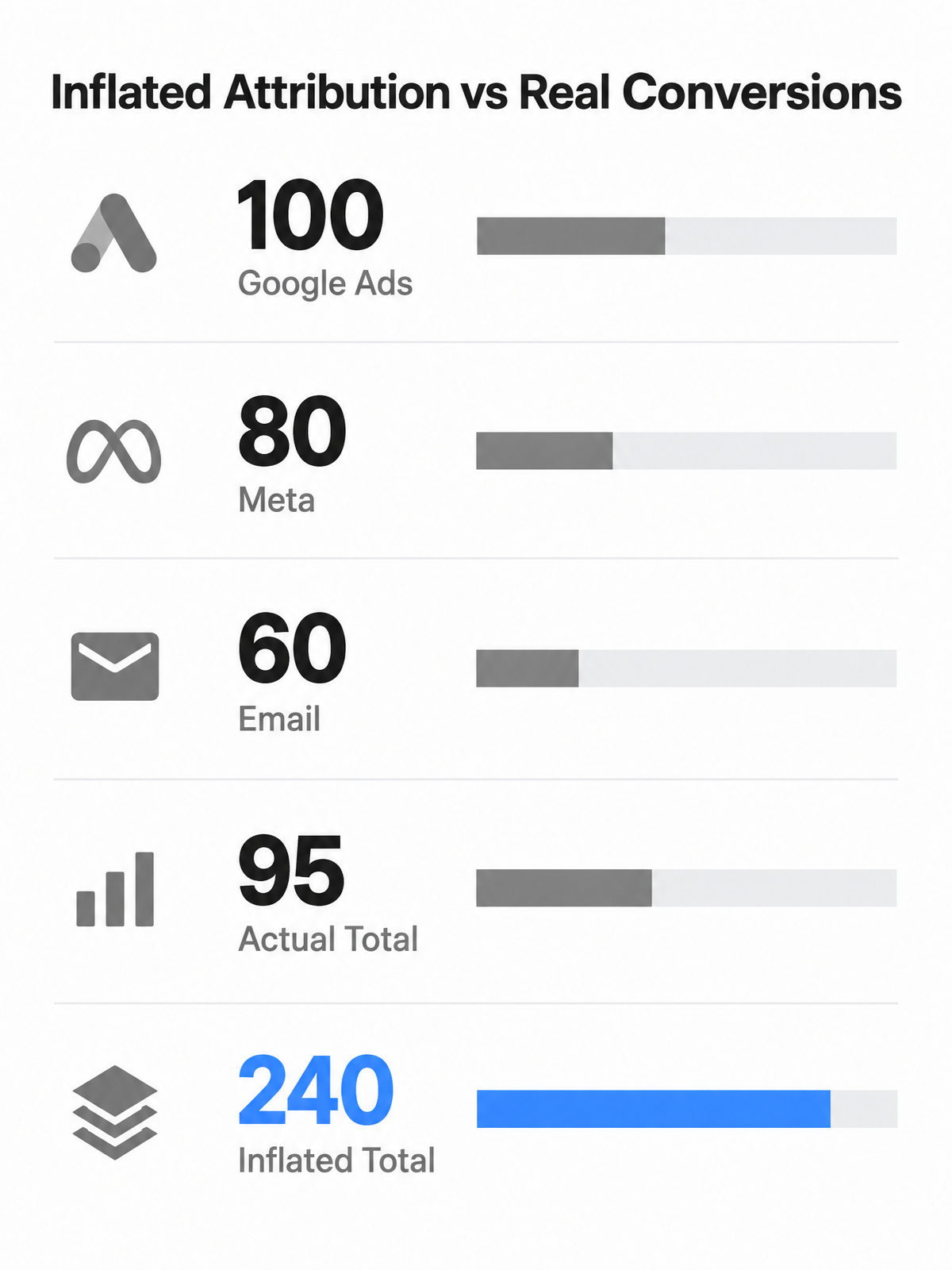
Most marketing teams treat attribution as a channel scoreboard. Google Ads reports its conversions, Meta claims its own, email platforms tally theirs. Add the reports together and you can end up with three times the conversions you actually closed. Each platform inflates its numbers because every one of them measures only the last click it touched, while the six earlier interactions disappear.
This is the measurement blind spot automated content worsens. When your system publishes SEO posts, updates local listings, and schedules social carousels at the same time, you're creating overlapping touchpoint sequences across channels. Customer journeys increasingly span multiple channels, often following patterns where one touchpoint sets off a chain reaction that converts weeks later. Traditional attribution wasn't built to track which specific content piece started that sequence. It sees "social" versus "organic search." It doesn't see that blog post A outperformed blog post B in sparking the chain that led to a closed deal.
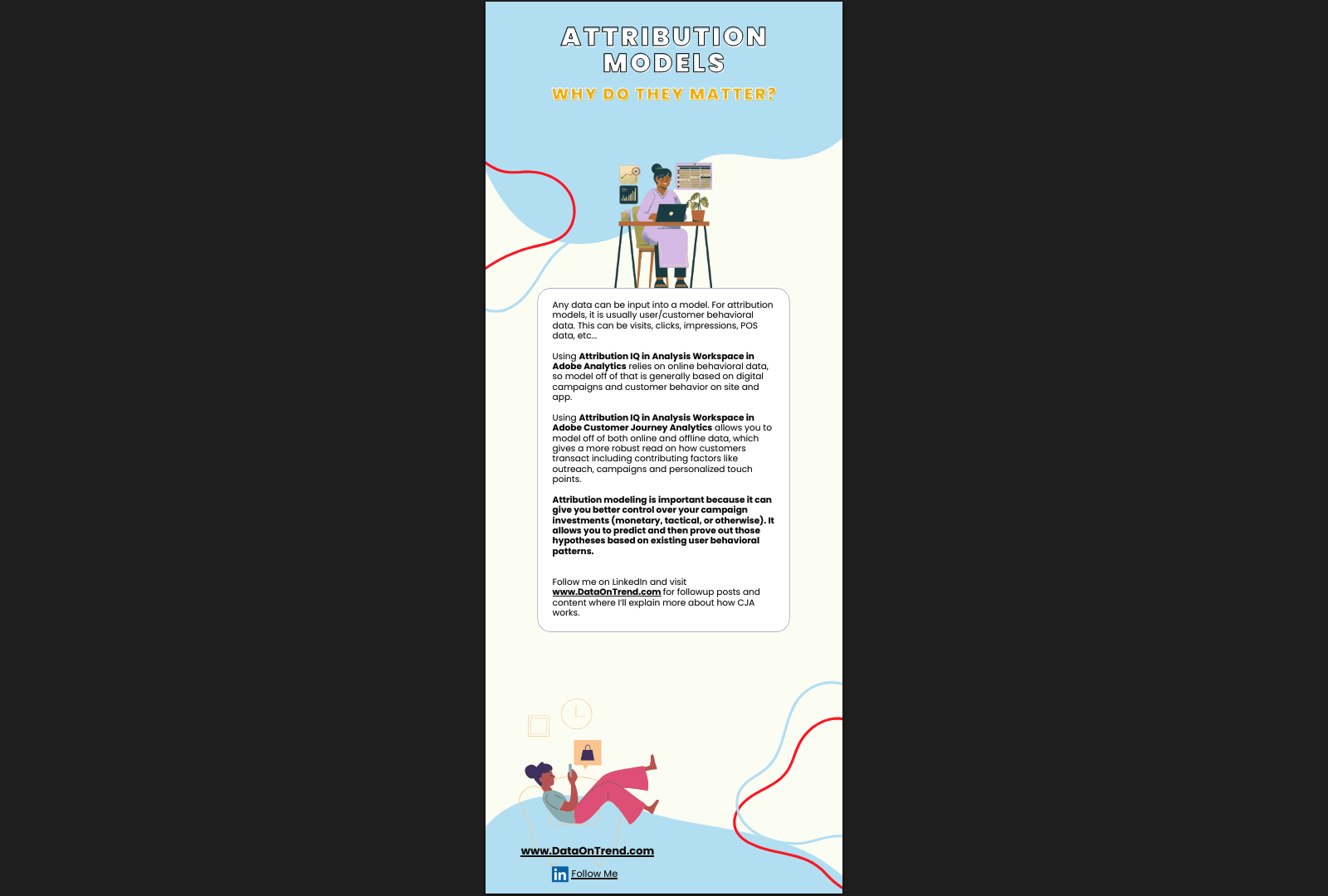
The table below shows how different attribution models distribute credit when automated content creates multi-channel touchpoints, what data each model needs, and where each one can misdirect budget.
| Model | Credit Distribution | Insight Focus | Required Data Streams | Implementation Effort | Ideal Use Case | Common Pitfall |
|---|---|---|---|---|---|---|
| Last-Touch | 100% to final interaction | Which channel closed the deal | Analytics platform + conversion tracking | Low | Conversion paths under 4 touchpoints, direct-response campaigns | Over-credits bottom-funnel actions; starves awareness spend that filled the pipeline in the first place |
| First-Touch | 100% to initial interaction | Which channel started awareness | Analytics platform + UTM tracking | Low | Top-of-funnel lead generation, brand awareness measurement | Ignores nurture work; undervalues email sequences and other mid-funnel touchpoints that guided prospects toward conversion |
| Linear | Equal credit across all touchpoints | Democratic view of contribution | Multi-touch tracking, user-ID stitching | Medium | Short cycles (under 14 days), evenly-weighted funnels | Treats a LinkedIn awareness scroll equal to a product demo that closed; doesn't match conversion power to credit |
| Time-Decay | More credit to recent interactions | Which channels push toward decision | Session tracking, timestamp data | Medium | Sales cycles 30–90 days, B2B consideration phases | Still undervalues early content that qualified the lead; can't tell if recent touches converted because of earlier ones |
| Position-Based (U-Shaped) | 40% first, 40% last, 20% middle | Awareness + conversion moments | Multi-touch tracking, journey mapping | Medium–High | Balanced journeys (4–8 touchpoints), B2B SaaS | Middle touches still get generic credit; doesn't reveal which specific mid-funnel actions drive stronger conversion outcomes |
| Algorithmic / Data-Driven | Credit assigned by statistical contribution | Machine-learned channel impact | High conversion volume, ML infrastructure, data science team | High | High-volume programs, mature attribution practice |
Single-Touch Speed Versus Multi-Touch Nuance
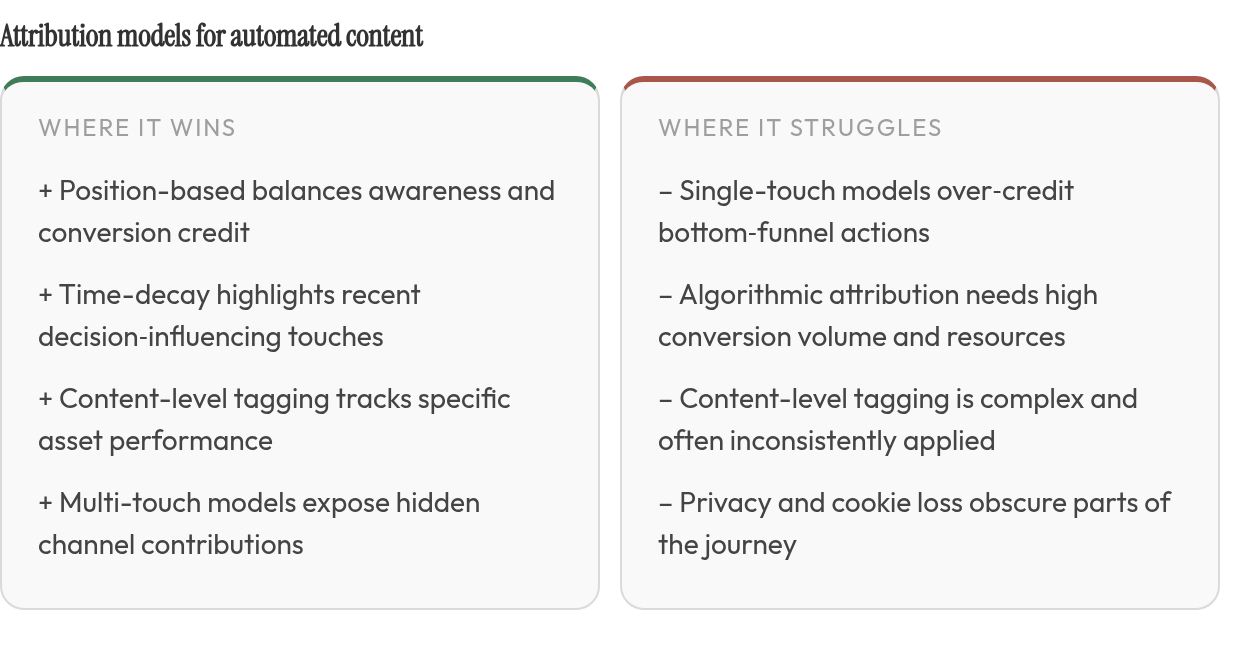
Single-touch models are fast. One channel gets full credit, budgets adjust, reports close. That speed trades accuracy for simplicity. When teams rely on final-click reporting while buyers engage across extended cycles, they starve the awareness and nurture channels that make bottom-funnel conversions possible. When they switch to broader attribution, they often discover that channels with weak closing credit were quietly responsible for introducing many of the customers who later converted elsewhere.
Multi-touch models distribute credit across the journey and reveal which combinations actually work. Teams that measure conversion quality by touchpoint type rather than channel alone consistently find meaningful performance gaps: some touchpoints convert at multiples of the rate others do. Shifting budget toward higher-converting touchpoint types can lift revenue while reducing total spend. Position-based models fit this scenario well without requiring the conversion volume or data science infrastructure that algorithmic approaches demand. If your conversion volume is modest or your team lacks dedicated analytics capacity, rule-based models like position-based or time-decay tend to produce better results than under-trained algorithms working from sparse data.
Multi-touch attribution requires user-ID stitching across devices, UTM discipline, and journey-mapping infrastructure that most teams don't maintain consistently. Privacy regulations and cookie deprecation now obscure significant portions of customer journeys, so even sophisticated models work with incomplete data. Post-purchase surveys asking "how did you first hear about us?" often reveal that a meaningful share came from word-of-mouth or view-through exposures that pixels never captured. Attribution credited those conversions to "direct" traffic instead.
Data Feeds Automated Workflows Should Capture
For automated content engines, channel-level attribution misses the operational question: which content pieces triggered the sequences that converted, not just which channels carried them. That requires tagging every published asset with a content ID that persists across platforms. Blog post 1472 goes to the web, gets shared to LinkedIn, appears in a newsletter, and surfaces in Google results. Then you can connect "user clicked organic result for post 1472, opened email mentioning post 1472 two days later, returned via paid retargeting" into a single content-driven journey rather than three disconnected channel events.
The data streams that workflow needs: organic/SEO performance, social engagement, email nurture signals, paid amplification metrics, and referral/backlink traffic showing which external sites picked up your content and sent qualified visitors. Most platforms don't natively capture this at the content-ID level. You're stitching GA4, email APIs, social analytics, and paid ad interfaces into a unified view that attributes revenue not to "email" generically, but to which specific email containing which content preceded conversion.
Without that granularity, you'll keep overspending on channels that capture demand other channels created. It's the attribution version of declaring the closer your best salesperson while ignoring the SDRs (sales development reps) who qualified every lead they touched.
TL;DR
Automated content makes channel-only attribution unreliable because one asset can trigger search, social, email, referral, and retargeting activity before a customer converts. Single-touch models are fast but narrow. Multi-touch models reveal how awareness, nurture, and closing interactions combine. Content-level tagging is the practical upgrade: use persistent asset IDs across placements so ROI reporting shows which posts, guides, or campaigns created revenue-producing journeys. Privacy limits and cookie loss mean attribution will never be perfect, so pair journey tracking with surveys and broader budget analysis. For most teams, position-based, time-decay, or W-shaped models make more sense than algorithmic systems unless conversion volume and analytics support are already mature.
Why Attribution Matters for Automated Content
The hidden tax on automated content is not the production workload. It's the reporting debt you take on every time one asset goes out through search, social, and email in the same week. One dashboard highlights paid conversions. Another celebrates social influence. The email tool points to engagement before purchase. None of those reports is necessarily wrong, but each one is incomplete when read alone.
That's the measurement trap automated content creates. You're generating touchpoints faster than your tracking can connect them, and the result is inflated attribution across every channel. Marketing teams often lack a clear view of the customer journey. They see channel-level reports but can't trace how a LinkedIn post sparked a search later, or how an email sequence kept a prospect warm until they finally converted through a retargeting ad.
The real cost shows up in budget decisions
Teams overspend on channels that look efficient in isolation. Search ads get credit because they sit close to the conversion moment, so budgets shift toward paid search even though some prospects only searched for your brand because earlier content introduced them. Remove that earlier activity and the apparently efficient channel can lose the demand it was capturing. Cross-channel attribution often reveals that social drives initial awareness for a substantial portion of converting customers, even when it rarely gets closing credit.
The channels that rarely appear as the final step—email nurture sequences, organic content, retargeting—can look like cost centers without proper attribution. In reality, they may be the reason prospects are ready to convert when they finally take action. Webinar audiences, repeat blog readers, and engaged email subscribers often show stronger intent than cold traffic, so budget decisions should evaluate lead quality as well as credited conversion volume.
Customer journeys frequently follow repeatable patterns: awareness content leads to a subscription, the subscription leads to a resource download, and the download leads to a sales conversation. When your system publishes across channels simultaneously, those sequences multiply. Standard attribution still can't distinguish whether one guide outperformed another in driving conversions across the triggered channel chain.
Privacy constraints make the problem worse
Cookie blocking, browser restrictions, and stricter regulations now hide parts of the path from first interaction to sale. A visitor may read a post on one device, click an email on another, and convert after a direct visit that looks disconnected from both. Even a clean tagging system will miss some of that context.
The businesses that handle this best combine multi-touch attribution for real-time optimization with marketing mix modeling for long-term budget planning. Multi-touch traces observable user journeys and distributes credit across interactions. Marketing mix uses statistical regression across channel-level data to estimate impact when direct tracking isn't possible. Used together, one validates the other, and both tell you how to automate content creation in a way that actually connects publishing activity to revenue outcomes.
Core Attribution Models Explained
When you run automated content across SEO, social, and email at the same time, a single conversion can have several legitimate influences. A prospect may discover the brand through an article, return through a social post, receive a nurture email, and later respond to a paid reminder. If your reporting system only records the final visible action, it turns a connected journey into a misleading channel ranking.
Attribution models exist to fix that. They create a formal method for assigning conversion credit so teams can compare influence across the journey instead of relying on platform dashboards alone.
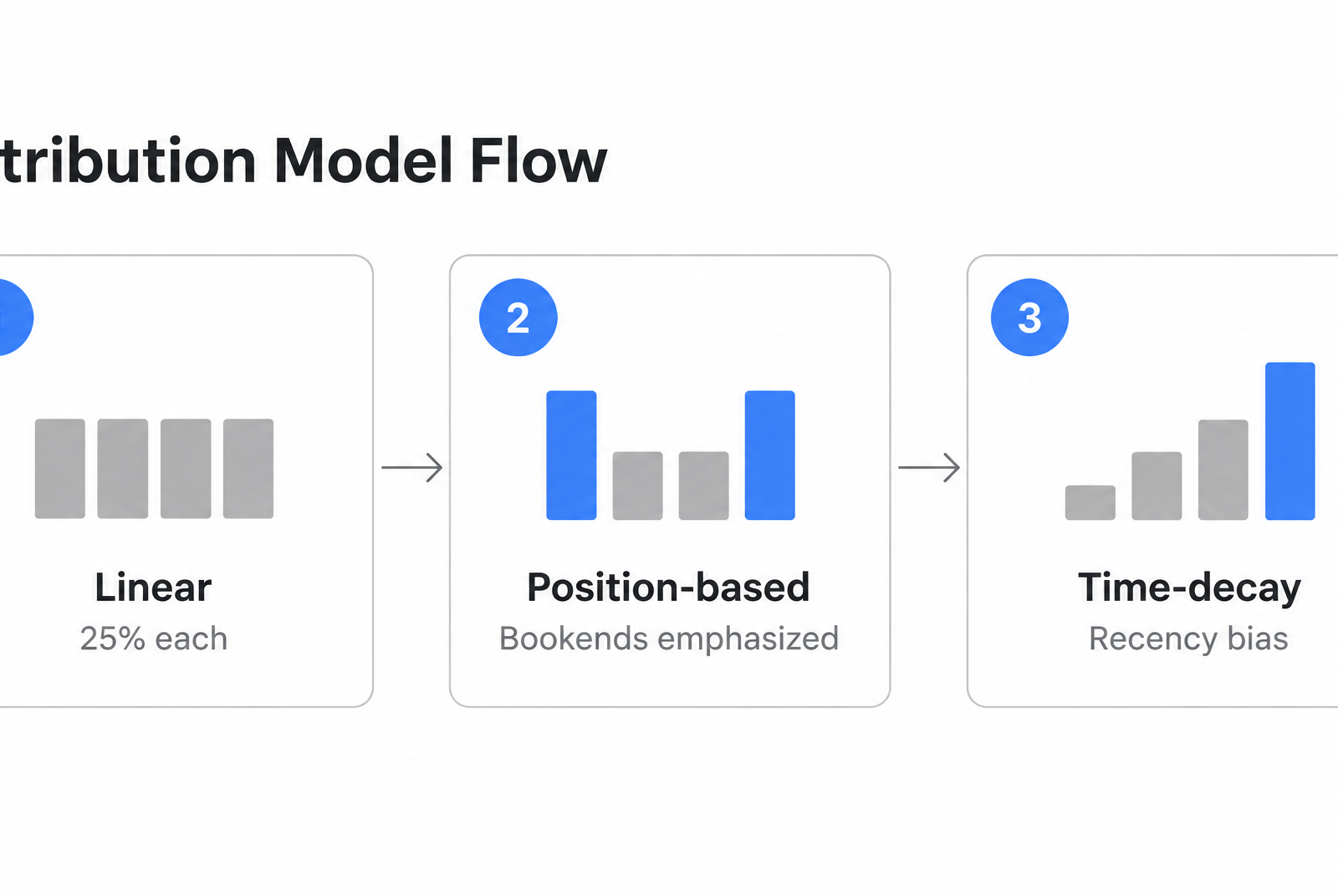
Rule-Based Models: First-Touch, Last-Touch, Linear, and Position-Based
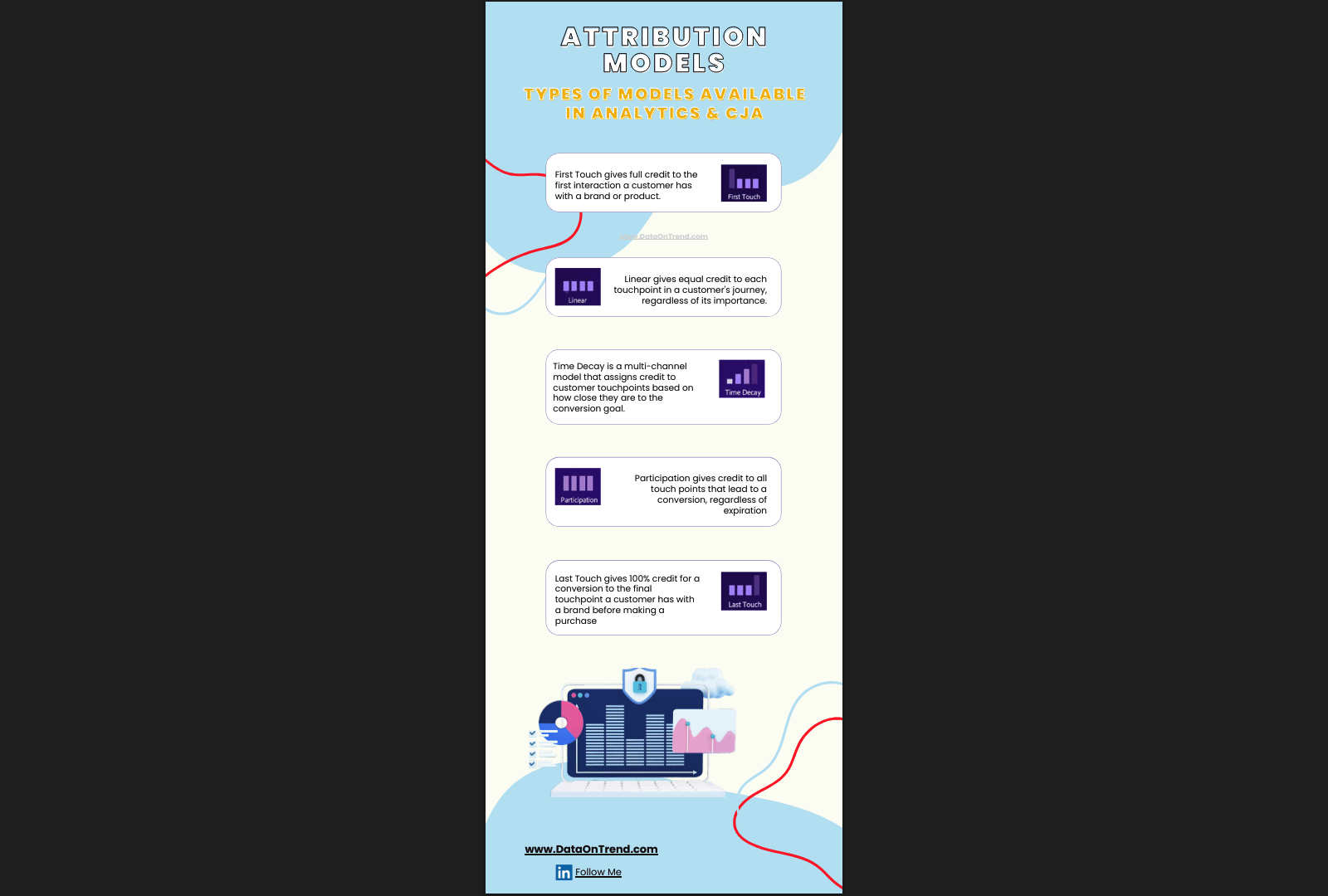
First-touch attribution gives all credit to the initial touchpoint, the SEO article that sparked interest, the LinkedIn post someone first encountered, or the referral page that introduced the brand. It's useful when you need to know which channels fill the top of the funnel, but it completely ignores everything that happened after awareness. If you optimize purely on first-touch, you'll pour budget into channels that generate curiosity but never close deals.
Last-touch attribution sits at the opposite extreme: every conversion gets credited to whichever touchpoint happened right before the purchase, whether that was a branded search, a direct visit, or a retargeting ad someone finally clicked. This creates a systematic bias toward bottom-funnel channels. In automated content programs, it can make demand-capture channels look like demand creators.
Linear attribution splits credit equally across every touchpoint in the journey. If someone saw an SEO article, clicked a LinkedIn post, opened emails, and converted after a retargeting ad, each interaction receives the same share. It's simple to explain, but it treats a passing scroll through social media the same as attending a long-form product session, even though one may have moved the decision much more than the other.
Position-based (U-shaped) attribution recognizes that not all touchpoints carry equal weight. The model emphasizes the bookends of the customer journey, initial discovery and final conversion, while still acknowledging the middle interactions that kept the prospect engaged. For automated content strategies, this means an SEO article that started the journey and a targeted email that triggered the demo request both get meaningful credit, while the middle touches share the smaller pool.
Time-Decay and W-Shaped Models for Longer Sales Cycles
Time-decay attribution weighs recent interactions more heavily than older ones, operating on the assumption that a newer touchpoint influenced the decision more than one that happened earlier. This works when recency predicts conversion power, but it can undervalue the upper-funnel content that built initial trust simply because it happened further back in time.
W-shaped attribution identifies three distinct moments that drive B2B outcomes: initial awareness, qualification into a real opportunity, and closing the deal. Each of these inflection points receives substantial credit, with the remaining weight distributed across other touchpoints. When you automate content marketing strategy across multiple channels, W-shaped attribution surfaces whether your SEO posts are generating awareness, your email sequences are converting readers into opportunities, or your retargeting ads are pushing qualified leads over the finish line.

Data-Driven Attribution: When Algorithms Beat Rules
Data-driven attribution uses machine learning to analyze conversion paths and assign credit based on statistical contribution rather than preset rules. The algorithm compares journeys that ended in conversion against those that didn't, calculating how much each channel type actually shifted the probability of a sale happening.
That sounds ideal, but it requires enough conversion volume and dedicated analytics resources to build, tune, and validate the models. If the dataset is too thin, algorithmic models can mistake random variation for meaningful contribution, making simpler frameworks more reliable. When attribution model biases systematically undervalue upper-funnel channels, the right choice depends on whether you have the data volume to support algorithmic precision or need a rule-based model your team can trust and act on.
For most teams running automated content strategies, position-based or W-shaped models deliver enough accuracy to reallocate budget toward what's working without the technical infrastructure algorithmic approaches demand. The best model isn't the most sophisticated one. It's the one your team understands well enough to make decisions with.
Mapping Automated Content Touchpoints Across Channels
When your automated system publishes a blog post, shares it to LinkedIn, and updates your local listings in the same hour, one idea has become several measurable interactions. The same asset may influence search visibility, social engagement, local discovery, and later remarketing audiences, yet each platform will describe only its slice of the journey.
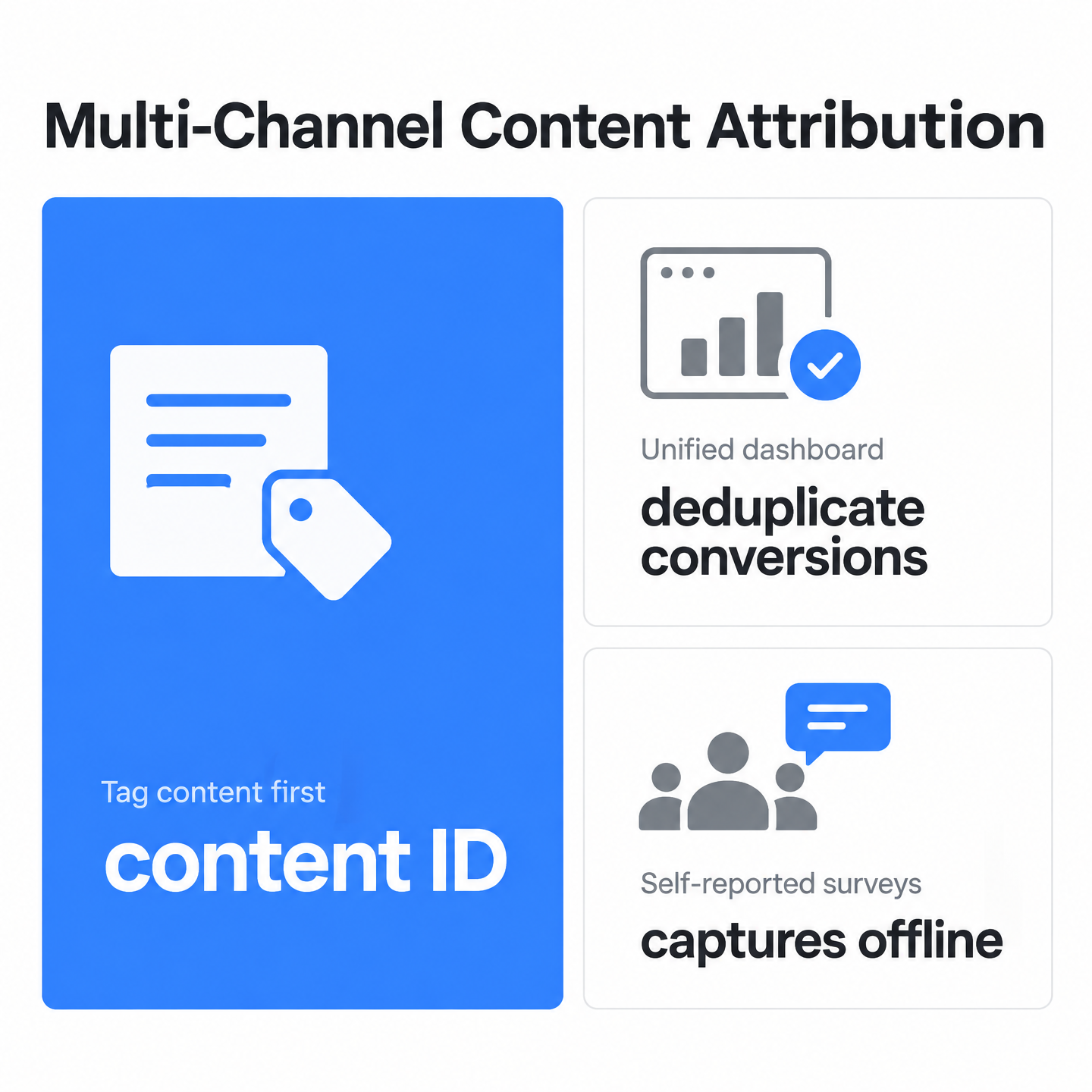
The measurement challenge is connecting those placements back to the asset that created them. Once you track content as the common thread, you can see whether a post became a useful cross-channel path or simply produced isolated engagement that never advanced the buyer.
Tag content at the source, not just the channel
Most attribution setups tag the delivery channel, utm_source=linkedin, utm_medium=social, but miss the content identifier that would connect a LinkedIn share, the original blog post, and the email newsletter excerpt back to the same source material. When you automate content marketing strategy across channels, that connection is what separates "LinkedIn drove conversions" from "this specific article influenced conversions across LinkedIn, organic search, and email."
Build your UTM structure around content IDs first: utm_content=post-447_topic-attribution_format-guide_persona-marketing-ops_publish-2026-10-11. Include enough detail to filter by topic, format, target audience, and publish date later. Source and medium capture where the content appeared; the content parameter captures what it was and when it went live.
Capture platform-specific engagement signals as custom events rather than conversion assists. Social clicks, email opens, landing page sessions, form fills, webinar registrations. Each one is a measurable step in the journey, not a yes/no conversion flag. When you automate content distribution, these events stack across channels before the final conversion, and you need to see the full sequence to understand which content types trigger which engagement chains.
Pull signals into one reporting layer or accept reconciliation overhead
Platforms like Google Ads, Meta, and email tools all report from their own vantage point. If you let each system define success independently, your reports will reward the platforms best positioned to observe the final interaction, not necessarily the channels or assets that created the customer's interest.
The fix is either a unified analytics dashboard that deduplicates conversions by user ID and timestamp, or manual spreadsheet reconciliation that matches conversion timestamps across platforms and removes duplicates. The dashboard approach costs more upfront but scales. The spreadsheet approach is free but eats hours every reporting cycle and introduces human error when volumes climb.
Privacy regulations and cookie blocking now obscure significant portions of customer journeys, which means attribution gaps are a structural reality, not a setup failure. Self-reported attribution surveys, asking "How did you first hear about us?" after conversion, capture the offline conversations, view-through impressions, and word-of-mouth referrals that pixels miss entirely. Direct traffic often masks untracked social interactions, colleague referrals, and other touchpoints that cookies can't capture.
Automated content creates overlapping touchpoint sequences faster than traditional campaigns, which amplifies both the attribution value and the measurement complexity. When a single content piece triggers engagement across search, social, email, and referral traffic in the same week, you need tagging and event capture that can reconstruct that sequence later. Otherwise you're back to measuring isolated channels and guessing which ones actually drove the conversion.
Implementing Multi-Touch Attribution in the AnyPost.ai Workflow
In the AnyPost.ai workflow, attribution starts before distribution. The goal is to make every generated asset traceable from creation through publication, amplification, engagement, and eventual revenue impact. If tracking is added only after the content reaches a platform, the most important connective tissue is already missing.
We see teams make the same mistake repeatedly: they measure "LinkedIn performance" and "organic search performance" as separate buckets, then wonder why their ROI numbers don't add up. Customers often interact with several placements before purchase, and those placements frequently trace back to the same source asset published in different formats.
Tag content at publish, not just at delivery
Traditional attribution tracks utm_source=linkedin versus utm_source=google. That's channel-level data. What you actually need is content-level data that follows a specific blog post from its initial publish through every channel it touches before conversion.
The minimal fields for attribution are straightforward: user or account ID, session ID, source/medium, campaign name, content ID, timestamp, touchpoint type, conversion ID, and revenue value. Most teams already capture the identity and campaign basics; the content ID and touchpoint type are what separate accurate attribution from channel-level guessing.
The workflow looks like this: your content generation system creates a post, the publishing layer tags it with a unique content_id parameter, each channel interaction captures that ID alongside standard UTM tags, identity stitching connects anonymous sessions to known users, the attribution model distributes credit, and your dashboard shows which content pieces drove revenue, not just which channels.
Validate before you optimize
Run test conversions before trusting any attribution setup. Create a known conversion path, blog post to email to demo request, tag each step manually, and verify the full sequence appears in your reports. If it doesn't, your tracking has gaps.
Reconcile channel-reported conversions against actual closed conversions before making budget calls. If your CRM shows fewer deals than your combined platform dashboards imply, treat the discrepancy as a measurement problem to solve rather than a performance win. Platform totals should roll up to the business outcome, not compete with it.
Look for duplicate platform claims by comparing conversion timestamps. If two systems claim credit for the same conversion within minutes of each other, you need a deduplication rule and a shared conversion record. Multi-touch attribution handles shared influence better than single-platform reporting, but only if tracking captures the full sequence.
Review your unattributed and direct traffic percentage. If a large portion of conversions show as "direct" or "(not set)", your tracking infrastructure has holes. Those often come from cross-device journeys, dark social shares, or sessions that started before your tracking window. Privacy constraints mean some conversions will always have incomplete attribution, but unusually high unattributed traffic signals a configuration problem.
Interpreting Attribution Results to Optimize Budget & Content Strategy
When attribution finally connects which channels touched a conversion, most teams stop too early. They read the reports, note which channels got credit, and move on. The gap between seeing attribution data and knowing what to do with it is where budgets stay misallocated.
Read attribution as conversion quality, not just conversion count
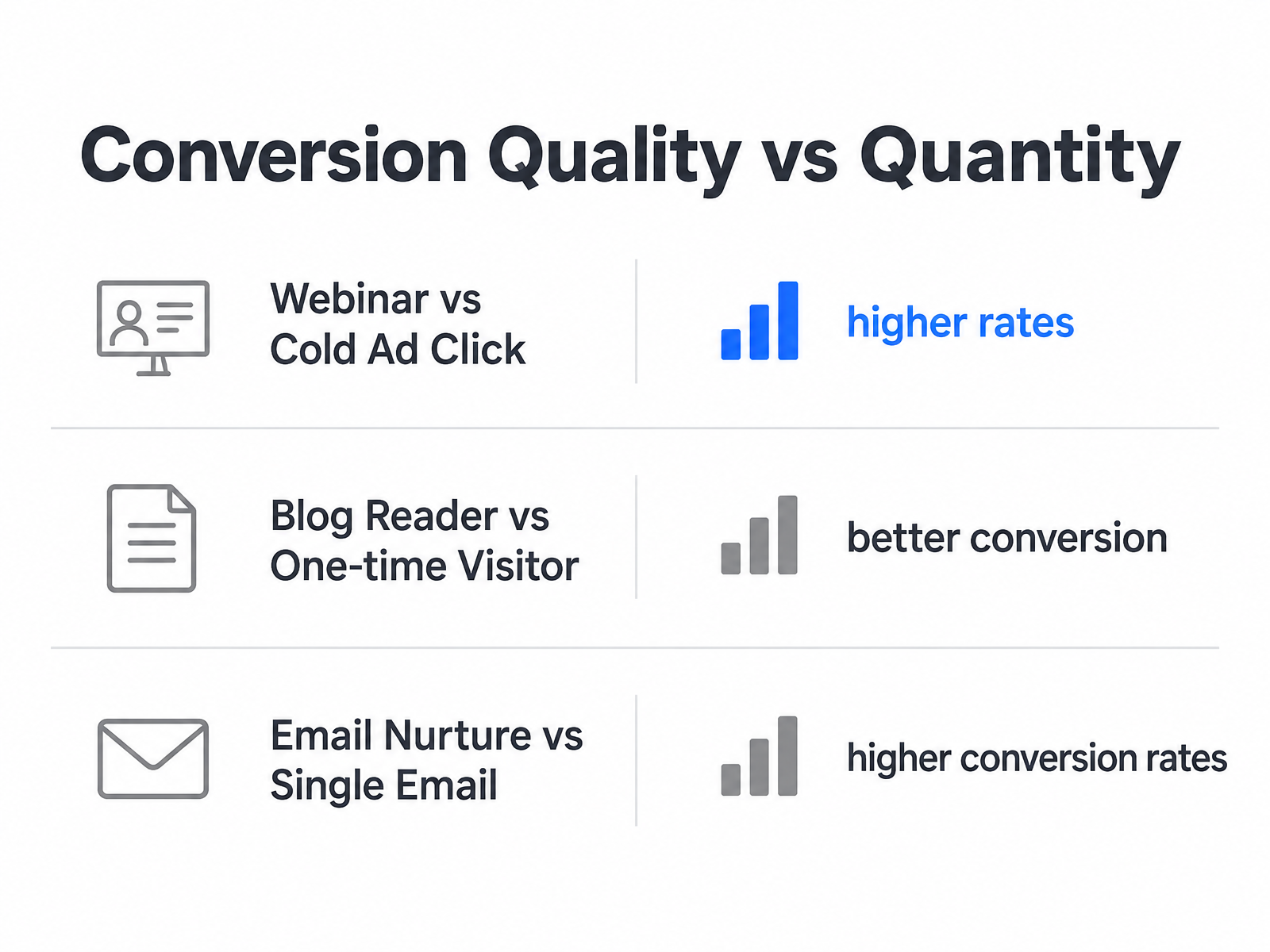
A channel that assists many conversions may still deliver weak economics if those journeys produce poor-fit leads or long sales delays. Different touchpoints often produce different quality signals. Webinar signups, repeat blog visits, email clicks, and cold ad clicks should not be evaluated as interchangeable outcomes. When you automate a content marketing strategy that publishes across channels simultaneously, standard multi-touch attribution shows you which channels the content reached, but not the conversion power of each touchpoint sequence. Track cost per qualified lead, not just cost per conversion, and weight your content ROI calculations by the quality of the journeys each piece initiates.

Calculate blended ROI, then drill into channel contribution
Start with total revenue divided by total marketing spend. That's your Marketing Efficiency Ratio. It never lies because it sidesteps platform inflation. Once you have that anchor, use attribution to see which channels contribute to that efficiency and which ones drag it down. Social channels may look weak in final-action reports while still supplying early-stage visibility that later channels convert.
Use this framework: total spend, including media, production time, and tool costs, divided by attributed conversions, segmented by channel and content type. If one channel produces qualified leads at a materially lower cost than another, your attribution is telling you where to test budget movement. When you spot cost-per-lead differences, reallocate in controlled increments while monitoring overall conversion volume and lead quality. Run these comparisons monthly so inefficient spend does not persist until the next quarterly review.
Spot the patterns that signal strategy changes
Attribution reveals which channels work together and which ones get credit they didn't earn. Social may show high assist rates but low closing credit. It's filling the funnel that search and email later convert. Email nurture tends to correlate with stronger conversion outcomes among customers who received multiple messages, even when email rarely appears as the last step. Organic search typically delivers lower-cost qualified leads because prospects already know what they're looking for, but those prospects may have searched only after earlier awareness content introduced your brand. When attribution shows you these sequences, you're seeing the actual conversion machinery, not just the channels that happened to be nearby when someone clicked buy.
Watch for channels with significantly higher assist rates than direct conversions. Those channels are likely undervalued. When you see this pattern, test shifting budget from channels that primarily capture existing demand toward those that create it in the first place.
Protect upper-funnel content from short-term bias
Short attribution windows systematically undervalue awareness content because conversions can happen well after the first touch. If you optimize purely for immediate ROI, you'll cut the channels generating future demand and wonder why performance drops later. Set an attribution window long enough to capture upper-funnel contribution, and track assisted conversions alongside direct conversions. When assisted conversions significantly outnumber direct conversions, that channel's value isn't showing up in short-term reports. Short attribution windows systematically undercredit early-stage interactions.
Advanced attribution models can improve accuracy, but they require substantial conversion volume and analytical resources. For teams with moderate traffic, models that credit key journey stages while distributing partial credit to supporting interactions often deliver clearer, more actionable insights than complex algorithmic approaches. Choose the framework your team can explain, audit, and use consistently.
Communicate insights to non-technical stakeholders
Most executives don't need to understand Markov chains or Shapley values. They need to see claimed conversions versus actual conversions, which channels are being overvalued, and what you recommend changing. Frame it as direct impact: "The platform dashboard shows a strong result, but cross-channel analysis reveals that many of those conversions had earlier email or organic search touchpoints that initiated the journey. Here is the unique contribution, and here is how the assisted conversions actually moved through the funnel." Then show the top assisted channels and the recommended budget shift, with expected impact.
Pair attribution data with engagement lift, conversion rate by content type, and qualified-lead cost. A channel can drive high traffic to a broken experience and attribution will call it underperforming when the real problem is what happened after the click. Supporting metrics catch that.
Frequently Asked Questions
1. What if we do not have enough conversion data for reliable algorithmic attribution?
Use a rule-based model until the data is strong enough to support automation. Position-based or W-shaped attribution gives teams a practical way to compare journey stages without pretending a small dataset can support statistical precision. Revisit algorithmic attribution once conversion volume, analytics ownership, and model validation processes are mature.
2. Can content-level attribution still work when cookies and browser restrictions hide part of the journey?
Yes, but it should be treated as directional rather than complete. A persistent content ID can connect observable events such as an organic click, email click, and later paid return. It cannot recover every hidden impression, private share, offline conversation, or cross-device interaction. Surveys and marketing mix analysis help fill that context.
3. Should every placement of the same automated content use the same content ID?
Yes. For teams applying this in the AnyPost.ai workflow, use one persistent content ID for the original asset wherever it appears, while UTMs capture the channel-specific details around each placement. Consistent identifiers preserve the cross-channel chain and make asset-level ROI possible.
4. Does position-based attribution mean middle-funnel interactions do not matter?
No. Middle interactions still receive credit, but the model gives more weight to discovery and conversion moments. The limitation is granularity: it may show that the middle of the journey mattered without proving which specific mid-funnel action contributed most. Use engagement and lead-quality metrics to interpret that middle layer.
5. How should we handle conversion counts duplicated across Google Ads, Meta, and email platforms?
Do not add platform-reported conversions together as if each count were unique. Reconcile records against customer or user ID and timestamp in a unified analytics layer whenever possible. If that infrastructure is not available yet, manual matching can work temporarily, but it becomes slower and less reliable as volume grows.