Using a Founder’s X Profile to Generate Leads Without Writing Posts

What You Need to Know
- A small share of your posts drives most profile views.
- 50 likes from prospects you'd actually sell to beat 5,000 from random followers scrolling past.
- You need to show relevance fast when someone clicks through from a comment, reply, or search result.
- Daily commenting on relevant threads can drive more profile traffic than original posts.
- Your X profile is the real conversion layer — every post, comment, and reply just sends attention there.
- Batch your content on weekends, comment daily, and you'll stay visible without the daily panic that kills momentum.
The Profile Converts. The Posts Just Send Traffic.
Most founders obsess over posts that go viral when the profile is what actually turns attention into pipeline. Someone sees your comment in a thread. They click through. Your profile has maybe three seconds to show you understand their problem and are worth following. That's the moment most founders lose.
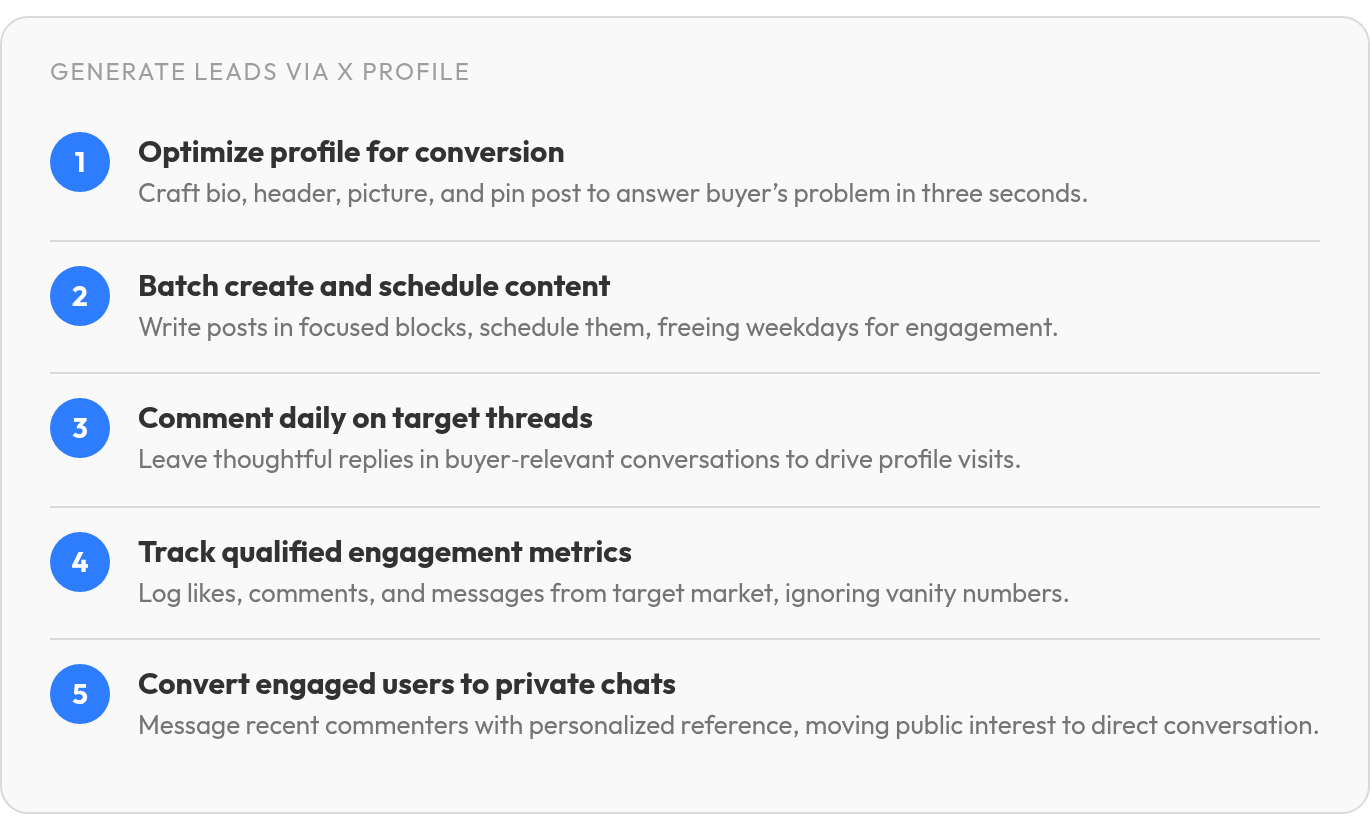
The conventional X strategy reverses this — chasing reach before the destination can handle it. Your target buyers are already on X, researching solutions and watching how founders talk about their problems. When they land on your profile, the bio needs to immediately answer whether you're solving something they care about.
Qualified Engagement Beats Vanity Numbers
The default playbook chases big metrics: viral reach, trending threads, broad approval from people who will never buy. That's the wrong signal for lead generation. The better metric is whether the right people react — SaaS founders, agency owners, marketers with budget, operators with an active pain point. Whatever segment you actually sell to.
Many founders misread this. Most posts produce modest reach, and that's fine. Your profile is the asset working every time someone discovers you through search, through comments on other threads, or through replies you leave. When they click through, your bio, pinned post, and header need to immediately show what problem you solve and for whom.
Think of the profile as the conversion layer beneath everything else. Publishing, commenting, replying, and search visibility all send attention somewhere. If that destination reads like a generic résumé, you're running a leaky funnel. Tighten the profile first, then build the systems that drive traffic to it.
Build a Lead-Ready Profile Before You Automate Content
Most founders automate publishing before their profile can convert the attention that content creates. Your X profile sits between visibility and conversation. When someone clicks through from a comment you left or a post that resonated, you get one shot to turn curiosity into a follow, a reply, or a demo request.
We see this repeatedly: founders with sharp commentary earn profile visits but lose the lead because the bio reads like a job title instead of a value proposition. Before you invest in any publishing cadence or engagement strategy, these profile elements need to function like landing page components.
Write a Bio That Converts in Three Seconds
Your bio needs to answer one question immediately: why should this person care? Generic descriptors like "entrepreneur" or "founder" waste the space. Profiles that generate leads specify what they fix and for whom. "Retention specialist for B2B SaaS" beats "business consultant" because it names the problem and the buyer.
Structure your bio around outcomes, not credentials. Lead with the result you deliver, add your niche, then include a clear call to action. Some founders use the bio to direct people to an email newsletter as the primary conversion point. Others link to a demo booking page or a lead magnet. The CTA should match where you want the conversation to start.
Optimize Header and Profile Assets for Discovery
Your header image is prime real estate with one practical constraint: links in header images aren't clickable. People have to manually type any URL you include, which means it needs to be short and memorable. Skip long tracking links. Use a custom short domain that reinforces your brand.
The profile picture matters more than most founders think. Use a professional headshot with good lighting and contrast. Your face should be clearly visible at thumbnail size. When your comments show up in someone's feed, that small circle next to your name is often the first trust signal.
Pin your strongest post to the top of your profile. Not the one that got the most casual applause — the one that best demonstrates your expertise to your ideal customer. If you don't have one yet, create it before you start any outreach or commenting strategy.
Separate Creation from Distribution
Most founders use X like a personal blog, but the platform rewards a different rhythm. The sustainable approach is to separate creation from distribution: write in focused blocks, schedule content in advance, and use the rest of the week to participate in conversations that matter to your market.
This keeps your profile active without making posting feel like a daily emergency. We see founders treat publishing as the main event when the compounding advantage often comes from being visible in the right replies, threads, and industry discussions. Your posts give people a reason to understand your point of view. Your engagement gives them repeated chances to notice you.
Engagement Drives Profile Visits More Than Posts
Comment daily on posts from your target market, not random viral threads. A smaller number of thoughtful replies in the places your buyers already pay attention to will outperform broad activity under accounts with no connection to your pipeline. The goal isn't to be everywhere — it's to become familiar in the circles where buying conversations already happen.
Pay attention to which interactions create actual dialogue. If a topic consistently brings prospects into the replies, save that angle and build on it. If another format earns passive reactions but no conversations, treat it as awareness content rather than a lead driver. The system works when you stop treating every post as equally important and double down on the formats your market actually responds to.
This is also where LinkedIn can support the same workflow. You don't need a separate personality on each platform. Your core point of view can stay consistent while the framing changes for each channel. X rewards concise, conversational participation. LinkedIn often gives you more room for context, examples, and business implications. Use both to reinforce the same founder positioning instead of creating disconnected content tracks.
Track Engagement That Actually Converts
The part most founders get wrong isn't finding engaged users — it's confusing activity with opportunity. When you track impressions and follower counts without separating qualified engagement from noise, you optimize for the wrong outcome. A busy notification tab can still produce very little pipeline if the people engaging are outside your market.
Separate Qualified Engagement from Volume
Qualified engagement beats volume every time. A thoughtful comment from a founder in your niche tells you more than a pile of likes from accounts outside your industry. The quality of each interaction matters more than the raw count, so focus on engagement from people who could actually become customers rather than casual browsers.
Start with a simple weekly spreadsheet. Log your content volume, publishing frequency, impressions, and follower growth. Then add the conversion signals: target-market likes, substantive comments, outreach messages sent, and conversations created. The last column matters most — how many engaged users did you actually message, and how many replied?
This tracking reveals which posts attract your buyer. Look for posts where engagement converts to conversations at a higher rate than your baseline. If one topic or format produces noticeably more private discussions than your usual content, tag the angle you used and test variations in your next publishing cycle to confirm the pattern.
Move Engaged Users to Private Conversations
Public engagement opens the door. Private conversation closes it. When someone from your target market likes or comments on your post, reach out while the interaction is recent enough to feel natural. Skip generic "let's connect" messages. Reference their comment or a specific detail from their profile that ties to your content.
We see founders hesitate here and treat outreach like cold prospecting. It's not. These people already engaged with your content, which gives you context for a relevant follow-up. The message should acknowledge that context: "Saw your comment on the lead-gen post, sounds like you're dealing with similar challenges at [their company]. Worth a quick chat?"
Track this funnel carefully: engaged users identified, messages sent, replies received, conversations created. When your reply rate stalls, your message needs work. When it improves consistently, you've found a template worth repeating.
Frequently Asked Questions
1. How much time does this approach actually require each week?
Plan for a light but consistent weekly routine rather than a daily scramble. The key is to separate writing from engagement: create content in focused batches, then show up regularly in the conversations your buyers already follow. That split is what keeps the system sustainable.
2. How do I tell if someone who engaged is actually in my target market?
Check their bio and recent posts before reaching out. If they mention your buyer’s pain points, work in your niche, or comment knowledgeably on industry topics, they qualify. A like from a random account with no relevant context does not warrant outreach.
3. When exactly should I message someone who engaged with my content?
Message when the interaction is still easy for them to remember. Tie your note to what they did—liked a specific post, replied with a useful point, or raised a problem you can speak to. The more clearly your outreach connects to their visible behavior, the less it feels like a generic pitch.