
White Label Ahrefs Report: 2026 Coverage Score for Automated SEO Reports
TL;DR
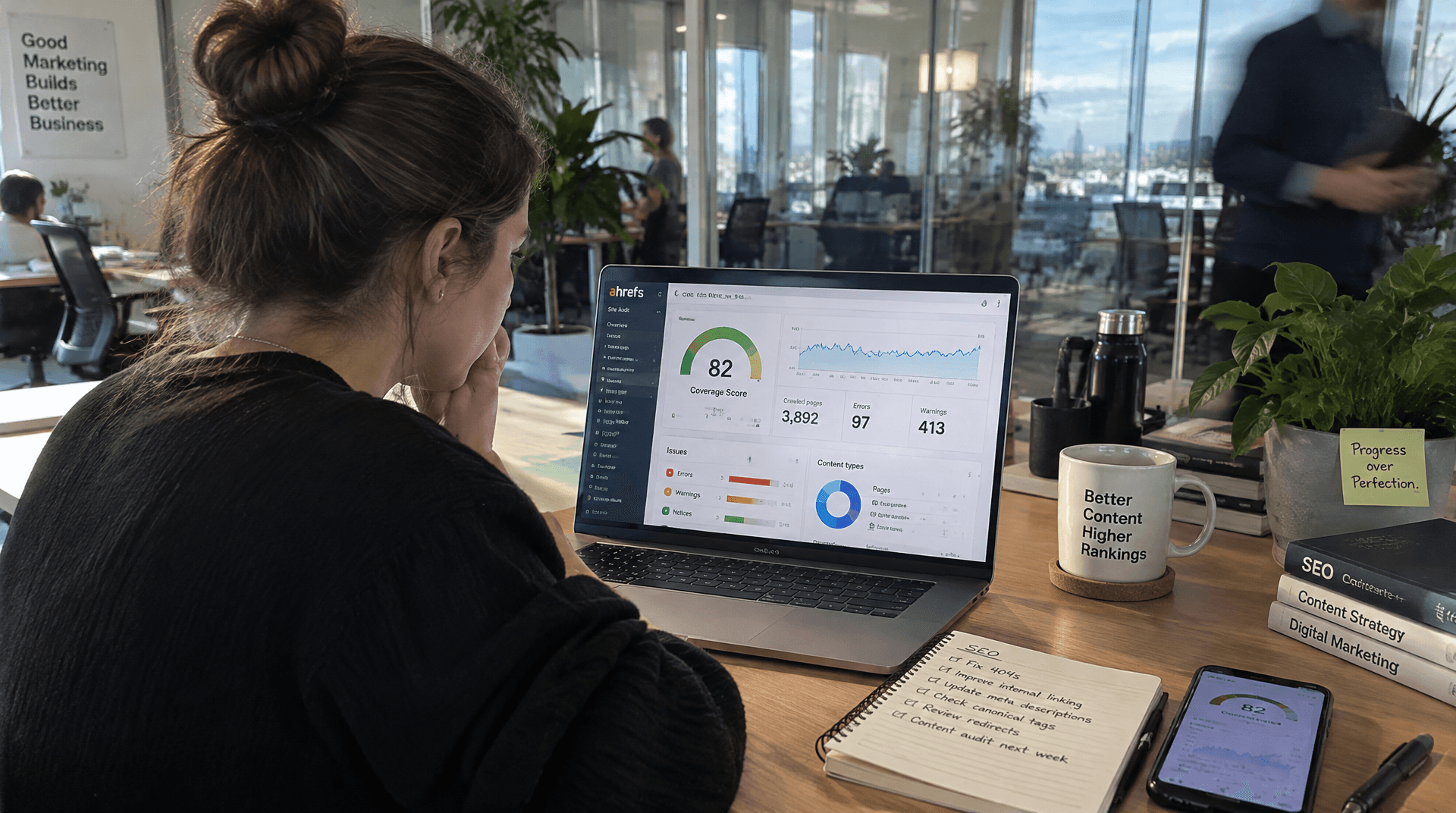
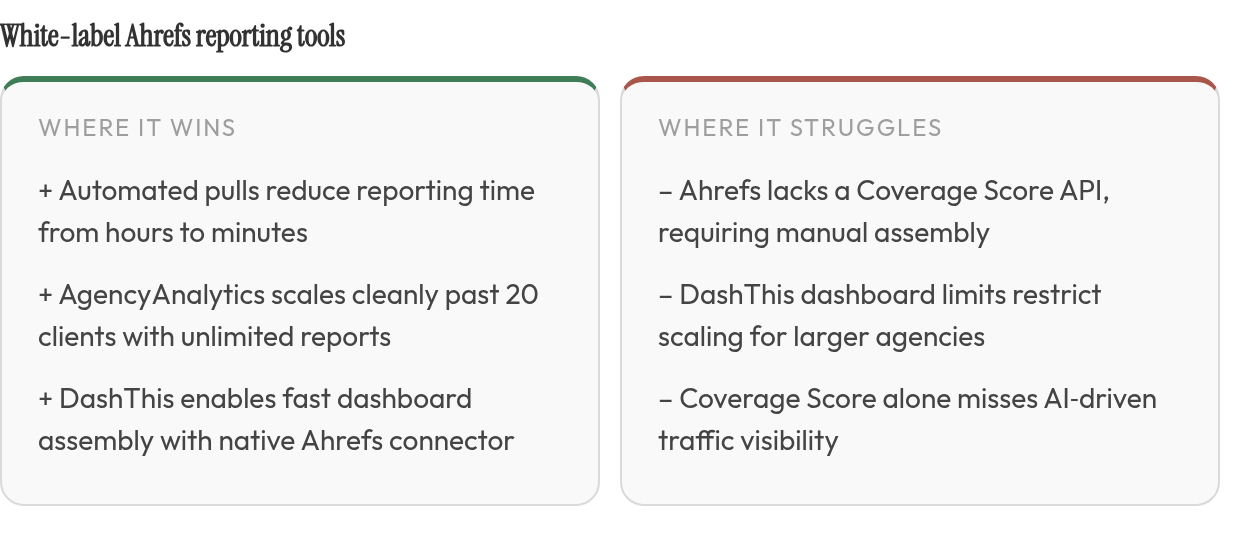
A Coverage Score is not a native Ahrefs field. What agencies call white-label Ahrefs reports is usually Domain Rating and keyword data pulled into a separate branded platform. The score is a client-facing proxy built by combining Ahrefs-derived SEO indicators with first-party performance data. Manual assembly can burn entire afternoons per client; automated reporting compresses that to minutes of monthly review. AgencyAnalytics positions itself for multi-client reporting with per-client billing, white-label domains, client portals, and scheduled PDFs. DashThis pulls Domain Rating, referring domains, and organic traffic into drag-and-drop dashboards with custom branding. Search Atlas pairs its OTTO SEO agent with rebrandable dashboards drawn from its own crawl. Strong rankings can mask collapsing traffic when AI Overviews drive zero-click searches, so coverage scores need a paired AI visibility metric.
Related Video
Watch: SEO in 2026: How I'd Rank in Google in the AI Era by Ahrefs
What most agencies miss about coverage scores
The most useful coverage score is one you can defend against Search Console and turn into a prioritized queue. When the coverage view is stitched from spreadsheets, every client call opens with quiet doubt. A coverage score should compare a site’s discoverable keyword universe from Ahrefs-derived data against what Google Search Console confirms it actually reaches. Organic keywords reveal content reach. Domain Rating shows backlink authority. Together, they expose gaps worth queuing as work: pages with Ahrefs potential but weak GSC reach become content refreshes; pages with GSC reach but few referring domains become link work.
Reports that don't match Search Console earn zero trust
A score only survives scrutiny if it holds up against Google Search Console. When evaluating platforms, validate against GSC over multiple months and watch for consistent variance. Hold your own reports to that standard.
| Workflow | Manual | Automated |
|---|---|---|
| Setup | Rebuild each time | Connect once, reuse |
| Time per client | Hours monthly | Minutes of review |
| Accuracy | Trust the export | Cross-checked vs GSC |
One gap the score can't catch alone: AI visibility. As more searches end without a click and AI Overviews reshape how users find answers, strong rankings can hide collapsing traffic. Pair coverage with AI visibility tracking, especially for accounts where branded authority, informational content, or answer-style queries drive the strategy. If ChatGPT and Perplexity do not cite a client, a page can still rank and still lose the zero-click decision. Comparing AI citations with GSC click and impression trends gives a fuller reporting decision than coverage alone.
Tool-by-tool comparison: what actually works
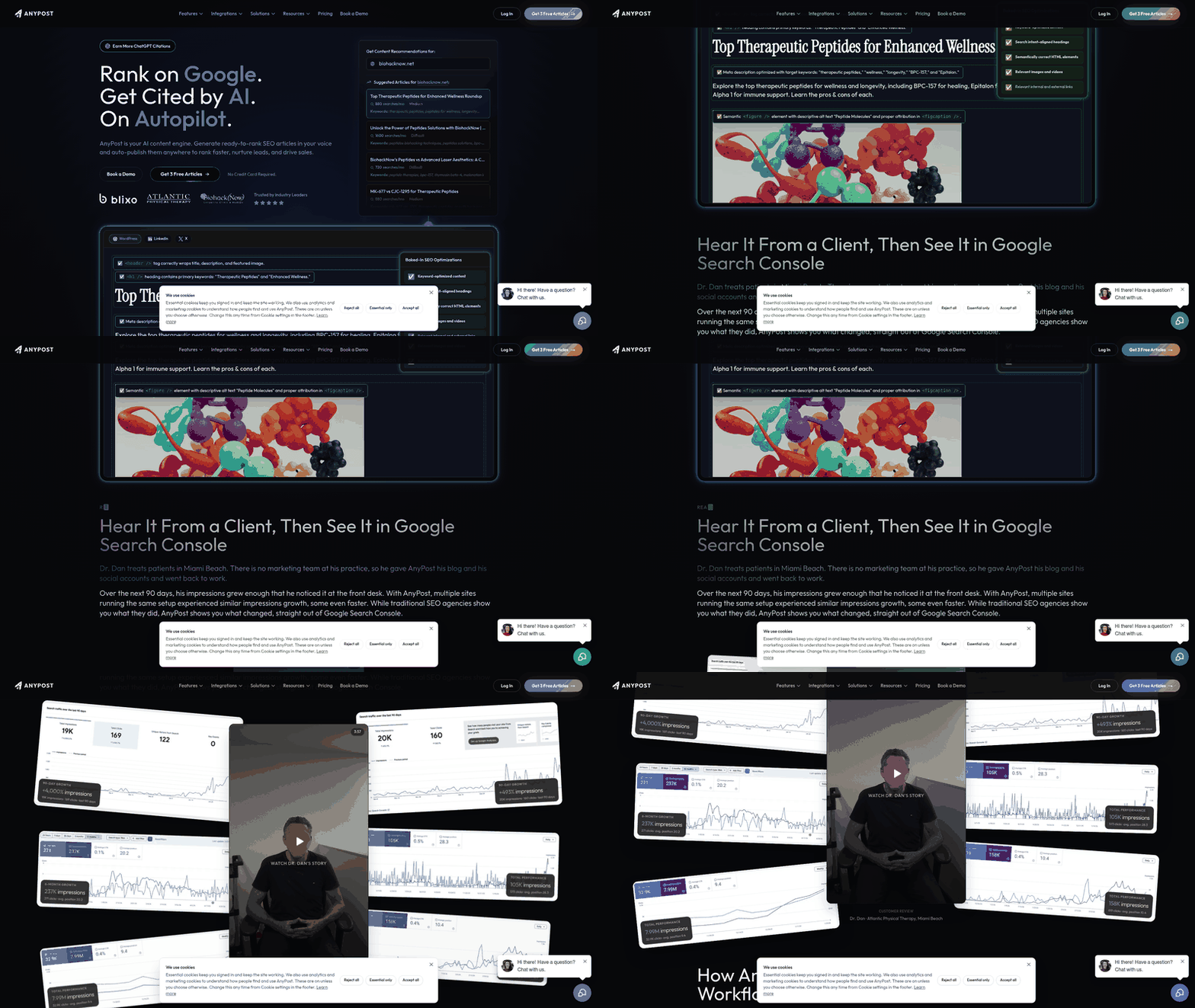
Start by treating white-label Ahrefs reporting as a proxy stack, not a single Ahrefs feature. The comparison below reflects each platform’s stated positioning; data validation against GSC is still required.
White-label Ahrefs reporting is a proxy stack
A Coverage Score is not a native Ahrefs field. What agencies call white-label Ahrefs reports is a stack: Ahrefs supplies Domain Rating, organic keywords, and backlink data; a separate reporting platform wraps it in branding and pairs it with Google Analytics, Search Console, and social metrics. The score is built from that combined view to show whether discoverable keywords are turning into actual search presence.
DashThis connects to Ahrefs and supports multiple integrations. Drag Domain Rating, referring domains, and organic traffic widgets into a dashboard, apply your logo and colors, set a refresh schedule. The setup can reduce manual assembly time per client, returning hours monthly across a client roster.
AgencyAnalytics runs deeper. It offers numerous integrations including Ahrefs, plus AI-generated summaries. The platform moved to per-client billing: white-label domain, client portals, and automated PDF scheduling come built in.
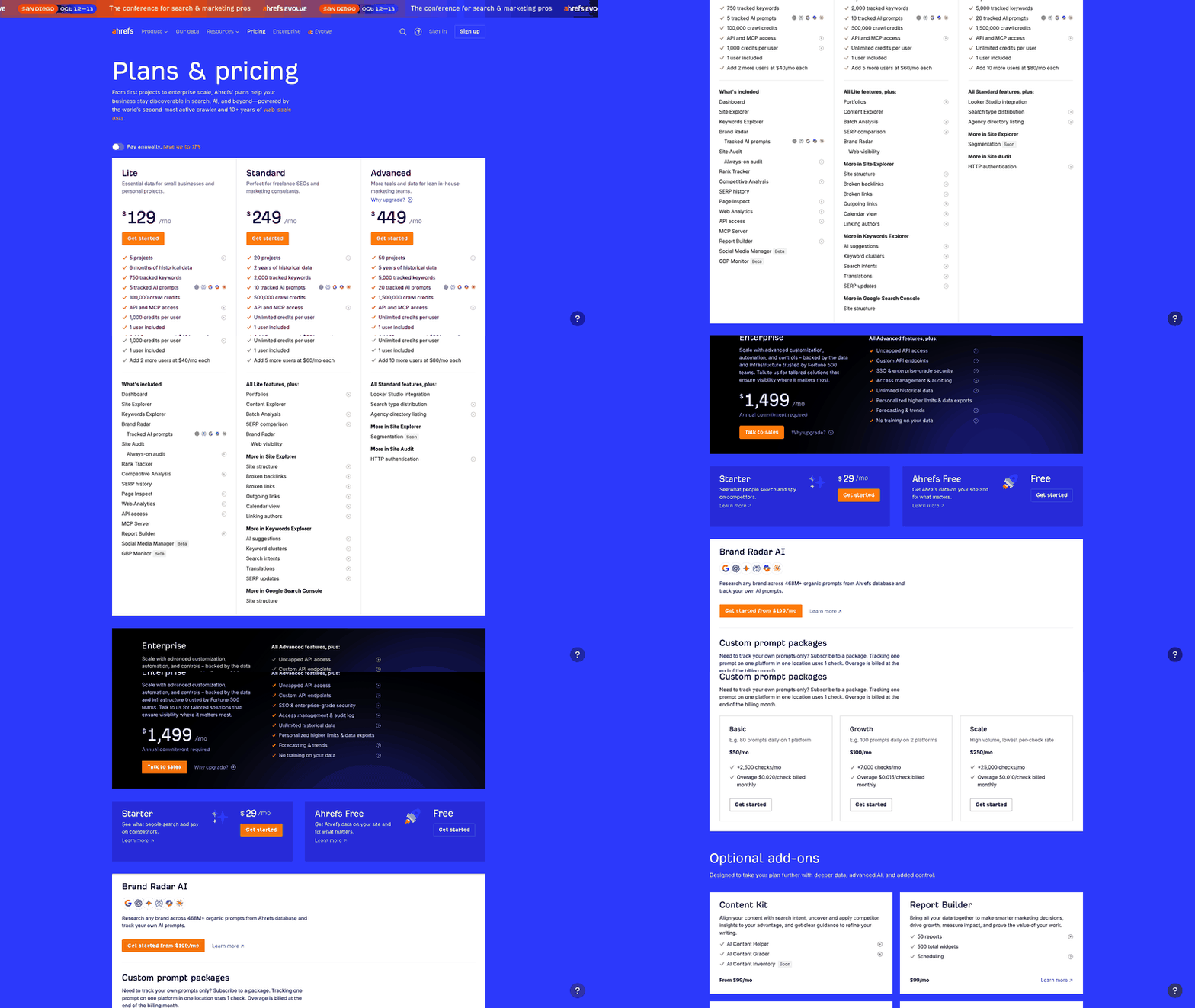
Search Atlas packages OTTO SEO—an AI agent designed to reduce manual SEO labor via a single JavaScript pixel—with white-label dashboards and an extensive keyword database. Plans offer various tiers with different project, seat, and keyword limits. The audit and rank-tracking modules pull Ahrefs-style metrics from Search Atlas's own crawl.
| Platform | SEO health proxy | White-label layer | Integrations | Pricing model | Setup effort | Scale ceiling | Unique strength | Data validation |
|---|---|---|---|---|---|---|---|---|
| Ahrefs + manual | Domain Rating, organic keywords, backlinks | None (manual assembly) | Export-based | Subscription | High (spreadsheet templating) | Manual labor wall at low client counts | Deep crawl coverage | Cross-check against GSC |
| DashThis | Pulls DR, referring domains, organic traffic from Ahrefs | Custom logo, colors, domain (higher tiers) | Multiple native connectors | Tiered by dashboard count | Quick Ahrefs setup | Dashboard limits scale with tier | Fast dashboard assembly | Native Ahrefs connector |
| AgencyAnalytics | Ahrefs DR/backlinks + GA4/GSC organic metrics | Full: logo, domain, client portals, PDF automation | Extensive integration library | Per-client pricing (Core tier), custom Enterprise | Moderate per client | Scales cleanly past 20 accounts | AI insights + automated summaries | Ahrefs + GSC side-by-side |
| Search Atlas | OTTO SEO visibility score + extensive keyword database | Rebrandable dashboards, custom reporting | Native OTTO + major SEO tools | Tiered by project/seat count | Moderate (OTTO pixel + dashboard) | Mid-scale project ceiling | AI autopilot handles on-page optimization | Proprietary crawl vs. Ahrefs |
| SE Ranking | Site audit score, keyword tracker, backlink monitor | White-label reports + custom branding | Multiple integrations | Agency tier pricing | Moderate | Mid-scale (small to mid-sized rosters) | Combined rank tracking + audit in one license | Built-in audit vs. Ahrefs Site Explorer |
| Semrush (Agency Growth Kit) | Authority Score, extensive keyword database, site audit | Add-on kit for white-label PDFs | API/Zapier integrations | Subscription plus kit cost | Moderate | High (enterprise-tier breadth) | Deepest competitive intelligence |
The practical ceiling shows up at different client counts. DashThis hits a dashboard limit tied to your plan tier. AgencyAnalytics bills per client but doesn't cap reports or users, so it scales cleanly past 20 accounts. Search Atlas caps project counts at higher tiers—fine for boutique agencies, less so as you grow.
Ahrefs plus manual assembly still wins on data depth—extensive page indexing, billions of tracked keywords, precise backlink decay detection—but you're stitching spreadsheets. For agencies handling more than a handful of clients, the assembly tax swallows more time than the reporting platform costs.
Building an automated coverage score report with AnyPost.ai
A useful automated report is less about polish and more about defensible inputs. Use the proxy stack to turn Ahrefs/GSC gaps into an action queue: pages with discoverable keyword potential but weak GSC reach become content refreshes; pages with impressions but weak conversion become conversion reviews. AnyPost can support content production, publishing activity, and performance review. It connects directly to your site and publishing channels, so real-time analytics can show which content drives traffic that converts. It does not automatically raise a Coverage Score.
Automated reporting shifts the work from buildout to review
Manual reporting is the biggest time sink for SEO agencies. Tools like AgencyAnalytics, SE Ranking, and Looker Studio with white-label add-ons can automate data pulling and report generation. A well-configured automated report takes 15–30 minutes to review and customize versus 3–5 hours to build from scratch.
Once the recurring data pull is handled, the agency's job shifts to interpretation: which content drove conversions, what should be refreshed, and what should be link-targeted.
Validate reporting data against Search Console
Automated reporting tools shouldn't be treated as self-verifying. Compare their keyword, impression, click, and landing-page trends with Google Search Console before you rely on a score in client-facing recommendations.
Test whether your reporting setup handles 10+ simultaneous client accounts with different tracking requirements. Avoid workflows that require more than 30 minutes of client setup. A reporting tool that saves two hours but makes every client ask for a walkthrough hasn't automated reporting—it's moved the labor into meetings.
Common pitfalls in automated coverage score reporting
The three recurring mistakes are treating the Coverage Score as pass/fail, skipping validation against Google Search Console, and assuming automation means you can ignore the report until a client asks.
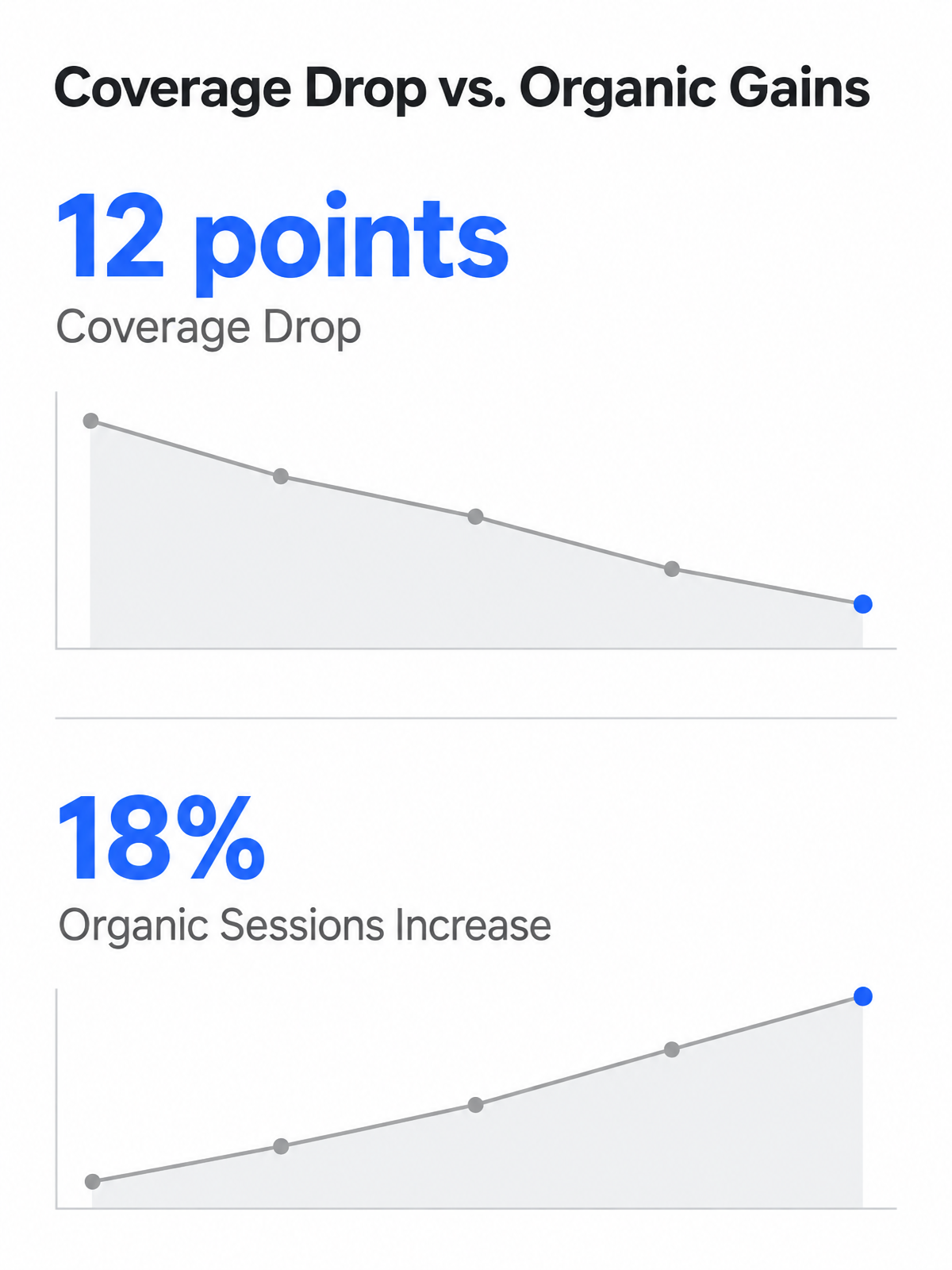
A Coverage Score that drops 12 points in a month sounds alarming. But if organic sessions climbed 18% and five target keywords moved into page one, the score is lagging an underlying win—maybe Google recrawled the site and now sees thousands of thin pages Ahrefs previously missed. Domain Rating, organic keywords, and traffic tell a fuller story. When those three metrics move together, direction matters more than a single score. Cross-check tools against Search Console for at least three months. If a platform consistently reports numbers that diverge from Search Console data, the dashboard looks professional but the client is making decisions on bad inputs.
Similarly, a stable coverage score can hide zero-click erosion. Pair coverage with AI visibility data that tracks whether ChatGPT and Perplexity cite the client, and compare that with GSC impression and click trends. Reporting should separate “still ranking” from “still being chosen as the answer.”
How often should you refresh Ahrefs data in white-label reports?
Recurring automated pulls matter more than a fixed weekly cadence. Automated reports cut the manual spreadsheet labor, freeing agencies to focus on review and strategy rather than compilation. Set up templates once, then let the platform refresh data on schedule.
Run a quality-assurance checklist before committing to any tool. Use a real client mix—accounts with different analytics access, keyword volumes, and stakeholder expectations. A platform that performs well in a demo can still become fragile when permissions, custom dashboards, and delayed data sources enter the workflow.
Pricing models scale differently. Some tools charge per client. Others price by dashboard count. Others tier by projects, seats, and keyword limits. Run the math for your actual account load to find the model that scales with your agency.
Automation reduces compilation work but doesn't replace judgment. The narrative—what the numbers mean for this specific client and what you recommend next—is the part clients pay for and the part automation can't fake. Automate the data; customize the interpretation. If the report needs a walkthrough call every month, you've moved the labor into meetings instead of eliminating it.
What we'd actually recommend
Match the tool to the workflow and client roster. Semrush fits enterprise strategic planning when you need cross-functional buy-in and the widest data breadth. SE Ranking fits small to mid-sized agencies managing 5–20 clients on tighter budgets. AgencyAnalytics handles multi-client reporting at scale, built for agencies juggling multiple tools under one roof. DashThis is the easiest dashboard builder when speed matters more than depth, though its SEO coverage runs shallow.
Match the tool to the workflow
Search Atlas and its OTTO module target AI-assisted SEO implementation, automating repetitive on-page work through a single JavaScript pixel. Routeless Radar is positioned around AI visibility—whether ChatGPT and Perplexity actually cite you—with monthly reports showing citation volume by query. Manual Ahrefs assembly still makes sense when you need the deepest crawl and backlink data but can live without a polished white-label reporting layer.
| Tool | Best for | Our notes |
|---|---|---|
| Semrush | Enterprise strategic planning | Enterprise-grade features at premium pricing |
| SE Ranking | Small agencies, 5–20 clients | Best value for agencies managing that client load |
| AgencyAnalytics | Multi-client reporting | Built for agencies juggling multiple tools |
| DashThis | Fast dashboard automation | Easiest dashboard builder, but limited SEO depth |
| Search Atlas | AI-assisted SEO execution | Automates on-page work through a single JavaScript pixel |
| Routeless | AI visibility monitoring | Tracks whether ChatGPT and Perplexity cite you |
| Ahrefs + manual | Deep crawl/link data | Manual assembly, no white-label reporting layer |
The decision criteria that actually separate tools: data accuracy cross-checked against Google Search Console, setup time under 30 minutes for a new client account, performance under real client loads, integration depth with the platforms your clients already use, and whether the pricing model scales without surprise jumps. White-label capability only matters if it covers the full stack—logo, colors, domain, and client login—not just a PDF export with your name on it.
Audit your current workflow against those criteria before switching. If reports consistently miss Google Search Console data by more than 15–20%, if setup eats entire afternoons, or if you're manually fixing dashboards at 11 pm before client calls, the tool has failed regardless of feature count.
Still Wondering?
1. What exactly is a Coverage Score in white-label Ahrefs reporting, and why can't I just pull it directly from Ahrefs?
It is a client-facing proxy metric, not a native Ahrefs field. Agencies build it in a reporting platform by combining Ahrefs-derived SEO indicators with first-party performance data, then using that combined view to show whether a site’s discoverable keyword universe is turning into actual search presence.
2. If automated reporting cuts manual work to minutes, why do some agencies still assemble Ahrefs reports by hand?
Some teams still prefer direct Ahrefs exports when the client engagement is heavily technical: link audits, crawl diagnostics, historical backlink analysis, or one-off research where presentation polish matters less than raw data access. That approach can be reasonable for a small roster, but it becomes harder to defend when every recurring report requires fresh formatting, chart cleanup, and manual commentary.
3. Can a strong Coverage Score hide traffic problems caused by AI Overviews and zero-click searches?
Yes. A site can still appear for valuable queries while fewer searchers click through to the page. That is why coverage should be read alongside AI visibility and citation tracking, especially for accounts where branded authority, informational content, or answer-style queries drive the strategy.