7 SEOcrawl.ai Alternatives for Teams That Need SEO Automation, Not Another Reporting Layer
Why People Look Beyond SEOcrawl
Teams evaluating SEOcrawl alternatives usually start with three questions: do we need AI visibility tracking or content automation, will usage limits survive our reporting cycle, and are we paying for client-scale features we'll never turn on?
Usage Limits Can Hit Before Monthly Reporting Cycles Do
Plan limits can hit before monthly reporting cycles do. If a platform resets prompt allowances weekly, teams tracking many brands across ChatGPT, Gemini, Perplexity, and Claude can burn through their allocation mid-cycle when running competitive share-of-voice comparisons or testing prompt variations. The workflow matters: compare quota limits against the number of brands you monitor and how many models you query before picking a tier, because upgrading mid-month to avoid throttling wipes out whatever savings brought you to the lower plan in the first place.
If predictable monthly costs matter more than flex capacity, get exact usage ceilings in writing before onboarding.
Feature Fit: AI Visibility Dashboards vs. Draft-and-Publish Automation
SEOcrawl measures AI visibility—mentions, citations, share of voice, filtered by country, topic, or LLM—then unifies that data with Google Search Console, GA4, rank tracking, and site audits in one dashboard. The platform's MCP server exposes 38 tools across 12 groups for ChatGPT or Claude so you can ask "which pages lost clicks last month?" and pull answers from live data without switching tabs.
What it doesn't claim is end-to-end content automation: writing drafts, optimizing them for search intent, publishing on schedule with brand-voice consistency. Teams comparing SEOcrawl to workflow-first platforms usually land here—if you need to report on AI assistant visibility and SEO performance for clients, SEOcrawl fits. If you need a system that generates and ships content at volume, you're evaluating a different category.
We focus on the other side: AI-powered content generation and multi-channel publishing, so you're writing, optimizing, and shipping articles at scale rather than analyzing visibility dashboards. But if reporting is the entire job, SEOcrawl's unified GSC-GA4-AI Tracker dashboard delivers that without feature bloat.
TL;DR
SEOcrawl is strongest as a visibility and reporting platform, not a production engine. The alternatives covered below fall into a few buckets: workflow builders for briefs, drafts, and custom automations; all-in-one SEO suites that combine rank tracking with client-ready reporting; agency dashboard platforms built around account volume; and free Google-native stacks for teams willing to assemble their own reports.
Quick Comparison
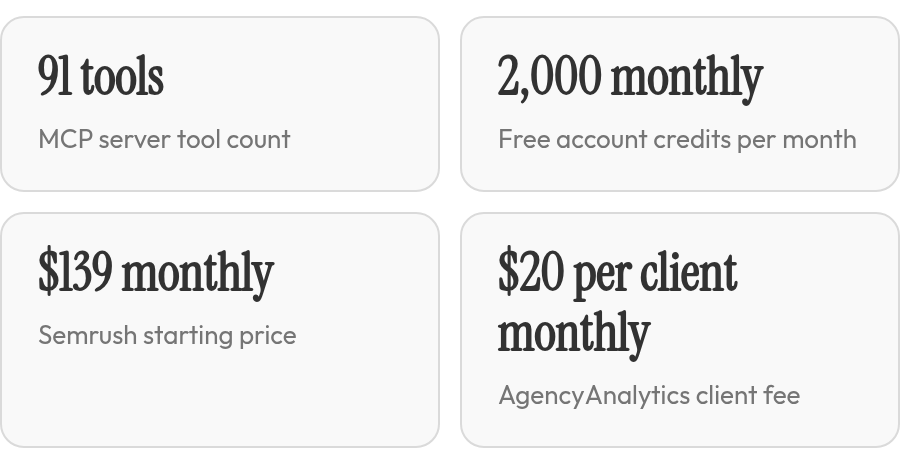
The replacement shortlist usually splits into three camps: teams building custom SEO workflows from scratch, teams wanting all-in-one suites that bundle rank tracking with AI visibility, and teams needing white-label client dashboards without platform bloat.
Workflow Builders vs. Pre-Built Suites
SketricGen uses a credit model and includes templates for content briefs, blog drafts, and reports rather than a monitoring dashboard. You may need to bring your own data source account, review output in its workspace, and export files. Gumloop offers agent-building workflows that can read Search Console data and send results to tools like Slack or Sheets. Both expect you to assemble much of the workflow; others hand you tracking dashboards instead.
Semrush is an all-in-one suite that may include rank tracking, reporting, and AI visibility features depending on your plan tier. SE Ranking provides scheduled rank reports in common formats and may offer guest access; trial availability and white-label features vary by plan.
Agency Dashboards and Free Reporting Stacks
AgencyAnalytics pricing tends to scale with your roster rather than data volume, so white-label reports and dashboards can grow with client count. Whatagraph focuses on automated reports that combine analytics, Search Console, and paid ad platforms into a single client view. Most teams layer these tools on top of native platform data rather than replacing their primary rank tracker.
The real question: are you paying for per-client dashboards that scale with your roster, workflow builders that let you assemble your own automation, or all-in-one suites that bundle traditional rank tracking with scheduled reports?
SketricGen
If your priority is workflow automation rather than dashboard reporting, SketricGen belongs near the top of the shortlist. Its focus is building content briefs and blog drafts instead of monitoring AI visibility or rank position. It is a no-code agent platform that ships SEO templates, not a monitoring dashboard.
SketricGen Builds Outputs, Not Dashboards
SketricGen's model is credit-based, so usage can scale independently from the subscription line item. Its positioning favors content briefs, drafts, and reports that you review before export rather than a live monitoring dashboard. Workflows may pause for approval checkpoints and pull search data through a separate data provider account. The exact credit consumption, number of approval gates, and agent chain will depend on the template and current plan.
SketricGen is not positioned for rank tracking, site crawling, backlink data, AI visibility monitoring across ChatGPT or Claude, or client portals. Its SEO templates may not read Search Console directly. Reports are often files you review internally rather than white-label deliverables or automated client dashboards.
SketricGen makes the most sense when source-tagged briefs and production-ready workflow outputs matter more than live monitoring. If your team needs SEOcrawl's AI Tracker, LLM filtering by market, or its MCP layer, this won't be a one-to-one replacement. When a separate data source account is required, the real cost includes more than the subscription line item.
Gumloop
For teams that want flexible agent-building, Gumloop is a better comparison than another static dashboard product. The tool is designed around configuring agents, connecting apps, and running workflows. The output depends entirely on what you build.
Gumloop Assembles Agents, Not Dashboards
You can configure agents to read Google Search Console data, inspect indexing signals, and write results to tools like Slack, Sheets, or Gmail. Gumloop can generate an SEO dashboard from Search Console data or competitive data if you have verified a property. A content refresh workflow can find pages losing organic traffic and produce a prioritized recovery plan. Triggers can be configured for events such as a page dropping below a position threshold or a competitor publishing new content.
Gumloop is not positioned for built-in rank tracking, site audit, AI visibility monitoring across ChatGPT or Claude, or the MCP server coverage SEOcrawl documents. You're building the workflow yourself, which means technical or operational capacity matters more than it does with a packaged platform.
This is a strong fit when internal tools and reporting cadence matter more than pre-built SEO modules. The tradeoff is assembly time. If your team would rather configure agents than subscribe to pre-built tracking, Gumloop's flexibility is the reason to switch. If you need AI visibility or white-label client dashboards out of the box, you may be paying for agent-building capacity you won't use.
Semrush
For all-in-one SEO plus AI visibility, Semrush is the broad-suite option. It combines traditional SEO research with AI search tracking across platforms like ChatGPT and Gemini, delivering scheduled branded reports rather than a lightweight monitoring dashboard.
Semrush Bundles SEO Research with AI Visibility Tracking
Semrush is known for a multi-geographic keyword database and may track AI search mentions alongside conventional SERP rankings. Depending on plan tier, AI visibility features may sit in higher-tier plans, tracking prompts and keywords across multiple domains. You can get rank tracking, site audits, backlink analysis, and AI mention monitoring in one account, with scheduled reports that can deliver branded PDFs to clients.
Reporting limits and possible per-report fees depend on the plan and current packaging. For agencies managing many clients, those costs can stack up faster than a flat usage-quota structure. Price the platform and the reporting layer together before committing—a recurring client report can become a fixed operational expense, and costs may compound when you need separate deliverables for different verticals or regions. Teams running client dashboards often find they're paying for report generation rather than the data itself.
Semrush offers the integrated dataset and all-in-one convenience. SEOcrawl gives you AI visibility tracking without the SEO-suite bloat. Switch to Semrush if you value scheduled branded reports, consolidated keyword research, and unified billing more than keeping platform costs low.
SE Ranking
For rank tracking and client reporting, SE Ranking is the pragmatic alternative. It is positioned around daily keyword monitoring and scheduled reports in multiple formats rather than focusing on AI visibility or workflow automation.
SE Ranking Tracks Ranks and Ships Reports, Not AI Workflows
SE Ranking can export reports in common file formats and may provide guest access so clients can view dashboards without login credentials. Rank-tracking accuracy matters if you're building client reports that cite specific position changes week over week, and any gap in daily data can ripple through the analysis you present.
White-label branding may require an add-on, which increases the monthly spend but keeps the base price lower than all-in-one suites that bundle features some small teams won't use. SE Ranking may track desktop and mobile rankings separately, so you can spot differences when mobile results shift independently. It doesn't offer SEOcrawl-style MCP tooling or content generation and publishing—SE Ranking monitors and reports rather than executing workflow steps. If your team mainly needs rank tracking with shareable outputs and you can live without AI visibility tracking or agent-driven execution, the plan-plus-add-on model can fit. If you're building custom SEO agents or need AI visibility across ChatGPT and Perplexity, you may be paying for a reporting layer you won't fully use.
AgencyAnalytics
AgencyAnalytics structures pricing around client volume rather than feature tiers, so agencies managing many accounts face different economics than solo consultants tracking a handful. That model rewards scale—the more dashboards you deploy, the more the per-unit cost can justify itself against manual reporting hours. It becomes compelling when client portals support retention, not just internal efficiency.
AgencyAnalytics Delivers Dashboards, Not SEO Execution
AgencyAnalytics can pull data from integrations into customizable dashboards that clients can view without login credentials. It is built around template-based reporting: you define a report template, map data sources, and schedule branded PDFs or live dashboards. It is not designed to crawl sites, write content briefs, or track AI visibility across ChatGPT and Perplexity the way SEOcrawl positions itself. AgencyAnalytics is the reporting layer, not the research engine.
The scope question: if your workflow already produces the SEO data and you need a scalable way to package it for clients, AgencyAnalytics fits. If you're evaluating alternatives because you want end-to-end automation—prompt tracking, content generation, site audits that feed directly into reports—you're pricing two different categories. One shows what happened; the other builds the analysis that explains why.
Whatagraph
Whatagraph is another agency-oriented reporting layer. It is positioned around automated reports that can pull from sources like analytics, Search Console, and paid ad platforms into a single client view. It is not a replacement for rank tracking or research; most teams layer it on top of native platform data.
Looker Studio and Google Search Console
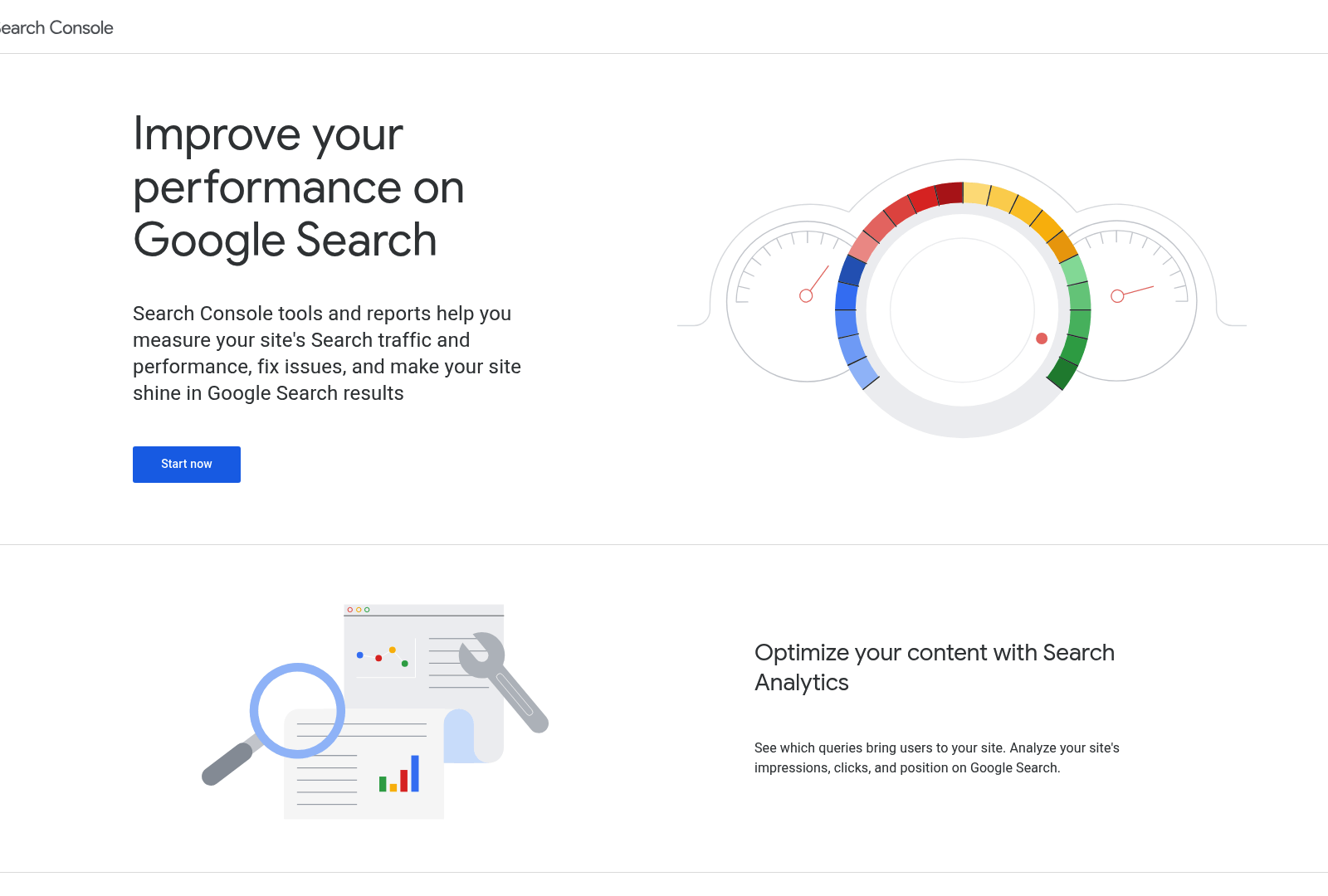
Looker Studio builds free custom dashboards from Search Console and Analytics, and Google Search Console itself tracks clicks, impressions, indexing status, and technical issues at no cost. These are the budget alternatives for teams willing to assemble their own reports from native Google data.
How to Choose
You can narrow the field by asking three filtering questions: do you need workflow outputs or just dashboards, does your budget support per-client pricing or flat-rate plans, and are you running an agency or managing your own sites?
Match the Tool to What You Actually Build
SketricGen and Gumloop hand you files and agents, not dashboards. If your team wants content briefs with explicit source references or custom agents that pull Search Console data into Slack, those workflow builders fit. Semrush and SE Ranking track ranks and ship scheduled reports in common formats or online dashboards. AgencyAnalytics pulls data from multiple integrations into branded dashboards clients view without logging in. Looker Studio builds free custom dashboards from Search Console and Analytics, and Google Search Console itself tracks clicks, impressions, indexing status, and technical issues at no cost.
Teams managing multiple sites often spend more time auditing and reporting than deciding. Solo builders and lean in-house teams can cover a surprising amount with free or low-cost tooling. Small in-house teams working on a single domain or tight cluster of sites often prefer all-you-can-track flat-rate plans where adding another property costs nothing. Agencies serving many clients face a different calculation: per-client pricing can scale quickly, and white-label dashboard features may sit behind higher-tier plans.
Most reports show numbers, not reasons—the why behind a traffic drop or a ranking shift is still written by hand. Tool limitations surface in practice: scheduled reports can go stale if a widget uses a fixed date range, and export formats sometimes break under load. API rate limits and data freshness windows also vary—some platforms refresh rank data daily, others weekly, and that lag matters when a client asks why yesterday's content isn't showing results yet. For a small team, the free Google stack plus one paid tool covers most needs. Price the whole stack, not just the dashboard subscription.
What to Actually Do
The choice between SEOcrawl.ai alternatives comes down to what you need the tool to produce and how you pay for it.
Pick SketricGen when you want source-tagged content briefs and blog drafts that include referenced search data. You review output files in a workspace rather than a live dashboard, and the credit model means usage can scale independently from your monthly bill. Gumloop fits teams that need custom SEO agents reading Search Console and writing to Slack or Sheets. You assemble the workflow yourself in a visual builder, which gives flexibility but requires setup time before the first report runs.
Go All-in-One When You Track AI Visibility and Ranks Together
Semrush is the better fit when you want branded client reporting and AI search visibility inside the same broader SEO platform. Its position tracking module may support device, location, and search-engine filtering, which helps teams connect AI visibility work with conventional search performance. SE Ranking is narrower and more reporting-focused: it tracks ranks, exports client-friendly files, and may offer guest access without requiring clients to manage credentials.
AgencyAnalytics is best treated as the presentation layer for data your team already trusts. Its per-client pricing structure means costs may rise as your roster grows, which favors agencies with stable client counts over shops that fluctuate month to month. Whatagraph fits a similar use case when automated multi-source reports matter more than a research workflow. Looker Studio is the budget alternative for teams willing to build custom views from Google-owned data and connector sources, though the learning curve is steeper than drag-and-drop report builders. Google Search Console remains the baseline free tool for native search performance, but it won't monitor AI assistant visibility or automate polished client reporting.
No tool removes the need for judgment. Dashboards can surface the movement; someone still has to explain the cause, decide the action, and ship the fix. For small teams, the free Google stack plus one paid tool covers most needs—price the whole stack before committing to per-client or per-report tiers that scale differently than you expect.
FAQ
Does SEOcrawl.ai write and publish content automatically, or just track visibility?
It is primarily a measurement and reporting platform. If your goal is automated article production, optimization, and scheduled publishing, compare workflow-first tools rather than treating SEOcrawl as a content engine.
Can usage limits be exhausted before a reporting cycle ends?
Yes. Heavy competitive testing across many brands and models can use capacity faster than a team expects, so confirm quota mechanics before choosing a plan.
Which alternative fits teams that need custom agents reading Search Console without dashboard bloat?
Gumloop is the closest fit. It is built for assembling custom workflows that connect SEO data to internal destinations such as team channels, spreadsheets, or email.
Do white-label dashboards come standard on SE Ranking and AgencyAnalytics, or are they add-ons?
White-label availability varies. SE Ranking may offer white-labeling as an added cost, while AgencyAnalytics centers its model on client-facing dashboards from the start. The better choice depends on whether you need a rank tracker with reporting attached or a reporting portal that consolidates data from tools you already use.