
AI Content Generation Fails Without These 5 Traffic Stages

What You Need to Know
- AI-assisted content production is rising quickly, but a large share of it appears to attract only a small fraction of organic traffic.
- In some controlled publishing tests, AI-generated drafts that received a focused human edit before going live outperformed untouched drafts by a clear margin.
- The trust signals that edit adds—firsthand experience, proprietary data, a named author—can also be the signals answer engines look for when choosing citations.
- Zero-click behavior can take a larger share of queries in some segments, which can reduce organic clicks for results below an AI-generated answer.
Stage 1: Why AI Content Generation Stalls Without the Traffic Stages
The gap most teams miss is simple: AI content generation produces the draft, but a draft is not traffic. The disconnect can feel uncomfortable. Many teams now report that they can publish more AI-assisted content than ever and still see flat organic traffic when the draft lacks a clear traffic source.
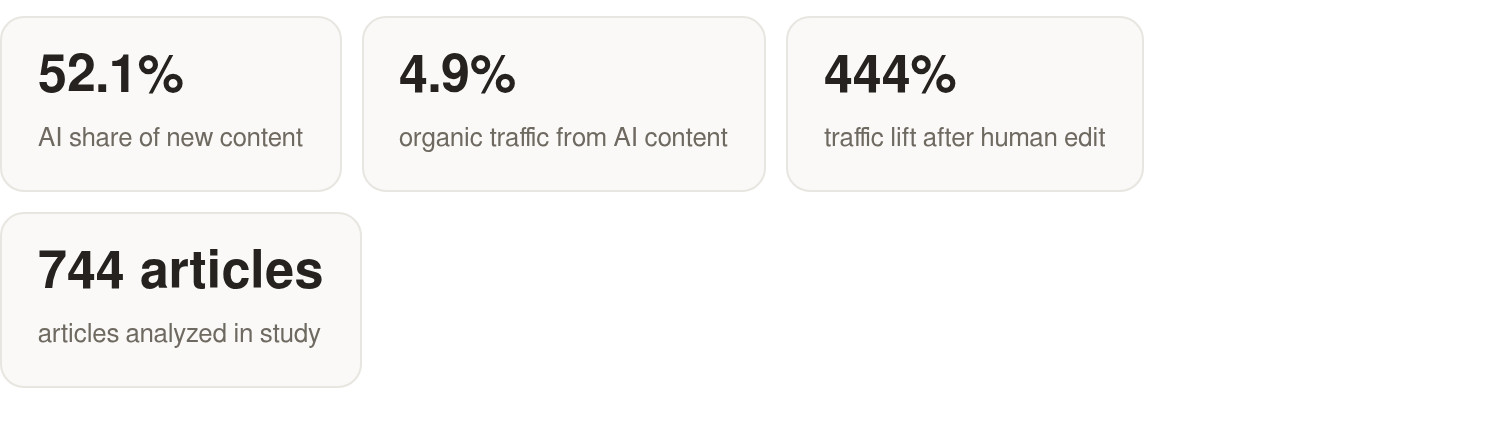
The math can get worse when you look at where search may be heading. Generative overviews now sit on top of some results pages, and zero-click behavior appears to be taking a larger share of queries in certain sectors. When an AI-generated answer satisfies the question directly, fewer searches may turn into clicks for the organic links below. Feeding more articles into that pipe may not change the flow.
Why doesn't AI content rank on its own?
Raw AI output often has no meaningful trust signals. Some search engines and platforms can identify synthetic text at scale, but detection was never the real problem. Trust is. In some controlled publishing tests, AI-generated drafts that received a focused human edit before going live outperformed untouched drafts by a clear margin.
The edit added the things a model can't consistently fake: firsthand experience, proprietary data, tightened claims, fresh facts, or a named author. Skip that layer and you may publish pages that fail to earn meaningful rankings.
Here's the link: the trust signals that edit adds can also be the signals answer engines look for when choosing citations. Editing for humans and optimizing for answer engines can be the same job. Our breakdown of how Google ranks AI content covers how those signals may map to ranking if you want the mechanics.
What breaks when you skip the traffic stages?
Missing stages can waste budget, and the damage can land differently depending on the operation.
- Confirm a traffic source before you publish. Smaller teams often ship posts with no clear channel to carry them.
- Add a human trust layer to every draft. High-volume teams can otherwise pay for drafts that produce little organic return.
- Build distribution beyond search. Agency teams running multiple clients may feel algorithmic shifts first when organic referral drops.
- Schedule content across web, social, and email automatically. This is often the stage that gets missed.
Why is automated multi-channel distribution the missing stage?
Search can be a weak primary distribution channel for some sites. Where organic clicks are shrinking, channels that don't depend solely on rankings—email, social, direct community syndication—may carry more audience growth. Automated distribution can support the parts that keep the lights on.
Getting one piece of AI content scheduled, posted, and amplified across the right channels the same day it's written can help generate traffic through owned distribution. Our guide to building a repurposing pipeline shows one approach to feeding multiple channels weekly without manual reposting. The stages ahead map each failure point to a fix.
Stage 2: Test Formats, Then Push Them Everywhere
Most teams treat AI content generation as a drafting problem: write faster, publish more, done. But the draft is the easy part. What moves numbers is testing which formats land and pushing every piece across more than one channel automatically.
The real leverage in modern automation is compressing the repetitive operational work. The moment drafting speeds up, the bottleneck can jump straight to distribution. So the highest-return place to point software is often the scheduling, formatting, and syndication layer that marketing teams still do by hand.
Test Formats Before You Scale Them
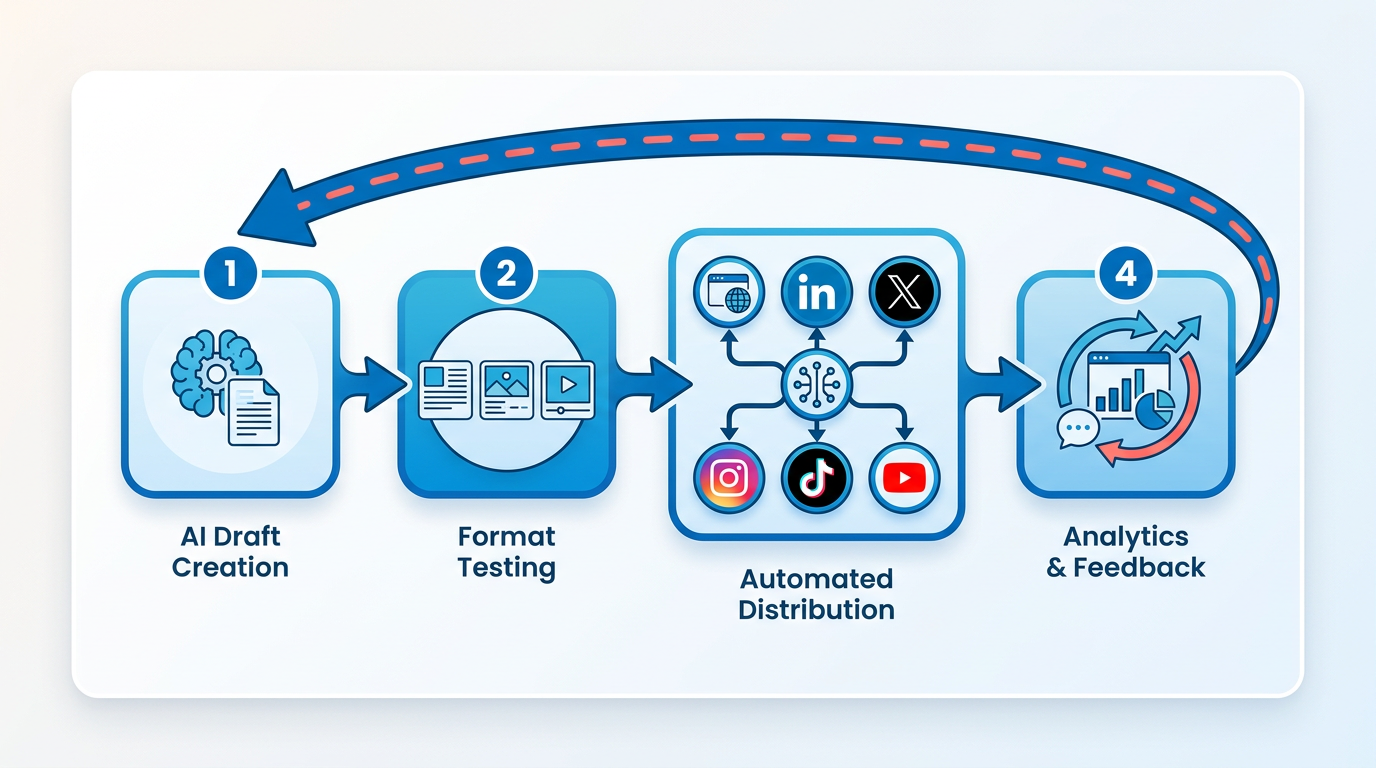
You don't know which format works until you run it head to head. One long-form article, one short social post, and one video script can all come from the same source idea. Let the data pick the winner.
- Run a 3-variant test over two weeks (long-form, short post, video) so you compare formats on equal footing before committing budget.
- Track engagement per format separately, not as one blended number. A carousel and a blog post earn attention in different ways.
- Repurpose one strong article into a newsletter, a social carousel, and a short video script instead of drafting each from scratch. This is where AI can cut hours down to minutes.
- Kill formats that flatline after a set trial period. Sunk-cost publishing is how teams waste the time AI just saved them.
If your audience lives on one channel and one only, skip the spread. Testing many formats for a small niche B2B list may be effort you won't earn back.
Automate the Distribution Layer, Not Just the Draft
A great post sitting in a drafts folder earns zero traffic. The gap between "written" and "seen" is scheduling, and that gap is exactly where manual work can quietly kill momentum.
- Consider auto-scheduling every piece to web, social, and newsletter in one pass, so publishing never waits on someone's calendar.
- Where your platform supports it, cross-post to LinkedIn, X, Instagram, TikTok, and YouTube from a single workflow instead of logging into five dashboards.
- Set a consistent cadence and let automation hold it. Sustained traffic comes from showing up predictably, not from sporadic bursts.
- Reformat automatically per platform. A vertical clip for TikTok and a text hook for X should come from the same asset without manual rework.

The operational split is clear. Manual repurposing means someone reformats and posts each asset by hand, which caps how many creative angles you can test. Automated pipelines strip out that friction, so you can run broader distribution experiments at the same time.
Stage 3: Build AI Content That Search Can Actually Cite
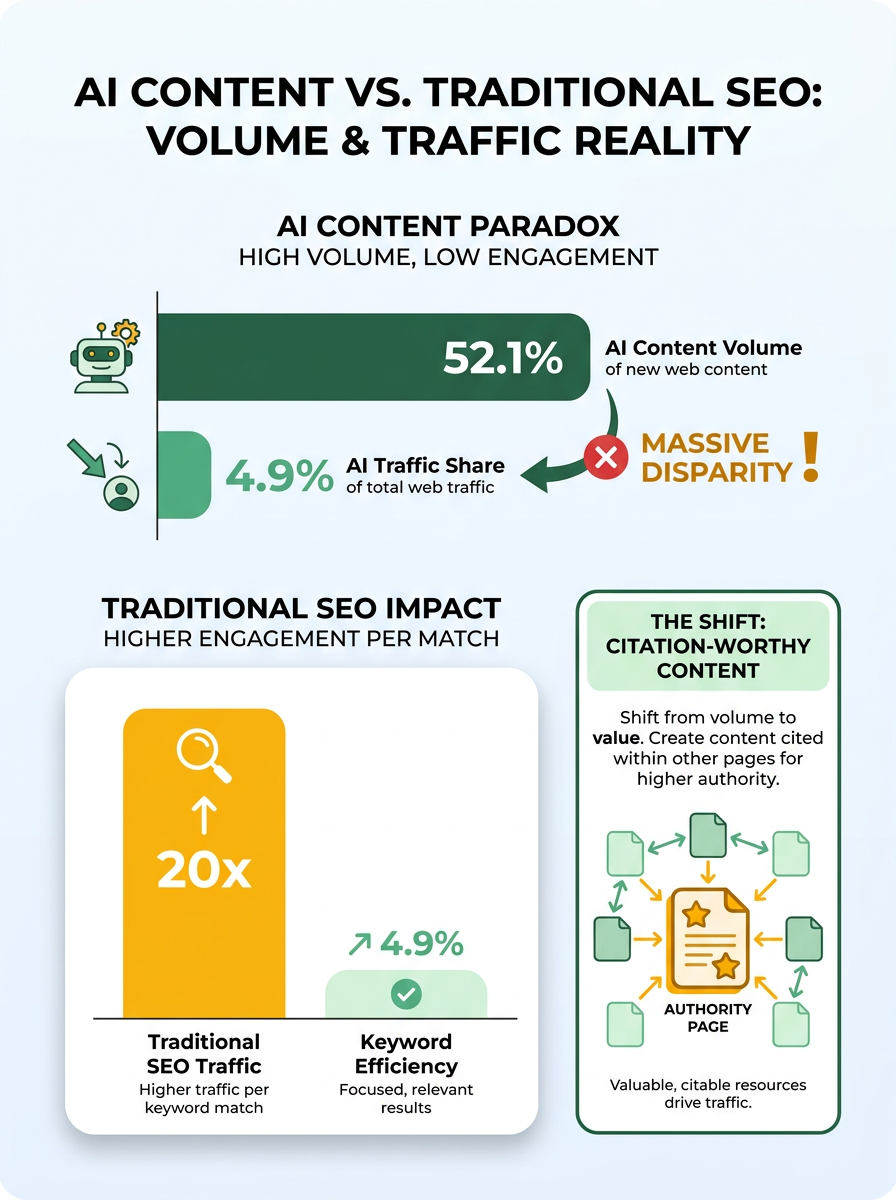
Building SEO content used to be simple math: match a keyword to a page, publish, rank. That math has changed. Search engines increasingly show generative summaries at the top of some results pages, answering the query directly and diverting some organic click flow that used to go to traditional results.
With SERP real estate compressed, a standard ranking may not be enough on its own. A well-optimized page may need to earn a citation inside the AI answer box while also feeding channels that don't depend on search. Surviving that means focusing on information gain and expertise a machine can extract.
Optimize for Citation, Not Just Ranking
Answer engines read your page on the reader's behalf and synthesize a response. To get named in that response, your content needs the same signals that build trust with humans.
- Answer the query directly near the top of the page, so an answer engine can lift a clean, quotable passage.
- Add proprietary data or a unique angle competitors can't copy. Generic summaries may get skipped; specific claims are more likely to get cited.
- Put a real author with credentials on every page. Authorship can serve as a trust signal for readers and citation systems alike.
- Structure content with clear headers and schema so machines can parse what each section answers.
The Trust Edit Is Also Your Ranking Edit
Refining an AI draft does more than clean up the reading. It can give search engines clearer factual hooks for attribution. When an editor adds a specific case observation, a verifiable data point, or a unique industry benchmark, answer engines may find direct textual evidence worth referencing. Some analyses of answer-engine citations suggest pages with original research and clearly attributed expertise tend to perform better than generic, aggregated overviews.
That editorial polish is where information gain comes from. Cut the synthetic filler, back up the broad claims, and tighten the technical accuracy, and you clear the human quality bar and the citation model in one move.
- Add firsthand experience or a real result the model couldn't know on its own.
- Cut filler and tighten every claim. Vague sentences don't get quoted.
- Fact-check and refresh stats before publishing, then set a reminder to update them.
Chasing AI detection is often the wrong fight. Watermarking tools may already be embedded in some synthetic output. Trust, not invisibility, is what appears to move rankings.

Plan Distribution While You Write, Not After
This is where the stage earns its place. If organic search keeps handing back fewer clicks, search may not be the primary home for your content. Distribution has to be planned while you write, not bolted on later.
- Draft the newsletter blurb and social variants in the same pass as the article, not as an afterthought.
- Tag each piece with the channels it targets so scheduling and cross-posting can run automatically.
- Set the auto-publish schedule across web, social, and email before the article ships.
Skip this for a one-off landing page. But for any program built on volume, distribution baked into the build is what can keep traffic alive when search referral shrinks.
Example workflow: one draft through trust edit, citation optimization, UTM tagging, scheduling, and review
For example, suppose a team drafts a piece on reducing churn in subscription trials. Before publishing, a human editor does a trust pass: adds a real project observation, replaces one vague claim with a specific product benchmark, names the author, and tightens the introduction. The editor then does a citation pass: moves the direct answer near the top, adds structured headings, and fact-checks every statistic. Before scheduling, the team tags the blog URL with one UTM campaign, the newsletter version with another, and the social clips with channel-specific UTMs. The draft is then queued to the website, newsletter, LinkedIn, X, and YouTube from one scheduling workflow. After the publish window, the team reviews channel-level UTM data, compares the newsletter version against the social versions, and records which variant should be repeated or retired.
Stage 4: Prove the Traffic Moved, Then Refine
You can't refine what you can't see. Stage 4 is about proving whether your AI content generation actually moved traffic, then using that proof to decide what gets published next. Many teams skip it. They publish, glance at a vanity number, and move on.
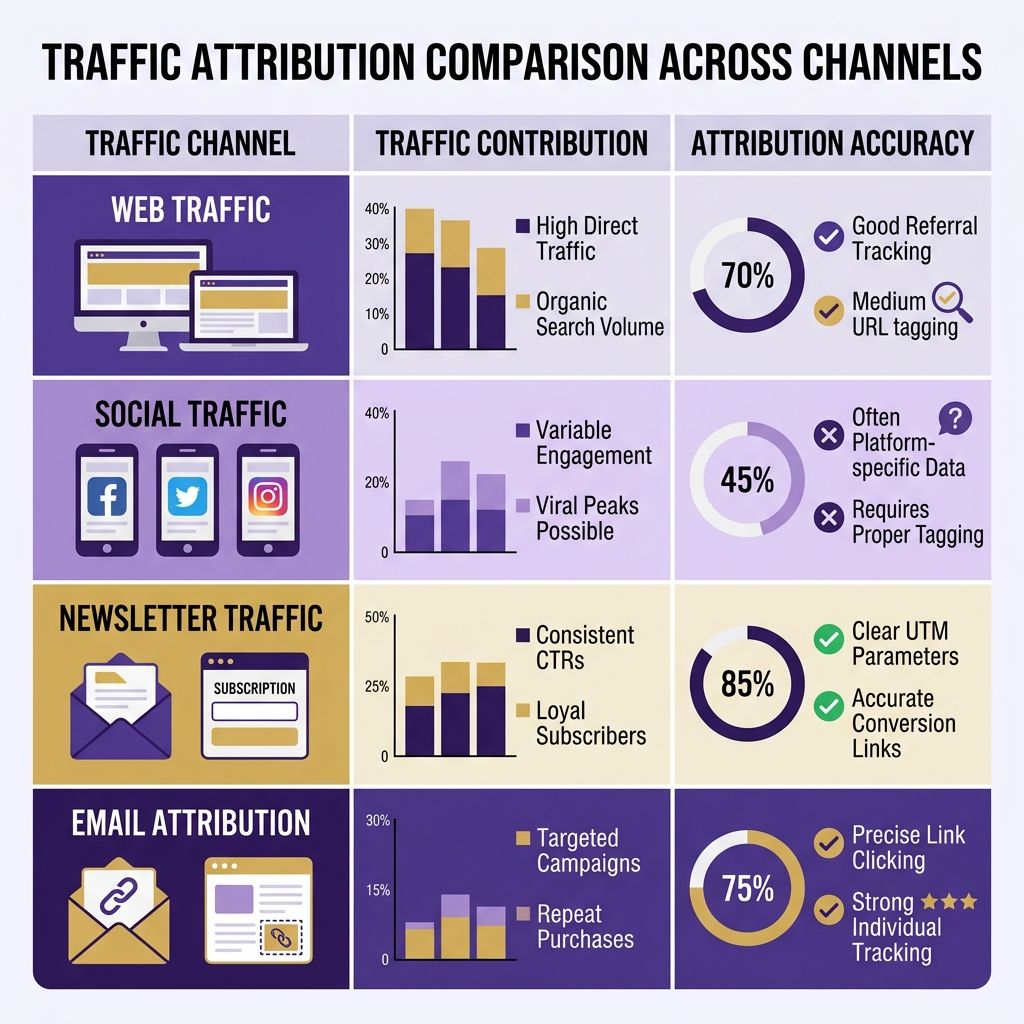
Here's the trap. When you distribute across web, social, and newsletters automatically, traffic can arrive from several directions at once. Without clean tracking, you can't tell which channel carried a piece. So validation starts with tagging every distributed version before it goes live, not after.
Tag Every Channel Before You Hit Publish
A single article pushed to your blog, LinkedIn, and an email blast is three different traffic sources. If they all report as "direct" or "referral," your data is less useful. UTM parameters can help fix that.
- Set one UTM convention and enforce it across every channel, so a newsletter click and a social click never blur into the same bucket. Lock the naming before automation starts firing.
- Wire Google Analytics goals to each distributed format, not just the blog page. You want to know whether the LinkedIn repost or the email drove the conversion.
- Add heatmaps on your highest-traffic AI pages to see where readers actually stop scrolling. A page that ranks but gets abandoned at the fold may be a trust problem, not a traffic problem.
This is where batch-level tracking can help. Split your output into cohorts by topic cluster, publish date, or editing depth, then tag each cohort with its own UTM campaign value. If one cohort's pages pull significantly more click-through than another on the same channel, you may have isolated a variable worth repeating. Average everything into one number and that signal can vanish. Avoid blending cohorts in the same report, or you may lose the comparison that tells you what to build more of.
Watch the Fatigue Signals Before They Cost You
Traffic curves from AI-generated pages don't climb forever. Diminishing returns can show up in data long before they show up in revenue.
- Track bounce rate and time-on-page as trend lines, not snapshots. A slow bounce-rate climb across a batch may mean the format is tiring your audience, even when raw traffic looks flat.
- Compare each batch's pre- and post-launch metrics against the last one. If batch three underperforms batch two on the same channel, that channel may be saturated.
- Flag pages where social and email hold steady while organic slides. That can be a cue that search referral is shrinking and your owned channels are carrying the load. Automated distribution can help keep those pages alive.
Set a Cadence That Actually Changes Decisions
Reporting only matters if it feeds the next batch. Weekly checks can catch fast-moving social and newsletter performance. Monthly reviews can suit organic, which often needs weeks to settle.
- Run a weekly pulse on channel-level UTM data to catch a dud format early.
- Run a monthly deep review to decide what to double down on and what to retire.
What you learn here is what can calibrate the next production cycle and your workflow rules.
Stage 5: Ship, Promote, and Keep the Traffic Coming
Here's where most teams stall at the finish line: the draft is done, it publishes to the blog, and then nothing happens. Shipping to one channel and waiting for Google is no longer a distribution plan. Leaning on a single discovery channel is a structural weakness, especially as search interfaces absorb more attention on the results page itself. Sustainable output means activating owned pipes in parallel.
The teams winning at AI publishing often run on multi-channel velocity and steady testing, not on waiting for a lone search article to mature. When a platform shift drags click-through rates down, the brands that hold momentum are the ones driving their own audience loops. That's why proactive syndication is the core of this final stage.
Automate the Publish, Not Just the Draft
The scheduling and cross-posting layer is where many teams still burn hours by hand. Automating it can be a high-return move once the writing is done.
- Where your platform supports it, set every finished piece to auto-publish to your site and syndicate to LinkedIn, X, and other social channels on a schedule, so distribution never waits on a person.
- Submit new URLs for indexing the moment they publish instead of waiting for a crawl, so fresh pages start competing sooner.
Amplify With Channels Search Can't Take Away
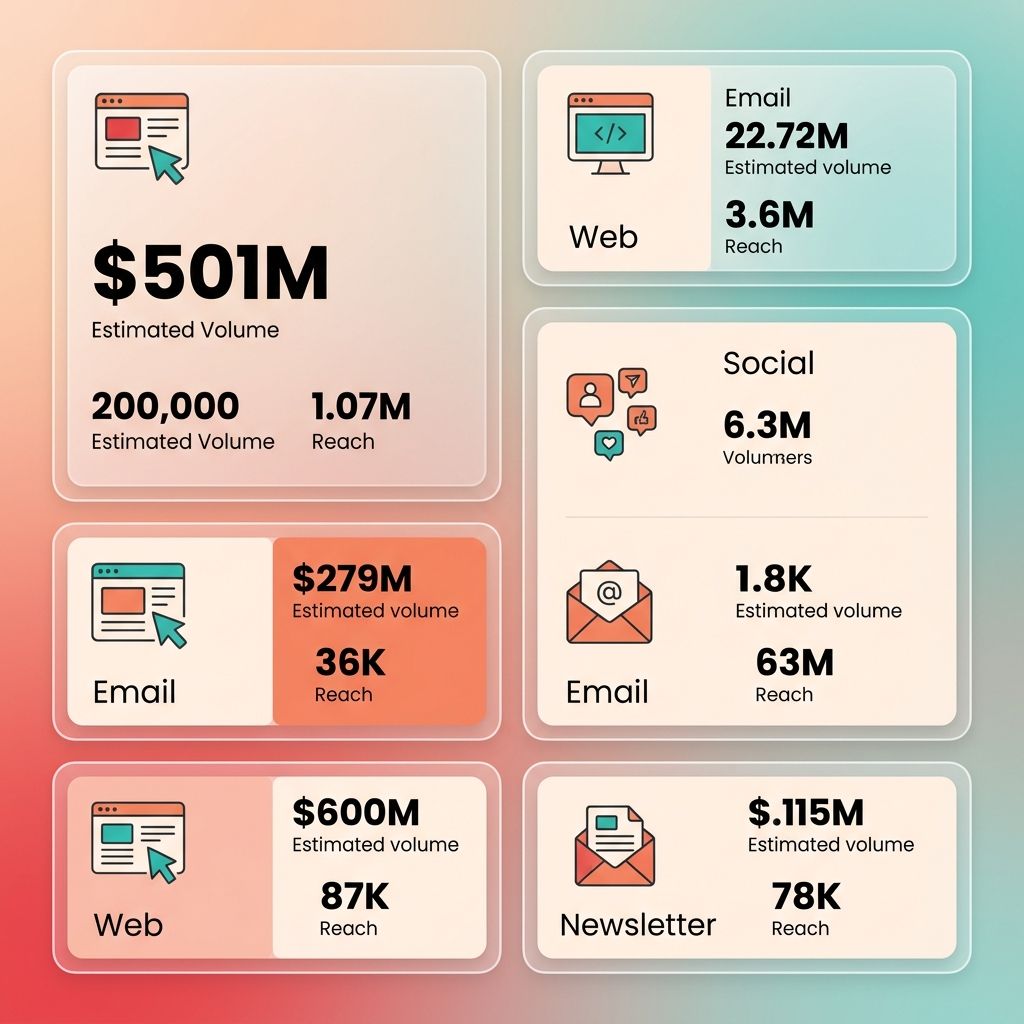
Search referral is a channel you rent. Email and social are audiences you own. When zero-click behavior keeps a growing share of queries from ever reaching your page, owned distribution stops being a nice-to-have.
- Automate a recurring newsletter that pulls your latest content and lands straight in inboxes, reducing dependence on search clicks.
- Republish and repackage strong assets across platforms on a rotation. That can bring repeat visitors back instead of finding you once and leaving.
- Keep a Google Business Profile active with regular posts if you serve a geographic market, since local visibility can feed a traffic stream separate from your blog.
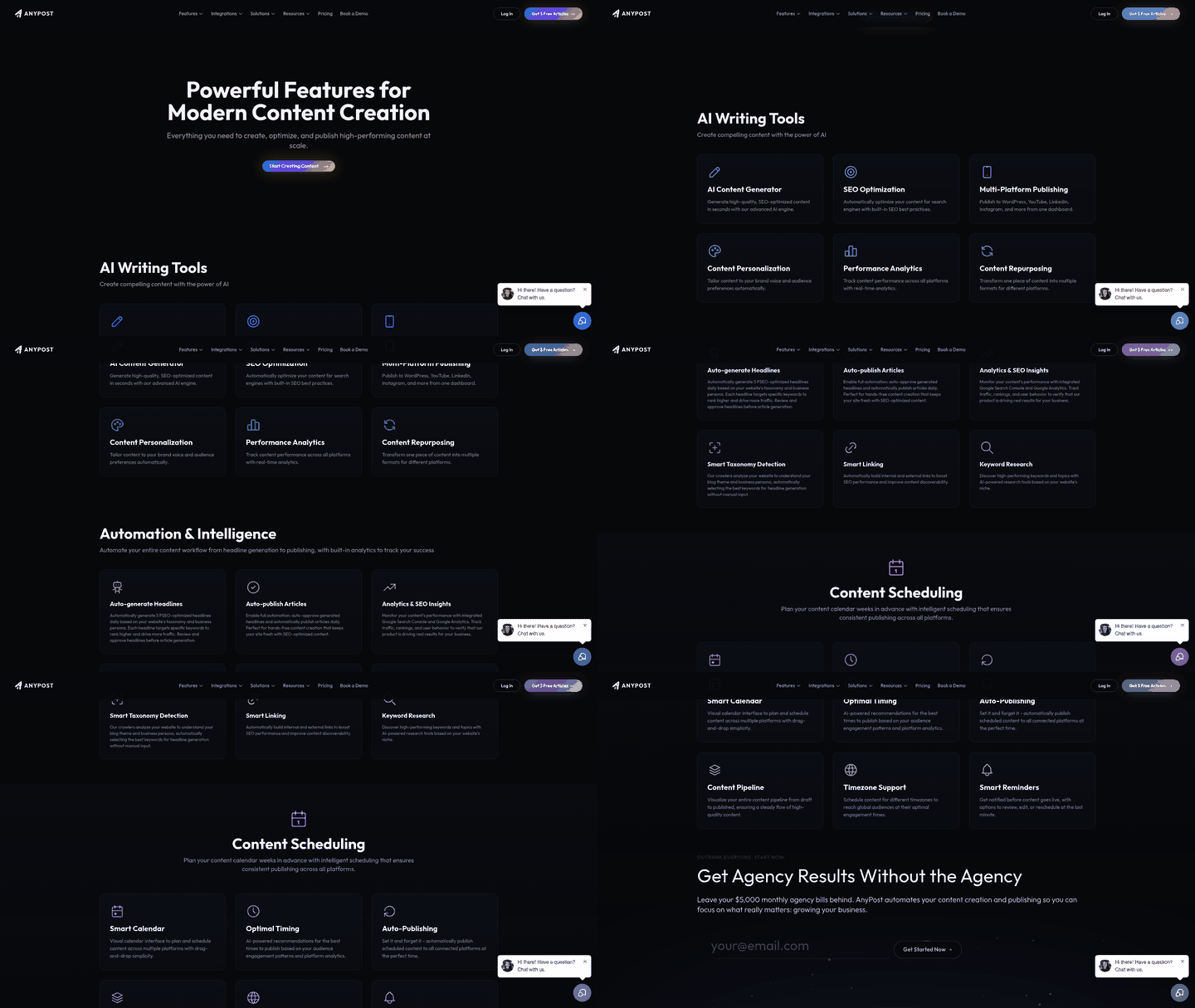
This kind of rotation can be automated on some platforms. For example, a platform like AnyPost may be configured to turn each article into social carousels and posts, publish across LinkedIn, X, Instagram, TikTok, and YouTube, and send newsletters, so one asset feeds several channels every week without manual effort.
Scale Volume Without Letting Quality Slide
More output only works if the floor holds. Pumping out drafts with no review can push you into the large pool of AI content that earns almost nothing.
- Run a content audit on a fixed cadence to catch pages that are underperforming or drifting off-brand before they drag the whole domain down.
- Keep a light human edit on every AI draft. That thin layer of judgement can help separate content that earns trust from generic AI noise.
- Maintain a steady publishing pipeline instead of sporadic bursts, so search engines and your audience both see consistent, fresh activity.
Skip aggressive scaling if you can't yet review what you ship. Volume without a quality floor can widen the traffic gap. It doesn't close it.
Questions People Ask
1. If my audience only uses one channel, do I still need multi-channel distribution?
Multi-channel distribution is designed for operations seeking reach across diverse touchpoints. If your target demographic interacts exclusively through a private Slack community or a dedicated enterprise email digest, expanding across five consumer social networks may produce unnecessary overhead. Focus your automated formatting exclusively on the channel where your core buyers consume content.
2. Can AI handle the trust edit instead of a human?
AI can assist with grammar and structural flow, but it cannot reliably invent authentic case outcomes, internal company metrics, or professional accountability. Editorial oversight can provide the real-world validation, domain perspective, and nuanced positioning required to satisfy quality evaluators and capture reader trust.
3. Will Google penalize my content just because it's AI-generated?
Search algorithms generally evaluate utility, accuracy, and depth rather than the specific software used to produce a sentence. High-ranking pages often demonstrate clear information gain, transparent sourcing, and practical value for searchers. Content that provides original perspective and factual rigor may meet search quality standards regardless of drafting methods.
4. Why can't I just track total traffic instead of tagging each channel?
Aggregate traffic figures can mask where audience growth originates. When an article is syndicated to email, professional networks, and video platforms simultaneously, unsegmented analytics can blend all visits together. Proper campaign tagging can reveal conversion rates, click-through performance, and ROI for each individual distribution endpoint.
5. How is optimizing for citation different from traditional keyword ranking?
Traditional optimization often centered on keyword density and link signals to secure a ranked URL position. Citation optimization tailors content for retrieval-augmented generation models that summarize answers directly. This can require direct query resolution, structured schema definitions, and clear factual assertions that language models can parse and reference as source material.
6. How does AnyPost fit into these traffic stages?
AnyPost is an example of a platform that can be configured to connect content creation to multi-channel execution. It can ingest source material, restructure it into format-specific assets like carousels and email briefs, and coordinate scheduled syndication across major platforms, depending on setup. This can help teams maintain cross-channel distribution without manually reformatting and publishing on individual dashboards.