
How to Automate Content Marketing by Replacing Five Tools with One Workflow

Quick Summary
The part most teams underestimate isn't writing the content. It's the coordination overhead between research, drafting, optimization, publishing, and reporting when each stage lives in a separate tool. Five logins, repeated context handoffs, manual data transfers—that's where afternoons disappear before a single piece goes live.
Here's what a unified workflow replaces:
SEO research platforms like Ahrefs and Semrush deliver keyword data, competitor analysis, backlink tracking, and rank monitoring. The manual bottleneck starts when you translate those spreadsheets into briefs, outlines, and editorial direction. Replacement benefit: AI-assisted brief generation converts research into production-ready inputs without forcing your team to rebuild context in a separate doc.
AI writing tools draft content fast but typically lack brand guardrails and fact-checking layers. Used alone, they can create more editing work than they save—every draft still needs tone, positioning, and accuracy checks. Replacement benefit: Faster first drafts with editorial control built in, cutting the blank-page stage while preserving quality.
Backlink outreach workflows involve prospecting sites, qualifying domains, personalizing pitches, tracking follow-ups, and logging responses across spreadsheets and email threads. Replacement benefit: Streamlined distribution cuts manual steps without sacrificing relationship quality.
Social schedulers like Sprout Social coordinate cross-channel publishing. Setup complexity scales with team size and channel count, especially when each post needs different formatting, hashtags, image specs, and approval routing. Replacement benefit: Single-workflow publishing reduces reformatting and keeps the editorial calendar synced to the assets it promotes.
Analytics and reporting tools pull performance data from multiple sources. Assembling weekly content reports manually becomes a recurring drain on bandwidth. Replacement benefit: Automated dashboards surface what's working without the data-wrangling tax, connecting content activity to traffic, leads, and engagement.
The Short Version
- Coordinating content across five disconnected tools creates handoff friction that delays publishing and compounds planning overhead.
- Manual brief creation is often the biggest bottleneck; AI-assisted templates make planning faster and more consistent.
- Teams get the best results when automation connects research, drafting, approvals, publishing, and reporting—not when each stage is treated as a separate task.
- The highest-cost stage in content production is usually the brief, not distribution. Automating scheduling without fixing upstream bottlenecks just creates faster mess.
Why Automating Content Marketing Matters
Automation matters because it shifts where marketers spend attention. Instead of copying research into templates, chasing approvals, resizing assets, or collecting analytics from multiple dashboards, the team can focus on judgment—which topics deserve investment, which angles differentiate the brand, which offers should pair with content, and which pieces need a human editorial pass before going live.
The hidden drag on lean teams
The coordination tax between multiple applications is what slows everything down. When keyword research sits in one platform, drafting happens in another, SEO feedback lives in a third tool, and your social scheduler operates separately, every handoff becomes a place where drafts stall, context gets lost, and publishing dates slip.
This hits lean teams hardest because no one owns just one task. The same marketer may handle research, writing feedback, CMS uploads, email copy, social promotion, and reporting. A fragmented stack forces that person to become the integration layer between tools.
Strategic automation solves the operational problem, not just the task problem. A unified workflow keeps topic strategy, draft creation, SEO guidance, distribution, and measurement connected so the team isn't constantly reconstructing decisions already made upstream.
Content automation is not the same as broader marketing automation. A CRM-first lead-nurture architecture sequences email sends and sales follow-ups, but content workflows need CMS, asset, social, SEO, and analytics integrations to keep research, drafting, publishing, and measurement connected. Without those connections, content automation becomes another isolated drafting step.
Designing the AnyPost.ai Unified Workflow
The sequence matters. When you're ready to automate content marketing strategy, distribution feels like the obvious first step—scheduling social posts and email sends is familiar, visual, and easy to demonstrate. But distribution only amplifies whatever sits before it. If the brief is unclear, the angle is generic, or the draft misses brand voice, faster publishing won't build a better content engine.
We designed our workflow to address planning before promotion. The goal is to move from a topic idea to a structured, publishable asset without asking the team to manually rebuild the same context across separate applications. Research, brief, draft, review, publishing plan, and reporting loop all share the same source of truth.
The Connected Pipeline We Built
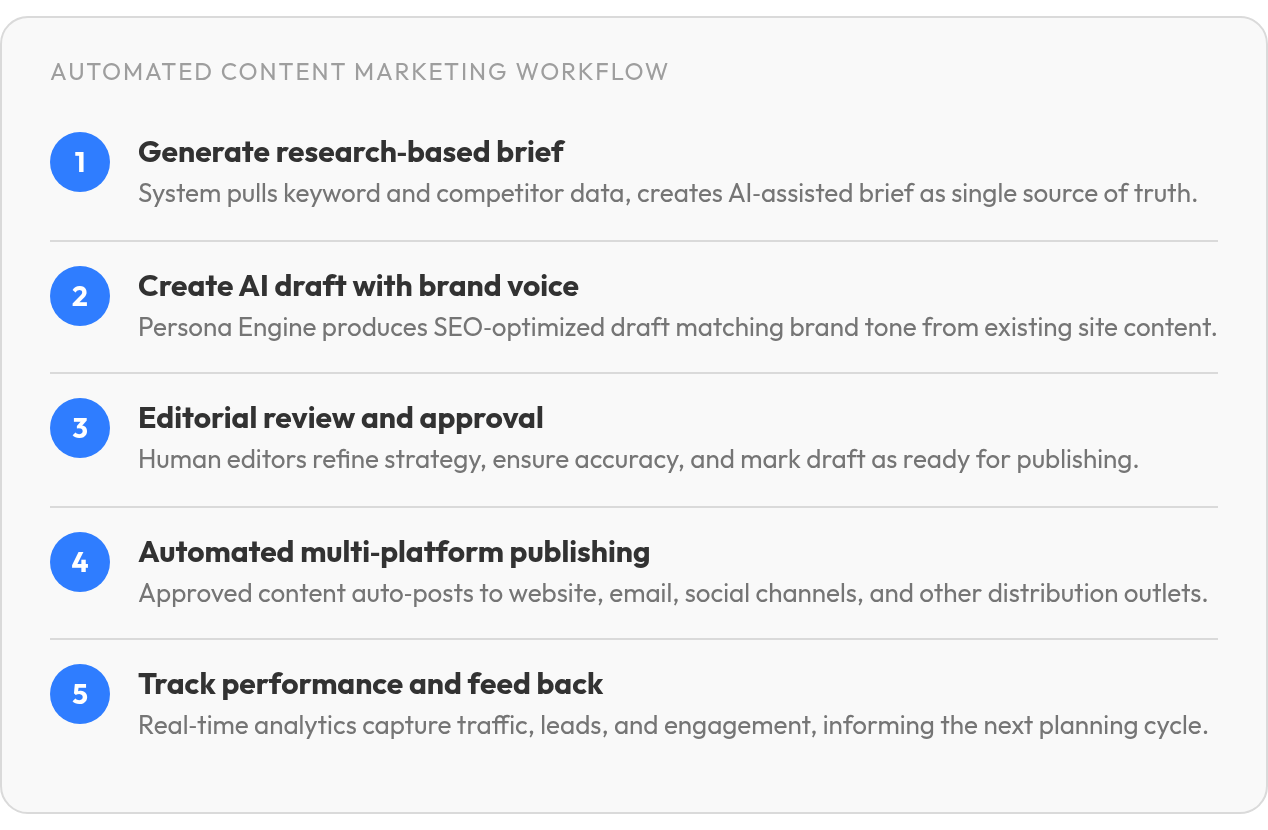
Our automation runs through connected stages, each designed to eliminate a manual handoff. When content needs surface, our system pulls keyword targets and competitive insights to build a foundation for each piece. The AI drafting step generates SEO-optimized content that matches your brand voice through our Persona Engine, which captures your messaging and tone from your existing site.
Your team validates strategic fit and makes editorial refinements before our multi-platform publishing system distributes approved content to your website, email list, Google Business Profile, and social channels—LinkedIn, X, Instagram, TikTok, and YouTube. Our real-time analytics tracking monitors performance across all published content, giving you visibility into what drives traffic and engagement so you can focus on decisions that actually require judgment.
The practical value is continuity. A keyword target selected during planning doesn't disappear when the draft moves to review. A brand position approved in the brief doesn't have to be re-explained to whoever's preparing social copy. Performance data flows back into the next planning cycle instead of living in a separate report no one revisits.
Six-Step Playbook to Swap Your Stack for One Workflow
The mistake most teams make when they automate content marketing strategy isn't picking the wrong platform. It's automating the wrong stage first. If your process begins with scattered research and vague editorial direction, automation will simply help you create more inconsistent work at higher speed.
The better approach is to map the lifecycle before you replace the tools. Identify where content gets delayed, which decisions are repeated, and which handoffs require someone to copy information from one system into another. Then choose the first workflow to automate based on impact, not convenience.
How do you wire the full lifecycle without gaps?
Start by defining lead and traffic KPIs you'll track weekly—organic sessions, form fills, demo requests—so you're measuring output that matters, not just published volume. Connect your existing data sources next: your CMS for publishing, Google Business Profile for local visibility, and your email platform for nurture sequences. Integration setup varies by platform, but most support OAuth or API connections that let data flow between tools.
Build your first automation trigger around one repeatable content type. Blog articles work well because the workflow is predictable. Set the trigger: when brief status changes to "Approved," route to AI-assisted drafting. When draft status hits "Ready for Review," notify your brand editor. When final status reads "Published," fire social posts and update your content calendar.
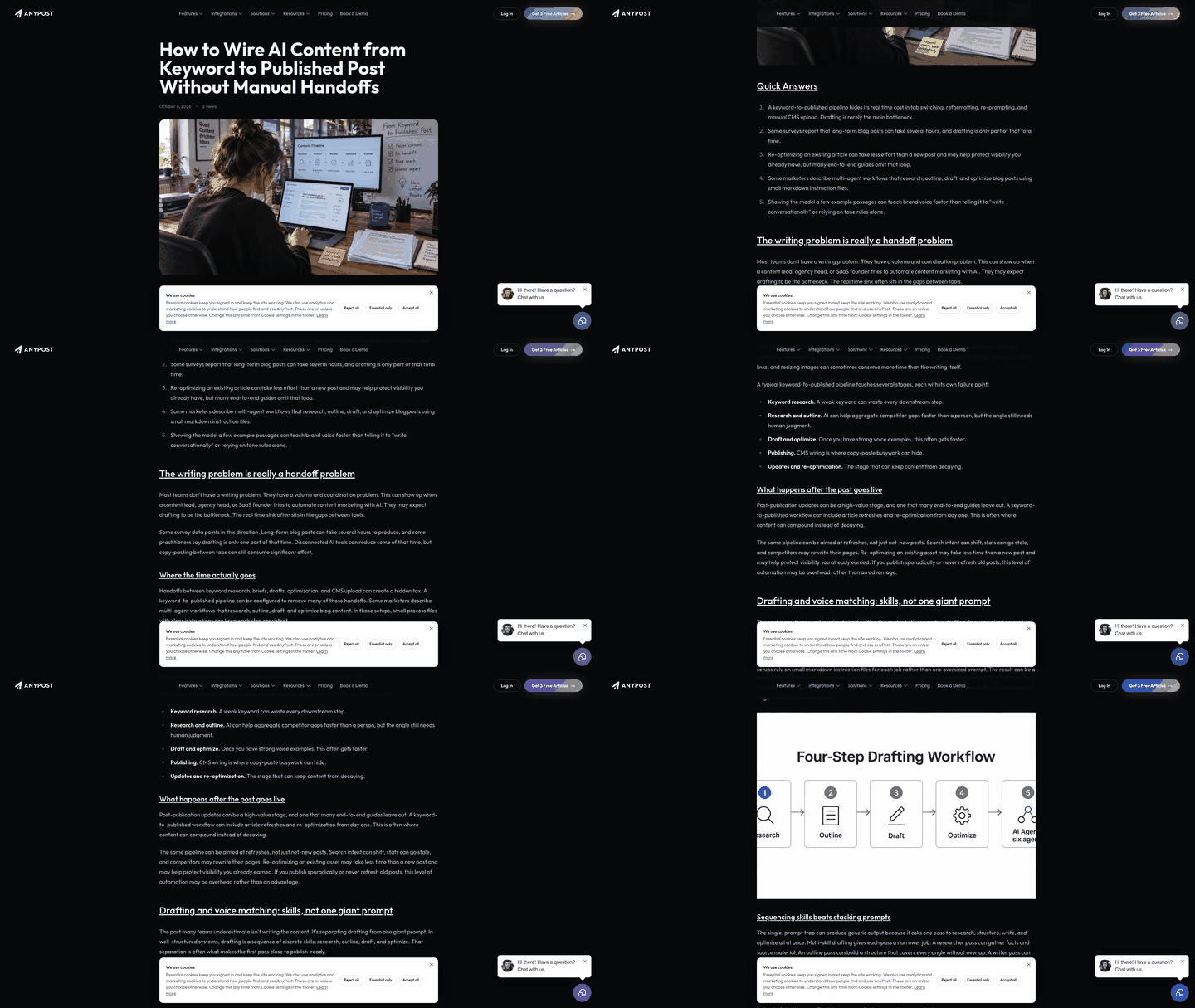
Test with a pilot batch of three to five articles before full rollout. Compare output quality, time per piece, and voice consistency against your manual baseline. This pilot should reveal whether your workflow has enough guardrails: clear inputs, assigned reviewers, publishing rules, and performance tracking. If any of those are missing, fix the process before increasing volume.
Scale when your pilot maintains quality at volume. The signal: you're publishing weekly without manual handoffs eating your calendar.
Measuring ROI & Avoiding Common Pitfalls
The hardest part about automating content marketing strategy isn't building the workflow. It's proving it was worth the effort. Most teams track how many articles got published or how much time a single task saved, but those numbers don't answer whether the automation paid for itself or whether the output actually drove business results.
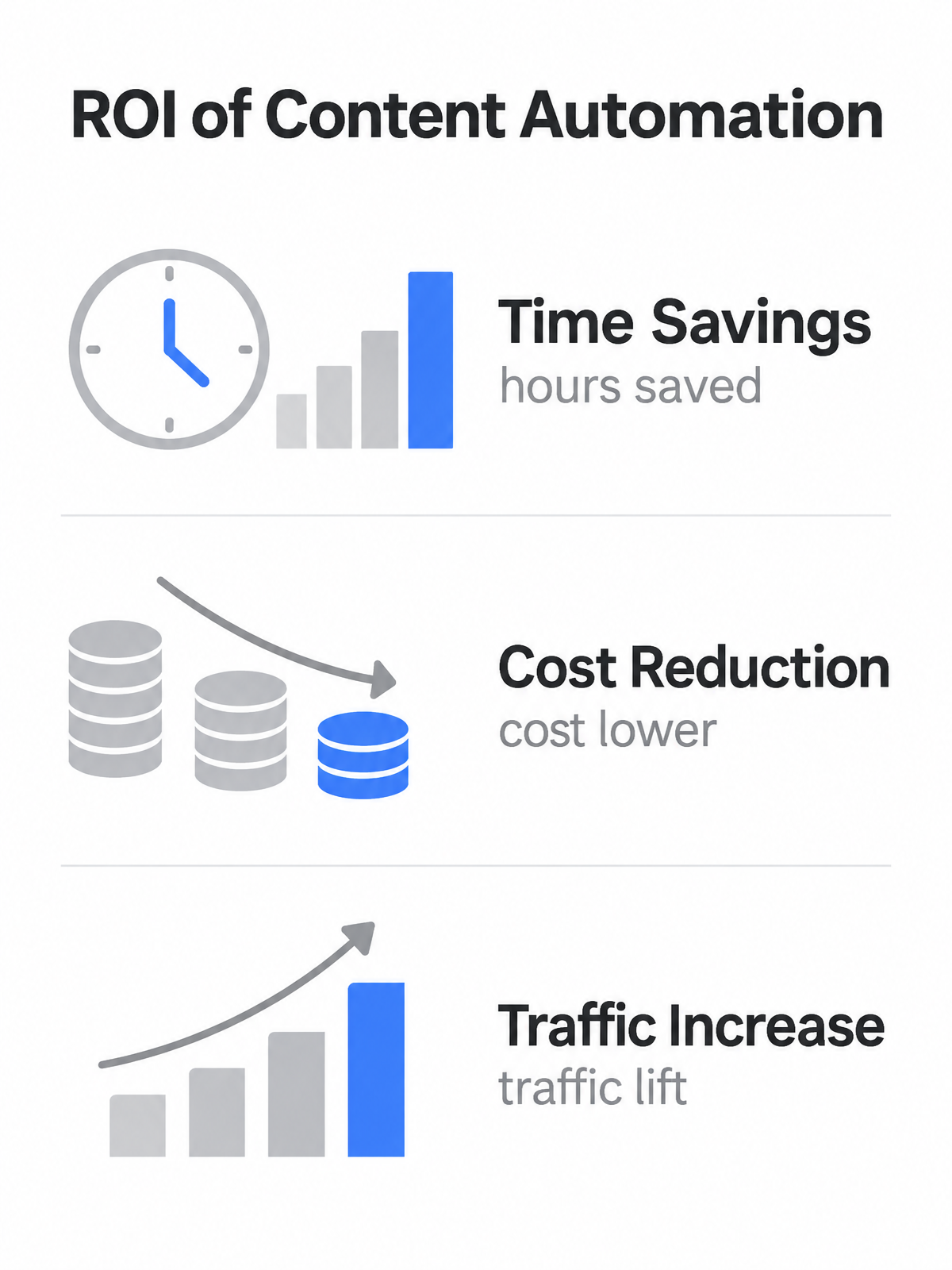
Measure ROI in layers. Time savings come first: how many manual planning, optimization, formatting, publishing, and reporting steps were removed? Production efficiency follows: can the team maintain a reliable publishing cadence without adding headcount or overloading editors? Cost reduction shows up when AI-assisted drafting is paired with human review rather than fully manual production. Channel performance ties everything back to business impact: organic traffic, assisted conversions, form fills, demo requests, email engagement, and social referral traffic show whether the workflow is creating momentum beyond publication.
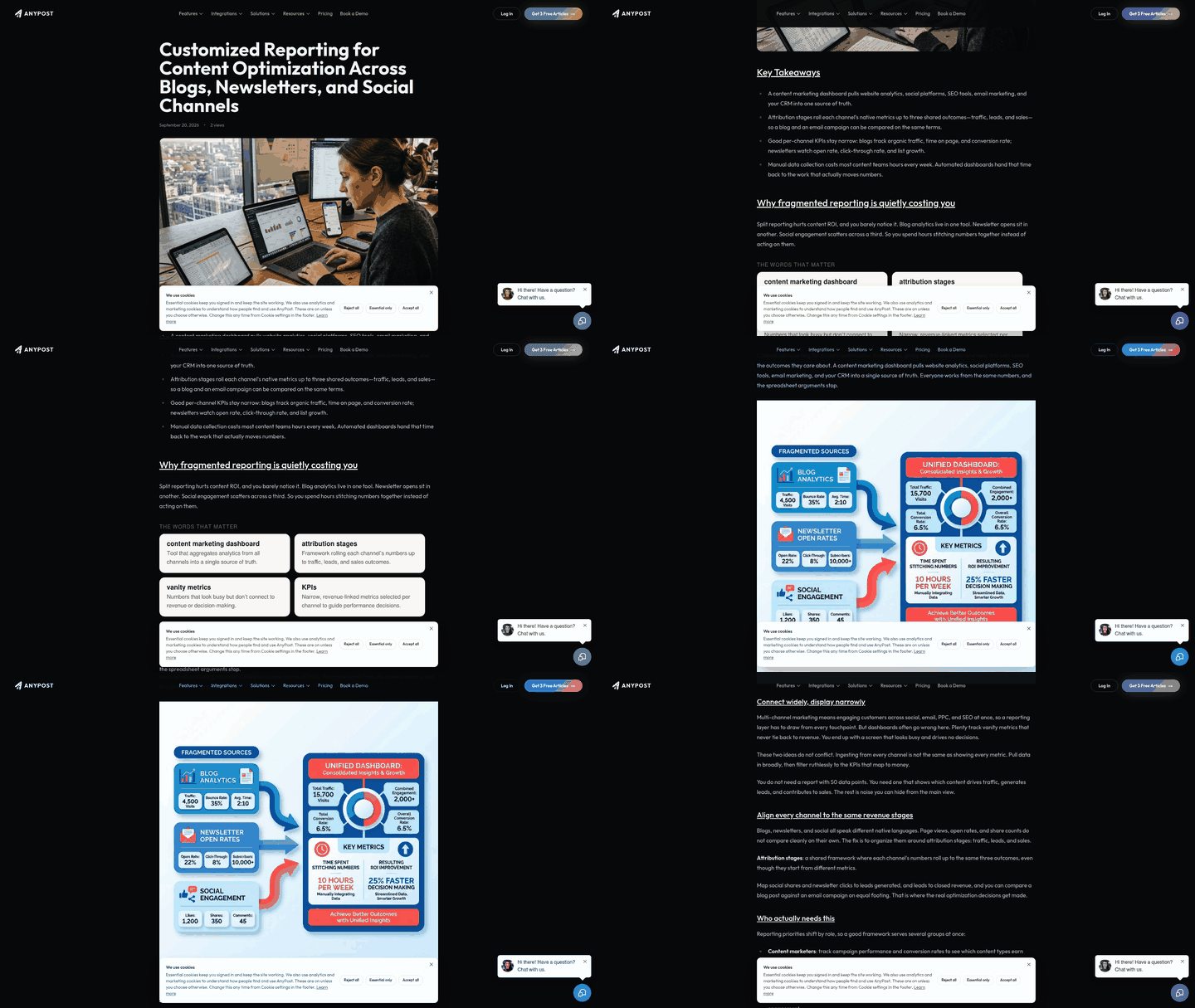
A useful dashboard should separate activity metrics from outcome metrics. Published articles, scheduled posts, and completed briefs show operational throughput. Rankings, qualified traffic, conversions, and pipeline influence show market response. Both matter, but they answer different questions. If activity rises and outcomes stay flat, the workflow may be efficient but strategically weak.
What breaks automation in practice
The performance gap between adoption and results tells the whole story. Many marketers have adopted AI content tools, yet only a minority report better content performance. Isolated drafting automation fails unless research, SEO, distribution, and measurement are connected. The miss happens when teams automate only drafting while leaving research, technical SEO, distribution, and measurement manual. A disconnected setup can produce high article counts that fail to drive traffic or engagement because the pieces lack strategic research, technical optimization, and distribution support.
The fix isn't abandoning automation—it's layering in review gates where they matter. We recommend editorial sampling on automated drafts, brand-voice checks tied to style guides and trained templates, approval rules that route regulated or high-stakes topics through human review, and exception-based review rather than manually rebuilding every step. Automation works best when it handles rules-based movement through the system while people retain control over positioning, accuracy, judgment, and final approval.
Common Questions
1. Should I automate distribution first or start with content planning and briefs?
Start with content planning and briefs. Distribution is easier to automate, but it is rarely the root constraint. If topics, keywords, structure, and editorial direction are weak, publishing faster will only expose those weaknesses across more channels. Fix the upstream planning workflow first, then connect scheduling once the inputs are reliable.
2. How does automated content maintain brand voice without sounding generic?
Brand voice preservation depends on training the system with your existing content. Our Persona Engine captures messaging and tone from your site to generate drafts that match your style. The key is to keep human review focused on nuance: claims, positioning, examples, calls to action, and strategic fit. Automation should reduce repetitive production work, not replace editorial judgment.
3. What's the difference between automating one tool versus connecting the full content lifecycle?
Automating one tool improves a narrow task. Connecting the full lifecycle improves the movement of work from idea to performance review. In a unified workflow, research informs the brief, the brief guides the draft, approvals trigger publishing, and analytics feed the next round of planning. That connection is what prevents context from being lost as content moves from one stage to the next.