
Ninja Reports or Ahrefs for Keyword Gap Analysis: Which One Builds Better Topic Clusters

The Short Version
Keyword gap analysis finds competitor terms your site does not rank for. Teams often score those terms by search volume, keyword difficulty, click potential, and SERP features. A high-volume query can still send few clicks if a search feature answers the question directly on the results page. So volume alone is not enough. Three common ways to turn gap keywords into themes are manual mind-maps, TF-IDF grouping, and AI similarity scoring. Ahrefs' documentation also describes an intersection filter for isolating terms where selected competitors rank but your site does not, and a hover behavior that shows a competitor's top-ranking page for a keyword.
What keyword gap analysis is really for
Keyword gap analysis finds the terms your competitors rank for that you don't. The conversation around tools is often framed as "who finds more gaps," but discovery is usually not the bottleneck. The harder step is turning a gap list into publishable pages.
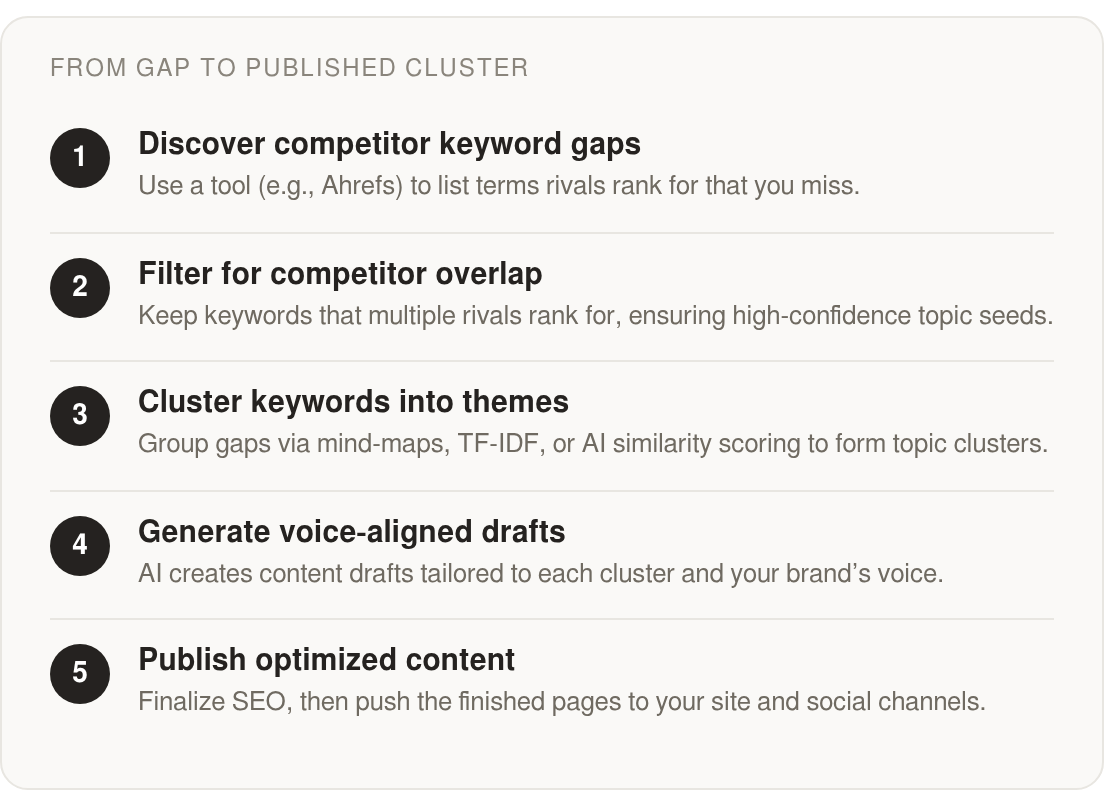
So the more useful question is not how many terms a tool can surface, but how quickly you can move from raw gaps to structured content.
The four data points that actually feed a cluster
Gap data is usually a list of competitor terms scored across four metrics: search volume, keyword difficulty, click potential, and SERP features. Search volume shows demand. Keyword difficulty estimates how competitive a term is. Click potential matters because some high-volume queries mostly resolve without a click. SERP features indicate what content format tends to win the result: a featured snippet, video pack, or "People Also Ask" box.
Ignoring the last two can lead to clusters built around keywords that look strong but don't convert.
Cast wide, then filter to the overlap
Ahrefs' public documentation describes two approaches that are useful at different times. The Content Gap tool can compare multiple competitor URLs, which casts a wide net. The same documentation points toward tighter results from filtering for keywords that multiple competitors rank for but your site misses.
A practical workflow is to start wide and then apply an overlap filter. Overlap suggests the market has already validated a topic. Ahrefs also documents that hovering over a position number shows a competitor's top-ranking page for that keyword, which can act as a template preview.
Clustering is where the comparison is actually won
Once you have gap data, common methods for turning keywords into themes include manual mind-maps, TF-IDF grouping, and AI similarity scoring. Manual mapping can be accurate but slow. AI scoring can be faster and scale across many keywords, which is useful for lean teams.
Many keyword tools stop at the exported gap list. The remaining work—grouping themes, deciding pillar and supporting pages, and drafting—may still need to happen manually. That is the part where tool comparisons often miss the real bottleneck.
Ninja Reports: gap features and the cluster workflow
Most teams start by counting features, but a more useful question is how fast the workflow moves from a raw gap list to content that can be published.
A scope note: Ahrefs' Content Gap tool has public documentation we can reference. The same level of verifiable public documentation is not available for NinjaReports, so this section avoids inventing a feature list for it.
What Ahrefs' Content Gap tool actually does
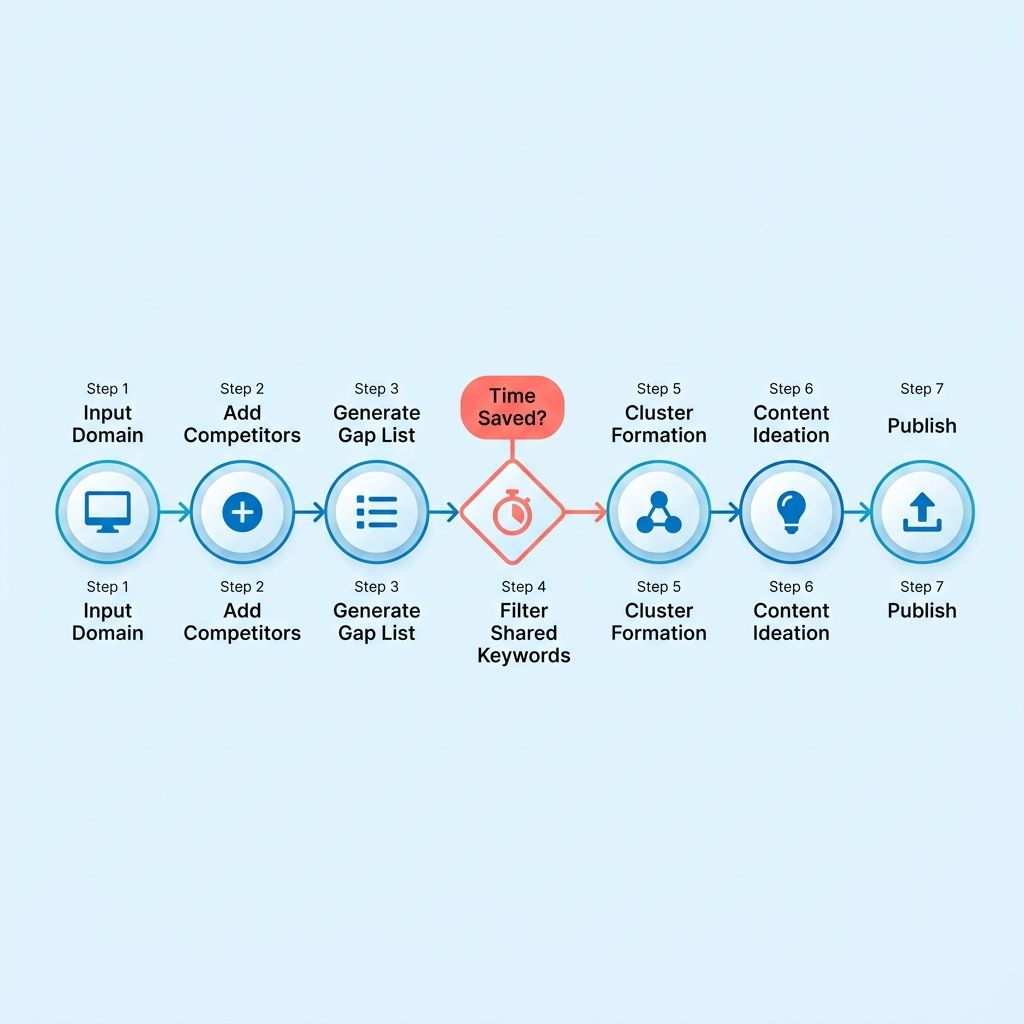
Ahrefs' documented Content Gap workflow starts with entering your domain and competitor domains. It then surfaces keywords those competitors rank for that your site does not. The tool relies on Ahrefs' index and includes intersection filters—for example, terms where selected rivals rank but your site is absent. Those filters can help separate one-off gaps from more consistent topics.
Where the documented workflow stops is also relevant. According to Ahrefs' public materials, Content Gap returns a keyword table. Grouping that table into clusters, mapping terms to pages, and writing content in your brand voice are not part of the same documented workflow.
Where NinjaReports fits
NinjaReports is commonly discussed as a reporting and gap-discovery option aimed at smaller SEO teams, but this article could not verify a detailed public feature spec. If you are weighing it against Ahrefs, the safer approach is to compare only what is documented and otherwise treat feature claims as unconfirmed.
We have published two side-by-side reads: NinjaReports vs Ahrefs keyword gap comparison and the best-pick guide for small teams.
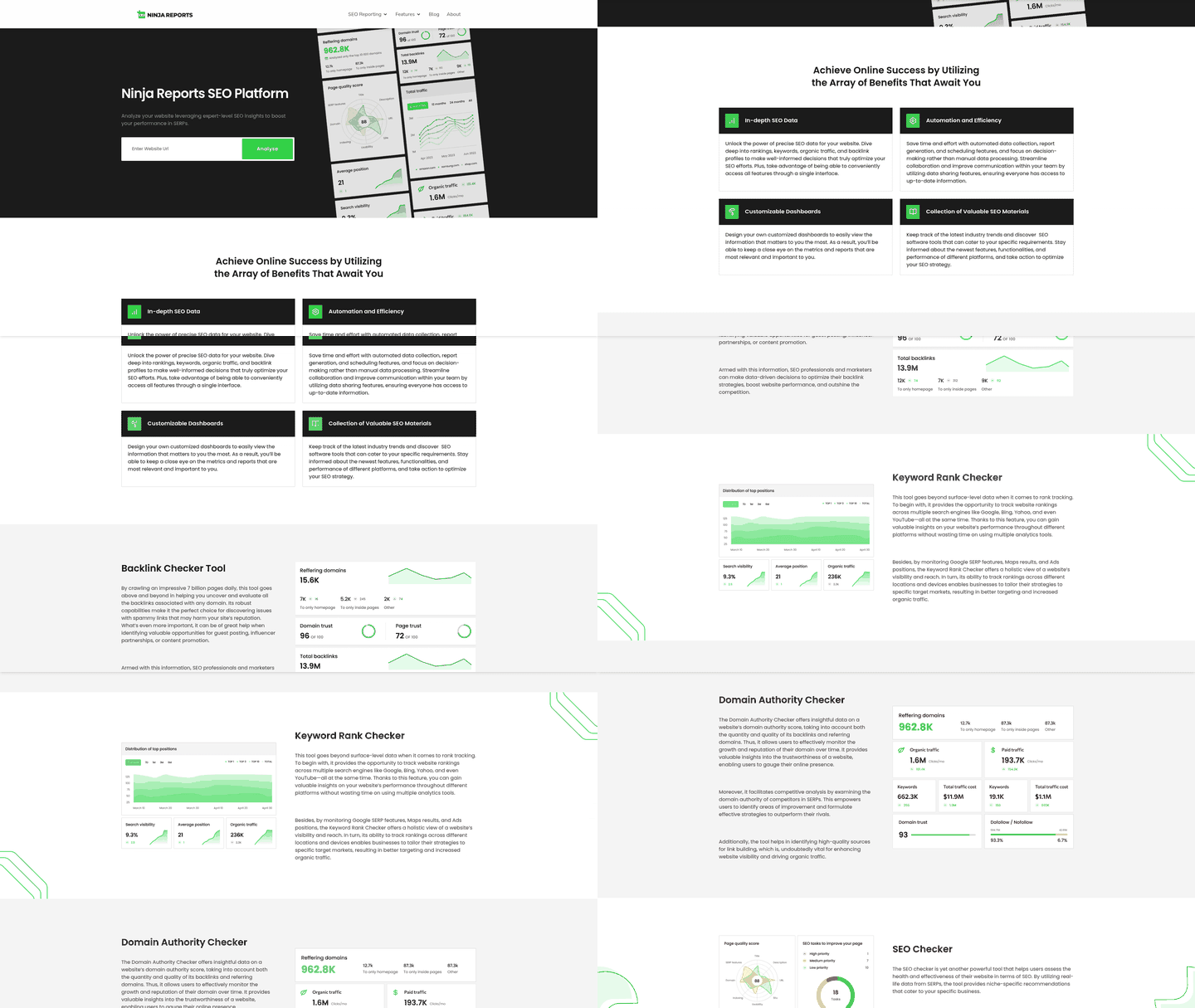
The pattern across most discovery tools is that they find gaps. They do not necessarily cluster or draft content. Someone still has to organize terms, brief a writer, and produce the pages.
| Workflow stage | Ahrefs Content Gap | Discovery tools (general) | AnyPost.ai |
|---|---|---|---|
| Find competitor keyword gaps | Documented; intersection filters | Often yes | Vendor-described |
| Group gaps into topic clusters | Not documented as automatic | Often manual | Vendor-described as automated |
| Draft in your brand voice | Not documented | Often not offered | Vendor-described |
| Publish downstream | Export, then manual | Export, then manual | Vendor-described as built into flow |
Why the handoff matters more than the discovery
Discovery is the part these tools tend to handle well. The harder work is turning a keyword table into a structured cluster and drafting in a voice that sounds like the brand. That handoff is where many tool comparisons go quiet.
AnyPost.ai's stated aim is to address the second half: the vendor says gap data can be grouped and drafted in its platform. Treat that as a product claim, not independent verification.
So if research depth matters, Ahrefs is a strong documented option. If publishing speed is the main constraint, the relevant question is whether the platform you choose can carry the work past the gap list.
Ahrefs: gap features and the cluster workflow
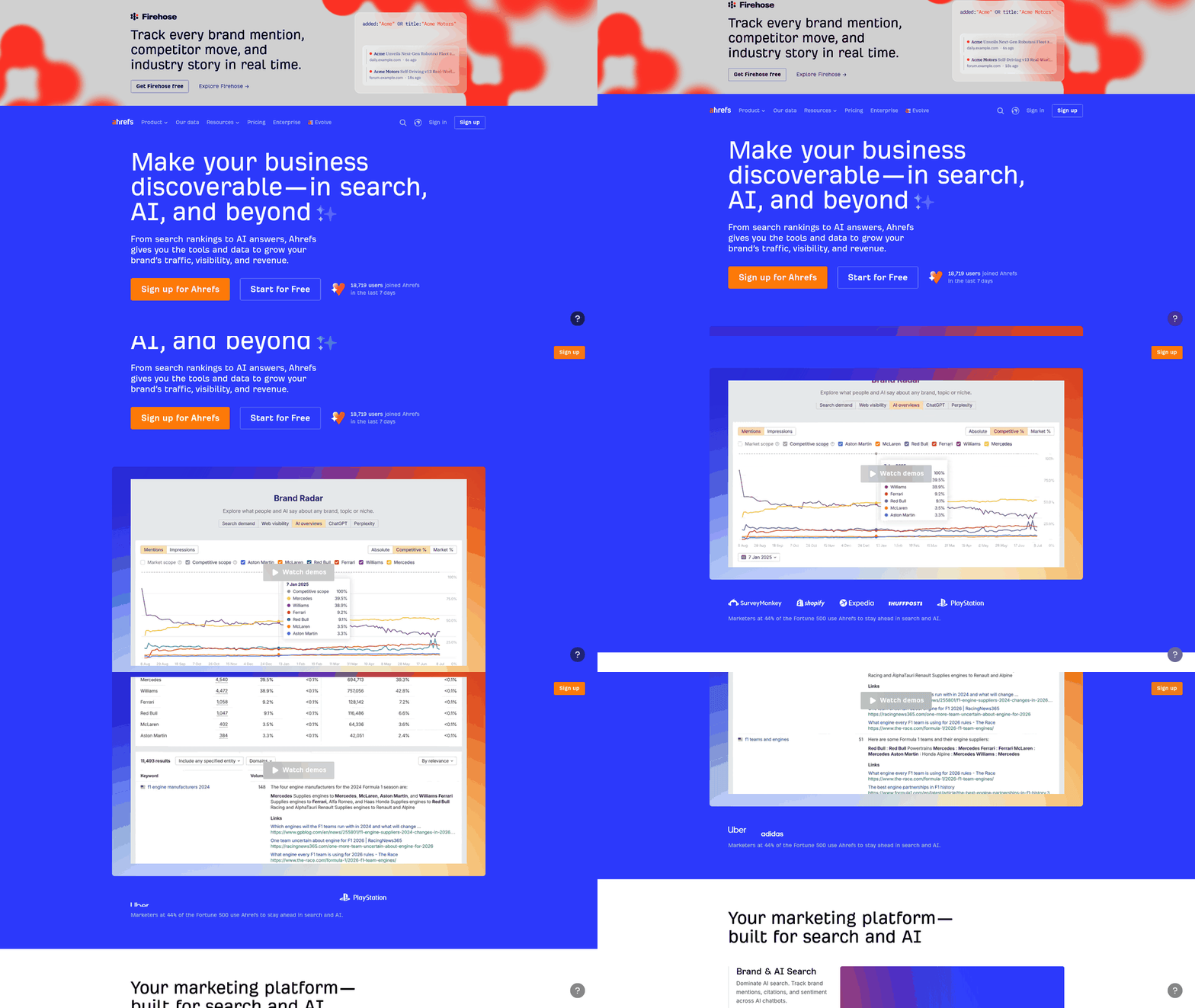
On raw depth, Ahrefs is widely used. Its Content Gap tool sits under Competitive Analysis, and the setup is direct: enter your domain, add competitor domains, and show keyword opportunities.
The ten-competitor net is only half the workflow
According to Ahrefs' public documentation, a single comparison can include multiple competitor URLs. That can generate a large list. The documentation also points toward filtering for terms that selected competitors rank for but your site does not.
Both moves are useful. A wide net surfaces volume; the overlap filter highlights higher-confidence cluster seeds. A wider net without overlap may include noise; overlap helps separate one-off gaps from terms the market appears to have validated.
Ahrefs' documentation also describes filters for location, difficulty, traffic, and position ranges. Hovering over a position number shows the competitor's top-ranking page for that keyword.
Where Ahrefs stops and automation starts
The documented output is still a keyword list. Ahrefs' Content Gap tool does not claim to produce a finished topic cluster or write in your brand voice. The final stretch—from gap data to publishable pages—is typically still manual.
AnyPost.ai describes itself as designed to close that gap, but those automation claims are vendor claims and should be checked against your own workflow before relying on them.
| Capability | Ahrefs | AnyPost.ai |
|---|---|---|
| Multi-competitor gap comparison | Documented up to 10 URLs | Vendor-described |
| Surfaces high-intent, low-difficulty keywords | Documented filtering/export | Vendor-described |
| SERP competitor analysis | Documented metrics | Vendor-described |
| Auto-groups gaps into clusters | Not documented | Vendor-described |
| Drafts voice-aligned content | Not documented | Vendor-described |
Pick Ahrefs when depth is the job
If research depth is the priority, Ahrefs' documented feature set is hard to fault. For SEO specialists who want to interrogate metrics, compare position ranges, and audit competitor pages, that granular control is useful.
If the bottleneck is time from gap to published cluster, a dashboard alone is a starting point, not a finish. The relevant comparison is whether the rest of the workflow is handled automatically, manually, or not at all.
AnyPost.ai: gap analysis plus automated cluster publishing
Many comparisons end at a spreadsheet full of gaps. AnyPost.ai positions itself as a tool that continues past that point. Gap discovery is described as one step in a longer workflow, not the finish line.
Ahrefs' documentation suggests filtering for keywords that competitors share. That overlap-to-cluster logic can be done manually, or it can be handled by automation if a tool offers it. AnyPost.ai claims to automate overlap-to-cluster grouping and then move into content drafting. These are vendor descriptions, so treat them as unverified in this article.

The handoff Ahrefs leaves as homework
Gap data tells you what to write, but it does not structure the pages or draft them. Ahrefs has made a broader point that AI can brainstorm keyword ideas but cannot replace real search metrics. Its Keywords Explorer pairs AI-generated seed terms with real data.
That combination—AI assistance plus real gap data—is a useful direction. AnyPost.ai says it uses gap data from integrated sources and then suggests clusters before drafting. It also describes a "Persona Engine" for voice alignment, but those are product claims and should be evaluated with real outputs.
Where a single-pane workflow earns its keep
Using separate tools often means stitching together a gap tool, a writer, an SEO checker, and a publisher by hand. AnyPost.ai claims to collapse that chain into one path. Whether that works depends on the platform's execution and your site's setup, so a small test project is usually a safer way to judge than relying on a feature table.
| Step | Standalone tool chain | AnyPost.ai |
|---|---|---|
| Gap discovery | Ahrefs Content Gap or similar | Vendor-described built-in + integrated data |
| Cluster suggestion | Manual, human-built | Vendor-described automated |
| Content drafting | Separate writer/AI tool | Vendor-described voice-aligned |
| SEO optimization | Separate checker | Vendor-described built-in |
| Publishing | Manual, per channel | Vendor-described one pass |
When a standalone tool still wins
Skip an all-in-one setup if raw gap depth is all you need. Ahrefs remains a stronger documented option for pure discovery, and its multi-competitor comparison can cast a wider net than most teams will use.
AnyPost.ai likely earns its place only when the real bottleneck is speed from gap to published cluster, and when the automation claims hold up in practice. The vendor publishes a deeper NinjaReports vs Ahrefs comparison on the blog.
The side-by-side matrix
This matrix is built from what the previous sections confirmed, not from spec sheets. That matters because one side has documented public specifications and the other does not.
Ahrefs' Content Gap documentation says a comparison can include multiple competitor URLs. That is the verified detail we can rely on. Where a cell would require inventing a NinjaReports spec, we mark it as not publicly documented.
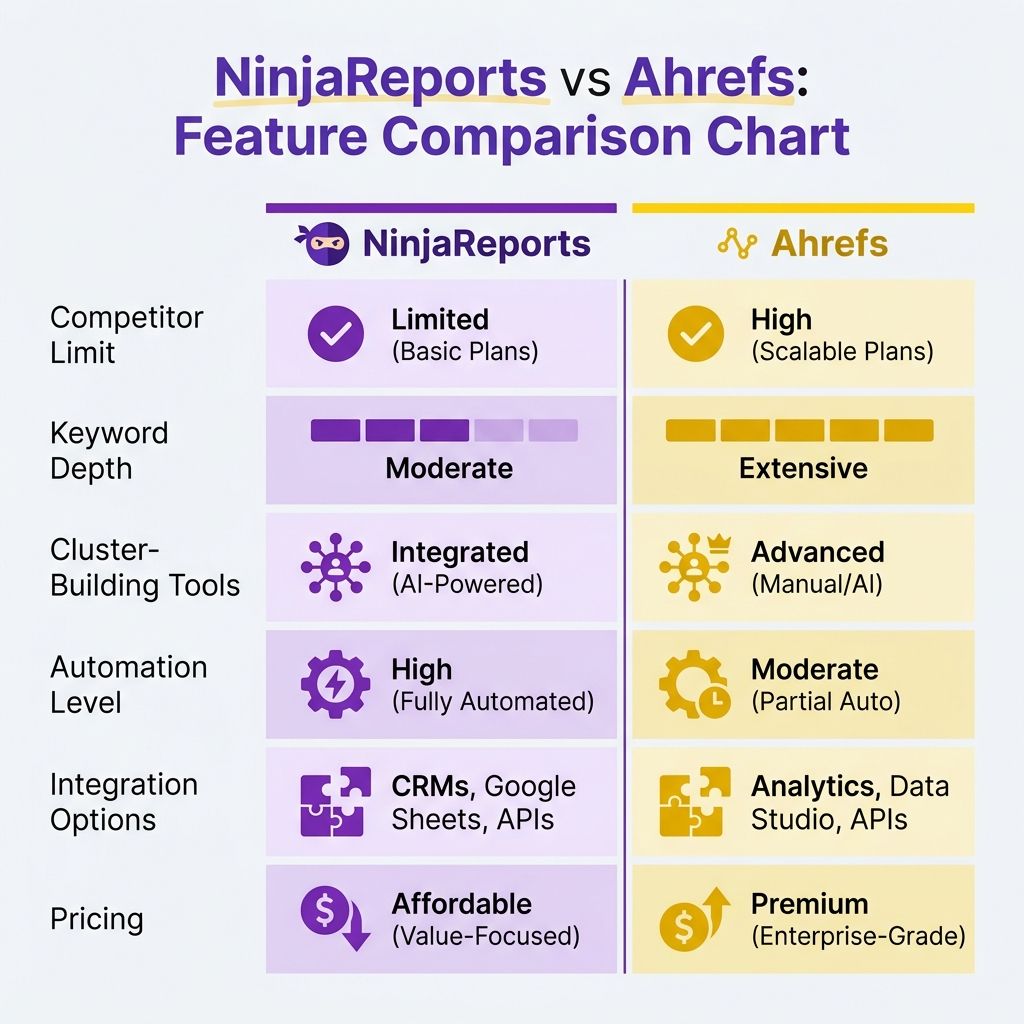
The matrix reads differently once you add publishing
| Dimension | NinjaReports | Ahrefs | AnyPost.ai |
|---|---|---|---|
| Data coverage | Not publicly documented | Documented multi-competitor gap data, up to 10 URLs | Vendor-described gap discovery |
| Gap-analysis depth | Not publicly documented | Documented; competitor overlap filtering | Vendor-described SERP analysis |
| Cluster-building workflow | Not publicly documented | Manual (export, then structure yourself) | Vendor-described automated content generation |
| Automation level | Not publicly documented | Documented discovery only | Vendor-described end-to-end |
| Integration options | Not publicly documented | SEO toolset | Vendor-described publishing |
| Pricing model | Not publicly documented | Tiered plans | No independent pricing verification |
| Unique strength | Not publicly documented | Data depth and scale | Voice-aligned automated publishing according to vendor |
The cost nobody puts in the price table
A discovery-first tool like Ahrefs sells a subscription. But the subscription covers keyword discovery. The tool hands you a gap list and stops. Someone still has to structure those keywords into a cluster and write pages. That labor is real cost, and it is rarely reflected in the price column.
Filtering to keywords competitors share—Ahrefs' own advice for finding validated topics—is itself manual cluster work if the tool does not automate it.
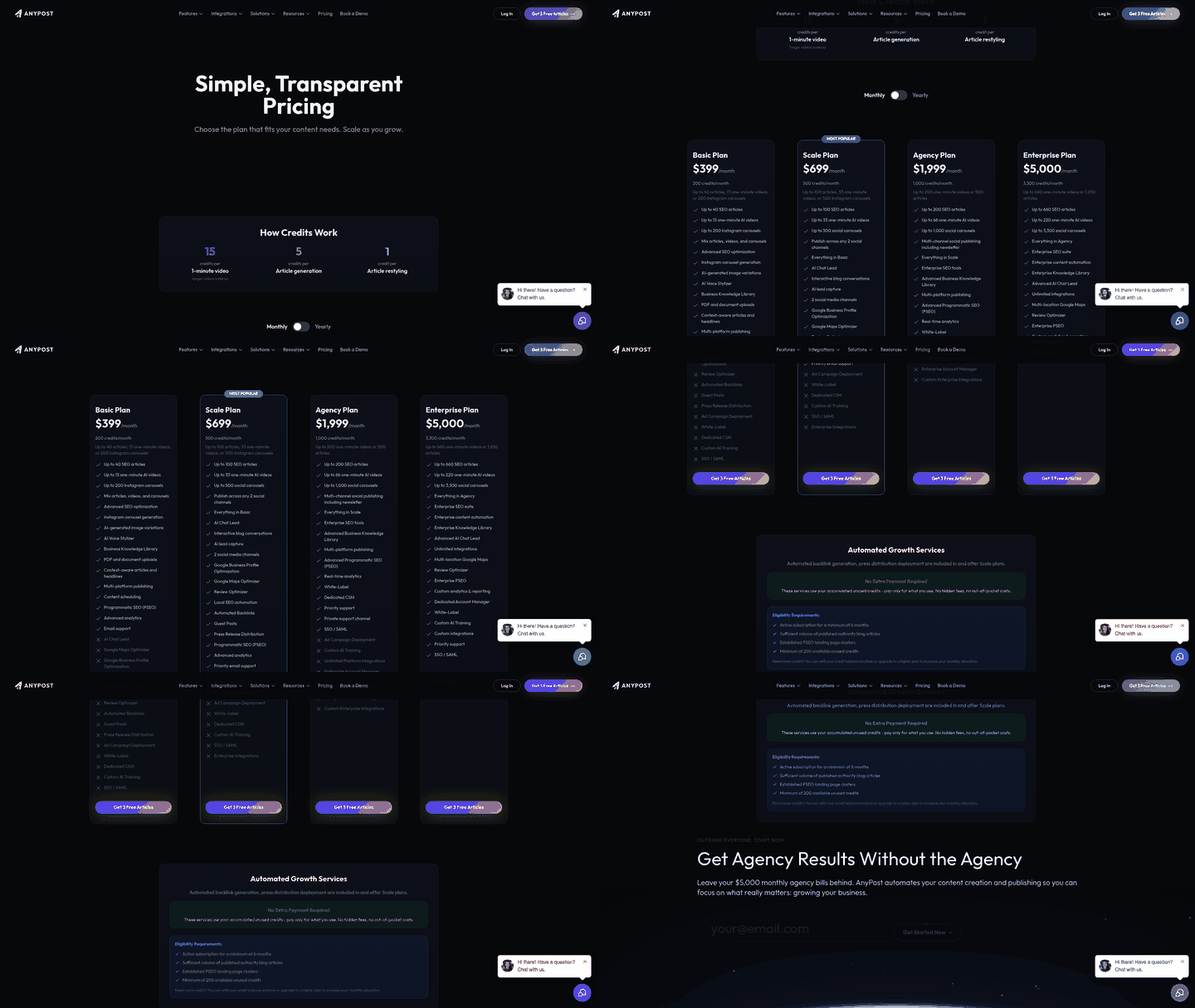
AnyPost.ai claims to reduce that manual work by studying top-ranking articles and drafting pages. Those are vendor claims; pricing and output should be verified with current data and a test project before making a decision.
Where each tool earns its spot
Ahrefs is a reasonable choice when raw data depth is the goal and you have writers ready to turn gaps into pages. Its documented ten-competitor comparison is strong for discovery.
Skip a discovery-only tool if your bottleneck is production, not finding gaps. Most teams stall after the export, not before it. More gap volume will not fix a pipeline that lacks a content step.
AnyPost.ai's claimed category is end-to-end automation from gap data to published clusters. That claim should be tested rather than accepted from a comparison table. The deeper NinjaReports vs Ahrefs breakdown takes a small-team angle.
Where this leaves you
The NinjaReports vs Ahrefs question may be the wrong one. Both give you a gap list. Neither necessarily writes the cluster.
Ahrefs' Content Gap tool is strong at discovery. It compares against competitor domains and surfaces terms they rank for that you don't. If raw data depth is your only need, it is hard to beat.
But a gap list is homework, not output. You still have to group terms, map pillar and supporting pages, write in your brand voice, and publish.
The full-workflow difference
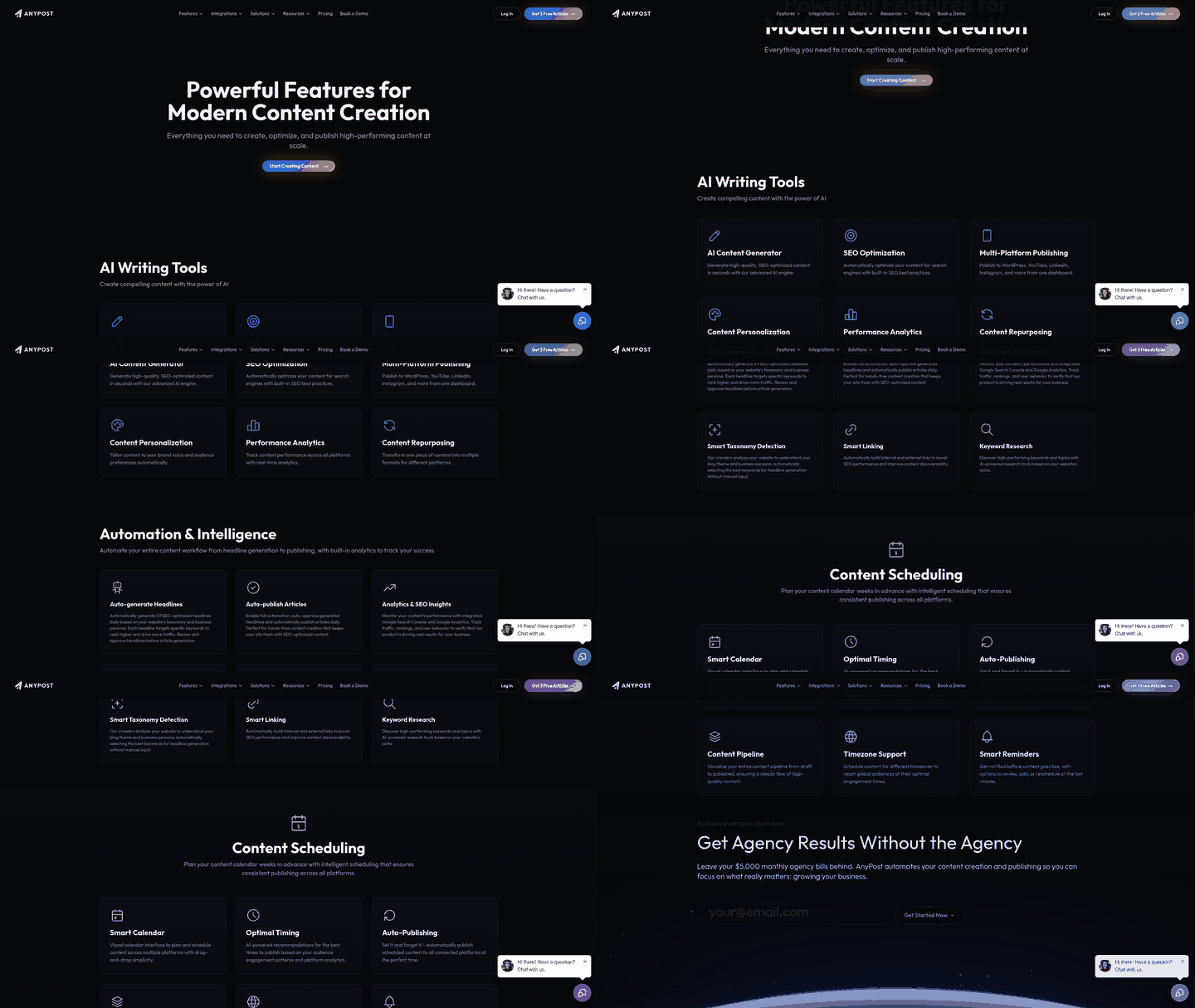
AnyPost.ai says it takes gap discovery through to published content, but this article could not independently verify those automation and publishing claims. The vendor describes a SERP Competitor Analyzer, a Taxonomy Researcher, and a Persona Engine. Treat those as product descriptions until you see them on your own keywords.
The claimed output is search-intent-aligned content with semantic HTML, internal links, and media. Those are specific vendor claims; verify them with a test project before relying on them.
Where each option actually wins
| Decision criterion | Ahrefs | AnyPost.ai |
|---|---|---|
| Raw gap data depth | Documented multi-competitor comparison | Vendor-described gap discovery |
| Cluster structuring | Manual | Vendor-described automation |
| Voice-aligned content | Not documented | Vendor-described Persona Engine |
| Publishing | Not documented | Vendor-described multi-channel |
| Best for | Analysts who want deep standalone data | Teams wanting gap-to-publish automation |
If your team already has an SEO analyst who works in keyword exports and passes drafts to writers, Ahrefs' depth is a good fit.
AnyPost.ai is likely to fit only when you don't have that machine—small marketing teams, agencies with many client sites, or founders with limited time. Pricing and performance claims should be verified against current vendor materials and your own results.
Start with a real cluster, not a spreadsheet
If you want to see the difference between a gap list and a published cluster, test it on your own site. You can get three free articles or book a demo to see the vendor's workflow.
Pick a hard topic cluster. Run it through and see what actually gets published. That is the fastest way to judge whether automation beats another spreadsheet of gaps.
Frequently Asked Questions
Why do some high-volume keywords still send zero clicks?
High-volume queries often lose much of their click traffic to a search feature that displays the information directly on the results page. That's why click potential and SERP features matter more than raw volume when deciding whether a gap keyword deserves a dedicated page.
What's the difference between the wide-net approach and the overlap filter in Ahrefs?
The wide-net approach uses the documented ability to enter multiple competitor URLs to surface maximum keyword ideas. The overlap filter narrows results to terms selected competitors rank for but your site does not. Collect wide first, then filter to shared overlap to isolate higher-confidence cluster seeds.
Can I trust a comparison that lists detailed specs for both NinjaReports and Ahrefs?
Question any comparison claiming hard specs for both tools. Ahrefs' Content Gap features are documented publicly, but no verifiable feature spec exists for NinjaReports. Honest comparisons mark those cells as undocumented rather than inventing numbers to fill the table.
Which of the three clustering methods works best for a small agency?
AI-driven similarity scoring may suit small agencies because it can scale across many client sites, but manual mind-maps remain more hands-on and can be more accurate. TF-IDF grouping sits between them. Speed from gap data to structured clusters is usually the real constraint for lean teams.
What hidden cost does a discovery-only tool leave out of its pricing?
The writing labor. A discovery tool hands you a gap list and stops, so someone still structures the keywords into clusters and drafts each page. The true cost of a discovery-based cluster is the subscription plus those manual writing hours that never appear on the invoice.